Vivado Design Suite Tutorial - Logic Simulation UG937 (v2021.1) July 14, 2021 - Xilinx
←
→
Page content transcription
If your browser does not render page correctly, please read the page content below
See all versions
                                of this document

Vivado Design Suite Tutorial

Logic Simulation
UG937 (v2021.1) July 14, 2021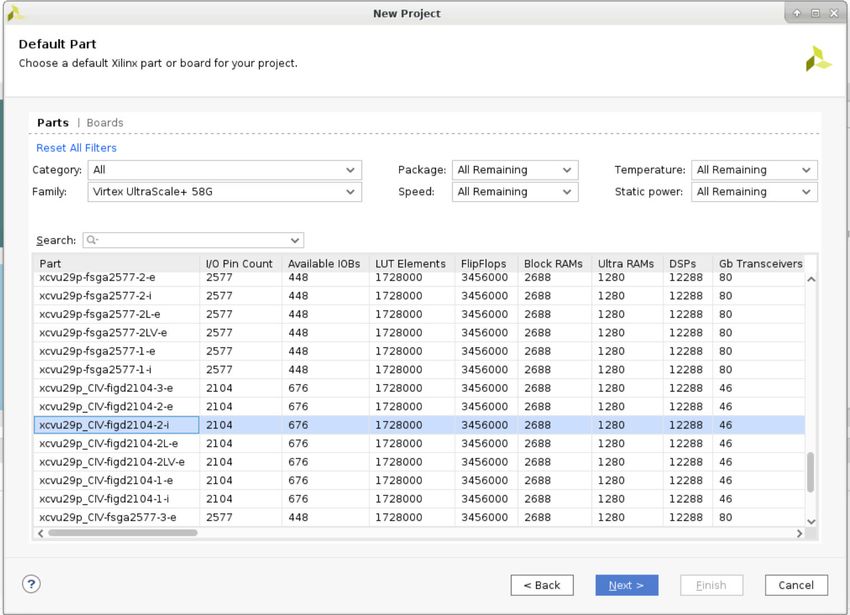
Revision History

Revision History
       The following table shows the revision history for this document.

                            Section                                        Revision Summary
                                             07/14/2021 Version 2021.1
        General updates                                   Updated for Vivado® ML Editions 2021.1

UG937 (v2021.1) July 14, 2021                                                                      www.xilinx.com
                                                                          Send Feedback
Logic Simulation                                                                                                2
Table of Contents
       Revision History...............................................................................................................2

       Chapter 1: Vivado Simulator Overview.............................................................. 5
           Introduction................................................................................................................................. 5
           Tutorial Description.....................................................................................................................6
           Locating Tutorial Design Files....................................................................................................7
           Software and Hardware Requirements.................................................................................... 8

       Chapter 2: Lab 1: Running the Simulator in Vivado IDE........................... 9
           Step 1: Creating a New Project.................................................................................................. 9
           Step 2: Adding IP from the IP Catalog.................................................................................... 15
           Step 3: Running Behavioral Simulation.................................................................................. 21
           Conclusion..................................................................................................................................23

       Chapter 3: Lab 2: Debugging the Design......................................................... 24
           Step 1: Opening the Project..................................................................................................... 24
           Step 2: Displaying Signal Waveforms..................................................................................... 25
           Step 3: Using the Analog Wave Viewer...................................................................................27
           Step 4: Working with the Waveform Window........................................................................ 29
           Step 5: Changing Signal Properties........................................................................................ 33
           Step 6: Saving the Waveform Configuration..........................................................................34
           Step 7: Re-Simulating the Design............................................................................................36
           Step 8: Using Cursors, Markers, and Measuring Time......................................................... 37
           Step 9: Debugging with Breakpoints...................................................................................... 40
           Step 10: Relaunch Simulation.................................................................................................. 45
           Conclusion..................................................................................................................................47

       Chapter 4: Lab 3: Running Simulation in Batch Mode............................. 48
           Step 1: Preparing the Simulation............................................................................................ 48
           Step 2: Building the Simulation Snapshot..............................................................................50
           Step 3: Manually Simulating the Design.................................................................................51
           Conclusion..................................................................................................................................52

UG937 (v2021.1) July 14, 2021                                                                                                     www.xilinx.com
                                                                                                     Send Feedback
Logic Simulation                                                                                                                               3
Chapter 5: Lab 4: System Verilog Feature....................................................... 53
          Creating an Example Design....................................................................................................53
          Functional Coverage................................................................................................................. 63
          Random Constraint................................................................................................................... 69

       Chapter 6: Lab 5: Running UVM example........................................................72
          Creating a New Project............................................................................................................. 72

       Chapter 7: Lab 6: Running GTM-Wizard example....................................... 76
          Overview.....................................................................................................................................76
          Feature Covered........................................................................................................................ 76

       Appendix A: Additional Resources and Legal Notices............................. 87
          Xilinx Resources.........................................................................................................................87
          Documentation Navigator and Design Hubs.........................................................................87
          Please Read: Important Legal Notices................................................................................... 88

UG937 (v2021.1) July 14, 2021                                                                                                    www.xilinx.com
                                                                                                    Send Feedback
Logic Simulation                                                                                                                              4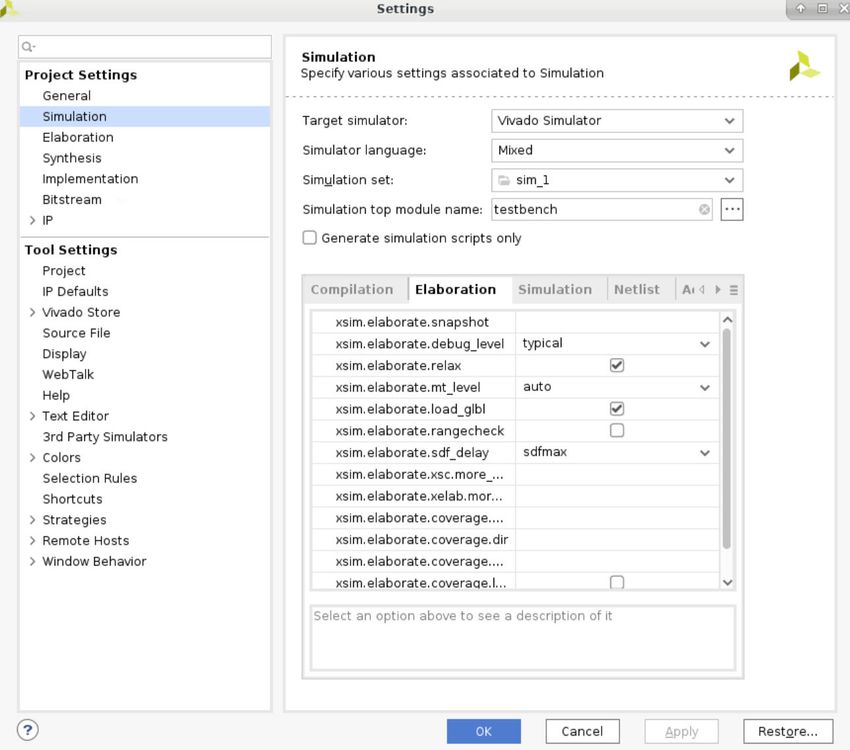
Chapter 1: Vivado Simulator Overview

                                                                                                    Chapter 1

Vivado Simulator Overview
             IMPORTANT! This tutorial requires the use of the Kintex®-7 family of devices or UltraScale™ devices. If
             you do not have this device family installed, you must update your Vivado® tools installation. Refer to the
             Vivado Design Suite User Guide: Release Notes, Installation, and Licensing (UG973) for more information
             on Adding Design Tools or Devices to your installation.

Introduction
       This Xilinx® Vivado® Design Suite tutorial provides designers with an in-depth introduction to
       the Vivado simulator.

             VIDEO: You can also learn more about the Vivado simulator by viewing the quick take video at Vivado
             Logic Simulation.

             TRAINING: Xilinx provides training courses that can help you learn more about the concepts presented in
             this document. Use these links to explore related courses:

             • Designing FPGAs Using the Vivado Design Suite 1 Training Course
             • Designing FPGAs Using the Vivado Design Suite 2 Training Course
             • Designing FPGAs Using the Vivado Design Suite 3 Training Course

       The Vivado simulator is a Hardware Description Language (HDL) simulator that lets you perform
       behavioral, functional, and timing simulations for VHDL, Verilog, and mixed-language designs.
       The Vivado simulator environment includes the following key elements:

       • xvhdl and xvlog: Parsers for VHDL and Verilog files, respectively, that store the parsed files
         into an HDL library on disk.

       • xelab: HDL elaborator and linker command. For a given top-level unit, xelab loads up all sub-
         design units, translates the design units into executable code, and links the generated
         executable code with the simulation kernel to create an executable simulation snapshot.

       • xsim: Vivado simulation command that loads a simulation snapshot to effect a batch mode
         simulation, or a GUI or Tcl-based interactive simulation environment.

       • Vivado Integrated Design Environment (IDE): An interactive design-editing environment that
         provides the simulator user-interface.

UG937 (v2021.1) July 14, 2021                                                                          www.xilinx.com
                                                                                Send Feedback
Logic Simulation                                                                                                    5
Chapter 1: Vivado Simulator Overview

Tutorial Description
       This tutorial demonstrates a design flow in which you can use the Vivado® simulator for
       performing behavioral, functional, or timing simulation from the Vivado Integrated Design
       Environment (IDE).

             IMPORTANT! Tutorial files are configured to run the Vivado simulator in a Windows environment. To run
             elements of this tutorial under the Linux operating system, some file modifications may be necessary.

       You can run the Vivado simulator in both Project Mode (using a Vivado design project to manage
       design sources and the design flow) and in Non-Project mode (managing the design more
       directly). For more information about Project Mode and Non-Project Mode, refer to the Vivado
       Design Suite User Guide: Design Flows Overview (UG892).

       The following figure shows a block diagram of the tutorial design.

                                              Figure 1: Tutorial Design

UG937 (v2021.1) July 14, 2021                                                                     www.xilinx.com
                                                                            Send Feedback
Logic Simulation                                                                                               6
Chapter 1: Vivado Simulator Overview

       The tutorial design consists of the following blocks:

       • A sine wave generator that generates high, medium, and low frequency sine waves; plus an
         amplitude sine wave (sinegen.vhd).
       • DDS compilers that generate low, middle, and high frequency waves: (sine_low.vhd,
         sine_mid.vhd, and sine_high.vhd).
       • A Finite State Machine (FSM) to select one of the four sine waves (fsm.vhd).
       • A debouncer that enables switch-selection between the raw and the debounced version of
         the sine wave selector (debounce.vhd).
       • A design top module that resets FSM and the sine wave generator, and then multiplexes the
         sine select results to the LED output (sinegen_demo.vhd).
       • A simple testbench (testbench.v) to initiate the sine wave generator design that:
          ○     Generates a 200 MHz input clock for the design system clock, sys_clk_p.

          ○     Generates GPIO button selections.

          ○     Controls raw and debounced sine wave select.

       Note: For more information about testbenches, see Writing Efficient Test Benches (XAPP199).

Locating Tutorial Design Files
       There are separate project files and sources for each of the labs in this tutorial. You can find these
       at the link provided below or under Support → Documentation → Development Tools (Product
       Type) → Hardware Development (Product Category) → Vivado – ML Editions (Product) →
       Tutorials (Doc Type) on the Xilinx website.

       1. Download the reference design files.
       2. Extract the zip file contents into any write-accessible location.
              This tutorial refers to the extracted file contents of ug937-design-files directory as
              .

               RECOMMENDED: You modify the tutorial design data while working through this tutorial. Use a new
               copy of the design files each time you start this tutorial.

       The following table describes the contents of the ug937-design-files.zip file.

UG937 (v2021.1) July 14, 2021                                                                    www.xilinx.com
                                                                            Send Feedback
Logic Simulation                                                                                              7
Chapter 1: Vivado Simulator Overview

       Table 1: Design File Contents

                        Directories/Files                                        Description
        /completed                                        Contains the completed files, and a Vivado 2021.x project of
                                                          the tutorial design for reference.
                                                          (x denotes the latest version of Vivado 2021 IDE)
        /scripts                                          Contains the scripts you run during the tutorial.
        /sim                                              Contains the testbench.v file.
        /sources                                          Contains the HDL files necessary for the functional
                                                          simulation.
        readme.txt                                        readme.txt is a readme file about the contents and
                                                          version history of this tutorial design.
        /uvm                                              UVM example needed for Lab 5

Software and Hardware Requirements
       This tutorial requires that the 2021.1 Vivado® ML Editions software release is installed. The
       following partial list describes the operating systems that the Vivado® ML Editions supports on
       x86 and x86-64 processor architectures:

       • Microsoft Windows Support:

          • Windows 10 Professional (32-bit and 64-bit), English/Japanese

       • Linux Support:

          • Red Hat Enterprise Workstation/Server 7.8-8.3 (64-bit), English/Japanese
          • SUSE Linux Enterprise 15.2 (32-bit and 64-bit)
          • CentOS 7.4 - 8.3 (64-bit), English/Japanese
          • Ubuntu Linux 16.04.5 LTS;16.04.6 LTS; 18.04.1 LTS; 18.04.2 LTS, 18.04.3 LTS; 18.04.4 LTS;
            and 18.04.5 LTS (64-bit), English/Japanese

       Refer to the Vivado Design Suite User Guide: Release Notes, Installation, and Licensing (UG973) for a
       complete list and description of the system and software requirements.

UG937 (v2021.1) July 14, 2021                                                                       www.xilinx.com
                                                                           Send Feedback
Logic Simulation                                                                                                 8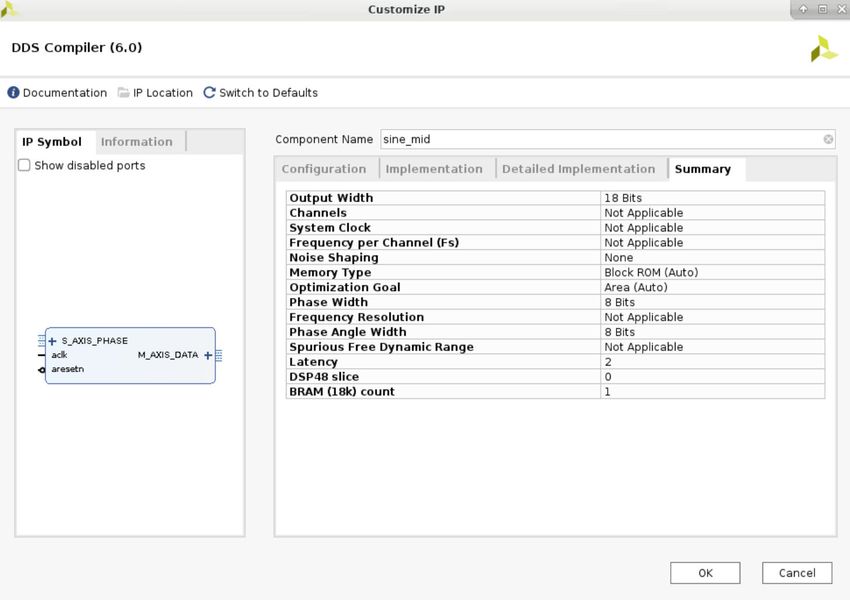
Chapter 2: Lab 1: Running the Simulator in Vivado IDE

                                                                                      Chapter 2

Lab 1: Running the Simulator in
Vivado IDE
       In this lab, you create a new Vivado® Design Suite project, add HDL design sources, add IP from
       the Xilinx® IP catalog, and generate IP outputs needed for simulation. Then you run a behavioral
       simulation on an elaborated RTL design.

Step 1: Creating a New Project
       The Vivado® Integrated Design Environment (IDE), as shown in the following figure, lets you
       launch simulation from within design projects, automatically generating the necessary simulation
       commands and files.

UG937 (v2021.1) July 14, 2021                                                            www.xilinx.com
                                                                     Send Feedback
Logic Simulation                                                                                      9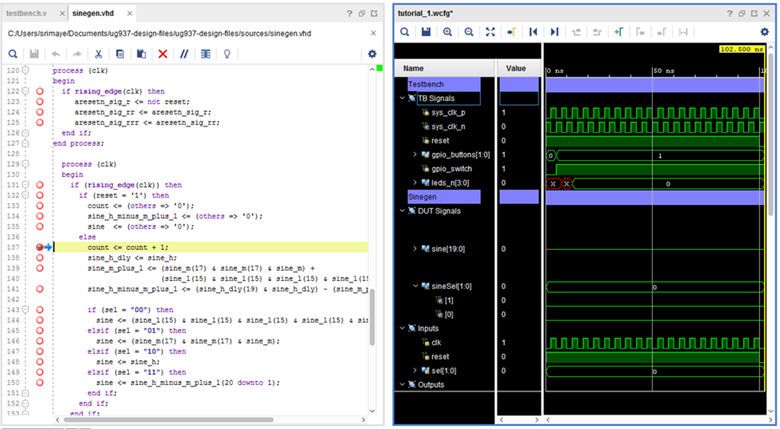
Chapter 2: Lab 1: Running the Simulator in Vivado IDE

       Create a new project for managing source files, add IP to the design, and run behavioral
       simulation:

       1. On Windows, launch the Vivado IDE by selecting Start → All Programs → Xilinx Design Tools
          → Vivado 2021.x → Vivado 2021.x
           (x denotes the latest version of Vivado 2021 IDE)
           Note: Your Vivado ML Editions installation might be called something other than Xilinx® Design Tools
           on the Start menu.

       2. In the Vivado IDE Getting started page, click Create Project.
       3. In the New project dialog box, click Next and enter a project name: project_xsim.

UG937 (v2021.1) July 14, 2021                                                                   www.xilinx.com
                                                                           Send Feedback
Logic Simulation                                                                                             10
Chapter 2: Lab 1: Running the Simulator in Vivado IDE
4. For the Project Location, browse to the folder containing the extracted tutorial data,
. Make sure to check the Create project subdirectory option and click Next.
Note: Create project subdirectory option is preselected.
5. In the Project Type dialog box, select RTL Project and click Next.
UG937 (v2021.1) July 14, 2021 www.xilinx.com
Send Feedback
Logic Simulation 11Chapter 2: Lab 1: Running the Simulator in Vivado IDE
6. In the Add Source dialog box, click Add Directories and add the extracted tutorial design
data:
• /sources
• /sim
Note: You can press the Ctrl key to click and select multiple files or directories.
7. Set the Target Language to Verilog to indicate the netlist language for synthesis.
8. Set the Simulator Language to Mixed as shown in the following figure.
The Simulator Language indicates which languages the logic simulator supports or requires.
Vivado Design Site ensures the availability of simulation models of any IP cores in the design
by using the available synthesis files to generate the required language-specific structural
simulation model when generating output targets. For more information on working with IP
cores and the Xilinx IP catalog, refer to the Vivado Design Suite User Guide: Designing with IP
(UG896). You can also work through the Vivado Design Suite Tutorial: Designing with IP
(UG939).
9. Click Next.
10. Click Next to bypass the Add Constraints dialog box.
UG937 (v2021.1) July 14, 2021 www.xilinx.com
Send Feedback
Logic Simulation 12Chapter 2: Lab 1: Running the Simulator in Vivado IDE
In the Default Part dialog box shown in the following figure, select Boards, and then select
either Kintex®-7 KC705 Evaluation Platform for 7 series or Kintex-UltraScale KCU105
Evaluation Platform for UltraScale devices and click Next.
UG937 (v2021.1) July 14, 2021 www.xilinx.com
Send Feedback
Logic Simulation 13Chapter 2: Lab 1: Running the Simulator in Vivado IDE
Note: Add sources from subdirectories option is preselected.
11. Review the New Project Summary dialog box.
12. Click Finish to create the project.
UG937 (v2021.1) July 14, 2021 www.xilinx.com
Send Feedback
Logic Simulation 14Chapter 2: Lab 1: Running the Simulator in Vivado IDE
Vivado opens the new project in the Vivado IDE, using the default view layout
Step 2: Adding IP from the IP Catalog
The Sources window displays the source files that you have added during project creation. The
Hierarchy tab displays the hierarchical view of the source files.
1. Click the icon in the Sources window to expand the folders as shown in the following
figure. Expand all button can be used to view all the files at all levels of hierarchy.
Notice that the Sine wave generator (sinegen.vhd) references cells that are not found in
the current design sources. In the Sources window, the missing design sources are marked by
the missing source icon .
Note: The missing source icon is used to view only the missing sources. This is useful in viewing the
missing sources in larger designs.
Now, add the sine_high, sine_mid, and sine_low modules to the project from the
Xilinx IP catalog.
UG937 (v2021.1) July 14, 2021 www.xilinx.com
Send Feedback
Logic Simulation 15Chapter 2: Lab 1: Running the Simulator in Vivado IDE
Adding Sine High
1. In the Flow Navigator, select the IP Catalog button.
The IP catalog opens in the graphical windows area. For more information on the specifics of
the Vivado® IDE, refer to theVivado Design Suite User Guide: Using the Vivado IDE (UG893).
2. In the search field of the IP catalog, type DDS.
The Vivado IDE highlights the DDS Compilers in the IP catalog.
3. Under any category, double-click the DDS Compiler.
The Customize IP wizard opens (following figure).
4. In the IP Symbol on the left, ensure that Show disabled ports is unchecked.
5. Specify the following on the Configuration tab:
• Component Name: type sine_high
• Configuration Options: select SIN COS LUT only
• Noise Shaping: select None
• Under Hardware Parameters, set Phase Width to 16 and Output Width to 20
6. On the Implementation tab, set Output Selection to Sine.
7. On the Detailed Implementation tab, set Control Signals to ARESETn (active-Low).
UG937 (v2021.1) July 14, 2021 www.xilinx.com
Send Feedback
Logic Simulation 16Chapter 2: Lab 1: Running the Simulator in Vivado IDE
8. On the Summary tab, review the settings and click OK.
When the sine_high IP core is added to the design, the output products required to
support the IP in the design must be generated. The Generate Output Products dialog box
displays, as shown in the following figure.
UG937 (v2021.1) July 14, 2021 www.xilinx.com
Send Feedback
Logic Simulation 17Chapter 2: Lab 1: Running the Simulator in Vivado IDE
The output products allow the IP to be synthesized, simulated, and implemented as part of
the design. For more information on working with IP cores and the Xilinx® IP catalog, refer to
the Vivado Design Suite User Guide: Designing with IP (UG896). You can also work through the
Vivado Design Suite Tutorial: Designing with IP (UG939).
UG937 (v2021.1) July 14, 2021 www.xilinx.com
Send Feedback
Logic Simulation 18Chapter 2: Lab 1: Running the Simulator in Vivado IDE
9. Click Generate to generate the default output products for sine_high. A dialog box opens
saying that the Out of context module run was launched for generating output products.
Click OK.
Adding Sine Mid
1. In the IP catalog, double-click the DDS Compiler IP a second time.
2. Specify the following on the Configuration tab:
• Component Name: type sine_mid
• Configuration Options: select SIN COS LUT only
• Noise Shaping: select None
• Under Hardware Parameters, set the Phase Width to 8, and the Output Width to 18
3. On the Implementation tab, set the Output Selection to Sine.
4. On the Detailed Implementation tab, set Control Signals to ARESETn (active-Low).
5. Select the Summary tab, review the settings and click OK as shown in the following figure:
When the sine_mid IP core is added to the design, the Generate Output Products dialog
box displays to generate the output products required to support the IP in the design.
UG937 (v2021.1) July 14, 2021 www.xilinx.com
Send Feedback
Logic Simulation 19Chapter 2: Lab 1: Running the Simulator in Vivado IDE
6. Click Generate to generate the default output products for sine_mid. A dialog box opens
saying that the Out of context module run was launched for generating output products.
Click OK.
Adding Sine Low
1. In the IP catalog, double-click the DDS Compiler IP for the third time.
2. Specify the following on the Configuration tab:
• Component Name: type sine_low
• Configuration Options: select SIN COS LUT only
• Noise Shaping: select None
• Under Hardware Parameters, set the Phase Width to 6 and the Output Width to 16
3. On the Implementation tab, set the Output Selection to Sine.
4. On the Detailed Implementation tab, set Control Signals to ARESETn (active-Low).
5. Select the Summary tab, review the settings as seen in the following figure, and click OK.
When the sine_low IP core is added to the design, the Generate Output Products dialog box
displays to generate the output products required to support the IP in the design.
UG937 (v2021.1) July 14, 2021 www.xilinx.com
Send Feedback
Logic Simulation 20Chapter 2: Lab 1: Running the Simulator in Vivado IDE
6. Click Generate to generate the default output products for sine_low. A dialog box opens
saying that the Out of context module run was launched for generating output products.
Click OK.
Step 3: Running Behavioral Simulation
After you have created a Vivado® project for the tutorial design, you set up and launch Vivado®
simulator to run behavioral simulation. Set the behavioral simulation properties in Vivado® tools:
1. In the Flow Navigator, right-click Simulation and then click Simulation Settings. Alternatively,
click Settings in the Flow Navigator under Project Manager to open the Settings window.
Select Simulation from the Settings window. The following defaults are automatically set:
• Simulation set: select sim_1
• Simulation top-module name: set testbench
2. In the Elaboration tab (figure below), ensure that the debug level is set to typical, which is the
default value.
UG937 (v2021.1) July 14, 2021 www.xilinx.com
Send Feedback
Logic Simulation 21Chapter 2: Lab 1: Running the Simulator in Vivado IDE
3. In the Simulation tab, observe that the Simulation Run Time is 1000ns.
4. Click OK.
With the simulation settings properly configured, you can launch the Vivado simulator to
perform a behavioral simulation of the design.
5. In the Flow Navigator, click Run Simulation → Run Behavioral Simulation.
Functional and timing simulations are available post-synthesis and post-implementation.
Those simulations are outside the scope of this tutorial.
When you launch the Run Behavioral Simulation command, the Vivado tool runs xvlog and
xvhdl to analyze the design and xelab in the background to elaborate and compile the
design into a simulation snapshot, which the Vivado simulator can run. When that process is
complete, the Vivado tool launches xsim to run the simulation.
In the Vivado IDE, the simulator GUI opens after successfully parsing and compiling the
design (figure below). By default, the top-level HDL objects display in the Waveform window.
UG937 (v2021.1) July 14, 2021 www.xilinx.com
Send Feedback
Logic Simulation 22Chapter 2: Lab 1: Running the Simulator in Vivado IDE
Conclusion
In this lab, you have created a new Vivado® Design Suite project, added HDL design sources,
added IP from the Xilinx® IP catalog and generated IP outputs needed for simulation, and then
run behavioral simulation on the elaborated RTL design.
This concludes Lab 1. You can continue Lab 2 at this time by starting at Step 2: Displaying Signal
Waveforms.
You can also close the simulation, project, and the Vivado IDE to start Lab 2 at a later time.
1. Click File → Close Simulation to close the open simulation.
2. Select OK if prompted to confirm closing the simulation.
3. Click File → Close Project to close the open project.
4. Click File → Exit to exit the Vivado tool.
UG937 (v2021.1) July 14, 2021 www.xilinx.com
Send Feedback
Logic Simulation 23Chapter 3: Lab 2: Debugging the Design
Chapter 3
Lab 2: Debugging the Design
The Vivado® simulator GUI contains the Waveform window, and Object and Scope Windows. It
provides a set of debugging capabilities to quickly examine, debug, and fix design problems. See
the Vivado Design Suite User Guide: Logic Simulation (UG900) for more information about the GUI
components.
In this lab, you:
• Enable debug capabilities
• Examine a design bug
• Use debug features to find the root cause of the bug
• Make changes to the code
• Re-compile and re-launch the simulation
Step 1: Opening the Project
This lab continues from the end of Lab #1 in this tutorial. You must complete Lab #1 prior to
beginning Lab #2. If you closed the Vivado IDE, or the tutorial project, or the simulation at the
end of Lab #1, you must reopen them.
Start by loading the Vivado Integrated Design Environment (IDE) by selecting Start → All
Programs → Xilinx Design Tools → Vivado 2021.x → Vivado 2021.x.
Note:
1. Your Vivado ML Editions installation might be called something other than Xilinx Design Tools on the
Start menu.
2. As an alternative, click the Vivado 2021.x Desktop icon to start the Vivado IDE.
The Vivado IDE opens. Now, open the project from Lab #1, and run behavioral simulation.
1. From the main menu, click File → Project → Open Recent and select project_xsim, which
you saved in Lab #1.
2. After the project has opened, from the Flow Navigator click Run Simulation → Run
Behavioral Simulation.
UG937 (v2021.1) July 14, 2021 www.xilinx.com
Send Feedback
Logic Simulation 24Chapter 3: Lab 2: Debugging the Design
The Vivado simulator compiles your design and loads the simulation snapshot.
Step 2: Displaying Signal Waveforms
In this section, you examine features of the Vivado simulator GUI that help you monitor signals
and analyze simulation results, including:
• Running and restarting the simulation to review the design functionality, using signals in the
Waveform window and messages from the testbench shown in the Tcl console.
• Adding signals from the testbench and other design units to the Waveform window so you
can monitor their status.
• Adding groups and dividers to better identify signals in the Waveform window.
• Changing signal and wave properties to better interpret and review the signals in the
Waveform window.
• Using markers and cursors to highlight key events in the simulation and to perform zoom and
time measurement features.
• Using multiple waveform configurations.
Add and Monitor Signals
The focus of the tutorial design is to generate sine waves with different frequencies. To observe
the function of the circuit, you monitor a few signals from the design. Before running simulation
for a specified time, you can add signals to the wave window to observe the signals as they
transition to different states over the course of the simulation.
By default, the Vivado® simulator adds simulation objects from the testbench to the Waveform
window. In the case of this tutorial, the following testbench signals load automatically:
• Differential clock signals (sys_clk_p and sys_clk_n). This is a 200 MHz clock generated
by the testbench and is the input clock for the complete design.
• Reset signal (reset). Provides control to reset the circuit.
• GPIO buttons (gpio_buttons[1:0]). Provides control signals to select different frequency
sine waves.
• GPIO switch (gpio_switch). Provides a control switch to enable or disable debouncer logic.
• LEDs (leds_n[3:0]). A placeholder bus to display the results of the simulation.
You add some new signals to this list to monitor those signals as well.
If necessary, in the Scopes window, click the sign to expand the testbench. (It might be
expanded by default.)
UG937 (v2021.1) July 14, 2021 www.xilinx.com
Send Feedback
Logic Simulation 25Chapter 3: Lab 2: Debugging the Design
An HDL scope, or scope, is defined by a declarative region in the HDL code, such as a module,
function, task, process, or named blocks in Verilog. VHDL scopes include entity/architecture
definitions, blocks, functions, procedures, and processes.
1. In the Scopes window, click to select the dut object.
The current scope of the simulation changes from the whole testbench to the selected
object. The Objects window updates with all the signals and constants of the selected scope,
as shown in figure below.
2. From the Objects window, select signals sine[19:0] and sineSel[1:0] and add them
into Wave Configuration window using one of the following methods:
• Drag and drop the selected signals into the Waveform window.
• Right-click on the signal to open the popup menu, and select Add to Wave Window.
Note: You can select multiple signals by holding down the CTRL key during selection.
UG937 (v2021.1) July 14, 2021 www.xilinx.com
Send Feedback
Logic Simulation 26Chapter 3: Lab 2: Debugging the Design
Step 3: Using the Analog Wave Viewer
The sine[19:0] signals you are monitoring are analog signals, which you can view better in Analog
wave mode. You can choose to display a given signal as Digital or Analog in the Waveform
window.
1. In the Waveform window, select the sine[19:0] signal.
2. Right-click to open the popup menu, and select Waveform Style → Analog, as shown in the
figure below.
3. Right-click to open the popup menu again, and select Radix → Signed Decimal as shown in
the figure below.
UG937 (v2021.1) July 14, 2021 www.xilinx.com
Send Feedback
Logic Simulation 27Chapter 3: Lab 2: Debugging the Design
Logging Waveforms for Debugging
The Waveform window lets you review the state of multiple signals as the simulation runs.
However, due to its limited size, the number of signals you can effectively monitor in the
Waveform window is limited. To identify design failures during debugging, you might need to
trace more signals and objects than can be practically displayed in the Waveform window. You
can log the waveforms for signals that are not displayed in the Waveform window, by writing
them to the simulation waveform database (WDB). After simulation, you can review the
transitions on all signals captured in the waveform database file.
In the Scope window, right-click on dut under testbench. Click Log to Wave Database from
the options list. Select Objects in Scope option. The specified signals are written to a waveform
database.
Using the Tcl Command
Enable logging of the waveform for the specified HDL objects by entering the following
command in the Tcl console:
log_wave [get_objects /testbench/dut/*] [get_objects /testbench/dut/
U_SINEGEN/*]
Note: See the Vivado Design Suite Tcl Command Reference Guide (UG835) for more information on the
log_wave command.
UG937 (v2021.1) July 14, 2021 www.xilinx.com
Send Feedback
Logic Simulation 28Chapter 3: Lab 2: Debugging the Design
This command enables signal dumping for the specified HDL objects, /testbench/dut/*
and /testbench/dut/U_SINEGEN/*.
Note: * symbol specifies all the HDL objects in a scope.
The log_wave command writes the specified signals to a waveform database, which is written
to the simulation folder of the current project:
/.sim/sim_1/behav/xsim
Step 4: Working with the Waveform Window
Now that you have configured the simulator to display and log signals of interest into the
waveform database, you are ready to run the simulator again.
1. Run the simulation by clicking the Run All button .
Observe the sine signal output in the waveform. The Wave window can be unlocked from
Main window layout to view it as standalone.
2. Click the Float button in the title bar of the Waveform Configuration window.
3. Click the Zoom Fit button to display the whole time spectrum in the Waveform
Configuration window.
Notice that the low frequency sine output is incorrect. You can view the waveform in detail by
zooming into the Waveform window. When you zoom into the waveform, you can use the
horizontal and vertical scroll bars to pan down the full waveform.
UG937 (v2021.1) July 14, 2021 www.xilinx.com
Send Feedback
Logic Simulation 29Chapter 3: Lab 2: Debugging the Design
As seen in the figure above, when the value of sineSel is 0, which indicates a low frequency sine
selection, the analog sine[19:0] output is not a proper sine wave, indicating a problem in the
design or the testbench.
Grouping Signals
Next, you add signals from other design units to better analyze the functionality of the whole
design. When you add signals to the Waveform window, the limited size of the window makes it
difficult to display all signals at the same time. Reviewing all signals would require the use of the
vertical scroll bar, making the review process difficult.
You can group related signals together to make viewing them easier. With a group, you can
display or hide associated signals to make the Waveform window less cluttered, and easier to
understand.
1. In the Waveform window, select all signals in the testbench unit: sys_clk_p, sys_clk_n,
reset, gpio_buttons, gpio_switch, and leds_n.
Note: Press and hold the Ctrl key, or Shift key, to select multiple signals.
2. With the signals selected right-click to open the popup menu and select New Group. Rename
it as TB Signals.
The Vivado® simulator creates a collapsed group in the waveform configuration window. To
expand the group, click to the left of the group name.
3. Create another signal group called DUT Signals to group signals sine[19:0] and
sine_sel[1:0].
UG937 (v2021.1) July 14, 2021 www.xilinx.com
Send Feedback
Logic Simulation 30Chapter 3: Lab 2: Debugging the Design
You can add or remove signals from a group as needed. Cut and paste signals from the list of
signals in the Waveform window, or drag and drop a signal from one group into another.
You can also drag and drop a signal from the Objects window into the Waveform window, or
into a group.
You can ungroup all signals, thereby eliminating the group. Select a group, right-click to open
the popup menu and select Ungroup.
To better visualize which signals belong to which design units, add dividers to separate the
signals by design unit.
Adding Dividers
Dividers let you create visual breaks between signals or groups of signals to more easily identify
related objects.
1. In the Waveform window, right-click to open the popup menu and select New Divider. The
Name dialog box opens to let you name the divider you are adding to the Waveform window.
2. Add two dividers named:
• Testbench
• SineGen
3. Move the SineGen divider above the DUT Signals group.
TIP: You can change divider names at any time by highlighting the divider name and selecting the Rename
command from the popup menu, or change the color with Divider Color.
Adding Signals from Sub-modules
You can also add signals from different levels of the design hierarchy to study the interactions
between these modules and the testbench. The easiest way to add signals from a sub-module is
to filter objects and then select the signals to add to the Waveform view.
Add signals from the instantiated sine_gen_demo module (DUT) and the sinegen module
(U_SINEGEN).
1. In the Scopes window, select and expand the Testbench, then select and expand DUT.
Simulation objects associated with the currently selected scope display in the Objects
window.
By default, all types of simulation objects display in the Objects window. However, you can
limit the types of objects displayed by selecting the object filters at the top of the Objects
window. The following figure shows the Objects window with the Input and Output port
objects enabled, and the other object types are disabled. Move the cursor to hover over a
button to see the tooltip for the object type.
UG937 (v2021.1) July 14, 2021 www.xilinx.com
Send Feedback
Logic Simulation 31Chapter 3: Lab 2: Debugging the Design
2. Use the Objects window toolbar to enable and disable the different object types.
The types of objects that can be filtered in the Objects window include Input, Output, Inout
ports, Internal Signals, Constants, and Variables.
3. In the Scopes window, select the U_SINEGEN design unit.
4. In the Waveform window, right-click in the empty space below the signal names, and use the
New Group command to create three new groups called Inputs, Outputs, and Internal
Signals.
TIP: If you create the group on top of, or containing, any of the current objects in the Waveform
window, simply drag and drop the objects to separate them as needed.
5. In the Objects window, select the Input filter to display the Input objects.
6. Select the Input objects in the Objects window, and drag and drop them onto the Input group
you created in the Waveform window.
Repeat steps 5 and 6 above to filter the Output objects and drag them onto the Output group,
and filter the Internal Signals and drag them onto the Internal Signals group, as shown in the
following figure.
UG937 (v2021.1) July 14, 2021 www.xilinx.com
Send Feedback
Logic Simulation 32Chapter 3: Lab 2: Debugging the Design
Step 5: Changing Signal Properties
You can also change the properties of some of the signals shown in the Waveform window to
better visualize the simulation results.
Viewing Hierarchical Signal Names
By default, the Vivado® simulator adds signals to the waveform configuration using a short name
with the hierarchy reference removed. For some signals, it is important to know to which module
they belong.
1. In the Waveform window, hold Ctrl and click to select the sine[19:0] and
sineSel[1:0] signals listed in the DUT signals group, under the SineGen divider.
2. Hold Ctrl, and click to select the sine[19:0] signals listed in the Outputs group, under the
SineGen divider.
3. Right-click in the Waveform window to open the popup menu, and select the Name → Long
command.
The displayed name changes to include the hierarchical path of the signal. You can now see
that the sine[19:0] signals under the DUT Signals group refers to different objects in the
design hierarchy than the sine[19:0] signals listed under the Outputs group. See the
figure below.
UG937 (v2021.1) July 14, 2021 www.xilinx.com
Send Feedback
Logic Simulation 33Chapter 3: Lab 2: Debugging the Design
Viewing Signal Values
You can better understand some signal values if they display in a different radix format than the
default, for instance, binary values instead of hexadecimal values. The default radix is
Hexadecimal unless you override the radix for a specific object.
Supported radix values are Binary, Hexadecimal, Octal, ASCII, Signed and Unsigned decimal. You
can set any of the above values as Default using Default Radix option.
1. In the Waveform window, select the following signals:
s_axis_phase_tdata_sine_high, s_axis_phase_tdata_sine_mid and
s_axis_phase_tdata_sine_low.
2. Right-click to open the popup menu, and select Radix → Binary.
The values on these signals now display using the specified radix
Step 6: Saving the Waveform Configuration
You can customize the look and feel of the Waveform window, and then save the Waveform
configuration to reuse in future simulation runs. The Waveform configuration file defines the
displayed signals, and the display characteristics of those signals.
1. In the Waveform window, click the Settings button on the title bar menu.
The Waveform Options dialog box opens to the General tab.
2. Ensure the Default Radix is set to Hexadecimal.
UG937 (v2021.1) July 14, 2021 www.xilinx.com
Send Feedback
Logic Simulation 34Chapter 3: Lab 2: Debugging the Design
This defines the default number format for all signals in the Waveform window. The radix can
also be set for individual objects in the Waveform window to override the default.
3. Select the Draw Waveform Shadow, as shown in the following figure, to enable or disable the
shading under the signal waveform.
By default, a waveform is shaded under the high transitions to make it easier to recognize the
transitions and states in the Waveform window.
You can also enable or disable signal indices, so that each signal or group of signals is
identified with an index number in the Waveform window.
4. Check or uncheck the Show signal indices check box to enable or disable the signal list
numbering.
5. Check or uncheck the Show grid lines check box to enable or disable the grid lines in
waveform window.
6. Check the Snap to Transition check box to snap the cursor to transition edges.
7. In the Waveform Options dialog box, select the Colors view.
Examine the Waveform Color Options dialog box. You can configure the coloring for
elements of the Waveform window to customize the look and feel. You can specify custom
colors to display waveforms of certain values, so you can quickly identify signals in an
unknown state, or an uninitialized state.
The Waveform window configures with your preferences. You can save the current waveform
configuration so it is available for use in future Vivado® simulation sessions.
By default, the Vivado simulator saves the current waveform configuration setting as
testbench_behav.wcfg.
8. In the Waveform window sidebar menu, select the Save Wave Configuration button .
9. Save the Wave Configuration into the project folder with the filename tutorial_1.wcfg.
UG937 (v2021.1) July 14, 2021 www.xilinx.com
Send Feedback
Logic Simulation 35Chapter 3: Lab 2: Debugging the Design
10. Click Yes. The file is added to the project simulation fileset, sim_1, for archive purposes.
TIP: You can also load a previously saved waveform configuration file using the File → Simulation
Waveform → Open Configuration command.
Working with Multiple Waveform Configurations
You can also have multiple Waveform windows, and waveform configuration files open at one
time. This is useful when the number of signals you want to display exceeds the ability to display
them in a single window. Depending on the resolution of the screen, a single Waveform window
might not display all the signals of interest at the same time. You can open multiple Waveform
windows, each with their own set of signals and signal properties, and copy and paste between
them.
1. To add a new Waveform window, select File → Simulation Waveform → New Configuration.
An untitled Waveform window opens with a default name. You can add signals, define
groups, add dividers, set properties and colors that are unique to this Waveform window.
2. Select signal groups in the first Waveform window by pressing and holding the Ctrl key, and
selecting the following groups: Inputs, Outputs, and Internal Signals.
3. Right-click to open the popup menu, and select Copy, or use the shortcut Ctrl+C on the
selected groups to copy them from the current Waveform window.
4. Select the new Waveform window to make it active.
5. Right-click in the Waveform window and select Paste, or use the shortcut Ctrl+V to paste the
signal groups into the prior Waveform window.
6. Select File → Simulation Waveform → Save Configuration or click the Save Wave
Configuration button, and save the waveform configuration to a file called
tutorial_2.wcfg.
7. When prompted to add the waveform configuration to the project, select No.
8. Click the icon to close the new Waveform window.
Step 7: Re-Simulating the Design
With the various signals, signal groups, dividers, and attributes you have added to the Waveform
window, you are now ready to simulate the design again.
1. Click the Restart button to reset the circuit to its initial state.
2. Click the Run All button .
UG937 (v2021.1) July 14, 2021 www.xilinx.com
Send Feedback
Logic Simulation 36Chapter 3: Lab 2: Debugging the Design
The simulation runs for about 7005 ns. If you do not restart the simulator prior to executing
the Run All command, the simulator runs continuously until interrupted.
3. After the simulation is complete, click the Zoom Fit button to see the whole simulation
timeline in the Waveform window. Figure below shows the current simulation results.
Step 8: Using Cursors, Markers, and
Measuring Time
The Finite State Machine (U_FSM) module used in the top-level of the design generates three
different sine-wave select signals for specific outputs of the SineGen block. You can identify
these different wave selections better using Markers to highlight them.
1. In the Waveform window select the /testbench/dut/sineSel[1:0] signal, as shown in
the following figure.
2. In the waveform sidebar menu, click the Go to Time 0 button .
The current marker moves to the start of the simulation run.
3. Enable the Snap to Transition check box in the General tab of settings window to snap the
cursor to transition edges.
4. From the waveform toolbar menu, click the Next Transition button .
The current marker moves to the first value change of the selected sineSel[1:0] signal, at
3.5225 microseconds.
5. Click the Add Marker button .
6. Search for all transitions on the sineSel signal, and add markers at each one.
UG937 (v2021.1) July 14, 2021 www.xilinx.com
Send Feedback
Logic Simulation 37Chapter 3: Lab 2: Debugging the Design
With markers identifying the transitions on sineSel, the Waveform window should look
similar to the following figure. As previously observed, the low frequency signals are incorrect
when the sinSel signal value is 0.
You can also use the main Waveform window cursor to navigate to different simulation times,
or locate value changes. In the next steps, you use this cursor to zoom into the Waveform
window when the sineSel is 0 to review the status of the output signal, sine[19:0], and
identify where the incorrect behavior initiates. You also use the cursor to measure the period
of low frequency wave control.
TIP: By default, the Waveform window displays the time unit in microseconds. However, you can use
whichever measurement you prefer while running or changing current simulation time, and the
Waveform window adjusts accordingly.
7. In the Waveform window, click the Go to Time 0 button , then click the Zoom in button
repeatedly to zoom into the beginning of the simulation run.
8. Continue to zoom in the Waveform window as needed, until you can see the reset signal
asserted low, and you can see the waveform of the clock signals, sys_clk_p and
sys_clk_n, as seen in the following figure.
UG937 (v2021.1) July 14, 2021 www.xilinx.com
Send Feedback
Logic Simulation 38Chapter 3: Lab 2: Debugging the Design
The Waveform window zooms in or out around the area centered on the cursor.
9. Place the main Waveform window cursor on the area by clicking at a specific time or point in
the waveform.
You can also click on the main cursor, and drag it to the desired time.
10. Because 0 is the initial or default FSM output, move the cursor to the first posedge of
sys_clk_p after reset is asserted low, at time 102.5 ns, as seen in the following figure.
You can use the Waveform window to measure time between two points on the timeline.
11. Place a marker at the time of interest, 102.5 ns, by clicking the Add Marker button .
12. Click to select the marker.
The Floating Ruler option that is available in the General tab of waveform Settings displays a
ruler at the bottom of the Waveform window useful for measuring time between two points.
Use the floating ruler to measure the sineSel control signal period, and the corresponding
output_sine[19:0] values during this time frame.
When you select the marker, a floating ruler opens at the bottom of the Waveform window,
with time 0 on the ruler positioned at the selected marker. As you move the cursor along the
timeline, the ruler measures the time difference between the cursor and the marker.
TIP: Enable the Floating Ruler checkbox from the General tab of Waveform Settings, if the ruler does
not appear when you select the marker.
UG937 (v2021.1) July 14, 2021 www.xilinx.com
Send Feedback
Logic Simulation 39Chapter 3: Lab 2: Debugging the Design
You can move the cursor along the timeline in a number of ways. You can scroll the horizontal
scroll bar at the bottom of the Waveform window. You can zoom out, or zoom fit to view
more of the time line, reposition the cursor as needed, and then zoom in for greater detail.
13. Select sineSel from the list of signals in the Waveform window and use the Next Transition
command to move to the specific transition of interest.
As shown in above figure, the ruler measures a time period of 3.420 ns as the period that
FSM selected the low frequency output.
Step 9: Debugging with Breakpoints
You have examined the design using cursors, markers, and multiple Waveform windows. Now
you use Vivado® simulator debugging features, such as breakpoints, and line stepping, to debug
the design and identify the cause of the incorrect output.
1. First, open the tutorial design test bench to learn how the simulator generates each design
input.
2. Open the testbench.v file by double-clicking the file in the Sources window, if it is not
already open.
The source file opens in the Vivado IDE Text Editor, as shown in the following figure.
UG937 (v2021.1) July 14, 2021 www.xilinx.com
Send Feedback
Logic Simulation 40Chapter 3: Lab 2: Debugging the Design
Note: You can also select File → Text Editor → Open File from the main menu, or Open File from the
popup menu in the Sources window. You can also select an appropriate design object in the Scopes
window or Objects window, right-click and select Go to Source Code.
Using Breakpoints
A breakpoint is a user-determined stopping point in the source code used for debugging the
design. When simulating a design with set breakpoints, simulation of the design stops at each
breakpoint to verify the design behavior. After the simulation stops, an indicator shows in the
text editor next to the line in the source file where the breakpoint was set, so you can compare
the Wave window results with a particular event in the HDL source.
You use breakpoints to debug the error with the low frequency signal output that you previously
observed. The erroneous sine[19:0] output is driven from the sineGen VHDL block. Start
your debugging with this block.
1. Select the U_SINEGEN scope in the Scopes window to list the objects of that scope in the
Objects window.
2. In the Objects window, right-click sine[19:0] and use Go to Source Code to open the
sinegen.vhd source file in the Text Editor.
TIP: If you do not see the sine[19:0] signal in the Objects window, make sure that the filters at the
top of the Objects window are set properly to include Output objects.
Looking through the HDL code, the clk, reset, and sel inputs are correct as expected. Set
your first breakpoint after the reset asserts low at line 137.
3. Scroll to line 137 in the file.
UG937 (v2021.1) July 14, 2021 www.xilinx.com
Send Feedback
Logic Simulation 41Chapter 3: Lab 2: Debugging the Design
Add a breakpoint at line 137 in sinegen.vhd. Note that the breakpoint can be set only on
the executable lines. The Vivado® simulator marks the executable lines with an empty red
circle , on the left hand margin of the Text Editor, beside the line numbers.
Setting a breakpoint causes the simulator to stop at that point, every time the simulator
processes that code, or every time the counter is incremented by one.
4. Click the red circle in the left margin, to set a breakpoint, as shown in the following figure.
Observe that the empty circle becomes a red dot to indicate that a breakpoint is set on
this line. Clicking on the red dot removes the breakpoint and reverts it to the empty circle
.
Note: To delete all breakpoints in the file, right-click on one of the breakpoints and select Delete All
Breakpoints.
Debugging in the Vivado simulator, with breakpoints and line stepping, works best when you
can view the Tcl Console, the Waveform window, and the HDL source file at the same time,
as shown in the following figure.
5. Resize the windows, and use the window Float command or the New Vertical Group
command to arrange the various windows so that you can see them all.
6. Click the Restart button to restart the simulation from time 0.
7. Run the simulation by clicking the Run All button .
The simulation runs to time 102.5 ns, or near the start of first counting, and stops at the
breakpoint at line 137. The focus within the Vivado IDE changes to the Text Editor, where it
shows the breakpoint indicator and highlights the line.
A message also displays in the Tcl console to indicate that the simulator has stopped at a
specific time, displayed in picoseconds, indicating the line of source code last executed by the
simulator.
UG937 (v2021.1) July 14, 2021 www.xilinx.com
Send Feedback
Logic Simulation 42Chapter 3: Lab 2: Debugging the Design
TIP: When you have arranged windows to perform a specific task, such as simulation debug in this
case, you can save the view layout to reuse it when needed. Use the Layout > Save Layout As
command from the main menu to save view layouts. See the Vivado Design Suite User Guide: Using
the Vivado IDE (UG893) for more information on arranging windows and using view layouts.
8. Continue the simulation by clicking the Run All button .
The simulation stops again at the breakpoint. Take a moment to examine the values in the
Waveform window. Notice that the sine[19:0] signals in the Outputs group are
uninitialized, as are the sine_l[15:0] signals in the Internal signals group.
9. In the Text Editor, add another breakpoint at line 144 of the sinegen.vhd source file.
This line of code runs when the value of sel is 0. This code assigns, with bit extension, the
low frequency signal, sine_l, to the output, sine.
10. In the Waveform window, select sine_l[15:0] in the Internal Signals group, and holding
Ctrl, select sine[19:0] in the Outputs group.
These selected signals are highlighted in the Waveform window, making them easier for you
to monitor.
11. Run the simulation by clicking the Run All button .
Once again, the simulation stops at the breakpoint, this time at line 144.
UG937 (v2021.1) July 14, 2021 www.xilinx.com
Send Feedback
Logic Simulation 43Chapter 3: Lab 2: Debugging the Design
Stepping Through Source Code
Another useful Vivado® simulator debug tool is the Line Stepping feature. With line stepping,
you can run the simulator one-simulation unit (line, process, task) at a time. This is helpful if you
are interested in learning how each line of your source code affects the results in simulation.
Step through the source code line-by-line and examine how the low frequency wave is selected,
and whether the DDS compiler output is correct.
1. On the Vivado simulator toolbar menu, click the Step button .
The simulation steps forward to the next executable line, in this case in another source file.
The fsm.vdh file is opened in the Text Editor. You may need to relocate the Text Editor to let
you see all the windows as previously arranged.
Note: You can also type the step command at the Tcl prompt.
2. Continue to Step through the design, until the code returns to line 144 of sinegen.vhd.
You have stepped through one complete cycle of the circuit. Notice in the Waveform window
that while sel is 0, signal sine_l is assigned as a low frequency sine wave to the output
sine. Also, notice that sine_l remains uninitialized.
3. For debug purposes, initialize the value of sine_l by entering the following add_force
command in the Tcl console:
add_force /testbench/dut/U_SINEGEN/sine_l 0110011011001010
This command forces the value of sine_l into a specific known condition, and can provide a
repeating set of values to exercise the signal more vigorously, if needed. Refer to the Vivado
Design Suite User Guide: Logic Simulation (UG900) for more information on using add_force.
4. Continue the simulation by clicking the Run All button a few more times.
In the Waveform window, notice that the value of sine_l[15:0] is now set to the value
specified by the add_force command, and this value is assigned to the output signal
sine[19:0] since the value of sel is still 0.
Trace the sine_l signal in the HDL source files, and identify the input for sine_l.
5. In the Text Editor, right-click to open the popup menu, and select the Find in files option to
search for sine_l.
6. Select the Match whole word and Enabled design sources checkboxes, as shown in the
following figure, and click Find.
UG937 (v2021.1) July 14, 2021 www.xilinx.com
Send Feedback
Logic Simulation 44Chapter 3: Lab 2: Debugging the Design
The Find in Files results display at the bottom of the Vivado IDE, with all occurrences of
sine_l found in the sinegen.vhd file.
7. Expand the Find in Files results to view the results in the sinegen.vhd file.
The second result, on line 111, identifies a problem with the design. At line 111 in the
sinegen.vhd file, the m_axis_data_tdata_sine_low signal is assigned to sine_l.
Since line 111 is commented out, the sine_l signal is not connected to the low frequency
DDS compiler output, or any other input.
8. Uncomment line 111 in the sinegen.vhd file, and click the Save File button .
9. In the Tcl Console, remove the force on sine_l: remove_forces -all
Step 10: Relaunch Simulation
By using breakpoints and line stepping, you identified the problem with the low frequency output
of the design and corrected it.
UG937 (v2021.1) July 14, 2021 www.xilinx.com
Send Feedback
Logic Simulation 45You can also read


