SAVIO SALESIAN COLLEGE - BEHAVIOUR FOR LEARNING POLICY SEPTEMBER 2020 Reviewed by the Governing Body - Savio ...
←
→
Page content transcription
If your browser does not render page correctly, please read the page content below

SAVIO SALESIAN COLLEGE

    “Educating in Friendship and Peace”

BEHAVIOUR FOR LEARNING POLICY

          SEPTEMBER 2020

         Reviewed by the Governing Body

                    Page 1 of 17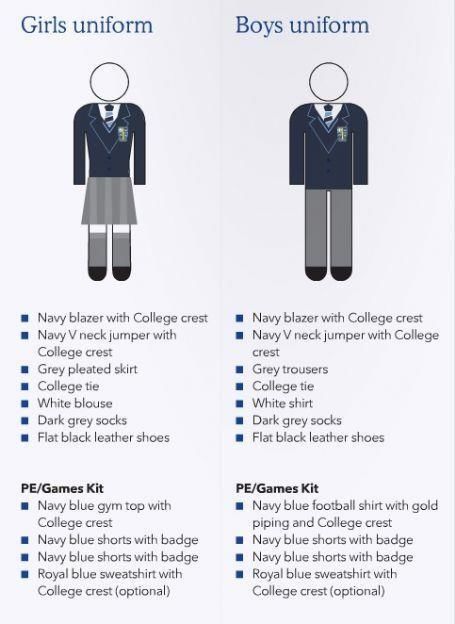
Version Control

Version Number    Version Description     Date of Revision
1                 Updated January 2019    January 2020

2                 January 2020            January 2021

3                 September 2020          September 2022

                           Page 2 of 17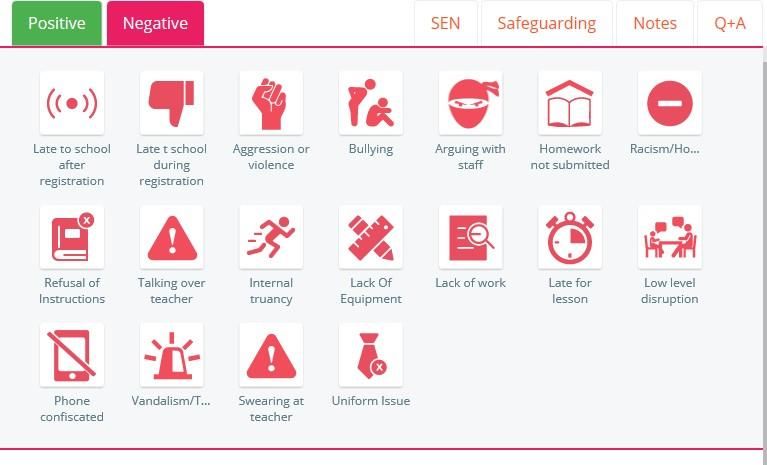
Behaviour For Learning Policy
‘We learn not for school, but for life’
Introduction
At Savio Salesian College we strive to keep alive the charism of St John Bosco, and his belief
in the goodness of God. We endeavour to give our students what they need for life. We
actively work to ensure that our students understand the goodness and love of God. Savio
Salesian College is a fully inclusive school which aims to give every student the opportunity
to access a full and broad curriculum and feel valued and included within the school
community. Good discipline and behaviour in the school community depends on
relationships based on mutual trust and respect. We recognise that positive responses and
affirmation are the means by which we can elicit acceptable behaviour.
Salesian Values
Respect – for oneself, and others, and every opportunity.
Understanding – a commitment to learning and working well with others.
Affection – care and love for each other, always.
Happiness and Humour – Don Bosco loved to make people laugh.
Objectives
To assist pupils to express themselves correctly and appropriately and to promote
self-discipline and self-esteem;
To encourage good behaviour and respect for others and to prevent bullying of any
kind;
To provide opportunities for pupils to take responsibility for their own behaviour and
learning;
To ensure that pupils’ behaviour is acceptable to the community at large;
To create an environment in which pupils feel safe and secure
To encourage pupils to have respect for their learning environment, facilities and
equipment;
To encourage pupils to be equipped for learning with the appropriate equipment.
To provide consistent and effective support for students and staf
Page 3 of 17Rules & Expectations Five main rules:- Positive attitude towards learning Equipment- be fully equipped with PE Kit, calculators, stationery Attend punctually- be on time to school & lessons Correct Uniform – Wear full uniform & have long hair tied back Effort matters – hard work & effort will reap the rewards as all students should aspire to be the best Uniform A high standard of personal appearance is expected of all students and anyone arriving at school in incorrect uniform will be loaned items from Student Services
Expectations

Dark Coats      Must be taken off once in the school building
Bag             Compulsory for everyone -Should be dark and big enough to carry PE kit /
                Books KS£ School Bags provided
                No small handbags or plastic bags
Blazer          Must be worn daily and to all lessons- only to be removed when teacher
                provides permission
Shirt/Blouses   Always tucked in
Tie             Worn at all times
Shoes           Must be flat, leather & can be polished
Hair            Should be tidy , tied back if long and natural colour for practical subjects
Make-up         Minimal make up which isn’t obvious
                No false tan, eyelashes or nail varnish allowed Small
                stud earrings may be worn in Years 9-11
PE kit          Should be brought to school on the relevant days
Planner         Should be placed on the desk for every lesson then checked weekly
                by Form Tutor & Parents
Stationery      All students should bring, pens, pencils, rulers & calculators to school
                in a see-through pencil case
Food            No food or gum should be consumed in the corridors or during
                lessons
Drink           Only water or drinks sold by the canteen are allowed to be
                consumed on site

Travelling to & from School

All Students are ambassadors for Savio Salesian College so their behaviour is meant to be
exemplary at all times.

Attendance is expected daily with students able to access the site from 7.45am for 8.30am
start of school day.

Permission to leave school

Students are only allowed to leave school with permission from SLT or a Progress Leader
having signed out at Student Services.

Rewards
Class Charts introduced in 2020 has enabled the central storage of merit marks with both
students and parents having access via the app.Students have the opportunity to be
recognised for living out our values, for their attitude to learning and excellent attendance
and punctuality to school. Students can be awarded on a daily, weekly and half-termly basis.
Progress Leaders Award: Staff will nominate student per year group for the ‘Progress Leader’ award each half term.Students will receive their award during assemblies. Every Half Term: Progress Leaders will award the top three students in each year group with a certificate and voucher during year group assemblies. There will be opportunities for students to be rewarded with external trips in recognition of their positive attitude towards learning. Students will receive recognition for their attitude towards learning, their contribution towards the whole school ethos and representative honours etc.. When appropriate their parents/carers will receive a letter of recognition, a photo will be published on the newsletter and school website. Departmental Rewards: Each department also has a range of rewards for students linked to ATL. These include: Merit marks recorded on Class Charts Grades on SIMS Stickers and Stamps Postcards of praise Letters home Positive telephone calls to parents Certificates of achievement/effort/progress Attendance & Punctuality Rewards: Students will be rewarded by their Progress Leader half-termly at year group assemblies. The form with the best attendance and punctuality each half term will receive a breakfast of croissant and hot-chocolate during form time. Forms with the best attendance and punctuality will also be publicly recognised at whole school assemblies each term Consequences The Three Cs The Three Cs Policy allows students a chance to stop, reflect on their behaviour and make the right choice. C1 – Chance to Make The Right Choice. The teacher will inform the student of the concern and give them a chance to make the right choice. C2 – Make the Right Choice – Reflection Time. Teachers will make their expectations very clear and explain the student has 2 minutes reflection time to make the right choice otherwise there will be a consequence. The teacher will then walk away from the student.
C3 –Consequence- If the student fails to meet the teacher’s expectations, a consequence will
be issued.
Recording incident on Class Charts & assigning appropriate demerit
Moving a student to another seat
Asking the student to remain behind at the end of the lesson for Restorative
Practice (RP)
Asking the student to return at break time or lunch time for RP
Calling for Subject Leader support
Calling for Senior Leader support
Referral to the Reflection Room
Phone call home to parents/carers
Discussing the matter with the student’s Form Teacher/Progress Leader
Pastoral/Departmental/SLT detention
Sanctions:
Parents/carers will be given regular updates when students are persistently failing to meet
school expectation and invited into the school to discuss their child’s behaviour. Written
referrals will be objective and not subjective when recorded on Class Charts. They will
clearly detail the incident that has occurred and the action taken. Under the Freedom of
Information Act, parents/carers have the right to request to see these documents.
Attitude to Learning Grade 1:
Progress Leaders will monitor registers regularly throughout the day for persistent grade 1
ATL grades. Progress Leaders will intervene as and when needed e.g. internal truancy,
persistent SLT calls. Students who are a persistent cause for concern will be discussed at
briefings and interventions put into place.
Progress Reports:
Any student placed on report must have a meeting with the form teacher and Progress
Leader to ensure expectations are clear. All students on report must report to the allocated
staff member at an agreed point in the day. If a student loses or fails to fulfill expectations a
sanction will be given that day and parents informed. Those students who persistently fail to
meet the school expectation will be referred to the Governor Behaviour Panel.
Restorative Practice:
By adopting restorative practices, we aim to create a healthy and supportive environment
that helps young people grow and make positive changes in their lives. Restorative practices
approach challenging behaviour and conflict in a different way focusing on building and
repairing relationships rather than managing and controlling behavior. Becoming a
restorative school is not a soft option, it does not replace punishment but gives students
and staff the opportunity to ‘put things right.’ By becoming a restorative school we commit
to dealing with conflict in a different way, see conflict as a part of life and see its potential
for learning new skills.Questions to be asked restoratively: -
What’s happened?
What were you thinking about at the time?
What have your thoughts been since?
Who has been affected by what’s happened and in what way?
How can we make the situation better?
The Reflection Room
The Reflection Room is an alternative to fixed term exclusion. This can also be a ‘time out’ to
allow for sanctions and restorative justice. Students who are removed from lessons may be
accommodated in reflection while an alternative placement is sought. Only SLT/Progress
Leader can take the decision to place a student in reflection. On receipt of the official
account of events, a decision will be made regarding any further action.
Aims:
To improve student behaviour through Restorative Practices
To allow time for pupils to reflect upon the consequences of their behaviour
To ensure that student learning can continue during the sanction
To allow students to reintegrate back into school
Procedures:
Students may only be referred to the Reflection Room by SLT/Progress Leader
When an internal exclusion parents/carers will be informed beforehand and
informed of progress at the end of the day
Disruption or non-co-operation may result in immediate fixed term exclusion
Students must remain in the Reflection Room all day including during beak and lunch
times
Students must follow all expectations as laid out in the Reflection Room
Students must remain in the Reflection Room until they have completed detentions
/sanctions
Daily Late Monitored & detention
3+lates Pastoral Detention after school
Lack of homework Departmental action
Removal from lesson Taken to Reflection Room then Subject Tutor
follows up with sanction and contact home
etc.. If there is failure to attend then HOD
follows up
with appropriate sanctions
Multiple removal from lesson Flagged to PL & appropriate sanction
enforced
Persistent removal from lessons or extreme Isolated with identified staff throughout the
behaviour day including break and lunchFailure to meet expectations / sanctions Subject staff liaise with Progress Leaders and
assigned Pastoral post –school detention
Failure to attend Pastoral Detention SLT Detention Friday
Serious breaches of school rules
Class Charts All intercessions must be recorded on Class
Charts identifying the relevant issue
Exclusion
Whilst we do not wish to exclude any child from our school, sometimes this may be
necessary both in terms of fixed-term exclusion and in exceptional circumstances,
permanent exclusion. In some exceptional circumstances it may, in the Headteacher’s
judgment, be appropriate to permanently exclude a child for a first or 'one off' offence. The
school endorses and works within the guidance contained within the Sefton Social Inclusion
system for New Protocol and Negotiated Transfer. These protocols may be used as an
alternative to fixed-term and permanent exclusion from school for those students who
seriously breach this behaviour policy.
Student with Persistent Behavioural Concerns Procedures:
Form Teacher/Subject Teacher Stage 1
RP meeting with Student – Barriers to Learning Log in
SIMS - Contact Parents – Parental Meeting
HOD/Progress Leader Stage 2
RP meeting with student
Log on SIMS - Contact Parents – Parental Meeting
PSP
Review PSP –liaise with SENCO
Pastoral Support Plan
Assistant Head Stage 3
RP meeting with Student
Review all interventions and investigate
alternatives
Log on SIMS
Meet with parents to discuss seriousness of situation –
discuss possibility of New Protocol Governor Behaviour
Panel Meeting arranged
Head of School Stage 4
Log on SIMS
Contact Parents –Meet with parents
No Improvement consider new protocol/permanent
exclusion depending upon individual circumstancesPositive Handling Strategies: Under Government guidelines all members of staff have a legal power to use reasonable force to prevent students committing a criminal offence, injuring themselves or others or damaging property, and to maintain good order and discipline. It is no longer acceptable for schools to have a ‘no contact policy’. At Savio Salesian College we have worked hard to place support structures in place to help create a calm, orderly and supportive climate. As a result, instances of physical restraint are very rare. Powers to Search: Schools are not required to inform parents/carers before a search takes place or to seek their consent to search their child. Headteachers and staff authorised by them have a statutory power to search pupils or their possessions, without consent, where they have reasonable grounds for suspecting that the pupil may have a ‘prohibited item’. (DFE Searching, screening and confiscation, February 2014) Confiscation: School staff can seize any prohibited item found as a result of a search. They can also seize any item, however found, which they consider harmful or detrimental to school discipline. Water may be consumed in lessons with the permission of the class teacher. Any other drinks other than those sold in the dining hall at break or lunch time will be confiscated. Any other prohibited item found shall be confiscated and not returned. Mobile Phones: Mobile phones should not be visible anywhere on school property. If seen they will be confiscated and locked in Student Services for collection at the end of the day. After the phone has been confiscated regularly then Student Services will contact home to arrange collection. Bullying: Bullying because of race, sex, religion, accents, disability or any other feature, is not acceptable in the school and will always be challenged immediately. Incidents will be reported so that patterns of behaviour can be detected, dealt with in accordance with the Anti-Bullying Policy and parents/carers will be informed.
Associated Resources and Legislative Links
Associated Resources:
https://www.gov.uk/government/publications/use-of-reasonable-force-in-schools
https://www.gov.uk/government/publications/searching-screening-and-confiscation
https://www.gov.uk/government/publications/school-exclusion
https://www.gov.uk/government/publications/keeping-children-safe-in-education--2
https://www.gov.uk/government/publications/send-code-of-practice-0-to-25 Legislative
Links:
Education Act 1996
School Standards and Framework Act 1998
Education Act 2002
Education and Inspections Act 2006
School Information (England) Regulations 2008
Equality Act 2010
The Education (Independent School Standards) (Amended) (England) Regulations 2014
Education Act 2011
Schools (Specification and Disposal of Articles) Regulations 2012
The School Behaviour (Determination and Publicising of Measures in Academies) Regulations
2012
Appendices
Behaviour Policy Addendum - Covid-19
Post Lockdown -All students should continue to adhere to the principles outlined in the
Behaviour Policy. In particular, students should be mindful of the following:
RUAH
Respect – for oneself, and others, and every opportunity.
Understanding – a commitment to learning and working well with others.
Affection – care and love for each other, always.
Happiness and Humour – Don Bosco loved to make people laugh.
Students and staff should
Respect the revised day to day expectations of the class ‘bubbles’ /zones and wider school
- children should adhere to the revised rules and expectations for entering and exiting the
school site
- children should stay in their own rooms unless directed otherwise- children should only interact with pupils in their own bubble throughout the school day
- children should only use their designated entrances and exits to the school building
- children should stay at their own desks unless directed otherwise
- children should obey social distancing rules at all times, in and out of the class bubble
- children should follow hygiene rules, including washing hands or using sanitizing statins
when asked to throughout the day
Be aware of and follow expected Self-care and Health needs
- children should inform an adult if they feel they have any Covid-19 symptoms
- children should use tissues when sneezing or coughing and dispose of in bins
- children should only go to the toilet area one at a time and thoroughly (for at least 20
seconds) wash their hands after use
- children should only use their own resource packs, stationery, not interfering or
touching any others’ resources or equipment
- all items used by any child should be sanitized/cleansed after each child’s use
- children should only use their own water bottles and eat/drink their own food. No
sharing is allowed.
Sanctions
In the unfortunate event of misbehaviour, pupils will be given clear, explicit warnings and
reminders of appropriate choices. If, following this, behaviours do not improve, then there will
be an escalation following the behaviour policy- including recording on class charts.
In the event that there are incidents which pose a risk to pupils and staff, parents will be
contacted and children collected from school to ensure the safety of themselves and others.
If any adverse behaviours take place that could affect the health or safety of individual pupils or
staff, then an individual risk assessment may be completed to review the safety of that child on
the school site during the pandemic restrictions (eg spitting, physical attacks, refusal to comply
with H&S/social distancing requirements that could heighten the risk of harm to others).
Behaviour Management
Consistent - Co-operation – Challenge
Remember the ethos & values of our school ‘We learn not for school, but for life’
Each of us must aim to embody the Gospel values of compassion, humility, gentleness,
justice, integrity, forgiveness and hope whilst not forgetting the Salesian ethos of inclusivity
and tolerance. In keep all of these at the heart of our interactions we will ensure that our
students are able to enter the adult world confident and able to make a valued contribution
to society.NEVER UNDER ESTIMATE THE POWER OF POSITIVE WORDS e.g command , praise ,praise ,
praise.
If any Behaviour Management Policy is to be effective, then it requires every member of
staff to play their part.
Form Tutors
Meet & greet at the door or collection point
Immediately address any uniform issues inc Year 7&8 school bags
Students place planners & pencil cases on the desk (sign weekly)
Ensure that students leave your room in full uniform
Collective Act of Worship
Be prepared & organised
Subject Teachers
Meet & greet at the door or collection point –encourage punctuality
Immediately address any uniform issues upon entry
Planners & pencil cases on desks
Ensure no eating/ chewing gum
Seating plan (Learn their names)-data based/ gender / alphabetical/ability
Clear expectations -PEACE rules displayed & enforced
Clear sanctions enforced fairly, consistently & proportionately e.g detentions/
moved seat/ stay behind / warnings/class charts recording
Be prepared & organised
Build positive relationships
Encourage students to positively contribute towards the lesson e.g hands up ,
targeted questioning
What if …..when you have followed procedures and established yourself what NEXT….?
Collaborate with colleagues- ‘buddy’ a student out
Contact home- positive & negative
Work within the line management system
Remember YOU ARE NOT ALONE AND WE ARE ALL IN THIS TOGETHERChance, choice, consequence
C1 Chance:
Staff member to warn pupil of poor behaviour.
Write initials on the board in the C1 section.
C2 Choice:
If the pupil continues to misbehave the staff member will give a second warning.
Write initials in the C2 section.
Remind the pupil that they had a chance and now they have a choice, improve behaviour or a senior
member of staff will be called and a detention issued.
C3 Consequence:
If the poor behaviour has continued tell the pupil that they will now receive a detention
Write initials in the C3 section. C3 incidents
Staff member to inform the pupil of the time and place of the detention. Only one incident to
be logged per lesson.
Staff member to ask for on call. Further details added
Teacher to log the incident on class charts to generate the detention. to notes.
The following incidents will be an immediate C3 and lead to a 40 minute pastoral detention:
Swearing directly at a teacher
Violence or overtly aggressive behaviour towards teacher or other pupils
Detentions
Type Location Time and place
Class teacher Teacher classroom As per teacher agreement
Whole school Main hall Monday, Wednesday,
Thursday for 20, 40 or 60
minutes.
All teachers will be placed onto a rota for the whole school detention system.
Teachers will set detentions via class charts.
Notification emailed to parents.
Teachers to record attendance via class charts.
If a pupil does not attend a detention they will be escalated to the next appropriate level.
There will be a detention list printed on the morning of each whole school detention day
and posted on exam board and in the canteen. Form tutors to remind pupils to check.
1DETENTIONS WITH CLASS CHARTS
The following behaviours will lead to a C3 detention being issued:
Low level disruption
Talking over teacher
Refusal to follow instructions
Lack of work
Arguing with teacher
Vandalism
The following behaviours will lead to a detention being issued:
Late to lesson
Late to specific lesson x2 in a half term (class teacher detention).
Late to any lesson x6 in a half term (40 minute whole school detention).
Late to any lesson 7+ in a half term (60 minute whole school detention).
Phone Confiscated
Phone confiscated x3 (40 minute whole school detention).
Phone confiscated x5 (60 minute whole school detention).
The following behaviours may be recorded but will not lead to a detention in the initial
roll out of class charts:
Homework
Lack of equipment
Lack of uniform
The following behaviours are only to be used by pastoral or student services staff:
Late to school during registration
o Will result in a break time detention set in the Oratory.
Late to school after registration
o Will result in a 20-minute whole school detention being issued.
Truancy
o Will result in a 40-minute whole school detention being issued.
2DETENTIONS WITH CLASS CHARTS
How to set detentions
When you log a C3 on class charts
you will automatically generate a
10-minute detention for that child.
By default all 10 minute detentions
are scheduled for the next Monday.
You will be prompted to choose a
day for your 10-minute detention.
20, 40 and 60 minute detentions
will also be in this list however
these are not to be used.
It is essential to tell the pupils the
time and place of your detention
and if you want the time and place
to be available on the daily print
out please add these details.
When done click create detention
3DETENTIONS WITH CLASS CHARTS
How to log attendance
Click this icon in the top right of the
screen.
Choose detentions from the list
Make sure that today is clicked to Click on this box so only your
see your detentions for that day detentions appear.
Click this box to record attendance at the detention. If they arrive at the detention
but do not behave you may opt to upscale the detention to a 20-minute whole
school detention.
It is essential that staff record attendance at
detentions as pupils will automatically be escalated to
a 20-minute whole school detention 4 hours after the
detention was set.
4You can also read


