SA PGM operations - Investor day (session 3) - 23 September 2021 - The Vault
←
→
Page content transcription
If your browser does not render page correctly, please read the page content below
SA PGM operations – Investor day (session 3)
23 September 2021
SA PGM
operations
Investor day
(session 3)
Long life, high
value assets
23 September 2021
Disclaimer
The information in this announcement may contain forward-looking statements within the meaning of the “safe harbour” provisions of the United States Private Securities Litigation
Reform Act of 1995. These forward-looking statements, including, among others, those relating to Sibanye Stillwater Limited’s (“Sibanye-Stillwater” or the “Group”) financial
positions, business strategies, plans and objectives of management for future operations, are necessarily estimates reflecting the best judgment of the senior management and
directors of Sibanye-Stillwater.
All statements other than statements of historical facts included in this announcement may be forward-looking statements. Forward-looking statements also often use words such
as “will”, “forecast”, “potential”, “estimate”, “expect” and words of similar meaning. By their nature, forward-looking statements involve risk and uncertainty because they relate to
future events and circumstances and should be considered in light of various important factors, including those set forth in this disclaimer. Readers are cautioned not to place
undue reliance on such statements.
The important factors that could cause Sibanye-Stillwater’s actual results, performance or achievements to differ materially from those in the forward-looking statements include,
among others, our future business prospects; financial positions; debt position and our ability to reduce debt leverage; business, political and social conditions in the United States,
South Africa, Zimbabwe and elsewhere; plans and objectives of management for future operations; our ability to obtain the benefits of any streaming arrangements or pipeline
financing; our ability to service our bond instruments; changes in assumptions underlying Sibanye-Stillwater’s estimation of their current mineral reserves and resources; the ability to
achieve anticipated efficiencies and other cost savings in connection with past, ongoing and future acquisitions, as well as at existing operations; our ability to achieve steady
state production at the Blitz project; the success of Sibanye-Stillwater’s business strategy; exploration and development activities; the ability of Sibanye-Stillwater to comply with
requirements that they operate in a sustainable manner; changes in the market price of gold, PGMs and/or uranium; the occurrence of hazards associated with underground and
surface gold, PGMs and uranium mining; the occurrence of labour disruptions and industrial action; the availability, terms and deployment of capital or credit; changes in relevant
government regulations, particularly environmental, tax, health and safety regulations and new legislation affecting water, mining, mineral rights and business ownership, including
any interpretations thereof which may be subject to dispute; the outcome and consequence of any potential or pending litigation or regulatory proceedings or other
environmental, health and safety issues; power disruptions, constraints and cost increases; supply chain shortages and increases in the price of production inputs; fluctuations in
exchange rates, currency devaluations, inflation and other macro-economic monetary policies; the occurrence of temporary stoppages of mines for safety incidents and
unplanned maintenance; the ability to hire and retain senior management or sufficient technically skilled employees, as well as their ability to achieve sufficient representation of
historically disadvantaged South Africans in management positions; failure of information technology and communications systems; the adequacy of insurance coverage;
any social unrest, sickness or natural or man-made disaster at informal settlements in the vicinity of some of Sibanye-Stillwater’s operations; and the impact of HIV, tuberculosis
and the spread of other contagious diseases, such as coronavirus (“COVID-19”). Further details of potential risks and uncertainties affecting Sibanye-Stillwater are described in
Sibanye-Stillwater’s filings with the Johannesburg Stock Exchange and the United States Securities and Exchange Commission, including the Integrated Annual Report and the
Annual Report on Form 20-F.
These forward-looking statements speak only as of the date of the content. Sibanye-Stillwater expressly disclaims any obligation or undertaking to update or revise any forward-
looking statement (except to the extent legally required).

                                                                                                                                                                                       2
Introduction
Richard Stewart, Chief Operating Officer
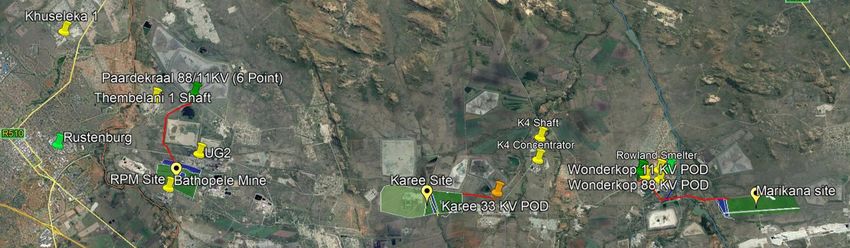
Location of SA PGM operations
                                  Four distinct ore bodies
                                   A. WESTERN LIMB OPERATIONS     B. EASTERN LIMB PROJECTS

                                   Rustenburg 100% (managed)      Blue Ridge 50% (managed)
                                   Kroondal 50% (managed)         Zondernaam 74% (managed)
                                   Marikana 95.3% (managed)       Limpopo (attributable portions of
                                   Platinum Mile 100% (managed)   Baobab, 95.3%
                                   Hoedspruit 74% (managed)       Dwaalkop JV, 45.3%
                                                                  Doornvlei 95.3% (managed)

                                   C. NORTHERN LIMB PROJECTS      D. GREAT DYKE
                                                                  (ZIMBABWE) OPERATION
                                   Akanani 93.1% (managed)
                                                                  Mimosa 50% (non-managed)

                                 Far
                                South
                                 Hill

                                                                                                      4
Overview of Sibanye-Stillwater's SA PGM Western Limb operations

Extensive mineralised strike length with down dip potential

                                                                  5
Acquisition synergies realised to date

                        PGM Integration savings to date

                3,500
                                                                                                                        • Shared overhead cost between
                                                                                                                          Group and other operations
                3,000                                                                                                   • Footprint reduction
                                                                                                                        • Optimisation of surface infrastructure
                2,500
                                                                                                                        • Contract management and
                                                                                                                          procurement synergies
                2,000
   R millions

                                                                                                                        • Closure of Marikana head offices and
                                                                                                                          end of life Generation 1 shafts
                1,500
                                                                                                                        • Streamlining processes and
                                                                                               180              1,830     procedures
                1,000
                                                                                                                        • System alignment and enhancement
                                                                                                                        • Preserved 12,500 jobs at Rustenburg
                 500
                                                                                                                        • Preserved 2,863* jobs at Marikana
                                 1,034                       1,034                           1,034              1,034     (excluding K4 project)
                   0
                                 2017                        2018                             2019              2020

                                                    Aquarius & Rustenburg           Marikana

R2.9 billion in annual synergies realised from the acquisition of Aquarius (Kroondal and Mimosa), Rustenburg and Marikana

Include 2,252 jobs saved at 4B Shaft but excluded 4.380 jobs created when the K4 project reaches steady state                                                 6
Successful completion of the Marikana integration - synergies delivered

                                 Production and operating cost (excl third party processing and by-product credits)                                                       Integration synergy benefits
                       250,000                                                 COVID Lockdown                                           35,000                            visible in Marikana operating
                                            227,466    Acquired                    impact
                                                                                                                                                                          costs
                                                                                                                              194,689   30,000
                       200,000                                                                                                                                            • Q2 2021 vs Q2 2019

                                                                                                                                                 Operating cost R/4E oz
4E production ounces

                                                                                                                                        25,000
                                                                                                                                                                            - 12% nominal improvement
                       150,000                                                                                                                                                in operating unit cost
                                                                                                                                        20,000
                                            20,021
                                                                                                                               18,039                                         despite 14% less ounces
                                                                                                                                        15,000
                       100,000                                                                                                                                                produced (post Generation
                                                                                                                                        10,000                                1 shaft closures in 2019)
                        50,000
                                                                                                                                        5,000

                            0                                                                                                           0
                                  Q1 2019   Q2 2019    Q3 2019    Q4 2019   Q1 2020   Q2 2020   Q3 2020   Q4 2020   Q1 2021   Q2 2021

                                                      PGM 4E ounces                   Operating cost

              Annual synergies of R1.8bn (excluding potential processing synergies)

                                                                                                                                                                                                    7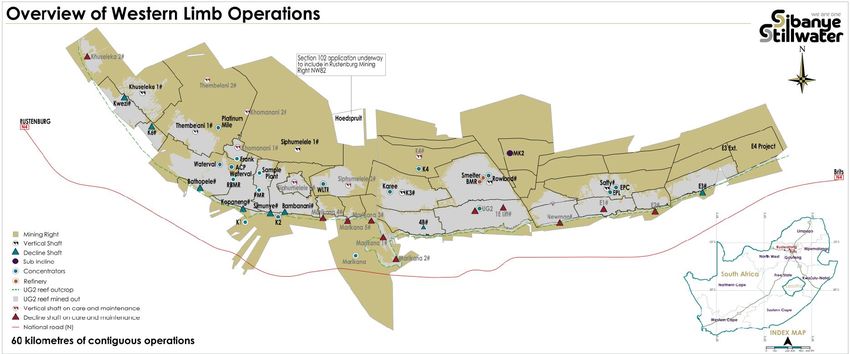
SA PGM operations moving down the industry cost curve
Global PGM Cash cost curve (CY21E- At Spot)
Cumulative Annual Production (4E Koz)
0 500 1,000 1,500 2,000 2,500 3,000 3,500 4,000 4,500 5,000 5,500 6,000 6,500 7,000 7,500 8,000 8,500 9,000
60,000 60,000
Spot PGM basket price received
Cash Cost and Basket Price (R/oz)
50,000 50,000
40,000 40,000
30,000 30,000
20,000 20,000
10,000 10,000
- 0
Sylvania Dumps (SLP)
Two Rivers (ARM/IMP)
Modikwa (ARM/AMS)
Zondereinde (NHM)
Mogalakwena (AMS)
Booysendal (NHM)
Amandelbult (AMS)
Kroondal (SSW/AMS)
Impala Mine (IMP)
Stillwater (SSW)
Unki (AMS)
LDI (IMP)
Mototolo (AMS)
BRPM (RBP)
Marula (IMP)
Tharisa (THA)
Zimplats (IMP)
Mimosa (IMP/SSW)
Styldrift (RBP)
Marikana (SSW)
Union (SIY)
Rustenburg (SSW)
Successful integration and realisation of synergies has moved Rustenburg and Marikana significantly down the cost curve
Source: Nedbank 8
Extensive resources and reserves*
     • Reserve estimate are based on a three-year trailing average price assumption

 SA PGM OPERATIONS                                                       6E PGM Mineral Resources (%)                   6E PGM Mineral Reserves (%)

Current life of mine (LOM) (at 31 Dec 2020)                                              27%                                              3%   3%
• Kroondal 11 years                                                                                                                                   6%

• Mimosa 11 years
                                                                         1%
• Marikana over 40 years                                                2%                                             34%
                                                                       1%
• Rustenburg 32 years
                                                                                   6E PGM mineral                               6E PGM mineral
• Surface sources
                                                                                    resources (%)                                 reserves (%)
     - Rustenburg 7 years
     - Marikana (Bulk Tailing Treatment) 5 years                                        Total                                         Total
                                                                                      350.8 Moz                                    46.36 Moz
 SA PGM operations                              % of 6E contribution
                                                                       27%
                                                                 50%                                          42%
Platinum
Palladium                                                        25%
                                                                                                                                                       54%
Rhodium                                                          7%

Gold                                                             2%
                                                                              Marikana         Rustenburg   Kroondal
Ruthenium                                                        13%
                                                                              Mimosa           Tailings     Projects
Iridium                                                          3%

 Reserves support long operational lives with extensive resources providing significant optionality

 •    PGM resources are inclusive of reserves
 •    Represents attributable figures from Mimosa and Kroondal
                                                                                                                                                             9
SA PGM operations production profile
Underground (attributable) and surface production
2,000,000
Forecast
1,600,000
4E PGM ounces
1,200,000
800,000
400,000
0
2016 2017 2018 2019 2020 2021 2022 2023 2024 2025 2026 2027 2028 2029 2030 2031 2032 2033 2034 2035 2036 2037 2038 2039 2040
Mimosa Kroondal Rustenburg Marikana Surface Projects (K4 and Klipfontein)
Long life PGM profile – delivering significant, sustainable benefits for all stakeholders
Note: Graph based on Reserves declared as at 31 December 2020. Current life of mine include K4 and Klipfontein. Price assumptions are available for reference in the appendix 10Significant development potential from extensive PGM Mineral Resources
Reserve
SA project pipeline Area Name /Resource Est
(Moz)
1 Marikana K4 (Both) Execution 13,43
17 2 Marikana E3D (UG2) FS Complete 2,75
13 15 3 KDL Klipfontein (UG2) Waiting 0,13
11 3
10 6 5
12
1 4 Siphumelele 1 (UG2) Upper 4,89
18
19 4 2 5 Siphumelele 1 (UG2) Lower 4,35
7
9 8 6 Marikana E4 (UG2) 6,03
16 20 7 Thembelani extension (MER) 5,23
8 Kroondal 5# (UG2) MK5 2,16
14
Project Status 9 KDL Tailings (3 dams) Meccano 2,37
10 Kwezi/K6 shallows 0,27 - 1,06
Feasibility complete
Pre-Feasibility phase 11 Saffy Deeps (UG2) 12,89
12 Boschfontein (UG2) 0,95
Concept phase
13 Pandora Deeps (UG2) 7,69
14 MK2 Decline (Both) 5,26
15 Baobab 5,04
5-10 years 2-5 years To complete 2021 Completed 16 Akanani 27,6
17 Blue Ridge 1,8
18 Marikana Tailings 0,75
INCREASING CONFIDENCE / LESS RISK 19 Retreatment of Paardekraal Tailings In progress
20 Retreatment of ETD2 Tailings In progress
Potential for ongoing metal supply through project development in supportive environment
* Note: Refer to full project pipeline slide in the appendix 11Potential SA PGM production profile assuming development of key projects
Underground (attributable) and surface production(plus projects)
2,000,000
1,600,000
4E PGM ounces
1,200,000
800,000
400,000
0
2021 2022 2023 2024 2025 2026 2027 2028 2029 2030 2031 2032 2033 2034 2035 2036 2037 2038 2039 2040
Current LOM Kroondal - Klipfontein Marikana - E3 Deeps E4 Saffy Deeps Them Mer Ext Sip UG2
Long life assets with significant optionaility- flexibility to meet future demand requirements in supportive environment
Note: Graph based on Reserves declared as at 31 December 2020. Current life of mine (LOM) include K4 and Klipfontein. Price assumptions are available for reference in the appendix 12Overview of the SA PGM operations Dawie van Aswegen, EVP SA PGM operations
SA PGM operations leadership

                                                            EVP SA PGM Operations
                                                             Dawie van Aswegen

     Act SVP & Head           SVP & Head             SVP & Head                SVP & Head           SVP & Head             SVP & Head
        of Human               of Finance           of Technical         of Mining Rustenburg    of Mining Kroondal    of Mining Marikana
        Resources                                   & Integration              Operations            Operations
     Norman Nxumalo       Roderick Mugovhani       Kevin Robertson          Floyd Masemula      Bonginkosi Nqgulunga     Johann Kleyn

Experienced leadership and succession plan ensures continuity and consistency

                                                                                                                                            14
Safety performance
• ISO 45001 accreditation to be achieved during 2021 (Marikana already accredited)
• ICMM reporting adopted and added total recordable injury frequency rate (TRIFR) as a new KPI since the start of 2021
Achievements
Fatal injury frequency rate - SA PGM1
Kroondal operation • 2,000,000 FFS2
Rustenburg operation • 1,000,000 FFS
Rate per million hours worked
Marikana operation • 3,000,000 FFS
SA PGM Surface operation • 5,000,000 FFS
SA PGM plants & concentrators • 13,000,000 FFS
Total SA PGM operations • 4,000,000 FFS
0.11 0.04 0.04 0.05 0.06 0.02
2016 2017 2018 2019 2020 YTD 2021
Working towards zero harm with initiatives aligned to Group Zero harm framework
1. SA PGM operations had a workforce of 46,385 (including contractors) people at end Dec 2020
2. Fatal free shifts (FFS) 15Planned ounces and costs
Underground operations
• Lower cost K4 and Klipfontein projects
2,000,000 21,000
approved in Q1 2021 - maintain
consistent profile
18,000
1,600,000 • AISC influenced by
royalty assumptions and basket price
Production (4E ounces)
15,000
movement
1,200,000 • Marikana integration savings
12,000
R/4Eoz
fully embedded
9,000 • Fit for growth procurement
800,000
savings included in contracts and
6,000 stores. Labour costs are estimated as per
2019 wage agreements
400,000
3,000 • 3-year trailing metal prices used to
estimate the by-product credits and
0 0 royalties in line with the SARS regulations
2021 2022 2023 2024 2025 2026 2027 2028 2029 2030
• NERSA guidance followed for
future electricity tariffs
Mimosa Marikana Kroondal Rustenburg Operating cost R/4Eoz AISC R/4Eoz
AISC and operating cost are consistent
Note:
• Production profiles based on the 2020 LOM reserve and resources plan. Assumes attributable (50%) production from Mimosa and Kroondal
• Costs are represented at 2021 real terms
• Assumed exchange rate for conversion of Mimosa costs: R15.00/US$ 16Surface sources – planned ounces and cost
Surface operations
• Includes Marikana Bulk tailings
160,000 25,000 treatment plant (BTT), Rustenburg
Western limb tailings retreatment
plant and Platinum Mile
20,000
120,000 • Platinum Mile holding increased from
91.7% to 100% in H1 2021
15,000 • Current surface processing forecast
4E ounces
R/4Eoz
to end in 2027
80,000
10,000
• Assessment of BTT opportunity and
WLTRP treatment of Marikana tailings
could extend LOM up to 20 years
40,000
5,000 • AISC benefit from by-product credits
0 0
2021 2022 2023 2024 2025 2026 2027
Rustenburg Marikana Platinum Mile Operating cost R/4Eoz AISC R/4Eoz
Option to increase LOM by up to 20 years being assessed
Note: Costs are represented at 2021 real terms 17Planned underground average head grade and recoveries
Underground operations
5.0 90%
85%
4.0
80%
Head grade g/t
Recovery %
3.0
75%
2.0
70%
1.0
65%
0.0 60%
2021 2022 2023 2024 2025 2026 2027 2028 2029 2030
Kroondal - head grade Mimosa - head grade Rustenburg - head grade Marikana - head grade
Kroondal - recoveries Mimosa - recoveries Rustenburg - recoveries Marikana - recoveries
Consistent LOM grade and recoveries ensures stable production
18Planned capital expenditure (base)
4,000 • Sufficient estimation of SIB Capital
at 10% to 12% of operating cost,
3,500 and ending capital spend 4 years
prior to closing an assets as to
3,000 eliminate over capitalising
2,500 • Marikana smelting and refining
compliance capital
R million
2,000
• Continuous Ore Reserve
1,500 Development (ORD) at the
conventional shafts
1,000
500
0
2021 2022 2023 2024 2025 2026 2027 2028 2029 2030
Kroondal - SIB Rustenburg - ORD Rustenburg - SIB Marikana - ORD* Marikana - SIB
Long-life assets with potential to mining through boundaries
Note:
• Capital expenditure in 2021 real terms. SIB: Stay-in-business capital, ORD: Ore reserve development
• Assumed exchange rate for conversion of Mimosa capital expenditure: R15.00/US$
• Represents attributable capital from Kroondal 19Base metals in concentrate profile
Total operations – base metals profile
12,000
10,000
8,000
Tonnes
6,000
4,000
2,000
0
2021 2022 2023 2024 2025 2026 2027 2028 2029 2030
Nickel Copper
Significant base metal produced as by-product from base metals refinery – existing hydrometallurgical processing expertise and knowledge
20Processing assets – competitive exposure to full value chain, from mine-to-market
Concentrators Furnace reliability
• Adequate capacity and flexibility to treat both underground and surface
Tonnes Smelted Between Failures
material
Smelting and refining
• Continued optimisation of furnaces through innovation and implementation of
industry best practice standards ensuring ongoing reliability
- Multiple design improvements
- Stricter adherence to operating parameters
Jan-03 Nov-04 Mar-06 Dec-06 May-09 Mar-10 Nov-14 Oct-17 Current
- Improved monitoring of furnaces
Furnace 1 Furnace 2
• Optimally utilise our smelter capacity taking into account the required ore
blend
• Potential creation of additional value through utilization of available Base
Metal Refinery (~50%) and Precious Metal Refinery (~50%) capacity
• Aligning processing strategy with future opportunities
Embedding ESG
• Currently meeting legislative limits. Future ESG projects will focus on reducing
SO2 further
A competitive advantage and strategic differentiator - available capacity throughout processing stream provides significant optionality
21Chrome David Kovarsky, SVP Chrome
Chrome production profile

                                                                                                                                              • Chrome produced as a by-product of PGM
                    Underground operations – chrome production profile                                                                          production –
    2,000,000                                                                                                               800
                                                                                                                                                - Primarily derived from UG2 reef
                                                                                                                                               - Grade of approximately 40.5% chrome.
    1,600,000                                                                                                                                  - Produced by standalone chrome recovery plants
                                                                                                                            600
                                                                                                                                               - Included in gross revenue and as a credit to AISC

    1,200,000                                                                                                                                  - Direct mining costs not allocated to chrome
                                                                                                                                                 production

                                                                                                                                  R million
Tonnes

                                                                                                                            400
                                                                                                                                              • 2021 full economic benefit on ~800,000 tonnes, an
         800,000                                                                                                                                increase in 2021 of 90,000 tonnes when the contract
                                                                                                                                                to supply Samancor expired in 2020
                                                                                                                            200               • Legacy agreements yield varying amounts received
         400,000                                                                                                                                for chrome , some below market prices
                                                                                                                                              • Since acquisition, chrome plants achieved
                                                                                                                                                production growth
              0                                                                                                             0
                   2021       2022      2023       2024      2025       2026      2027       2028      2029       2030                        • The South African ferrochrome industry has proposed
                   Marikana - below market                                            Kroondal - below market                                   a chrome export tax. This proposal is being opposed
                   Kroondal - market related                                          Marikana - market related
                                                                                                                                                strongly by primary chrome ore and UG2 producers
                                                                                                                                                as it could lead to lower sales and job losses
                   Rustenburg - market related                                        Kroondal -Contribution to revenue
                   Rustenburg - Contribution to revenue                               Marikana - Contribution to revenue

    Chrome is a significant contributor to profitability of SA PGM operations
    Note: Beneficial tonnes are sold at market related prices with little or no value realised from non-beneficial tonnes
    Gross revenue assumes a chrome price of R2,600 per tonne                                                                                                                                         23
Financial aspects Roderick Mugovhani, SVP: Finance
SA PGM operating cost breakdown

              Operating costs classification (%)
                                                                         • Labour cost includes salaries, incentives, overtime and company
                                3%                                         contributions
                           7%
                                                                         • Stores and material includes higher than inflation rates of steel,
                                                                           explosives and underground support
                                                                         • Overheads incorporate Group and services charges
                                          43%
               25%
                                                                         • Fit for growth ( FFG) initiatives focus on the reduction of contract
                                                                           expenditure (c. R800m for the SA Region)
                                                                         • Some contractor's expenses are driven by exchange rate pressures

                     5%
                                                                         • Continuous footprint reduction as a result of further integration initiatives
                          4%                                             • Excludes ORD and SIB capital
                               4%    9%
                                                                         • Compliance to ESG requirements, in particular to Marikana smelting and
        Salaries and wages                 Utilities                       refining complex
        Chrome transport etc cost          Rustenburg toll charges
        Overheads                          Consumables
        Contractors                        Other

Consolidation of cost from the total segment that is made up of Conventional and Mechanised shafts

Based on HY1-2021 Operating
Additional COVID-19 cost included
Excludes the 3rd party purchases                                                                                                                      25
SA PGM operating cost breakdown by operation
0% 1%
9% 6%
3% 10%
37%
20% 40%
Rustenburg – 28% Marikana – 48% Kroondal –
operating costs operating costs operating costs
31%
classification classification classification
5%
11% 6%
8%
10% 2%
5% 8% 6% 7%
Salaries and wages Utilities Salaries and wages Utilities Salaries and wages Utilities
Chrome transport etc cost Rustenburg toll charges Chrome transport etc cost Overheads Chrome transport etc cost Overheads
Overheads Consumables Consumables Contractors Consumables Contractors
Contractors Other Other Other
Conventional shafts at Rustenburg and Marikana are more labour intensive resulting in higher proportion of salaries and wages
Marikana includes the Smelting and refining operations
Rustenburg operations labour cost incorporates the Bathopele Mechanized shaft cost
26SA PGM fixed and variable cost breakdown per operation (operating cost)
70%
• Based on steady state
59.4% operations, normalised for COVID-
60% 57.5%
56.1% 55.1% 19 lockdowns
50% • Combination of all the operations
43.9% 44.9% on a 100% basis
42.5%
40.6%
% Allocation
40% • Fixed costs consist mainly of labour
costs, electricity, overheads
30% and contractors
• Mechanised operations have less
20%
fixed to variable cost ratio
• Variable costs are linked
10%
to production output, i.e. stores,
incentives and overtime shifts
0%
Rustenburg Marikana Kroondal SA PGM operations
Variable Fixed
Lower proportion of fixed cost at the mechanised operations, i.e. Bathopele Shaft at Rustenburg and Kroondal operations
27H1 2021 reconciliation of AISC (R/4Eoz) – excluding 3rd party purchases at Marikana
25,000
• All-in sustaining cost (AISC) was
developed and generally
20,000 adopted by the global gold
industry to ensure consistent and
comparable reporting of costs
15,000
• Includes by-product revenue that
R/4Eoz
is offset as a credit against costs
10,000 • 3rd party purchases of
concentrate accounted for
additional R1,914/4Eoz AISC
5,000
for H1 2021
- Significant revenue benefit from
0 third party processing and
Operating SIB Capital ORD Capital Controllable - Sundry Royalty tax By-product AISC excl POC
improved capacity utilisation
cost AISC expenses credits
Impact of by-product credits in the AISC influenced by price movement of Ir, Ru, Cr, Cu, Ni and other by-products
SIB: Stay-in-business capital, ORD: Ore reserve development
28Significant value in "by-product" PGMs
% Price increases of iridium and ruthenium Positive impact of by-
2,000
1,800
product credits • By-product revenues offset cost
1,600 in the AISC calculation (credit
1,400
1,200 against costs)
1,000 H1 2021
800
600 • Growth in by-product credits
400
200 2020
from other PGM metals Iridium –
0 731%, Ruthenium - 1680%
Oct-16
Dec-16
Oct-17
Dec-17
Oct-18
Dec-18
Oct-19
Dec-19
Oct-20
Dec-20
Feb-17
Apr-17
Feb-18
Apr-18
Feb-19
Apr-19
Feb-20
Apr-20
Feb-21
Apr-21
Jun-17
Aug-17
Jun-18
Aug-18
Jun-19
Aug-19
Jun-20
Aug-20
Jun-21
Aug-21
2019 • Base metal by-product credit
Iridium Ruthenium growth Copper – 198% and
% Price increases of nickel and copper Nickel - 187%
250 2018
• Increase in by-product credit
200
prices during 2021 contributing
150 2017
to significant increase in
100 operating profit
50 2016 − By-products accounted for
0
R4,139/4Eoz reduction in AISC for
H1 2021
Oct-16
Dec-16
Oct-17
Dec-17
Oct-18
Dec-18
Oct-19
Dec-19
Oct-20
Dec-20 0 2,000 4,000 6,000
Feb-17
Apr-17
Feb-18
Apr-18
Feb-19
Apr-19
Feb-20
Apr-20
Feb-21
Apr-21
Jun-17
Jun-18
Jun-19
Jun-20
Jun-21
Aug-17
Aug-18
Aug-19
Aug-20
Aug-21
R/4Eoz
Nickel Copper
By-product benefits realised in increased revenue and lower AISC
29SA PGM projects Ralph Lombard, SVP Projects (Group Technical)
K4 project – unrivalled PGM brownfields project
 • Mining both Merensky and UG2 reefs to a depth of 1,287m
 • Project significantly predeveloped by Lonmin – most infrastructure already
   in place:
   - equipped and functional vertical shaft to a depth of 1,332m
   - equipped and functional ventilation shaft to a depth of 1,078m
   - functional 130,000 tpm concentrator
   - existing surface infrastructure such as offices, change houses,
     refrigeration plants, grout plants, etc.
   - stations and station crosscuts
 • Project progress
   - Key project personnel sourced & EPCM contractor in place
   - Infrastructure & mining early works commenced – major focus areas for
     next 9 months
   - Mining activities on track to commence Q2, 2022
   - Design on track with a focus on ESG friendly solutions

Regional social and economic benefits
 • Ensures sustainability of Marikana operations for over 50 years
 • Significant investment in local economy
 • Will provide ~4,380 jobs at steady state
 • Meaningful opportunities for local procurement,
   SMME development and skills transfer

                                                                                31
K4 project – unrivalled tier 1 PGM project
Key statistics (2021 terms) LoM capital expenditure profile (R million)
• Project capex* of ~R4.0bn over 1,200
8 years - majority during first 3 1,000
years 800
• Steady state (2030-2063) 600
~250koz per annum 400
• Average operating cost ~ 200
R16,051/4Eoz (R16,000/oz at
0
steady state)
2021
2022
2023
2024
2025
2026
2027
2028
2029
2030
2031
2032
2033
2034
2035
2036
2037
2038
2039
2040
2041
2042
2043
2044
2045
2046
2047
2048
2049
2050
2051
2052
2053
2054
2055
2056
2057
2058
2059
2060
2061
2062
2063
2064
2065
2066
2067
2068
2069
2070
2071
• Six years payback
• ~11.5m 4Eoz produced
over 50 year life of mine ORD SIB TSF Infrastructure
• NPV (15% real discount rate
– R3bn at assumed project Commodity price and exchange rate assumptions
prices Metal price Unit 2021 Thereafter
• IRR 33% at assumed prices Platinum US$/oz 900 880
Palladium US$/oz 1,900 1,600
Rhodium US$/oz 8,500 5,650
Gold US$/oz 1,605 1,500
ZAR/USD ZAR/US$ 15.50 15.00
Low capital intensity, short lead time, superior return on investment
* Inclusive of TSF, excluding ORD and SIB capex 32Klipfontein PGM project – shallow, open pit
• Open pit operation adjacent to Kroondal East Bambanani shaft Klipfontein – expected 4E PGM oz production
• UG2 reef will be mined to depth of ~45m
• 50/50 JV with Anglo American Platinum (under the current PSA)
• Key statistics (2021 terms) – 100%#
- R66m project capital*
- S102 approved by DMRE
- Ore will be transported and treated at the K2 Concentrator
- Average steady state production (2022-2024) ~37,000 4Eoz per year
- Average operating cost of R8,754/4Eoz (R8,622/oz at steady state)
- 118,250oz produced over 3 year life
- NPV (15% real) ~ R740m at assumed prices
- IRR 70% at assumed prices
- 4-month payback
UG crown pillar
• Initiated project ‘kick off’ on 11 August 2021
Regional social and economic benefits
• Providing 124 jobs - contractor to source local labour
Open pit
• Creating opportunities for local procurement and SMME development Mining limit
• Rehabilitation to agricultural farm-land status, at the end of the project
* Excluding SIB capex Surface topography
# Numbers quoted as 100% for the project. Sibanye-Stillwater will have 50% attributable 33Value creation through sustainability Jevon Martin, Head of Energy & Decarbonisation Grant Stuart, SVP Environment Thabisile Phumo, SVP Stakeholder Relations
SA PGM operations' role in the Group journey to carbon neutrality
                                Our path to carbon neutral by 2040
                                 • Long-term GHG emissions reduce naturally with declining PGM
                                   production profile
                                 • Benefits from National renewable energy plan towards 2040
     SA PGM operations           • Various proactive initiatives underway to further accelerate our
    currently account for          decarbonisation plan
       310MW or 39%             Demand side energy management
 of Group energy demand
                                 • Advance energy management – 60,201 tCO2e of GHG emissions
               82                  reduced in 2020 through:
               3%                  - Integrated and dynamic digital twin simulations
                                   - Compressed air optimization
         Total CO2e                - Pumping system improvements
      emissions (2020):            - Ventilation system enhancement
       Scope 1 & 2                 - Energy culture and awareness campaigns
        (000t CO2e)             Strategic energy sourcing
                                 • 175MW solar projects (overleaf) at SA PGM operations                  Remotely-operated battery LHD to be trialed
              2,472              • Allocation of wind energy benefits through wheeling
              97%                • Investigation of coal input alternatives for the Marikana smelter
                                Technology adoption
                                 • Investigation of battery electric vehicle opportunities, including
    Scope 1           Scope 2
                                   trialing of remotely-operated, battery electric vehicles and Li-ion
                                   battery locomotives at K4
                                Scope 3 and carbon offsets
 97% of current operational      • Development of Scope 3 targets and a carbon offset strategy to
 emissions from Eskom coal         address remnant hard-to-abate emissions
        fired power

Electricity will remain the focus as the primary contributor to operational emissions
                                                                                                                                                       35
SA PGM operations' role in the Group journey to carbon neutrality
80MW
RPM 4 65MW BMR 2 30MW
• Feasibility study for three on-site Solar PV projects completed: • Total capital cost of R2.5-2.8bn to be finance through three separate
− Plant sizing based on comprehensive study, including life of PPA arrangements
mine analysis, allowing for up 175MWp − Minimal capital outlay with access to renewable electricity at a
− Available land at RPM and Marikana with scope for future 30-50% (solar) discount to grid electricity, escalating at CPI
expansion − Reduction of GHG emissions and future carbon tax liabilities
− No fatal flaws to process • Target financial close H1 2023, with commercial operation early 2025
− Viable technical solutions for electrical connections into the − Critical lead items include permitting processes and have been
corresponding substations initiated
Recent regulatory reforms and less obstructive approach have catalysed progress
36Rehabilitation obligations
Planning and execution for sustainable post-mining socio-economic closure within local communities
ACHIEVEMENTS CLOSURE LIABILITY CONCURRENT REHABILITATION
• Development of regional closure strategy and • 2020 liability assessment independently • Rehabilitation of the Klipfontein Concentrator
plans that include fit for purpose post-mining assessed in accordance with closure plans (before)
land uses • Externally assessed and audited closure
• Advanced concurrent rehabilitation initiatives in liabilities in accordance with GN R. 1147
collaboration with local small medium • Closure liabilities funded through funds in trust
enterprises Toandachieve
guarantee an insurance
agreed safe, stable, non-
policies
• Potentially leverage 50.1% stake in DRDGOLD to polluting and aesthetically aligned regional
exploit surface rehabilitation opportunities post-mining
2% solution, supporting the
• Footprint reduction initiatives (Klipfontein creation of sustainable communities,
Concentrator) 26%
− 100% local and black owned company conservation areas that will deliver clean
40% and regional catchments,
water to local
− Skills development and employment from
local community and enable sustainable post mining
− Total liability reduction – R40.6m economies and ecosystems.
30%
• Deposition into pits in accordance with • Rehabilitation of the
2%
environmental authorisations (R1bn) Klipfontein Concentrator
Rustenburg
Blue Ridge
Kroondal
Marikana
(after)
• R4.7bn estimated closure liability – 9% over
funded through cash in trust and guarantees
Planning for long term economic sustainability over the 20 year + life of mine: integrated post mining economy
37Tailings management
We commit to zero harm at all stages of tailings lifecycle
EMPOWERED & ENABLED ACCOUNTABILITY GOVERNANCE STRUCTURE IN DEVELOPMENT
• Accountable Executive responsible to the CEO • International Council of Mines and Metals (ICMM)
• Appointed VP Tailings Engineer for the Group
Board
commitments:
• Internationally recognised Independent Tailings Tailings Policy Policy Assurance
• Tailings Management System – Done
Review Board established • Compliance for “Very High” or “Extreme” TSFs
• Tailings Working Group established across SA PGM
Executive – August 2023
• Consolidated risk management • Compliance for TSF balance – Aug 2025
Governance Governance Assurance
• Increased awareness and elevation of risk
Framework
• Re-classification to GISTM consequence matrix
• Engineering consulting companies and Engineers of
Independent Tailings
Review Board
Tailings Engineering • 16% complete with 74% end 2022
Record appointed Hazard classification as per SANS 10286*
Standards Standards Assurance
• Appointment of Concentrator Managers as the
1 1
Responsible Tailings Facility Engineer Operations
Owner, RTFE
• Support provided by VP Tailings and Engineers
of Record KPI’s, TARPs and
Systems
Conformance Assurance 5
• Digital platform developed on PIVOT application for Tailings Storage Facility Engineer of Record
consolidated GISTM conformance audits with action Operator and Support Engineering Consultant
tracking for monthly audits and consolidated
reporting of progress 16
• Group Tailings Management System framework
• Group representation on ICMM Tailings Working drafted
Group
• Terms of References for internal and external Active High Dormant High
• Internal competence training to ensure ownership
appointees drafted Active Med Dormant Med
and reduce external reliance
Group Tailings Management System (GTMS) aligned to the Global Industry Standard for Tailings Management (GISTM)
*SANS 10286 (1998) using Empirical Methodology
38Optimising a critical resource- water use management strategy
Water security strategy supporting climate change resilience and sustainable economies
WATER SECURITY STRATEGY OBJECTIVE AND COMMITTMENT WATER CONSERVATION SUCCESS
• Collaborative engagement Responsible and collaborative water • Reduction of more than 1,400 Ml (11%) in
• Actively participate in regional catchment management by driving water security and potable water purchases 2020 compared to
management forums independence strategies with compliance 2019
to regulatory requirements, building a climate • 18% reduction in potable water purchases since
• Marikana integration
resilient business in anticipation of responsible 2018*
• Water harvesting and storage opportunities To achieve an agreed safe, stable, non-
closure
• Water conservation and water demand polluting and aesthetically aligned regional SA PGM Consumption (Ml)
management plans post-mining solution, supporting the 1,400
• Predictive water balance management creation of sustainable communities, 1,200
conservation areas that will deliver clean 1,000
water to local and regional
Platinum (%) catchments, 800
ML
and enable
65% sustainable post mining
0.9kl/ton 600
(excluding rain)
economies and ecosystems. 400
200
• Stringent monitoring and transparent reporting
-
− Smart water management through online
monitoring through the Zednet platform
− Group water CDP disclosure submitted July Rustenburg (Ml) Kroondal (Ml)
2021 Marikana (Ml) Target Consumption
The SA PGM operations are well placed to realise ISO 14001: 2015 accreditation by end 2021 with the accreditation for Kroondal processing (Boabab K1, K2), Kroondal and RPM mining received in September 2021
Water consumption reduced by 15%, 22% and 21% across Marikana, Kroondal and Rustenburg respectively from 2018 - 2020
* Including Marikana operations for 2018 pre-ownership
39Making real changes to transform and create value for all stakeholders
Restructuring of the Marikana empowerment structure
• Previous structure non-beneficial with substantial debt burden Investing in projects results in job security and opportunities
• New sustainable B-BBEE financing structure with immediate access to
• K4 and Klipfontein will employ > 4,500 jobs at steady state
distributable cash flow and the ongoing transfer of tangible value
Contributing to the fiscus and social imperatives
• Securing the licence to operate for these operations
• Sibanye-Stillwater royalties and taxes* of R10.3bn for H1 2021 alone
Social relief via BEE structures & employee profit share schemes
• Delivering on Social and labour plans for each mining licence
• R145m paid to Rustenburg BEE structures & R64m to
• Employee voluntary contribution scheme
employees via profit share scheme (ESOP) since acquisition
• Sponsorships to universities, bursaries and learnerships
• R91m paid to Marikana empowerment structures & R521m paid to
Marikana employees trust (ESOP) for 2020 year
Marikana Renewal
Our contribution to the community has been through 80# Social and
District Development
Programme – Towards 2022 Model
labour plan projects at SA PGM operations
LETSEMA ENGAGEMENT STAKEHOLDER
Health sector
PROCESS COLLABORATIVE PROCESS ✓ We partnered with the North West province Department of Health to improve
health services in the region through construction of clinics & forensic mortuary
Our focus on honour, engage and create is delivered in partnership with ✓ Mobile clinics
stakeholders to ensure:
• Honor the legacy of Marikana and facilitate healing for families and the injured Education sector
• Pursue justice and restitution for the affected and impacted ✓ In partnership with NW Department of Basic Education we have rolled out our
• Social redress though the delivery of social infrastructure that benefits Early Childhood Development Programme comprising upgrade of facilities,
communities teacher training and learning infrastructure and material
• Contribute to the District Development Model and promote the development ✓ We have constructed new schools and extensions of several schools
of alternative economic streams in the region
Our mining
Our improves
mining improveslives
lives
• As per Group Cash flow statement
• # Of which 55 project have been completed and 25 are in progress. Includes projects from Rustenburg, Kroondal and Marikana (various mining licences) 40Conclusion Richard Stewart, Chief Operating Officer
Key highlights |SA PGM operations

                                                    • Aligned to Group zero harm safety framework – notable safety milestones achieved
     Highest safety standards                       • ISO 45001 accreditation to be achieved during 2021 (Marikana already accredited)

                                                    • Significant cost and operational synergies realised through consolidation and integration – delivering
     Integrated, contiguous operations                sustainable value
                                                    • Potential for ongoing synergies – delivering real cost benefits (cross boundary mining, projects)

                                                    • Sizeable reserves and resources to support long operating long life >40 years and provide significant
     Long life assets with sizeable resources         optionality

     Processing capacity and optionality            • Competitive advantage from existing processing capability and capacity provides significant optionality

                                                    • Proactive stakeholder engagement with specific programmes to address regional legacy
     Extensive community and ESG programmes         • Path to carbon neutral
                                                    • Pragmatic approach to Environmental water management

                                                    • K4 project best project in industry with most of the upfront capital sunk
     World class, low risk Brownfields projects     • Klipfontein, low capital intensity with near term production – high return

                                                    • Leading position in PGM industry established through rapid execution of M&A
     Decisively executed growth strategy            • Payback on investment within 4 years ensures significant future value for all stakeholders

A sizeable, long life PGM mining and processing business, well positioned for ongoing creation of superior value for all stakeholders

                                                                                                                                                                42
Questions?
Contacts
James Wellsted/
Henrika Ninham/
Chris Law
ir@sibanyestillwater.com
Tel:
+27(0)83 453 4014/
+27(0)72 448 5910/
+44 (0)7923126200
Website: www.sibanyestillwater.com
Tickers: JSE: SSW and NYSE: SBSW
43SA PGM operations Investor day
Appendix
Competent persons’ declaration | SA PGM operations
Sibanye-Stillwater reports its Mineral Resources and Mineral Reserves in accordance with the SAMREC Code, the updated Section 12 of the JSE Listings Requirements; and
in consideration of the SEC Industry Guide 7, which is aligned with the guiding principles of SOX. Recent amendments adopted by the SEC to modernise the property
disclosure requirements for mining registrations, which has not come into effect fully yet, aligns closely with the requirements under the JSE and SAMREC, and any non-
compliance to SEC Industry Guide 7 is therefore considered immaterial. The Altar, Marathon and Rio Grande Mineral Resources were originally compiled under NI 43-101
guidelines but are deemed to be SAMREC compliant.

This Mineral Reserve and Mineral Resource declaration represents a condensed and consolidated summary of the full Sibanye-Stillwater Mineral Resource and Mineral
Reserve declaration available in the Group Mineral Resource and Mineral Reserve Report, which was published on 22 April 2021 and are available at
www.sibanyestillwater.com/news-investors/reports/annual/.

Guided by a commitment to best practice corporate governance, the statement has been reviewed and confirmed by each segment’s Technical Services.

The Mineral Resources and Mineral Reserves are estimates at a particular date, and are affected by fluctuations in mineral prices, the ZAR/US$ exchange rate, operating
costs, mining permits, changes in legislation and operating factors. Although all permits may not be finalised and in place at the time of reporting, there is no reason to
expect that these will not be granted.

All statement figures are operations managed by Sibanye-Stillwater with the exception of those for Mimosa, the attributable portion for DRDGOLD and the US Projects.
Mineral Resources are reported inclusive of Mineral Reserves, and production volumes are reported in metric tonnes (t).

The Southern African(SA) PGM operations statement are reported as 3E PGM + gold, which consists of platinum, palladium, rhodium and gold. The US operations are
reported as 2E PGM, which consist of platinum and palladium.

All financial models used to determine Mineral Reserves are based on current tax regulations at 31 December 2020. Rounding of figures may result in minor computational
discrepancies. Where this happens, it is not deemed significant.

For the Southern African PGM operations, the lead competent person designated in terms of the SAMREC Code, who takes responsibility for the consolidation and
reporting of the SA Platinum Operations Mineral Resources and Mineral Reserves, and for the overall regulatory compliance of these figures, is Andrew Brown, who gave
his consent for the disclosure of the 2020 Mineral Resources and Mineral Reserves Statement. Andrew [M.Sc Mining Eng] is registered with SAIMM (705060) and has 37 years’
experience relative to the type and style of mineral deposit under consideration. Andrew is a full-time, permanent employee of Sibanye-Stillwater.

                                                                                      https://www.sibanyestillwater.com/news-investors/reports/annual/2020/

                                                                                                                                                                          46
Price assumptions on reserves and resources
The Group complies with both the JSE and the US Securities and Exchange Commission (SEC) guidelines on commodity prices
used in the estimation of Mineral Reserves at all managed operations and projects. An average exchange rate of R15.00/US$
(2019: R14.50/US$) and the commodity prices illustrated below were used in the estimation process:
31 December 2020
Precious metals US$/oz R/oz R/kg
Gold 1,500 22,500 720,000
Platinum 880 13,200 424,389
Palladium 1,600 24,000 771,617
Rhodium 5,650 84,750 2,724,772
Iridium 1,450 21,750 699,278
Ruthenium 260 3,900 125,388
Base metals US$/lb US$/tonne R/tonne
Nickel 5.90 13,000 195,000
Copper 2.72 6,000 90,000
Cobalt 15.00 33,069 496,040
Uranium oxide (U3O8)¹ 32.00 70,548 960,000
Chromium oxide (Cr2O3)² ³ 0.07 160 2,400
1,2. Long term contract price
3. 42% concentrate 47Planned capital expenditure (including K4 and Mimosa)
5,000
4,500
4,000
3,500
3,000
R million
2,500
2,000
1,500
1,000
500
0
2021 2022 2023 2024 2025 2026 2027 2028 2029 2030
Kroondal - SIB Rustenburg - ORD Rustenburg - SIB Marikana - ORD Marikana - SIB Mimosa - SIB K4 - ORD K4 - SIB K4 - TSF K4 - Project
Long-life assets with potential to mining through boundaries
Note:
• Capital expenditure in 2021 real terms. SIB: Stay-in-business capital, ORD: Ore reserve development
• Assumed exchange rate for conversion of Mimosa capital expenditure: R15.00/US$
• Represents attributable capital from Mimosa and Kroondal
• Capital exclude unapproved projects under studies 48Planned mining tonnes and costs
Mined production Assumptions
25,000,000 1,800 • Production profiles are based on
the 2020 LOM reserve and
resources strategic plan
1,500
20,000,000 • K4 and Klipfontein projects
inclusion maintains lower cost
1,200 profile
Tonnes milled
15,000,000
• Labour cost estimated as per
R/Tonne
900 wage agreement
10,000,000 • 3-year trailing prices are used to
600 estimate the by-product credits as
well as the royalty tax estimation
5,000,000
300 • Above inflation NERSA guidance
are included for electricity
0 0 • Marikana integration savings fully
2021 2022 2023 2024 2025 2026 2027 2028 2029 2030 embedded
Mimosa Marikana Kroondal Rustenburg Operating Cost R/Tonne AISC R/Tonne • Fit for growth procurement savings
included in contracts and stores
Note:
• Assumes 50% of Mimosa and Kroondal tonnes milled
• Costs are represented at 2021 real terms
• Assumed exchange rate for conversion of Mimosa capital expenditure: R15.00/US$ 49Surface sources – planned tonnes and cost
Surface operations • Including Marikana BTT,
Rustenburg WLTR and Platinum
25,000,000 140
Mile
120 • Surface Tailings retreatment
20,000,000 reserves running out in 2027
100
• Platinum Mile (holding
15,000,000 increased from 97.1% to 100%
Tonnes milled
80
in H1 2021)fully integrated into
R/Tonne
Sibanye Group
60
10,000,000
• Assessment of BTT
40
opportunity and WLTRP
treatment of Marikana tailings
5,000,000 could extend LOM up to 20
20
years
0 0 • Average operating cost of
2021 2022 2023 2024 2025 2026 2027 about R110/tonne milled
Rustenburg Marikana Platmile Operating Cost R/Tonne AISC R/Tonne
Note: Costs are represented at 2021 real terms 50Kroondal – planned ounces and cost
Kroondal operations • Opportunity to extend life
beyond current plan by mining
250,000 20,000
a cross boundary into
Rustenburg Resource
200,000 16,000 • Kroondal low-cost mechanised
operation and would
significantly bring forward
150,000 12,000 value of Rustenburg resources
R/ ounce
Ounces
100,000 8,000
50,000 4,000
0 0
2021 2022 2023 2024 2025 2026 2027 2028 2029 2030
Simunye Kopaneng K6 Kwezi Bambanani Operating Cost R/4Eoz AISC R/4Eoz
Efficient low cost operations, with consolidation upside
Note: Represent attributable ounces (50%). Costs are represented at 2021 real terms 51Kroondal – planned tonnes and cost
Kroondal operations
4,000,000 1,200
3,500,000
1,000
3,000,000
800
2,500,000
Tonnes milled
R/tonne
2,000,000 600
1,500,000
400
1,000,000
200
500,000
0 0
2021 2022 2023 2024 2025 2026 2027 2028 2029 2030
Simunye Kopaneng K6 Kwezi Bambanani Operating Cost R/Tonne AISC R/Tonne
Efficient low cost operations, with consolidation upside
Note: Costs are represented at 2021 real terms 52Rustenburg – planned ounces and cost
Rustenburg operations • Long life operation- stable
800,000 18,000
production to 2026
15,000
600,000
12,000
R/ ounce
Ounces
400,000 9,000
6,000
200,000
3,000
0 0
2021 2022 2023 2024 2025 2026 2027 2028 2029 2030
Siphumelele Bathopele Khuseleka Thembelani Operating Cost R/4Eoz AISC R/4Eoz
Long-life assets
Note: Costs are represented at 2021 real terms, LOM cost profile remain stable as the expensive operations are mine out. In line with the right sizing strategy, unit cost are expected to remain constant 53Rustenburg – planned tonnes and cost
Rustenburg operations
8,000,000 1,800
1,500
6,000,000
1,200
Tonnes milled
R/tonne
4,000,000 900
600
2,000,000
300
0 0
2021 2022 2023 2024 2025 2026 2027 2028 2029 2030
Siphumelele Bathopele Khuseleka Thembelani Operating Cost R/Tonne AISC R/Tonne
Long-life assets
Note: Costs are represented at 2021 real terms 54Marikana – planned ounces and cost
Marikana operations • High quality operations with
significant optionality
900,000 25,000
• K4 adding to production profile
until 2026
20,000
• Lower cost K4 to benefit
600,000 operating cost and AISC
15,000
4E ounces
R/ ounce
10,000
300,000
5,000
0 0
2021 2022 2023 2024 2025 2026 2027 2028 2029 2030
K4 4B East 3 K3 Rowland Saffy Operating Cost R/4Eoz AISC R/4Eoz
High quality mine-to-market operation
Note: Costs are represented at 2021 real terms 55Marikana – planned tonnes and cost
Marikana operations
8,000,000 2,100
1,800
6,000,000
1,500
Tonnes milled
1,200
R/tonne
4,000,000
900
600
2,000,000
300
0 0
2021 2022 2023 2024 2025 2026 2027 2028 2029 2030
K4 4B East 3 K3 Rowland Saffy Operating Cost R/Tonne AISC R/Tonne
High quality mine-to-market operation
Note: Costs are represented at 2021 real terms 56Mimosa – planned ounces and cost
Mimosa operations Steady, consistent production and
cost forecast
140,000 16,000
120,000
12,000
100,000
80,000
4E ounces
R/4Eoz
8,000
60,000
40,000
4,000
20,000
0 0
2021 2022 2023 2024 2025 2026 2027 2028 2029 2030
Tons Processed Operating Cost R/Tonne AISC R/Tonne
Consistent delivery
Note: Costs are represented at 2021 real terms 57Mimosa – planned tonnes and cost
Mimosa operations
1,600,000 1,400
1,200
1,200,000
1,000
Tonnes milled
800
R/Tonne
800,000
600
400
400,000
200
0 0
2021 2022 2023 2024 2025 2026 2027 2028 2029 2030
Tons Processed Operating Cost R/Tonne
Consistent delivery
Note: Costs are represented at 2021 real terms 58Surface operations – from mine-to-market
• Enhance and optimise surface operations
- Augment future life of surface operations (WLTR / PlatMile / BTT / ETTP, etc.)1,
beyond 2025
- Innovate and implement new technologies where required
- Testing flotation technology to recover the ultrafine chrome in current tailings
horizons and dormant tailings dams.
- Tailings deposition
- Strategic review of the tailing deposition across SA PGM segment,
incorporating K4 and surface retreatment opportunities has been • 12 active tailings dams and 8 dormant tailings dams
completed,
- Marikana tailings deposition constraints have been eradicated
• Embed ESG excellence
- Footprint reduction by depositing current tailings into a mega in-pit tailings
facility
- Land available for agriculture / business usage / housing post rehabilitation
- Reducing future environmental liabilities
A competitive advantage and strategic differentiator - provides significant optionality
1. WLTR: Western Limb Tailings Retreatment; Platinum Mile; Bulk Tailings Treatment, Eastern Tailings Treatment Plant
59Other by-products we mine | SA PGM operations
Copper Nickel Iridium Ruthenium Cobalt Cr2O3
Mine % per tonne % per tonne % of 6E g/t % of 6E g/t % per tonne % per tonne
UG2 Bathopele 0.008 0.089 3.773 19.041 0.062 19.851
Khuseleka 0.008 0.112 4.054 14.525 0.059 24.420
Thembelani 0.009 0.114 3.336 15.609 0.072 23.472
Kwezi 0.014 0.109 4.317 14.695 0.064 15.100
K6 0.014 0.083 3.212 14.638 0.061 14.265
Kopaneng 0.012 0.071 3.311 14.664 0.040 14.943
Simunye 0.004 0.093 3.837 13.644 0.054 15.314
Bambanani 0.006 0.070 3.463 10.957 0.042 15.002
4B 0.008 0.030 3.640 15.410 18.239
K3 0.009 0.033 3.366 14.426 16.828
K4 0.011 0.039 3.553 14.863 19.302
Rowland 0.009 0.028 3.628 15.675 20.069
Saffy 0.008 0.031 3.627 16.069 21.367
E3 0.007 0.031 3.752 15.670 21.025
60Other by-products we mine | SA PGM operations
Copper Nickel Iridium Ruthenium Cobalt Cr2O3
Mine % per tonne % per tonne % of 6E g/t % of 6E g/t % per tonne % per tonne
Merensky Khuseleka 0.089 0.194 1.529 7.902 0.686
Thembelani 0.089 0.219 1.620 7.772 0.261
Siphumelele 0.101 0.218 1.950 7.689 0.421
4B 0.076 0.140 1.048 6.034 0.364
K3 0.089 0.175 1.240 6.899 0.502
K4 0.086 0.157 1.358 7.305 0.551
Rowland 0.076 0.135 1.034 5.774 0.381
61Prill splits by reef type
Marikana Rustenburg Kroondal Mimosa
Merensky reef UG2 reef Merensky reef UG2 reef UG2 reef Main sulphide zone
4E g/t 4,16 4,02 4,83 3,68 2,57 3,45
Pt % 61,85 59,38 63,80 54,53 54,94 49,35
Pd % 27,81 28,87 27,30 34,31 33,95 38,47
Rh % 3,31 11,18 3,99 10,43 10,38 4,20
Au % 7,02 0,57 4,92 0,72 0,72 7,97
Chrome % – 19,45 - 21,88 13,95 -
Basket prices spot (R/4E oz)* 30,895 51,440 32,360 50,761 50,541 35,934
MR grades higher but UG2 currently benefitting from high Pd and Rh prices and Cr credits
Source: Company information
Prices as at 9am on 11 August, exchange rate US$/R14.81 62Kroondal costs are well controlled
AISC excluding By-product credits R/4E ounce • Trackless mining – on reef
development expensed
18,000 50,000
• Three-year wage contract in
place until June 2020
15,000
40,000
Average month 4E ounce
12,000
30,000
R/4E ounce
9,000
20,000
6,000
10,000
3,000
0 0
FY2015 FY2016 FY2017 FY2018 FY2019 FY2020 FY2021 - HY1
Operating Cost SIB Capital Other Cost Royalty Tax PGM 4E Ounce
Cost awareness culture entrenched
* 50% pool and share agreement with Anglo American Platinum
** All-in sustaining cost (AISC) is calculated by including cost of sales before amortisation and depreciation, royalties, community costs, share-based payments,
rehabilitation interest and amortisation, ore reserve development, sustaining capital expenditure and less by-product credits 63Rustenburg benefits from integration synergies
AISC excluding By-product credits R/4E ounce • Integration synergies and
savings have made Rustenburg
25,000 80,000
operations sustainable
• Ore reserve development
capital aimed at maintaining
20,000
the current level of production
60,000
at the conventional shafts
Average monthly 4Eoz
• Change from POC To toll
15,000 processing in 2019 resulted in
R/4E ounce
increase in costs, but delivered
40,000
significant profitability gains
10,000
20,000
5,000
0 0
FY2016 FY2017 FY2018 FY2019 FY2020 FY2021 - HY1
Operating Cost Toll Charges ORD Sustaining Royalty Tax Other Cost PGM 4E Ounce
Profitable long life operations
* All-in sustaining cost (AISC) is calculated by including cost of sales before amortisation and depreciation, royalties, community costs, share-based payments,
rehabilitation interest and amortisation, ore reserve development, sustaining capital expenditure and less by-product credits 64Mimosa is a consistent cost performer
AISC excluding By-product credits R/4E ounce • Stay-in-business capital is
inclusive of on-reef
21,000 25,000
development
18,000
20,000
15,000
Average monthly 4Eoz
15,000
R/4E ounce
12,000
9,000
10,000
6,000
5,000
3,000
0 0
FY2015 FY2016 FY2017 FY2018 FY2019 FY2020 FY2021 - HY1
Operating Cost SIB Capital Other Cost Royalty Tax PGM 4E Ounce
Regularly contributing dividends
Note: Mimosa is a 50:50 joint venture with Implats
* All-in sustaining cost (AISC) is calculated by including cost of sales before amortisation and depreciation, royalties, community costs, share-based payments,
rehabilitation interest and amortisation, ore reserve development, sustaining capital expenditure and less by-product credits 65You can also read


