OUTCOMES REPORT - accessnow.org - RightsCon
←
→
Page content transcription
If your browser does not render page correctly, please read the page content below

OUTCOMES
     REPORT

accessnow.org   rightscon.org
Table of contents

Celebrating RightsCon Online                            3

The RightsCon program                                   4
      Intersecting themes                               5
           Health                                        5
           Protest                                       5
           Digital identity                              5
           Environment                                  6
           Gender justice                               6
           Indigenous rights                            6
           Futurism                                     6

      Program tracks                                     7
           AI, automation, and the algorithm             7
           Civil society resistance and resilience      8
           Content governance and censorship            8
           Cyber norms and practice                     9
           Data protection and user control             9
           Democracy, elections, and political change   10
           Internet access and shutdowns                11
           New models for business and labor            12
           Peace, justice, and investigations           13
           Privacy and surveillance		                   13

Solve my problem                                        14

Community highlights                                    17
           The RightsCon community                      17
           Launches, outcomes, and achievements         19
           Testimonials                                 21

Looking ahead to 2021                                   22

Thank you to our sponsors                               23
RIGHTSCON ONLINE OUTCOMES REPORT                                                                    CONFERENCE OVERVIEW               03

Celebrating RightsCon Online

               7,681
                   PARTICIPANTS
                                                            157
                                                            COUNTRIES
                                                                                                 309
                                                                                                   SESSIONS

Access Now is proud to present the outcomes report for the ninth iteration of our annual summit series, RightsCon
Online (rightscon.org), which took place across every time zone from Monday, July 27 to Friday, July 31, 2020.

Since 2011, we have convened the human rights and technology community in key hubs around the world, including
Tunis, Toronto, Brussels, Rio de Janeiro, Manila, and San Francisco. At the end of RightsCon Tunis in 2019, we
announced our intention to bring RightsCon to San José, Costa Rica. Instead, in 2020, for the first time in the history
of the summit, we embarked on a journey to somewhere entirely different and unexpected – creating a fully online
RightsCon experience.

In transitioning from an in-person convening to an online summit, this year’s RightsCon established a critical platform
for thousands of experts to connect, coordinate, and advance a shared agenda for 2020 and for the decade ahead. It
also allowed us to broaden our reach and increase participation from 2,979 participants at RightsCon Tunis in 2019, to
7,681 in 2020, meaning that RightsCon Online was not only the largest, but the most accessible iteration of our summit
to date.

RightsCon Online demonstrated the importance of coming together, and embodied the strength, resilience, and
solidarity of our global community in a time of crisis. From the COVID-19 pandemic, the Black Lives Matter protests and
the Hong Kong demonstrations, to internet shutdowns and civil society crackdowns around the world, the events of
2020 have reaffirmed that the movement for human rights requires all of us, together.

     Participants by region                       Participants by stakeholder                   Participants by gender group

                                                            40.8%    13.7%                                            56 %
                                                                             11.4%
                                                                                 6.4%
                                                                                   8.1%
                                                                                    4.5%
                                                                                      4.1%                                         33.9 %
                                                                                       3.8%

                                                                                                            56%
                                                                                                                                    4.1 %

                                                         40.8%
                                                                                       2.1%
                                                                                       0.4 %
                                                                                        4.8 %                                       6%
                                                         CIVIL SOCIETY                            IDENTIFYING AS WOMEN
                       Africa    7.5 %              Civil society    Government                    Female
                                                                                                   Women      Male
                                                                                                              Men     Non-binary
                  Asia Pacific    13.5 %            Academic         Philantropic sector           Did not disclose
                      Europe          24 %          Private sector    Press & media
                                                    & start-ups
Latin America & the Caribbean     13 %                                Investor
                                                    International
   Middle East & North Africa    4%                 institution       Did not disclose
              North America                33 %     Other
             Did not disclose    5%
RIGHTSCON ONLINE OUTCOMES REPORT                                                     THE RIGHTSCON PROGRAM               04

The RightsCon program
Every year, the RightsCon program is built by, and for, our community. Sessions are sourced from an open Call for
Proposals, reviewed by the experts on our Program Committee, and curated based on urgent and emerging priorities for
human rights in the digital age.

                                        Shoshana Zuboff,
                                        Academic and author
                                                                                          Rashad Robinson,
                                                                                          President of Color Of Change

        Maria Ressa,
        CEO of Rappler

For RightsCon Online, we built a custom platform, where participants could explore the program, engage in discussion
forums, and connect through private messages and one-on-one calls. We also adapted our traditional session
formats in order to advance the conversation in new ways. Live programming took the form of panels, fireside chats,
community labs, and strategy sessions. Other content, including recorded lightning talks and tech demos, remained
available throughout the summit for participants to engage with regardless of timezone or location.

Our commitment to session excellence shone throughout our 2020 iteration. Recognizing that online convening is
uncharted territory for many in our community, we provided format-specific trainings to session organizers to prepare
them to facilitate online discussions. We also refined our approach to Solve My Problem, a closed-door session format
piloted at RightsCon Tunis, and hosted a number of fireside chats with leading voices in the technology and human
rights space.

Program Overview:

            10
          PROGRAM
                                             309                                         14
                                                                                       HIGH-LEVEL
                                                SESSIONS
           TRACKS                                                                    FIRESIDE CHATS

               7
        INTERSECTING
                                             140
                                             FACILITATORS
                                                                               SESSIONS HELD IN
                                                                           ENGLISH • SPANISH • ARABIC
           THEMES                              TRAINED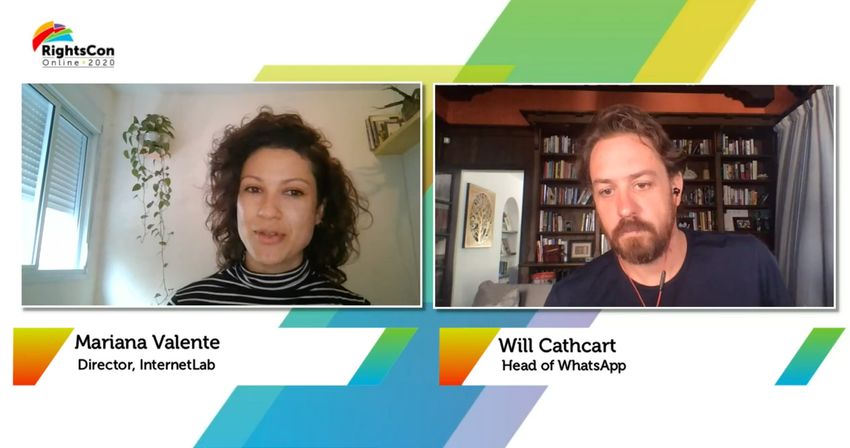
RIGHTSCON ONLINE OUTCOMES REPORT                                                         THE RIGHTSCON PROGRAM            05

Intersecting themes
This year marked our most competitive Call for Proposals yet, with 1,338 proposals received from 110 countries. When
we pivoted to an online summit, we made the decision to concentrate on the issues identified as the most pressing and
relevant in our RightsCon community survey, and deliver a program and a platform that would deepen collaboration in a
moment when solidarity across sectors and borders is critically needed.

We took crucial steps to rethink the program structure, which involved refining our program tracks, and establishing a set of
intersecting themes, such as gender justice and health, that cut across some or all of the tracks. The themes demonstrate
the interconnected and converging nature of the technologies that shape our lives, and correspond to our commitment to
create a navigable and effective journey for RightsCon participants.

Health
A nascent area of the program in Tunis, public
health arose as a prominent intersecting theme
in 2020. The outbreak of COVID-19 has affected
almost every aspect of our lives, and exposed
existing gaps in our social and political systems.
From internet connectivity and election security,
and the protection of patient data, to the role of                     “Transnationally and nationally, an uprising
the media and technology industries in stemming                        triggered by the murder of George Floyd has
the spread of misinformation, the pandemic –                           really forced a long-overdue interrogation of
and the global response to it – has challenged                         systemic racism...and the area of tech is one
and expanded our understanding of health and                           where this conversation is equally urgent.” -
healthcare in the context of digital development,                      E. Tendayi Achiume, U.N. Special Rapporteur on
privacy, and access to information.                                     racism, racial discrimination, xenophobia, and
                                                                          related intolerance

Protest
As censorship and crackdowns threaten activists
and frontline communities, human rights                         Digital identity
defenders, researchers, and technologists are
pioneering alternative forms of resistance and                  The #WhyID coalition formed at RightsCon Tunis in 2019,
resilience, aided by technology. The freedoms of                with the aim to halt the deployment of poorly designed,
assembly and association look vastly different in               ineffective, or dangerous digital identity programs.
a socially-distant world, with digital strikes and              In 2020, the concept of digital ID has come under
campaigns dominating on Twitter and TikTok, Black               increasing scrutiny, as sessions examined the gendered
Lives Matter protestors filming police brutality in             and exclusionary practices behind recently developed
Minneapolis and São Paulo, and labor organizers                 identity programs; privacy risks and ramifications in Asian
harnessing diverse media to unveil corporate                    and African contexts; the application of human rights-
surveillance and silencing efforts. Even with public            centered design; and strategic litigation and civil society
health concerns around physical gathering, 2020                 advocacy tactics to influence implementation of such
also marked a return to the roots of protest, with              programs. Raising particular alarm is the adoption of
renewed appreciation for the visceral power of                  digital welfare states, which link identity and distribution
marches and demonstrations to push for radical                  of social benefits, perpetuating poverty, poor health
action and change.                                              outcomes, and lack of political representation.
RIGHTSCON ONLINE OUTCOMES REPORT                                                THE RIGHTSCON PROGRAM               06

Environment                                             Indigenous rights
Last year, ahead of our planned summit in Costa         The rights of indigenous peoples forms an important
Rica, we made a commitment to expand the                and intentional throughline of the RightsCon program.
conversation around environmental sustainability,       Building on conversations hosted in Tunis and Toronto,
and create space for our community to consider the      sessions this year mapped indigenous perspectives on
impact of technology on our planet. The RightsCon       data protection; media literacy and education; linguistic
Online program tapped into the momentum of              diversity; and connectivity. Climate justice and protection
the climate justice movement, with sessions on          of land defenders also informed the discussion on
digital activism; innovation and sustainable futures;   indigenous sovereignty and data science, due to the
environmental monitoring tools; “green” internet        introduction of environmental sustainability as a new area
governance; online surveillance and attacks on land     of exploration.
defenders; benchmarking the footprint of the tech
sector; and more.                                       COVID-19 has heightened concerns about information
                                                        flow and internet access in indigenous communities. In
                                                        her fireside chat, Commissioner Jessica Rosenworcel
                                                        of the Federal Communications Commission (FCC)
                                                        specifically drew attention to the digital divide and the
OUR ENVIRONMENTAL IMPACT
                                                        widening “homework gap” affecting students on tribal
Last year, alongside committing to expand
                                                        land in the United States.
the topic of environmental sustainability in
our program, we also pledged to improve our
overall sustainability efforts in organizing an in-
person summit. In the lead up to Costa Rica, the
RightsCon Team looked into ways of reducing
and, eventually neutralizing, our carbon footprint                                         “It’s not just that
and environmental impact. The shift to an                                              indigenous people need
online RightsCon resulted in an unexpected                                                the internet. I truly
achievement of those goals, creating our                                               believe that the internet
greenest summit to date - however                                                     needs indigenous people.”
our efforts do not end there. We will                                                    - Darrah Blackwater,
 carry forward our sustainability                                                   indigenous spectrum rights
   efforts, regardless of how future                                                advocate, Navajo Nation
     RightsCon summits look.

Gender justice
                                                         Futurism
Gender equity and LGBTQ+ rights remain a
prominent theme in the RightsCon program, both           The devastating consequences of multiple crises
in terms of content and representation. RightsCon        – the COVID-19 pandemic, climate change, and
Online continued our strong track record in              rising political, social, and economic inequities –
elevating the perspectives of gender-diverse             have transformed our vision of the future. Systemic
people as session organizers, with 62.3% identifying     disruption, driven by activists, technology providers,
as women, and 2.7% identifying as nonbinary or           policymakers, journalists, and other rights-bearers,
genderqueer. Sessions explored the interplay of          requires imagination and persistence. In a year, a
gender and technology, drawing on intersectional         decade, or a century from now, what actions can we
approaches to AI and internet research; advancing        take to achieve digital justice? RightsCon Online sought
justice for survivors of sexual and gender-based         out the answers to that question, with futures-focused
violence; and reflecting on successes of feminist        sessions charting a course for democracy, sustainability,
and LGBTQ+ movements in creating vibrant and             business innovation, and civil society resilience.
secure digital spaces.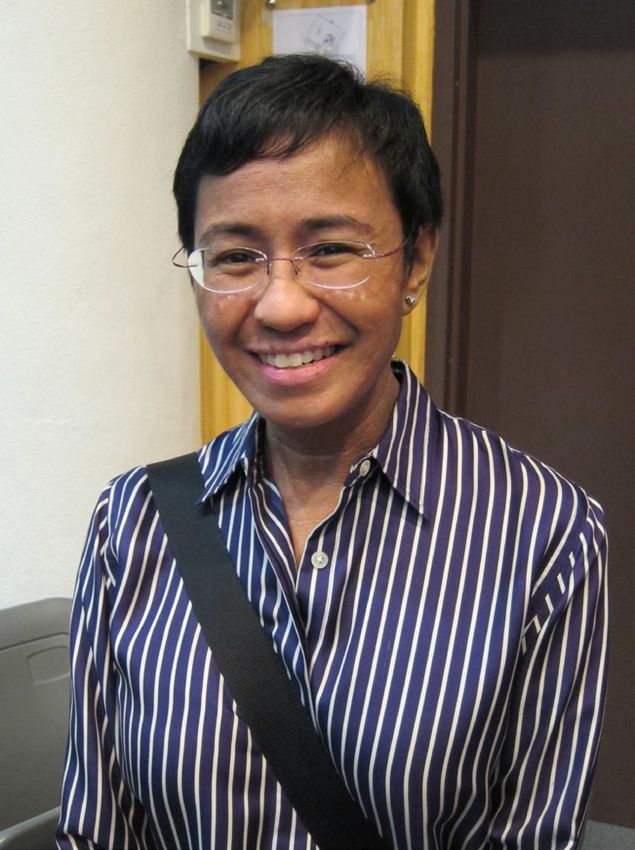
RIGHTSCON ONLINE OUTCOMES REPORT                                                           THE RIGHTSCON PROGRAM           07

Program tracks
RightsCon Online featured ten program tracks which, together with the intersecting themes, enabled participants to explore
a full range of human rights and technology issues, from artificial intelligence and content governance, to cybersecurity and
surveillance, and beyond.

TOP TRACKS AT RIGHTSCON ONLINE:
Check out which topics received the most engagement this year below.

 Civil society resistance   Internet access            Content governance       Privacy and               Data protection and
 and resilience             and shutdowns              and censorship           surveillance              user control

 3468 3325 3105 3093 2246
 ENGAGEMENTS                ENGAGEMENTS               ENGAGEMENTS               ENGAGEMENTS              ENGAGEMENTS

  ACROSS                     ACROSS                    ACROSS                    ACROSS                    ACROSS

 50 34 50 31 32
 SESSIONS                   SESSIONS                  SESSIONS                  SESSIONS                 SESSIONS

AI, automation, and the algorithm
Artificial intelligence (AI) has shaped the technologies that               [SESSION SPOTLIGHT ]
underpin our societies, economies, and political systems.
                                                                            •   Data Dada: creative strategies for
The conversation at RightsCon couches algorithmic
                                                                                algorithmic resistance! (Icarus Salon)
governance in human rights principles, while delving into
the biases and business interests that corrupt automated                    •   Mujerxs unidas, jamás serán vencidas:
processes and enhance threats to our privacy and security.                      intersectional feminism in the age of AI
                                                                                (Coding Rights)
Unseating white, patriarchal, and Global North perspectives,                •   Tackling online abuse: bridging the gap
sessions placed an emphasis on localization, intersectional                     between human rights and computer
feminism, community-driven design, and regulatory                               science (Workshop on Online Abuse and
frameworks developed in Africa, Asia, and Latin America.                        Harms)
Discussions and workshops offered creative tools for
                                                                            •   ¿Ambiente artificial o inteligencia
advocacy and resistance to AI-assisted surveillance, and
                                                                                ambiental? (IPANDETEC
critiqued automated content delivery systems which
                                                                                Centroamérica)
undermine freedom of expression online.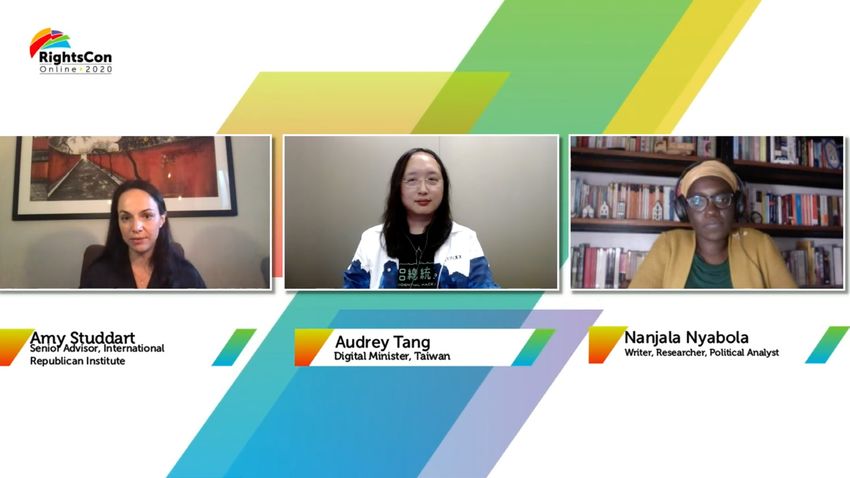
RIGHTSCON ONLINE OUTCOMES REPORT                                                           THE RIGHTSCON PROGRAM               08

                                                                 Content governance and censorship
                                                                 The regulation and moderation of information in digital
                                                                 spaces is one of the defining issues of the decade
                                                                 for the RightsCon community. Content creation and
                                                                 dissemination across networks and platforms implicates a
                                                                 range of stakeholders, and in the midst of a global health
                                                                 crisis, it is increasingly difficult to deny the dire impacts of
                                                                 disinformation and online hate on our human rights.

                                                                 As moderation practices and principles evolve, the notion
                                                                 of a “one size fits all” model of platform accountability
                                                                 has receded in favor of localized, context-specific
                                                                 systems of content governance. RightsCon programming
                                                                 delved into urgent freedom of expression issues, such
                                                                 as transparency and oversight of content removals;
                                                                 responses to hate speech and harassment; strategies for
                                                                 online documentation and record-keeping; and efforts
Civil society resistance and resilience                          to combat health, climate, and political disinformation.
                                                                 Digital media literacy, data journalism, and fact-checking
Anti-rights actors and authorities are seizing upon the          were some of the evolving tactics surfaced at the disposal
COVID-19 climate to renew or expand threats to civil             of researchers, journalists, private sector leaders, and
society, cutting off access to information, resources, and       advocates who are invested in creating safer, more
international support. This program track – first created        sustainable online ecosystems.
at RightsCon Brussels in 2017 and reintroduced in 2020
– examined the current state of civil society, connecting
and mapping trends related to community-building,
online activism, self-care for individuals and organizations,
philanthropy and funding models, and more.

Notably, sessions presented cross-movement strategies                     [SESSION SPOTLIGHT ]
to dismantle tools of oppression, such as crackdowns and
censorship, with perspectives from environmental defenders,               •    When misinformation hurts our
racial justice organizers, diaspora communities, and activists                 fundamental health rights (Meedan)
across every region of the world.                                         •    Social media platforms: are they art’s new
                                                                               gatekeepers? (PEN America)
                                                                          •    From Fortnite to Hong Kong: video game
                                                                               policy and human rights (Electronic Frontier
                                                                               Foundation (EFF); Access Now; Center for
                                                                               Technology and Society; Geekylegal)
[SESSION SPOTLIGHT ]
                                                                          •    Christchurch Call: a framework for
•   Social movements: amplifying resilience
                                                                               collective action, in consultation with civil
    and opportunities for support and solidarity
                                                                               society (French Ministry for Europe and
    from the international community (CIVICUS;
                                                                               Foreign Affairs; New Zealand Ministry of
    Netherlands Ministry of Foreign Affairs)
                                                                               Foreign Affairs and Trade)
•   Civil society in the digital age in Africa:
    identifying threats and mounting pushbacks
    (Centre for Human Rights at the University of
    Pretoria)
•   A world in revolution: lessons and tactics
    from 2019 protests (Social Media Exchange
    (SMEX); Open Technology Fund)
•   Seize the signatures: digital activism is
    rewriting the rules of mobilization in
    times of climate crisis (Change.org;
    Extinction Rebellion)
RIGHTSCON ONLINE OUTCOMES REPORT                                                            THE RIGHTSCON PROGRAM          09

Cyber norms and practice                                            Data protection and user control
The intersecting role of cybersecurity for individuals,             Day to day, routine technologies collect thousands of
companies, and states often places the right to privacy             points of data on our habits, preferences, and interests.
at odds with national and corporate interests. Strong               The construction of data-driven economies around these
regulations, data protection principles, and encryption             technologies not only endangers our right to privacy, but
tools are key to securing digital spaces and safeguarding           also empowers political agents, advertisers, and hackers
users from cyber attacks. Sessions ranged in focus, from            to exploit our data for commercial or other gain.
honing in on individual digital security practices for artists to
undertaking big-picture questions on governance and the             While technology companies and providers enabled
applicability of international law in a militarized cyberspace.     these markets to flourish, often without the consent of
                                                                    users, sessions detailed how strong laws and policies can
                                                                    prevent these abuses and demand greater transparency
                                                                    into the collection, storage, management, and usage
                                                                    of data. To break apart data monopolies, policymakers
                                                                    and independent authorities should implement robust
                                                                    regulatory frameworks, and enforce principles of design
                                                                    and consent that serve human rights, rather than
[SESSION SPOTLIGHT ]                                                corporate interests.
•   UNdoing progress and rights with a new global
    cybercrime treaty? (Third Way)
•   Not “revenge porn”: new trends in non-
    consensual intimate imagery in Uganda and
    the role of digital security (Women of Uganda                            [SESSION SPOTLIGHT ]
    Network)                                                                 •   Ownership or rights: what’s the path to
•   Encryption under fire: a discussion on the                                   achieving true agency over data? (Ada
    threats to private messaging around the world                                Lovelace Institute)
    (WhatsApp)                                                               •   From toys to schools to digital IDs: pushing
•   Militarized cyber space: intelligence,                                       for better governance and accountability for
    espionage, and the application of                                            children’s data (UNICEF)
    international law (Centre for Multilateral                               •   Strengthening indigenous data governance
    Affairs; Association for Progressive                                         and sovereignty: lessons learned from
    Communications (APC)                                                         mobile data collection apps (East
                                                                                 West Management Institute’s Open
                                                                                 Development Initiative)
                                                                             •   From devices to bodies: a tale on
                                                                                 DNA data collection (Coding
                                                                                 Rights)
RIGHTSCON ONLINE OUTCOMES REPORT                                          THE RIGHTSCON PROGRAM              10

                                                           “There’s a saying that ‘anything that was
                                                           around when we are born is human nature,
                                                           and anything that’s introduced after we’re
                                                           born is technology.’ In that sense, in Taiwan,
                                                           democracy is very much a technology.” -
                                                           Audrey Tang, Digital Minister, Taiwan

Democracy, elections, and political
change
The COVID-19 pandemic has brought into sharp focus
the tenuous position of democracies around the world.
Deepening inequalities, combined with sharp political
polarization, has widened the gulf between those who
reap benefits from systemic power structures, and those
who do not. Election security, an emerging issue for
observers and independent monitoring bodies, has taken
on critical importance as votes are cast in the midst
of interference, censorship, and corruption. In many
countries, democracy itself is on the ballot.              [SESSION SPOTLIGHT ]
                                                           •   Securing elections during COVID-19: online
Dissatisfaction with government inaction to the                threats, vulnerabilities, and resources to
pandemic and connected crises has triggered protests           protect the foundations of democracy
and demonstrations. From Hong Kong to Beirut,                  (Cloudflare)
Portland to Minsk, millions of people are taking to the
                                                           •   From passive participation to productive
streets and social media to voice political grievances.
                                                               resistance: building community capacity to
Sustained activism continues to lead to important and
                                                               challenge smart city tech (Open North)
hard-won victories for human rights, such as Microsoft’s
ban on police use of facial recognition technology         •   Dissecting the (not so) democratic drama:
and Sidewalk Labs’ decision to abandon the Quayside            reflecting on the digital manipulations and
project in Toronto. Movement leaders are capitalizing          political persecutions in the Tunisian 2019
on the momentum to build more equitable policies and           elections (Bloggeurs sans Chaines)
practices at the local, regional, and global level.        •   Unrecognized and digitally disenfranchised:
                                                               digital rights for peoples without a state
                                                               (SecDev Group)
RIGHTSCON ONLINE OUTCOMES REPORT THE RIGHTSCON PROGRAM 11
“The internet ceases to be a luxury, and
becomes a foundation – a foundation of
our education systems, a foundation of
our health systems, a foundation of our
economies. And what that means for those
Internet access and shutdowns who are not connected are that they are
left further behind, and the digital divide
Connecting the unconnected, and ensuring access to a free, has a massive exacerbating effect on all
fair, and open internet, remains an urgent and multifaceted other inequalities.” - Fabrizio Hochschild
challenge. Poor infrastructure, prohibitive costs, and other Drummond, Special Adviser of the Secretary-
barriers place remote and at risk communities at a severe General on the U.N. 75th Anniversary
disadvantage, compounding structural injustices. Even
when these barriers are removed, disruption in the form of
internet shutdowns, throttling, and other forms of network
interference can have profound consequences on the
health, lives, and livelihoods of those who are affected.
As COVID-19 pushes more public services, such as
education and healthcare, online, governments and internet
service providers have an obligation to close the digital
divide and invest in connectivity initiatives that center
underrepresented groups, such as indigenous communities,
refugees, and people experiencing poverty. Further, civil [SESSION SPOTLIGHT ]
society should continue to learn from and champion Global • Global connectivity: where are we heading
South-led efforts to localize and decolonize the internet. after COVID-19? (Alliance for Affordable
Internet)
RightsCon Online sessions emphasized collaboration across
disciplines in order to establish clear standards for universal • Challenges for linguistic minorities on the
connectivity; expand on the “soft factors” that limit access; internet (Centro ISUR; Fundación Karisma)
measure the impact of shutdowns, which are often used to • Building rainbow bridges: what LGBTI
quell social unrest or cut off the flow of information during communities can teach us about
elections and key political moments; and develop alternative overcoming the digital divide (ILGA World
tools and technologies that support digital inclusion. - The International Lesbian, Gay, Bisexual,
Trans and Intersex Association)
• Investigating internet shutdowns
with open data (Open Observatory
of Network Interference (OONI);
Center for Applied Internet Data
Analysis (CAIDA))RIGHTSCON ONLINE OUTCOMES REPORT THE RIGHTSCON PROGRAM 12
“We have to come before data, and this
begins with a new charter of fundamental
rights that asks, “Who gets to know
about my experience?” - Shoshana
Zuboff, academic and author of The Age of
Surveillance Capitalism
New models for business and labor
In the last decade, economic systems have grown
increasingly receptive to business models that prioritize
surveillance, and the collection and monetization of user
data. Accountability measures, such as transparency
reporting, oversight mechanisms, and impact assessments,
place pressure on companies to prioritize the security and [SESSION SPOTLIGHT ]
privacy of users over profits. • Going coop: a platform model for workers in
the South (International Labor Organization
RightsCon frequently connects industry representatives from (ILO); IT for Change)
major companies, such as Microsoft, Facebook, and Cisco, • Investing in our shared humanity: connecting
with activists, journalists, and frontline defenders whose investors and human rights defenders
experiences are shaped by digital products and services. (Business & Human Rights Resource Centre
In 2020, the program not only delved into long-standing (BHRRC); Investor Alliance for Human Rights;
topics, including privacy by design, data protection, and International Service for Human Rights (ISHR))
human rights due diligence, but also carved out space to
discuss structural problems within the tech sector and the • Is the tech greener on the other side?
platform economy. Labor rights and sustainability came to Benchmarking tech companies’
the fore in these sessions, underscoring that change must environmental sustainability (Ranking Digital
start at the systems level in order to disrupt the far-reaching Rights)
effects of corporate surveillance and control. • Building power over Amazon’s empire
(Athena; The Partnership for Working
Families; Institute for Local Self-
Reliance (ILSR); MediaJustice; United
for RespectRIGHTSCON ONLINE OUTCOMES REPORT THE RIGHTSCON PROGRAM 13
Peace, justice, and investigations
What does peace and peacebuilding look like in the digital
age? Conflict, war, and violence have accelerated the
displacement of people. In this context, technology is
heralded as both a tool for peace and an exacerbator of
conflict.
Digital tools have enabled advocates and international bodies
to document abuses against persecuted communities,
such as Rohingya and Uyghurs; unearth mass graves and
other evidence of atrocities; expose inhumane conditions
in detainment and detention facilities; and collect data in
humanitarian crises that can inform relief and response
efforts. Yet online platforms have also contributed to
radicalization and the incitement of violence, enabling bad
actors to spread hate speech and governments to target
individuals and communities with greater precision.
RightsCon Online hosted nuanced conversations on the
intersection of justice and technology, featuring prominent
speakers, such as activist Behrouz Boochani, U.N. Special
Rapporteur on counterterrorism Fionnuala Ní Aoláin, and Privacy and surveillance
skilled practitioners from humanitarian and legal institutions.
As technology advances, so too do threats to our privacy.
Biometric authentication, facial recognition, Bluetooth
location trackers, voice-activated smart devices, and other
“ambient” forms of surveillance are deeply embedded in our
online and offline interactions, unleashing a Pandora’s box of
privacy issues. Predictably, the sale of products such as NSO
Group’s Pegasus and Amazon Ring to governments and
authorities with poor human rights records has heightened
[SESSION SPOTLIGHT ] security risks for activists, journalists, and dissidents.
• Behrouz Boochani: writing No Friend But the The potential for abuse or misuse of these increasingly
Mountains from Manus prison on WhatsApp sophisticated technologies is of chief concern for privacy
(ARTICLE 19; Berkman Klein Center for Internet experts, and extensive regulation, strategic litigation, and
& Society, Harvard University) multi-stakeholder commitments are needed to rein in and
draw clear boundaries around surveillance infrastructure.
• Frequent flyer numbers, meal preferences,
and the efficient countering of terrorist travel
(U.N. Special Rapporteur on counter-terrorism;
Human Rights Center, University of Minnesota)
• The impending age of killer robots? How our [SESSION SPOTLIGHT ]
data fuels autonomous weapons, and why • AIl watched over by machines of loving grace:
it’s not too late to stop them (Campaign to facial recognition, 1 CCTV camera for every 8
Stop Killer Robots) people, and protecting rights (Microsoft)
• Unlocking the truth: documenting • Mass surveillance in China (and beyond): is
political prisoners globally (United for dystopia already here? (Human Rights Watch)
Iran)
• The dark side of digital ID: exclusion and the
human rights of the poor (Digital Welfare State
and Human Rights Project; Open Society
Foundations (OSF))
• What is the price of inclusion for gender
minorities? Privacy and surveillance
challenges faced by transgender persons
with digital identities (Independent)RIGHTSCON ONLINE OUTCOMES REPORT SOLVE MY PROBLEM 14
Solve my problem
Solve My Problem sessions are closed-door conversations that invite representatives with diverse perspectives and issue area
expertise to resolve a specific and defined problem at the intersection of human rights and technology.
First piloted at RightsCon Tunis in 2019, the format shifted from a focused, “in the room” experience into a facilitated online
discussion. Solve My Problem sessions at RightsCon Online were divided into two time blocks, scheduled across one or more
days of the summit. Read on for an overview of the problems and outcomes of the three sessions hosted this year.
On facial recognition technology
The problem statement:
As companies such as Microsoft and IBM adopt moratoriums or bans on facial
recognition technologies (FRT), civil society should seek to clarify these commitments
and build on the momentum to restrict or regulate the use of facial recognition globally.
The structure:
The first block focused on civil society responses and objectives, and the second
discussed multistakeholder strategies with companies, governments, and academics.
The outcomes:
1. Civil society participants determined a set of shared priorities to prevent human
rights abuses, including robust transparency measures regarding the procurement
and deployment of FRT, and recognition that even so-called “lower risk”
applications contribute to building surveillance infrastructures.
2. Participants expressed doubt that safeguards could fully mitigate the damages
inflicted by FRT, and discussed whether moratoriums are sufficient, as compared to
bans.
3. The session mapped clear distinctions in regional approaches to regulating
this technology. Organizations that are based in Europe or work closely with
international institutions tend to focus on influencing national and global policies,
while organizations based in the Global South are heavily engaged in litigation and
limiting local authorities.
What’s next?:
The session organizers are forming a permanent, broader coalition of civil society
organizations to work on the human rights implications of FRT. The coalition, which
will include racial justice advocates and other underrepresented groups, is in the initial
stages of development.RIGHTSCON ONLINE OUTCOMES REPORT SOLVE MY PROBLEM 15
On content moderation
The problem statement:
Online platforms, due to their market dominance and impact on public discourse, often
operate with little or no oversight when it comes to the moderation, regulation, and
removal of user-generated content. Strong models of oversight are needed to prevent
gatekeeping, censorship, and other abuses of power.
The structure:
During the first block, participants mapped out and critiqued existing oversight models,
and discussed gaps in implementation in various national jurisdictions. The second
block focused on regional aspects of oversight, from competences and limits on
overreach in future models, to the right of standing granted to online users.
The outcomes:
1. Participants worked from the assumption that no one universal solution for
oversight exists, and that regional context will dictate the efficacy and suitability of
a given model.
2. Conversations about oversight mechanisms often center on the speed of removal
and response, and the “consistency” of content legality assessment. These are
issues of content, not of the processes created and adopted by online platforms.
Governments, civil society organizations, and companies should frame the
conversation around the latter.
3. Participants identified the need for a set of universal standards of oversight,
approved by civil society and grounded in international human rights law.
What’s next?:
The session organizers will host a blog post series, which will analyze the regional
consequences of the Facebook Oversight Board in different parts of the world, and
invite guest authors to contribute.RIGHTSCON ONLINE OUTCOMES REPORT SOLVE MY PROBLEM 16
On environmental defenders
The problem statement:
Despite mounting threats to land and environmental defenders, there is a scarcity and
lack of unification of data on online and offline attacks. The Defend the Defenders (DD)
Coalition, which is composed of 50 national and international organizations, networks,
and activists, has set out to create a global, collective database of these attacks.
The structure:
Both session blocks convened experts from the data science, digital security, and
human rights fields to discuss the technical challenges and solutions for consolidating,
storing, and protecting data from diverse sources.
The outcomes:
1. Participants established that, in order to harmonize different databases, the most
practical solution is an offline and online CSV template, which contributors can
populate and upload/download.
2. The session generated creative strategies for data protection, such
compartmentalizing the data-storage-visualization flow, while keeping sensitive
data collection to a minimum.
3. Participants noted that the DD Coalition should create a robust and clear informed
consent policy before the database is developed. Deliberate reflection around use
cases will also help the project implementers make appropriate decisions about
methodological, technical, and design aspects of the database.
What’s next?:
The DD Coalition plans to launch the database in January 2021. You can find more
information on their website.RIGHTSCON ONLINE OUTCOMES REPORT COMMUNITY HIGHLIGHTS 17
Community highlights:
“Access is really important,
but access cannot be used as a
substitute for being intentional
about the platforms that we build
and the spaces that we create on the
internet.” - Nanjala Nyabola, author
and political analyst
The RightsCon community
Immediately after we postponed RightsCon Costa during this moment. We received over 700 responses
Rica, Access Now began strategizing around the from 100 countries across 10 sectors, with 90% of
question: how do we move a dynamic and high- respondents indicating that they were either likely
energy summit of hundreds of sessions and thousands or very likely to participate in a virtual version of our
of participants online? While these were challenging summit. We checked in with our session proposers and
questions, we knew finding alternative avenues to their responses were also very telling: 70% of those
connect our work and collectively organize was more who replied to the survey said that hosting a session
important than ever. remained a priority for them and their work.
To guide us in our approach, we put a call out to our We knew RightsCon Online would be different, but
network, asking for their support in shaping what an we were blown away by the strength, resilience, and
online RightsCon would look like. The response was solidarity of our global community in a time of crisis.
inspiring: the majority of our community emphasized Together, we demonstrated the power of convening
the need for a platform to strategize, connect, and and experienced an unparalleled opportunity to
move forward their work collectively – particularly expand representation in this environment.RIGHTSCON ONLINE OUTCOMES REPORT COMMUNITY HIGHLIGHTS 18
Inclusivity at RightsCon Online
This year, for the first time ever, RightsCon was entirely
free of charge. Our approach to registration came
from a commitment to provide a platform that would
ensure the broadest participation possible. While we
typically exercise a flexible ticket discount policy –
in 2019, we gave away over 2,000 free tickets – we
recognized that in light of the challenges and financial
uncertainty that many in our community have faced
in 2020, waiving registration fees was especially
important.
Translation: I have been up since 4am
In thinking about accessibility, it was clear that
working, I have a session at 7am and I
although virtual convening alleviates the barriers
go to bed at 1am. Can you have jetlag for international travel, those without quality
from #Rightscon Online? internet access would be hindered from meaningful
participation. Consequently, we introduced, for the
first time, our Connectivity Fund, aimed at providing
direct financial support to session organizers, speakers,
and civil society participants who needed support
in the form of additional bandwidth or increased
connectivity in order to effectively participate during
RightsCon Online. Funding was provided to 74
recipients from 21 different countries. The majority of
With the community continuing to grow every year, we applications came from Africa, receiving 81.1% of the
were thrilled to see RightsCon Online welcome 5,754 funding.
first-time participants for a total of 7,681 participants
tuning in from 157 countries and presenting an
astounding 175% overall participation increase from How we approached safety and security
RightsCon Tunis. As always, upholding diversity and
representation continued to be our highest priority. Whether in person or online, our priority for safety
The majority of participants (56%) self-identified as and security remained the same: maintaining a
women with 4.1% identifying as non-binar or third safe, productive, and inclusive space throughout
gender (inclusive of bigender, agender, genderfluid, the summit. Given that we were navigating a new
and gender non-conforming). environment, we recognized that we had to take extra
considerations and adapt our security and response
Taking a closer look at the regional participation processes. Working with our partners at TechChange,
breakdown, the majority of participants came from we built a secure and tailored platform and conducted
North America and Europe with 32.9% and 24.1% a full security audit. In anticipation of any incidents,
respectively. Compared to RightsCon Tunis, Asia we built a strong reporting, escalation, and response
Pacific saw an increase of participation from 6% to system. To help prepare participants, we laid out clear
13.5%. Similarly, Latin America and the Caribbean’s communications and guides, including digital hygiene
representation increased from 5% to 13%. Finally, and digital security best practices. Members of our
representation from Africa was 7.5%, and 4% from the staff underwent Code of Conduct and moderator
Middle East and North Africa. training, which was pivotal in ensuring the successful
delivery of each session.
Consistent with previous years, civil society comprised
the majority of stakeholder representation with 40.8%.
In comparison to RightsCon Tunis, government and
international institution participation increased slightly
from 9% to 10.9% There was a slight decrease of
private sector representation from 14% to 11.4%, but an
increase in philanthropic sector representation from
1% to 4%. This year, we provided additional options for
stakeholders within the community to select, including
creatives (2.1%) and investors (0.4%).RIGHTSCON ONLINE OUTCOMES REPORT COMMUNITY HIGHLIGHTS 19
Launches, outcomes, and achievements
United Nations experts raise the alarm and negative aspects of the bill and announced a
campaign to the international community that attended
for digital spaces during COVID-19 RightsCon Online. During the panel, one of the bill’s
authors deputy Felipe Rigoni, who was participating as
Six U.N. Special Rapporteurs released an official a speaker, shared he was working toward the removal
statement at RightsCon, warning of closing of digital of the dangerous provisions on user identification
spaces amid the COVID-19 pandemic, and embracing and traceability. This declaration was an important
their commitment to continue documenting the signal that the criticism made by civil society groups
intersection of technology within their mandates. and other stakeholders were heard and accepted by
Signatories included: decision makers.
• David Kaye (freedom of opinion and expression)
• Mary Lawlor (situation of human rights defenders);
• Clément Voule (freedom of peaceful assembly and
association);
• Agnès Callamard (extrajudicial, summary or
arbitrary executions)
• E. Tendayi Achiume (contemporary forms of
racism)
• Fionnuala D. Ní Aoláin (protection of human rights
while countering terrorism)
The rapporteurs emphasized that “with the closing of
civic space and restrictions on offline media, access to
universal, open, affordable, secure, and stable Internet
is vital to save lives.” The joint statement builds on a
similar statement from our 2019 summit, which called
on governments to ensure that human rights are
respected and protected in the digital sphere.
[SESSION SPOTLIGHT ]
Brazil’s harmful “fake news” bill
addressed FIRESIDE CHAT
David Kaye, former U.N. Special Rapporteur
Access Now and the CoalizãoDireitos na Rede
on freedom of opinion and expression
organized a private meeting and a public panel to
discuss the PL 2630/20, also known as the “Fake News
Bill”, in Brazil. They called on representatives from On the final day of his mandate, David Kaye
Brazil’s Congress to address the harmful bill, leading to joined Maria Ressa, journalist and CEO of
direct commitments to improve and modify provisions Rappler, for a wide-ranging discussion on the
of mass traceability and user identification. evolution of freedom of expression online
during his tenure as rapporteur from 2014 to
The bill included terrible provisions on user 2020. He spoke extensively on the topic of
identification and traceability that eliminated technology-facilitated violence and harassment,
online anonymity and allowed mass surveillance of citing the continued trolling and targeting of
messages, even encrypted ones. The private high-level Ressa in the Philippines, and emphasized
meeting was attended by Brazilian parliamentarians, the rapporteur’s role in holding both
international and national civil society organizations,
companies and states to account for
the OAS rapporteur for freedom of expression and the
failing to mitigate this form of abuse.
U.N. right to privacy rapporteur.
Moreover, Access Now and the CoalizãoDireitos na
Rede organized a public panel to share the positiveRIGHTSCON ONLINE OUTCOMES REPORT COMMUNITY HIGHLIGHTS 20
Second Oxford Statement calls for
protecting COVID-19 vaccine research U.N. B-Tech project releases report on
from malicious cyber operations rights-based models for technology
companies
Complementing a public session at RightsCon, the
Oxford Institute for Ethics, Law, and Armed Conflict B-Tech, an initiative under the U.N. Office of the High
(ELAC) at Oxford University organized a workshop Commissioner for Human Rights (OHCHR), launched
with Microsoft and the Government of Japan, focused a new foundational paper, Addressing Business Model
on safeguarding COVID-19 vaccine research and Related Human Rights Risks, at RightsCon Online. The
trial data from cyber attacks and intrusions. Based on report details the role of companies, investors, and
these discussions, ELAC released the Second Oxford governments in ensuring that business practices and
Statement on International Law, an open letter affirming evaluations across the technology industry are aligned
state obligations to secure vaccine research, which with human rights principles.
garnered support from 50 lawyers, academics, and
policymakers.
Hiperderecho launches Son Mis Datos
Federal Communications Commission report
(FCC) rebukes U.S. President’s Executive Peruvian civil society organization, Hiperderecho
Order to leverage Section 230 presented Son Mis Datos (It’s My Data), which details the
state of data protection in Peru, and explains how to
FCC Commissioner Jessica Rosenworcel delivered a request, retrieve, and authenticate personal data from
statement in response to the Trump administration’s private companies. The report builds on the Son Mis
efforts to direct the FCC to moderate online speech Datos web application project, which simplifies the
under the auspices of Section 230. The Commissioner process of conducting citizen audits of corporate data
firmly condemned such broad overreach of use.
government power, and released her statement at
RightsCon on the same day that the Secretary of Launch of AI Myths project by Mozilla
Commerce filed a petition to begin implementation of
the Executive Order.
fellow Daniel Leufer
AI Myths, a project to tackle eight of the most common
and harmful myths, misconceptions, and inaccuracies
about artificial intelligence, led by Access Now Mozilla
“In the United States we are a democratic,
Fellow Daniel Leufer, was launched at RightsCon
open society in which people can hold their Online. AI Myths uses research, analysis, interactive
government accountable, even if imperfectly. experiences, and resource lists to provide readers with a
Whether we can keep it that way depends on clear-eyed view of what AI can – and cannot – really do.
the survival of a robust, independent digital
space for activism and public discourse.” -
Jessica Rosenworcel, Commissioner, Federal
Communications Commission Other notable RightsCon Online 2020
outcomes
• A new Digital Trade Alliance was announced with
the World Trade Organization during RightsCon
Freemuse launches the Know Artistic session Trading away our digital rights: the digital
Rights campaign trade agenda at the World Trade Organization.
• Minister Audrey Tang of Taiwan signed on in
Freemuse announced its “Know Your Artistic Rights” support of Access Now’s #WhyID letter.
campaign and digital toolkit to protect artists from • Expansion in membership, particularly from South
harassment online. The session brought together Asia, for the Digital Rights Litigators Network.
human rights advocates and creators, such as film
director Wanuri Kahui (Rafiki) and product designer • The Canadian government announced a $2
Arda Awais (Identity 2.0), to discuss violations of million CAD investment in online safety for
artistic expression on digital platforms, and explore human rights defenders, journalists, and
how artists can stay safe online. civil society groups.RIGHTSCON ONLINE OUTCOMES REPORT COMMUNITY HIGHLIGHTS 21
Testimonials “This was my first RightsCon conference and what
an experience it was, hosting a conversation about
healing, hope and protest was just what I needed
during a summer during which Black people
were grappling with mass deaths through COVID
and evidence that we are still continually hunted
“Ended the Democracy 2030 panel to and killed by the police. I did not know how the
a message on Twitter saying that the audience would respond to witnessing two Black
panel was “life giving”. I feel the same - I people engaging in “kitchen talk” on the main
cannot tell you how much I appreciate stage but they embraced us. I hope this will be the
the chance to think optimistically and beginning of a long relationship with RightsCon
constructively about the future we want as they think about how anti-racist policies and
to build. Excited to work with you all to practices can become part of human rights
build it!” – Amy Studdart, IRI frames.” – Mutale Nkonde, CEO AI for the People,
Key Constituent of the UN 3C Round Table on AI
“I had a B Plan for RightsCon when I heard it was “I’m glad for having decided to attend
going to be in Costa Rica. I had expected visa the #RightsCon2020. It is a great
issues and so made plans for remote participation. experience for me and I am learning a
And Baaam!! When we went fully virtual, I had lot. Thank you and the entire team at
apprehensions because I was hosting a very high- #RightsCon and #AccessNow for a job
level panel. But everything went okay. I do recall well done and for facilitating my internet
that UNESCO panel where someone had to speak costs for the week’s attendance.”
in French. We did not have official translation. - Laure Nganlay, Communication
I, and one other person instinctively started Associate #defyhatenow Cameroon
transcribing the French speaker into English. It
was automatic, it was voluntary. At that time, I
knew there was “RightsCon Spirit”. I loved that
all global time zones could have a chunk, their
own chunk. I loved that I could be in one session
and also follow the tweets from other sessions. I
loved the gender balance of sessions. I loved the
passion of the young volunteers. And yes, I loved
that the RightsCon ladies rocked it.” - Nnenna “There was a huge contingent interested in the
Nwakwanma, Chief Web Advocate, World Wide right to health, with topics directly related to the
Web Foundation COVID-19 pandemic in addition to other public
health and digital rights intersections. As a public
health researcher, it was so great to have the
chance to learn from folks in other disciplines, with
ideas and insights we could bring back to our own
pandemic and health misinformation response
effort, in this crazy, totally (what feels like an)
“Nothing is inevitable. That’s the message unprecedented time.” – Nat Gyenes, Meedan
for all of us in this next decade.” - Shoshana
Zuboff, academic and author of The Age of
Surveillance CapitalismRIGHTSCON ONLINE OUTCOMES REPORT LOOKING AHEAD TO 2021 22
Looking ahead to 2021
Engaging the Latin American and Caribbean region
Our in-person summit in 2020 was slated to take place in Costa Rica, bringing the conference to Central America
for the first time, and returning to Latin America and the Caribbean after RightsCon Rio de Janeiro in 2012. When
we pivoted to an online summit, we wanted to ensure regional perspectives would remain central and relevant to
the overall programming of RightsCon Online. To achieve this, we consulted with partners and organizations in the
region to better understand what issues, projects, and initiatives should be centered in the summit. In the end, we
hosted 29 sessions in Spanish and 21 sessions specifically focusing on the Latin America and Caribbean region.
Antonia Urrejola Noguera,
IACHR Rapporteur on the
Rights of Indigenous Peoples
Audrey Tang,
Digital Minister of Taiwan
Alexis Ohanian,
Co-founder of Reddit
Dr. Paola Vega Castillo,
Minister of Science, Technology, and
Telecommunications, Costa Rica
Rashida Richardson,
Director of Policy Research, AI Now
Institute; Visiting Scholar, Rutgers Law
RightsCon in 2021 and beyond
The unparalleled global events of this year have made our world an unpredictable place, however, one thing remains clear:
there is still work to be done. From protecting free speech to advancing racial justice and addressing the climate crisis, our
collective efforts are needed to create solutions for some of the most pressing and challenging issues of our time.
It is our deep commitment to preserve spaces for convening and bring the RightsCon community together in 2021. Our
planning for next year is underway and we’re taking the learnings from bringing RightsCon Online to life as we shape our
next summit. We’ll soon share important updates – including a formal Save the Date – and details on how you can join us
for next year, the 10th anniversary of RightsCon.
BROUGHT TO YOU BY CONTACT
Access Now defends and extends the digital rights of users For more information about RightsCon contact Nikki
at risk around the world. By combining direct technical Gladstone, RightsCon Director, at nikki@accessnow.org
support, comprehensive policy engagement, global RightsCon.org
advocacy, grassroots grantmaking, and convenings such as @RightsCon
RightsCon, we fight for human rights in the digital age. Keep Up to Date with the RightsCon RundownRIGHTSCON ONLINE OUTCOMES REPORT THANK YOU TO OUR SPONSORS 23
Thank you to our sponsorsYou can also read


