Building the Future How smart public infrastructure decisions can cut pollution, save money, and support a clean economy
←
→
Page content transcription
If your browser does not render page correctly, please read the page content below
x.

Building the Future
How smart public infrastructure
decisions can cut pollution, save
money, and support a clean economy

Building the Future
A Canadian
How          Opportunity: Tackling
     public infrastructure can cut Climate Change
                                   pollution,       by switching
                                              save money,        to cleana power
                                                           and support     clean economy   AA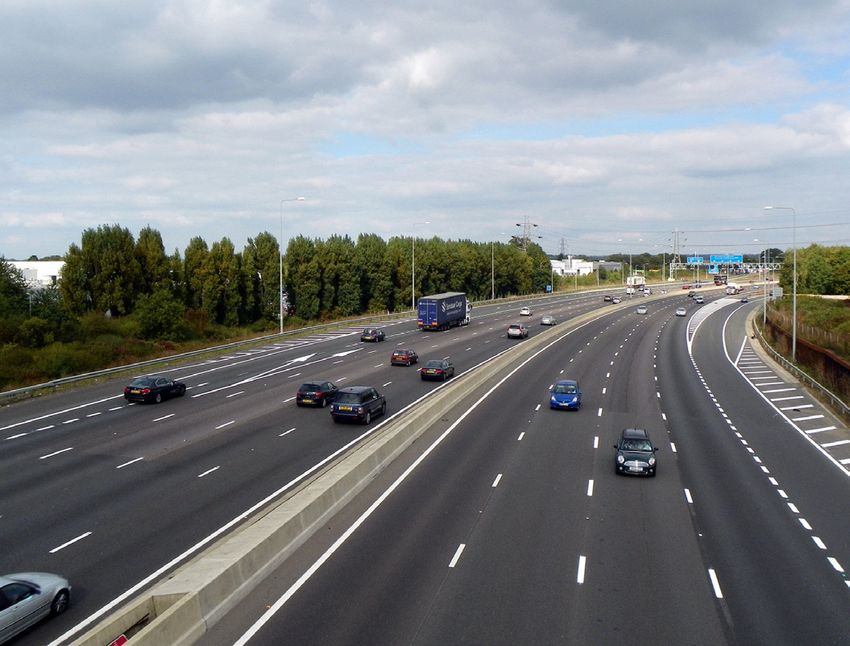
Contents                                                                                  We would like to thank the following experts for the
                                                                                          insights and advice they contributed to this paper:
Introduction                                                                   2
                                                                                          Adam Auer, Cement Association of Canada
Why Infrastructure?                                                            3
                                                                                          Celine Bak, Analytica Advisors
What’s Happening in Canada?                                                    6
                                                                                          Aaron Barter & Emma Lowden, Waterfront Toronto
Looking to the Experts                                                         8          Martin Canning, Evergreen Canada

Looking Forward                                                              10           Liesbeth Casier, International Institute for Sustainable
                                                                                          Development
Endnotes                                                                     11           Ron Dizy, MaRS Discovery District
                                                                                          Aaron Freeman, Pivot Strategic
                                                                                          Robert Larocque, Forest Products Association of Canada
                                                                                          Mark Rowlinson, United Steelworkers of Canada
                                                                                          Mike Wilson, Smart Prosperity
                                                                                          Ryan Zizzo, Zizzo Strategy

Key Terms
PUBLIC INFRASTRUCTURE                                                                  LIFE-CYCLE ASSESSMENT
Infrastructure refers to the fundamental facilities and                                Life-Cycle Assessment or LCA is a standardized method used
systems (e.g., buildings, roads, and power supplies)                                   to quantify the environmental impacts of buildings. It looks at
serving a country, city, or other area, including the services                         material extraction, product manufacturing, product use, end
and facilities necessary for its economy to function.                                  of life, and disposal.

EMBODIED CARBON                                                                        LIFE-CYCLE INVENTORY
Embodied carbon refers to the greenhouse gas emissions                                 Life-Cycle Inventory or LCI is the data collection portion
created in various phases of a building or piece of                                    of LCA. It consists of detailed accounting of all the flows in
infrastructure’s full life-cycle (e.g. material extraction,                            and out of the product system, including raw resources or
manufacturing, construction, maintenance, and end                                      materials, energy by type, water, and emissions to air, water,
of life/disposal).                                                                     and land by specific substance. This kind of analysis can
                                                                                       be extremely complex and may involve dozens of individual
                                                                                       unit processes in a supply chain (i.e. the extraction of raw
                                                                                       resources such as rocks and minerals, processing them
                                                                                       into a product, transportation, etc.) as well as hundreds
                                                                                       of tracked substances.

Building the Future
How public infrastructure can cut pollution, save money, and support a clean economy                                                                    1
Introduction

The Government of Canada has made tackling climate change a policy priority, most
prominently through its Pan-Canadian Framework on Clean Growth and Climate Change.
Under that framework, the federal government—together with provincial and territorial
governments—has committed to “invest in infrastructure to build climate resilience…
reduce disaster risks and save costs over the long term.”                                             1

The Government of Canada has prioritized increasing                                    businesses, and fuel our trucks and trains. Lower-carbon
infrastructure investment and cutting pollution across the                             building materials to erect our skyscrapers, pave our roads,
country. The 2016 federal budget saw the launch of the                                 and treat our wastewater will also become more cost-
Investing in Canada Plan, the federal government’s long-                               competitive.
term infrastructure strategy. This plan marks a historic new
investment of $180 billion over the next 12 years in five key                          But now we need to focus on the next step: bringing the
priority areas: public transit, green and social infrastructure,                       two policy priorities of increasing infrastructure investment
trade and transportation, and rural and remote communities.2                           and reducing pollution together to transform and improve
                                                                                       the way government invests in critical infrastructure. Doing
A cornerstone of the pan-Canadian framework is a national                              so will create less pollution and waste as infrastructure is
price on pollution, which creates an incentive to cut pollution                        constructed, and it will ensure our buildings, roads, and
by putting a price on it. Provinces and territories that haven’t                       bridges are better able to withstand the negative impacts of
designed their own systems are subject to the national system                          climate change—such as extreme temperatures and flooding
as of 2019. Carbon pricing plays a critical role because it                            over the long term.
harnesses market forces to the service of climate solutions:
as the costs of fossil fuels increase, so too does the demand                          This policy primer will make the case for why we should look to
for zero-carbon technologies to heat our homes, power our                              public infrastructure to build the clean growth economy. It will
                                                                                       also provide advice to government on how to do that.

Building the Future
How public infrastructure can cut pollution, save money, and support a clean economy                                                                   2
Why Infrastructure?
The experts have weighed in: there is a huge opportunity for Canada in changing the way
it looks at infrastructure. A new approach will not only reduce greenhouse gas (GHG)
emissions, helping Canada meet its pollution reduction targets, it will also support
new infrastructure—roads, bridges, and buildings—that can withstand the impacts of
a changing climate. An added bonus? Saving money. Using new approaches to fund
infrastructure projects that take GHG emissions into account can help to stretch
precious taxpayer dollars. It also supports new market opportunities for lower- and
zero-carbon materials, products, and services, which are essential to building a robust
economy based on clean growth.
Reducing Emissions GHG EMISSIONS FROM
Each time we build infrastructure, whether in the form of a BUILDING CONSTRUCTION
building or a road, we generate GHGs. Generally speaking, the
GHGs generated will fall into one of two camps: (1) those that
come from the operation of the infrastructure, such as heating
a building or running traffic lights and signals on a road; and
(2) those that come from the construction of infrastructure, 50%
the process used to create the materials used in construction,
and how the materials travelled to get to the construction
site. Respectively, these are known as operational GHGs and 11%
embodied carbon.3,4 2018 2050
Overwhelmingly, when we think about infrastructure, we think
Building Operations
about buildings. Buildings are our homes, our places of work,
Embodied Carbon
and our places of recreation. There is very little we do that
does not involve going into a building. Unsurprisingly, this is Source: Green Construction Board, 2014
where the majority of global policy has focused.
In Canada, buildings account for nearly one-quarter of our
According to the latest data from the United Nations GHG emissions,7 making them a worthwhile policy area to
Environment Programme, the building sector is the single tackle. But embodied carbon also exists in other types of
largest contributor to global warming, with 28% of harmful infrastructure, such as roads and bridges. In the same way a
GHG emissions coming from building operations—e.g. heating, building accumulates embodied carbon through its life-cycle,
cooling, ventilation, electricity—and 11% coming from the so does a road. Think for a minute about road maintenance:
embodied carbon of building materials.5 how often you see construction companies hard at work
repaving a major highway? Each time they do, embodied
That 11% might sound small compared to the emissions that
carbon accumulates.
come from operating buildings, but for new construction,
embodied carbon matters just as much. That’s because, The truth is: tackling embodied GHG emissions in our
with an increasingly clean electricity grid and improvements infrastructure is a win for Canada in both the short- and the
to energy efficiency, embodied carbon will be responsible long-term. If you build new infrastructure today with materials
for almost half of total new construction emissions between and construction processes that produce fewer GHGs and
now and 2050.6 The emissions we produce between now are more durable to environmental impacts, you enjoy
and 2050 will determine whether we meet the goals of the emissions savings now (i.e. from the initial procurement) and
2015 Paris climate accord and prevent the worst effects of save additional emissions (and costs) in the longer-term via
climate change. reduced maintenance and repairs.
Building the Future
How public infrastructure can cut pollution, save money, and support a clean economy 3Cost Savings
Photo courtesy of naturallywood.com. Photographer: Brudder
Tackling embodied GHG emissions in public infrastructure
isn’t just about doing what’s right for the environment
and cutting pollution. It’s also about doing what’s right for
Canada’s budget—and your wallet.
Cost savings can be found in the way public infrastructure is
designed and by making better use of construction materials
and resources. Using fewer materials overall, using materials
better suited to the expected life-span of the infrastructure
project, and buying materials that are sourced closer to
home will reduce material and transportation costs (as well
Case Study: Brock Commons Tallwood House as emissions).8
Brock Commons is an innovative tall wood student
residence at the University of British Columbia. It is But saving money is also about building infrastructure that
currently one of the tallest mass timber hybrid structures can withstand the impacts of a changing climate. Severe
in the world, standing at 18 storeys.1 Construction of Brock weather changes—floods, fires, storms—wreak havoc on our
Commons demonstrated that an innovative mass timber- communities and are costing Canadians more and more in
hybrid structural system can cut embodied carbon and is insurance claims. The Insurance Bureau of Canada reported
comparable in cost to a traditional concrete building.2 The that insured damage for 2016—the year of the Fort McMurray
building is built with 17-storeys of prefabricated cross- wildfires—topped $4.9 billion, smashing the previous annual
laminated timber floors supported on glue-laminated record of $3.2 billion set in 2013.9 Canadians are spending
timber columns and parallel strand lumber columns with more on insurance, and our governments are spending more
steel connections atop a concrete base.3 Careful design on disaster relief programs. In the 1970s, disaster relief
and prefabrication of components offsite allowed for quick spending was around $40 million a year, but in the first six
installation and assembly, saving further emissions, as years of this decade, federal disaster relief spending rose
well as construction costs.1 In the end, Brock Commons even more to an average of over $600 million a year.10
avoided the production of 679 metric tons of GHGs and
More recently, a report from the Environmental Commissioner
sequestered 1,753 metric tonnes more in the building
of Ontario highlighted just how much the increased risks
itself.4 To ensure the building can withstand climate
from climate-related weather events are costing Canadians:
impacts such as fires and earthquakes, Brock Commons
“Intact Financial, one of Canada’s largest property insurers,
was built to fire and seismic safety performance standards
is reported to have raised premiums by as much as 15-20%
exceeding what would be required for a concrete or steel
in response to increasing costs of weather-related property
structure of comparable size.3
damage. The Insurance Bureau of Canada estimates that up
1. The Use of Low Carbon & Renewable Materials in LEED Projects. to 10% of Canadian properties may soon be too high risk to
Case Study: Brock Commons Tallwood House. 2018. As found at: be insured by the private sector if no measures are taken to
https://www2.gov.bc.ca/assets/gov/environment/climate- mitigate flood risk by the owner or through public policy.”11
change/cng/resources/case-studies/lcm-casestudies-bcth.pdf
2. “Brock Commons Tallwood House – Vancouver, BC.” Sustainable
Architecture and Building Magazine. 2017. As found at:
https://sabmagazine.com/residential-large-award-winner/
3. University of British Columbia’s Centre for Interactive Research
on Sustainability. Brock Commons Tallwood House Performance
Overview. naturally:wood. 2018. As found at: https://www.
naturallywood.com/sites/default/files/documents/resources/
brock_commons_cs_-_performance_web.pdf
4. “Mainstreaming Mass Wood Construction.” Sustainable
Architecture and Building Magazine. 2017. As found at:
https://sabmagazine.com/mainstreaming-mass-wood-construction/
Building the Future
How public infrastructure can cut pollution, save money, and support a clean economy 4Supporting Innovation
Photo: Peter O'Connor
If Canada wants to reduce embodied carbon emissions in
infrastructure and reap the benefits in cost savings that come
with it, we need to change how we invest government dollars.
Simply put: the only way we are going to do things differently
is by buying things differently.12
The global market for low-carbon goods and services is worth
over $5.8 trillion and is projected to grow 3% per year.13
Canada’s green building industry is worth $23.5 billion in
GDP and directly supports an estimated 298,000 jobs.14
Reducing GHG emissions in our public infrastructure will
help accelerate the growing trend of Canadian companies
developing advanced green materials and increase their
competitive edge and access to both domestic and foreign
markets including Europe, Asia, and the United States.15
As Canada seeks to reduce embodied carbon in its Case Study: M25 Highway Upgrade
infrastructure, there are growing opportunities for innovation. In the lead up to the 2012 London Olympics, the U.K.
New materials, products, and construction processes are decided to widen one of its busiest thoroughfares,
emerging that offer a lower-carbon footprint than what might the M25, a 60 km of the highway that loops around
be available today. Greater London. About 200,000 or so vehicles travel
this highway daily. The M25 widening project raised the
Both France and the U.K. have included innovation as bar for highway projects in terms of resource efficiency,
components in their respective programs to reduce embodied embodied carbon, and cost savings.1 The Highways
carbon in their infrastructure.16 Agency Carbon Calculation tool2 calculates the project’s
As Canada looks to build a growing economy with good jobs total carbon footprint and identifies opportunities for
based on a clean future, encouraging the marketplace to bring carbon savings. The tool showed that 76% of the project’s
innovative solutions forward—such as lower- or zero-carbon total carbon footprint would result from the embodied
building materials and processes—will help to achieve that goal. carbon and transportation of construction materials.
The project team was able to achieve a 27% reduction in
embodied carbon through the use of recycled aggregates,
the reuse of the existing pavement, and the use of
low-carbon recycled steel sheet piles (which were 60%
less expensive than virgin materials, also resulting in
significant cost savings).2
1. SKANSKA. M25 Widening Project, U.K.: Sustainability Case Study
99. 2012.
2. The Carbon Calculation tool considers multiple phases of the
project’s life-cycle but does not account for the manufacturing of
materials or decommissioning. See Highways England Carbon Tool
Guidance. 2015. As found at: https://assets.publishing.service.
gov.U.K./government/uploads/system/uploads/attachment_data/
file/453177/Task_446_Guidance_Document.pdf
Building the Future
How public infrastructure can cut pollution, save money, and support a clean economy 5What’s Happening in Canada?
Like many countries, Canada has brought forward a suite of policies aimed at reducing
GHGs in building operations. Canada’s electricity-generation mix is already one of the
cleanest in the world, with 80% of our electricity coming from renewable or non-emitting
sources in 2016—and an aim to be 90% non-emitting by 2030. As the country moves 17,18
towards a complete phase-out of coal-fired power generation by 2030, 16 million tonnes
of carbon pollution will be reduced in that year, lowering operational emissions in 19
buildings across the country.
Energy efficiency programs funded by the federal government
will also help reduce emissions in building operations, Across Canada: reducing GHG emissions
with more than $1 billion from the Low Carbon Economy using Life-Cycle Assessment
Leadership Fund over the next five years going to the
provinces of British Columbia, Alberta, Ontario, Quebec, A number of cities and provinces across Canada are
New Brunswick, and Nova Scotia.20 using an LCA approach to help reduce emissions in
public infrastructure.
The Government of Canada has also made a strong
commitment to lead by example via its Greening Government The Ontario Ministry of Infrastructure included the
Strategy.21 The strategy commits to reducing carbon pollution integration of LCA into its infrastructure planning,
from government operations 40% below 2005 levels by 2030 procurement, and business case development as part
and running government operations on renewable energy by of its most recent Long-Term Infrastructure Plan——the
2025.22 The strategy contains a number of initiatives aimed ministry aims to use LCA in the near future.1
at reducing emissions in building operations, including retrofit
The province of Quebec has developed an initiative
programs and a net-zero energy building code by 2022.
to increase the use of wood in construction, requiring
In terms of policies to reduce emissions from public an LCA-based comparative analysis of life-cycle GHG
infrastructure, the path is still fresh. Canada has prioritized emissions for structural materials in provincially
public infrastructure spending in green areas such as electric funded projects.2
vehicle charging, waste water management, and electricity
Both Alberta and Nova Scotia are presently establishing
projects. The government also included green infrastructure
similar Wood Charters as Quebec, which will also require
in its priorities for the Canada Infrastructure Bank—all steps in
life-cycle emissions data at the funding application stage.
the right direction.
Municipally, Vancouver is taking the lead, introducing a
The federal government has also introduced a Climate Lens,
new low-carbon rezoning policy with a compliance path
a requirement that applies to applications to the Investing
that requires the reporting of embodied emissions using
in Canada Infrastructure Program and other funds such as
a whole-building LCA perspective.3
the Smart Cities Challenge and the Disaster Mitigation and
Adaptation Fund. Announced in late spring 2018, the lens
contains two components: (1) a GHG mitigation assessment,
which measures the anticipated GHG emissions impact of
1. Ontario Ministry of Infrastructure. Building better lives: Ontario’s
an infrastructure project; and (2) a climate change resilience
long-term infrastructure plan. 2017. As found at: https://www.
assessment, which uses a risk management approach23 to ontario.ca/document/building-better-lives-ontarios-long-term-
identify and assess climate risks and describe the measures infrastructure-plan-2017/chapter-2-planning-future#section-2
taken to prevent, withstand, and respond to those risks and 2. Government of Quebec. The Wood Charter. 2017 As found at:
potential impacts.24 https://www.mffp.gouv.qc.ca/publications/forets/entreprises/
charte-du-bois-anglais-Web.pdf.
3. City of Vancouver. Green buildings policy for rezoning. 2017. As
found at: http://guidelines.vancouver.ca/G015.pdf
Building the Future
How public infrastructure can cut pollution, save money, and support a clean economy 6According to Infrastructure Canada, the Climate Lens was The introduction of the Climate Lens is a step in the right
created to “provide meaningful insight into the climate direction, but currently it only applies to a subsector of
impacts of individual projects, encourage improved choices projects being funded under the Invest in Canada Plan and
by project planners consistent with shared federal, provincial, does not require measurement or reduction of embodied
and territorial objectives articulated in the Pan-Canadian carbon. There is opportunity for Canada to build on this
Framework for Clean Growth and Climate Change—including momentum and provide further leadership and support.
a commitment to reduce Canada’s GHG emissions by 30% Working in collaboration with other levels of government, the
below 2005 levels by 2030—and provide a substantive federal government could expand the Climate Lens and use
eligibility test for projects funded through the Climate Change approaches to measure and reduce embodied carbon, better
Mitigation and Adaptation, Resilience and Disaster Mitigation directing the design, function, and type of public infrastructure
sub-streams of the Investing in Canada Infrastructure we build in Canada.
Program.”25
WHAT’S HAPPENING INTERNATIONALLY ON EMBODIED CARBON26
Country Approach Tools
The Requirement to conduct whole-building LCA and National LCA and EPD database
Netherlands measure/calculate and report embodied carbon in Standard methodology for whole-building LCA
new residential and office buildings (over 100 m2) at
the building permit application stage Several LCA software tools compatible with methodology
Germany Requires whole-building LCA for new federal buildings Free national LCA and EPD database
over 2M EURO ($2.8M CDN) as part of a green Free national LCA software tool
building rating program. Incentives are offered based
on building performance relative to embodied carbon
performance benchmarks
Sweden Requirement to calculate and report embodied National LCA database
carbon in large transportation infrastructure projects National LCA software tool
(>50M SEK/~$7.5M CDN) during design and
construction stages
Incentives available for those that achieve further
reductions
France Voluntary building label pilot program offers National LCA and EPD database
incentives for meeting embodied carbon targets for
new buildings
Plans to make voluntary program mandatory in or
around 2020
Switzerland City of Zurich requires all new government buildings National LCA database
to be Minergie-Eco standard certified, which requires
a whole-building LCA and calculation of embodied
carbon.
Belgium Requirement to register EPDs in a national database National EPD database
whenever making environmental claims for National calculation methodology in development
construction products.
National software tool in development
U.K. Voluntary standards BREEAM (buildings), CEEQUAL National materials LCA database
(infrastructure), and Home Quality Mark (residential)
include LCA options but do not require LCA. For
instance, BREEAM offers “innovation” points when
design teams perform whole-building LCA
Building the Future
How public infrastructure can cut pollution, save money, and support a clean economy 7Looking to the Experts
In October 2018, the National Research Council, in partnership with the Centre for
Greening Government, held a consultation in Ottawa on the “development of integrated
tools, guidelines and databases to empower Canadians to take carbon-based decision-
making actions.” 27
They proposed the development of: (1) a centralized and Third, increased support for local manufacturing and
validated national Life-Cycle Inventory (LCI) database to allow economic development. Local products don’t travel as far
for fair comparison of tendered projects both in terms of life- from their place of origin to their destination, and being
cycle GHG emissions and the total cost of asset ownership manufactured in a country with a relatively low-emissions
over its lifespan; and (2) infrastructure-specific LCA guidelines electricity grid—and a price on carbon—creates benefits by
and enhanced LCA tools to help provide the step-by-step way of lower-emissions and economic development.30 One
approach needed to measure, evaluate, and track the full interviewee wisely observed that supporting local jobs and
life-cycle of carbon emissions in buildings and other forms of materials can effectively connect the importance of public
public infrastructure. infrastructure with all Canadians—in a way that just talking
about carbon won’t.
We decided to take a deeper dive into these issues with some
of the consultation participants and other climate policy Fourth, human health, safety, and comfort. While we use
experts. We hope the advice provided below is useful as roads and bridges, we live, work, and play in buildings. In
Canada explores how to measure and reduce GHG emissions an effort to find the most GHG reductions, we also have to
in its public infrastructure.28 take into account usability, comfort, and human health and
wellness. Consider this: the stairs need to be walkable, the
temperature needs to be regulatable, buildings need to be a
Setting the Right Goals place people feel comfortable in. Buildings and infrastructure
also need to be able to withstand climate impacts such as
When designing an effective policy, it’s essential to set fires or flooding. Therefore, we need to consider the broader
goals. By defining the desired outcomes for your policy and use of the building and how that could be impacted by design
corresponding tenders, the government creates a clear, or construction.
defined, and transparent set of parameters for the market to
respond to.29 While this paper primarily focuses on reducing
embodied carbon in public infrastructure, we asked experts if Building the Right Tools
there were outcomes beyond this that the government should
consider in its policy approaches. Four types of outcomes rose The key component of the National Research Council’s
to the top. consultation focused on the creation of a centralized and
validated national LCI database, a vital tool to inform
First, cost savings. Experts recommended focusing on getting evidence-based decision-making for public infrastructure. Our
the carbon reductions right and reaping the associated experts told us that this is a great start, but that more needed
benefits in cost savings that come with it. Better designs, to be done.
processes, and material use can translate into lower costs
of construction, operation, and maintenance. First and foremost, the database needs an accompanying
tool or system that makes it easy to mine and use the data
Second, innovation. Reducing embodied carbon in provided. Creating a complex system of data will be useless
infrastructure and changing government approaches to unless it is simple and accessible for users. Usability must
infrastructure decision-making can foster new green products be a primary focus of government for the database to be
and services, support innovative Canadian companies, and successful.
accelerate clean growth.
Building the Future
How public infrastructure can cut pollution, save money, and support a clean economy 8it’s important that government take a leadership position,
Building the database: design attributes that position also needs to be flexible enough to adjust as
things evolve, data improves, and new products and building
We asked each of our experts for their top three design
methods are created and deployed.
features for a national Life-Cycle Inventory database, and
here’s what we heard: Finally, and unanimously from all of our experts, the creation
of these tools must support a shift in government policy
• Usability, usability, usability! The database must be
and decision-making. In other words, they need to be made
simple to use, but could consider some enhanced
mandatory and applied broadly across all public infrastructure
features for LCA experts
programs. There is little to be gained in GHG reductions, cost-
• Transparent and accessible savings, or innovation without taking this vital step.
• Based on sound science (and could be subject to We recommend government work with other levels of
third-party review to ensure this) government and stakeholders to set a target for when this
new LCI database will be rolled out.
• The data accurately reflects the regional diversity
of the country; some provinces are able to produce
materials with a lower GHG footprint than others (i.e. Support for Tools
electricity grid)
How we fund the creation of the LCI database and its ongoing
• Has an internal price on carbon built into it upkeep is an important question. While conceivably there
could be a model where different institutions pay into it,
• Flexible our experts were unanimous in their advice: this is a tool
to support an important policy direction for government
• Required as part of any government request-for-
(reducing Canada’s emissions and building a low-carbon
proposals in building public infrastructure
economy), and therefore government should fund the tool as a
way of translating its policy values into action.
Second, there needs to be a transparent, accessible
methodology on how to calculate and use the data that is It could be conceived that once the database and related
based on sound science. This might be different depending tools are up and running, some sort of subscription fee could
on the level of expertise of the end-user. For example, be charged to recover some of the costs associated with
professional practitioners who work in LCA may require, and continued upkeep and operation of the database—especially
be more comfortable with, enhanced information; however, because the success of the database relies on maintaining
the methodology also needs to meet the needs of less the most up-to-date data. Such an approach would be similar
experienced users, such as small municipalities looking to to the approach taken by the Canadian public tendering
assess local projects. The methodology would also seek to service, MERX, and the Netherland’s DuboCalc system.
ensure that the data collected accurately reflects regional Government should consider offering different levels of
contexts. For instance, the same materials produced in one subscription fees based on the type of user; for example, a
province may be lower-carbon than another due to differences small municipality may pay a different fee than a large private
in electricity mix or other factors. construction consortium.
Third, government also needs to find a way to leverage and
benefit from the nimbleness of the marketplace. While
Building the Future
How public infrastructure can cut pollution, save money, and support a clean economy 9Looking Forward
Public infrastructure is powerful. It’s where we work, it’s where we travel, it’s where we
play. It is also a huge opportunity for Canada to meet our emissions reductions targets
and literally build our future clean economy with good jobs.
The advice contained in this document includes important are determined and funded. The focus should be on solutions
policy considerations the federal government will need to that prioritize reducing embodied carbon, saving money, and
consider as it develops tools and shapes decision-making supporting a growing industry.
around public infrastructure.
We commend the Government of Canada for its work to date,
There is a need to work in partnership with provinces, and we look forward to contributing further ideas to the design
territories, and municipalities, as well as industry of specific policies, tools, and programs as they take shape.
stakeholders, to change the way public infrastructure projects
Building the Future
How public infrastructure can cut pollution, save money, and support a clean economy 10Endnotes
1. Pan-Canadian Framework on Clean Growth and Climate Change, 14. Canada Green Building Council. Green Building in Canada:
2016 Assessing the Market Impacts and Opportunities. Summary
found at: https://www.cagbc.org/CAGBC/Advocacy/
2. Infrastructure Canada, Investing in Canada Plan. Available at: Green_Building_in_Canada_Assessing_the_Market_Impacts_
https://www.infrastructure.gc.ca/plan/about-invest-apropos- Opportunities.aspx
eng.html
15. National Research Council. Low-Carbon Assets through Life-
3. Embodied carbon is also referred to as: scope 3 emissions, Cycle Assessment (LCA) Initiative: A proposal for discussion.
embodied emissions, embodied GHGs, embodied CO2, or 2018.
more broadly, embodied energy (related, but not equivalent as
depends on carbon content of energy source). 16. Written by Ryan Zizzo & Joanna Kyriazis, Zizzo Strategy Inc.
Helen Goodland, Brantwood Consulting, prepared for Forestry
4. Prepared by Zizzo Strategy for The Atmospheric Fund. Embodied Innovation Investment. Embodied Carbon of Buildings and
Carbon in Construction: A Policy Primer for Ontario. 2017. Infrastructure: International Policy Review. 2017. https://www.
5. United Nations Environment Programme, Global Status Report naturallywood.com/sites/default/files/documents/resources/
2017: Towards a zero-emission, efficient, and resilient buildings embodied_carbon_in_construction_and_infrastructure_-_
and construction sector, 2017. international_policy_review.pdf
6. 2030 Inc./Architecture 2030. Data Sources: UN Environment 17. Government of Canada/Environment and Climate Change
Global Status Report 2017; EIA International Energy Outlook Canada. Media Release: The Government of Canada outlines
2017. Available at: https://architecture2030.org/new-buildings- next steps in clean-energy transition. As found at: https://www.
embodied/ newswire.ca/news-releases/the-government-of-canada-outlines-
next-steps-in-clean-energy-transition-674314233.html
7. Environment and Climate Change Canada, Canadian
Environmental Sustainability Indicators: Greenhouse Gas 18. Government of Canada/Environment and Climate Change
Emissions. Available at: www.ec.gc.ca/indicateurs-indicators/ Canada. Pan-Canadian Framework on Clean Growth and Climate
default.asp?lang=En&n=FBF8455E-1 Change. 2016. As found at: https://www.canada.ca/en/
services/environment/weather/climatechange/pan-canadian-
8. The U.K. Green Building Council. Tackling Embodied Carbon in framework/clean-energy.html
Buildings. 2015.
19. Government of Canada/Environment and Climate Change
9. Insurance Bureau of Canada. Media Release: Severe weather, Canada. Media Release: The Government of Canada outlines
natural disasters cause record year for insurable damage in next steps in clean-energy transition. As found at: https://www.
Canada. 2017. http://www.ibc.ca/nb/resources/media-centre/ newswire.ca/news-releases/the-government-of-canada-outlines-
media-releases/severe-weather-natural-disasters-cause-record- next-steps-in-clean-energy-transition-674314233.html
year-for-insurable-damage-in-canada
20. Government of Canada/Environment and Climate Change
10. Ibid Canada. Media Release: The Government of Canada announces
new funding for energy efficiency and climate action in six
11. Environmental Commissioner of Ontario. Climate Action in provinces. 2017. As found at: https://www.canada.ca/en/
Ontario: What’s Next? 2018 Greenhouse Gas Progress Report. environment-climate-change/news/2017/12/the_government_
2018. ofcanadaannouncesnewfundingforenergyefficiencyand.html
12. Clean Energy Canada has published two policy briefs on how 21. Clean Energy Canada was pleased to convene a group of
to modernize government procurement and the benefits experts to provide recommendations on the Government
from doing so. The Power of Procurement: Cutting the federal of Canada’s Greening Government Strategy. The summary
government’s carbon emissions and The Power of Procurement: report of recommendations can be found here: The Power
How governments can drive clean growth, cut carbon, and of Procurement: Cutting the federal government’s carbon
create jobs emissions
13. Government of Canada. Greening Government Strategy. 22. Government of Canada. Greening Government Strategy.
As found at: https://www.canada.ca/en/treasury-board- As found at: https://www.canada.ca/en/treasury-board-
secretariat/services/innovation/greening-government/strategy. secretariat/services/innovation/greening-government/strategy.
html html
Building the Future
How public infrastructure can cut pollution, save money, and support a clean economy 1123. According to Infrastructure Canada, the risk management 27. National Research Council. Low-Carbon Assets through Life-
assessment will require that a professional engineer, registered Cycle Assessment (LCA) Initiative: A proposal for discussion.
professional planner, or appropriately specialized biologist 2018.
or hydrologist provide an attestation that the climate change
resilience assessment was carried out using a methodology 28. Ibid
that is in accordance with the International Organisations for 29. This is what is known in procurement literature as outcomes-
Standardisation’s ISO 31000 Risk Management Standard. based procurement, which was announced in the 2017 federal
24. Infrastructure Canada. Climate Lens – General Guidance. As budget as “solutions-based procurement”. Outcomes-based
found at: https://www.infrastructure.gc.ca/pub/other-autre/ procurement awards contracts based on a proponents’’
cl-occ-eng.html ability to meet or exceed a defined program result—in effect,
the solution to the problem being tackled—in a meaningful
25. Ibid and measurable way. For more information, see: The Power
of Procurement: Cutting the federal government’s carbon
26. Adapted from Ryan Zizzo & Joanna Kyriazis, Zizzo Strategy Inc. emissions
Helen Goodland, Brantwood Consulting, prepared for Forestry
Innovation Investment. Embodied Carbon of Buildings and 30. For more information on the role of small- and medium- sized
Infrastructure: International Policy Review. 2017. https://www. enterprises in government purchasing, please see: The Power
naturallywood.com/sites/default/files/documents/resources/ of Procurement: Cutting the federal government’s carbon
embodied_carbon_in_construction_and_infrastructure_-_ emissions
international_policy_review.pdf
Building the Future
How public infrastructure can cut pollution, save money, and support a clean economy 12x. Building the Future How public infrastructure can cut pollution, save money, and support a clean economy 13
You can also read


