SULFOSUCCINIC ACID: AN EFFICIENT CROSSLINKING INTERMEDIATE FOR COSMETIC HYDROGELS - Chemspec Europe
←
→
Page content transcription
If your browser does not render page correctly, please read the page content below

SULFOSUCCINIC ACID:
AN EFFICIENT CROSSLINKING INTERMEDIATE FOR
COSMETIC HYDROGELS
Martin Häubl (ESIM Chemicals GmbH)
C. Pretschuh, M. Steiner. M. Mihalic (Wood K Plus, Linz, Austria)
Chemspec 2018
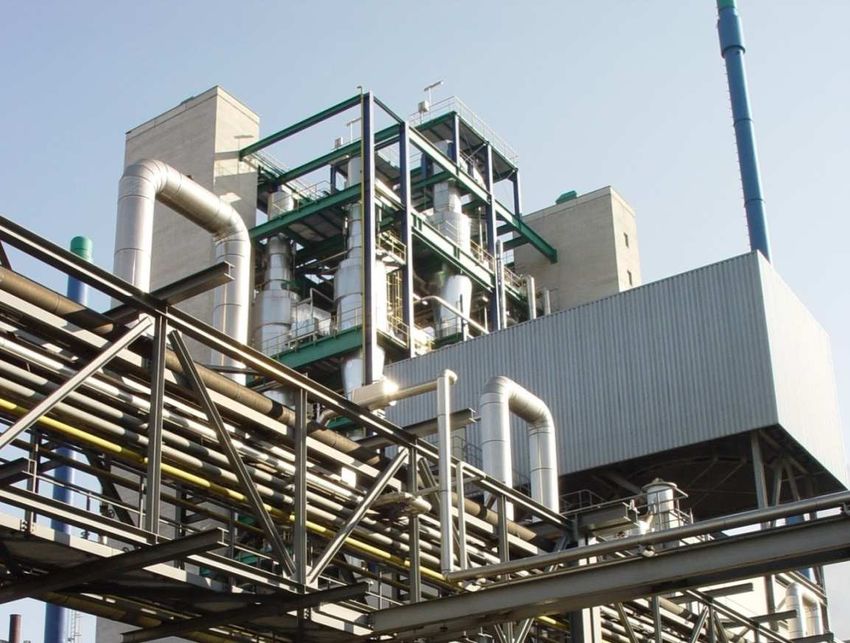
ESIM CHEMICALS AT A GLANCE

  ESIM Chemicals is a global leader in
  custom development and production
  of fine chemicals for various industries
  and a flexible supplier of maleic
  anhydride, fumaric acid, maleates,         520               75+
  succinates and fumarates.                    Employees      Years of Expertise

                                             200                    2
                                             MEUR Net Sales   Business Clusters

ESIM Chemicals                                                                     2
CHEMISTRY PARK LINZ AT A GLANCE

  Linz is the home of a well established
  and globally active chemical industry.   >40 3,500
                                             Companies         Employees

                                           1.2         km2     31        km
                                                Area           Railway net

                                           2,500 300
                                                MEUR               MEUR
                                           Replacement Value   Infrastructure

ESIM Chemicals                                                                  3
MARKETS WE FOCUS ON

   Crop Protection      Polymers

   Pharma        Food          Feed

   Electronics          Cosmetics
                        Personal Care

ESIM Chemicals                          4
BUSINESS CLUSTERS

                 Exclusive Synthesis   Intermediates

ESIM Chemicals                                         5
EXCLUSIVE SYNTHESIS
CORE TECHNOLOGIES OF ESIM INCLUDE:

   Continuous           Hydrogenation
   Processing

   Melt           Advanced     Esterification
   and Liquid     Catalysis
   Handling

   Distillation         Solid Material
                        Handling

ESIM Chemicals                                  6
A HUGE VARIETY OF PLATFORM CHEMICALS
AND SPECIALTIES

ESIM Chemicals                     7

HIGH QUALITY STANDARDS

ESIM Chemicals           8

WHEN HAVE YOU USED A HYDROGEL FOR
THE LAST TIME?

                                                             Ref. to: https://www.ratgeber-hautgesundheit.de/pflege/kosmetik/

Ref. to: http://wienerin.at/home/leben/gesundheit/5217921/

ESIM Chemicals                                                                                                                  9
WHAT IS A HYDROGEL?

     Dry solid (collapsed)   Hydrogel (swollen network)

                                       Water

                                       Polymer Chain

                                       Crosslinker
ESIM Chemicals                                            10
MAJOR APPLICATIONS FOR HYDROGELS /
MARKET PERSPECTIVE
Cosmetic products
Soft contact lenses
Hygiene products (Superabsorbent fillers in diapers)
Ref. to: https://www.theeyegalleryok.com/
Wound dressings
Tissue engineering scaffolds
Drug delivery
Agriculture (water conservation) Ref. to: https://www.alibaba.com/
Food products
Strong future market growth (CAGR 8%) in all
applications
Ref. to: http://www.marineagar.net/
ESIM Chemicals 11WHY ARE HYDROGELS WIDELY USED IN
COSMETICS?
To improve sensory properties of a lotion or cream
Thickening agent
Control release of active ingredients
Ref. to: https://receptranaturals.com/
Bio-compatibility
High water content
Elasticity and softness
Naturally sources (protein chains, polysaccharides)
Ref. to: https://www.dreamstime.com/
Ref. to: https://www.nationalgeographic.org/
ESIM Chemicals 12HOW TO IMPROVE HYDROGELS?
Polymer
Make use of naturally derived and sustainable materials
(Polysaccharides, etc.) to substitute crude oil based polyacrylates
Crosslinker
Use a highly efficient crosslinker which leads to high performance
hydrogels (swelling, rheological behavior)
Substitute crosslinkers like epichlorohydrin, divinylsulfone, and
various anhydrides by harmless materials, which are not
cancerogenic to reduce toxic residues within the hydrogel
Use of crosslinkers, which are readily biodegradable
ESIM Chemicals 13NATURALLY DERIVED POLYMERS:
CELLULOSIC DERIVATIVES
Carboxymethylcellulose Sodium (CMCNa)
Low cost naturally derived polysaccharide
Biocompatible and biodegradable
High molecular weights and low degree of substitution increases
crosslinking ratio [1],[2]
Hydroxyethylcellulose (HEC)
Biocompatible and biodegradable
Spacer material to improve swelling of crosslinked hydrogels
As it is less sterically hindered than CMCNa crosslinking is
promoted using this material [2]
[1] Ref. to: J. Appl. Polym. Sci. 110, 2453-2460, 2008
[2] Ref. to: Carbohydrate Polymers 137, 2016, 59-64
ESIM Chemicals 14SULFOSUCCINIC ACID AS CROSSLINKER:
BIODEGRADABLE AND NON-TOXIC
Sulfosuccinic esters are already well-known in the O O
cosmetic ingredient sector (e.g. DOSS) HO
S
OH
O
Excellent biodegradability OH
Excellent thermal crosslinker for hydrophilic naturally O
derived polymers (e.g. polysaccharides)
Multifunctional: Crosslinking agent as well as
esterification catalyst
The insertion of a sulfonic acid group to the polymer
network improves its hydrophilicity which leads to
better swelling performance
Non-cancerogenic (in contrast to epichlorohydrin etc.)
ESIM Chemicals 15RAW MATERIALS FOR GEL PREPARATION
Polymers:
Carboxymethylcellulose Sodium (CMCNa)
Degree of substitution: 0.9
Mw: ~ 250.000
Na+: 8 wt%
Hydroxyethylcellulose (HEC)
Degree of substitution: 0.4
Mw: ~ 90.000
Crosslinker:
Sulfosuccinic Acid 99 %
Diluted to a 7 wt% aqueous solution
ESIM Chemicals 16PRINCIPLE OF CHEMICAL CROSSLINKING Ref. to: N. Reddy, R. Reddy, Qiuran Jiang, Trends in Biotechnology 33,6, p 362 – 369, 2015 ESIM Chemicals 17
CROSSLINKING REACTION USING
SULFOSUCCINIC ACID
                 Crosslinking of HEC and CMCNa with Sulfosuccinic Acid

                                                                   OR                 OR

                                                                          O                       O
                                                             RO                  O
                                                                                              O             O R
                                                                     RO          RO
                                                        RO                                                      n

                                                                                                  O

                                              ∆                                               O
                                                                                              O             O
                                                                                                        S
                                             O O                                                            OH
                                       HO                                                         O O
                                         S                                OR'
                                                   OH
                                        O                                                                   O
                                                   OH                            O
                                                                   R'O                    O
                                               O                                                      R'O           O R'
                                                                           R'O            R'O
                                                             R'O                                                         m

                                                                                 x H2 O

ESIM Chemicals                                                                                                      18
SWELLING RATIOS OF CMCNa-HEC
HYDROGELS
CMCNa/HEC 3:1 gels crosslinked with
10 wt% Sulfosuccinic Acid (SSA) at different reaction times
Reaction: 60°C, Curing: 2 hours at 80°C
140
120
Swelling Ratio SR [%]
128
100
117
80
60
67
40
20
0
2 4 6
Reaction time [hours]
ESIM Chemicals 19VISCOSITY INCREASE DUE TO HIGHER
CROSSLINKING RATIO
CMCNa/HEC gels crosslinked with different amounts of
Sulfosuccinic Acid (SSA),
Reaction: 4 hours at 60°C, Curing: 2 hour at 80°C
CMCNa/HEC 3:1 with 3 % solid content,
parallel-plate-rheometer, 30°C, 1 – 10 % deformation
10000
Viscosity |η*| [Pa s]
1000
100
10
1
0,01 0,1 1 10 100
Angular Frequency w [rad/s]
0 % SSA 0.5% SSA 4% SSA 10% SSA
ESIM Chemicals 20PREPARATION OF CELLULOSE BASED
HYDROGEL USING SULFOSUCCINIC ACID
OPTIMIZED REACTION PARAMETERS
3:1 mixture of CMCNa/HEC in water (1.5 wt% total solid content)
Addition of Sulfosuccinic Acid as 7 wt% aqueous solution at 60°C
(10 wt% based on total amount of cellulosic derivatives)
Stirring of the reaction mixture at 60°C or 4 hours
Final curing and drying at 80°C for 2 hours
Swelling of the dried hydrogel in water to obtain a hydrogel with
5 wt% solid content
ESIM Chemicals 21VISCOSITY OF THE HYDROGEL AT
OPTIMIZED REACTION CONDITIONS
CMCNa/HEC 3:1 gel crosslinked with 10 wt% Sulfosuccinic Acid
(SSA), Reaction: 4 hours at 60 °C; Curing: 2 hours at 80°C
CMCNa/HEC 3:1 with 5 % solid content,
parallel-plate-rheometer, 30°C, 1 – 10 % deformation
10000
Viscosity |η∗| [Pa s]
1000
100
10
1
0,01 0,1 1 10 100
Angular Frequency ω [rad/s]
ESIM Chemicals 22COMPARISON WITH CARBOPOLS:
VISCOSITY
Parallel-plate-rheometer, 30°C, 1 – 10 % deformation
100.000
10.000
Viscosity |η∗| [Pa s]
1.000
100
10
1
0
0,01 0,1 1 10 100
Angular Frequency ω [rad/s]
Carbopol 980 3 wt% Carbopol 981 3 wt% CMCNa - HEC opt 5 wt%
ESIM Chemicals 23COMPARISON WITH CARBOPOLS:
REVERSIBLE ELASTIC LIMIT
Parallel-plate-rheometer, 30°C
100.000
10.000
Deformation γ [%]
1.000
100
10
1
0
1 10 100
Shear Stress τ [Pa]
Carbopol 980 3 wt% Carbopol 981 3 wt% CMCNa - HEC opt 5 wt%
ESIM Chemicals 24REM PICTURES OR FREEZE DRIED
HYDROGELS
CMCNa – HEC Gel opt (5 wt%) Carbopol 980 (3 wt%)
ESIM Chemicals 25CONCLUSIONS
Successful crosslinking of a biodegradable hydrogel without toxic
residues based on cellulose derivatives (CMCNa and HEC) using
Sulfosuccinic Acid.
Optimal crosslinking parameters were reached at a Sulfosuccinic Acid
level of 10 wt%, and crosslinking temperatures of 60°C for 4 hours
followed be a further curing step at 80°C for 2 hours. The obtained
hydrogel showed similar properties to commercially available Carbopol
(Polyacrylic Acid) gels.
A 5 wt% aqueous crosslinked cellulosic CMCNa-HEC Hydrogel showed
a rheological behavior similar to a 3 wt% aqueous Carbopol gel.
If the amount of Sulfosuccinic Acid exceeds 10 wt% the increased
crosslinking ratio results in a poor swelling behavior of the gel (limited
water accessibility to the polymer network).
ESIM Chemicals 26ACKNOWLEDGEMENT This study was performed together with the Competence Centre for Wood and Wood-related renewable resources (Wood K plus) and co- financed by the Austrian Research Agency FFG. ESIM Chemicals 27
CONNECT WITH US @ BOOTH F10

Dr. Martin Häubl
ESIM Chemicals GmbH
St.-Peter-Strasse 25
4020 Linz
Austria

Tel: +43 732 6982-2483
Mobile: +43 664 88236163
martin.haeubl@esim-chemicals.com
www.esim-chemicals.com
                                   28
You can also read


