Understanding Difference and Diversity - Shaykh Faid Mohammed Said
←
→
Page content transcription
If your browser does not render page correctly, please read the page content below
Understanding Difference and Diversity
Shaykh Faid Mohammed Said

All praise be to God Almighty, the One to whom is            to interact. This in turn is a big burden and challenge
all glory. We bear witness that there is no God but          to all those who raise children, whether parents or
God. We bear witness that Muhammad is His mes-               people who run educational institutions.
senger, peace and blessings be upon him and his fam-             When looking at coexistence it is essential to look
ily. Blessings are upon his followers and those who          at the essential principles upon which Islam is based.
enjoin good.                                                 The practical side of the life of the Prophet Muham-
    Islam is indeed a religion of peace, justice, modera-    mad was based upon principles laid out in the Holy
tion, the middle path, and joint peaceful coexistence.       Qur’an that he practiced throughout his life. The
There was to be no difference between the rights of          mother of the believers Aisha, when asked about
Muslims and others as it is the religion of justice.         the behaviour of the Prophet Muhammad, replied:
This was the foundation of the community that was            “Qur’an was the basis of his behaviour.” God Almighty
established by the Prophet Muhammad in Madinah,              in the Qur’an speaks of previous nations that were
a town that included Jews, non-Muslim Arabs, Chris-          calling for what they do not apply to themselves:
tians, and others.                                           “Enjoin ye righteousness upon mankind while ye your-
    At their core the Qur’an and the Sunnah are              selves forget (to practice it)? And ye are readers of the
concerned with relationships among individuals,              Scripture! Have ye then no sense?” [Al-Baqarah, 2:44].
communities and nations, and the meaning of joint                In addition, the Qur’an states that the origin of all
peaceful coexistence between Muslims and others              lies in the unity of the human race: “O mankind! Lo!
is at the core of Islamic belief. In the Holy Qur’an,        We have created you male and female, and have made
God expresses the importance of understanding and            you nations and tribes that ye may know one another.
tolerance, which elevates the concept of joint peace-        Lo! the noblest of you, in the sight of Allah, is the best
ful coexistence. This is the approach set by Islam and       in conduct. Lo! Allah is Knower, Aware.” [Al-Hujurat,
adopted in dealing with people who do not believe in         49:13] This verse not only states the original unity of
Islam, as exemplified by the following verses:               the human race, but also asserts the greatness of such
                                                             a bond. It is the origin that shall be the basis of deal-
  “And if anyone of the idolaters seeketh thy protec-        ing with people. God Almighty made different beliefs
  tion (O Muhammad), then protect him so that                among people to reflect the diversity of human civili-
  he may hear the Word of Allah, and afterwards              sation, which the human shall accept and believe that
  convey him to his place of safety. That is because         it is the will of God in order to make us different. As
  they are a people who know not,” [Al-Tawba, 9:6)           the Qur’an says: “And if thy Lord had willed, He verily
  and: “and speak kindly to mankind,” [Al-Baqa-              would have made mankind one nation, yet they cease
  rah, 2:83].                                                not differing, save him on whom thy Lord hath mercy;
                                                             and for that, He did create them. And the Word of thy
   There are also other verses that point to the nature of   Lord hath been fulfilled: Verily I shall fill hell with the
relationships with non-Muslims. This is to encourage         jinn and mankind together.” [Hud, 11:118-119]
the raising of generations with honour, and the build-           God asserts further by saying: “And if thy Lord
ing of communities that are diverse yet are understand-      willed, all who are on the earth would have believed
ing and tolerant of other traditions. It is such nations     together. Wouldst thou (Muhammad) compel men
that Islam helped to build and ultimately flourish.          until they are believers?” [Yunus, 10:99]. In another
   A significant development in the world of tele-           verse, this meaning is reaffirmed: “Had Allah willed
communications has meant the instantaneous ex-               He could have made you one community. But that He
change of information among people at incredible             may try you by that which He hath given you (He hath
speed. Although this has its many benefits, there is         made you as ye are). So vie one with another in good
also a case of information overload. Thinkers, educa-        works. Unto Allah, ye will all return, and He will then
tors and guardians face challenges in their local envi-      inform you of that wherein ye differ.” [Al-Ma’idah, 5:48]
ronments in trying to search and figure out a solution           God shows in these verses that it is not His will to
for relevant concerns that occupy the community. In          create people as one nation, but He wants to grant
an increasingly virtual world, people use social media       each person the freedom and will to worship Him
                                                                                                                        1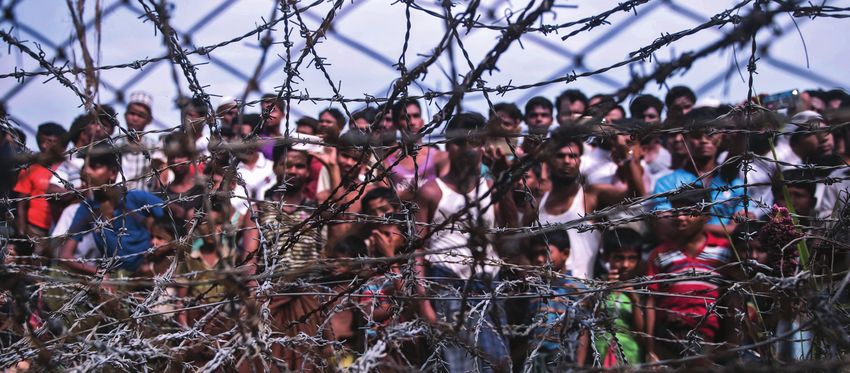
voluntarily; and by so-doing differences occur that        7:10] God Almighty prepared the earth in order to
 reflect the diversity of human civilisation. Divine        facilitate interaction and dealing between people on
 laws call for worshipping God and having faith in          two basic pillars: benevolence and justice: “Lo! Allah
 Him on the basis of searching, thinking, reasoning,        enjoineth justice and kindness, and giving to kinsfolk,
 and seeing proof without any form of coercion.             and forbids lewdness and abomination and wickedness.
    Today, the world talks about universal values,          He admonishes you in order that ye may take heed.”
 global policy, global behaviour, a global economy          [Al-Nahl, 16:90]
 and global culture. This represents a big challenge           God makes this an important condition in our
 in a globalised world. The cultural contributions          attempt to get closer to Him: “and speak kindly to
 that have been achieved by immigrants in the West          mankind”. [Al-Baqarah, 2:83] He made one of the
 are the best proof of how cultures can mix and ben-        characteristics of the true believers turning away
 efit one another. The fear of globalisation and its        from the ignorant and this being one of the symbols
 repercussions have subsided as we see these cultures       of his faithful worshippers: “and when the foolish ones
 continuingly evolve, and this can be helped further        address them answer: Peace.” [Al-Furqan, 25:63]
 through interaction and constructive dialogue based
 on mutual respect.                                           COEXISTENCE AND ITS MEANING:
    The Messenger of God built a great society in
 which he laid down the principles of justice and free-     This is a modern term about which definitions have
 dom. He spread the values of tolerance and cooper-         varied amongst groups or parties that use it. The defi-
 ation and in it elevated the status of good morals to      nition closest to the concept of coexistence in Islam
 the point that he said, “The most beloved of you to me     is communication with the other in all forms of in-
 and the closest to me on the Day of Resurrection are the   teraction, cooperation, and positive constructive in-
 ones with the best morals.”                                tegration that stems from charity, kindness, care, an
    In our present age, the concept of coexistence has      individual and a community. In order to reach that
 become one of the necessities of life. This is true not    which is in the interests of both parties, religiously
 only for leaders, politicians, thinkers, writers, and      and worldly, in the present and in the future, this
 business owners, but also for the entire human race        cooperation helps organise thought, social, political,
 and their societies, with their various groups and reli-   economic, cultural and education.
 gious, sectarian and intellectual affiliations.
                                                                             CITIZENSHIP
       COEXISTENCE IN LANGUAGE
                                                            The principle of citizenship is one of the important
 Living with each other in terms of language means          principles in the cohesion of societies, or between
 interaction, and the most supporting proof is in the       them and the representatives of power. Citizenship
 words of God Almighty: “And have appointed the             in its Arabic linguistic meaning is derived from the
 day for livelihood.” [Al-Naba, 78:11] God made the         word for homeland, which is the house in which you
 day to interact and deal with the universe, the whole      reside, and it is the homeland of a person. Citizen-
 universe, and in His saying: “And We have given you        ship is from the verb that means being a citizen who
 (mankind) power on the earth, and appointed for you        participates in the place of residence and birth.
 therein livelihoods. Little give ye thanks.” [Al-A’raf,
2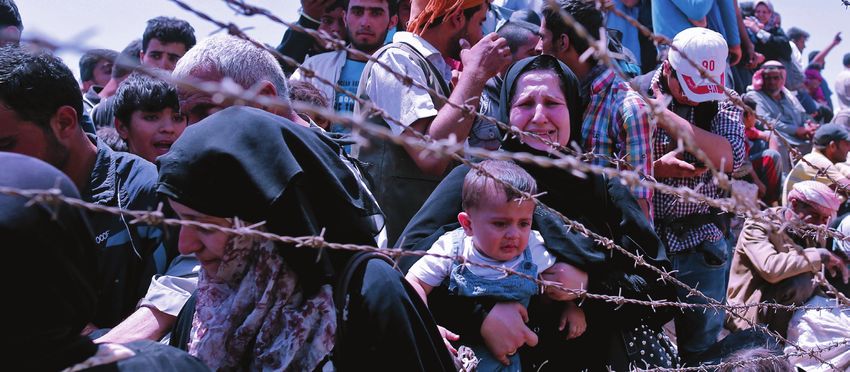
CITIZENSHIP AND ITS MEANING                             “Revile not those unto whom they pray beside Allah lest
                                                            they wrongfully revile Allah through ignorance. Thus
Citizenship, idiomatically, is the description of a cit-    unto every nation have We made their deed seem fair.
izen who has rights and duties imposed on him by            Then unto their Lord is their return, and He will tell
the fact that he belongs to a homeland. These rights        them what they used to do.” [Al-An’am, 6:108]
include, without limits, the right to education, health
care, and work in a particular homeland. As for du-                    THE PRINCIPLE OF
ties, they include, without limits, the duty of loyalty             RECOGNITION OF OTHERS
to the homeland and defending it, and to perform
and excel in work. Accordingly, citizenship is the re-      Even if we do not see the validity of His belief, God
lationship of the individual to his homeland, which is      said: “Unto you your religion, and unto me my reli-
determined by the constitution and the laws emanat-         gion.” This Chapter in the Qur’an is called “Surat
ing from it, which carry and guarantee the meaning          Al-Kafirun”, and God began it by saying: “Say: O
of equality between citizens.                               disbelievers!” [Al-Kafirun, 109:1] Despite this, he
   What are the general and important principles            acknowledged to them that they have their own reli-
that determine coexistence in Islam? It is an impor-        gion, and God said: “Lo! those who believe (this reve-
tant question to address in our minds.                      lation), and those who are Jews, and the Sabaeans and
                                                            the Christians and the Magians and the idolaters… Lo!
              THE PRINCIPLE OF                              Allah will decide between them on the Day of Resur-
             FREEDOM OF BELIEF                              rection. Lo! Allah is Witness over all things.” [Al-Hajj,
                                                            22:17]
This principle has been emphasised by the Holy
Qur’an more than once. God forbids compulsion in                  THE PRINCIPLE OF DIALOGUE
religion, saying: “There is no compulsion in religion.
The right direction is henceforth distinct from error.      You can find this in its finest form and best example,
And he who rejecteth false deities and believeth in         where the Qur’an calls for goodness in dialogue; and
Allah hath grasped a firm handhold which will nev-          if the other offends, God, says: “And argue not with
er break. Allah is the Hearer, Knower.” [Al-Baqarah,        the People of the Scripture unless it is in (a way) that
2:256] God is able to do everything and is able to          is better, save with such of them as doing wrong; and
give people the freedom to choose to say: “Say: (It         say: We believe in that which hath been revealed unto
is) the truth from the Lord of you (all). Then whosoever    us and revealed unto you; our Allah and your Allah
will let him believe, and whosoever will let him disbe-     is One, and unto Him, we surrender.” [Al-Ankabut,
lieve.” [Al-Kahf, 18:29] He affirms that it is among        29:46] Rather, this is a calling for those who do not
the requirements of the diversity of life that people       improve dialogue and do not find in themselves the
are part of many nations. He says Glory be to Him:          scientific competence nor the patience to avoid en-
“Had Allah willed He could have made you one com-           gaging in dialogue. Great good can be found in this
munity.” [Al-Nahl, 16:93] This principle is one of the      Qur’anic direction to the violator, as God instructs us
fundamental constants of Islam: “This is nought else        to follow the best means and beautiful words in ad-
than a reminder unto creation, Unto whomsoever of           dition to the best behaviour in dialogue. It is a calling
you willeth to walk straight.” [Al-Takwir, 81:27-28]        for dialogue in the most effective form, which is to
    Even after the Muslims became powerful in Madi-         exaggerate the goodness and make the effort to con-
nah, God confirmed this meaning in the verse: “Say:         vey the information through this door into the other
Obey Allah and obey the Messenger. But if ye turn           person’s heart.
away, then (it is) for him (to do) only that wherewith he
hath been charged, and for you (to do) only that where-       BENEFICENCE AND BENEVOLENCE
with ye have been charged. If ye obey him, ye will go
aright. But the Messenger hath no other charge than to      Unless an enemy fights and declares war, kindness
convey (the message) plainly.” [Al-Nur, 24:54] Among        and fairness is stipulated for all: “Allah does not for-
the freedom of people in their beliefs is the respect       bid you from dealing kindly and fairly with those who
for their religions and rituals, and this leads to their    have neither fought nor driven you out of your homes.
respect for Islam and Muslims. Therefore, Islam for-        Surely Allah loves those who are fair.” Al-Mumtahan-
bids insulting non-Muslims or insulting their gods:         ah, [60:8]
                                                                                                                    3
THE HIGH NATURE OF THE                               hatred of any people seduce you that ye deal not justly.
          HUMAN RACE TO GOD                                  Deal justly, that is nearer to your duty. Observe your
                                                             duty to Allah. Lo! Allah is informed of what ye do.” [Al-
Whatever his affiliation, colour, race, or gender, man       Ma’idah, 5:8] “Unto this, then, summon (O Muham-
is honoured by God Almighty: “Verily we have hon-            mad). And be thou upright as thou art commanded,
oured the Children of Adam. We carry them on the             and follow not their lusts, but say: I believe in whatever
land and the sea, and have made provision of good            scripture Allah hath sent down, and I am commanded
things for them, and have preferred them above many          to be just among you. Allah is our Lord and your Lord.
of those whom We created with a marked preferment.”          Unto us our works and unto you your works; no argu-
[Al-Israa, 17:70] God honoured man by making him             ment between us and you. Allah will bring us together,
a representative on earth.                                   and unto Him is the journeying.” [Al-Shura, 42:15]
    In the Holy Qur’an, God’s call to people is men-
tioned by the saying “O Children of Adam” in Surat              THE PRINCIPLE OF CALLING FOR
Al-A’raf four times “O Children of Adam! We have                 SEARCHING AND PROMOTING
revealed unto you raiment to conceal your shame.” “O           COMMON PRINCIPLES AND VALUES
Children of Adam! Let not Satan seduce you as he
caused your ( first) parents to go forth from the Garden.”   Regarding this principle, Allah says in the Qur’an:
“O Children of Adam! Look to your adornment at               “Say: O People of the Scripture! Come to an agreement
every place of worship, and eat and drink.” “O Children      between us and you.” [Al Imran, 3:64] The Messenger
of Adam! When messengers of your own come unto you           of God raised his companions on this great principle,
who narrate unto you my revelations.” “And (remem-           and we see that clearly in the dialogue of Jaafar bin
ber) when thy Lord brought forth from the Children of        Abi Talib, may Allah be pleased with him, and the
Adam.” [Al-A’raf, 7:26] We are all children of Adam,         King of Abyssinia, when the first Muslims migrat-
peace and blessing be upon him. In this, there are           ed from Makkah to Abyssinia and the Quraysh de-
signs through which it appears that human dignity            manded their return. Jaafer bin Abi Talib said,
is linked to the status of Adam and the dignity of his
humanity by the Grace of God Almighty, and this                “Oh King, we were an ignorant people, wor-
can be read from the kindness inherent in this appeal.         shipping idols, eating dead meat, committing
                                                               immorality, cutting ties of kinship, abusing our
        THE PRINCIPLE OF EQUITY                                neighbours, and the strong among us devouring
        IN DEALING WITH PEOPLE                                 the weak. We were on that until Allah sent us a
         OF A DIFFERENT BELIEF                                 Messenger from among us, whose lineage, hones-
                                                               ty, trustworthiness, and chastity we know, so he
Regarding those who quarrel with people who con-               called us to Allah to unite and worship Him, and
demn our religion, Allah warns us: “O ye who believe!          to cast off the stones and idols that we and our
Be steadfast witnesses for Allah in equity, and let not        fathers used to worship besides Him, and blood,

                                                                   Syrian refugees struggle behind barded wire in Turkey.

4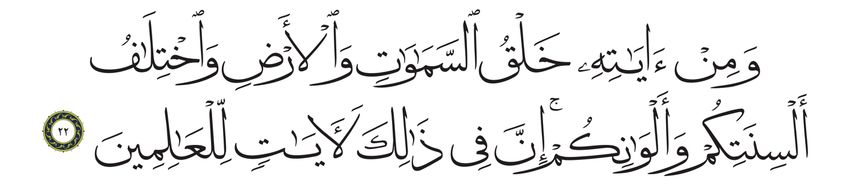
Rohingya refugees struggle behind barded wire in Bangladesh.

  and forbade immorality, false speech, consuming       him in Makkah in his childhood; they knew his no-
  orphan’s money, and slandering chaste women,          ble morals, fairness to the oppressed, and insistence
  and commanded us to worship Allah alone and           on always speaking the truth. Subequently God hon-
  not associate anything with Him, and command-         oured him with prophethood and he was told to pro-
  ed us to pray, zakat and fasting.” He added: “He      claim the message of peace, justice and love.
  enumerated the matters of Islam on —so we be-            One day a man from Zabid (a tribe from Yemen)
  lieved him and believed in him, and we followed       came to the city of Makkah with merchandise. The
  him according to what was brought from Allah; so      goods were sold to Al-A’as ibnu Wael, but were not
  we worshipped Allah alone, and we did not asso-       paid. The man was oppressed. The man from Zabid
  ciate anything with Him, and turned away from         asked for help from the Quraysh , but they did not
  what was forbidden to us, and made lawful what        want to help him. Al-Zubayr bin Abdul Muttalib got
  was permitted to us. When they oppressed us and       up and said, “Why are we allowing injustice?” Elders
  oppressed us and oppressed us, and prevented us       gathered Banu Hashim, Zahra, and Banu Taym bin
  from our religion, we went to your country, and       Murra in the house of Abdullah bin Jadaan. The elders
  we chose you over anyone else, and we desired to      made the Al-Fudhul (Pact of Curiosity) agreement
  be near you, and we hoped that we would not be        and helped the man from Zabid. They immediately
  wronged by you, O King.”                              met Al-A’as bin Wael and returned the merchandise
                                                        to its rightful owner. Even though this happened pri-
   Jaafar bin Abi Talib—may Allah be pleased with       or to the proclamation of Islam,k the Prophet of God
him—focused on the common values of honesty,            said of the agreement, “…if I was asked in Islam for
good neighbourliness, abstaining from incest and        something like this, I would have accepted it.”
bloodshed, and other such values. Muslims lived in
Abyssinia and coexisted in what was a new society           THE PRINCIPLE OF COMPASSION
and a different culture. They were able to hold firm         AND MAINTAINING DIGNITY
to the values that united them and not focus on their              AND HUMANITY
differences.
                                                        It is not possible to build a coexisting society if a large
         THE PRINCIPLE OF                               part of that society lives in a state of misery and suf-
    PROMOTING INITIATIVES AND                           fering. This is one of the most important ways of Al-
     PROMOTING EQUALITY AND                             lah. The Messenger of God, said: “One who strives to
      ELIMINATING INJUSTICE                             help the widows and the poor is like the one who fights
                                                        in the way of Allah.” And: “I will be like this in Jannah
The Messenger of God, after he was given the Divine     with the person who takes care of an orphan.”
message, was able to penetrate people’s hearts. He          Imam Ahmad and Al-Bayhaqi narrated from Abu
was a role model who led by example. People knew        Hurairah, “A man complained to the Messenger of Al-
                                                                                                                   5
lah—Peace be upon him— of the hardness of his heart, Nisaa, 4:145] and verses of the Quran speak of their
and he said to him:’ if you want your heart to soften, reprehensible characteristics, bad morals, and disposi-
then feed the needy, and stroke the head of the orphan.’” tions that involve falsehood which they endeavoured
to spread among the people. However, the Messenger
THE PRINCIPLE OF RESPECTING of God did not use the certainty of his Lord to kill
OTHERS’ OPINIONS IS ONE OF them or punish them. Rather, he continued to call for
THE MOST IMPORTANT FOR the values of the true religion and generally warned
PEACEFUL COEXISTENCE against the characteristics of hypocrisy, and treated
them outwardly with kindness,to the extent that he
The Messenger of God was keen to prevent disso- did not expose them among his companions so that
nance within the community. We see this clearly in one of them would not be reckless and expose one of
the wisdom of not rebuilding the Kaba after Islam them. Only Hudhaifah bin Al-Yaman, his secretary,
had been proclaimed. Sayyidna Aisha—may God be told of their names. Abdullah bin Ubayy bin Salul con-
pleased with her—related what the Prophet said: verted to Islam and remained close to the Messenger
of God, and the Muslims did not treat him with the
“O `Aisha! If the people had not been so close to crime of his father.
the pre-Islamic period of ignorance I would have The Holy Quran mentions to us in more than
dismantled the Kaba and made two doors, one for one verse that this group of people posed a serious
its entrance and the other for an exit.” threat to civil society and harm to the Messenger of
God. “Surely, if we return to Al-Madinah the mightier
THE PRACTICAL APPLICATION will soon drive out the weaker,” [Al-Munafiqun, 63:8]
OF COEXISTENCE IN THE “And of mankind, there is he whose conversation on the
HISTORY OF MUSLIMS life of this world pleaseth thee (Muhammad), and he
calleth Allah to witness as to that which is in his heart;
The basis for this is looking at the biography of the yet he is the most rigid of opponents.” [Al-Baqarah,
Prophet because God Almighty directed Muslims 2:204] “And when he turneth away ( from thee), his
to follow His guidance and obey His commands effort in the land is to make mischief therein and to de-
and the Mighty one said: “You have a good example stroy the crops and the cattle, and Allah loveth not mis-
[to mankind] in the Messenger of Allah.” [Al-Ahzab, chief.” [Al-Baqarah, 2:205] “And when it is said unto
33:21] him: Be careful of thy duty to Allah, pride taketh him
to sin. Hell will settle his account, an evil resting-place.”
FIRST: DEALING WITH [Al-Baqarah, 2:206]
THE HYPOCRITES Here we must stand and look at this emerging state
in which the enemies are lurking, and the danger of
The Messenger of God had to deal in Makkah with the existence of the internal enemy is not hidden
those who did not believe in his message. They showed from anyone, yet the Prophet does not attack them,
him hostility and tested him and his companions with but rather leaves their affairs to Allah. The one who
all kinds of torment, including verbal and physical is able to coexist with the enemy who realises its dan-
abuse, economic and social siege, and forced displace- ger and its apparent hatred, and in the event of war
ment. But when the Prophet came to Madinah, he that threatens to eradicate the Muslims, represents
faced three types of people whose interests were inter- the pinnacle of the greatness of that person and the
twined and converged in resentment toward him. They advancement of that society.
were the pagans, Jews and hypocrites. The hypocrites
were the ones who pretended to belong to this new DEALING WITH THE JEWS
religion, yet the faith did not touch their hearts, so
they remained in confusion, hesitation and fear. The The interaction of the Prophet of God with the Jews
Quran speaks about the psychological aspect of this represents the height of tolerance and fairness. Here
group of people and the root of their hostility to this it is necessary to list some of the established examples
religion—but what concerns us is how the Messenger of the Prophet’s dealings with the Jews.
of God dealt with them. God Almighty said regarding When the Prophet came to Madinah he was in-
them: “Lo! the hypocrites (will be) in the lowest deep of formed that the Jews would fast on the tenth of
the Fire, and thou wilt find no helper for them,” [Al- Muharram in thanks to God for the victory of Mo-
6ses, so the Prophet said, “I am indeed closer to Moses O Umar, pay off his loan, and give him extra because
than them,” and ordered his companions to fast on you frightened him.” Umar took Zaid ibn Su’nah,
that day. It is understood from this that the Prophet paid off his debt, and gave him an extra twenty saa`
wanted by this act to teach all people that Muslims of dates. Zaid then asked him for the reason of the
revered the victory of Moses, peace be upon him, and increase and Umar replied that the Prophet of God
his victory was also a victory for them since the mes- had ordered to give it because Umar had scared Zaid.
sage of the Prophets is one. Zaid, then asked: “Do you recognise me, Umar?”
When the Prophet married Safiya bint Hayyi (the “No”, he said.
mother of the believers), who was a Jew before her “I am Zaid ibn Su`nah”
conversion to Islam, and was reproached for being “The scholar of the Jews?” Umar asked.
Jewish, he said to her: “You are the daughter of a “Yes, the same one.”
prophet, your uncle is a prophet, and you are under a “Then what made you behave and speak with the
prophet.” This is an indication that blaming people Prophet of God as you did?” Umar asked.
for their affiliation is not part of the religion at all, as “O Umar!” he replied, “I recognized all of the signs
the Messenger of God orders his wife to celebrate her of prophethood upon seeing the face of Muhammad ex-
origin and affiliation. cept two signs that were not immediately evident: One,
When the funeral of a Jew passed by, the Messen- that his forbearance would precede his rashness, and
ger of God stood up for it, and he was questioned that his forbearance would increase upon encountering
about it, he said: “Is this not a soul.” excessive rashness. Now I have recognised these two signs
A Jewish boy who was serving the Prophet of as well. Bear witness, O Umar! I am pleased with Allah
God became ill, and he visited him. The Prophet as my Lord, with Islam as my religion, and with Mu-
called him to Islam while he was dying. Here it must hammad as my Prophet. Also bear witness that I give
be pointed out that the Prophet was not seeking to half of my wealth —and I have plenty of wealth—in
achieve gains from visiting the patient and convers- charity to the nation of Muhammad (peace and bless-
ing with him. He had in fact the best interests of the ings be upon him).”
boy at heart. Umar and Zaid then returned to the Prophet of
The Prophet of God’s shield was mortgaged to a God and Zaid publicly proclaimed: “I bear witness
Jew, and this is further evidence of civilised dealings that none is worthy of worship besides Allah, and I bear
with people of a different faith. witness that Muhammad is His servant and Messen-
Zaid ibn Su`nah was one of the very notable Jew- ger and I believe in him.” Thus, Zaid testified to the
ish scholars of Madinah who lived at the time of the Prophet Muhammad’s message and took the pledge
Holy Prophet. The Prophet took a loan from Zaid of allegiance on his hand. Later, Zaid participated in
to help other people in the city and promised to pay a number of expeditions along with the Prophet and
it on a certain date. The Prophet of God, who was was martyred in the Battle of Tabuk.
with Abu Bakr, Umar, Uthman, and a number of oth-
er companions—may God be pleased with them— DEALING WITH THE CHRISTIANS
had offered funeral prayers before Zaid came to the
Prophet and grabbed him by his shirt. It was two or The Prophet of God, who is the best example, had
three days before the due date to repay the debt. Zaid huge respect for religious rituals in his dealings with
spoke to him angrily and said: “O Muhammad! Why Christians. On the authority of Muhammad bin Jaa-
don’t you pay off my due? By Allah, I know nothing of far bin Al-Zubayr, when the delegation of Christians
your family except deferment [on debts]. I know well of from Najran came to the Messenger of God they
your people.” entered his mosque following the afternoon prayer.
At this Umar became extremely angry and said: When their time of prayer came, they were told they
“Did you actually just say what I heard you say to the could pray in his mosque. Some people wanted to
Messenger of God? Did you really just do to him what prevent them, so the Messenger of God said: “Leave
I saw? By the One Who holds my life in His hand, I them.” The Prophet’s treatment of the Christians was
would have struck your head with my sword.” The based on respect. Their treatment signifies Islam’s
Prophet, who was looking at Zaid ibn Su’nah quietly teachings relating to religious pluralism in a society
and patiently, said: “O Umar! We don’t need this. I was with different religious beliefs and practices.
more in need of your advice to pay off his loan well, and Peaceful coexistence with the other in Islam is a
your advice to deal with him courteously. Go with him well-established fact confirmed by the texts of the
7Qur’an and Sunnah, and the chapters of Islamic INDEX OF RESOURCES
history and its events. Islam guarantees freedom of AND REFERENCES
belief for all people. It is not permissible under any
circumstances to force non-Muslims to convert to • The Holy Qur’an
Islam. It also guarantees the interaction of Muslims • Peaceful Coexistence from Islamic Perspec-
with others in sales, trade, and visits, and represents tive, Dr. Abd Rabo Abdel Qader, Jerusalem
peaceful coexistence in light of the purposes and University Journal
rules of Shari’ah. • Approach in Preparation of Theses and Re-
Islam and the teachings of the Beloved Prophet searches, Dr. Salah El Din Fawzy, Publisher:
aim to spread the culture of tolerance and modera- Dar Al Nahda Al Arabia, Cairo, Edition 1999
tion in order to achieve coexistence with communi- • Al Qamus Al Muhit, Majd Al Din Abu Ta-
ties of different nationalities, ethnicities, and sects. In her Mohamed bin Yaqoob Al Fairouz Abady,
many ways that guarantees a peaceful life that derives died in 817 A.H., criticized by: Heritage Crit-
its effectiveness from the values, principles and best icism Office in Al Resalah Corporation under
constants of Islam. supervision of Mohamed Naiem Al Erkasosy,
The origin of Islam is peace, not war, and war is not Publisher: Al Resalah Publishers, Beirut, Leb-
resorted to except in cases of necessity. Disagreement anon, Edition 8, 1426 A.H. -2005
in belief is not a reason for fighting opponents, and • In communicating with Others by Prof. Dr.
aggression by actions is the only logical reason for Qotb Mustafa Sano, Kuwait Ministry of
fighting and self-defense. Awqaf and Islamic Affairs in Kuwait, Con-
The human origin was mentioned by the Prophet ference of Drafting Programs, Procedures and
in the farewell sermon: “O people, your Lord is one, Plans for Protecting the youth from manifes-
and your father is one. An Arab has no superiority over tations of deviation and religious fanaticism
a non-Arab nor a non-Arab has any superiority over an 1427 A.H./2006
Arab; also a White has no superiority over a Black nor • Lisan al-Arab, Mohamed bin Makram bin
does a Black have any superiority over a White except Ali, Abu Fadl, Gamal Al Din Ibn Manzur
by piety and good action.” Al Ansari Al Rwaifi’e Al Afriky, died in 711
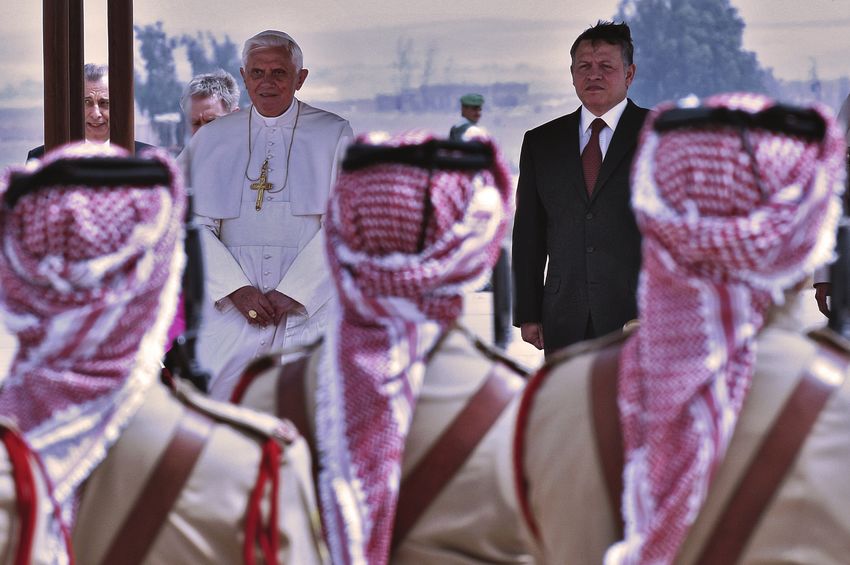
Pope Benedict XVI expresses “deep respect” for Islam while visiting The Hashemite Kingdom of Jordan
8A.H., criticized by Abdullah Ali Al Kaber, Ehia’ Al Turath Al Araby, Beirut, Publishing
Mohamed Ahmed Hasab Allah, and Hashem Year: Not known
Mohamed Al Shazly, Publisher: Dar Al • Musnad Imam Ahmed bin Hanbal Abu Ab-
Maarif, Cairo –Egypt –Publishing year: not dullah Ahmed bin Mohamed bin Hanbal
known bin Helal bin Asad Al Shebany (died in 241
• Jamiu Al Bayan, Mohamed bin Jarir bin Yazid A.H.), criticized by Soaeb Al Arna’ot –Adel
bin Kathier bin Ghaleb Al Amaly, Abu Ja’far Morshed and others under supervision of
Al Tabari, died in 310 A.H., criticized by: Dr. Dr. Abdullah bin Abdel Mohsen Al Turkey,
Abdullah bin Abdel Mohsen Al Turkey, Pub- Publisher: Al Resalah Corporation, Edition
lisher: Dar Hajr Publishers, Edition 1, 1422 1, 1421 A.H. -2001
A.H. -2001 • Sunnah by Al Tirmidhi, Mohamed bin Essa
• Interpretation of the Holy Quran, Author: Al Tirmidhi Abu Essa (died in 279 A.H.),
Abu Al Fedaa Ismail bin Omar bin Kathier criticized by Bashar Awad Maarof, Publisher:
Al Qurashi Al Basri and then Al Demishqi Dar Al Gharb Al Islamy –Beirut, Edition 1,
(died in 774 A.H.) criticized by Samy bin 1998
Mohamed Salama, Publisher: Dar Tiba Pub- • Al Sunan Al Kubra by Ahmed bin Al Hussein
lishers, Edition 2, 1420 A.H. -1999 bin Ali bin Mussa Al Kharasani, Abu Baker
• Jamiu Musnad Sahih Al Mukhtasar of Mat- Al Bayhaqi, died in 458 A.H., criticized by
ters, Sunnah and days of the Messenger of Mohamed Abdel Qader Atta, Publisher: Dar
Allah –Peace by upon him -, Mohamed bin Al Kotob Al Elmia, Beirut, Lebanon, Edition
Ismail Abu Abdullah Al Bukhari Al Jaafi, crit- 3, 1424 A.H. -2003
icized by Mohamed Zaher bin Naser Al Nas- • Historical Rooting of Citizenship by Dr. Feri-
er, Publisher: Dar Tawk Al Najah, Edition 1, al Ghanem Ahmed Al Saegh
1422 A.H. • The Resurrection Boost in the Guidance of
• Al Musnad Al Sahih Al Mukhtasar of reflect- the Best of Worshipers by Ibn Qayyim Al
ing justice of the Messenger of Allah, by Mus- Jawziyyah, Dar Al Resalah Publishers
lim bin Al Hajaj Abu Al Hasan Al Qasheri • The Book of the Major Classes, Al Khanji
Al Niesabory, died in 261 A.H., criticized by Bookstore, Publishing Year: 1421 A.H. corre-
Mohamed Fouad Abdel Baky, Publisher: Dar sponding to 2001
Sheikh Faid Mohammed Said is currently General Secretary of the Fatwa and Islamic Affairs commission and
Imam and Khateeb of the Central Mosque in London.
And of His signs is the creation of the heavens and the earth and the differences
of your tongues and your colours. Surely in that there are signs for all peoples.
The Romans, 22
© FreeIslamicCalligraphy. com
9You can also read


