SPRING BIRDS IN MCHENRY COUNTY - FIRST ARRIVALS AND YEAR ROUND RESIDENTS
←
→
Page content transcription
If your browser does not render page correctly, please read the page content below
Spring Birds
in McHenry County

                                             Adult Male American Goldfinch. Photo: Mike’s Birds

   First Arrivals and Year Round Residents
            Early March to Early April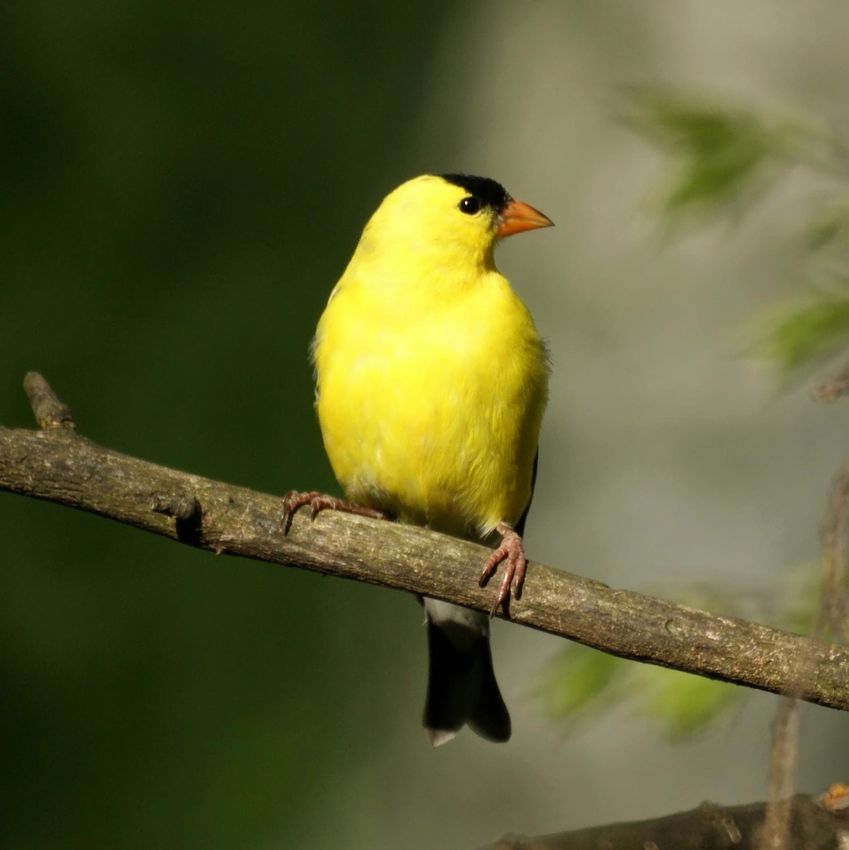
Welcome to Springtime Birding in McHenry County!

Wild places in McHenry County nurture many year-round resident bird species that become more active
as the weather warms. The prairies, oak savannas, wetlands, and woodlands of this area also provide
important nesting and feeding habitat for all kinds of migratory birds who arrive or pass through each
spring and fall. Our spring migration season, from March to May, is one of the best times to learn about
northern Illinois birds.

Birding, also known as birdwatching, is the process of observing and identifying bird species. This guide
will help novice birders get started with spotting common mid-spring bird arrivals in McHenry County.
Many of these birds flock to neighborhoods as well as protected natural areas, so you may see them on
a walk in the woods or during a stroll down your street. Experienced birders may also find this guide
useful as a refresher or quick-start list. Happy birding!

        If you want to see birds even closer to home, look for the species in this guide that are marked
        with a bird house. These species are attracted to backyard feeders and habitat, making birding
        at your own window simple and fun for the whole family! Check the Resources at the end of this
        guide to learn more about bird-friendly backyards.

                                       Tips for Beginner Birders

What do I need to start birding? All you really need is a place to observe birds and your own eyes.
However, most birders find that binoculars and a good bird identification guide make it easier and more
enjoyable to spot and identify birds. Check the Resources page at the end of this guide for more
information about binoculars and guides.

Where should I go to see birds? Public parks, trails, and conservation areas are great places for a
birding adventure. And don’t forget to look in your own backyard and around your neighborhood! Many
species can be spotted around the edges of shopping centers, subdivisions, and apartment complexes.
The more you observe your surroundings, the more birds you will start to see everywhere.

What if I need to stay home or can’t take a walk? That’s the perfect opportunity to bring birds to your
yard, balcony, patio, or porch! Bird feeders and food are sold online and at hardware, grocery, and big
box stores. But feeding birds doesn’t have to be complicated or expensive. You can even make bird
feeders out of items around the house or in your recycling bin. Check the Resources page of this guide
for more information about attracting birds to your backyard.

How do I develop my birding skills? It’s pretty simple! Just listen and watch the world around you. Move
slowly and quietly and observe your surroundings in detail. As you become familiar with common local
bird species, you’ll be able to quickly and easily tell what kind of birds you see and hear. And of course,
it’s fun to share your birding adventure with friends or family!

Another way to challenge yourself as a birder is by creating a “life list” of bird species to spot and check
off as your skills grow. A good introduction to “life lists” can be found at www.backyardnature.net/
birdlist.htm.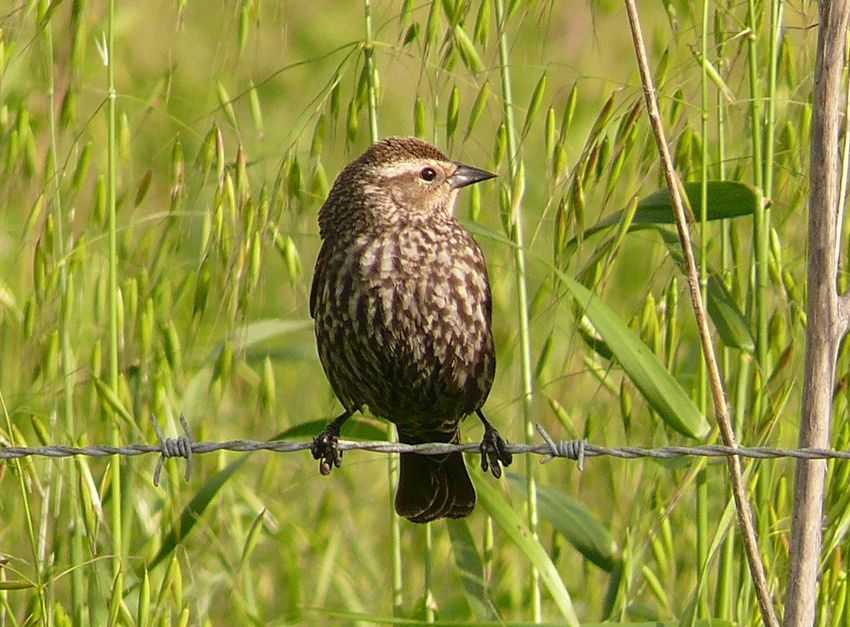
Species Information                            ID Tips                            Photos

American Robin                             ID Tips: Males have a gray
Some Robins stay here year-round,          back, darker gray head and
roosting in trees over the winter and      throat, white underside and a
becoming active and more visible as        warm orange belly and breast.
the weather warms. They are a              Females have identical

                                                                                                    Photo: mdf
familiar spring sight everywhere,          coloring, but in subdued tones.
from gardens, parks, and yards to          Up to 6.7” long.
farm fields, woodlands, and forests.
Robins can be seen hopping along           Listen to Calls:
the ground and listening for the           www.allaboutbirds.org/guide/
                                                                             Adult male or female
movement of tasty invertebrates in         American_Robin/sounds
the top layer of soil. They also eat
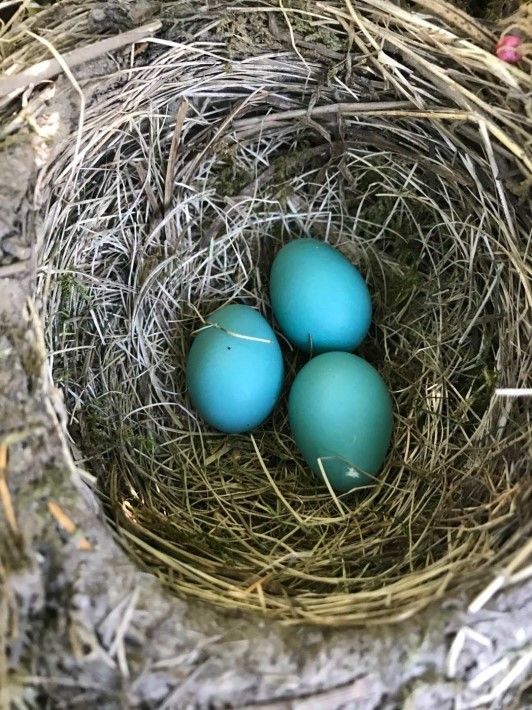
fruit and insects. Robins lay sky-blue     Scientific Name: Turdus
eggs in nests made from grass and          migratorius

                                                                                                     Photo: Ruby Feng
mud, tucked into tree branches or
under the eaves of buildings.

     Did You Know? You can attract
this bird to your yard with suet,
sunflower seeds, peanuts, fruit, and
mealworms.
                                                                             Robin eggs in nest

Black-Capped Chickadee                     ID Tips: Males and females
A common sight flocking to backyard        have the same gray back,

                                                                                                     Photo: tsaiproject
bird feeders, this inquisitive and         paler gray belly and breast,
acrobatic bird lives in northern           white head, and black cap and
Illinois year-round. Listen for its        throat. Up to 5.9” long.
cheerful, familiar calls, which sound
like “spring’s here” and “chick a dee      Listen to Calls:
dee dee.” Researchers have                 www.allaboutbirds.org/guide/
discovered that some Chickadees            Black-capped_Chickadee/           Adult male or female
mimic elements of human language           sounds
in their calls, perhaps due to their
natural curiosity and adaptability in      Scientific Name: Poecile
living near people. Look for this little   atricapillus
bird in forests, open woodlands,                                                                     Photo: Talshiarr
shrubby thickets, parks, and yards.
They eat insects, seeds, and fruit.

     Did You Know? You can attract
this bird to your yard with suet,
peanuts, mealworms, and sunflower,
safflower, and nyjer seeds.                                                  Adult male or female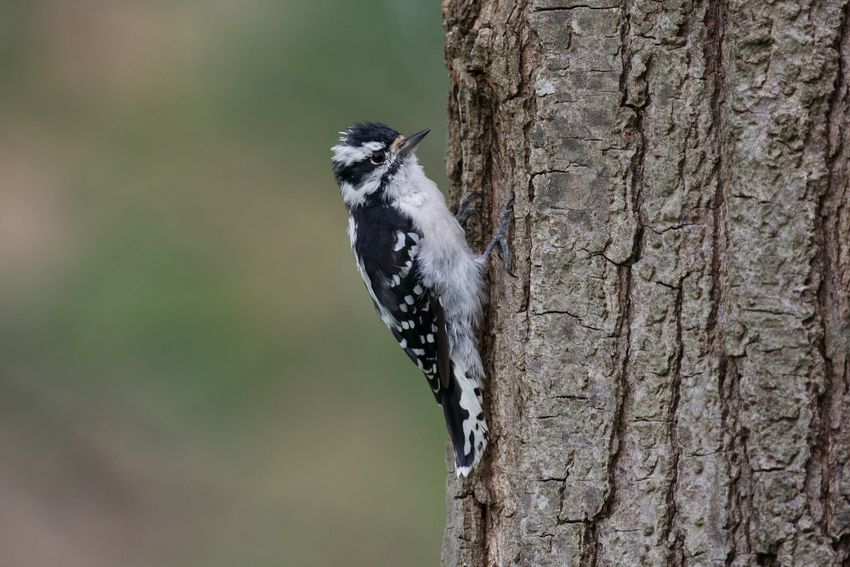
Species Information                           ID Tips                            Photos

Downy Woodpecker                       ID Tips: Males have bright
This acrobatic, active little          checkered black and white

                                                                                               Photo: Wolfgang Wander
woodpecker lives in the Midwest        coloring, a white breast, belly
year-round and is a frequent           and throat, and a tiny bright
visitor to backyard bird feeders.      red cap. Females look the
Look for their distinctive black       same but do not have a red
and white colors flitting from tree    cap. Up to 6.7” long.
to tree in woodlands, gardens,
parks, yards, and fencerows, and       Listen to Calls:
listen for their drumming on wood      www.allaboutbirds.org/guide/
as they forage for insects and         Downy_Woodpecker/sounds
spiders. Woodpeckers are also                                            Adult male
known to eat acorns, berries,          Scientific Name: Dryobates
grains, seeds, suet, and peanut        pubescens
butter.

     Did You Know? You can
attract this bird to your yard with

                                                                                               Photo: Russ
peanuts, suet, mealworms, and
sunflower or safflower seeds

.
                                                                         Adult female

Eastern Bluebird                       ID Tips: Males have a brilliant
This colorful migratory bird is        royal blue back and head, a
found across North America and         warm red-brown breast and

                                                                                                                        Photo: Flying822
as far south as Nicaragua. Many        throat, and a white underside.
birders look forward to their bright   Females have identical
return each spring! Look for their     coloring in subdued shades,
unique blue and orange colors          with gray-blue and paler red-
out in open spaces dotted with         brown feathers. Up to 8.3”
trees and sparse understory. This      long.
includes parks, savannas,
pastures, yards, and golf              Listen to Calls:                  Adult male
courses. Bluebirds often seek out      www.allaboutbirds.org/guide/
nest boxes and bird houses to          Eastern_Bluebird/sounds
raise their young. They eat insects
                                                                                                                        Photo: Patrick Coin

and fruit as well as the occasional    Scientific Name: Siala sialis
small animal, like frogs.

       Did You Know? You can
attract this bird to your yard with
suet, peanuts, mealworms, and
fruit.
                                                                         Adult female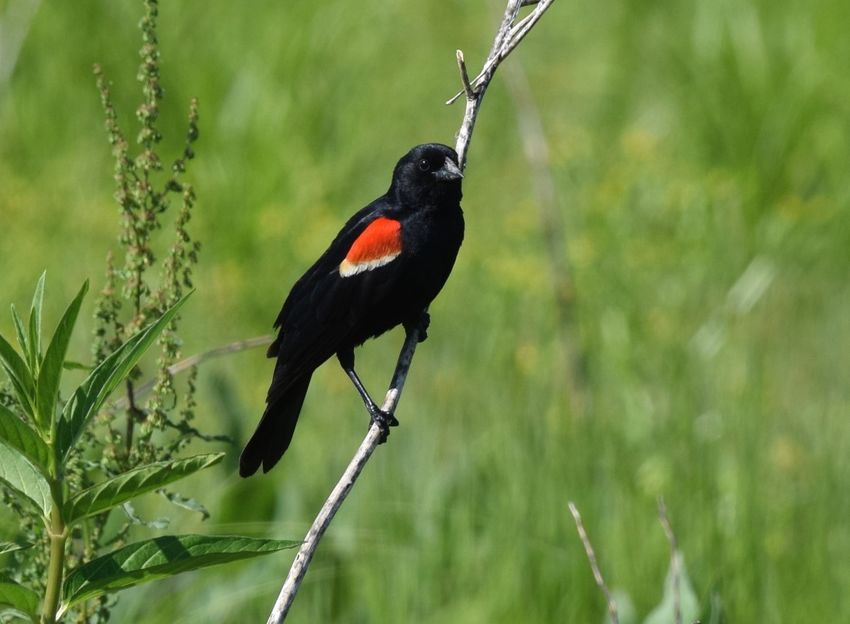
Species Information                         ID Tips                             Photos

Northern Cardinal                     ID Tips: Males are scarlet red
Cardinals live here year-round        with a perky, pointed crest,

                                                                                                    Photo: Hari Krishnan
and are common, cheery visitors       orange bill, and a distinct
to bird feeders and residential       black mask across the front of
areas. Look for their red colors      the face. Females share the
and listen for their perky “birdie    same shape but a completely
birdie birdie” call in dense          different coloring. They are a
shrubby and wooded areas. This        red-tinged tan with deeper red
includes hedges, wooded edges,        wings and tail, and no mask
thickets, parks, and yards,           on the face. Up to 9.1” long.     Adult male
Cardinals enjoy seeds, fruit, and
insects.                              Listen to Calls:
                                      www.allaboutbirds.org/guide/

                                                                                                    Photo: William Klos
     Did You Know? You can            Northern_Cardinal/sounds
attract this bird to your yard with
sunflower and safflower seed,       Scientific Name: Cardinalis
peanuts, cracked corn, and millet. cardinalis

                                                                        Adult female

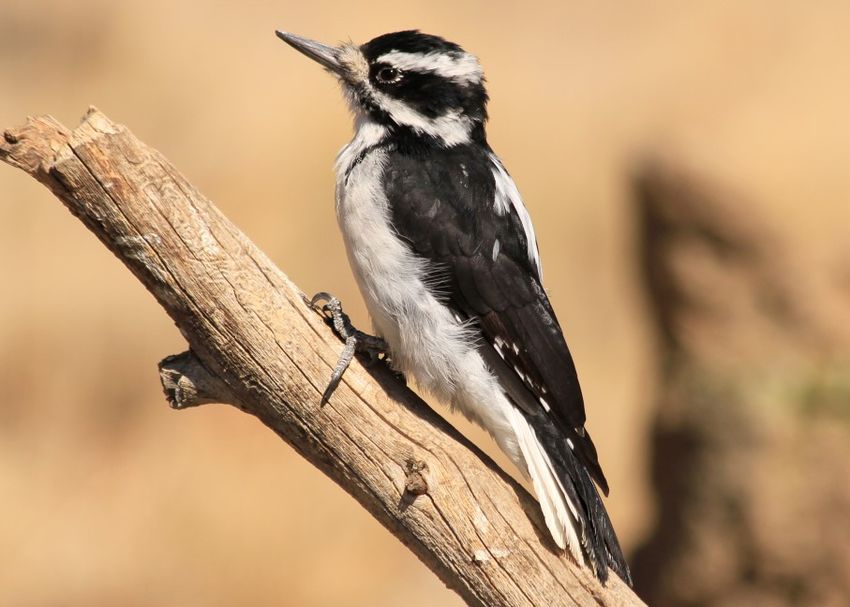
Hairy Woodpecker                      ID Tips: Males and females
Hairy Woodpeckers look similar to     are boldly patterned in

                                                                                              Photo: Andy Reago &
their smaller cousins, Downy          contrasting black and white.
Woodpeckers. Look for a larger        Look for black wings check-

                                                                                              Chrissy McClarren
bodied bird with fluffy little        ered with white, two white
feathers around the base of its       stripes on the head, and a
long bill. You will see Hairy         large white patch in the center
Woodpeckers hammering for             of a black back. Males also
insects and larvae on the trunks      have a small patch of red on
and main branches of large trees.     the back of the head. Up to
They also eat fruit and seeds.        10.2” long.                       Adult male
Mature woodlands, wooded                                                                      Photo: Simon Wray at Oregon
edges in parks and yards,             Listen to Calls:
orchards, and shady cemeteries        www.allaboutbirds.org/guide/
are good places to spot this bird.    Hairy_Woodpecker/sounds
                                                                                              Dept. of Fish & Wildlife

     Did You Know? You can            Scientific Name: Dryobates
attract this bird to your yard with   villosus
sunflower and safflower seeds,
peanuts, suet, and mealworms.

                                                                        Adult female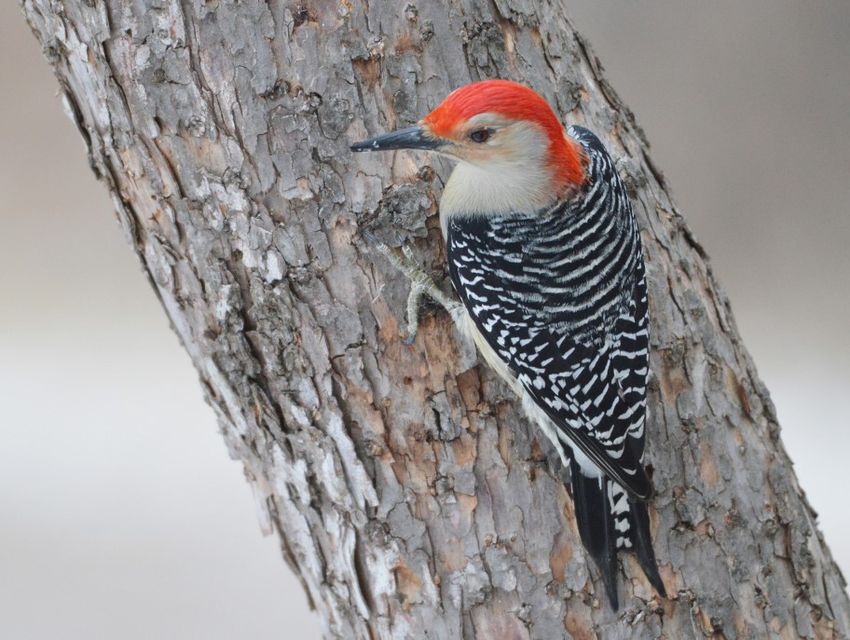
Species Information                           ID Tips                             Photos

Red-Bellied Woodpecker                 ID Tips: Males have a bright
Listen for loud drumming sounds        barred black and white back

                                                                                                Photo: Jocelyn Anderson
as this bird hammers trees with        and wings, pale gray under-
its beak in search of tasty insects.   sides with a light red spot, and
Larger than the Hairy and Downy        a flashy red cap. Females
Woodpeckers, the Red-Bellied           have similar coloring, but the
Woodpecker is able to stick its        red cap does not extend fully
barb-tipped tongue out nearly 2”       over the top of the head. Up to
past the end of its beak to snatch     9.4” long.
prey from the crevices in bark.
They are found in forests, parks,      Listen to Calls:
and yards as they hunt for             www.allaboutbirds.org/guide/
                                                                          Adult male
insects, spiders, acorns, nuts,        Red-bellied_Woodpecker/
pinecones, fruit, suet, and small      sounds
animals.

                                                                                                Photo: DickDaniels
                                       Scientific Name: Melanerpes
     Did You Know? You can             carolinus
attract this bird to your yard with
peanuts, suet, mealworms, fruit,
cracked corn, and sunflower and
safflower seeds.

                                                                          Adult female
Red-Winged Blackbird                   ID Tips: Males are glossy
One of our earliest signs of spring    black with scarlet red and
arriving in northern Illinois, these   yellow shoulder patches.

                                                                                                    Photo: Andy Reago &
flashy black birds sing their          Males will puff up or hide their
“Conk-la-reee!” call all day long.     shoulder patches depending

                                                                                                    Chrissy McClarren
Males are highly territorial and       on how confident they feel.
spend about 25% of each day            Females look completely
aggressively defending their           different from males, with
chosen radius of territory against     streaky brown feathers. Up to
male competitors and predators.        9.1” long.
Look for Red-Winged Blackbirds
near wetlands and waterways, in        Listen to Calls:                   Adult male
fields and prairies, and in the        www.allaboutbirds.org/guide/
grasses and trees along roads.         Red-winged_Blackbird/sounds
They enjoy insects, seeds, and
grains.                                Scientific Name: Agelaius
                                                                                                    Photo: Linda Tanner

                                       phoeniceus
     Did You Know? You can
attract this bird to your yard with
sunflower seeds, cracked corn,
peanuts, millet, and oats.

                                                                          Adult female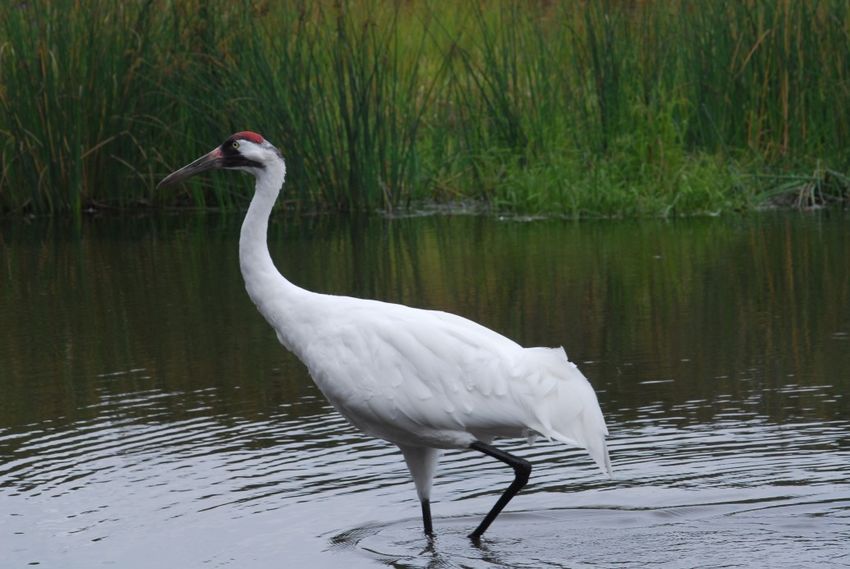
Species Information                            ID Tips                             Photos

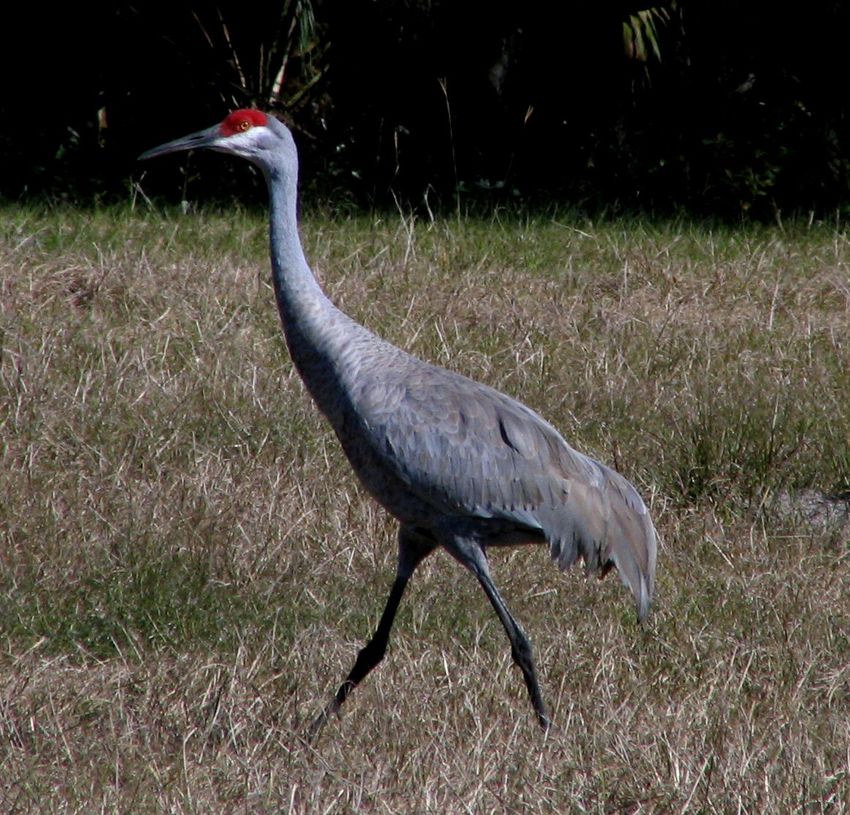
Sandhill Crane                           ID Tips: Males and females
This tall, stately crane is one of       are slate gray with black legs,
our region’s most spectacular            pale cheeks, and red skin
seasonal sightings. You may see          patches on the head. Some
enormous circling flocks                 may have a rusty wash on the
overhead during spring migration.        back and wings. Juveniles,

                                                                                                   Photo: Mwanner
Listen for their unique trilling calls   also known as colts, do not
and look for them near wetlands,         have pale cheeks or red skin.
fields, and prairies. They search        Up to 42.7” long.
for a variety of foods including
seeds, cultivated grains like corn       Listen to Calls:
and wheat, berries, tubers,              www.allaboutbirds.org/guide/
invertebrates, and small animals         Sandhill_Crane/sounds              Adult male or female
like mice and frogs.
                                         Scientific Name: Antigone

                                                                                                     Photo: Serge Melki
Did You Know? Sandhill cranes            canadensis
choose lifetime mating partners
based on their dancing skills,
which involve flapping the wings,
pumping the head, and leaping.

                                                                            In flight

Whooping Crane                           ID Tips: Males and females
Thank to decades of conservation         are snowy white with black
efforts, the U.S. population of          legs and black wing tips that
Whooping Cranes grew from just           are more visible in flight. The

                                                                                                     Photo: Cheep Shot
20 remaining birds in 1941 to            head features a long yellow bill
more than 800 individuals today.         and reddish-black coloring
This massive white crane species         near the bill and on the crown,
is sometimes spotted in McHenry          Juveniles have light brown
County on its way north for the          heads and brown mottling on
summer. Keep an eye open near            the wings. Up to 59.1” long.
wetlands, fields, and prairies, as
well as among groups of their            Listen to Calls:                   Adult male or female
smaller cousins, Sandhill Cranes.        www.allaboutbirds.org/guide/
Whooping Cranes forage for               Whooping_Crane/sounds
plants, invertebrates, and small
animals like frogs.                      Scientific Name: Grus
                                         americana
                                                                                                     Photo: U.S.D.A.

Did You Know? Scientists have
tracked the annual migration
patterns of Whooping Crane
flocks for years. You can see
where these birds are moving at
map.bringbackthecranes.org.
                                                                            In flight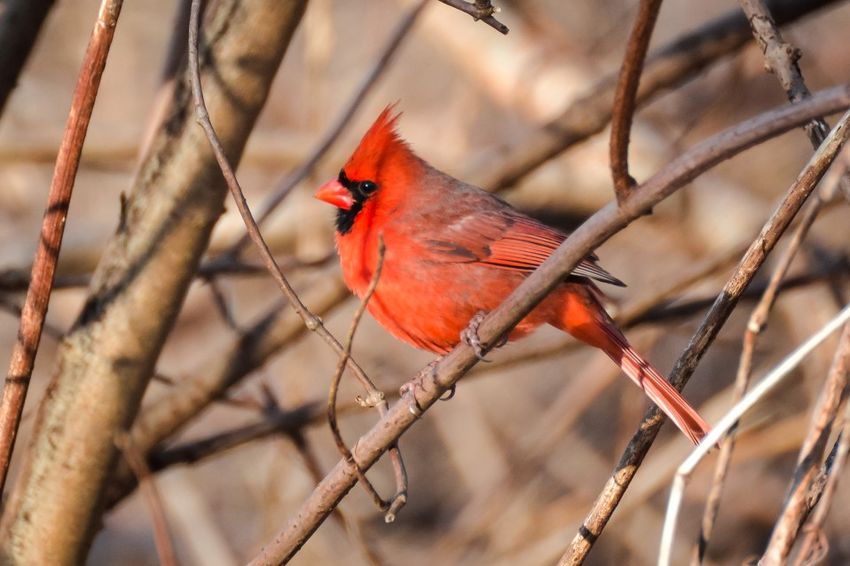
Resources

Choose Your Birding Tools:

Check out binoculars for different budgets at www.birdfeederhub.com/best-budget-binoculars-for-
backyard-bird-watching/.

The Cornell Laboratory of Ornithology’s All About Birds website offers extensive free bird identification
information, from photos to recordings of bird songs, at www.allaboutbirds.org.

The National Audubon Society provides recommendations for bird identification books and apps at
www.audubon.org/news/what-bird-guide-best-you and www.audubon.org/news/the-best-birding-apps-
and-field-guides. Many of the apps are free! Look for books at your local bookstore, library, and online
retailers, and download apps from your Apple or Android store.

Become a Citizen Scientist:
Become a volunteer scientist with eBird, a free worldwide citizen science project, at www.ebird.org.
Birders can develop their skills with online learning tools and submit their own birding data to support
global bird research.

Volunteer to look for local crane species during the annual Midwest Crane Count project, a multi-state
effort organized by the International Crane Foundation. This non-profit conservation organization also
operates a learning center in Baraboo, Wisconsin, where you can see 15 species of cranes up close!
Visit www.savingcranes.org.

Join a Birding Group:
Meet other birders through birding events and outings hosted by the McHenry County Audubon Society
and the Illinois Audubon Society. Visit www.mchenryaudubon.org and www.illinoisaudubon.org.

Find Birding Activities for the Whole Family:

Find resources and activities for young birders through the eBird’s Young Birders Network at
https://ebird.org/about/resources/for-young-birders

Sign the “Pledge to Fledge” and help spread the word about birding to your family and friends!
https://gbbc.birdcount.org/pledge-to-fledge/?lang=fr

Learn About Backyard Bird Feeding:

Visit www.feederwatch.org/learn/feeding-birds/ for lots of information about attracting birds to your
backyard, porch, balcony, or neighborhood.
You can also read


