Sport Welcomes Refugees - A Guide to Good Practice in Europe - Sport Inclusion Network
←
→
Page content transcription
If your browser does not render page correctly, please read the page content below

Sport
                       Welcomes
                       Refugees
                       A Guide to Good Practice in Europe
© Christopher Glanzl
Publisher
    Camino – Werkstatt für Fortbildung, Praxisbegleitung und Forschung im sozialen Bereich gGmbH
    Boppstraße 7
    10967 Berlin, Germany
    Tel. +49 30 610 737 20
    Fax +49 30 610 737 229
    mail@camino-werkstatt.de
    www.camino-werkstatt.de

    Author: Victoria Schwenzer (Camino) with the contributions of all SPIN partners
    Translation: Barbara Orth (Camino) and Annette Schmaltz, Berlin
    Layout: Matthäus Zinner (typothese.at), Vienna

    © Berlin, November 2018

    Contact to Sport Welcomes Refugees Project:
    Sport Inclusion Network (SPIN)
    Kurt Wachter | Coordinator
    c/o fairplay - VIDC
    Möllwaldplatz 5/3
    1040 Vienna, Austria
    wachter@vidc.org
    Tel. +43 1 713 35 94 90
    www.sportinclusion.net
    www.facebook.com/SpinProject

    The Sport Welcomes Refugees project is co-funded by the European Commission under the
    Erasmus+ Sport Programme. This publication reflects only the author’s view and the Agency
    and the Commission are not responsible for any use that may be made of the information contains.

2
CONTENT
Introduction: Refugees and Sports in Europe  .  .  .  .  .  .  .  .  .  .  .  .  .  .  .  .  .  .  .  .  .5

Sport as a Tool for Integration: Situation in Different European Countries .  .  .  .  .  .  .  . 7

Specific National or Governmental Programmes .  .  .  .  .  .  .  .  .  .  .  .  .  .  .  .  .  .  . 11

Activities of Sports Clubs .  .  .  .  .  .  .  .  .  .  .  .  .  .  .  .  .  .  .  .  .  .  .  .  .  .  .  .  .  . 14

Community Projects and Grass-Roots Initiatives/NGOs  .  .  .  .  .  .  .  .  .  .  .  .  .  .  .  . 18

Empowerment of Women and Girls . . . . . . . . . . . . . . . . . . . . . . . . . 21

Organisations Led by Migrants and Refugees  .  .  .  .  .  .  .  .  .  .  .  .  .  .  .  .  .  .  .  . 26

Cooperation and Partnerships .  .  .  .  .  .  .  .  .  .  .  .  .  .  .  .  .  .  .  .  .  .  .  .  .  .  . 29

Education and Qualification  .  .  .  .  .  .  .  .  .  .  .  .  .  .  .  .  .  .  .  .  .  .  .  .  .  .  .  . 33

Anti-Racist Events and Multicultural Tournaments .  .  .  .  .  .  .  .  .  .  .  .  .  .  .  .  .  . 36

How to Successfully Include Refugees in and Through Sports? – Quality Criteria .  .  .  . 39

                                                                                                                         3
4
© Lea Pelc / fairplay

INTRODUCTION:
REFUGEES AND SPORTS IN EUROPE

R    ecent refugee and migratory arrivals in Europe consti-
     tute the biggest movement of displaced people since
World War II. In 2016, more than 1.2 million asylum seek-
                                                                                The SPIN project brings together a mix of experienced
                                                                            organisations in the field of inclusion in, and through,
                                                                            sports:
ers1 applied for protection in one of the European member                      the Vienna Institute for International Dialogue and Co-
states.2                                                                       operation (fairplay-VIDC),
    Following the White Paper on Sport (2007), a key ob-                       the Italian Sport For All Association Unione Italiana
jective of European sport policies is that everyone should                     Sport per Tutti (UISP),
have access to sports. Sport not only benefits mental                          the Football Association of Ireland (FAI),
and physical health, it also promotes social skills. Play-                     the Professional Football Players Union (SJPF) of Por-
ing sports with other people also fosters new connections                      tugal,
across language and cultural barriers.                                         the migrant-led Mahatma Gandhi Human Rights Organ-
    For many refugees and asylum seekers a sports club                         isation (MGHRO) from Hungary,
is often the only opportunity to meet locals outside of                        the Greek NGO FAROS, which provides support for un-
their interactions with officials, authorities, and the police.                accompanied refugee children,
Hence, sport can play a positive role in creating inclusive                    the multicultural Finnish sports umbrella organisation
societies, and affects a number of other areas in people’s                     Liikkukaa,
lives.                                                                         as well as Camino from Germany, dedicated to social
    How to best integrate newly arrived migrants through                       science research and an expert on practical-oriented re-
sport, and how to promote mutually beneficial interac-                         search on youth and sports.
tions of different cultures and communities? Sport can act
as a catalyst for positive social transformation, but it can                    The Good Practice Guide includes examples from dif-
also reproduce destructive patterns in social interactions.                 ferent European countries and describes strategies, activi-
It therefore requires well-guided and socially responsible                  ties, consequences, and challenges of integrating refugees
interventions in order to be effective in creating inclusive                and asylum seekers within the structures of organised
programmes.                                                                 sport activities. It is based upon the experiences and re-
    This Good Practice Guide has been developed within                      search of the different network partner organisations as
the Sport Inclusion Network (SPIN) partnership. SPIN im-                    well as independently researched examples from the UK.
plements the ‘Sport Welcomes Refugees – Social Inclusion                    The guide has been compiled and finalised by Camino. Its
of newly arrived migrants in and through sport’ project in                  aim is to deliver ideas and impulses to sport associations,
2017/2018, co-funded by the Erasmus+ Programme of the                       clubs, and initiatives as well as political decision makers
European Union. The overall objective of the project is to                  on how to include refugees in and through sports.
enhance the social inclusion and participation of newly                         The guide ends by introducing the quality criteria
arrived migrants and refugees at different levels of sport                  the project has developed. These criteria are meant for
through trainings, awareness-raising, and capacity-build-                   self-evaluation of sport projects and suggest ways on how
ing for sport stakeholders.                                                 projects can be further developed in accordance with these
                                                                            quality criteria.

1 As legal questions of status are not the focus of this guide, the terms
  ‘refugees’ and ‘asylum seekers’ will be used interchangeably throughout
  this guide to refer to everyone who has experienced forced migration or
  displacement.
2 Eurostat news release, 46/2017 – 16 March 2017.

                                                                                                                                      5
6
© Christopher Glanzl

SPORT AS A TOOL FOR INTEGRATION:
SITUATION IN DIFFERENT EUROPEAN COUNTRIES

H    ow is sport employed in different countries as a means
     to integrate refugees and asylum seekers? What are
the difficulties and challenges? The following paragraphs
                                                                     In 2016 and 2017, the Ministry of Economic Affairs and
                                                                     Employment funded projects to coordinate voluntary
                                                                     work that promotes integration and support the activi-
offer an insight into the situation in different European            ties of grass-roots level organisations.
countries and highlight different issues. The European                In response to recent demographic shifts, and to pro-
comparison shows that national strategies for integrating         mote the social inclusion of minority groups, there are
refugees greatly differ, and, in some cases, do not even ex-      now a variety of funding opportunities for both local au-
ist so far. What is more, the prevalent anti-immigrant sen-       thorities and other organisations, whose activities have an
timent in politics does not only mean that some countries         emphasis on sport for integration of asylum seekers and
lack national integration strategies and project funding;         immigrants.
but also that civil society initiatives are actively obstructed       In Finland, the high membership and material costs at
or destroyed in some places - Hungary is a point in case.         private sports clubs are a barrier for immigrants as well as
                                                                  low-income families in general. This financial exclusion
                                                                  presents high barriers to asylum seekers, who are likely to
Finland                                                           face tighter financial constraints than the locals. A number
The Finnish government recognises the importance of               of organisations aim to tackle this problem by focusing
supporting immigrants’ participation in leisure activities.       on accessible sports activities for both adults and children.
As stated in the government’s Integration Programme for
2016–2019, sports and youth work have an important role
in immigrants’ integration and fostering a sense of com-          Portugal
munity. Youth work and sports can flexibly offer mean-            The Portuguese government is committed to supporting
ingful leisure activities and encounters with the majority        refugees and has built infrastructures and refugee integra-
society and local population. This is also true for asylum        tion programmes. The Portuguese Council for Refugees,
seekers and immigrants who are not enrolled in formal             for example, offers counselling on all aspects of life, in-
education, vocational training or paid work. To highlight         cluding sport activities. In Portugal, sports, and football in
three measures related to youth work and sports:                  particular, are an important tool used by several organisa-
   For a fixed term, the degree to which national youth           tions working with migrants, refugees, and marginalised
   centers offer targeted activities for young asylum seek-       populations. The Portuguese High Commissioner of Migra-
   ers and/or, more generally, for young immigrants, is           tion has a strategic programme to include youngsters from
   one of the priorities when allocating funding.                 difficult social backgrounds into society using sports as a
   The Ministry of Education and Culture will make grants         tool for integration. Other non-governmental organisations
   available that foster equal opportunities to exercise and      are working on specific programmes to develop the so-
   join organised sport activities. A particular focus will be    cial inclusion of minorities and marginalised populations
   on attracting women and girls and the most marginal-           through sport at different levels.
   ised groups. The Regional State Administrative Agencies
   will support the creation and development of sports ac-
   tivities that promote asylum seekers’ mental and physi-
   cal well-being at asylum centers.

                                                                                                                               7
© Camino

Ireland                                                           Germany
It is a common belief in Ireland that sport can play a role       In Germany, sport is generally regarded as an important
in helping to meet some of the challenges faced by new            and successful tool for integrating newly arrived migrants,
arrivals and ensure the safe integration of individuals into      especially refugees and asylum seekers, as well as socially
communities. This belief is central to the development of         disadvantaged minorities into mainstream society. This be-
the Irish formula, which encompass the utilisation of sport       lief has led to a number of government programmes at the
as a bridge to welcome and actively integrate refugees and        national and regional level, funded by the respective feder-
asylum seekers into their new communities often in con-           al and state-level ministries. An example is the Integration
junction or collaboration with state policies and mecha-          Through Sports programme, initiated by the Federal Gov-
nisms. According to the Football Association of Ireland,          ernment and established in 1989 by the German Olympic
changing demographics provide an opportunity for growth           Sports Committee. Integration Through Sports has focused
and development of sport through increased participation          more on refugees since 2015. Many state sports federations
and new expertise. At the same time, integration and rac-         play an important role in these national programmes, but
ism are challenges to be reckoned with.                           also in regional programmes managed at the state level.
     A matrix of national, regional, and local strategies tack-   The German Football Association is also a dedicated actor
les these challenges with a common goal: the creation of          and has developed a programme specifically for refugees.
a bridge for refugees and asylum seekers’ involvement in               Evaluations of these programmes have showed that in-
sport clubs or mainstream sports structures, their active         tegration through sports does not work without adequate
and long-term participation and development within those          additional opportunities, e.g. spaces for encounters, sup-
structures, as well as support and long-term sustainability       port with finding employment and apartments, mentoring
where relevant.                                                   and language support. Many sports clubs now recognise
     Over the last 20 years, this synergy of proactive stake-     this and try to combine their sport programmes with infor-
holders has achieved a lot to make sport in Ireland a more        mal counselling services and advice.
welcoming, inclusive, and safe space for minorities; espe-             Moreover, there is lots of volunteering at the grass-roots
cially, refugees and asylum seekers. However, it is not pos-      level, i.e. at the level of civil society initiatives, refugee in-
sible to conclude that the Ireland Integration through Sport      itiatives, and local clubs that develop and run particular
initiatives have been a quintessential integration plan (es-      exercise programmes with the help of volunteers in their
pecially from the viewpoint of refugees and asylum seek-          local area. One of the main challenges with this form of
ers), in this context sport can’t work alone with respect to      organisation is how to support the volunteer coaches and
integration. Yet, they may serve as the springboard for pro-      instructors, especially with regards to emotional stress,
viding and promoting pathways to effective integration if         pedagogical competences, and the bureaucratic challenges
current standards continue to be developed and evaluated.         created by immigration law. Material costs for transporta-
                                                                  tion and equipment are another issue. In order to support
                                                                  volunteers and clubs, sports associations have developed
                                                                  information material and it is possible to join specialised
                                                                  workshops, trainings, and events.
                                                                       Within organised sport, the most salient question is
                                                                  how to make newcomers feel welcome and create intercul-
                                                                  tural openness within sports clubs. The newly developed
                                                                  qualification programmes for refugees are a first step in
                                                                  this direction since these qualifications allow them to be-
                                                                  come coaches and instructors themselves. However, given
                                                                  the heated and highly polarised debates on migration in
                                                                  German society, there is a lot that still needs to be done.

8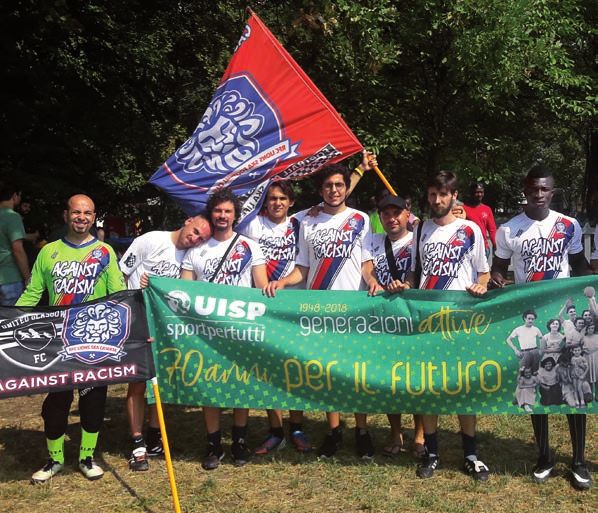
© UISP

Greece                                                           Italy
The multifaceted benefits of sports as a tool for inclusion      In Italy, some institutions have produced guidelines or rec-
of refugees at the European level, both unofficially as well     ommendations for the use of sport as integration tool (in
as institutionally, are broadly accepted in Greece. Howev-       general). For example in 2012, the Italian Olympic Com-
er, Greece lacks specific national directives or guidelines to   mittee signed an agreement with the Association of Italian
ensure that refugees have access to, and are encouraged          Municipalities to encourage and facilitate access to sport
to, participate in sports.                                       for minors, asylum seekers and refugees. The Olympic
    While there are few government programmes that pro-          Committee also published a manifesto on the importance
mote the inclusion of refugees with funding from the Eu-         of sport for integration projects. However, there are no offi-
ropean Union (Erasmus+), most activities are currently           cial strategies for inclusion of refugees through sport at the
initiated by civil society. Consequently, initiatives are ad     level of regional or national ministries and governments.
hoc and short-term. Furthermore, even though there are               Despite the lack of a formal inclusion strategy, local
UN High Commission for Refugees (UNHCR) co-coordi-               bodies and ministries offer grants for the inclusion of refu-
nated working groups on several issues related to refugee        gees and migrants, and usually sport is one of the eligible
protection and integration in general, there are no such         actions. The National Office Against Discrimination, at-
groups for integration through sports specifically.              tached to the National Department of Equal Opportunities,
    During 2015 and 2016, when a million people crossed          also promotes and finances projects involving sport.
Greece to reach Northern Europe, some sport organisa-                In practical terms, the work of associations and NGOs
tions engaged in activities that cannot be characterised as      that promote sports is crucial, and some of these even
sports projects, but are more generally civic and human-         have national strategies for the inclusion of refugees in
itarian in nature: the Greek Cricket Federation, for exam-       sport: The sports organisation Italian Association of Sport
ple, handed out cooking sets, blankets, jerry cans, sleeping     for All (UISP) for example does not require a residency
mats, sanitary items, and shelter material. They now hold        permit for people to join in its regular sport activities and
events to inform and encourage adults and minors to join         tournaments. For the majority of sport federations, howev-
local cricket initiatives.                                       er, this document is required.
    In professional teams, integration is practically impos-         In Italy, sport is one of the main areas where institu-
sible due to the lack of the required documents such as          tional discrimination affects migrants and second-genera-
birth certificates. However, the Hellenic Football Federa-       tion migrants without citizenship: for example, there is a
tion (HFF) currently discusses how professional players’         limit to the number of non-European players in any given
certificates can be issued. While no concrete or long-term       team, even in amateur sports. For asylum seekers and refu-
solution has been identified, HFF has committed to admit         gees the situation is complicated because of the lack of, or
five players per year without the necessary documents.           incompleteness of, their official documents. Furthermore,
    The lack of a national directive or framework also           FIFA has a rule that a player needs to obtain the approval
means that persons involved in the training of refugees, or      of their home federation to join a new association – a rule
in their integration into sports, are not always qualified to    that is a source of enormous stress for refugees and asylum
coach; there is a distinct lack of professionalism and guide-    seekers. Grass-roots sport associations, NGOs promoting
lines. The lack of understanding of the legal framework          sports, and civil society organisations are very active in
around refugee status also further discourages local sports      this area, and try to both exert pressure on sport institu-
clubs from welcoming refugees.                                   tions and to promote activities that include migrants and
                                                                 refugees through sports.

                                                                                                                              9
© ASBÖ

 Austria                                                          Hungary
An important aspect of society’s engagement with mi-              For the past two years, the Hungarian government has
grants happens at the level of organised sports. There are        been internationally scrutinised for its regressive poli-
projects run by sport associations at the national or federal     cies towards refugees and migrants. As a relatively new
state level, and even the smallest municipalities may have        member of the EU, Hungarian policy around refugees and
initiatives that work on joint sport projects with refugees.      migrants has caused much controversy as it specifical-
     At the same time, the issue of migration featured heav-      ly denies the entry, support, and assistance of refugees,
ily in political debates throughout the Austrian presiden-        whether they are merely travelling through the country or
tial and legislative elections in 2016 and 2017, respectively.    are seeking asylum there. The Hungarian government has
Both campaigns showed that political actors and parties           closed all refugee camps and converted them into deten-
are willing to employ populist tactics to gain more votes         tion centers. These detention centers are shipping contain-
by playing on existing fears and reservations within the          ers, where asylum seekers and refugees are held until their
general population. A study commissioned by the Austrian          cases have been heard via video link. The public sector
Integration Fund in 2016 reveals immigration as the num-          has not only retracted funding, but also any other kinds
ber one concern of Austrians.                                     of support for refugees and migrants, whether concerning
     Representatives of the governing coalition have an-          their settlement or entrance.
nounced budget cuts and restrictions in migration law, as             In line with its restrictive policies and right-wing rheto-
well as changes in asylum and integration policies. These         ric, the government actively sanctions organisations work-
cuts have already been partially implemented in the areas         ing in the area of migration, refugee and asylum seeker
of education and integration.                                     assistance by levying a higher tax on any funding they re-
     On top of political restrictions and funding difficulties,   ceive. This has caused significant problems for the stability
integrationist sport projects also face the threat of imma-       and future of these organisations and initiatives.
nent deportation of their players. While deportations are             The Mahatma Gandhi Human Rights Organisation
first and foremost a psychological burden for those direct-       (MGHRO), based in Budapest, has been conducting sports
ly affected, they also effect the social dynamic and fabric       activities, specifically focused on the inclusion of migrants
within the sport club, especially in team sports. Thus, an        and refugees and the awareness of the Hungarian commu-
immanent deportation often weighs heavily on all mem-             nity. The Hungarian Football Federation (MLSZ) has assist-
bers of a club or project, even people that primarily serve       ed MGHRO with financial and technical support over the
as instructors for sport activities face unusual psycholog-       years. It was therefore crucial in building a local migrant/
ical strains.                                                     refugee team even though it was not directly involved in
                                                                  the team’s inception and sustainability. However, this sup-
                                                                  port has been discontinued as a result of the intensifying
                                                                  political and policy climate; a discourses that completely
                                                                  rejects the presence, assistance and support of refugees.

10
© Lea Pelc / fairplay
SPECIFIC NATIONAL OR
GOVERNMENTAL PROGRAMMES
R efugees and asylum seekers have different needs for
support compared to EU migrants who migrate for
work. At the same time, refugees are a heterogeneous
or a national ministry for migration), and/or that they have
received funding by the EU. Most of these programmes are
implemented by large sport associations, for example the
group of people that differ greatly in terms of their social, Irish Football Association or the German Olympic Com-
cultural, and/or ethnic background. mittee.
The previous chapter introduced national strategies The programmes and projects also reflect the impor-
in general terms and highlighted the situation in differ- tance political actors give to the topic integration of ref-
ent European countries. This chapter looks at specific pro- ugees and integration through sports. At the other end of
grammes and projects that are not only aimed at migrants this, a lack of programmes for the special target groups ref-
in general, but also, or even exclusively, at refugees and ugees shows there are no national approaches to leverage
asylum seekers. What these programmes and projects have the potential of sport for integration.
in common is that they have been initiated and funded by
national governments (for example by a ministry of sport
11© Camino
Germany Ireland
German Olympic Committee: Football Association of Ireland:
Welcoming Through Sports Integration Through Football Project
For the past 25 years, the Federal Ministry of the Interior (BMI) The Football Association of Ireland (FAI) is leading other stake-
as well as the Federal Agency for Migration and Refugees holders on the sport scene in developing and implementing
(BAMF) have promoted the federal programme Integration nationwide strategies/programmes aimed at social inclusion
Through Sport. This programme reaches out to all migrants, and integration of refugees and people with other migrant
and is complemented by a project specifically for refugees since backgrounds. One such nationwide good practice example is
2015: the Welcoming Through Sport project is implemented by the FAI’s Integration Through Football Project supported under
the German Olympic Committee in cooperation with thirteen the EU’s Asylum, Migration and Integration Fund & admin-
state sports federations. The project, which is financially istered in Ireland by the Department of Justice and Equality
supported by both the IOC and the German Commissioner for (DJE).
Migration, Refugees and Integration, includes over 200 sports The target groups for the Integration Through Football Project
clubs in Germany. These clubs offer a great variety of sports are refugees and asylum seekers, third country nationals, as
and fitness activities: rugby, cricket, volleyball, basketball, and well as clubs and community partners at all levels of the game.
gymnastics, among many others. The programme seeks to involve these target groups in football
The activities are open to all refugees, regardless of their origin along with the host population, and not in isolation, wherever
or their prospects of remaining in the country. Refugees’ needs possible.
and their prior athletic experiences inform the variety of sports The project is designed to develop and support football and
and activities clubs and associations offer. In addition, coaches community alliances. The project sits within the frame of the
in clubs receive training to strengthen their intercultural skills. FAI’s Intercultural Football Programmes, and is also in line with
At the beginning, the main aim was to make sports accessible national integration policy/Strategy for Migrant Integration (‘A
for refugees and offer low-level exercise opportunities for ref- Blueprint for the future’). The range of community partners is
ugees. Some of these took place at refugee shelters. Later, the broad and can include NGOs, schools, local authorities, local
programme focused on fostering refugees’ active participation area partnerships, refugee or asylum seekers accommodation
in developing new training opportunities and empower them centres etc. The list is not exhaustive and all potential commu-
to become volunteers within their sports clubs. Right now, the nity partners are considered.
programme focuses on reaching more women and girls. Starting in May 2017, the programme is scheduled to run for a
three-year period. It seeks to foster and support 17 local club
For further information, please visit:
and community alliances annually to encourage increased par-
https://integration.dosb.de/inhalte/projekte/wis-willkommen-
ticipation in football. The outreach strategy involves a national
im-sport-fuer-gefluechtete/
call for community groups and football clubs to form colliga-
https://cdn.dosb.de/user_upload/www.integration-durch-sport.
tive alliances. Follow-up meetings are then held with clubs
de/Projekte/WiS/WiS_report_e.v._final.pdf
and community groups to discuss steps, roles and actions for
https://cdn.dosb.de/DOSB_Broschuere_1.pdf
each alliance. This enables the design of best-fit programmes
or events for the community/club alliances, based on needs
The integration project of Ireland’s Football Associa- and available resources in the local areas. Funding support is
tion aims to forge alliances with local initiatives and thus
provided by the FAI to alliances to run their actions.
The programme annually provides for the running of 17 open
emphasises that it takes joint efforts of partners of different
days or open training sessions, 24 afterschool programmes,
areas of life to foster integration. While some projects tar-
eight volunteering in football information evenings or club
get only refugees, this project wants to include both refu- open houses, eight futsal league programmes for adults and
gees and non-refugees in their sport activities.
12© fairplay
four KOWELS (Kicking Off With English Language Skills) football Austria
programmes. The Austrian Ministry of Sport:
There are significant operational challenges for refugees’
participation, e.g. transportation to events. These operational Working Group on Sport and Integration
challenges are made even more difficult in places where peo- In 2010, the Ministry of Sport established a permanent Working
ple are fairly remote. Low female participation rates is another Group on Sports and Integration. The Working Group is made
issue, more so for women than for girls. up of several organisations, including ministries and the Feder-
In terms of impact, the aims for sustainability beyond its al Sports Fund (BSFF), various sport for all umbrella federations,
project cycle and sees its collaborative approach and funding the Austrian Integration Fund, the initiative fairplay as well as
mechanism as key to achieving this goal. the Institute for Children’s Rights and Parents’ Education, who
coordinate the Working Group.
For further information, please visit:
The Working Group aims to foster participation of immigrants
http://www.fai.ie/domestic/take-part-programmes/amif-appli-
and ethnic minorities in sports. The Ministry of Sports fund-
cations
ed integration projects during a pilot phase between 2011-
http://www.justice.ie/en/JELR/Migrant_Integration_Strategy_En-
2014. Since 2012, the Working Group organises workshops on
glish.pdf/Files/Migrant_Integration_Strategy_English.pdf (The
intercultural competences in sports; in 2016, there was a series
Migrant Integration Strategy)
addressing questions surrounding refugees in sports.
For more information, please visit: www.sportintegration.at
The Austrian Ministry of Sport’s Working Group on
Sport and Integration supports strategic cooperations be-
tween political actors and actors from the organised sport Portugal
sector. However, the programme focuses on integration in High Commission for Migration:
general, and not on refugees in particular. The Portuguese
Choices Programme has an even broader target group: it
Choices Programme
reaches out to all children and adolescents from disadvan- One of the most recognised social programmes to support
taged backgrounds, including refugees. youngsters in particular is the Choices Programme promoted
by the Portuguese High Commission for Migration. It aims
to provide monitoring and tools to prevent young people’s
segregation. According to an external evaluation, the Choices
Programme has been successful since its start in 2001, because
it uses an empowerment strategy that does not address chil-
dren and adolescents as victims of difficult circumstances, but
as protagonists that can be supported by enhancing their own
resources. In a new edition of the programme, the Portuguese
Player’s Union works to support migrants and refugees through
football practices in an inclusive football league called Liga
Escolhas. Those who work within this programme pay special
attention to the players’ education and supervise them at
school as well as in their family homes.
For more information, please visit:
https://www.programaescolhas.pt/
13© UISP
ACTIVITIES OF SPORTS CLUBS
T he work of sport associations is crucial for implement-
ing regional, national or governmental programmes. At
the same time, the grass-roots level of organised sports, the
Northern Ireland’s Simple Judo club; in other cases, it may
be the desire for civic engagement and helping the new
neighbours. However, those who want to initiate these
sport clubs, also work towards integration of refugees, and projects sometimes face opposition within their own club.
this is especially important when a country does not have What can help in these situations is to point to the clubs
national or regional programmes. Many sport clubs across code of conduct and to the fact that volunteering with and
Europe develop their own projects and specific training for refugees is line with the values of respect practiced by
sessions. It may be the personal interaction with a refu- the club.
gee that leads to a particular initiative - as in the case of
14© fairplay
Belfast / Northern Ireland (UK) This has a positive impact on the volunteers because they
Simply Judo Club: feel appreciated, and because the project’s additional pub-
licity may lead to new donations and sponsors. For these
Simply Judo Connects
reasons, giving out prizes and awards is an important
Simply Judo in Northern Ireland, a British Judo Association strategy to promote volunteering and civic engagement
member club, launched an integration initiative in the be- amongst civil society and political actors.
ginning of 2017 that seeks to connect refugee families with the
local community. A visit of refugee children to the head coach’s
fire station in Belfast sparked the idea of the Simply Judo Brighton / England (UK)
initiative. Shortly after, the judo club got in touch with the
primary school the refugee children attended in West Belfast. Brighton Table Tennis Club:
The initiative now works with 60 children, half of whom are Refugee Integration Work
locals, and half come from various countries including Syria,
In 2007, two ex-England internationals established Brighton
Somalia, Sudan, China, the Congo, and Nigeria. The children
Table Tennis Club (BTTC). It started out as a small project with
take part in two classes every week. The sessions are run by the
two worn-out tables in the Brighton Youth Centre. Now the
two head coaches and three support coaches, and are split into
club counts about 1250 members who join the weekly sessions.
two levels. Instructors aim to mix refugee and local children
It has its own centre with ten tables, and runs 100 tables across
into even teams. After a few weeks the children began to
the city in parks, squares, schools, sheltered housing schemes,
spend time together even outside the judo class and have now
a centre for homeless people, sports centres and a psychiatric
become friends. For the parents of the refugee children, the
hospital. It also works in two prisons outside the city.
lessons are also an opportunity to get to know local parents,
share information or to become interested in judo themselves. The mission of the club is to improve health, celebrate diversity,
Sport Northern Ireland, the Department of Communities, and and build community. There are sessions for young people of
two sport companies support the initiative. Funding secured all ages and backgrounds, those aged 50+, adults with learn-
through the Department of Communities, and time volunteered ing disabilities, and children in care.
by coaches has ensured the club can provide classes and judo BBTC is a recognised Club of Sanctuary, an award that recog-
suits, as well as licenses for each of the children on the initia- nises cities and schools that welcome refugees and asylum
tive free of charge for the coming year. The project has won a seekers. The club turned into a place of shelter and integration
national award for its work and was short-listed for the 2017 especially for unaccompanied minors. Now 15 to 20 boys from
UK coaching awards. The clubs plan to continue the work with Afghanistan, Iraq, Eritrea, Kurdistan, and Algeria, come several
refugee children and make the initiative sustainable. times every week, for table tennis lessons and friendship.
The programme has been so successful in teaching the boys
For more information, please visit: English and fostering friendships between the young asy-
http://simplyjudo.com/ lum seekers and local children that BTTC has also been given
https://www.belfastlive.co.uk/sport/other-sport/simply-ju- substantial grants from Sport England to support its refugee
do-club-connecting-refugee-13117307 integration work.
http://www.sportni.net/news/belfast-sports-project-shortlisted-
for-uk-coaching-award/ For more information, please visit:
http://brightontabletennisclub.co.uk/home
https://www.theguardian.com/world/2016/aug/26/turning-the-
Initiatives often start out as small volunteer projects
tables-the-ping-pong-sanctuary-for-young-refugees
supported by a club’s own funds or additional donations. https://cityofsanctuary.org/awards/
By giving out awards and accolades for this work, this vol- https://www.youtube.com/watch?v=YMBCsRpZTcE
untary work is validated and rendered visible in society.
15© Camino
Vienna / Austria Göggingen / Germany
Rugbyclub Union Donau Wien: DJK Göggingen:
Rugby Opens Borders Cricket Division
The Rugby Open Borders initiative was established by the The sports club DJK Göggingen has been volunteering with
Viennese Rugby Club Donau Wien, and offers weekly training refugees since 2015, and is part of the federal programme
sessions for young refugees and migrants. In addition to sport Integration Through Sports. As of 2016, it has admitted over 200
activities, the project coordinators also organise joint trips, refugees as members.
parties, and cooking sessions. The club prioritises intercultural In collaboration with the volunteer centre in nearby Augsburg,
exchange and collaboration, dissolving borders, and living the sports club DJK Göggingen developed a training schedule
diversity in order to make Austrian society more accessible for and mentoring scheme specifically for unaccompanied minors
youth from different parts of the world. that is also open to adult refugees. The plan not only included
The Rugby Open Borders team consists of volunteers of different swimming lessons, football, table tennis, bowling, and gym-
national and professional backgrounds, including athletes, nastics, but also cricket.
lawyers and social workers in a supervising capacity. The core Cricket is not well-known in Germany, but very popular in
team includes 35 athletes. Those who are talented are given countries like Pakistan or Afghanistan. The cricket training was
the opportunity to also join the established youth teams within a huge success: it was so popular that the club established
Donau Wien and other collaborating clubs. its own cricket division with several teams. The club actively
Rugby Open Borders is funded by donations and project fund- involves young refugees in its work, for example as referees.
ing, and has won a national prize for its work in 2015. Refugees also participate in first-aid courses and take on vol-
untary roles within the club.
For more information, please visit:
One of the remaining challenges is to find a playing field that
www.rugbyopensborders.com
is large enough for cricket since cricket fields are larger than the
more common football playing fields. As of now, the club also
does not own its own cricket equipment and needs to borrow
It is important to take refugees and their interests into
it.
account when developing sport training opportunities. Another issue is deportations that weigh heavily on players
This may also lead to structural changes in sport clubs and their families, as well as the volunteers within the club. In
and to new types of sports as shown by an example from addition, the club faced challenges from outsiders, who were
southern Germany: a club that offers many grass-roots sometimes jealous of the club’s success, as well as insiders who
sports started a new cricket training because refugees were were not happy with the club’s commitment.
interested in it. In the end, the club established its own For further information, please visit:
cricket division because of the great response. https://djk-goeggingen.de/abteilungen/cricket
https://cdn.dosb.de/DOSB_Broschuere_1.pdf
16© MGHRO
Another important factor when developing new ex- Würzburg / Germany
ercise opportunities is accessibility; not only in terms of Olympos Würzburg Rowing Club:
making the training sessions themselves accessible, but
also in terms of providing for different athletic levels. The
STAR Project
following project of the rowing team in Würzburg, Ger- After a sometimes traumatic flight across the Mediterranean,
many is doing precisely that by having experienced club children and young adults can experience a new positive
members support the newbies. approach to water in the rowing boats of the rowing club
Olympos in Würzburg, Germany. In 2016, the club developed
the STAR project, which also offers swimming lessons, general
fitness, football, volleyball, as well as language trainings in
addition to rowing. Volunteers support refugees with bureau-
cratic matters as well as finding an apartment or a vocational
training placement.
The project teaches Syrian, Afghan, Kurdish, Eritrean,
Ukrainian, and Somali girls the basics of swimming and row-
ing. Some have passed the first level of a three-level national
swimming certification for minors. Boys from Syria, Afghan-
istan, Pakistan, Eritrea and Kurdistan also row, swim, and
participate in indoor sports. There are also groups for biking
and running. In the club’s experience, it is easiest to retain
members if single-sex trainings for girls are on offer.
To ensure accessibility, trainings are free of charge and the
threshold of required skills is very low. However, rowing is
a sport that requires a lot of technical skill and balance; to
address this challenge, Olympos has developed a training
programme that is based on imitating members that are more
experienced. That way newbies can enter the rowboat within
ten minutes. After another ten minutes, they are able to move
the boat forward independently. The joint practice with older
members and newbies helped both sides to develop intercul-
tural competences and established interpersonal relationships
beyond the training sessions.
About 200 refugee youth have participated in the sport train-
ings since 2015, and over 60 participants have learnt the basics
of rowing. The project receives funding by the German Ministry
of Migration through a programme of the German Sports Youth.
For more information, please visit:
www.row2015.de
https://cdn.dosb.de/DOSB_Broschuere_1.pdf
17© Karina Lackner / Kicken ohne Grenzen
COMMUNITY PROJECTS AND
GRASS-ROOTS INITIATIVES/NGOS
G rass-roots initiatives outside of organised sports have
sprung up across Europe to help those newly arrived
on the continent. At the same time, established NGOs, in-
Often, sport is regarded as a means to get in touch
with refugees in order to then offer additional support.
At the same time, sport is also a tool of empowerment to
cluding migrant-led groups and organisations that work in strengthen refugees’ confidence in their own abilities and
the area of migration, have added new projects to their resources. An example of such an empowerment project
portfolios. They often combine these efforts with various is the Berlin based initiative, Champions Without Borders,
other offers such as discussion groups, counselling servic- which actively involves refugees as interpreters or coaches.
es, and support with finding an apartment and employ-
ment.
18© fairplay
Berlin / Germany Helsinki Region / Finnland
Champions Without Borders Helsinki Sports International
Champions Without Borders is a non-profit organisation Helsinki Sports International (HSI) is a non-profit organisation
that offers football trainings to children, men, and women with a long history in the Helsinki Region. Its main objective is
throughout the city – adjusting each training to the needs of the improvement of the situation of newly arrived refugees and
the particular group. Athletes can train without being subject migrants through integration into sports. The sporting activities
to prejudice, bureaucratic barriers, or pressure to perform. take place in Helsinki but also in other cities. The project has
After training sessions, the team stays for an informal gathering various outreach strategies to get in touch with its target group.
to reflect on the previous session, share experiences, and to These include campaigns, open days, guided tours of refugee
offer counselling. At these gatherings interpreters are available, and youth centres, direct contact through refugee centers
so all players can be reached and heard. Experienced players and finally through social networks offering free activities like
pass on their knowledge and thus build capacity in the newer football, futsal, floor ball and also cultural activities like guided
team members. tours, discussion groups and educational programmes.
The international teams participate in tournaments and HSI takes into account that each individual is unique and has
friendly games at regular intervals. They also join anti-racist different interests and needs. The work is based on the values
events and thus raise awareness on the situation of refugees of dignity and respect for the individual cultural background of
in Germany. In the long-run, the goal is to refer players to every person. All activities are aimed at empowering the newly
regular football clubs in Berlin. To this end, Champions Without arrived refugees or migrants.
Borders advises regular clubs on how to interact with refugee The project receives government funding, private donations
athletes, for example with regards to dealing with player iden- as well as EU funding. HSI also uses voluntary structures and
tification cards and permissions. co-operates with other social organisations such as such as the
Champions Without Borders also offers a variety of other Finnish Red Cross, Liikkukaa Sports for All - Ry, Monaliikku, the
activities including cooking sessions, workshops at schools African Association of Central Finland and the City of Helsinki.
about asylum and human rights, guided tours around the city
For further information, please visit:
by refugees, as well as workshops and certification courses for
https://www.facebook.com/Helsinki-Sports-Internation-
refugees. The club is one of the central actors at the intersection
al-545284439181324/
of refugees, sport clubs, and local communities, and thus adds
an important contribution to integration. It has won several
national prizes for its work. The following project started by a Greek NGO has
founded its own team comprised of refugee players. By
For further information, please visit:
playing against teams of amateur leagues, the refugee
https://www.championsohnegrenzen.com/
team is connected to organised sports.
The following Finnish project also uses empowerment
as a tool and focuses on individual support and the values
of respect and dignity.
19© Camino Athens / Greece Organisation Earth: Hope Refugees FC Organisation Earth is a Greek NGO founded in 2010 and based in Athens that involved refugees in sport related events and matches upon their arrival at the Port of Piraeus. In July 2016, they started organizing sports activities in Skara- mangas and Lavrio refugee camps and soon saw a positive impact on the refugees. Their next step was to organise events outside of the camps, by sending an open call to all camps and squats in Athens. After tryouts, Hope Refugees FC was set up as a team comprised entirely of refugee players. In November 2016, FIFA and an op- erational manager funded the project to start an independent championship. During that period, 110 players from 16 different countries played on the team. Hope Refugee FC decided to help their best players to earn a living through football. Several of these players had previously played professionally in their countries of origin. In October 2017, Hope Refugee FC held new try-outs, and the team now plays against 2nd and 3rd division teams. In May 2017, the Barcelona Foundation approached Hope Ref- ugee FC to organise a training of the trainers in order to teach children values of sportsmanship, including effort, ambition, team work, humility, and respect. A girl team was started in July 2017, and 150 children are now registered and participate in bi-weekly trainings. For further information, please visit: http://www.organizationearth.org/en/ https://www.facebook.com/EarthRefugee/ 20
© Lea Pelc / fairplay

                    EMPOWERMENT OF WOMEN AND GIRLS

                    S   port training sessions for refugees can only promote
                        equal opportunities if they take gender into account.
                    Experiences from various European countries show that
                                                                                   European countries that show that it is, in fact, possible to
                                                                                   reach refugee women and girls with the right strategies.
                                                                                       Certain conditions need to be considered if girls and
                    refugee girls and women have, so far, not been reached         women are to be reached. One example can be transpor-
                    sufficiently through sports activities. For this reason, a     tation to and from the gym if refugee hostels are remote,
                    gender-sensitive approach means in this case, above all, to    and women do not feel safe enough to travel through a
                    consider the needs of women and girls. On the one hand,        city after sunset. Another condition can be childcare so
                    this can be done by designing mixed-gender training ses-       that women are not distracted while exercising. Another
                    sions appropriately. However, it has proved to be particu-     important factor is to plan social activities in addition to
                    larly useful to develop special session for girls and women,   sporting activities, for example time for conversations and
                    because these can then be better tailored to the sporting      joint meals.
                    desires and previous sporting experience of girls and/or           Gender stereotypes and community expectations as
                    women, i.e. by designing the framework according to the        well as the challenge to settle into a new life mean that
                    target group.                                                  many refugee women tend to be busy with taking care
                        Since sport projects designed for refugee girls and wom-   of their family and are hesitant to take time out for them-
                    en are not well recognised in current sport structures, the    selves by playing sports. Muslim girls and women can face
                    following section will give ample examples from different      challenges both from within their communities as well as

                                                                                                                                               21
© Camino
mainstream society when it comes to exercising without The following project from England that caters to Mus-
prejudice or islamophobic stereotypes and overcoming lim girls and now actively reaches out to refugee girls,
patriarchal barriers to women playing sports. If a project employs positive female role models to challenge islam-
wants to reach Muslim girls and women, it is important ophobia and stereotypical gender roles. The project from
that participants are able to adhere to religious dress codes Ireland also caters specifically to Muslim women. Both
and can use appropriate sport outfits. projects successfully offer sports that are regarded as male
In general, it is helpful to employ female coaches to dominated, such as football or martial arts. One of their
reach women and girls. Female coaches can make the goals is also to make women from religious and ethnic mi-
trainings more accessible and can serve as a role model. norities more visible in sports usually dominated by white
The following swimming project from Italy illustrates how men. This strategy seeks to change the club from within
this can be done. and make it more diverse; but it is also used for PR to
make a particular type of sport more attractive for women
Turin / Italy and girls of colour.
UISP Turin:
London / England (UK)
Women’s Swimming Pool
At the Massari sports complex in Turin, two hours of sport are
Maslaha:
dedicated to women in the pool every Sunday morning. The Muslim Girls Fence
project is conducted by the sports association UISP in Turin. In the UK islamophobia has a strong gendered dimension that
It involves three swimming activities: a beginner and an ad- Muslim Girls Fence seeks to address. The project is a collabo-
vanced swimming course for girls and women, free swimming, ration between the NGO Maslaha, based in East London, and
and an aqua gym. British Fencing that was established in 2011. Maslaha currently
Only females are present at the activities, including all users runs its fencing project in schools and in communities in
of the pool and the instructors. The facility’s support staff also London, Doncaster, and Birmingham. Currently four girls from
ensures that no man can attend the activities or have access Syria, who recently came to Britain as refugees, take part in a
to the changing rooms and the pool. With this set-up, the fencing project in Doncaster run by Maslaha.
women’s pool allows all women, including veiled women, to Schools working with the initiative receive ten weeks of weekly
participate in activities, in total freedom, without violating any fencing classes combined with creative workshops exploring
religious codes of conduct. identity and self-expression and challenging stereotyping. The
The project also organises social gatherings, such as walks participants can maintain their involvement after the initial
and communal meals, where women have the opportunity to training. They also have the opportunity to gain leadership
learn about each other’s customs and dishes in their respec- qualifications accredited by British Fencing and to start their
tive countries of origin. All women attended the traditional own community or school-based fencing clubs. Maslaha also
UISP race Vivicittà in the town of Turin. A very similar project is features the Ambassador Scheme, where girls can act as advo-
conducted in the city of Emilia region. cates for the project at events and in the media.
In 2018, the UISP Committee collaborated with the local Valdese By catering to young Muslim girls, the initiative fosters equality
Church, to host seven Syrian women, who had newly arrived through fencing with a strong effect on education, employ-
under a humanitarian quota. This was part of an agreement to ment, and health. Furthermore, the initiative challenges
give sport opportunities to women, who had just arrived and perceptions of fencing as a white-dominated, elite sport that
have no recreational opportunities. is not accessible to young people of all backgrounds. Maslaha
For further information, please visit: wants policy-makers and leading national sports organisations
http://www.uisp.it/torino2/# to create awareness of the needs and experiences of Muslim
22© Lea Pelc / fairplay
women. They are currently developing a nationwide pro- Berlin / Germany
gramme to involve more Muslim women and girls in sport and #BIKEYGEES
physical activity across the UK.
The cycling training for refugee women is a grass-roots initia-
For more information and articles, please visit: tive started in Berlin in 2015, implemented by volunteers and
www.maslaha.org funded by donations.
https://maslaha.org/muslim-girls-fence Berlin is a bike city and a lot of people use their bike as a daily
http://www.muslimgirlsfence.org/about.html means of transportation. Cycling can be an easy way of (re)
gaining individual mobility for refugees and newcomers to
Berlin. Women in particular need this support. Many newly
Dublin / Ireland arrived women have to walk to get anywhere. They feel isolat-
Sport Against Racism Ireland: ed in their accommodation.
BIKEYGEES seeks to expand the mobility of female refugees in
Hijabis and Hat-tricks town and their independence with a free means of transpor-
SARI (Sport Against Racism Ireland) is an Irish NGO based in tation. While biking supports their physical abilities, the main
Dublin with keen interests in integration and the general aim of the project is empowerment. The project offers open
welfare of refugees, asylum seekers and people of ethnic training sessions and exclusive training sessions at refugee hos-
minority backgrounds in Ireland. Hijabis and Hat-tricks is a tels. It combines physical activity, relaxation, and fun with the
collaborative project involving SARI, the refugee hostels, the use of a newly acquired language. The common goal fosters a
local councils and local sport clubs. The programme offers sense of community and friendship.
multiple sporting activities, come together tournaments, and Volunteers are mainly female, some have a family or personal
after school activities. It provides football, martial arts, and histories of migration, some do not. The project also offers
cricket trainings for Muslim female refugees, one session a training in German traffic rules and bike repair workshops.
week for every activity. It has an average participation of 15 Cycling graduates are actively involved in the project, for
women per week. The programme recruits participants through instance for language mediation and by helping the others.
leaflets and posters left in local mosques, as well as via social After a training featuring six units with practical and theoretical
media, word of mouth, youth centres and refugee hostels. The lessons, the cycling graduates will get a bike for their own use.
increasing numbers of participants and palpable improvement So far, 500 women have learnt how to ride a bike in 70 train-
in confidence levels is a mark of success of the programme. ings. Over 100 bike sets were handed out to cycling graduates.
The project won the German Bike Prize in 2018.
More information, please visit:
www.sari.ie For more information, please visit:
http://bikeygees.org/de/
Sport and exercise sessions for women and girls aim
for empowerment: sport is about strengthening women’s In order to reach women without or little prior experi-
self-confidence and promote their right to self-determina- ence in playing sports, it is also important to have accessi-
tion and independence. Mobility is often a salient issue. ble trainings that do not focus on competition. This allows
women to learn to enjoy sport and exercise without feeling
pressured.
23© Lea Pelc / fairplay
Austria Helsinki Region / Finland
Mamanet Austria Monaliiku Ry:
The Association Mamanet Austria was founded in Vienna in late Fit4Life
2015 as a sport association for mothers and all women over the Fit4Life incorporates an innovative approach to help refugee
age of 30. There are weekly cachibol training sessions. Cachibol and migrant women change their lifestyle, and take care of
is a game similar to volleyball that is very accessible to those their health through physical exercise and group learning on
who have never played any sports before. related topics. The elements in the Fit4Life project are contin-
The project is for refugee and migrant women and collaborates uously developed further. Fit4Life uses social media as well as
with Caritas and various youth centres. Child care is offered at partner organisations, social and employment services, and
all events. The organisers support women to found their own word of mouth to reach out to the target groups.
teams and these teams may compete in an amateur league if The activities offered include physical exercise, health check-
they wish. ups, and consultations on health risks and changes of life style.
The main goal of the club is to minimise the barriers to exercise There are group discussions on resources and opportunities to
for all mothers and women above the age of 30, whether improve one’s health and general well-being, lectures about
they are just starting out or have previously played a sport. It healthy nutrition, and interactive cooking classes, which the
also aims to reach those groups that tend to be excluded from participants can contribute to. All of these weekly group activ-
sports. In the autumn of 2017, there were 23 weekly courses ities take place mainly in the Helsinki region, but also in other
across Austria and Mamanet won several prizes. municipalities in Finland, and are free of charge. During the
For more information, please visit: three-hour sessions, sport activities and discussions on various
www.mamanet-austria.at topics related to the project are combined, and the participants
get assistance with translation and childcare.
Participants have improved their health and knowledge on
The approach to combine sports with exercise and health related matters, they have included sport activities
general well-being and health has proven to work well, into their daily life routine, and have increased their personal
as the following Finnish example illustrates. The Irish networks. Finding appropriate spaces for closed group sessions
example also focuses specifically on nutrition combined remains a challenge as does the communication across cultural
with sports. Some projects also consider women’s men- barriers.
tal health for their trainings by cooperating with women’s For more information, please visit:
shelters and domestic violence counsellors since some of www.fit4life.fi
the women may have experienced flight and violence. If
participants are traumatised, sport projects need to be sen-
sitive to their special needs, for example with regards to
physical boundaries. It is crucial to seek out experts when
dealing with mental health issues and trauma since coach-
es and supervisors are not trained, or qualified, in dealing
with those. For these reasons, cooperating with the respec-
tive social service providers is very important.
24You can also read


