Sixth Form Prospectus 2022/2023 - www.caludoncastle.co.uk/sixth-form - Caludon Castle School
←
→
Page content transcription
If your browser does not render page correctly, please read the page content below
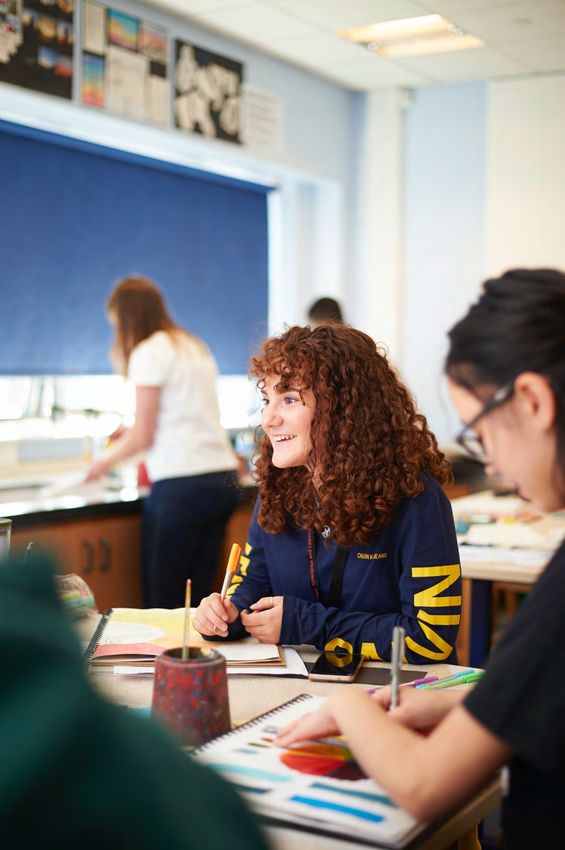
Sixth Form
Prospectus
2022/2023

       www.caludoncastle.co.uk/sixth-form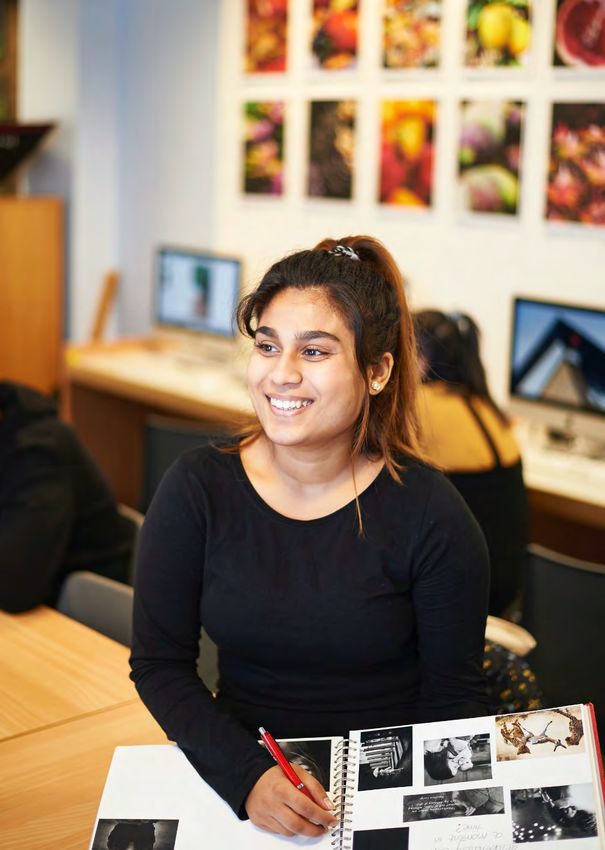
CONTENTS

           Sixth Form Information                                Subjects
Welcome                                1
                                               French                       24
Support and Success                    2
                                               Geography                    25
Caludon Castle Sixth Form Hub          3
                                               Health and Social Care       26
Curriculum and Employability           4
                                               History                      27
Programmes of Study                    5
                                               Mathematics                  28
Entry Requirements                     6-8
                                               Further Mathematics          29
Enrichment and 6th Form Societies      9
                                               GCSE Mathematics             30
Recent University and Apprenticeship   43-44
destinations
                                               Media Studies                31
The Sixth Form Team and Alumni         45-49
                                               Moving Image                 32
                       Subjects
Art and Design                         10      Music                        33

Biology                                11
                                               Philosophy and Ethics        34
Business                               12
                                               Photography                  35
Chemistry                              13

Design Technology                      14      Physics                      36
Digital Media                          15
                                               Psychology                   37
Drama                                  16

Economics                              17      Applied Science              38

                                               Sociology                    39
English Language                       18

English Lit and Lang                   19      Spanish                      40

English Literature                     20
                                               Sport                        41
GCSE English                           21
                                               Travel and Tourism           42
EPQ                                    22
WELCOME

    Thank you for considering the Sixth Form        The Sixth Form team is committed to
    at Caludon Castle School. In an                 ensuring an effective climate for learning,
    increasingly competitive world, higher          developing student independence and
    qualifications will give you a broader          maximising student progress. We offer a
    range of career opportunities. We feel          superb enrichment programme including
    confident that Caludon offers excellent         student leadership opportunities, which will
    courses for all our students, whatever          enhance your experience, develop skills and
    their interests and abilities. We run a         support your transition beyond the Sixth
    wide range of Advanced Level and level          Form. We expect your wholehearted
    3 (equivalent of A level) vocational            commitment to the courses you will study; in
    courses and an exciting combined one-           return we promise you our fullest support.
    year level 2/3 course, incorporating a          We look forward to welcoming you to
    BTEC and resit GCSEs. We also work in           Caludon Castle Sixth Form.
    partnership     with other schools in
    Coventry, which gives students access to
    an even greater range of courses.

    Our modern building provides excellent
    facilities for learning and teaching
    provision, including lots of specialist
    facilities,  such    as     a     dedicated
    photography area with dark room, a
    drama studio, high quality science
    laboratories and excellent IT facilities. The
    Sixth Form has its own purpose built area
    within the school building and access to            Mrs Sarah Kenrick
    the onsite community library.                         Headteacher
                                                        November 2022

1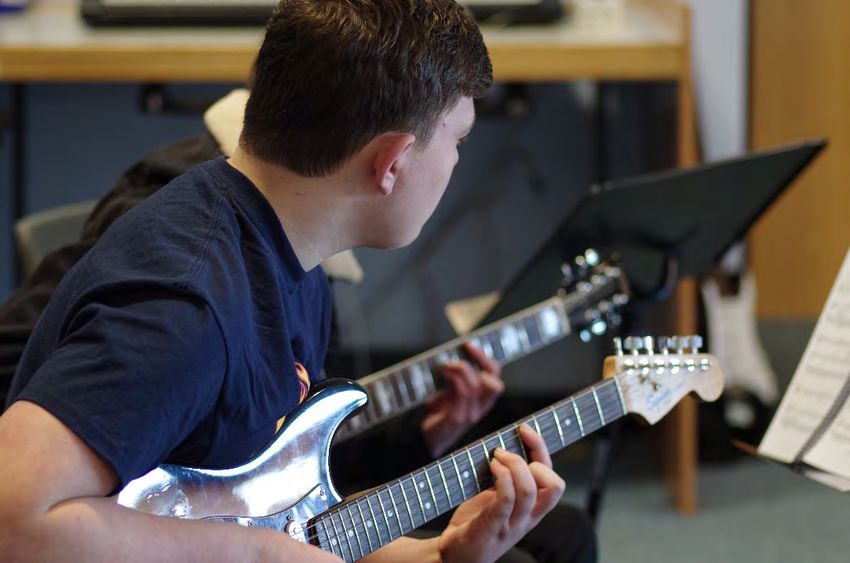
SUPPORT AND
  SUCCESS

“Probably the biggest insight is that happiness is not just
a place, but also a process….an ongoing process of fresh
challenges and it takes the right attitudes and activities
to continue to be happy” Ed Diener
                                                              Where applicable, we enter students for AS
                                                              exams to help inform us and them of their
                             Welcome to                       knowledge, progress and suitability for the
                             Caludon Sixth                    full A level course. Those who do not sit an
                             Form. You will be                AS will sit an assessment exam at the end of
                             supported by the                 Year 12, to ensure that they too can make
                             Post 16 staff, as                informed decisions about their Year 13 A
                             you make your                    level programme of study.
                             initial subject                  We have a fantastic choice of enrichment,
                             choices this winter.             trips and extra-curricular activities, which
We will help you choose a programme                           help students to develop skills beyond the
that is appropriate for you and best suited                   curriculum, making them more competitive
to your talents and aspirations. Help and                     and employable young people, so that they
advice will also be available to you during                   are well prepared for their future pathways.
our taster days, which take place in June                     All students in Year 12 will also undertake
after your GCSE exams, and again on                           work experience to help them build their
results day in August.                                        employability skills.

Students who join from other schools are                      We are proud of our students’ achievements
made to feel welcome and settle well.                         in all the qualifications offered (AS, A level,
Indeed students have often commented                          BTEC, GCSE resits), as well as their chosen
on the warm welcome. We also have                             pathways for the future. Last year, 107
student leaders who are there especially                      students gained places at university, of
to support all students as they move into                     whom 50 went to Russell Group or high tariff
Post 16 education.                                            universities, including 1 student who
                                                              successfully gained a place at Cambridge. An
Students benefit from high quality,                           increasing number of students are accessing
engaging and stimulating lessons, which                       either higher or degree level apprenticeship
enable them to develop a deep                                 placements, as the vocational route becomes
understanding and love of their subjects.                     more popular and we strengthen our links
Students receive regular quality feedback                     with local employers.
on their progress towards achieving and
exceeding their targets in each subject.                      We are always happy to offer help and
Many of our students move on to                               advice to prospective students; please
universities, apprenticeships or further                      contact us in the Post 16 office if you have
training in these or related subjects after                   any questions about the Post 16 experience.
their Post 16 education.
                                                              Mrs Sarah Carter
                                                              Assistant Headteacher and Head of Sixth
                                                              Form                                          2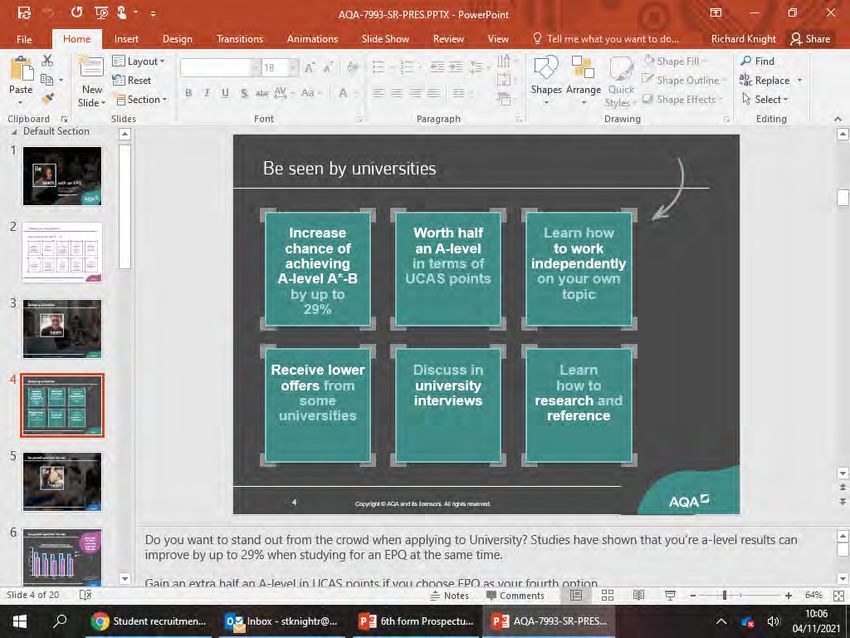
CALUDON
    CASTLE
    6TH FORM HUB

                                                   The common room is a vibrant area where
                                                   student can relax, listen to music,
                                                   complete group work and eat their lunch.
                                                   This is an excellent place for students who
                                                   are new to Caludon to meet new friends
                                                   and integrate fully into the Caludon
                                                   community.

                                                   The Sixth Form staff office is much more
    At Caludon we believe that education is        than just an area for administration. It is
    about more than just qualifications. It is     very much the 'hub' of the Sixth Form
    also about developing young adults,            area, which was clearly recognised in
    which can only be achieved through             our last full Ofsted inspection. The Sixth
    developing a supportive environment.           Form leaders are based in the office along
                                                   with our administration and pastoral
    The care and guidance they are offered is      support staff, who provide advice and
    excellent and they are clearly proud to        guidance throughout the day.
    play a part in the caring culture of the
    provision.    Ofsted 2016 (last full
    inspection)

    We have a large and vibrant Sixth Form
    community which is located within the
    heart of the school. The Sixth Form has 3
    main areas; the study room, common room
    and staff office.

    The study room, which is open from 8am
    until 5pm, is fully equipped with iPads for
    students to help with quiet study. There is
    also free Wi-Fi across the whole school, to
    ensure that students have access to all of
    the learning materials they need. This area
                                                    Staff and learners see the Sixth Form
    also has information regarding universities,
                                                    office as the 'hub' of the centre. Learners
    tutor meetings, study tips and job
                                                    say that they can talk to staff at any time
    opportunities.
                                                    with absolute confidence and that they
                                                    will get the help and support that they
                                                    need, including mentoring and additional
                                                    tutoring.    Ofsted 2016

3
CURRICULUM AND
EMPLOYABILITY

                                            In addition, a week is set aside in January
                                            for all Year 12 students to complete
                                            work experience. This is a highly
                                            successful programme which helps
                                            students develop the work skills needed
                                            in their future careers. To help support
                                            this, all Year 12 students attend Skills
                                            lessons, where they work on writing a
                                            CV and application forms. They also
                                            cover valuable self management and life
                                            skills.
The ethos of Caludon Sixth Form is one
of guided choice, both in terms             Leaders ensure that learners have
of curriculum and future pathways.
                                            access to a wide range of independent
                                            advice, including visits from and to local
Students are offered a full range of
academic and vocational qualifications,     universities and those further afield.
to ensure that they can access their        Learners are very well supported in
pathway of choice. Many of our students     making their selections and applications
choose to move on to university,            for universities or employment
however an increasing number are                                        Ofsted 2016
moving into higher level apprenticeships.
                                            Throughout the year we have visiting
To support students, we have an             speakers     from    universities  and
assistant head who oversees the             apprenticeship providers; potential
Information, Advice and Guidance (IAG)      Oxbridge students complete visits to
linked with the Sixth Form. There are       help support their applications and in
regular IAG newsletters, which include      the summer and all Year 12 students are
sections on university, apprenticeships     given    the    opportunity    to  visit
and work placements in each edition.        Birmingham University and the UCAS
There are careers fairs throughout the      convention.
year which attract around 15-20             Our sixth form tutor programme is
different providers, visits to local        aimed at enabling young people to
universities when conditions permit, a      understand      some    of    the     key
visit to the skills show, UCAS and          employability skills and encourage and
apprenticeship application training and     nurture the practice of these skills. The
Twitter is used regularly to inform         programme also works with students in
students of opportunities.                  enabling them to articulate their skills
                                            and thus improving their competences
                                            for the future.

                                                                                    44
PROGRAMMES OF
     STUDY

    Students indicate their choice of subjects   Programme of study for students without
    during year 11 and option blocks are built       grade 4 in Maths and/or English
    around these choices.                           Language will be created for each
                                                                individual.
    Programmes of study for each individual
    are agreed following GCSE results. Entry
    requirements indicate which courses will
    be successful and each student meets
    with an experienced member of the post
    16 team for guidance.
                                                 The programme will include:
         Level 3 programme of study
                                                 Maths and/or English GCSE resit lessons
                                                 with exams in November (and May, if
                                                 necessary)
                                                 Extended Project Qualification – research
                                                 and write about a topic of your choice
                                                 (level 2 or 3). This develops a lot of the
                                                 skills required for further study, whilst
                                                 allowing students to focus on their own
The programme will include:
                                                 interests
Students studying level 3 qualifications (A
                                                 One or two of:
levels and BTEC level 3) typically study 3
                                                 One level 3 qualification (typically a BTEC
subjects. This can be three A levels, 3
                                                 level 3)
BTECs or a mixture of A level and BTECs,
                                                 Resit some GCSEs, joining year 11 classes
depending on the subject.
                                                 Half a day work experience (helping in a
                                                 primary school or KS3 classes at Caludon)
In the sixth form, the 16 to 19 study            PLEASE NOTE: STUDENTS WILL NOT
programmes provide students with                 BE ABLE TO MOVE ONTO A LEVEL 3
meaningful         and         successful        PROGRAMME OF STUDY UNLESS
pathways.       Progress in academic             THEY ACHIEVE A LEVEL 4 IN ENGLISH
subjects and applied general subjects are        LANGUAGE AND MATHS
both above the national average.
                    Ofsted 2019 (short
 inspection)

5
ENTRY REQUIREMENTS
FOR LEVEL 3 COURSES

 Standard requirements = 5 x level 2 qualifications: GCSEs at level 4 or above or BTECs at a pass
 or above, including at least grade 4 in English and Mathematics .

 Additional requirements are listed in the table but we are flexible in our approach and look at
 each application on its merits, with the aim of helping each individual student achieve the best
 possible grades.
AS and A level            Requirements                                           Preferred
Subjects
Art and Design            GCSE grade 5 in Art and Design.                        GCSE grade 6 in Art and
                                                                                 design.
                          If students have not taken GCSE Art and Design and
                          wish to opt for the subject students are required to
                          bring a portfolio of work they have done in their
                          spare time to show the leader of Art.
Biology                   GCSE grade 6 in Biology or GCSE grade 6 in Double
                          Science and grade 5 in Maths.
Chemistry                 GCSE grade 6 in Chemistry or GCSE grade 6 in
                          Double Science and grade 5 in Maths.
Design and Technology      GCSE 6 in Design and Technology with 5 in Maths       GCSE grade 5 in English and
                                                                                 Maths grade 6
Drama                     Standard requirements

Economics                 5 grade 5s including grade 6 in Maths and English      6 in Geography, History, 6 in
                                                                                 Sociology if taken
English Language          GCSE grade 6 in English Language and grade 5 in        GCSE grade 6 in English
                          English Literature                                     Literature strongly preferred
English Language and      GCSE grade 5 in both English Language and English       GCSE grade 6 in at least one
Lit                       Literature                                              of English Language or
                                                                                  Literature

English Literature        GCSE grade 6 in English Literature and grade 5 in      GCSE grade 6 in English
                          English Language                                       Language strongly preferred

                                                                                                               6
ENTRY REQUIREMENTS
CONTINUED

AS and A level                   Requirements                                  Preferred
Subjects
French           Minimum of GCSE grade 6 in French                 Grade 7 in French

Geography        5 grade 5s or equivalent including grade 5 in     Grade 5 in Science
                 English or Maths and Geography.
History          GCSE Grade 6 in History and a 6 in English        Grade 6 in English Literature and
                 Language or Literature with a grade 5 in the      Language
                 other English GCSE.
Mathematics      Grade 7 at GCSE Maths
Further          Grade 7 at GCSE Maths                             Grade 8 or above at GCSE
Mathematics
Media Studies    5 GCSE subjects at grade 5 or above. Grade 6 in Experience of GCSE Media studies
                 English.                                        isn’t essential but is beneficial

Moving Image     Standard school requirements

Philosophy and   Grade 5 in English Language                       Grade 5 in English Literature and
Ethics                                                             History if taken
Photography      Standard school requirements

Physics          GCSE grade 6 in Physics or GCSE grade 6 in
                 Double Science and grade 6 in Maths, as well as
                 a commitment to post GCSE Maths study

Psychology       5 GCSEs at grade 5 or above, including at least a
                 grade 5 in English, Mathematics and Biology or
                 Double science.
Sociology        5 GCSEs at grade 5 or above, including a grade
                 6 in Sociology (if studied) and a grade 5 in
                 English
Spanish          Minimum of GCSE grade 6 in Spanish                Grade 7 in Spanish

7
ENTRY REQUIREMENTS
    (APPLIED GENERAL
LEVEL 3 COURSES) AND EPQ

    Applied                     Requirements                               Preferred
    General
    Subjects
Business            Standard requirements                     Grade 5 in Maths
Cambridge
National
Digital Media       Standard requirements
Cambridge
Technical
Food Science and    GCSE in FPN with 5 in English and Maths
Nutrition
Health and Social   Standard requirements
Care BTEC
Music BTEC          Merit at BTEC Music or grade 5 at GCSE

Applied             GCSE grade 5 in Double Science
Science BTEC

Sport BTEC          Standard requirements

Travel and          Standard Requirements
Tourism BTEC

  0.5 A Level                   Requirements                               Preferred
Business            All students within the Sixth Form are
Cambridge           offered the opportunity to complete an
National            EPQ

                                                                                       8
ENRICHMENT AND
6th FORM SOCIETIES
Caludon Sixth Form has a strong careers
and enrichment programme which Students also have the opportunity to
enables students to develop a range of become involved in student leadership.
work skills. These support students’ Positions include senior student leaders,
university applications, enhance their membership of a committee (graduation,
C.V.s and, if applying for an welfare, transition, charity and fundraising) or
apprenticeship, show employers a range they may become faculty ambassadors
of skills, which are beyond academic. representing particular subjects.
Lastly, we have a growing number of Sixth
In Year 12, enrichment is compulsory and Form Societies, including a games’ club and a
gives the students the opportunity to variety of sports clubs.
take part in an activity which benefits the
local community, be that the school or
beyond. Students must complete 25
hours of volunteer work during the year,
however most students complete many Sixth Form
more than this. Societies
Faculty Student
Ambassadors Leadership
Year 12 students also complete a week’s
work experience which allows students to
develop work skills, explore potential career Sixth Form
options and, for those students considering EPQ Experience
an apprenticeship, can often lead to job (Extended
Project
Enrichment
Programme
offers. Qualification)
In addition, students have weekly Skills
lessons, which cover a range of topics Tutor Work
programme Experience
including careers, current affairs, life skills
and also gives the students the opportunity
to complete the AS level Extended Project
Qualification (EPQ). This involves students
conducting independent research on a topic
of their choice.
9ART AND DESIGN
“Art enables us to find ourselves and lose ourselves at the same time.”
Thomas Merton
Exam Board Qualification Subject Entry Requirements
WJEC AS Level B651QSL GCSE grade 5 in Art and Design.
If students have not taken GCSE Art and Design and wish to opt
A level 1651QS for the subject, students are required to bring a portfolio of work
they have done in their spare time and show the leader of Art.
COURSE CONTENT AND
MEHOD OF ASSESSMENT
The Art department develops both the academic A level
and cultural aspects of a student’s life. We aim to Component 1: Personal Investigation (60% of
develop the students in our lessons into confident qualification. 120 marks).
individuals who can use the power of the visual
A component of the course entitled ‘Personal
language to explore issues, ideologies and situations
in a variety of ways. As the students progress Investigation’ is internally determined by learner
through the course we aim to develop and engender and teacher, internally assessed and externally
key learning habits (in particular risk taking and moderated.
perseverance) in order to create a learning
Component 2: Externally Set Assignment (40%
experience in art that the student will find
informative and memorable. We wish to develop of qualification. 80 marks)
students who will be able to explore and respond to A controlled examination component of the
all manner of influences during their work in the course. Set by WJEC, internally assessed and
department, in a creative way.
externally moderated. The Externally Set
Assignment consists of two parts:
AS Level Part 1: Preparatory study period
Component: ‘Personal Creative Enquiry’. 100% of
qualification/100 marks. Part 2: 15 hours of sustained focus work:
This course consists of one component. Referred to
as the ‘Personal Creative Enquiry’ it is 100% of WHAT DOORS WILL IT
qualification, and consists of an extended,
exploratory project/portfolio and outcome/s based OPEN FOR ME?
on themes and subject matter which are personal
and meaningful to the learner. Work will be AS and/or A level courses can lead to both
determined by the learner and teacher, assessed by employment and higher education. Students can
the teacher and externally moderated. No time limit: go on to study a wide range of courses such as:
duration to be determined by the centre, taking into Art Foundation Courses (one year)
account the May deadline for submission of internal Art Degree course (three years) (after a one year
marks to WJEC. Art Foundation Course).
AS or A level Art can also lead towards specific
areas of work (in graphic design studios, media,
ceramics, textiles, fashion, architecture, interior
design, etc) or towards teaching and art therapy,
when combined with other examination
successes.
10BIOLOGY
“Biology is bigger than physics. It enjoys bigger budgets, a bigger workforce, and achieves
more major discoveries. Biology is likely to remain the biggest part of science through the
twenty-first century.” Freeman Dyson.
Exam Board Qualification Subject Entry Requirements
AQA AS Level 7401 GCSE grade 6 in Biology or GCSE
A level 7402 grade 6 in Combined Science and
grade 5 in Maths.
COURSE CONTENT, STRUCTURE METHOD OF ASSESSMENT
The AS level consists of 2 x 1 hour 30 minute
This course is a traditional A level covering the
written papers and 6 specified practicals which
major topics in Biology.
are tested in the exam. The A level consists of
3 x 2 hour papers and a further 6 specified
practicals which are tested in the exam.
AS Level
Comprises 4 sections –
• Biological molecules
• Cells and immunology WHAT DOORS WILL IT
• Cardiovascular and breathing systems OPEN FOR ME?
• Genetic information and relationships
between organisms A level Biology provides the chance to study a
broad range of biological topics, providing a
A level
solid foundation for further study in a range of
All AS sections plus 4 additional sections –
related areas from medicine, nursing, pharmacy
• Biochemistry of respiration and
and veterinary science to health related drug
photosynthesis
research and sports science based careers. The
• Nervous system and the kidney
focus is on animal biology with the emphasis
• Genetics and evolution
upon cell biology, genetics and whole organ
• Gene expression and Forensic Science
physiology including, but by no means limited
to, heart, lungs, kidney and nervous
system. Throughout the course, the medical
and forensic science applications of biological
processes are highlighted.
Student Comment:
“Biology is a very interesting subject and
very well taught and you get so much
extra support.”
11BUSINESS
“It takes 20 years to build a reputation and five minutes to ruin it. If you think about that, you’ll do
things differently.”
Warren Buffett Cambridge Technical
Exam Board Qualification Subject Entry Requirements
OCR 05835 Standard requirements
COURSE CONTENT, STRUCTURE
AND METHOD OF ASSESSMENT
This course is practical and is assessed through the Unit 5: Marketing and market research
application of skills and knowledge taught during Marketing is the function that makes sure a
the course. Each unit is assessed through business sells the right products, at the right
examinations and assignments. price, in the right place, using the most suitable
promotion methods. Successful marketing is
Unit 1: The Business Environment essential if a business is to survive in a very
This unit develops an understanding of how and competitive business world. The unit has
why businesses operate in the way they do. You will particular emphasis on the role of market
look at a range of different types of business, research and how it contributes to marketing
business structures and functional areas. You will decision-making, and the actions a business
understand the constraints, internal and external, may take. This unit is assessed through
under which a business must operate, how these coursework in Year 13.
can affect business behaviour and ways a business
responds to changes. This unit is assessed through
an external exam in Year 12. Unit 8: Introduction to human resources
People are the most valuable resource to any
Unit 2: Working in Business organisation or business and in order to obtain the
Businesses today need employees, managers and greatest value from them, they need to be
entrepreneurs who are multi-skilled, independent managed and supported. In this unit you will gain
thinkers. This unit will cover the skills and an overview of how the HR function ensures this
understanding needed to work effectively within a happens. This unit is assessed through coursework
business environment, such as working with in Year 13.
business documents, making payments, prioritising
business activities and communicating with
stakeholders. This unit is assessed through an
external exam in Year 13.
METHOD OF
Unit 4: Customers and Communication
ASSESSMENT
Customers are vital to the success of any business. The course is assessed through external
This unit covers the essential elements that examinations (50%) and coursework (50%).
businesses should consider when communicating
with customers to ensure they have a good
customer experience, leading to customer WHAT DOORS WILL
satisfaction and loyalty. This unit is assessed
through coursework in Year 12.
IT OPEN FOR ME?
OCR Cambridge Technical in Business can offer
a number of career choices including
accountancy, marketing, business administration,
human resource management and retail
management. It can also lead to degrees in
Business Studies, Business and Management and
Accountancy.
12CHEMISTRY
“The country which is in advance of the rest of the world in chemistry will also be foremost in
wealth and in general prosperity.”
William Ramsay
Exam Board Qualification Subject Entry Requirements
OCR AS Level H032 GCSE grade 6 in Chemistry or
A level H432 GCSE grade 6 in Combined Science
and grade 5 in Maths.
COURSE CONTENT, STRUCTURE METHOD OF ASSESSMENT
The specification is divided into chemical topics, AS Qualification
each containing different key concepts of chemistry. Breadth in chemistry (01)* 70 marks 1 hour 30
Once the key features of a chemical topic have been minutes written paper 50% of total AS level
developed, applications are considered. The Depth in chemistry (02)* 70 marks 1 hour 30
teaching of practical skills are integrated with the minutes written paper 50% of total AS level
theoretical topics and are assessed both in the Both components assess content from all four
written examination and in class. modules.
A level Qualification
AS level Periodic table, elements and physical chemistry (01)
Module 1 – Development of practical skills in 100 marks 2 hours 15 minutes written paper 37%
chemistry • Practical skills assessed in a written of total A level
examination Synthesis and analytical techniques (02)
Module 2 – Foundations in chemistry • Atoms, 100 marks 2 hours 15 minutes written paper 37%
compounds, molecules and equations • of total A level
Amount of substance • Acid–base and redox Unified chemistry (03)
reactions • Electrons, bonding and structure 70 marks 1 hour 30 minutes written paper 26% of
Module 3 – Periodic table and energy • The periodic total A level
table and periodicity • Group 2 and the halogens • Practical endorsement in chemistry (04)
Qualitative analysis • Enthalpy changes • Reaction (non exam assessment) Reported separately
rates and equilibrium (qualitative)
Module 4 – Core organic chemistry • Basic concepts
• Hydrocarbons • Alcohols and haloalkanes •
Organic synthesis • Analytical techniques (IR and
MS) WHAT DOORS WILL
A level IT OPEN FOR ME?
Module 5 – Physical chemistry and transition
elements • Reaction rates and equilibrium Chemistry is a challenging, academic and
(quantitative) • pH and buffers • Enthalpy, entropy rigorous A level that will impress many
and free energy • Redox and electrode potentials • universities/employers. Chemistry can lead to
Transition elements many careers in healthcare such as medicine,
Module 6 – Organic chemistry and analysis • pharmacy and dentistry. It can be useful in
Aromatic compounds • Carbonyl compounds • careers in the biological sciences, physics,
Carboxylic acids and esters • Nitrogen compounds • mathematics, pharmacology and analytical
Polymers • Organic synthesis • Chromatography chemistry. Chemistry is also taken by many Law
and spectroscopy (NMR) applicants as it shows you can cope with
difficult concepts.
13DESIGN TECHNOLOGY
“My own success has been in observing objects in daily use which, it was always assumed, could
not be improved.”
James Dyson
Exam Board Qualification Subject Entry Requirements
Eduqas A level A602QS GCSE 6 in Design and Technology
with 5 in Maths
COURSE CONTENT, STRUCTURE WHAT DOORS WILL IT
Design and Technology offers a unique opportunity OPEN FOR ME?
in the curriculum for learners to identify and solve
real problems by designing and making products or Design and Technology opens the door to some of
systems. the widest career routes in the UK and worldwide.
Design and Technology is an inspiring, rigorous and Design and Technology gives students a wide range
practical subject. This specification encourages of progression options into further study, training or
learners to use creativity and imagination when relevant employment. Students who successfully
applying iterative design processes to develop and complete the qualification will be equipped to move
modify designs, and to design and make prototypes into apprenticeships or degrees in related subjects
that solve real world problems, considering their such as product design, engineering, graphic design,
own and others’ needs, wants, aspirations and interiors, architecture landscape design, automotive
values. design, furniture design.
A Level
Design and Technology enables students to be able
to:
• be open to taking design risks, showing innovation
and enterprise whilst considering their role as
responsible designers and citizens
• develop intellectual curiosity about the design and
manufacture of products and systems, and their
impact on daily life and the wider world METHOD OF ASSESSMENT
• work collaboratively to develop and refine their
ideas, responding to feedback from users, peers and Component 1 Examination (50% of overall A Level)
expert practitioners Learners take a single examination in Design and
• gain an insight into the creative, engineering Technology: product design.
and/or manufacturing industries The examination includes a mix of structured and
• develop the capacity to think creatively, extended writing questions assessing learners'
innovatively and critically through focused research knowledge and understanding of:
and the exploration of design opportunities arising • technical principles
from the needs, wants and values of users and • designing and making principles
clients • wider issues in design and technology.
• develop knowledge and experience of real world Component 2 Design and Make NEA (50% of overall
contexts for design and technological activity A Level)
• develop an in-depth knowledge and A design and make project, based on a brief
understanding of materials, components and developed by the candidate, assessing the
processes associated with the creation of products candidate's ability
that can be tested and evaluated in use to:
• be able to make informed design decisions • identify, investigate and outline design
through an in-depth understanding of the possibilities
management and development of taking a design • design and make prototypes
through to a prototype/product • analyse and evaluate design decisions and
outcomes, including for prototypes made by
themselves and others
37
14DIGITAL MEDIA
“Social and digital media are a bullet train, and that train is not coming home”
Howard Schultz
Cambridge Technical
Exam Board Qualification Subject Entry Requirements
OCR 05844 Standard Entry Requirements
COURSE CONTENT, STRUCTURE METHOD OF ASSESSMENT
Unit 1 – 2 hour exam – Media products and
Students will learn the skills and apply them to audiences
create a proposal to meet a client brief; produce
planning materials; create and manage original Unit 2 – 2 hour exam - Pre-production and
content for the product and apply editing planning
techniques.
Unit 3 – Coursework - Creating a media product
Learners must achieve 3 mandatory units – units 1,
2 and 3, plus a minimum of 120 GLH chosen from Final Units TBC
the optional units (30 GLH and 60 GLH).
Unit 1 – Media products and audiences
The aim of this unit is for students to develop their
understanding of how different media institutions
operate in order to create products that will appeal
to specific target audiences; different ownership
WHAT DOORS WILL
models within media industries, analysing different
media products, how audiences are categorised,
IT OPEN FOR ME?
researched and targeted by media producers and, If students choose this pathway, they can gain
how media institutions distribute and advertise their employment in a range of roles to include those
products to audiences. of production practitioner and research focused
career,s such as Support Researcher, Media
Unit 2 – Pre-production and planning Editor, Programme Researcher, and Studio
Mandatory unit that forms the foundations of the Assistant, Media Internship.
course. Students will learn about the pre-
production process the creative media industry
follows when creating a product, carrying out
research in the planning stage of media production,
legislation that needs to be considered and,
constraints including timescales and
resources. Students will understand how to create
preproduction documents in relation to client
requirements and how to plan projects to meet
these needs.
Unit 3 – Creating a media product
Students will develop knowledge and understanding
of the production processes of producing a media
product from one of the following:
• Print-based product
• Audio-visual product
• Audio product
15DRAMA
“Whatever you can do or dream you can begin it.
Boldness has genius power and magic in it”
Goethe.
Exam Board Qualification Subject Entry Requirements
EDEXCEL 9DRO Standard requirements
COURSE CONTENT, STRUCTURE
This is a fun yet rigorous course, which demands the
highest levels of commitment from
candidates. Students will be required to balance
practical group work with sophisticated written
work. As a result, the qualification is highly
regarded by universities and future employers.
A level
Component 1: Devising Performance
Part One:
This is a highly engaging unit which asks students to
‘devise’ or create their own piece of performance
work. The department choose the text, which must METHOD OF ASSESSMENT
be used, as a starting point, to create the work.
Component 1: Devising Performance 9DR0/01
40% of the qualification assessed through
Part Two
practically based coursework including a
All students must produce a portfolio documenting
performance and with written supporting
and reflecting on their exploratory process and the evidence.
skills and techniques that they have developed in
Component 2: Text in Performance 9DR0/02
response to the text and the influence of their
20% of the qualification assessed through
chosen theatre practitioner.
performance examination
Component 3: Theatre Makers in Practice
Component 2: Text in Performance
9DR0/03 40% of the qualification assessed
This is a practical performance examination of two
through written examination
pieces of work and is performed and marked by a
visiting examiner. There will be some flexibility but WHAT DOORS WILL IT
students will need to choose two options from a
choice of play texts. The first performance is a short OPEN FOR ME?
monologue (solo performance) or duologue (with
two performers) from a published play text. The Previous students have gone on to pursue careers
second performance is to perform with a larger in theatre, media, advertising, social work,
group of actors, on a longer extract, from a teaching, sales and other careers which
contrasting play from our list. necessitate effective communication and creative
skills. Although Drama is not a specified A level
Component 3: Theatre Makers in Practice
subject for some of the top universities, recent
The written examination in the final year draws
research has shown that a proportionately high
together the various strands of the course so far. It is
number of students at top universities had
comprised of three sections.
studied Drama at A level.
In section A, students write about a contemporary
play or production that they have seen live. In
section B, students will refer to another selected play Student Comment:
and answer questions about how an extract from this “A level Drama has really helped push me out of
play might be realised on stage as a performer or my comfort zone. It's made me approach things
designer. in a different way, made me do tasks quickly and
Finally, in section C, students will each have their have the final product look effective and convey
own concept for a hypothetical staging of the chosen a message.”
play that is influenced by a theatre practitioner.
16ECONOMICS
"The difficulty lies not so much in developing new ideas as in escaping from old
ones”
John Maynard Keynes
Exam Board Qualification Subject Entry Requirements
AQA AS Level 7135 5 grade 5s including grade 6 in
(only for those students not
completing the full A Level)
Maths and English
A level 7136
COURSE CONTENT, STRUCTURE METHOD OF ASSESSMENT
AS Qualification
It is an exciting time to study economics. Many of Unit 3.1: 90 minute exam worth 70 marks
the most important issues facing society are (50%)
economic in nature. Whether you are concerned Unit 3.2: 90 minute exam worth 70 marks (50%)
with global warming or global trade, whether you
are looking at the collapse of world financial
A level Qualification
markets or of your neighbour's small business, you
Unit 4.1: 2 hour exam worth 80 marks
can't get far without a knowledge of economics.
(33.3%)
The course aims to stimulate your interest in how
economies work. Unit 4.2: 2 hour exam worth 80 marks
(33.3%)
Economic principles and issues: 2 hour exam
This course is a traditional A level. It is an exam
worth 80 marks (33.3%)
based subject, which includes a mix of short
answer and essay based questions. Students are WHAT DOORS WILL IT
also required to read around the subject.
OPEN FOR ME?
AS - Microeconomics
Students will be required to acquire knowledge and Economists are employed in a variety of settings
understanding of a selection of microeconomic in both the public and private sectors.
models and to apply these to current problems and Economics graduates also find employment in
areas such as:
issues.
•banks (high street and the City);
•charitable and not-for-profit organisations;
AS - Macroeconomics •consultancies;
Students will be required to use their •insurance and accountancy firms;
microeconomic knowledge from unit 3.1 and apply •government departments and think tanks.
it to show knowledge of the macroeconomy.
A level - Microeconomics
This builds on the microeconomics in unit 3.1 by
studying the main market structures, the labour
market and the distribution of wealth
A level - Macroeconomics
Students will develop their macroeconomic
knowledge by studying financial markets, fiscal
policy and supply side policies along
17ENGLISH LANGUAGE
“Its very variety, subtlety, and utterly irrational, idiomatic complexity makes it possible to say
things in English which simply cannot be said in any other language.”
Robert A. Heinlein
Exam Board Qualification Subject Entry Requirements
AQA A level 7702 GCSE grade 6 English Language and grade
5 in English Literature
COURSE CONTENT, STRUCTURE METHOD OF ASSESSMENT
Have you ever wondered where English comes
from? Have you thought about how children learn Paper 1: Language, the Individual and Society
(40% of A Level, 100 marks)
to speak? Have you heard the same phrases over
and over again from politicians and wondered why • Textual variations and representations
they use them? If so, English Language is (70 Marks)
the perfect course for you. • Child's Language development (30 marks)
2hrs 30 mins
A Level
The English Language course at Caludon is a two- Paper 2: Language Diversity and Change
year linear course with all examinations completed (40% of A Level, 100 marks)
at the end of the second year of study. • Diversity and change
• Language discourses
The first year of study introduces you to the 2hrs 30mins
foundations of language study, allowing you to
understand how words, phrases and sentences work Independent Language Investigation
in unison, and why writers make (20% of A Level, 35 marks)
certain choices. You will also learn about child An independent investigation into a chosen aspect
language and explore ways in which children learn of language which is assessed and moderated by
to read and write. The creative writing section of teachers. Students will research their topic of
your coursework is also completed this year. choosing, find and analyse their own data.
In the second year, you will develop your Original Writing
understanding of language change by delving into Students will produce their own piece of creative
English language across time. Here you will writing on a topic of their choice. The original
learn about and evaluate the different influences writing allows students to exhibit their own
over English since 500AD. You will also creative flair and explain their language choices.
explore how language can
be manipulated for purpose.
WHAT DOORS WILL IT
Independent investigations take place in the second
year of study. This allows you to explore any
OPEN FOR ME?
aspects of English that intrigue you, ranging from Possible career choices: A level English can build
the language of football to the influence of pathways into law, recruitment, journalism,
biblical language. advertising, teaching and the public sector.
Student Comment:
“English Language was a great introduction to
writing skills that were crucial when I studied
History at university. It taught me how to
approach reading a large number of texts for
assignments, how to read texts critically and how
to structure my essays in a clear manner that was
easy to read.”
18ENGLISH LANG AND LIT
"For some of us, books are as important as almost anything else on earth. What a miracle it is that out of these small, flat, rigid
squares of paper unfolds world after world after world, worlds that sing to you, comfort and quiet or excite you. Books help us
understand who we are and how we are to behave. They show us how to live and die.”
Anne Lamott
Exam Board Qualification Subject Entry Requirements
AQA A level 7707 GCSE grade 5 in both English Language and
English Literature. A GCSE grade 6 in at least
one of these subjects is preferred
Paper 2: Exploring Conflict (40% of A-level/100
COURSE CONTENT, STRUCTURE marks)
Writing about Society and re-creative writing
English Language and Literature gives you the best based on set texts
of both worlds: powerful literature and a focus on Assessed by an open book written exam: 2 hours
how language operates. If you are creative, love 30 minutes
debate and enjoy variety, this is the perfect course Section A – Writing about Society.
for you. You will study a variety of fiction and non- One piece of re-creative writing using The Great
fiction texts, covering drama, poetry and prose by Gatsby (25 marks)
writers such as Carol Ann Duffy, Margaret Atwood, Critical commentary (30 marks)
Tennessee Williams, and F. Scott Fitzgerald. Section B – Dramatic Encounters.
One question from a choice of two on A Streetcar
METHOD OF ASSESSMENT Named Desire (45 marks)
The course at Caludon is a two-year linear course Non-exam assessment: Making Connections (20%
with all examinations completed at the end of the of A-level/50 marks)
second year of study.
A piece of coursework (2,500 – 3,000 words),
A level which is assessed by teachers and moderated by
Paper 1: Telling Stories (40% of A-level/100 marks) AQA. It is a personal investigation that explores a
Remembered Places and Poetic Voices prose specific technique or theme in both literary and
Assessed by a written exam: 3 hours non-literary discourse
Section A – Remembered Places. This section is
closed book. One compulsory question on the AQA WHAT DOORS WILL IT OPEN
Anthology: Paris (40 marks)
Section B – Imagined Worlds. This section is open FOR ME?
book. One question from a choice of two on The
Handmaid’s Tale (35 marks) Any career pathways that involve communications
Section C – Poetic Voices. This section is open book. and relationships, including teaching, journalism,
One question from a choice of two on Carol Ann advertising and the public sector. This course offers
Duffy’s poetry (25 marks) transferable skills in communicating clearly and
imaginatively, sought after by many employers and
universities.
19ENGLISH LITERATURE
“When I look back, I am so impressed again with the life-giving power of literature. If I were a young person today,
trying to gain a sense of myself in the world, I would do that again by reading, just as I did when I was young.”
Maya Angelou
Exam Board Qualification Subject Entry Requirements
AQA A level 7717 GCSE grade 6 in English Literature and
grade 5 in English Language
COURSE CONTENT, STRUCTURE METHOD OF ASSESSMENT
Are you an independent thinker? Do you love Paper 1: Literary genres (40% of A-level /75
reading? Do you want to learn about writers who marks)
have changed the world through their novels, poetry Tragedy: Othello (Shakespeare), Death of a
and plays? Salesman (Miller), selected poetry by John Keats.
English Literature explores ideas relating to ethics, Assessed by a closed book written exam: 2 hours
identity, history and philosophy through the study of 30 minutes
writers such as Shakespeare, Arthur Miller, John Section A: one passage based question on set
Keats, Margaret Atwood, Khaled Hosseini and Shakespeare text (25 marks)
William Blake. We consider not only the written Section B: one essay question on set Shakespeare
word but also ask what fictional worlds teach us text (25 marks)
about our own society. We focus on two genres: Section C: one essay question linking two texts (25
tragedy and political and social protest writing. marks)
A level Paper 2: Texts and genres (40% of A-level/ 75
The English Literature course at Caludon is a two- marks)
year linear course with all examinations completed Political and Social Protest Writing: The
at the end of the second year of study. Handmaid's Tale (Atwood), The Kite Runner
(Hosseini), The Songs of Innocence and of
In your first year of study, you’ll be introduced to Experience (Blake).
literary critical theory, which explores literary texts Assessed by an open book written exam: 3 hours
from a variety of perspectives. This will support your Section A: one compulsory question on an unseen
study of a range of texts, including poetry, plays and passage (25 marks)
prose, and prepare you for your NEA. Section B: one essay question on set text (25
marks)
Across the two years, you will explore both classic Section C: one essay question which connects two
and contemporary texts, with plenty of texts (25 marks)
opportunities for discussion, debate and
independent thinking.
Non-exam assessment (NEA): Theory and
WHAT DOORS WILL IT independence (20% of A-level/50 marks)
OPEN FOR ME? Study of two texts: one poetry and one prose text,
Assessed by the production of two essays of 1,250–
1,500 words, each responding to a different text
Possible career choices: A level English can build
and linking to a different aspect of the Critical
pathways into law, recruitment, journalism,
anthology.
advertising, teaching and the public sector.
One essay can be re-creative. The re-creative piece
will be accompanied by a commentary.
Assessed by teachers and moderated by AQA.
20GCSE ENGLISH
"Employers care about the quality of English skills people have…They told us about the type of knowledge and skills
which hold real currency and support the success of their businesses.”
David Russell
Exam Board Qualification Subject Entry Requirements
AQA GCSE 8300 Not achieving a grade 4 at GCSE
COURSE CONTENT, STRUCTURE
AND METHOD OF ASSESSMENT
Paper 1 Paper 2
Written exam: 1 hour 45 minutes Written exam: 1 hour 45 minutes
80 marks 80 marks
50% of GCSE 50% of GCSE
Section A: Reading
(40 marks) (25%) – one single fiction text Section A: Reading
1 short form question (1 x 4 marks) (40 marks) (25%)
2 longer form questions (2 x 8 marks) Two linked texts - one non-fiction text and one
1 extended question (1 x 20 marks) literary non-fiction text
1 short form question (1 x 4 marks)
2 longer form questions (1 x 8, 1 x 12 marks)
1 extended question (1 x 16 marks)
Section B: Writing Section B: Writing
(40 marks) (25%) (40 marks) (25%)
Descriptive or narrative writing: 1 extended Writing to present a viewpoint
question, 24 marks for content, 1 extended writing question (24 marks for
16 marks for technical accuracy) content, 16 marks for technical accuracy)
WHAT DOORS WILL IT
OPEN FOR ME?
This is an important qualification which is
highly valued by employers since all jobs
require us to have good communication
skills. Most jobs will call for us to be able
to have a good understanding of written
materials and to be able to express
ourselves clearly both in writing and
orally. A grade 4 in English Language is a
prerequisite for many college courses and
for all university courses.
21Extended Project Qualification
(EPQ)
“Be seen with an EPQ”
Exam Board Qualification Subject entry requirements
AQA 7993 All students are offered the
opportunity to complete an EPQ
COURSE CONTENT, STRUCTURE METHOD OF ASSESSMENT
Independent research is the foundation of the 5000 word internally assessed
EPQ. project
You will: Or an artefact and a 1000 word
• carry out detailed research that informs the report.
project product Plus an oral presentation with Q and
outcome and format A.
• use a wide range of relevant resources
• perform critical analysis and evaluation of WHAT DOORS WILL IT
resources OPEN FOR ME?
• use a mix of sources to realise the project
product outcome. Studies have shown there is an
increased chance of achieving A-
You will learn skills such as: level A*-B by up to 29% when
• how to develop titles, questions and studying for an EPQ at the same
proposals time1 . Universities look on the EPQ
• project management skills, including time favourably and can make alternative
management, planning techniques, and offers of lower A-level grades if
setting aims and objectives accompanied by an EPQ.
• research methods, including research ethics,
analysis and evaluation, risk assessment and Research has revealed that EPQ
data collection techniques students are less likely to leave their
• report writing and presentation skills. course after the first year, compared
to students who did not take the
qualification and more likely to
obtain a 1st or 2:1
“It’s hard to imagine a career
where the skills learnt in the EPQ
wouldn’t help – the planning and
managing element of the
qualification will always feed into
work-life.“ Jane Stevens, Head of
Projects, Uppingham School
22FOOD SCIENCE and NUTRITION
“Cooking requires confident guesswork and improvisation, experimentation and substitution, dealing
with failure and uncertainty in a creative way.”
Paul Theroux
Exam Board Qualification Subject Entry Requirements
WJEC Level 3 Diploma GCSE 5 in FPN with 5 in Maths and
English
COURSE CONTENT, STRUCTURE METHOD OF ASSESSMENT
Food Science and Nutrition offers a unique Component 1 Meeting Nutritional Needs of
opportunity in the curriculum for learners to work in Specific Groups.(40% of Level 3 Diploma)
Food with a focus on the science behind it. Internal and external assessment.
Food Science and Nutrition is an exciting, rigorous The purpose of this unit is for learners to develop
and practical subject. This specification encourages an understanding of the nutritional needs of
learners to gain an understanding of the science of specific target groups and plan and cook complex
food safety, nutrition and nutritional needs in a wide dishes to meet their nutritional needs.
range of contexts. A focus on food safety and hygiene;
taught as theoretical knowledge and practical sessions. Component 2 Ensuring Food is Safe to
Level 3 Diploma Eat. (20% of Level 3 Diploma)
Food Science and Nutrition enables students to be External assessment.
able to: Learners will develop an understanding of
• gain an in depth understanding of food science and hazards and risks in relation to the storage,
nutrition and the impact of food and nutrition on the preparation and cooking of food in different
lives of individuals and on society today environments and the control measures needed to
• identify hazards and minimise risks when producing minimise these risks
food to meet the nutritional needs of specific groups.
• develop a detailed knowledge of the different Component 3 Experimenting to Solve Food
properties of nutrients, how the body processes Production Problems. (20% of Level 3 Diploma)
nutrients and how nutritional needs change over time Internal assessment.
• plan complex dishes and in depth dietary plans to Food producers and chefs develop new and
meet the nutrition needs of specific individuals. interesting dishes by experimenting with the
• develop knowledge and experience of real world properties of food. Today, even greater
contexts for Food planning, preparation and understanding of the scientific principles of food
manufacture. provides chefs with a range of options as they come
up with more and more innovative dishes and ideas
WHAT DOORS WILL IT
OPEN FOR ME? Component 4 Current Issues in Food Science and
Nutrition. (20% of Level 3 Diploma)
An understanding of food science and nutrition is Internal assessment.
relevant to many industries and job roles. Care Through this unit, you will develop the skills needed
providers and nutritionists in hospitals use this to plan, carry out and present a research project on
knowledge, as do sports coaches and fitness current issues linked to issues related to food science
instructors. Hotels and restaurants, food and nutrition. This could be from the perspective of a
manufacturers and government agencies also use consumer, food manufacturer, caterer and/or
this understanding to develop menus, food products policymaking perspective
and policies that support healthy eating initiatives.
Many employment opportunities within the field of
food science and nutrition are available to
graduates. This is an Applied General qualification.
This means it is designed primarily to support
learners progressing to university. It has been
designed to offer exciting, interesting experiences
that focus learning for 16 - 19 year old learners
through applied learning.
23FRENCH
"Young people considering their future subject choices should be made more aware of the
benefits to their careers that can come from studying a foreign language."
Katja Hall
Exam Board Qualification Subject Entry Requirements
AQA AS Level 7651 Minimum of grade 6; 5 grade 5s
A level 7652 including grade 5 in Maths and
English preferred
COURSE CONTENT, STRUCTURE METHOD OF ASSESSMENT
Languages are all around us; they are used in so Individual research project
many situations whether at work, on holiday or just Students identify a subject or key question based
casually in day-to-day life - we live in a multilingual on a country/ community where French is spoken.
global society. Learning a language is a never-ending Students select information from sources
process; languages are constantly changing, bringing including the Internet. Students present findings
in new words and getting rid of old ones. Languages and discuss in the speaking assessment.
at A-level offer you a fantastic opportunity to work
towards becoming a linguist and the broad range of Assessment: AS Qualification
skills which you gain from studying a language at A- Paper 1 Listening, reading and writing (including
level are incredibly important tools to have under translation into English).
your belt. Paper 2 Writing (translation into French and essay
about film or book).
AS Level Paper 3 speaking test (discussion of a sub theme
Aspects of French speaking society: current trends based on a card).
• The changing nature of family
• The ‘cybersociety’ A level Qualification
• The place of voluntary work Paper 1 Listening, reading and writing (translation
Artistic Culture in the French speaking world into English and into French)
• A culture proud of its heritage Paper 2 An essay about a book plus an essay about
• Contemporary francophone music a film or second book
• Cinema: the 7th art form Paper 3 Speaking test (discussion of one topic and
presentation of individual research)
One text or film from a prescribed list
A level
WHAT DOORS WILL IT
As above plus: OPEN FOR ME?
Aspects of French speaking society: current issues
• Positive features of a diverse society Linguists are in short
• Life for the marginalised supply in our global
• How criminals are treated economy. French A
Aspects of political life in the French speaking level opens up plenty of
world job opportunities in
• Teenagers, the right to vote and political business, education,
commitment communication, law and
• Demonstrations, strikes – who holds the power? many other sectors with
• Politics and immigration international links. It is
also valued by
One text ( or if text studied in Year 12, one film or a universities as it
second text) demonstrates many
academic skills, as well
Individual research project for speaking assessment as the ability to
communicate.
24GEOGRAPHY
“Geography students hold the key to the world's problems“
Michael Palin
Exam Board Qualification Subject Entry Requirements
AQA AS Level 7036 5 grade 5s or equivalent including
A level 7037 5s in English or Maths and
Geography.
COURSE CONTENT, STRUCTURE METHOD OF ASSESSMENT
AS Qualification
Geography is a pretty unique subject because it Component one: 1 hour 30 minutes written exam
looks at both the physical structure of the (80 marks) 50% of the AS
planet and the social structure (i.e. how we affect Component two: 1 hour 30 minutes written exam
our environment and how it affects us) in the past, (80 marks) 50% of the AS
present and future. The new Geography course will
challenge your perceptions and stimulate you to A level Qualification
investigate and use analytical skills. The course Component one: 2 hours 30 minutes written exam
reflects the world today and investigates (96 marks) 40% of the A level
earthquakes, rivers, hazards, globalization, Component two: 2 hours 30 minutes written exam
population and urban environments. (96 marks) 40% of the A level
Component three: 3,000- 4,000 words (35 marks)
This course is a traditional A level. It is an exam 20% of the A level.
based subject which includes a mix of short answer
and essay based questions. This course is a WHAT DOORS WILL IT
traditional A Level. It is an exam based subject with
a mix of short answer and essay based questions, as OPEN FOR ME?
well as a piece of coursework in their
second year. Students are also required to read An A Level in Geography lends itself favourably to
around the subject. nearly any subject at degree level. Geography itself
is considered to be one of the most employable
AS Level degrees, due to the range of skills that you are
Component one: Coasts AND hazards. required to have knowledge of, as a geographer.
Careers in Geography can take you anywhere from
Component two: Changing places AND Geography working for the army as a weather forecaster, to
fieldwork focusing on the skills required for town planning to working for the home office.
fieldwork.
A level
Component One: Water and carbon cycles AND
coastal systems AND hazards.
Component two: Global systems AND changing
places and the Environment
Component three: Geographical investigation: 4000
word piece of coursework.
Student Comment:
Geography gave me the skills I needed to become an
independent, resilient learner that I needed to be for
university. It strongly linked to many other subjects and
opened doors for me that I didn't know I would need.
25You can also read


