POLICY BRIEF Jakarta Underwater: Leave your home or fight to stay?
←
→
Page content transcription
If your browser does not render page correctly, please read the page content below
CMU-SPP

                            POLICY BRIEF
                            Jakarta Underwater:
                            Leave your home or fight to stay?

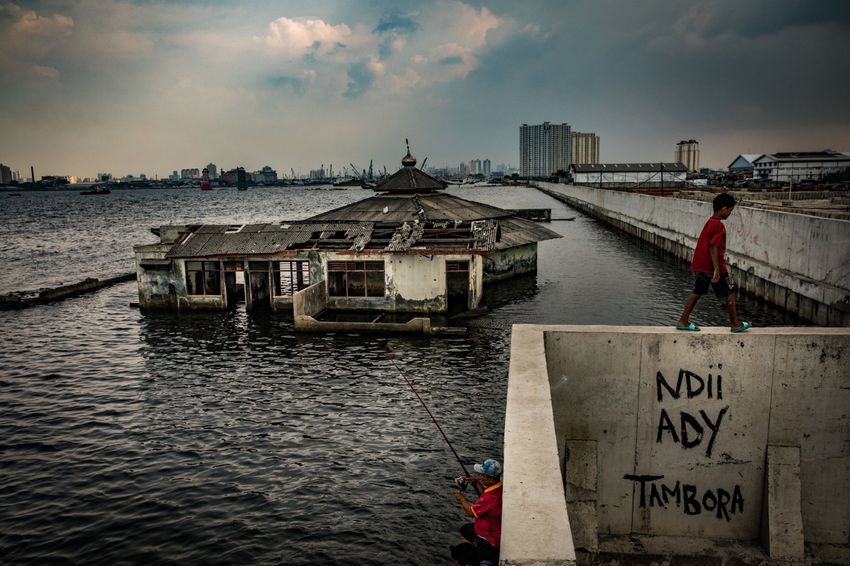
(Kimmelman & Haner, 2018)

                            By
                            Hnin Nu Nu Naing
                            Su Yadanar Myint
                            Anwar Luqman Hakim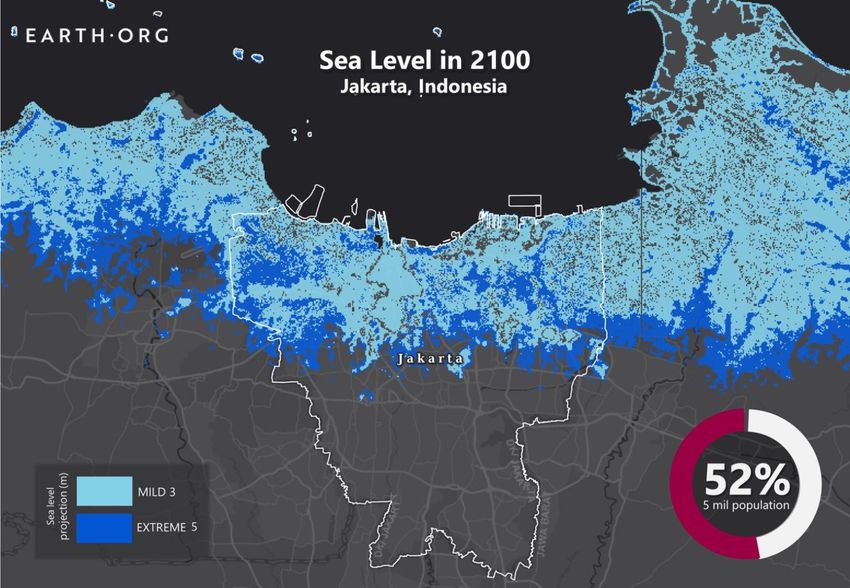
Jakarta Underwater
                 :Leave your home or fight to stay?
                Hnin Nu Nu Naing, Su Yadanar Myint, Anwar Luqman Hakim
                            Supervisor: Dr.Warathida Chaiyapa
    Assistant Director of CMU-SPP and the instructor of the course Global Climate Policy

                                                                    (Kimmelman & Haner, 2018)

Key Messages
•   Relocation is not a viable option as it requires massive cost and comprehensive planning.
•   Comprehensive plans based on participatory decision-making are preferred as communi-
    ties' livelihoods rely on.
•   Find and develop feasible alternative solutions that are socially and environmentally sus-
    tainable development considering local concerns and pre-existing socio-economic prob-
    lems.

                                              1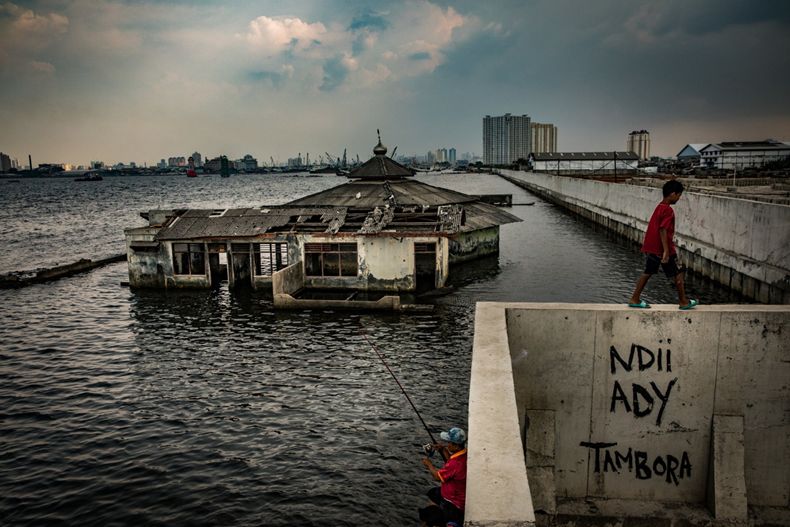
Rising Sea Level is a Global Threat

Scientists and policy makers alike have              Bank report showing the threat faced by Mar-
warned that human security risks may spill-          shall Islands. The North Pacific country with
over into higher-order security risks. This          a population of 59,000 is at risk of disappear-
may lead to political instability, intra-state       ing due to sea level rise. The report stated that
conflict, major natural disasters involving          a 1-meter sea level rise will permanently
significant military responses, mass displace-       flood 40% of the buildings in the capital, and
ments of peoples, and threats to critical re-        frequent flooding for 96% of the 20,000 pop-
sources and infrastructure. Other key risks          ulated city.
that must be observed including geopolitical
                                                     The Intergovernmental Panel on Climate
impact of climate change including regional
                                                     Change (2021) in its report stressed the need
and inter-state tensions and conflicts (The
                                                     for immediate, rapid and large-scale green-
Expert Group of the International Military
                                                     house gas emissions to avoid crossing the
Council on Climate and Security, 2020)
                                                     1.5oC global warming threshold. The report
Rising sea level is one of the consequences of       further stated that the changes to normal cli-
climate change. According to the WCRP                mate patterns will increase with additional
Global Sea Level Budget Group (2018), be-            warming, among others continued global av-
tween 1993 and 2018 thermal expansion of             erage sea level rise (15-30 cm) through the
the oceans contributed 42% to sea level rise.        middle of the century and extreme sea level
Sea level can increase the risk of flooding          events that previously occurred once in 100
which affects national security by threatening       years could happen every year by the end of
the country's infrastructure, economies, pub-        this century.
lic health, public property, and ecology.
                                                     The threat is real not only for Marshall Is-
Thereby imperative for countries and com-
                                                     lands and other island communities, but also
munities which have been encountering the
                                                     for many nation’s capitals and major mega-
threat of sea level rise to prepare mitigation
                                                     cities built on the shorelines. In 2021, New
and adaptation strategies.
                                                     York City and New Jersey faced an unprece-
Mcdonald (2021) reported on the World                dented    flash   flooding     and    tornadoes

                                                 2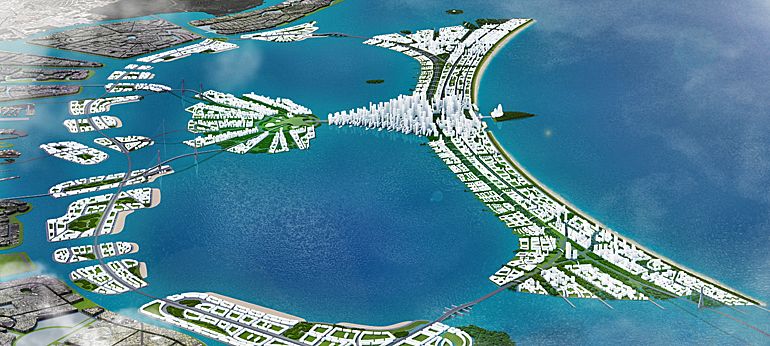
(Levenson & Barnard, 2021). The recent dis-           Mega Cities throughout the world (Jakarta,
aster may be attributed to the storm Ida which        Bangkok, Shanghai, Mexico City, Lagos,
caused heavy rainfall, overloading the drain-         Dhaka) are facing the same threat of sea level
age system. However, it is without a doubt            rise and compounded with the threat of land
that the city itself is facing problems from          subsidence, mainly due to excessive ground-
groundwater extraction and its proximity to           water extraction (Erkens et al., 2015)
two large rivers.

The Jakarta Case

                                                               (Bandung Institute of Technology, n.d )

The notion that Jakarta, a mega city with a           rise of 2.5 feet (76.2 cm) in sea level it will
population of 10,562,088 (Jakarta Statistics          trigger mass migration and fight over arable
Agency, n.d.), is sinking is not new. The no-         land. If the projections are correct, Indonesia
tion resurfaced in Indonesia after the U.S.           will have to move the Capital since Jakarta
President Joe Biden made a reference to it in         will be underwater (The White House, 2021).
his July 27, 2021, remarks at the Office of the
                                                      It is worth noting that the current President of
Director of National Intelligence. Biden re-
                                                      Indonesia, Mr. Joko Widodo, has not make
marked that the greatest threat facing Amer-
                                                      any comments regarding the projection that
ica is climate change, and if the world sees a
                                                      Jakarta is sinking since 2019. President

                                                  3
Widodo, previously the Governor of the Ja-          Widodo announced the government’s plan to
karta, last spoke about the issue in 2016 and       move the capital from Jakarta to East Kali-
2019, pushing for a speedy completion of the        mantan. The development of a new capital is
giant sea wall project (Laub, 2019; Deutsche        ongoing despite the complications brought by
Welle, 2016). In 2019, shortly after winning        the covid-19 global pandemic (Meiliana,
his second term in the office, President            2021).

                                                                Dutchwatersector.com in Saturi (2017)

The Giant Sea Wall, also known as the
Garuda Project, is the Indonesian govern-
ment’s answer to the sinking Jakarta. Octavi-
anti & Charles (2018) described that the In-
donesian Government, with cooperation from
the Government of the Netherlands, has
launched             the            National

                                                4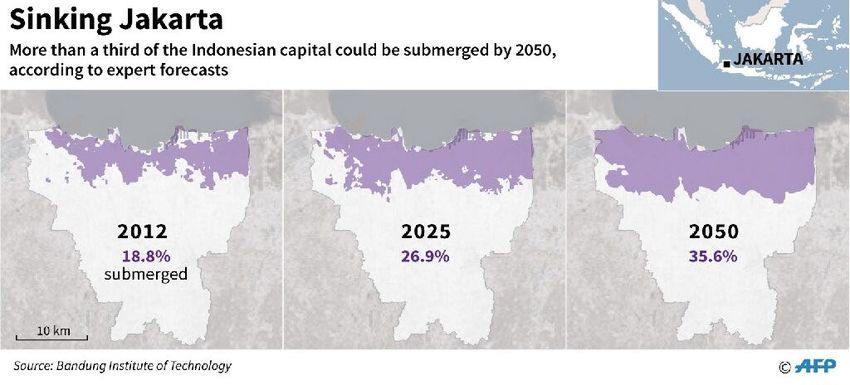
Misdirected Policies?

                                                                                    (Earth.Org, 2020)

As instructed by President Widodo, the gov-           Jakarta’s residents (Reuters, 2018). The plan
ernment put a lot of focus in constructing the        was updated in 2017 to include the existing
giant sea wall. It is believed that this policy       man-made islands originally build independ-
formulated in association with the Dutch,             ent of the NCICD (Badan Pembangunan In-
known as the leading experts of coastal de-           frastruktur Wilayah, 2017).
velopment, is the answer of the many woes of

                                                  5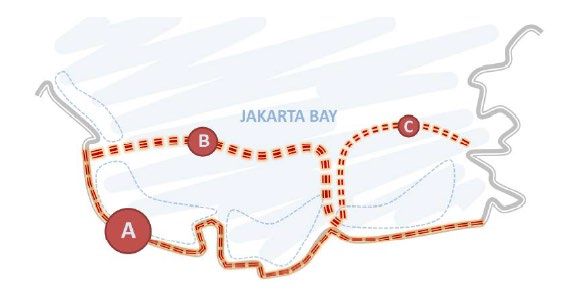
C. Phase C, optional phase, is the con-
                                                         struction of the east outer great seawall,
                                                         effectively closing off the Jakarta Bay
                                                         to further reduce the pressure of sea
                                                         water intrusion in the eastern part of Ja-
                                                         karta.
              NCICD Executive Summary (2017)

Based on the NCICD Executive Summary                NCICD is deemed a controversial project by
(2017), the project consisted of three phases       many. Academics (among others Erkens et.
based on urgency:                                   al, 2015; Deltares, 2015; and Abidin et al.,
                                                    2011), and the government, has acknowl-
 A. Phase A, a critical phase with no-regret        edged that Jakarta is threatened not only by
    approach consisted of building and re-          sea level rise, but also by the land subsidence.
    inforcing a 20.1 km long dike in North          The intensified flooding in Jakarta as well as
    Jakarta, as well as reinvigorating the          increased inland seawater intrusion has been
    many rivers crossing Jakarta. This              linked by academics to land subsidence
    phase has been scheduled to be finished         (Brinkman & Hartman, 2009, Onodera et. al,
    in 2020, however due to many compli-            2009; Soekardi et. al., 1986). NCICD, how-
    cations, the process has yet to be con-         ever, failed to address the issue of land sub-
    cluded.                                         sidence, and focusing only on the rise of sea
                                                    level.
 B. Phase B, a mid-term phase, focused on
                                                    The closing of the bay area in Jakarta, as a
    construction of an offshore giant sea
                                                    result of the NCICD, faced a lot of resistance,
    wall for the Western part of Jakarta
                                                    including from the academics. The USD 40
    Bay. Although the Indonesian Govern-
                                                    billion project is using a top-down approach
    ment has secured support from the
                                                    and does not take into account the voices of
    Netherlands and the Republic of Korea,
                                                    the community it is claiming to protect. In the
    it appears this phase that was scheduled
                                                    NCICD Master Plan (The Coordinating Min-
    to start in 2018 and to be finished in
                                                    istry of Economic Affairs, 2014) the
    2022 has yet to be started.

                                                6
considerable effects of the development to sustainable livelihoods due to sudden change
the community in the coastal areas were not in life.
adequately considered.
The same issues can be said with construction
There are many kampongs and residential of the dike along the coastal area. It directly
neighbourhoods in the coastal area since it of- affected the livelihood of the communities
fers employment opportunities from fishing currently living in the area. The whole project
or in the nearby Tanjung Priok seaport. These will surely need to resettle the slum areas in
areas are considered slum areas and some il- North Jakarta to elsewhere (Sherwell, 2016).
legal housing. The Government is trying to
To alleviate the burden on Jakarta as the cap-
relocate the population of these communities
ital city, the Indonesian government has also
into low-rise low-cost apartments, however
started the construction of a new capital city
so far these efforts have been met with differ-
in East Kalimantan. The USD 33 billion pro-
ing results.
ject was initially scheduled to complete con-
The construction of the sea wall, and the 17 struction of government offices in 2024, but
man-made islands (originally not part of the it must be put on hold due to the Covid-19
NCICD but then incorporated into it in 2016) pandemic (The Jakarta Post, 2020). While the
has proven to be problematic to the livelihood country is prioritizing its economic recovery,
of the fishing communities. Mauriend (2018) it also serves as an opportunity to discuss re-
identified the following issues arising from location plans with affected communities and
the reclamation: changes in sea pattern and hear local voices and redevelop an inclusive
fishing locations; loss of access to livelihoods policy.
for those who have to relocate; loss of
Fighting for a Sustainable Solution
In 2021, NCICD is still the chosen policy of learned from their research on mitigation and
the Indonesian government to address the is- adaptation efforts in low lying small island
sue of sea level rise vis-à-vis Jakarta. Jamero communities in the Philippines. According to
et al. (2017, 2018, and 2019) and Esteban et their research, successful adaptation efforts
al. (2019) shared the lessons need to be inclusive and address the needs of
7the most vulnerable groups in the commu- island-countries. The Government needs to
nity. In the research, communities viewed re- look for alternative policies that will address
location as a last resort and will always work the threat, while providing a better future for
on adaptation responses. the communities.
Eriksen et al. (2011) stated that successful ad- While some residential areas in Jakarta
aptation measures must be socially and envi- coastal areas inevitably needs to be relocated
ronmentally sustainable to allow develop- due to health and sanitary concerns, most res-
ment pathways. Research by Mirza (2003) idents have insisted to remain and adapt to the
concluded that constant capacity building rising of sea level as well as the effect of
through partnership between developed and NCICD projects. This adaptation measures
developing countries with a focus on climate includes changes in fishing ground and activ-
mitigation will provide a more sustainable fu- ities, as well as raising their homes to reduce
ture for communities. the effect of flooding.
The social and culture dimension of the threat The government need to provide assistance in
of sea level rise and its mitigation effort must the form of laying the legal framework and
not be sidelined. It is the responsibility of building infrastructures and facilities that
each and any governments to protect the centered on the need of the vulnerable groups
basic rights of its people, including social jus- of communities to preserve their culture and
tice. With this in mind, we are proposing the livelihoods.
following policies and framework to mitigate
2. Communities’ involvement and avoiding
the effect of sea level rise in
maldapation
Building a giant sea wall and affecting
1. Relocation as a last resort changes at the community level without con-
Relocation, although appears to be a sound sulting the communities themselves will re-
policy, remains a complex issue, as it requires sult in non-compliance. The government did
long term planning and massive resources, not meaningfully involve the impacted com-
and it will put a heavy strain on the most vul- munities on the Great Garuda Project, nor
nerable groups: women, children, and the el- about the threat of sea level rise, thereby se-
derly. Especially true for mega-cities and verely reducing ownership of the
8communities. The impacted community demanded the gov-
ernment to improve their living conditions
The USD 40 billion project is regarded as a
while maintaining their livelihood and cul-
top-down policy, the affected communities as
ture. Short term direct actions are needed,
well as academic communities panned the
aside from reinforcing the dikes, the commu-
project as lacking in transparency and inclu-
nity needed better sanitation, dredging and
sivity. It is viewed to benefit more to the pow-
draining of inundated areas, better and bigger
erful real estate developers, rather than the
water pumps, as well as access to clean water.
community which have been living under
poor conditions for the last decade. In the medium-term actions, communities
need proper support from the government as
Pursuing the cooperation of local communi-
well as the ability to maintain their liveli-
ties and facilitating local ownership of adap-
hood. This can be done through better adap-
tation responses between local communities
tation measures, such as introduction of sus-
is imperative for decision makers. Adaptation
tainable fisheries (farming), and more flood-
measures must be linked to sustainable devel-
resilient building construction techniques.
opment. Empirical evidence and impact anal-
ysis information dissemination are needed to 3. Long-term consistent mitigation policy is
show urgency in every level. Wise use of the needed
power of social media is detrimental to reach The rise of sea level is a problem of a global
and gain the support from the public. level, the way to recovery has to start some-
where. As stated in the Indonesian Nationally
Jakarta, being an old colonial city, has a basic
Determined Contribution to the United Na-
problem, restricted water access in the city
tions Framework Convention on Climate
causing most of its residents have to extract
Change, Indonesia is committed to reduce
groundwater to survive (Thornell, 2021).
GHG emissions by up to 41% below the 2030
This issue has been neglected by the govern-
business-as-usual scenario with international
ment in their mitigation plan and has proven
assistance, and 29% below the 2030 busi-
to compound the issue of sea water rise,
ness-as-usual scenario unconditionally.
which will cause the city to be one of the first
in the world to permanently fall victim to the In the NDC, Indonesia has stated that it is an-
sea. ticipating long-term impacts from sea level
9rise as a threat to the most vulnerable groups.
The way out proposed in the document is to
strengthen climate resilience through adapta-
tion and mitigation efforts, which has been
updated in the Annex 2 of the updated NDC.
As with all the other NDCs Indonesia’s NDC
is also under critiques by various organisa-
tions and researchers as being not enough to
make a difference. Nevertheless, the key pro-
grammes already outlined in the NDC should
act as a guidance and mainstreamed into all
policies and disseminated to all stakeholders.
It will take the cooperation and collaboration
of all nations and in every level to overcome
a challenge of this magnitude, as the sea level
rise poses not only a threat to one country or
community, but it is a clear and present dan-
ger to human security.
--o0o—
10References Erkens, G., Bucx, T., Dam, R., Lange, H., & Lambert,
J. (2015). Sinking coastal cities. Proceedings of
Badan Pengembangan Infrastruktur Wilayah. (2017). the International Association of Hydrological
BUKU EXECUTIVE SUMMARY- Sciences. 372. 189-198. 10.5194/piahs-372-
PENGEMBANGAN KAWASAN PANTAI 189-2015.
UTARA JAKARTA (NCICD) 2017. Is-
suu.Com. https://issuu.com/kath- Esteban, M., Jamero, M. L., Nurse, L., Yamamoto, L.,
erinelvira/docs/gabung-buku_deluxe_ncicd- Takagi, H., Thao, N. D., ... & Shibayama, T.
16082018 (2019). Adaptation to sea level rise on low coral
islands: Lessons from recent events. Ocean &
Bandung Institute of Technology. (n.d.). [Sinking Ja- coastal management, 168, 35-40.
karta]. https://scx1.b-
cdn.net/csz/news/800a/2019/3-mapshow- Intergovernmental Panel on Climate Change. (2021,
ingth.jpg August 9). Climate change widespread, rapid,
and intensifying - IPCC [Press release].
Deltares. 2015. Sinking cities: An integrated approach https://www.ipcc.ch/site/assets/up-
towards solutions. Deltares18 3. Delft/ Utrecht, loads/2021/08/IPCC_WGI-AR6-Press-Re-
The Netherlands. lease_en.pdf
Deutsche Welle (www.dw.com). (2016, April 28). Ja- Jakarta Statistics Agency. (n.d.). BPS Provinsi DKI Ja-
karta Tenggelam Tanpa Tanggul Raksasa. karta. Indonesia Statistics Agency. Retrieved
October 26, 2021, from https://ja-
DW.COM. https://www.dw.com/id/presi-
karta.bps.go.id/indicator/12/111/1/jumlah-
den-jokowi-jakarta-tenggelam-tanpa- penduduk-provinsi-dki-jakarta-menurut-ke-
tanggul-raksasa/a-19222934 lompok-umur-dan-jenis-kelamin.html
Earth.Org. (2020, June 30). Sea Level in 2100: Ja-
Jamero, M. L., Onuki, M., Esteban, M., Chadwick, C.,
karta, Indonesia [Illustration]. Tan, N., Valenzuela, V. P., ... & Avelino, J. E.
(2019). In-situ adaptation against climate
https://u4d2z7k9.rocketcdn.me/wp-con-
change can enable relocation of impoverished
tent/uploads/2020/06/jakarta-3-
small islands. Marine Policy, 108, 103614.
1536x1063.jpg
Jamero, M. L., Onuki, M., Esteban, M., & Tan, N.
(2018). Community-based adaptation in low-
Eriksen, S., Aldunce, P., Bahinipati, C. S., Martins, R.
lying islands in the Philippines: challenges and
D. A., Molefe, J. I., Nhemachena, C., ... &
lessons learned. Regional Environmental
Ulsrud, K. (2011). When not every response to
Change, 18(8), 2249-2260.
climate change is a good one: Identifying prin-
ciples for sustainable adaptation. Climate and
Jamero, M. L., Onuki, M., Esteban, M., Billones-
development, 3(1), 7-20.
11Sensano, X. K., Tan, N., Nellas, A., ... & Valen- Pandemi Halaman all - Kompas.com.
zuela, V. P. (2017). Small-island communities
KOMPAS.Com. https://na-
in the Philippines prefer local measures to relo-
sional.kompas.com/read/2021/10/21/105551
cation in response to sea-level rise. Nature Cli-
mate Change, 7(8), 581-586. 21/dua-tahun-pemerintahan-jokowi-maruf-
rencana-pemindahan-ibu-kota-negara-
Kimmelman, M., & Haner, J. (2018, January 3). Ja-
karta Is Sinking So Fast, It Could End Up Un- di?page=all
derwater. The New York Times.
https://www.nytimes.com/interac- Mirza, M. M. Q. (2003). Climate change and extreme
tive/2017/12/21/world/asia/jakarta-sinking-cli- weather events: can developing countries
mate.html adapt?. Climate policy, 3(3), 233-248.
Laub, K. (2019, July 28). Indonesia’s leader says sink- NCICD Executive Summary. (2015, June). Aca-
ing Jakarta needs giant sea wall. AP NEWS. demia.Edu. https://www.aca-
https://apnews.com/article/jakarta-science- demia.edu/31902383/NCICD_Execu-
joko-widodo-indonesia-asia-pacific- tive_Summary?auto=download
8409fd8291ce43509bd3165b609de98c
Octavianti, O. and Charles, K. (2018). Disaster capi-
Levenson, M., & Barnard, A. (2021, September 13). talism? Examining the politicisation of land
Ida Brings Flash Floods and Upheaval to New subsidence crisis in pushing Jakarta’s seawall
York City. The New York Times. megaproject. Water Alternatives 11(2): 394-
https://www.nytimes.com/2021/09/02/nyre- 420
gion/flash-floods-new-york.html
Reuters. (2018, April 24). Will Giant Sea Wall plan
Mauriend, C. (2018). Analisis Dampak Pembangunan sink or swim in Jakarta? | Indo-Pacific Defense
Pulau Reklamasi di Teluk/Pantai Utara Jakarta. Forum. Indo-Pacific Defense Forum |.
https://ipdefenseforum.com/2018/04/will-gi-
Mcdonald, J. (2021, October 18). Rising sea levels
ant-sea-wall-plan-sink-or-swim-in-jakarta/
threaten Marshall Islands’ status as a nation,
World Bank report warns. The Guardian. Sato, C., Haga, M., & Nishino, J. (2006). Land subsid-
https://www.theguard- ence and groundwater management in Tokyo.
ian.com/world/2021/oct/17/rising-sea-levels- International Review for Environmental Strate-
threaten-marshall-islands-status-as-a-nation- gies, 6(2), 403-424.
world-bank-report-warns
Saturi, S. (2017, May 3). Kala Pemerintah Fokus Lagi
Meiliana, D. (2021, October 21). Dua Tahun Proyek Tanggul Laut Raksasa, Penelitian
Pemerintahan Jokowi-Ma’ruf: Rencana Ungkap Cara Itu Bukan Solusi. Monga-
bay.Co.Id.
Pemindahan Ibu Kota Negara di Tengah
12https://www.mongabay.co.id/2017/05/02/kala- The Jakarta Post. (2020, August 19). Indonesia puts
pemerintah-fokus-lagi-proyek-tanggul-laut- $33 billion move of capital city on hold to
raksasa-penelitian-ungkap-cara-itu-bukan-so- tackle pandemic. https://www.thejakarta-
lusi/ post.com/news/2020/08/19/indonesia-puts-33-
billion-move-of-capital-city-on-hold-to-tackle-
Sherwell, P. (2016, November 22). $40bn to save Ja-
pandemic.html
karta: the story of the Great Garuda. The
Guardian. https://www.theguardian.com/cit- The White House. (2021, July 28). Remarks by Presi-
ies/2016/nov/22/jakarta-great-garuda-seawall- dent Biden at the Office of the Director of Na-
sinking tional Intelligence.
https://www.whitehouse.gov/briefing-
Suprayogi, H., Rudyanto, A., Bachtiar, H., Limantara,
room/speeches-remarks/2021/07/27/remarks-
L.M. (2018). Critical-phase sea dike construc-
by-president-biden-at-the-office-of-the-direc-
tion of NCICD in Jakarta as national capital
tor-of-national-intelligence/
city. IOP Conf. Ser.: Earth Environ. Sci. 162
012020 Thornell, C. (2021, February 22). Why Jakarta is sink-
ing. VOX.
The Coordinating Ministry of Economic Affairs. 2014.
https://www.vox.com/22295302/why-jakarta-
Master Plan National Capital Integrated
sinking-flooding-colonialism
Coastal Development. Jakarta.
WCRP Global Sea Level Budget Group. (2018).
The Expert Group of the International Military Coun-
Global Sea Level Budget 1993-Present. Earth
cil on Climate and Security. (2020, February).
System Science Data, 10(3), 1551-1590.
World Climate Security Report 2020. Interna-
https://doi.org/10.5194/essd-10-1551-2018
tional Military Council on Climate and Secu-
rity. https://climateandsecurity.org/worldcli-
matesecurityreport2020/
13You can also read


