ADVIO: An Authentic Dataset for Visual-Inertial Odometry
←
→
Page content transcription
If your browser does not render page correctly, please read the page content below
ADVIO: An Authentic Dataset for
                                                         Visual-Inertial Odometry

                                                Santiago Cortés1 , Arno Solin1 , Esa Rahtu2 , and Juho Kannala1
                                                1
                                                    Department of Computer Science, Aalto University, Espoo, Finland
                                                    {santiago.cortesreina,arno.solin,juho.kannala}@aalto.fi
                                                        2
                                                          Tampere University of Technology, Tampere, Finland
arXiv:1807.09828v1 [cs.CV] 25 Jul 2018

                                                                        esa.rahtu@tut.fi

                                               Abstract. The lack of realistic and open benchmarking datasets for
                                               pedestrian visual-inertial odometry has made it hard to pinpoint dif-
                                               ferences in published methods. Existing datasets either lack a full six
                                               degree-of-freedom ground-truth or are limited to small spaces with op-
                                               tical tracking systems. We take advantage of advances in pure inertial
                                               navigation, and develop a set of versatile and challenging real-world com-
                                               puter vision benchmark sets for visual-inertial odometry. For this pur-
                                               pose, we have built a test rig equipped with an iPhone, a Google Pixel
                                               Android phone, and a Google Tango device. We provide a wide range of
                                               raw sensor data that is accessible on almost any modern-day smartphone
                                               together with a high-quality ground-truth track. We also compare result-
                                               ing visual-inertial tracks from Google Tango, ARCore, and Apple ARKit
                                               with two recent methods published in academic forums. The data sets
                                               cover both indoor and outdoor cases, with stairs, escalators, elevators,
                                               office environments, a shopping mall, and metro station.

                                               Keywords: Visual-inertial odometry · Navigation · Benchmarking

                                             Access data and documentation at:
                                             https://github.com/AaltoVision/ADVIO

                                         1   Introduction
                                         Various systems and approaches have recently emerged for tracking the mo-
                                         tion of hand-held or wearable mobile devices based on video cameras and iner-
                                         tial measurement units (IMUs). There exist both open published methods (e.g.
                                         [14,16,2,12,21]) and closed proprietary systems. Recent examples of the latter
                                         are ARCore by Google and ARKit by Apple which run on the respective man-
                                         ufacturers’ flagship smartphone models. Other examples of mobile devices with
                                         built-in visual-inertial odometry are the Google Tango tablet device and Mi-
                                         crosoft Hololens augmented reality glasses. The main motivation for developing
                                         odometry methods for smart mobile devices is to enable augmented reality appli-
                                         cations which require precise real-time tracking of ego-motion. Such applications
2          Cortés, Solin, Rahtu, and Kannala

                                          Google Tango
                                  (raw pose, area learning pose,
    Google Pixel                                                      Apple iPhone 6s
                                    fisheye video, point cloud)
    (ARCore pose)                                                      (ARKit pose)

                                                                      Raw sensor data:
                                                                      • Video
                                                                      • Accelerometer
                                                                      • Gyroscope
                                                                      • Magnetometer
                                                                      • Barometer
                                                                      • GNSS

     Free hand-
    held motion                          Ground-truth
                                          (6-DoF pose)

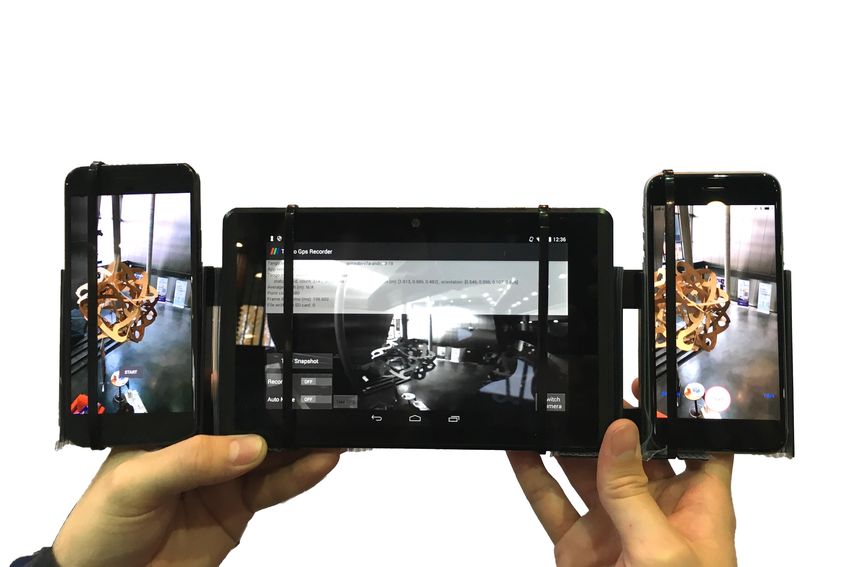
Fig. 1. The custom-built capture rig with a Google Pixel smartphone on the left, a
Google Tango device in the middle, and an Apple iPhone 6s on the right.

could have significant value in many areas, like architecture and design, games
and entertainment, telepresence, and education and training.
    Despite the notable scientific and commercial interest towards visual-inertial
odometry, the progress of the field is constrained by the lack of public datasets
and benchmarks which would allow fair comparison of proposed solutions and
facilitate further developments to push the current boundaries of the state-of-
the-art systems. For example, since the performance of each system depends
on both the algorithms and sensors used, it is hard to compare methodological
advances and algorithmic contributions fairly as the contributing factors from
hardware and software may be mixed. In addition, as many existing datasets
are either captured in small spaces or utilise significantly better sensor hardware
than feasible for low-cost consumer devices, it is difficult to evaluate how the
current solutions would scale to medium or long-range odometry, or large-scale
simultaneous localization and mapping (SLAM), on smartphones.
    Further, the availability of realistic sensor data, captured with smartphone
sensors, together with sufficiently accurate ground-truth would be beneficial in
order to speed up progress in academic research and also lower the threshold
for new researchers entering the field. The importance of public datasets and
benchmarks as a driving force for rapid progress has been clearly demonstrated
in many computer vision problems, like image classification [9,19], object detec-
tion [13], stereo reconstruction [10] and semantic segmentation [13,6], to name a
few. However, regarding visual-inertial odometry, there are no publicly available
datasets or benchmarks that would allow evaluating recent methods in a typical
smartphone context. Moreover, since the open-source software culture is not as
common in this research area as, for example, it is in image classification and
object detection, the research environment is not optimal for facilitating rapid
progress. Further, due to the aforementioned reasons, there is a danger that the
field could become accessible only for big research groups funded by large corpo-
rations, and that would slow down progress and decay open academic research.
    In this work, we present a dataset that aims to facilitate the development of
visual-inertial odometry and SLAM methods for smartphones and other mobile
ADVIO: An authentic dataset for visual-inertial odometry            3

                                                              Floor 5             23.6 m

                                                              Floor 4             19.2 m

                                                              Floor 3             14.7 m

                                                              Floor 2             10.1 m

                                                              Floor 1             5.6 m

                                                              Floor 0             0.0 m

   (a) View inside mall        (b) Tango point cloud         (c) Escalator data sets
Fig. 2. Multi-floor environments such as (a) were considered. The point cloud (b) and
escalator/elevator paths captured in the mall. The Tango track (red) in (b) has similar
shape as the ground-truth in (c). Periodic locomotion can be seen in (c) if zoomed in.

devices with low-cost sensors (i.e. rolling-shutter cameras and MEMS based iner-
tial sensors). Our sensor data is collected using a standard iPhone 6s device and
contains the ground-truth pose trajectory and the raw synchronized data streams
from the following sensors: RGB video camera, accelerometer, gyroscope, mag-
netometer, platform-provided geographic coordinates, and barometer. In total,
the collected sequences contain about 4.5 kilometres of unconstrained hand-held
movement in various environments both indoors and outdoors. One example se-
quence is illustrated in Figure 2. The data sets are collected in public spaces,
conforming the local legislation regarding filming and publishing. The ground-
truth is computed by combining a recent pure inertial navigation system (INS)
[24] with frequent manually determined position fixes based on a precise floor
plan. The quality of our ground-truth is verified and its accuracy estimated.
    Besides the benchmark dataset, we present a comparison of visual-inertial
odometry methods, including three recent proprietary platforms: ARCore on
a Google Pixel device, Apple ARKit on the iPhone, and Tango odometry on
a Google Tango tablet device, and two recently published methods, namely
ROVIO [2,1] and PIVO [25]. The data for the comparison was collected with
a capture rig with the three devices and is illustrated in Figure 1. Custom ap-
plications for data capture were implemented for each device.
    The main contributions of our work are summarized in the following:

 – A public dataset of iPhone sensor data with 6 degree-of-freedom pose ground-
   truth for benchmarking monocular visual-inertial odometry in real-life use
   cases involving motion in varying environments, and also including stairs,
   elevators and escalators.
 – Comparing state-of-the-art visual-inertial odometry platforms and methods.
 – A method for collecting ground-truth for smartphone odometry in realistic
   use cases by combining pure inertial navigation with manual position fixes.
4             Cortés, Solin, Rahtu, and Kannala

                                    Table 1. An overview of related datasets.
                        Rawseeds [5]     KITTI [10]      NCLT [4]        EuRoC [3]     PennCOSYVIO [18]                Proposed
Year                        2006            2012            2015             2016               2017                  (this paper)
Carrier                 Wheeled robot       Car            Segway           MAV          Hand-held device          Hand-held device
Environment           Indoors/Outdoors    Outdoors    Indoors/Outdoors     Indoors       Indoors/Outdoors          Indoors/Outdoors
Scene setup             Campus-scale     City-scale     Campus-scale      2 Rooms      150 m path on campus   Multiple levels in 3 buildings
                                                                                          (walked 4 times)         + outdoor scenes
Hardware setup           Custom           Custom         Custom            Custom             Custom             Standard smartphone
Distance (total)         ∼10 km           ∼39 km        ∼147 km            ∼800 m             ∼600 m                    ∼4.5 km
Long-range use-case         X               X              X                 —                   X                          X
3D point cloud             —                X              X                 X                   —                          X
Ground-truth          GPS/Visual tags    GPS/IMU      GPS/IMU/Laser      MoCap/Laser        Visual tags          IMU + Position fixes
Accuracy                   ∼m              ∼dm            ∼dm               ∼mm                ∼dm                        dm–m

2      Related Work

Despite visual-inertial odometry (VIO) being one of the most promising ap-
proaches for real-time tracking of hand-held and wearable devices, there is a lack
of good public datasets for benchmarking different methods. A relevant bench-
mark should include both video and inertial sensor recordings with synchronized
time stamps preferably captured with consumer-grade smartphone sensors. In
addition, the dataset should be authentic and illustrate realistic use cases. That
is, it should contain challenging environments with scarce visual features, both
indoors and outdoors, and varying motions, also including rapid rotations with-
out translation as they are problematic for monocular visual-only odometry. Our
work is the first one addressing this need.
     Regarding pure visual odometry or SLAM, there are several datasets and
benchmarks available [23,6,8,26] but they lack the inertial sensor data. Further,
many of these datasets are limited because they (a) are recorded using ground
vehicles and hence do not have rapid rotations [23,6], (b) do not contain low-
textured indoor scenes [23,6], (c) are captured with custom hardware (e.g. fisheye
lens or global shutter camera) [8], (d) lack full 6-degree of freedom ground-truth
[8], or (e) are constrained to small environments and hence are ideal for SLAM
systems but not suitable for benchmarking odometry for medium and long-range
navigation [26].
     Nevertheless, besides pure vision datasets, there are some public datasets
with inertial sensor data included, for example, [10,5,4,3,18]. Most of these
datasets are recorded with sensors rigidly attached to a wheeled ground ve-
hicle. For example, the widely used KITTI dataset [10] contains LIDAR scans
and videos from multiple cameras recorded from a moving car. The ground-truth
is obtained using a very accurate GPS/IMU localization unit with RTK correc-
tion signals. However, the IMU data is captured only with a frequency of 10 Hz,
which would not be sufficient for tracking rapidly moving hand-held devices.
Further, even if high-frequency IMU data would be available, also KITTI has
the constraints (a), (b), and (c) mentioned above and this limits its usefulness
for smartphone odometry.
     Another analogue to KITTI is that we also use pure inertial navigation with
external location fixes for determining the ground-truth. In our case, the GPS
fixes are replaced with manual location fixes since GPS is not available or ac-
ADVIO: An authentic dataset for visual-inertial odometry         5

curate indoors. Further, in contrast to KITTI, by utilizing recent advances in
inertial navigation [24] we are able to use the inertial sensors of the iPhone for the
ground-truth calculation and are therefore not dependent on a high-grade IMU,
which would be difficult to attach to the hand-held rig. In our case the man-
ual location fixes are determined from a reference video (Fig. 3a), which views
the recorder, by visually identifying landmarks that can be accurately localized
from precise building floor plans or aerial images. The benefit of not using opti-
cal methods for establishing the ground-truth is that we can easily record long
sequences and the camera of the recording device can be temporarily occluded.
This makes our benchmark suitable also for evaluating occlusion robustness of
VIO methods [25]. Like KITTI, the Rawseeds [5] and NCLT [4] datasets are
recorded with a wheeled ground vehicle. Both of them use custom sensors (e.g.
omnidirectional camera or industrial-grade IMU). These datasets are for evalu-
ating odometry and self-localization of slowly moving vehicles and not suitable
for benchmarking VIO methods for hand-held devices and augmented reality.
    The datasets that are most related to ours are EuRoC [3] and PennCOSYVIO
[18]. EuRoC provides visual and inertial data captured with a global shutter
stereo camera and a tactical-grade IMU onboard a micro aerial vehicle (MAV)
[17]. The sequences are recorded in two different rooms that are equipped with
motion capture system or laser tracker for obtaining accurate ground-truth mo-
tion. In PennCOSYVIO, the data acquisition is performed using a hand-held
rig containing two Google Tango tablets, three GoPro Hero 4 cameras, and a
similar visual-inertial sensor unit as used in EuRoC. The data is collected by
walking a 150 meter path several times at UPenn campus, and the ground-truth
is obtained via optical markers. Due to the need of optic localization for deter-
mining ground-truth, both EuRoC and PennCOSYVIO contain data only from a
few environments that are all relatively small-scale. Moreover, both datasets use
the same high-quality custom sensor with wide field-of-view stereo cameras [17].
In contrast, our dataset contains around 4.5 kilometers of sequences recorded
with regular smartphone sensors in multiple floors in several different buildings
and different outdoor environments. In addition, our dataset contains motion in
stairs, elevators and escalators, as illustrated in Figure 2, and also temporary
occlusions and lack of visual features. We are not aware of any similar public
dataset. The properties of different datasets are summarized in Table 1. The
enabling factor for our flexible data collection procedure is to utilize recent ad-
vances in pure inertial navigation together with manual location fixes [24]. In
fact, the methodology for determining the ground-truth is one of the contribu-
tions of our work. In addition, as a third contribution, we present a comparison
of recent VIO methods and proprietary state-of-the-art platforms based on our
challenging dataset.

3    Materials

The data was recorded with the three devices (iPhone 6s, Pixel, Tango) rigidly
attached to an aluminium rig (Fig. 1). In addition, we captured the collection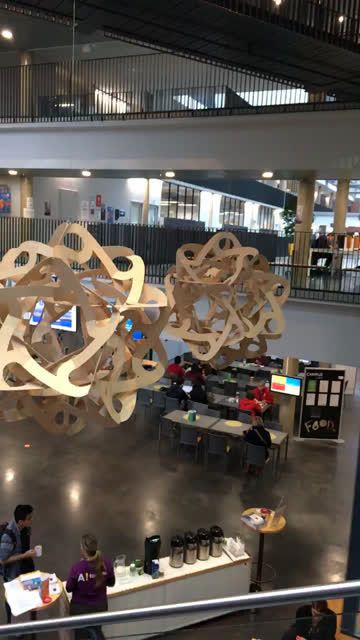
6        Cortés, Solin, Rahtu, and Kannala

    (a) Reference              (b) Tango (fisheye lens)                 (c) iPhone
Fig. 3. Example of simultaneously captured frames from three synchronized cameras.
The external reference camera (a) is used for manual position fixes for determining the
ground-truth trajectory in a separate post-processing stage.

process with an external video camera that was viewing the recorder (Fig. 3).
The manual position fixes with respect to a 2D map (i.e. a structural floor plan
image or an aerial image/map) were determined afterwards from the view of the
external camera. Since the device was hand-held, in most fix locations the height
was given as a constant distance above the floor level (with a reasonable uncer-
tainty estimate), so that the optimization could fit a trajectory that optimally
balances the information from fix positions and IMU signals (details in Sec. 4).
    The data streams from all the four devices are synchronized using network
provided time. That is, the device clock is synchronized over a network time
protocol (NTP) request at the beginning of a capture session. All devices were
connected to 4G network during recording. Further, in order to enable analysis
of the data in the same coordinate frame, we calibrated the internal and exter-
nal parameters of all cameras by capturing multiple views of a checkerboard.
This was performed before each session to account for small movements during
transport and storage. The recorded data streams are listed in Table 2.

3.1     Raw iPhone Sensor Capture
An iOS data collection app was developed in Swift 4. It saves inertial and vi-
sual data synchronized to the Apple ARKit pose estimation. All individual data
points are time stamped internally and then synchronized to global time. The
global time is fetched using the Kronos Swift NTP client3 . The data was cap-
tured using an iPhone 6s running iOS 11.0.3. The same software and an identi-
cal iPhone was used for collecting the reference video. This model was chosen,
because the iPhone 6s (published 2015) is hardware-wise closer to an average
smartphone than most recent flagship iPhones and also matches well with the
Google Pixel hardware.
3
    https://github.com/lyft/Kronos
ADVIO: An authentic dataset for visual-inertial odometry                     7

                       Table 2. Data captured by the devices.

Device       Data            Format                 Units                            Capture rate
Ground-truth Pose            Position/orientation Metric position                          100 Hz
iPhone       ARKit pose      Position/orientation   Metric position                        60   Hz
             Video           RGB video              Resolution 1280×720                    60   Hz
             GNSS            Latitude/Longitude     World coordinates (incl. meta)         ∼1   Hz
             Barometer       Pressure               kPa                                   ∼10   Hz
             Gyroscope       Angular rate           rad/s                                 100   Hz
             Accelerometer   Specific force         g                                     100   Hz
             Magnetometer    Magnetic field         µT                                    100   Hz
Pixel        ARCore pose     Position/orientation   Metric position                        30   Hz
Tango        Raw pose        Position/orientation   Metric position                        60   Hz
             Area learning   Position/orientation   Metric position                        60   Hz
             Fisheye video   Grayscale video        Resolution: 640×480                    60   Hz
             Point cloud     Array of 3D points     Point coloud                           ∼5   Hz

    During the capture the camera is controlled by the ARKit service. It is per-
forming the usual auto exposure and white balance but the focal length is kept
fixed (the camera matrix returned by ARKit is stored during capture). The res-
olution is also controlled by ARKit and it is 1280×720. The frames are packed
into an H.264/MPEG-4 video file. The GNSS/network location data is collected
through the CoreLocation API. Locations are requested with the desired accu-
racy of ‘kCLLocationAccuracyBest’. The location service provides latitude and
longitude, horizontal accuracy, altitude, vertical accuracy, and speed. The ac-
celerometer, gyroscope, magnetometer, and barometer data are collected through
the CoreMotion API and recorded at the maximum rate. The approximate cap-
ture rates of the multiple data streams are shown in Table 2. The magnetometer
values are uncalibrated. The barometer samples contain both the barometric
pressure and associated relative altitude readings.

3.2      Apple ARKit Data
The same application that captures the raw data is running the ARKit frame-
work. It provides a pose estimate associated with every video frame. The pose
is saved as a translation vector and a rotation expressed in Euler angles. Each
pose is relative to a global coordinate frame created by the phone.

3.3      Google ARCore Data
We wrote an app based on Google’s ARCore example4 for capturing the AR-
Core tracking result. Like ARKit, the pose data contains a translation to the first
frame of the capture and a rotation to a global coordinate frame. Unlike ARKit,
the orientation is stored as a unit quaternion. Note that the capture rate is slower
than with ARKit. We do not save the video frames nor the sensor data on the
Pixel. The capture was done on a Google Pixel device running Android 8.0.0
Oreo and using the Tango Core AR developer preview (Tango core version
1.57:2017.08.28-release-ar-sdk-preview-release-0-g0ce07954:250018377:stable).
4
    https://github.com/google-ar/arcore-android-sdk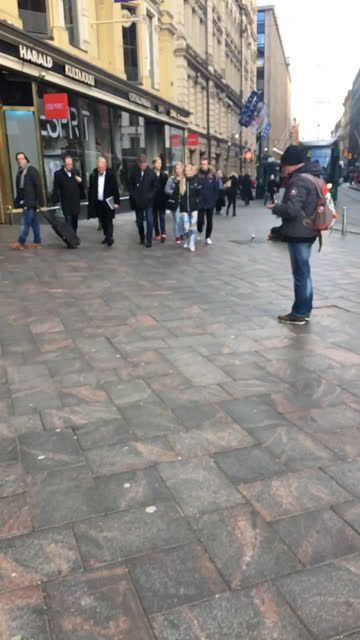
8        Cortés, Solin, Rahtu, and Kannala

3.4    Google Tango Data

A data collection app developed and published by [11], based on the Paraview
project5 , was modified in order to collect the relevant data. The capture includes
the position of the device relative to the first frame, the orientation in global
coordinates, the fisheye grayscale image, and the point cloud created by the
depth sensor. The Tango service was run on a Project Tango tablet running An-
droid 4.4.2 and using Tango Core Argentine (Tango Core version 1.47:2016.11-22-
argentine_tango-release-0-gce1d28c8:190012533:stable). The Tango service pro-
duces two sets of poses, referred to as raw odometry and area learning6 . The raw
odometry is built frame to frame without long term memory whereas the area
learning uses ongoing map building to close loops and reduce drift. Both tracks
are captured and saved.

3.5    Reference Video and Locations

One important contribution of this paper is the flexible data collection framework
that enables us to capture realistic use cases in large environments. In such
conditions, it is not feasible to use visual markers, motion capture, or laser
scanners for ground-truth. Instead, our work takes advantage of pure inertial
navigation together with manual location fixes as described in Section 4.1.
     In order to obtain the location fixes, we record an additional reference video,
which is captured by an assisting person who walks within a short distance from
the actual collector. Figure 3a illustrates an example frame of such video. The
reference video allows us to determine the location of the data collection device
with respect to the environment and to obtain the manual location fixes (subject
to measurement noise) for the pure inertial navigation approach [24].
     In practice, the location fixes are produced as a post-processing step using a
location marking tool developed for this paper. In this tool, one can browse the
videos, and mark manual location fixes on the corresponding floor plan image.
The location fixes are inserted on occasions where it is easy to determine the
device position with respect to the floor plan image (e.g. in the beginning and
the end of escalators, entering and exiting elevator, passing through a door, or
walking past a building corner). In all our recordings it was relatively easy to
find enough such instances needed to build an accurate ground-truth. Note that
it is enough to determine the device location manually, not orientation.
     The initial location fixes have to be further transformed from pixel coor-
dinates of floor plan images into metric world coordinates. This is done by
first converting pixels to meters by using manually measured reference distances
(e.g. distance between pillars). Then the floor plan images are registered with
respect to each other using manually determined landmark points (e.g. pillars
or stairs) and floor height measurements.
5
    https://github.com/Kitware/ParaViewTangoRecorder
6
    https://developers.google.com/tango/overview/area-learning
ADVIO: An authentic dataset for visual-inertial odometry            9

4     Methods

4.1   Ground-Truth

The ground-truth is an implementation of the purely inertial odometry algorithm
presented in [24], with the addition of manual fixation points recorded using the
external reference video (see Sec. 3.5). The IMU data used in the inertial navi-
gation system for the ground-truth originated from the iPhone, and is the same
data that is shared as part of the dataset. Furthermore, additional calibration
data was acquired for the iPhone IMUs accounting for additive gyroscope bias,
additive accelerometer bias, and multiplicative accelerometer scale bias.
    The inference of the iPhone pose track (position and orientation) was im-
plemented as described in [24] with the addition of fusing the state estimation
with both the additional calibration data and the manual fix points. The pose
track corresponds to the INS estimates conditional to the fix points and external
calibrations,

                p p(tk ), q(tk ) | IMU, calibrations, {(ti , pi )}N

                                                                  i=1 ,       (1)

where p(tk ) ∈ R3 is the phone position and q(tk ) is the orientation unit quater-
nion at time instant tk . The set of fixpoints consists of time–position pairs (ti , pi ),
where the manual fixpoint pi ∈ R3 assigned to a time instant ti . The ‘IMU’ refers
to all accelerometer and gyroscope data over the entire track.
    Accounting for uncertainty and inaccuracy in the fixation point locations is
taken into account by not enforcing the phone track to match the points, but
including a Gaussian measurement noise term with a standard deviation of 25 cm
in the position fixes (in all directions). This allows the estimate track to disagree
with the fix. Position fixes are given either as 3D locations or 2D points with
unknown altitude while moving between floors.
    The inference problem was finally solved with an extended Kalman filter
(forward pass) and extended Rauch–Tung–Striebel smoother (backward pass, see
[24] for technical details). As real-time computation is not required here, we could
have also used batch optimization but that would not have caused noticeable
change in the results. Calculated tracks were inspected manually frame by frame
and the pose track was refined by additional fixation points until the track
matched the movement seen in all three cameras and the floor plan images.
Figure 2c shows examples of the estimated ground-truth track. The vertical line
is an elevator ride (stopping in each floor). Walking-induced periodic movement
can be seen if zoomed in. The obtained accuracy can be checked also from the
example video in the supplementary material.

4.2   Evaluation Metrics

For odometry results captured on the fly while collecting the data, we propose
the following evaluation metrics. All data was first temporally aligned to the
same global clock (acquired by NTP requests while capturing the data), which
10      Cortés, Solin, Rahtu, and Kannala

            (a) Office indoor                   (b) Urban indoor (mall/metro)

         (c) Urban outdoor (city)               (d) Suburban outdoor (campus)
Fig. 4. Example frames from datasets. There are 7 sequences from two separate office
buildings, 12 sequences from urban indoor scences (malls and metro station), two from
urban outdoor scenes, and two from suburban (campus) outdoor scenes.

seemed to give temporal alignments accurate to about 1–2 seconds. The tem-
poral alignment was further improved by determining a constant time offset by
minimizing the median error between the device yaw and roll tracks. This align-
ment accounts for both temporal registration errors between devices and internal
delays in the odometry methods.
    After the temporal alignment the tracks provided by the three devices are
chopped to the same lengths covering the same time-span as there may be few
seconds differences in the starting and stopping times of the recordings with
different devices. The vertical direction is already aligned to gravity. To account
for the relative poses between the devices, method estimates, and ground-truth,
we estimate a planar rigid transform (2D rotation and translation) between
estimate tracks and ground-truth based on the first 60 s of estimates in each
method (using the entire path would not have had a clear effect on the results,
though). The reason for not using the calibrated relative poses is that especially
ARCore (and occasionally ARKit) showed wild jumps at the beginning of the
tracks, which would have had considerable effects and ruined those datasets for
the method.
    The aligned tracks all start from origin, and we measure the absolute er-
ror to the ground-truth for every output given by each method. The empirical
cumulative distribution function for the absolute position error is defined as
                                                              n
                         number of position errors ≤ d   1X
             F̂n (d) =                                 =      1e ≤d ,            (2)
                                      n                  n i=1 i

where 1E is an indicator function for the event E, e ∈ Rn is a vector of absolute
position errors compared to ground-truth, and n is the number of positions. The
function tells the proportion of position estimates being less than d meters from
ground-truth.
ADVIO: An authentic dataset for visual-inertial odometry 11
5 Data and Results
The dataset contains 23 separate recordings captured in six different locations.
The total length of all sequences is 4.47 kilometers and the total duration is 1
hour 8 minutes. There are 19 indoor and 4 outdoor sequences. In the indoor
sequences there is a manual fix point on average every 3.7 meters (or 3.8 s), and
outdoors every 14.7 m (or 10 s). The ground-truth 3D trajectories for all the
sequences are illustrated in the supplementary material, where also additional
details are given. In addition, one of the recordings and its ground-truth are
illustrated in the supplementary video. The main characteristics of the dataset
sequences and environments are briefly described below.
Our dataset is primarily designed for benchmarking medium and long-range
odometry. The most obvious use case is indoor navigation in large spaces, but we
have also included outdoor paths for completeness. The indoor sequences were
acquired in a 7-storey shopping mall (∼135,000 m2 ), in a metro station, and
in two different office buildings. The shopping mall and station are in the same
building complex. The metro and bus station is located in the bottom floors,
and there are plenty of moving people and occasional large vehicles visible in the
collected videos, which makes pure visual odometry challenging. Also the lower
floors of the mall contain a large number of moving persons. Figure 2 illustrates
an overall view of the mall along with ground-truth path examples and a Tango
point cloud (Fig. 2b). Figure 4b shows example frames from the mall and station.
The use cases were as realistic as possible including motion in stairs, elevators
and escalators, and also temporary occlusions and areas lacking visual features.
There are ten sequences from the mall and two from the station.
Office building recordings were performed in the lobby and corridors in two
office buildings. They contain some people in a static position and a few people
moving. The sequences contain stair climbs and elevator rides. There are closed
and open (glass) elevator sequences. Example frames are shown in Figure 4a.
The outdoor sequences were recorded in the city center (urban, two se-
quences) and university campus (suburban, two sequences). Figures 4c and 4d
illustrate example frames from both locations. Urban outdoor captures were
performed through city blocks; they contain open spaces, people, and vehicles.
Suburban outdoor captures were performed through sparsely populated areas.
They contain a few people walking and some vehicle encounters. Most of the
spaces are open. The average length of the outdoor sequences is 334.6 meters,
ranging from 133 to 514 meters. The outdoor sequences were acquired in different
times of the day illustrating several daylight conditions.
Figure 5a shows the histograms of different motion metrics extracted from the
ground-truth. Figure 5a shows the speed histogram which has three peaks that
reflect the three main motion modes. From slower to faster they are escalator,
stairs, and walking. Figure 5b shows the speed histogram for just one sequence
that contained both escalator rides and normal walking. The orientation his-
tograms show that the phone was kept generally in the same position relative to
the carrier (portrait orientation, slightly pointing downward). The pitch angle
which reflects the heading direction has a close to uniform distribution.12 Cortés, Solin, Rahtu, and Kannala
25 m
0 1 2 3 0 1 2 3
(a) Speed, (b) Speed,
all data escalators/walking
−π −π/2 0 π/2 −π −π −π/2 0 π/2 −π
(c) Orientation, roll (d) Orientation, yaw (e) An indoor office path
Fig. 5. (a) Speed histograms; peaks correspond to escalators, stairs, and walking.
(b) the histogram for one data set with escalator rides/walking. (c–d) the histogram
for roll and yaw. (e) the paths for ground-truth ( ), ARKit ( ), ARCore ( ),
Tango/Raw ( ), Tango/Area learning ( ), ROVIO ( ), and PIVO ( ).
5.1 Benchmark Results
We evaluated two research level VIO systems using the raw iPhone data and
the three proprietary solutions run on the respective devices (ARCore on Pixel,
ARKit on iPhone, and Tango on the tablet). The research systems used were
ROVIO [2,1,20] and PIVO [25]. ROVIO is a fairly recent method, which has
been shown to work well on high-quality IMU and large field-of-view camera
data. PIVO is a recent method which has shown promising results in compar-
ison with Google Tango [25] using smartphone data. For both methods, imple-
mentations (ROVIO as part of maplab7 ) from the original authors were used
(in odometry-only mode without map building or loop-closures). We used pre-
calibrated camera parameters and rigid transformation from camera to IMU,
and pre-estimated the process and measurement noise scale parameters.
For testing purposes, we also ran two visual-only odometry methods on the
raw data (DSO [7] and ORB-SLAM2 [15]). Both were able to track subsets of the
paths, but the small field-of-view, rapid motion with rotations, and challenging
environments caused them not to succeed for any of the entire paths.
In general, the proprietary systems work better than the research methods,
as shown in Figure 7. In indoor sequences, all proprietary systems work well in
general (Fig. 7a). Tango has the best performance, ARKit performs well and
robustly with only a few clear failure cases (95th percentile ∼10 meters), and
ARCore occasionally fails, apparently due to incorrect visual loop-closures. In-
cluding the outdoor sequences changes the metrics slightly (Fig.7b). ARKit had
7
https://github.com/ethz-asl/maplabADVIO: An authentic dataset for visual-inertial odometry 13
100 m 30 m
(a) An urban outdoor path (b) An indoor mall path
Fig. 6. Example paths showing ground-truth ( ), ARKit ( ), ARCore ( ),
Tango/Raw ( ), and Tango/Area learning ( ) that stopped prematurely in (a).
Map data c OpenStreetMap. The ground-truth fix points were marked on an archi-
tectural drawing. ROVIO and PIVO diverge and are not shown.
severe problems with drifting in the outdoor sequences. In terms of the ori-
entation error all systems were accurate with less than < 2◦ error from the
ground-truth on average. This is due to the orientation tracking by integrating
the gyroscope performing well if the gyroscope is well calibrated.
As shown in Figure 7, the research methods have challenges with our iPhone
data which has narrow field-of-view and a low-cost IMU. There are many se-
quences where both methods diverge completely (e.g. Fig. 6). On the other hand,
there are also sequences where they work reasonably well. This may be partially
explained by the fact that both ROVIO and PIVO estimate the calibration pa-
rameters of the IMU (e.g. accelerometer and gyroscope biases) internally on the
fly and neither software directly supports giving pre-calibrated IMU parameters
as input. ROVIO only considers additive accelerometer bias, which shows in
many sequences as exponential crawl in position. We provide the ground-truth
IMU calibration parameters with our data, and it would hence be possible to
evaluate their performance also with pre-calibrated values. Alternatively, part of
the sequences could be used for self-calibration and others for testing. Propri-
etary systems may benefit from factory-calibrated parameters. Figures 5e and 6
show examples of the results. In these cases all commercial solutions worked well.
Still, ARCore had some issues at the beginning of the outdoor path. Moreover,
in multi-floor cases drifting was typically more severe and there were sequences
where also proprietary systems had clear failures.
In general, ROVIO had problems with long-term occlusions and disagree-
ments between visual and inertial data. Also, in Figure 5e it has clearly inaccu-
rate scale—most likely due to the not modelled scale bias in the accelerations,
which is clearly inadequate for consumer-grade sensors that also show multi-
plicative biases [22]. On the other hand, PIVO uses a model with both additive
and multiplicate accelerometer biases. However, with PIVO the main challenge
seems to be that without suitable motion the online calibration of various IMU
parameters from scratch for each sequence takes considerable time and hence
slows convergence onto the right track.14 Cortés, Solin, Rahtu, and Kannala
1 1
Proportion of positions
Proportion of positions
0.8 0.8
0.6 0.6
0.4 0.4
0.2 0.2
0 0
10−1 100 101 102 10−1 100 101 102
(a) Absolute error (m), indoor data sets (b) Absolute error (m), all data sets
Fig. 7. Cumulative distributions of position error: ARKit ( ), ARCore ( ),
Tango/Raw ( ), Tango/Area learning ( ), ROVIO ( ), and PIVO ( ).
6 Discussion and Conclusion
We have presented the first public benchmark dataset for long-range visual-
inertial odometry for hand-held devices using standard smartphone sensors. The
dataset contains 23 sequences recorded both outdoors and indoors on multiple
floor levels in varying authentic environments. The total length of the sequences
is 4.5 km. In addition, we provide quantitative comparison of three proprietary
visual-inertial odometry platforms and two recent academic VIO methods, where
we use the raw sensor data. To the best of our knowledge, this is the first back-
to-back comparison of ARKit, ARCore, and Tango.
Apple’s ARKit performed well in most scenarios. Only in one hard outdoor
sequence the ARKit had the classic inertial dead-reckoning failure where the
estimated position grew out of control. Google’s ARCore showed more aggres-
sive visual loop-closure use than ARKit, which is seen in false positive ‘jumps’
scattered troughout the tracks (between visually similar areas). The specialized
hardware in the Tango gives it a upper hand, which can also be seen in Figure 7.
The area learning was the most robust and accurate system tested. However, all
systems performed relatively well in the open elevator where the glass walls let
the camera see the open lobby as the elevator moves. In the case of the closed
elevator none of the systems were capable of reconciling the inertial motion with
the static visual scene. The need for a dataset of this kind is clear from the
ROVIO and PIVO results. The community needs challenging narrow field-of-
view and low-grade IMU data for developing and testing new VIO methods that
generalize to customer-grade hardware.
The collection procedure scales well to new environments. Hence, in future
the dataset can be extended with a reasonably small effort. The purpose of the
dataset is to enable fair comparison of visual-inertial odometry methods and to
speed up development in this area of research. This is relevant because VIO is
currently the most common approach for enabling real-time tracking of mobile
devices for augmented reality.
Further details of the dataset and the download links can be found on the
web page: https://github.com/AaltoVision/ADVIO.ADVIO: An authentic dataset for visual-inertial odometry 15
References
1. Bloesch, M., Burri, M., Omari, S., Hutter, M., Siegwart, R.: Iterated extended
Kalman filter based visual-inertial odometry using direct photometric feedback.
International Journal of Robotics Research 36(10), 1053–1072 (2017) 3, 12
2. Blösch, M., Omari, S., Hutter, M., Siegwart, R.: Robust visual inertial odometry
using a direct EKF-based approach. In: Proceedings of the International Confer-
ence on Intelligent Robots and Systems (IROS). pp. 298–304. Hamburg, Germany
(2015) 1, 3, 12
3. Burri, M., Nikolic, J., Gohl, P., Schneider, T., Rehder, J., Omari, S., Achtelik,
M.W., Siegwart, R.: The EuRoC micro aerial vehicle datasets. International Jour-
nal of Robotics Research 35, 1157–1163 (2016) 4, 5
4. Carlevaris-Bianco, N., Ushani, A.K., Eustice, R.M.: University of Michigan North
Campus long-term vision and LIDAR dataset. International Journal of Robotics
Research 35, 1023–1035 (2015) 4, 5
5. Ceriani, S., Fontana, G., Giusti, A., Marzorati, D., Matteucci, M., Migliore, D.,
Rizzi, D., Sorrenti, D.G., Taddei, P.: Rawseeds ground truth collection systems for
indoor self-localization and mapping. Autonomous Robot 27(4), 353–371 (2009)
4, 5
6. Cordts, M., Omran, M., Ramos, S., Rehfeld, T., Enzweiler, M., Benenson, R.,
Franke, U., Roth, S., Schiele, B.: The Cityscapes dataset for semantic urban scene
understanding. In: Proceedings of the IEEE Conference on Computer Vision and
Pattern Recognition (CVPR). pp. 3213–3223. Las Vegas, USA (2016) 2, 4
7. Engel, J., Koltun, V., Cremers, D.: Direct sparse odometry. IEEE Transactions on
Pattern Analysis and Machine Intelligence 40(3), 611–625 (2018) 12
8. Engel, J., Usenko, V.C., Cremers, D.: A photometrically calibrated benchmark for
monocular visual odometry. arXiv preprint arXiv:1607.02555 (2016) 4
9. Everingham, M., Eslami, A., Van Gool, L., Williams, I., Winn, J., Zisserman, A.:
The PASCAL visual object classes challenge: A retrospective. International Journal
of Computer Vision (IJCV) 111(1), 98–136 (2015) 2
10. Geiger, A., Lenz, P., Urtasun, R.: Are we ready for autonomous driving? The
KITTI vision benchmark suite. In: Proceedings of the IEEE Conference on Com-
puter Vision and Pattern Recognition (CVPR). pp. 3354–3361. Providence, Rhode
Island (2012) 2, 4
11. Laskar, Z., Huttunen, S., Herrera, D., Rahtu, E., Kannala, J.: Robust loop closures
for scene reconstruction by combining odometry and visual correspondences. In:
Proceedings of the International Conference on Image Processing (ICIP). pp. 2603–
2607. Phoenix, AZ, USA (2016) 8
12. Li, M., Kim, B.H., Mourikis, A.I.: Real-time motion tracking on a cellphone using
inertial sensing and a rolling-shutter camera. In: Proceedings of the International
Conference on Robotics and Automation (ICRA). pp. 4712–4719 (2013) 1
13. Lin, T., Maire, M., Belongie, S.J., Hays, J., Perona, P., Ramanan, D., Dollár,
P., Zitnick, C.L.: Microsoft COCO: Common objects in context. In: Proceedings
of the European Conference on Computer Vision (ECCV). pp. 740–755. Zurich,
Switzerland (2014) 2
14. Mourikis, A.I., Roumeliotis, S.I.: A multi-state constraint Kalman filter for vision-
aided inertial navigation. In: Proceedings of the International Conference on
Robotics and Automation (ICRA). pp. 3565–3572. Rome, Italy (2007) 1
15. Mur-Artal, R., Tardós, J.D.: ORB-SLAM2: An open-source SLAM system for
monocular, stereo and RGB-D cameras. IEEE Transactions on Robotics 33(5),
1255–1262 (2017) 1216 Cortés, Solin, Rahtu, and Kannala
16. Mur-Artal, R., Tardós, J.D.: Visual-inertial monocular SLAM with map reuse.
Robotics and Automation Letters 2(2), 796–803 (2017) 1
17. Nikolic, J., Rehder, J., Burri, M., Gohl, P., Leutenegger, S., Furgale, P.T., Siegwart,
R.: A synchronized visual-inertial sensor system with FPGA pre-processing for
accurate real-time SLAM. In: Proceedings of the IEEE International Conference
on Robotics and Automation (ICRA). pp. 431–437. Hong-Kong, China (2014) 5
18. Pfrommer, B., Sanket, N., Daniilidis, K., Cleveland, J.: PennCOSYVIO: A chal-
lenging visual inertial odometry benchmark. In: Proceedings of the IEEE Interna-
tional Conference on Robotics and Automation (ICRA). pp. 3847–3854. Singapore
(2017) 4, 5
19. Russakovsky, O., Deng, J., Su, H., Krause, J., Satheesh, S., Ma, S., Huang, Z.,
Karpathy, A., Khosla, A., Bernstein, M., Berg, A., Fei-Fei, L.: ImageNet Large
Scale Visual Recognition Challenge. International Journal of Computer Vision
(IJCV) 115(3), 211–252 (2015) 2
20. Schneider, T., Dymczyk, M.T., Fehr, M., Egger, K., Lynen, S., Gilitschenski, I.,
Siegwart, R.: Maplab: An open framework for research in visual-inertial mapping
and localization. IEEE Robotics and Automation Letters 3(3), 1418–1425 (2018)
12
21. Schöps, T., Engel, J., Cremers, D.: Semi-dense visual odometry for AR on a smart-
phone. In: Proceedings of the International Symposium on Mixed and Augmented
Reality (ISMAR). pp. 145–150 (2014) 1
22. Shelley, M.A.: Monocular Visual Inertial Odometry on a Mobile Device. Master’s
thesis, Technical University of Munich, Germany (2014) 13
23. Smith, M., Baldwin, I., Churchill, W., Paul, R., Newman, P.: The New College
vision and laser data set. International Journal of Robotics Research 28(5), 595–
599 (2009) 4
24. Solin, A., Cortes, S., Rahtu, E., Kannala, J.: Inertial odometry on handheld smart-
phones. In: Proceedings of the International Conference on Information Fusion
(FUSION). Cambridge, UK (2018) 3, 5, 8, 9
25. Solin, A., Cortes, S., Rahtu, E., Kannala, J.: PIVO: Probabilistic inertial-visual
odometry for occlusion-robust navigation. In: Proceeding of the IEEE Winter
Conference on Applications of Computer Vision (WACV). Lake Tahoe, NV, USA
(2018) 3, 5, 12
26. Sturm, J., Engelhard, N., Endres, F., Burgard, W., Cremers, D.: A benchmark
for the evaluation of RGB-D SLAM systems. In: Proceedings of the International
Conference on Intelligent Robot Systems (IROS). pp. 573–580 (2012) 4ADVIO: An authentic dataset for visual-inertial odometry 17
Supplement for
ADVIO: An Authentic Dataset
for Visual-Inertial Odometry
A Description of supplementary video
The attached supplementary video shows the ground-truth track for data set #16
(captured in one of the two office buildings). The visualized track is the ground-
truth track calculated from the entire IMU data sequence. The fix points used
for track calculation are visualized by dots. The track on the current floor shows
in red. The video has been sped-up.
Captured Ground-
video truth track
Zoomed Vertical
in view view
B Details on collected data
B.1 Ground-truth
Ground-truth poses: Camera pose (translation and orientation) calculated
based on the raw IMU data and a set of known fixation points. The ground-
truth track is sampled at 100 Hz.
Fix points: A set of ground-truth points marked with a visual editor. The
points are based on the three videos stored by the system (primarily the
iPhone and the second iPhone that filmed a reference track showing the
capturer) and floor plan layouts.
B.2 iPhone
Camera frames: Camera frames are captured at 60 fps (1280 × 720, portrait).
The exact frame acquisition times reported by the platform are stored. The
frames are packed into an H.264/MPEG-4 video file.
Platform location: Data collected through CoreLocation. The update rate de-
pends on the device and its capabilities. Locations are requested with the de-
sired accuracy of kCLLocationAccuracyBest. The timestamps are converted
to follow the same clock as the other sensors (time interval since device boot).
The stored values are18 Cortés, Solin, Rahtu, and Kannala
– coordinate.latitude
– coordinate.longitude
– horizontalAccuracy
– altitude
– verticalAccuracy
– speed
Accelerometer: Data collected through CoreMotion/CMMotionManager. Ac-
quired at 100 Hz, which is the maximum rate. CoreMotion reports the accel-
erations in ‘g’s (at standstill you expect to have 1 g in the vertical direction).
Gyroscope: Data collected through CoreMotion/CMMotionManager. Ac-
quired at 100 Hz, which is the maximum rate. Note that the readings are in
the Apple device coordinate frame (not altered in any way here).
Magnetometer: Data collected through CoreMotion/CMMotionManager. Ac-
quired at 100 Hz, which is the maximum rate. Values are the three-axis
magnetometer readings in uT. All values are uncalibrated.
Barometric altimeter: Data collected through CoreMotion/CMAltimeter.
Acquired at an uneven sampling rate (∼1 Hz). Samples are stored as they
arrive from the delegare callback. The actual barometric pressure is in val0
and the inferred relative altutude (calculated by Apple magic) is stored in
val1.
ARKit poses: The Apple ARKit poses (translation and orientation) are cap-
tured at 60 Hz. The camera parameters reported by ARKit on the iPhone
are stored as well.
B.3 Tango
Tango poses (raw): The Google Tango raw poses (translation and orienta-
tion) are captured at 60 Hz.
Tango poses (area learning): The Google Tango area learning poses (trans-
lation and orientation) are captured at 60 Hz.
Camera frames: Video from the wide-angle (fisheye) camera on the Tango.
Captured at ∼5 fps / 640×480. The frames are packed into an MPEG-4
video file.
Tango point clouds: Tango point cloud data acquired by the Tango device
and aligned to the current pose of the device. Sampling rate is not uniform.
Timestamps are stored in point-cloud.csv. The actual point clouds are
stored in the corresponding point-cloud-$index.csv.
B.4 Pixel
ARCore poses: The Google ARCore poses (translation and orientation) are
captured at 30 Hz.ADVIO: An authentic dataset for visual-inertial odometry 19
C Dataset structure
To maximize compatibility, all data is published in open and simple file formats.
The comma separated value (CSV) files hold a timestamp in the first column and
the respective data in the columns that follow. All time stamps are synchronized
between sensor types and devices. Camera frames are stored as H.264/MPEG
video and the associated frame time stamps are available in separate CSV files.
The folder structure for one data set looks like the following:
data
advio-01
ground-truth
poses.csv
fixpoints.csv
iphone
frames.mov
frames.csv
platform-location.csv
accelerometer.csv
gyroscope.csv
magnetometer.csv
barometer.csv
arkit.csv
tango
frames.mov
frames.csv
raw.csv
area-learning.csv
point-cloud.csv
point-cloud-001.csv
point-cloud-002.csv
...
pixel
arcore.csv
advio-02
...20 Cortés, Solin, Rahtu, and Kannala D List of data set features N:o Venue Data set In/Out Stairs Escalator Elevator People Vehicles 1 Mall 01 Indoor X Moderate 2 Mall 02 Indoor Moderate 3 Mall 03 Indoor Moderate 4 Mall 04 Indoor X Moderate 5 Mall 05 Indoor X Moderate 6 Mall 06 Indoor High 7 Mall 07 Indoor X Low 8 Mall 08 Indoor X Low 9 Mall 09 Indoor X Low 10 Mall 10 Indoor Low 11 Metro 01 Indoor High X 12 Metro 02 Indoor High X 13 Office 01 Indoor X Low 14 Office 02 Indoor X X Low 15 Office 03 Indoor None 16 Office 04 Indoor X None 17 Office 05 Indoor X None 18 Office 06 Indoor X X None 19 Office 07 Indoor X None 20 Outdoor 01 Outdoor Low X 21 Outdoor 02 Outdoor Low X 22 Outdoor (urban) 01 Outdoor High X 23 Outdoor (urban) 02 Outdoor High X
ADVIO: An authentic dataset for visual-inertial odometry      21

E   Data set paths

The following table lists each path shape (top/side views) and summary infor-
mation. The fix points are visualized in the top view by dots.

Path (top)                 Path (side view)             Information

                                                        Number: 1
                                                        Length: 245.4 m
                                                        Duration: 4 min 20 s
                                                        Levels: 5
                                                        Fix points: 70

                                                        Number: 2
                                                        Length: 220.6 m
                                                        Duration: 3 min 19 s
                                                        Levels: 1
                                                        Fix points: 35

                                                        Number: 3
                                                        Length: 153.1 m
                                                        Duration: 2 min 28 s
                                                        Levels: 1
                                                        Fix points: 42

                                                        Number: 4
                                                        Length: 68.1 m
                                                        Duration: 1 min 57 s
                                                        Levels: 5
                                                        Fix points: 20

                                                        Number: 5
                                                        Length: 176.4 m
                                                        Duration: 2 min 41 s
                                                        Levels: 2
                                                        Fix points: 50
22 Cortés, Solin, Rahtu, and Kannala
Number: 6
Length: 374.0 m
Duration: 4 min 36 s
Levels: 1
Fix points: 68
Number: 7
Length: 34.8 m
Duration: 1 min 36 s
Levels: 6
Fix points: 23
Number: 8
Length: 99.7 m
Duration: 1 min 47 s
Levels: 2
Fix points: 49
Number: 9
Length: 88.4 m
Duration: 1 min 37 s
Levels: 2
Fix points: 36
Number: 10
Length: 124.9 m
Duration: 2 min 3 s
Levels: 1
Fix points: 33
Number: 11
Length: 196.5 m
Duration: 3 min 27 s
Levels: 1
Fix points: 21ADVIO: An authentic dataset for visual-inertial odometry 23
Number: 12
Length: 135.5 m
Duration: 1 min 55 s
Levels: 1
Fix points: 15
Number: 13
Length: 142.7 m
Duration: 2 min 32 s
Levels: 2
Fix points: 44
Number: 14
Length: 69.7 m
Duration: 1 min 53 s
Levels: 3
Fix points: 48
Number: 15
Length: 23.2 m
Duration: 0 min 52 s
Levels: 1
Fix points: 21
Number: 16
Length: 151.3 m
Duration: 2 min 27 s
Levels: 3
Fix points: 40
Number: 17
Length: 157.6 m
Duration: 2 min 38 s
Levels: 3
Fix points: 4624 Cortés, Solin, Rahtu, and Kannala
Number: 18
Length: 130.6 m
Duration: 3 min 17 s
Levels: 3
Fix points: 52
Number: 19
Length: 136.0 m
Duration: 2 min 22 s
Levels: 2
Fix points: 29
Number: 20
Length: 476.5 m
Duration: 5 min 3 s
Levels: 1
Fix points: 23
Number: 21
Length: 480.7 m
Duration: 5 min 17 s
Levels: 1
Fix points: 32
Number: 22
Length: 514.0 m
Duration: 6 min 26 s
Levels: 1
Fix points: 24
Number: 23
Length: 266.4 m
Duration: 3 min 26 s
Levels: 1
Fix points: 38ADVIO: An authentic dataset for visual-inertial odometry 25
F Speed histograms per data set
1 2 3 4
5 6 7 8
9 10 11 12
13 14 15 16
17 18 19 20
21 22 23You can also read


