URSULINE HIGH SCHOOL WIMBLEDON - CURRICULUM GUIDE YEAR 9 2020/2021
←
→
Page content transcription
If your browser does not render page correctly, please read the page content below

Year 9

URSULINE HIGH SCHOOL
    WIMBLEDON

   CURRICULUM GUIDE
        YEAR 9

      2020/2021

           1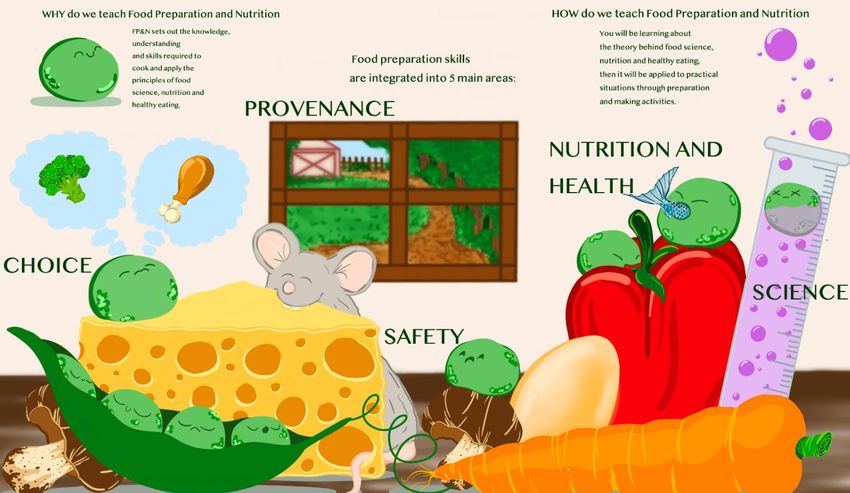
Year 9
                                                       Contents
Introduction by Mr O Nichols Assistant Headteacher Teaching & Learning   3

Mission Statement                                                        4

Section 1 - General Information

Model of the school day                                                  6

Key Dates & Events                                                       7

Year 9 Tutor Team                                                        9

Concerns                                                                 10

School policies (including Homework)                                     11

Student Services                                                         13

Permission for Leave during Term Time                                    13

Digital Learning                                                         14

Homework Timetable                                                       16

Assessment, Recording and Reporting                                      17

Section 2 – The Curriculum

Art                                                                      19

Art Textiles                                                             21

Business                                                                 22

Computer Science                                                         26

Design Technology                                                        28

English                                                                  32

Food and Nutrition                                                       34

French                                                                   36

Geography                                                                37

German                                                                   38

History                                                                  39

Maths                                                                    40

Music                                                                    41

PE                                                                       44

PSHEC                                                                    45

Religious Education                                                      47

Science                                                                  49

Spanish                                                                  50

                                                             2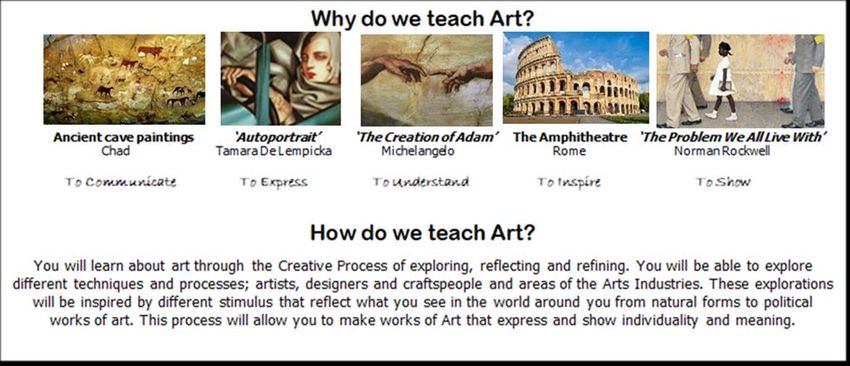
Year 9

Introduction

It has been a challenging year for all of our students and staff and we are delighted to be welcoming you back to
Ursuline High School. We have taken great care to ensure the safety of your daughter and, though things may look a
little different at this time, our core values and ethos remain as steadfast as ever. Our commitment to our
community is at the forefront of everything that we do.

For the first term at least, all work will be conducted on tablets, using the MS Teams platform, which incorporates
Class NoteBook and Assignments. Please ensure that your daughter has her tablet charged and in her bag each
morning.

It is our intention that this Guide should serve as a handy reference for parents who have queries about their
daughter’s learning. To this end, we have tried to include all the information you might want to know, dividing the
Guide into three sections: General, Curriculum and Assessment. We have also suggested ways of supporting your
daughter with her studies, as well as aiding you to keep abreast of her progress.

Our aim is for each student to develop her learning skills as well as her knowledge and understanding through a
rigorous and challenging programme, including a series of learning conferences. We will continue to embed public
speaking in Year 9 across all curriculum subjects.

In addition, your daughter will be starting GCSE content in her Core Subjects. Therefore, as of September, your
daughter’s work will be graded using the new GCSE 9-1 grading system for those subjects involved.

Meanwhile, our laptop scheme will allow us to provide further exciting and inspiring learning experiences for your
daughter. In addition, after school, there are many extra-curricular opportunities for your daughter to participate in,
from sports to music and from drama to charity events.

Please do not hesitate to contact the school if you have any queries.

We wish your daughter a successful and enjoyable year.

Mr O Nichols

Assistant Headteacher Teaching & Learning

                                                          3
Year 9
Mission Statement
Inspired by the life and work of St Angela, our Ursuline School commits itself to education for tomorrow’s world within
the dynamic tradition of Catholic belief and practice. As a Christian community, characterised by a spirit of respect,
trust and joy, we promote excellence in every aspect of life, thereby fully developing each individual.
We aim:
1. To build a caring and supportive Christian community where each individual is able to grow in their
understanding of the faith and in their commitment to Christ.
2. To set standards of excellence in teaching and learning and to provide a broad and balanced and relevant
curriculum.
3. To develop personal qualities of understanding of self and others, self-discipline and motivation, responsible
maturity, creative freedom and integrity.
4. To foster an attitude of respect for all regardless of age, race and colour, creed or gender.
5. To build peace, to promote justice, social concern and through the celebration of difference, the equality of
all peoples.
6. To widen horizons, to encourage a sense of commitment and service to the wider world and to enable each
one to go on learning and changing all through life.
Serviam Programme
Religious formation at the Ursuline is inspired by the spirituality of St Angela Merici. It is based on the motto,
‘Serviam : I will serve’. It seeks to develop young people for others. Particular care and attention is given to
providing students with opportunities to explore their relationship with God, with themselves and with others. This
care of the whole person is achieved through the Serviam programme. This programme is fundamental to our
school and is the basis of our Roman Catholic ethos.
The Serviam programme offers the following:
Shared and personal prayer
Feast Day celebrations
Retreats
Service as a whole school and through individual projects
Leadership opportunities
Service trips in the local and international community
Mission Week
4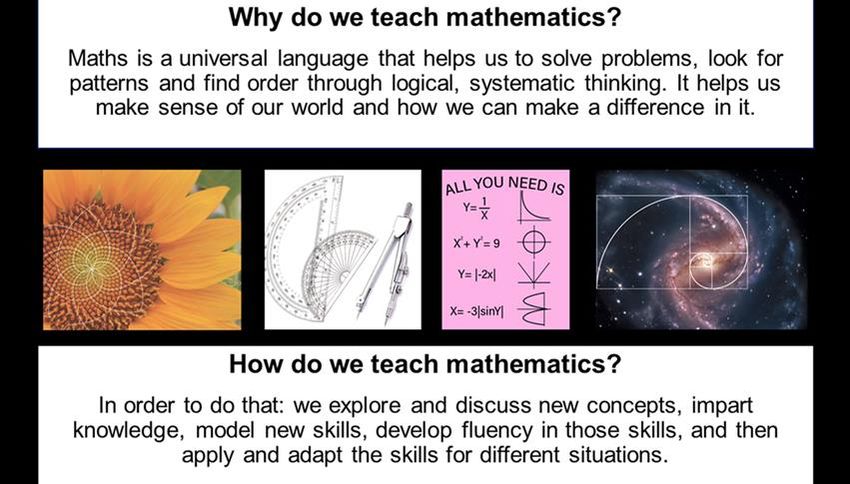
Year 9

 SECTION 1:

 GENERAL

INFORMATION

       5
Year 9

                                     Model of School Day
School timings at Key Stage 3
Monday to Thursday:

 8:35 – 8:45 am          Registration / Assembly
 8:45 – 9:35 am          Lesson 1
 9:40 – 10:30 am         Lesson 2
 10:30 – 10:50 am        Break
 10:55 – 11:45 am        Lesson 3
 11:50 – 12:40 am        Lesson 4
 12:40 – 1:20 pm         Lunch
 1:25 - 2:15 pm          Lesson 5
 2:20 – 3:10 pm          Lesson 6
End of School

 3:15 – 4:05 pm          Extra-Curricular Activities Lesson 7

Friday:

 8:35 – 8:45 am          Registration / Assembly
 8:45 – 9:35 am          Lesson 1
 9:40 – 10:30 am         Lesson 2
 10:30 – 10:50 am        Break
 10:55 – 11:45 am        Lesson 3
 11:50 – 12:40 am        Lesson 4
 12:45 – 1:35 pm         Lesson 5
End of School

 1:35 – 2:20 pm          Lunch Available
 2:00 – 3:00 pm          Extra-Curricular Activities (Lesson 6)

                                                     6
Year 9
                          YEAR 9 KEY DATES AND EVENTS 2019-2020

SEPTEMBER 2019
1st                    Inset Day
2nd                    Inset Day
4th                    School returns for Year 9
10th                   10.55 – 11.45 Mass of the Holy Spirit
11th                   13.35 School production auditions
OCTOBER 2019
1st                    Prevent morning PSHEC
19th                   10.55 – 11.45 Mass of St Ursula
22nd                   13.25 – 15.20 Academic Review Day
23rd                   08.45 – 13.35 Academic Review Day
NOVEMBER 2019
2nd & 3rd              Inset Days
26th & 27th            19:30 School Production
DECEMBER 2019
1st, 3rd, 8th & 10th   Year 9 & 10 Reconciliation Services
14th                   20:00-21:00 Joint Christmas Carol Service with Wimbledon College
18th                   11:50-12:40 Christmas Assembly
JANUARY 2020
4th                    Year 9 PSHEC Day
25th                   Year 9 Pathways Taster Day
29th                   Feast of St Angela Mass
FEBRUARY 2020
2nd                    Year 9 Pathways Taster Day
22nd                   Inset Day
24th                   Year 9 Parents’ Evening
MARCH 2020
19th                   Multicultural Evening
25th & 26th            Academic Review Day
31st                   09.40 – 10.30 Passion Service
APRIL 2020
MAY 2020
14th & 21st            Retreat Day
JUNE 2020
14th                   End of Year Exams Week
JULY 2020
1st & 2nd              Year 9 Chaplaincy Retreat
2nd                    Sports Day
2nd                    14.00 School Council Meeting
7th                    Year 9 Celebration
14th                   End of Year Concert
19th July              UHS Fest Week
23rd July              End of Year Mass

                                                         7
Year 9

                                                     YEAR 9 TUTOR TEAM

     I would like to take this opportunity to introduce to you the team that will be responsible for your daughter’s
     academic and pastoral development during this very important year in their school career.

     I list below the Year 9 tutor team and their contact details. Should you wish to contact us by phone (020 8255 2688)
     you will be more likely to speak to us directly at the following times: 10:30am, 12:40pm and after 3:15pm. Parents
     are welcome to make appointments throughout the year to meet teachers and staff.

    Form                  Teacher                                       Email address

Head of Year      Mr Waltl                 marcus.waltl@ursulinehigh.merton.sch.uk

Pastoral          Mrs Andrews              jane.andrews@ursulinehigh.merton.sch.uk
Assistant

Attendance        Mrs Young                bernadette.young@ursulinehigh.merton.sch.uk
Officer

             Form Group                                             Tutor

      9 Angela                                             Paula Lee Thomas

      9 Bernadette                                          Geraldine Taylor

      9 Catherine                                             Lisa Nkansah

      9 Francis                                            Georgia McNichol

      9 Margaret                                          Melanie Guillet Siad

      9Teresa                                               Ronan Preastuin

      9 Ursula                                                 Anna Lush

                                                                8
Year 9

                             Concerns Diagram for Parents and Carers

Dear Parent/ Carers,
Please refer to the diagram below to be able to channel your concerns to the correct member of staff. You may
contact any member of staff by phone or email directly to arrange an appointment.

PASTORAL CONCERNS                                      ACADEMIC CONCERNS

Examples of pastoral concerns:                         Examples of academic concerns:
Behaviour in/out of school,                            Behaviour in lessons, quality
friendship issues,                                     and standards of classwork,
attendance, punctuality                                homework, tests and exam study skills

Pastoral Assistant                      Start with                     Class teacher

Form tutor                                                             Head of Department

Head of Year                                                           Head of Faculty

Assistant Head Teacher                                                 Assistant Head Teacher

Deputy Head Teacher                                                    Deputy Head Teacher

Head Teacher                         End with                          Head Teacher

                                                        9
Year 9
School Policies
The use of Planners at KS3
Year 9 students will receive a Key Stage 3 planner. All students are issued with a FREE planner, which contains a lot
of very important information about the school; it is also an extremely effective way for you to communicate with
the school. May I take this opportunity to remind you to check your daughter’s planner and sign it weekly to show
you have done so. When inspecting your daughter’s planner, please ensure that all homework has been set and
completed. The planner is school property and we expect your daughter to treat it with respect and use it correctly.
Any planner that is lost, graffitied or misused in anyway will need to be replaced. This year we have photocopied
spare planners and your daughter will be expected to bear the cost of the replacement planner (£4.00)
Attendance & Punctuality
Attending school regularly and on time is crucial. School starts at 8.35a.m. (prompt). Your daughter’s
attendance is monitored weekly. If your daughter is absent from school, please ring either the attendance
officer Ms Young (020 3908 3144) or the Pastoral Support Assistant Ms Pearce (020 3908 3182) to report
the absence. The school has a target of 96% attendance and it is our expectation that all girls meet this
target. This equates to a maximum of 7.5 days absence per year.
Use of the Medical Room
If your daughter is unwell during the school day, she must have a signed note from her subject teacher before
reporting to the main school office where she will be seen. If she is too unwell to return to class then contact with
home will be made and arrangements for you to collect your daughter confirmed.
Homework
Your daughter should spend 45minutes to one hour per homework set each evening. The Learning Resource Centre
(LRC) is open every day until 4pm; we encourage your daughter to make use of this quiet, well-resourced study
environment. If you have any concerns about the homework set, please feel free to contact either your daughter’s
tutor or Head of Year regarding this matter.
Purpose of homework
Homework is an essential aspect of a student’s study and a requirement for success.
Homework set will be appropriate: reinforcing classwork, or accessing extension tasks.
Homework will challenge and stimulate learning.
Homework will help contribute to the students’ personal development by building student responsibility,
honesty, perseverance, time-management and self-confidence. Homework will enable the student to
develop sound, personally directed study habits.
Homework will reinforce the aim of the Ursuline to develop independent learners.
10Year 9
Best types of homework tasks involve:
Prep work
Re-drafting & making corrections
Rote learning
Applying knowledge through practising exercises
Answering questions
Wider reading
Essay & extended writing
Preparing a starter activity or a plenary
Independent work (My maths)
Independent research
Rehearsals & practice (particularly for the Arts)
Procedures in the setting and monitoring of homework
Homework will be set in accordance with the homework timetable.
Students should make a note of all homework set and due in date in their diaries. The diaries will be
signed each week both by Parents and Form Tutors.
Detailed descriptions should be written where necessary.
Subject teachers will acknowledge all work produced and reward in line with the rewards and sanctions policy.
All homework will be marked within two weeks.
Homework Club / Prep
We monitor carefully the number of students receiving sanctions for no homework or for poor homework. The reasons
for such sanctions are varied: poor organisational skills, poor understanding, lack of support at home, poor learning
habits and lack of routines amongst others. We believe we need to equip students with the necessary skills, support,
self-discipline and perseverance to develop their learning skills.
We have a Homework Club for students who received a large number of sanctions over a short period of time for
poor homework or homework not completed. The Homework Club is aimed at students who have received five or
more sanctions over 5 weeks – or 8 sanctions over one term. These students will attend the Homework Club for a period
of 5 weeks Monday to Thursday. Parents will also be asked to attend a workshop on supporting homework so that, once
the 5 weeks are completed, students will continue the practise at home under guidance and supervision of
their parent/carer.
Use of Textbooks
Your daughter will be issued with appropriate resources for all her subjects including some textbooks.
Textbooks are very costly and the school views them as an investment in your daughter’s education.
The treatment of textbooks is very important and I would like you to discuss this with your daughter. Textbooks should
be treated with the greatest care and returned when requested in the condition they were received in. Your daughter
will be expected to reimburse the full cost of any textbook that has been damaged or lost whilst in your daughter’s
care. A new book will be purchased with the money and your daughter may keep the damaged book.
11Year 9
Student Services - removing barriers to learning
At the Ursuline High School we recognise that sometimes our students experience difficulties that affect their
performance in school. To help in the removal of these barriers, a number of services are available to students
including:
Counselling from qualified Psychotherapists
Assessment and support from the Social Inclusion Manager
Health advice and monitoring from the School Nurse
Peer mentoring from year 12 students
Restorative Justice meetings for students in conflict
One to one mentoring in Study Support.
Information and guidance for continuing education and careers
Targeted groups for issues like Social Skills, Anger management and Self Esteem.
Support to overcome learning difficulties from the Learning Support Department.
If we are unable to meet a student’s needs fully within school, she may also be referred to agencies such as:
Educational Psychologist
Children and Adolescent Mental Health Service (CAMHS)
Social Care
Young Carers
Educational Welfare Officer
Since September 2012, we have employed a Parents’ Champion & Student Advocate in order to facilitate liaison
between school and home for disadvantaged students. Referrals for extra support are coordinated by the Assistant
Head Teacher for Student Services, Mrs Watson, in consultation with Heads of Year.
Important information re. Permission for Leave in Term Time
The Government has changed the law from September 2013.
Leave of absence may now only be taken for Exceptional reasons
Educational event
Family event
Parents must request leave for exceptional circumstances as far in advance as possible.
The request should be made in writing using the appropriate leave of absence form, Educational event or Family event
form (Available from the school office or on the school web site from September)
This must include the reason why you feel that it is necessary to take a leave of absence. This may include any
extenuating or compassionate reasons, including evidence of circumstances such as medical certificate or letter from
employers.
On receipt of an application for leave on the appropriate form together with any supporting documentation,
consideration will be given to the circumstance. A letter outlining the decision of the school will be sent to you
within 7 days.
12Year 9
Digital Learning
1:1 Devices and Microsoft Teams
Contact Teacher: Mr O Nichols (Assistant Head Teacher)
Students at the Ursuline are able to participate in our forward thinking 1:1 device scheme that provides an
engaging way for students to learn. Through the use of their own school tablet device and the Microsoft
Teams VLE, students can take advantage of a wide range of learning opportunities both in school and at
home.
Laptops and Tablets at School
Parents and carers make monthly donations into the Governors’ Fund. This fund enables the school to
lease a tablet to students in Year 9. Students can use the tablet at home as well as at school.
A bank of tablets are also available for students during the school day. These tablets may be borrowed
from the “Laptop Doctor” for a single lesson at a time and they must be returned by the same student.
Students who participate to the tablet initiative may not borrow any machine from the Laptop Doctor,
unless theirs is in repair. Students should respect the fact that these are limited in number and available to
support the initiative. It is important that students use their own machine if they are lucky enough to have
one. Tablets are a fantastic resource, and while they are insured against accidental loss or damage;
students should take care of them at all times, especially as they are school property. Please note
insurance will only cover the cost of one repair; any further damage has to be paid for by the student.
It is not expected that students will use their tablets all the time every lesson. Rather, they are a resource
in our toolkit of learning that should be used for short periods during lessons. It is expected that students
will charge their tablet each evening and take care not to waste the battery life on trivial things in between
lessons. This is first and foremost a learning facility. Tablets should come into school each day in the school
bag for protection. Safe use instructions are provided along with instructions and a training session when
the tablets are distributed, along with our internet safety policy.
Microsoft Teams: The Virtual Learning Environment
Microsoft Teams is an excellent resource that students can use both in school and at home. This safe web
environment provides students with a wide range of learning opportunities:
1. Flipped learning: prepare for a lesson before hand by reading set material, watching a video,
listening to a podcast etc.
2. Find resources for the lesson on MS Teams both in school and at home for reference
3. Revise what has been done in the lesson before doing homework
4. Complete quizzes to assess learning and get personalised feedback
5. Upload work for the teacher and receive feedback on MS Teams
6. Use links with the internet that have been chosen and checked by the teacher
7. Check what homework has been assigned and the deadlines
8. Take part in monitored discussions with your peers and the teacher to get help or to discuss ideas
All work completed on the school network or uploaded to Microsoft Teams should be considered “best
work”, just like writing in an exercise book. Sanctions will apply if for example, students use slang or
inappropriate language/material. The forums and discussion groups are for assessed work, not personal
chat. More serious infringements like bringing inappropriate images into school on the tablet or using
13Year 9
resources in a disrespectful way will be referred directly to the Assistant Head teacher responsible for ICT
and the school behaviour procedures will be followed. Please see the rewards and sanctions page of the
student planner for details.
The school has an “E-safety” policy which may be viewed on our website. Parents are asked to read and
discuss the use of ICT and e-safety through the “E-Safety Agreement and Acceptable Use of ICT and Social
Media” in students’ planners and must countersign the agreement.
We hope all students will enjoy using their 1:1 device and that it will add positive value to their progress.
14Year 9
Homework Timetable
YEAR 9 Population A
YEAR 9 ANGELA
Monday Tuesday Wednesday Thursday Friday
PSHEC Computing DT/Food Art Science
Music History Science Geography English
Science PE – class a1 & a2 RE PE – class a3 & a4 Maths
English French Maths
German
YEAR 9 BERNADETTE
Monday Tuesday Wednesday Thursday Friday
Science PE – class a1 & a2 Science PE – class a3 & a4 Science
English French RE Computing English
DT/Food German Maths Geography Maths
History PSHEC Art
Music
YEAR 9 CATHERINE
Monday Tuesday Wednesday Thursday Friday
Science PE – class a1 & a2 Science PE – class a3 & a4 Science
English French RE Geography English
Art German Maths DT/Food Maths
Computing PSHEC History Music
YEAR 9 FRANCIS
Monday Tuesday Wednesday Thursday Friday
Science PE – class a1 & a2 Science PE – class a3 & a4 Science
English French RE DT/Food English
Computing German Maths Art Maths
Geography Music History PSHEC
15Year 9
YEAR 9 Population B
YEAR 9 MARGARET
Monday Tuesday Wednesday Thursday Friday
Science English Science English Science
RE French RE – class b2 & b3 PE Maths
DT/Food Spanish Maths History RE – class b1
Geography PSHEC Computing
Music Art
YEAR 9 TERESA
Monday Tuesday Wednesday Thursday Friday
Science English Science English Science
RE French RE – class b2 & b3 PE Maths
DT/Food Spanish Maths History RE – class b1
Geography PSHEC Computing
Music Art
YEAR 9 URSULA
Monday Tuesday Wednesday Thursday Friday
Science English Science English Science
RE French RE – class b2 & b3 PE Maths
PSHEC Spanish Maths Music RE – class b1
Geography Computing History Art
DT/Food
16Year 9
Assessment Recording and Reporting
Regular assessment regarding your daughter’s academic progress and achievement is vital to your daughter’s
success at the Ursuline High School.
Students will be provided with an end-of-year 9 target to support the introduction of the new GCSEs. Your daughter
will be expected to reach this target by the end of Year 9. A significant majority of students will seek to exceed this
target.
In Year 10, your daughter will be given a new GCSE target to be achieved at the end of Year 11. Targets are graded 9-
1: 9 being the highest and 5 being the national expected standard at the end of Year 11.
You will receive feedback on your daughter’s academic effort and attainment each half term. There will be one
parents’ evening where you will meet your daughter’s subject teachers and an Academic Review Day where you will
meet your daughter’s form tutor and Head of Year.
We encourage all parents to attend Parents’ Evening, Academic Review Day and to contact the school outside of
these times if there is a concern/information they wish to address or share with the school.
Electronic Mark Book (EMB)
Subject teachers will input one half-termly effort and attainment grade for the work your daughter has completed.
At the end of each half-term you will be able to track the grades on Progresso; you will receive a termly report of the
grades showing her effort and attainment grades for that period of time. This information will show you how your
daughter is progressing towards her target.
Full Report
The full reports will be posted home before the Christmas holidays.
Year 9 Internal Exams
During the week beginning 13th May 2019, your daughter will sit her end of Year 9 internal examinations. The grades
she achieves from these exams will be reported back to you in June 2019.
17Year 9
SECTION 2:
THE
CURRICULUM
18Year 9
Art Contact: Ms Samuelson 3 lessons per week
Course content
Throughout the year students learn about historical and contemporary practice in a variety of Art forms.
Students are encouraged to analyse other artists’ work in depth, developing a host of critical thinking skills
alongside their growing experimental, problem solving and media and refining skills. The project cycle starts
with researching and improving practical skills, and then leads to individual designs that are developed
through composition, media and other experimental processes until students finally complete a final piece
that is personal, meaningful and informed.
Modules
Distortion
Students look at concepts based around the idea of distortion. Individual ideas are generated followed by
independent connections to artists. From here students explore media and materials using their chosen
artist’s as inspiration before creating their own developed idea.
This Girl Can
Students are asked to consider their own values and core beliefs through their own identity and place in the
school community and beyond. Students use the core values of The Ursuline as a starting point to develop
an independent piece of work with artist links and conceptual connections.
Student groups
Mixed ability groups – handbook for guidance and challenges set every lesson
Monitoring progress
Projects are marked in line with the whole school policy. T
Coursework titles
1AD01 - Unit 1: Distortion 1AD01 - Unit 2: This Girl Can – and 5 hour
end of year Exam
19Year 9
Assessment
End of 1st Unit - DEADLINE February 2019 End of 2nd Unit - DEADLINE July 2019
Homework
Practical homework is set weekly and due in the following week. Additional holiday and weekend work could
include drawing from observation, developmental studies and visiting exhibitions. There is a compulsory bi-
weekly Intervention class to support and challenge students with their coursework.
Visits
Artist workshops throughout the year. Tate Britain Gallery Visit for Y10
20Year 9
Textile Art Contact: Ms Samuelson 3 lessons per week
Course content
The year will be divided in to three projects. Project 1 is a fabrics project – understanding fabric construction and
properties. Project 2 is a 2D surface project based on natural forms through print and embellishment and Project 3 is a
3D constructed garment project based on the idea of Protective Skins.
During all 3 projects students develop their knowledge and understanding of other artists, time periods and cultures to
broaden their knowledge of art and textiles and its place in the world. Students will also learn to develop their own ideas
independently through structured research and analysis.
Student groups
Students are taught in mixed-ability groups.
Monitoring progress
Every half term student sketchbooks will be marked in line with school policy. Students will be given individual targets
that they will be expected to meet in the following half term.
Assessment
• Formative assessment every half term based on GCSE levels.
• Summative assessment in line with the GCSE curriculum.
• Art Exam in Summer term
Homework
Practical and written homework is set according to School Policy, with at least one extended writing piece set every half
term.
Textbooks, materials & visits
Department provides sketchbooks. Resources are provided by the Art department.
How parents can help
Parents should ensure that pupils have a range of pencils, a soft rubber, pencil sharpener, glue stick and black fine
liners. A set of colour pencils and watercolour tablet would also be helpful.
21Year 9
Computing Contact: Ms Bhayat 1 lesson per week
Course content
Students in Year 9 will continue to develop their knowledge of Computing, building on the skills and
knowledge from Year 7 and 8. They will have 1 lesson per week and will cover the fundamental aspects of
this discipline including; programming using Python and the use of algorithms. Pupils will start the process of
exploring GCSE Computer Science modules such as 2.1 Algorithms and 2.2. Programming from the exam
board OCR.
Student Grouping
Students are taught Computing in their tutor groups and are not set according to ability. All units involve group
and individual tasks.
Monitoring progress
Students are taught in line with the School Marking Policy of the school and are assessed according to the
Computing Progression Pathways developed by the Computing At School organisation that reflects the
National Curriculum. Students will be assessed in line with the School Assessment Policy and will be given
levels and sub levels.
Assessment
Students will be assessed each half term according to the School Policy. Students will have a formal
assessment at the end of each term which will vary depending on the unit of work and may consist of;
whole project assessment, written exam paper, computer based test.
22Year 9
Homework
Homework is set according to the School Homework timetable and will relate to the unit of work being studied.
Homework may include: worksheets, internet research tasks, wider reading, continued development
on an IT solution.
All homework is marked in accordance with School Policy.
Textbooks, materials & visits
Students are provided with workbooks and worksheets where appropriate throughout the year.
Useful websites:
www.cs4fn.org.uk
www.csunplugged.org
Craig and Dave you tube channel
How parents can help
Parents can encourage students to use computers at home if they have access. Parents can also help
students to have an awareness of the latest technology advances by encouraging them to watch any relevant
TV programmes and also making them aware of any news stories. Parents can encourage students to
explore python coding.
23Year 9
Design & Technology Contact: Ms Thomas 1 lesson per week for 15 weeks
Course content
Mixture of design, make and evaluation tasks using mainly natural and manufactured timber and polymers.
Students will develop their iterative design and make skills and safely use of a range of tools and equipment.
Project Title in Design & Technology:
“Time” – Students will use standard components, electronics and incorporate recycled materials to produce
a clock based on their personal research of a design movement or industrial designer.
Students will develop both sketching, modelling and CAD/CAM skills, use hand tools, fixed equipment and
the laser cutter to produce a quality outcome.
Student groups
Students are taught in small mixed ability groups. Projects are completed individually.
Monitoring progress
Projects will be marked in line with the school’s marking policy and graded to bronze, silver, gold and platinum
standards.
Progress is recorded on individual record sheets in students Design and Technology books.
EMB grades will be entered half termly.
Half the students will do Design and Technology until February half-term and then will change to Food
Preparation and Nutrition for the remainder of the year.
Assessment
At the end of the project, prior to rotation, a final grade will be given.
End-of-project assessments will be in February or in June.
Homework
24Year 9
Set each week related to practical projects where possible and will include:
Research 2D/3D Designing & Modelling ICT Planning the making
Prep work Safety related issues Evaluation
Homework is marked in accordance with School Policy and homework will focus on developing technical
literacy, numeracy for D&T and research skills.
Textbooks, materials & visits
Department worksheets all will be available via TEAMS.
technologystudent.com
https://www.bbc.co.uk/bitesize/examspecs/zb6h92p
How parents can help
Help them to identify different types of woods, particularly the identification of softwoods such as pine and
cedar and hardwoods such as oak, teak and mahogany. Encourage recycling of materials, particularly the
identification of different types of plastics and their use in the home. Help them to learn the new technical
terms and processes.
25Year 9
English Contact: Mr Ryan - Head of Faculty 4 lessons per week
Ms McHale – Head of KS3 English
Why study English?
The study of English fosters critical thinking skills, develops creativity, exposes us to ideas from other cultures, and encourages
thoughtful self-examination. English enables you to understand the world and the world to understand you.
Great literature is not simply the exploration of facts; it reminds us of perpetual cycles of collective human experience, cycles that are
shared, in which humans across all cultures and all time periods have found ways, albeit imperfectly, to understand others.
How do we teach English?
You will explore texts, discuss complex ideas, analyse works of great literature, evaluate writers’ intentions, and be inspired to develop
your creativity.
Course content
Students will study a range of fiction and non-fiction texts across the year, including a Shakespearean play,
world literature, and they will explore contemporary issues in the form of a range of diverse extracts. In
addition, during their final half term, we will introduce them to some of the GCSE poetry in preparation for
Year 10. Speaking and listening opportunities include poetry and drama performances and learning lines by
heart.
Student groups
All students are set according to ability. Staff review their progress each half-term and students are moved
between sets as appropriate.
Monitoring progress
Redrafted work is marked extensively using the 9-1 grading system and effort grades. Unlike in Year 7 and
Year 8, their work will be assessed using the GCSE grading system so they are introduced to the standards
required at KS4. Students have success criteria, grade boundaries and standards in their books. There are
three strands of assessment in English: speaking and listening, reading, and writing.
Assessment
End of year exams during the summer term.
Homework
26Year 9
Students are set two pieces of homework per week. Where an extensive task or project is set, students will
be given more than one homework slot to complete this task. Homework tasks include written work, as well
as research and reading.
Textbooks, materials & visits
Students will need their own dictionary and thesaurus at home. They must also have a reading book available
every day. Where possible, we have theatre groups coming into school to perform to students.
How parents can help
Encourage your daughter to read widely for pleasure and to visit both the school and her local library. All
reading helps improve literacy levels! Students should read a range of fiction and non-fiction texts, including
novels, short stories, graphic novels, newspapers, and magazines.
Where possible, we offer support and catch-up programmes for students who need them. If your daughter is
invited, please encourage her to attend.
27Year 9
Food Preparation & Nutrition Contact: Ms Hoyles 1 lesson per week for 15 weeks
Course content
Students will be taught an introduction into healthy eating, looking at the sources and function of
Macronutrients (proteins, fats, carbohydrates) and Micronutrients (vitamins – water soluble and fat soluble
and minerals), There will also be a series of practical lessons which will include: Chow Mein, quesadillas,
oat cookies, bread & butter pudding, msemen (Moroccan flat bread) and a vegetarian curry. These practicals
will build on techniques and skills. We will also be looking at food hygiene (personal and kitchen), designing
for specific needs, sensory analysis and environmental and moral factors affecting food choice.
The majority of the content will be delivered through preparation and making activities, students will be able
to make the connections between theory and practice to apply their understanding of food and nutrition to
practical preparation.
Student groups
Students are taught in mixed ability groups half a form at a time.
Monitoring progress
28Year 9
Work will be marked in line with the school’s marking policy. EMB grades will be entered half termly.
Homework and class work will be marked using platinum / gold / silver / bronze, grade descriptors will be
shared with the students. Marked work will include planning and practical work, tests, an extended writing
and an oracy task. These grades will be put on the Electronic Mark Book
Assessment
At the end of each term or, prior to rotation, an interim grade will also be given (details above).
Homework
1 piece of homework per week.
Textbooks, materials & visits
www.nutrition.org.uk for Food News and nutritional information.
How parents can help
Encourage your daughter to read about changes in nutritional guidelines. www.nutrition.org.uk releases
updates regularly. Also please encourage making food products at home.
29Year 9
French Contact: Mrs Guillet Siad 3 lessons per week
Course content
Grammar:
Consolidation of present tense including Clauses introduced by quand/lorsque and
irregular verbs si/parce que/car to express reasons
Perfect tense with avoir and être + vs Comparative and superlative in expressing
Imperfect opinions about subjects use of tu and vous
Future tense in informal/formal exchanges
Topics taught with KS4 resources
Me, my family and friends Music, cinema and TV
Relationships with family and friends Free-time activities; Sport
Home, town, neighbourhood and region Food and eating out
My studies Customs and festivals in French-speaking
Free-time activities countries/communities
Monitoring progress
EMB assessments every two weeks, including:
Formal and informal assessment in all four skills: reading (including translation from French into English) /
writing (including translation from English into French) / speaking / listening + vocabulary / verb tests.
Assessment
Key linear assessments- e.g assessments on all work covered in Autumn Term: Christmas assessment
(December)+ all work covered in year 9: Year 9 internal Exams (May)
Homework
Learning vocabulary and verbs Writing in French / Translating from
Reading and understanding detail and gist French into English and from English into
French
30Year 9
Researching grammar & cultural
elements, reading French news
Any of the above will be set once per week – approximately 45 minutes to 1 hour
Textbooks, materials & visits
Textbooks: Kerboodle AQA GCSE Foundation / Higher + Tricolore Totale 4
Use of websites: www.languagesonline.org.uk, www.wildfrench.co.uk, www.modlangs.co.uk
School exchange trip with Ursuline School of Largenté in Bayonne
How parents can help
Check homework diaries and quality time is spent on regular rote learning and homework
Subscribe to Mary Glasgow Magazine via school
Rehearse vocabulary with your daughter and encourage her to upload and listen to French music.
Arrange a possible visit to France during school holidays.
31Year 9
Geography Contact: Mrs Nichols 3 lessons per week
Exam board: AQA Qualification: GCSE Geography
Course content
Students will start the AQA GCSE course in year 9
Unit 1 Section B – Physical Geography – The Living World – Rainforests and Hot Deserts
Unit 2 Section C – Human Geography – Resources – Resource management and water supply.
Map Skills
Student groups
Students are taught in their mixed ability tutor groups. At the end of the year they will pick the option of
continuing with GCSE Geography or no longer continuing with the course.
32Year 9
Monitoring progress
Students are taught in line with the school marking policy and will be graded on the GCSE grading system of
9-1. Students will work in files and complete an EMB assessment fortnightly based upon GCSE style
questions.
Assessment
End of topic tests and structured assignments.
Range of research assignments, enquiry based projects, written tests and extended writing tasks. They will
sit the formal Unit 1, Unit 2 and Unit 3 papers in Year 11
Homework
Homework set weekly. This includes: Research, analysing geographical data, report writing, extended pieces
of writing (essays, letters, diary entries, speeches) and answering structured questions. Homework set may
vary according to ability
Textbooks, materials & visits
Text Books: - AQA GCSE Geography – Hodder and Oxford, Kerboodle, Geography Review
How parents can help
Encourage students to read/look for topical news articles/documentaries.
Visit libraries to help with research assignments.
Useful websites: http://www.un.hn.mitch; www.volcano.und.nodak.edu; www.meteo.gov.uk
www.bbc.co.uk (education section); www.s-cool.co.uk
33Year 9
German Contact: Ms Antell 3 lessons per week
Course content
Topics Grammar
Me, my family and friends Present tense (separable verbs)
Free time, activities, meeting people Modal verbs
Home, town and local area Use of prepositions
My studies Past tense
Music, Cinema and TV Use of opinions/comparatives
Food and eating out Subordinate clauses
Sports, Introduction to the future tense
Customs & festivals in German-speaking
countries/communities
Student groups
Students are set according to their ability in German.
Monitoring progress
EMB assessments every two weeks- including:
Formal and informal assessment in all four skills: reading (including translation from German into English) /
writing (including translation from English into German) / speaking / listening + vocabulary / verb tests.
Assessment
Key linear assessments- e.g assessments on all work covered in Autumn Term: Christmas assessment
(December) + all work covered in year 9: Year 9 internal Exams (May)
Homework
34Year 9
Oral presentations; researching information; learning vocabulary
Reading and understanding;
Research Grammar and cultural elements.
Writing in German- including translations.
Homework is set twice a week and is marked in accordance with School Policy.
Textbooks, materials & visits
Textbook: Kerboodle AQA GCSE Foundation / Higher BoardworksCD-Rom; websites: www.klar.co.uk
/ www.linguascope.co.uk / www.atantot.co.uk
Edexcel Textbook; German Collins Dictionary; Mary Glasgow magazines; Film Clips/Magazines/Songs
Penpal exchange with Ursuline School, Cologne
How parents can help
Check homework diaries and exercise books.
Holidays in Germany and German speaking countries.
Access to the Internet; subscribing students to Mary Glasgow magazines (available at school).
35Year 9
History Contact: Mr Griffiths 3 lessons per week
Examination Board: Pearson Specification: 1H10 Qualification: GCSE History
Course content
Russian Revolution and Communism How the Treaty of Versailles cause WW2?
Who were the Bolsheviks? How did Aggression from Japan and Italy cause
WW2?
Why did the Revolution happen?
What was the policy of appeasement?
Who was Lenin?
Why did the League of Nations fail?
How did Communism affect Korea/Vietnam?
Holocaust
1920s America
What is the Holocaust?
What issues were being faced in America at the
time? What were the events?
What America like post WW1? Why should it be remembered?
Was is it a time of prosperity?
Why did groups like the KKK rise? Edexcel Paper 2: Superpower Relations
What was Prohibition Who were the Superpowers?
What is a Cold War?
Causes of WW2
36Year 9
How did tensions rise between the US and the What is Mutually Assured Destruction?
USSR?
How did the Cold War End?
What were the main crises of the Cold War?
Student groups
Students are taught in mixed ability groups.
Monitoring progress
Student work and progress is monitored during lessons through participation in class discussions, small group
and individual work. Likewise, classwork and homework will be monitored through marking, feedback and
student response to feedback.
Assessment
Continuous and ongoing assessment
Homework
Homework is set twice a week as per the homework timetable. Students should spend between 45 minutes
and one hour on each homework task per week. Homework tasks will take on a variety of formats across the
year. This could be independent research, creative writing, formal writing e.g. short and long answer
questions, presentations, project work and revision.
Textbooks, materials & visits
Edexcel textbooks
Edexcel revision guides
Useful websites:
Information and quizzes - http://www.bbc.co.uk/schools/gcsebitesize/history/mwh/
Factual Information - http://www.spartacus.schoolnet.co.uk/
Videos & podcasts - http://www.youtube.com/user/mrallsop
Original documents & activities - http://www.nationalarchives.gov.uk/education/Mathematics
37Year 9
Mathematics Contact: Ms Kearney 4 lessons per week
Examination board: Edexcel Qualification: Mathematics GCSE
Course content
This is a GCSE Maths Linear Course and the following content will be examined:
• Number
• Algebra
• Ratio, proportion and rates of change
• Geometry and measures
• Statistics
• Probability
The qualification will be graded and certificated on a nine-grade scale from 9 to 1 using the total mark across
all papers where 9 is the highest grade.
The final examination will be sat at the end of Year 11
38Year 9
Two tiers are available: Foundation and Higher
Foundation tier: grades 1 to 5.
Higher tier: grades 4 to 9
The qualification consists of three equally-weighted written examination papers at either Foundation tier or
Higher tier.
Paper 1 is a non-calculator assessment and a calculator is allowed for Paper 2 and Paper 3.
Each paper is 1 hour and 30 minutes long.
Each paper has 80 marks.
Each paper has a range of question types; some questions will be set in both mathematical and non-
mathematical contexts.
Student groups
Groups are set according to prior attainment.
Monitoring progress
Homework grades are recorded in line with school policy. Scores and GCSE grades are given for tests and
are compared to target grades.
Assessment
Students will be assessed regularly, and these assessments are used for reporting ‘currently achieving’
grades in November and March. All students sit a summer examination which is used for the end of year
report.
Homework
Homework tasks will be set during each lesson and will be marked according to Mathematics Faculty
homework policy.
Textbooks, materials & visits
Students have access to GCSE mathematics resources through the VLE. Homework will often be set from
these resources. The Mathematics teachers generate exam support and extension materials.
How parents can help
Encourage students to keep a full set of Mathematical equipment (including a scientific calculator) and bring
it to every Mathematics lesson. Check your daughter’s homework to see that full working out is shown and
not just the answer.
Revision websites:
www.bbc.co.uk/schools/gcsebitesize/maths
39Year 9
www.mymaths.co.uk
http://corbettmaths.com/
Music Contact: Miss Lush 1 lesson per week
Course content
Jazz
Film Music
Musicals
Pachelbel’s Canon
Minimalism
Student groups
Students are taught in mixed ability groups.
40Year 9
Monitoring progress
Observation in Class Peer and self-assessment
Regular performances given in class Work completed on TEAMS
End of topic recordings Folders (kept in classroom)
Assessment
Every Topic will end with a formal assessment of practical work
On-going teacher assessments throughout the year
End of year exam (practical composing/performing task)
Homework
30-45 minutes per week. This will be a practical activity whenever possible.
Textbooks, materials & visits
A large selection of percussion instruments.
Multi-timbral keyboards.
A number of pianos.
5 practice rooms and two large classrooms / rehearsal spaces.
How parents can help
Assist your daughter with research projects by allowing her access to the library/Internet.
Encourage your daughter to take part in the many music clubs on offer at the school.
Support her in her homework tasks, and ensure completion and on time delivery.
Encourage your daughter to listen to music from a wide range of cultures and traditions and become
familiar with the works of the great composers.
41Year 9
PE Contact: Ms Doyle 1x double lesson per week
Course content
In Year 9 Core PE students continue to develop their skills and fitness by doing a range of games, athletic
and creative activities. Students also focus on developing their leadership skills through sport & physical
activity.
Autumn A Autumn B
Netball or Dance Netball or Dance/Principles of training
Spring A Spring B
Basketball / cycling Cycling / cross-country
Summer A Summer B
Cricket / athletics Rounders / cricket / tennis
Student groups
Mixed ability groups.
Monitoring progress
End of activity formal practical assessments, EMBs will be entered every half term. Student’s self-assessment
takes place in every lesson to ensure they know how to improve. Students will be assessed on their best 4
skills in isolation and then in competition.
Assessment
End of each activity area at the end of each half term.
Homework
Club attendance and taking part in inter-house competition is PE homework.
42Year 9
Textbooks, materials & visits
Competitive fixtures list. UK and European Football & Netball sports tour. Ski Trip & Sports Clubs
opportunities at lunch and after school/Wimbledon Ball Girl training
How parents can help
Ensure your daughter wears the correct named PE kit to all lessons, that it is washed regularly and that she
has a lock on her locker. Inform teachers if PE kit is lost and replace immediately.
Inform the teacher if your daughter is injured or unwell and unable to participate in lessons. Ensure that your
daughter does not share her PE kit with other students.
PSHEC Contact: Mr Waltl – Head of Year 1 period per week and cross
(Personal, Social & Health curricular activities.
Education & Citizenship)
Course content
Students will examine a range of issues including the following topics. Aspects of citizenship are also covered
in PE, English and Humanities lessons.
Autumn Term: Cultural diversity; Raising awareness of Black History Month; Homelessness; Bullying:
avoiding fights; Planning for the future; Puberty, STIs and contraception, addressing misconceptions. E-
safety will also include cross-curricular topics with themes such as pornography and addictions.
Spring Term: Careers & preparation for Careers Networking Day; Democracy, monarchy and constitutional
history; youth crime (inc racism & homophobia); the Justice system: police, courts and tribunals.
Summer Term: Personal identity and self-worth (body image); mental health, handling stress; health choices
focusing on drugs and alcohol; staying safe & coping with life changes; money and budgeting.
Philanthropy projects, traditionally on the Year 8 PSHEC programme, will now continue into Year 9 and
students will devote them one lesson every half-term.
All the main aspects of British values will be taught in Year 8 such as mutual respect & tolerance; rule of law
and individuals’ liberty.
There will be specific Prevent lessons throughout the year with a whole morning in September dedicated to
learning about radicalisation, healthy relationships and FGM. Further lessons will develop students’
awareness of the risks of extremism and terrorism.
Monitoring progress
They are assessed by their peers and by the form tutor during group and discussion work. For citizenship an
assignment in PSHEC lessons as well as in RE, English and Humanities is used to assess a student’s level.
Assessment
43Year 9
Four assessments take place during the year and progress is reported in end of year reports.
Homework
Students are set homework once a week in PSHEC lessons which usually involves research. Homework in
RE, English and Humanities also covers aspects of citizenship
Religious Education Contact: Mr Odhiambo 3 lessons per week
Course content
Pilgrimage: students will consider the meanings of pilgrim and pilgrimage; why religious believers go
on a pilgrimage; evaluate the significance of pilgrimage in the 21st century.
Prayer: students will consider the meaning of prayer and its significance to believers; different types
of prayers – adoration, praise, forgiveness, petition and intercession; importance of aids to prayer in
Christianity and in other religions.
Our World: students will consider human relationship with the environment. Students will discuss and
evaluate the views that humans are stewards of God’s creation; the implications of humans having
dominion over God’s creation.
Creation: What are the meaning and significance of Catholic beliefs about creation? How have they
been influenced by different sources? How can these beliefs be expressed through art?
Incarnation: What does it mean to believe that God took human form? Where has this belief come
from? How can this belief be expressed through symbols?
Student groups
Students are taught in their English sets.
Monitoring progress
44Year 9
RE class and homework is checked by the teacher each week and one piece of written work a fortnight is
formally assessed. Students will also be encouraged to assess each other’s work, and set their own
targets for improvement. Effort is rewarded through the school’s rewards system.
Assessment
Students will take one End of Year exam covering all four topics.
Homework
Homework is set each week. This may involve: researching upcoming topics, revising for timed examinations
or consolidating learning by completing exam questions.
Textbooks, materials & visits
Staff will be using the VLE in addition to a variety of books and other resources. Pupils are normally given
stimulus material so we do not issue a textbook.
Class Mass and other Chapel Services are included in our programme. All Y9 students have a Retreat Day.
How parents can help
It is helpful if your daughter has a Bible she can use at home. Students with access to the internet at home
will be able to access the VLE to revise, prepare work or homework. Please ask your daughter to show you
what she is doing and discuss topics with her. Visits to a library are always beneficial.
45Year 9
Science Contact: Ms Parker- Head of Biology 5 lessons per week
Mr Daly – Head of Chemistry
Mr Rushforth – Head of Physics
Examination board: AQA Specification: Science Trilogy (8464) Qualification: GCSE Double Science
46Year 9
Course content
The Year 9 students will be taught KS4 content, enabling us to deliver a 3 Year KS4 Course that meets the
needs of every student. Though they will start their GCSE course, there will be no movement into Triple or
Double Science until Year 10. There is no Core or Additional Science any more, simply Double Award
Science, coming under the Trilogy banner in reference to the 3 sciences.
The units taught are as follows:
Biology
Cell structure and transport. Communicable diseases
Cell division. Preventing and treating
Organisation and the digestive disease.
system. Non communicable diseases.
Organising animals and plants.
Chemistry
Atmosphere. Formation of salt.
Balancing equations. Neutralisation reactions.
Sustainable development. Rates of reaction
Chemical change.
Physics
Energy Forces
Electricity Waves
Molecules and Matter Electromagnetism
Radioactivity
Student groups
Set by ability. 4 sets in population A. 3 sets in population B
Monitoring progress
Homework marked in line with School Policy
Formative assessment throughout all units
Assessment at the end of each unit of work
One longer test each term using a combination of SATs questions and Ks4 style longer answer questions.
Assessment
Test 1 - December
Test 2 - March
Test 3 - May
47Year 9
These tests, coupled with EMB data will be used to determine suitability to the Triple Science course. The
end of year exam will receive a 50% weighting, the 3 big tests a 30% weighting and the EMBs a 20%
weighting.
Homework
45 minutes, 3 times per week
May involve textbook or worksheet questions, self-tests, revision, reading etc.
Textbooks, materials & visits
Revision guides will be available to purchase from Parent Pay at cost.
There will be a vast quantity of material on the VLE for each student to work on exam technique, active
revision methods and extra content to support the Syllabus.
How parents can help
Monitor Homework Diary. Show an interest in what your daughter is studying in Science.
Assist your daughter when she is revising for tests/examinations.
Provide additional reference materials – books, CD Roms.
Encourage your daughter to visit libraries, museums.
Watch appropriate TV programmes.
Use the Internet. E.g. www.bbc.co.uk/science
Ensure homework is completed on time.
48Year 9
Spanish Contact: Ms Castro 3 lessons per week
Course content
Topics
Me, my family and friends Music, Cinema and TV
Free time, activities, meeting people Food and eating out
Sports
Home, town and local area Customs & festivals in Spanish-
speaking countries/communities
My studies
Grammar
Present tense Use of opinions/comparatives
Modal verbs Subordinate clauses
Use of prepositions Introduction to the future tense
Past tense
49You can also read


