TOOLKIT FOR DROP-INS PROVINCIAL ELECTIONS
←
→
Page content transcription
If your browser does not render page correctly, please read the page content below
PROVINCIAL ELECTIONS

TOOLKIT FOR DROP-INS
                    Includes:
   Voting without ID or a permanent address,
        Ideas for Drop-in engagement and
      TDIN Provincial Elections Brochure

    Ontario Provincial Elections
 Thursday, June 2nd, 2022

               Researched and prepared by
     Corry Sobol, Emily Derouin and Maddy Hammond
 with the Toronto Drop-In Network Advocacy Committee
INTRO
                General info about this Toolkit and TDIN brochure
 This toolkit and brochure provide Drop-in staff with information about how they can
     assist program participants and community members to cast their votes in the
                  upcoming Ontario Provincial Elections, on June 2nd.
    Why Bother? Well, elections are one of the many ways to become involved in
addressing issues that are important to everyone involved with your Drop-in. Elections
  are also a great time to start up conversations and actions about the issues, and that
                     involvement can keep going after the elections.
 We’ve provided election resources and links for finding further information, as well
 as ideas about how to engage and assist Drop-in participants with the voting process.
Notes:
   ▪ Elections Ontario has jobs opportunities during the elections, for assisting at
       voting locations. (See page 3. Click on ‘c’ re. Jobs at Elections Ontario link)
   ▪ To be eligible to vote, you must be at least 18 years old, a Canadian citizen, and
       a resident of Ontario

                  How to vote without a permanent address or ID
    The provincial elections are around the corner. Many people have already
 registered to vote. However, people with no fixed address or who only have limited
 ID can encounter barriers to registration. This is where you as a Drop-in worker
 come in.
   This toolkit shares Elections Ontario procedures for Drop-Ins to register as
 ‘Authorized Administrators’ and provide participants who lack a permanent address
 with a temporary residence form called a ‘Certificate of Identity and Residence’.
 This certificate will allow participants to vote in this election.
   In the next section, click on link #1 for detailed instructions about how to go
 about getting authorized as a temporary residence. Once you become a registered
 Authorized Administrator, you’ll be able to give out certificates to participants,
 which they can then take to your agency’s local polling station and cast their vote.
    Regarding a lack of government ID: Additional options and links are provided
 in the TDIN Brochure to assist housed participants who have limited or no ID, so
 that they too can participate in the vote.

                      Provincial Government Responsibilities
     There are three levels of government in Canada: Federal, Provincial and Municipal.
   For the upcoming provincial election, Ontario voters will be electing 124 Members of
    Provincial Parliament (MPPs.) The political party with the most MPPs will form the
         provincial government, and their party leader will become the Premier.
 At the Provincial Parliament in Toronto (‘Queen’s Park’), the MPPs vote on the provincial
 laws and programs that affect our lives. While the provincial government doesn’t run city
services, it does fund much of what happens in the city, including public transit.       2.
Provincial government decisions affect issues such as:
     ▪   HOUSING (Access, Rent geared to income, Supportive Housing, Tenants’ Rights)
     ▪   HEALTHCARE (Hospitals, Public & Mental Health, Harm Reduction, Opioid Crisis)
     ▪   COMMUNITY & SOCIAL SERVICES (ODSP/OW, Indigenous supports)
     ▪   LABOUR AND EMPLOYMENT (Minimum wage, Workers Comp)
     ▪   HUMAN RIGHTS (Freedom from discrimination, O.H.R.C.)
     ▪   ADMINISTRATION OF JUSTICE (Legal Aid, Courts & prisons)

                              SECTIONS AND LINKS

    The following links will help you navigate this ‘Toolkit’ doc quickly.
    Click on the highlighted links below to go straight to these sections:

   1) Authorizing a Drop-in as a Temporary Residence

   2) Engaging Participants in the Voting Process

   3) Registering Participants for In-Person Voting and Mail-In Voting

Official forms and further resources:

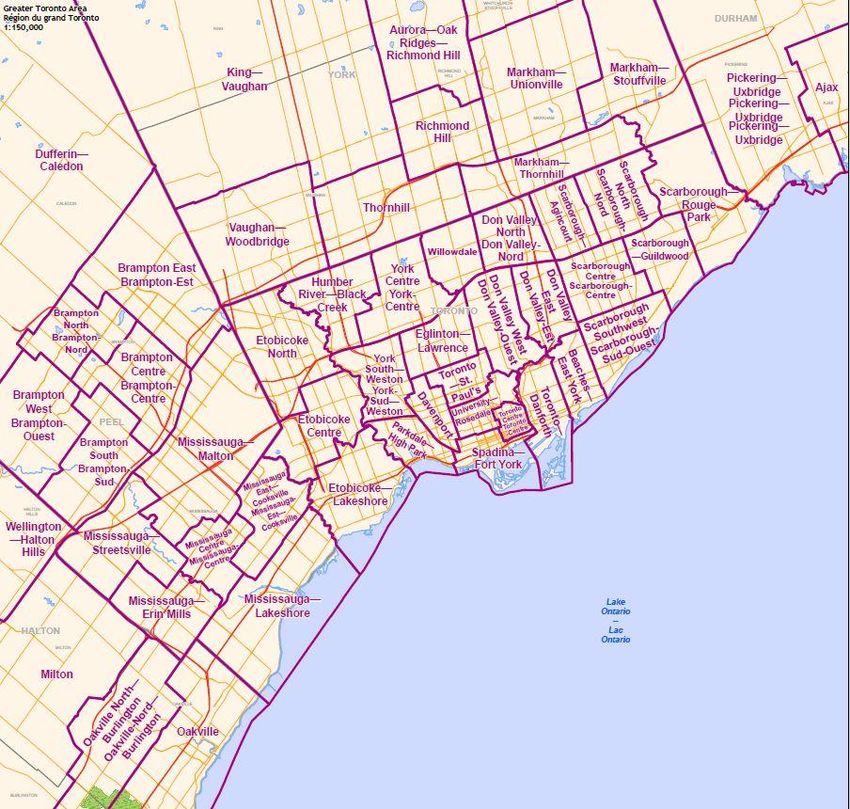
             a. GTA Electoral Districts Map

             b. ‘Let’s make our voices heard!’ and ‘Want to vote?” Posters

             c. Election Links, Political parties, Civic engagement, Other
                 community toolkits, Accessible Voting, Jobs at Elections
                 Ontario Links

             d. TDIN Brochure (2022 Ontario Provincial Election)
                                                                                     3.
Engaging Participants in the Voting Process
TDIN can provide support to you and your Drop-in for activities that encourage
discussion, involvement in campaigns around issues, and voting preparation for the
election, including honoraria for participants who are actively involved.
Contact Susan at tdin@tngcs.org
1.) Find out your Drop-in’s Electoral District (or ‘riding’);
Candidates; Elections information for your district
Click here:
https://www.elections.on.ca/en/voting-in-ontario/frequently-asked-questions/voter-information-
service.html
You can find out answers to questions such as :
➢ Which provincial riding is your Drop-in located in?
➢ Who are your Members of Provincial Parliament (MPPs)?
➢ Where are the nearest voting stations?
➢ What are the advance polling dates?
2.) Share information with your program participants.
▪ Keep your staff and volunteers up to date with information and
resources
▪ Make a schedule. Plan for assisting participants on Voting
Day, on Advance Polls dates, and/or with Mail-In Voting
Decide how to share information:
➢ Can you print flyers to hand out?
➢ Can you hang posters in the window, or on a bulletin board?
➢ Is your drop-in equipped for you to be able to provide
information digitally to participants, through e-mail or
social media?
3.) Programming Suggestions
Create opportunities for discussion, both amongst your participants
and with election candidates – this may encourage people to:
• speak about the issues that are important to them
• learn about which candidate could best represent them
• get out to vote
Here are some ideas about ways to create those opportunities for
Drop-in participants:
4.Ballot Box Exercise about Current Issues:
Have a ballot box present in the Drop-in for participants to submit any
election topics-of-interest such as housing, food security, policing,
social assistance, ODSP/OW rates, workers’ rights, etc. This exercise
will give participants an opportunity to speak about their concerns
regarding various issues.
• Ballots can be left blank so that participants can submit their
own ideas, or can present a list of issues that participants can
check off or rank in order of importance
• Pick a day and time for a group discussion and advertise it on the
ballot box. Encourage participants to ask questions both before,
during and after the day
• If possible, have accessible information available for participants
to see which political party lines up with their issues of concern
Communicate Issues to Candidates:
Either as a group, or individually:
• develop a petition for people to sign
• write letters to candidates, from participants, about their
concerns
➢ Create an event where these letters can be written, or a general
time when they can be submitted to the Drop-in.
Participants can either write these letters on their own and
bring them in, or participate as part of a planned group activity
➢ Make posters explaining the event. Keep envelopes handy for
the letters so that they can be enclosed privately. Provide names
of candidates and pens
➢ Schedule a time for these letters to be mailed/emailed/delivered 5.Invite Candidates to Your Drop-in:
Find out who your candidates are and invite them to the Drop-in or
to a nearby outdoor venue to meet with participants to discuss
relevant issues.
➢ Elections Ontario’s Contact Us Page link:
https://www.elections.on.ca/en/contact-us.html
➢ Elections Ontario’s Frequently Asked Questions link:
https://www.elections.on.ca/en/voting-in-ontario/frequently-asked-questions/voter-
information-service.html
• Email invitations to candidates and then follow up with phone calls
• Include a message about your Drop-In’s role in your community
and why you are inviting candidates to spend time there
• If possible, offer to show them around your Drop-in
• When a meeting is scheduled, re-confirm the details well before the
actual date
• Promote the event with posters and invite other Drop-ins in
your riding
Put up Posters:
• Place plain-language posters in and around the Drop-in which
encourage the importance of voting, and how staff can assist with
preparing to vote
• Post infographic-style posters that explain the voting process
• Use posters to encourage people to ask you questions about
voting
• These links below can be used for this election: 6.
➢ “Let’s make our voices heard!’ and “Want to vote?” PostersHave your Drop-in authorized as a Temporary Address
(for program participants without an address)
and become an
‘Authorized Administrator’
From Elections Ontario:
7Registering Participants for Mail-In Voting
About mail-in Voting:
Shelters and Drop-Ins in Toronto are eligible to be a registered address to conduct mail-in voting for
their participants. This can be done for an individual participant or for a group of participants together.
If you choose to conduct mail-in voting from your agency, it is recommended you conduct this
ASAP. mail-in votes must reach Elections Ontario by Thursday, June 2nd at 6 pm.
1. Contact your local Elections Ontario to ensure your agency’s registration as an Authorized
Administrator.
2. For an individual –
a. Complete the Confirmation of Residence form provided. Need Certificate of Identity and
Residence Form (Elections Ontario to provide)
b. They will also require a secondary ID with their name. Accepted ID
c. Take pictures of the Confirmation of Residence and secondary ID.
d. Register online for mail-in voting (application available from May 4th) See: Elections
Ontario (search ‘Mail-in voting’)
e. The voting kit and special ballot will be sent to your agency for the individual to
complete. Postage-paid envelopes are provided for mailing back.
3. For groups –
a. Complete Confirmation of Residence forms for each participant. They will require a
secondary piece of ID as stated above.
b. Contact Elections Ontario and ask to speak to the Service Point Supervisor.
c. Tell them you wish to register as a Mobile Poll to conduct voting by mail for a group
of participants.
d. They will work with you to personally drop off multiple voting kits and confirm
voters amongst your participants. Postage-paid envelopes to mail to Elections
Ontario will be provided.
2. Registering Participants for In-Person Voting
1) Ensure your agency is an Authorized Administrator
2) Find out which of your participants wishes to vote and needs the use of a
temporary address (use engagement ideas, posters, and resources in this
toolkit to help create interest and provide info about options for
participating in the vote.)
3) Fill out a Certificate of identity and Residence for each participant. They will
need to bring this as ID on Election Day.
4) If you are organizing a group to attend together on Election Day, consider
keeping these forms filed safely until then. 8.MAP OF 2022 ONTARIO PROVINCIAL
ELECTORAL DISTRICTS (‘RIDINGS’)
Greater Toronto Area
_____________We demand better!
…LET’S MAKE OUR
ON ELECTION DAY!
~…want to vote?
Election links, Civic engagement, Political parties, Other community toolkits,
                       Accessible voting, Jobs at Elections Ontario

HOW-TO-VOTE LINKS AND PHONE NUMBERS:

  ➢ QUESTIONS? CALL ELECTIONS ONTARIO
     Toll-free in Canada: 1-888-668-8683

  ➢ ELECTIONS ONTARIO HOMEPAGE
    https://www.elections.on.ca/en.html

  ➢ VOTING
    https://www.elections.on.ca/en/voting-in-ontario.html

  ➢ WAYS TO VOTE
    https://www.elections.on.ca/en/voting-in-ontario/how-to-vote.html

  ➢ ID REQUIREMENTS
    https://www.elections.on.ca/en/voting-in-ontario/id-requirements-for-voting.html

  ➢ VOTING RIGHTS
    https://www.elections.on.ca/content/dam/NGW/sitecontent/2017/resources/Ontario%20Voter%20Rights
    %20poster.pdf

  ➢ DECLARATION OF RESIDENCE & IDENTITY (to make an Oath; to be filled out at the voting place)
    https://www.forms.ssb.gov.on.ca/mbs/ssb/forms/ssbforms.nsf/MinistryDetail?OpenForm&ACT=RDR&
    TAB=PROFILE&ENV=WWE&NO=017-10554PE

CIVIC ENGAGEMENT and OTHER COMMUNITY ELECTION TOOLKITS:
   Organizations active in advocacy issues related to this election include: ACORN (Rent relief), OFL
   (Gig workers’ rights), ODSP Action Coalition (Reforms), WAC (Adequate paid sick days), ACTO
   (Tenants rights), OADA (Disability barriers), Dixon Hall (Indigenous housing), ISAC (Income security)

   ➢ ENGAGED DEMOCRACY:
     https://www.engagedemocracy.ca/ontario-election-2022
   ➢ https://theonn.ca/wp-content/uploads/2022/03/Election-Advocacy-Toolkit-1.pdf (Ontario
     NonProfit Network, 2022)
   ➢ https://cfuwontcouncil.org/wp-content/uploads/2022/01/Ontario-Election-Toolkit-2022.pdf
     (Canadian Federation of University Women, 2022)
   ➢ Getting Involved in the Ontario Election: A toolkit for AOHC members (Ass. Of Ontario Health
     Centres, 2018)
   ➢ Advocacy Toolkit (Ontario Library Association Advocacy Committee, 2019)                      9.
MAJOR POLITICAL PARTY WEBSITES (ONTARIO):
➢ NDP
https://www.ontariondp.ca/
➢ LIBERAL
https://ontarioliberal.ca/
➢ GREEN
https://gpo.ca/
➢ CONSERVATIVE
https://ontariopc.ca/
ACCESSIBLE VOTING:
Accessibility services at voting locations
• Availability of magnifiers
• Access to ballot templates with braille numbering and cut-outs
• Assistance from a friend or support person in marking your ballot
• Use of your mobile phone or device as an accessibility tool, including video remote interpreting applications
Voting locations
Elections Ontario works to ensure that voting locations meet our site accessibility standards, where possible. To confirm the
accessibility of your voting location, visit voterinformationservice.elections.on.ca when the election is called.
Election officials can bring the ballot outside the voting location to make the process more accessible. You can also apply to
transfer your voting location if another one better meets your accessibility needs by contacting your returning office before
election day. Service animals are allowed.
Contact Information
➢ To book an accessible voting service, contact your returning office. Find your returning
office contact information at
https://voterinformationservice.elections.on.ca/en/election/search or by calling
our office at 1-888-668-8683 (TTY: 1.888.292.2312) when the election is called
➢ For general information, visit elections.on.ca, email info@elections.on.ca. or call
1.888.668.8683 (TTY: 1.888.292.2312).
JOBS at Elections Ontario:
From Elections Ontario: Come work for us! We are recruiting election officials to come work for us
during the election. To work as an Information Assistant, you must:
➢ be at least 16 years of age; and
➢ have a social insurance number 10.
➢ Apply here: https://jobs.elections.on.ca/en/applyGET READY TO VOTE:
Make sure you're registered
Check your registration if you've moved or never voted before.
Go to www.elections.on.ca/voter-registration. It's easy and will save
you time when you go vote in the upcoming provincial election.
Watch for your voter information card
If you're registered, you will get a voter information card in the mail
TDIN BROCHURE after the election is called. It tells you when and where to vote.
Check your name and address on the card. If there are errors, or if you
don't receive a card, go to https://eregistration.elections.on.ca/en/home
Ontario Provincial Election or call to update your information.
Thursday, June 2nd, 2022
Voters Who Do Not Have a Permanent Residence:
When a person has no permanent residence or dwelling, the person’s
The Ontario Government is responsible for many of the things temporary quarters at the time of registration are considered to be the
that impact daily life. Let’s vote for candidates who will fund place where the person usually lives.
and support development of:
Voters Who Do Not Have a Permanent OR Temporary Residence:
• Housing – affordable, more of it, and a full range of housing If a voter does not have a permanent or temporary residence, then he
options may consider Drop-Ins, shelters or hostels that provide food, lodging or
• Public transit – affordable, accessible, in all neighbourhoods other social services as their place of ordinary residence however they
• Health – full range of free health services and able to get must request a Certificate of Identity and Residence from the
everything we need to stay healthy, including Harm agency’s staff, and show this document at their Polling Station. Drop-
in’s must be registered as Authorized Administrators to give out this
Reduction supports
certificate (see TDIN Toolkit for details.)
• Other Provincial issues such as Social Assistance - ODSP
and OW; Food Security & Accessibility; Workers Rights - WHAT DROP-INS CAN DO TO PROMOTE THE VOTE:
Sick days, Minimum Wage, Safe workplaces
1. Print, sign & give out the Certificate of Identity and Residence
right until the end of the Election.
For questions about voting in the provincial election,
visit: www.elections.on.ca or call 1-888-668-8683 2. Help participants gather their ID to vote.
1. 2.3. Encourage people to vote at the Advanced Polls so any Assist participants to check if they have the right ID
problems can be addressed early.
PROOF OF IDENTITY AND ADDRESS NEEDED TO VOTE:
4. Hold a vote ‘pop up’ at your Agency:
To vote in the provincial election, you need to prove your identity and
Read the Democratic Engagement Exchange’s PROVINCIAL address.
ELECTION HANDBOOK: THE POWER IS YOURS.
There are three ways to do this:
This handbook is a non-partisan guide that equips first-time
and infrequent voters with the knowledge to make a confident 1.Show one of these pieces of ID:
vote in the election. The workbook-style handbook is
engaging, easy to read & most importantly, fun! • Your driver's license
• Any other card issued by a Canadian government (federal,
5. Print & display Elections Ontario materials. Click here to provincial/territorial or local) with your photo, name and address
order materials 2.Show two pieces of ID:
Both must have your name, and at least one must have your current
address.
HOW DROP-INS CAN ASSIST PARTICIPANTS TO VOTE:
Examples:
To Drop-in staff: • Voter information card and bank statement
• Utility bill and student ID card
Follow these steps to ensure your Certificates of Identity and
Residency are accepted: 3.If you don't have ID:
1) Telephone your local Riding Office in advance to confirm Take an oath.
You can still vote if you declare your identity and address in writing
that your agency is on the list of agencies (‘Authorized and have someone with you who knows you, is registered to the same
Administrators’) that can give out Certificates of Identity polling station and can vouch for your current address.
and Residence to their program participants.
This person must be able to prove their identity and address. A person
Note: Your agency’s name should already be on file at your
can vouch for only one other person (except in long-term care
local polling station. They will be expecting your agency’s institutions).
participants to arrive with their Certificate so that they can
vote. Don’t have these? No problem!
- See the list of Accepted ID to Prove Your Identity and
2) Let TDIN know when your Drop-In is authorized to give out Address, under ‘Option 2’
Certificates of Identity and Residence, so we can help OR see Elections Ontario’s full list of accepted ID, with details on
direct people. Accessibility, and learn about the many ways you can vote. 4.
3.From a healthcare facility or organization:
ACCEPTED ID TO PROVE YOUR IDENTITY & ADDRESS: • Blood donor card
(Option 2) • CNIB card
• Hospital card
Note: ALL OPTIONS WITH A * ALSO REQUIRE PROOF OF ADDRESS
DOCUMENTS From Elections Canada:
● Targeted revision form to residents of long-term care
From a government or government agency: institutions
● Birth certificate * ● Voter information card
● Health card * From an educational institution:
● Canadian citizenship card or certificate * ● Correspondence issued by a school, college or university
● Canadian Forces identity card * ● Student identity card *
● Canadian passport * • Credit union statement
● Card issued by an Inuit local authority From a private organization:
● Firearms license • Employee card
● Government cheque or cheque stub • Residential lease or sub-lease
● Government statement of benefits • Utility bill (e.g.: electricity; water; telephone, cable or satellite)
● Income tax assessment • Identity bracelet from a hospital or long-term care institution
● Indian status card or temporary confirmation of registration • Medical clinic card
● Liquor identity card From a financial institution:
● Métis card • Bank statement
● Old age security card * • Credit card
● Parolee card • Credit card statement
● Property tax assessment or evaluation Letters of confirmation:
● Public transportation card • Letter from a public curator, public guardian or public trustee
● Social insurance number card * • Letter of confirmation of residence from a First Nations band
● Band membership card or reserve or an Inuit local authority
● Vehicle ownership • Letter of confirmation of residence, letter of stay, admission
● Veterans Affairs health care identification card * form, or statement of benefits from one of the following
● Debit card designated establishments:
● Insurance certificate, policy or statement ◊ Student residence
● Mortgage contract or statement ◊ Seniors’ residence & Long-term care institution.
● Pension plan statement ◊ Shelter
● Personal cheque ◊ Drop-ins
◊ A community-based residential facility
Extra pieces of ID may be added. Elections Ontario accepts e-
5. statements and e-invoices. Print or show them on a mobile phone. 6.Mail-in Voting: NOTES:
Shelters and Drop-Ins in Toronto are eligible to be a registered address
to conduct mail-in voting for their participants. This can be done for
an individual participant or for a group of participants together.
If you choose to conduct mail-in voting from your agency, it is
recommended you conduct this ASAP. All mail-in votes must
reach Elections Ontario by Thursday, June 2nd at 6 pm.
1. Contact your local Elections Ontario to ensure your
agency’s registration as an Authorized Administrator.
2. For an individual –
a. Complete the Certificate of Identity and Residence
Form provided.
b. They will also require a secondary ID with their
name. Accepted ID
c. Take pictures of the Certificate of Identity and
Residence Form and secondary ID.
d. Register online for mail-in voting (application available
from May 4th) See: Elections Ontario (search ‘Mail-in
voting’)
e. The voting kit and special ballot will be sent to your
agency for the individual to complete. Postage-paid
envelopes are provided for mailing back.
3. For groups –
a. Complete Certificate of Identity and Residence
Form for each participant. They will require a
secondary piece of ID as stated above.
b. Contact Elections Ontario and ask to speak to the
Service Point Supervisor.
c. Tell them you wish to register as a Mobile Poll to
conduct voting by mail for a group of participants. ________________________________________________________
d. They will work with you to personally drop off
multiple voting kits and confirm voters amongst
your participants. Postage-paid envelopes to mail to
Elections Ontario will be provided.
7.
8.You can also read


