The Continued Struggle to Access Medical Care in Afghanistan
←
→
Page content transcription
If your browser does not render page correctly, please read the page content below
The Continued Struggle
to Access Medical Care
in Afghanistan

                         MAY 2021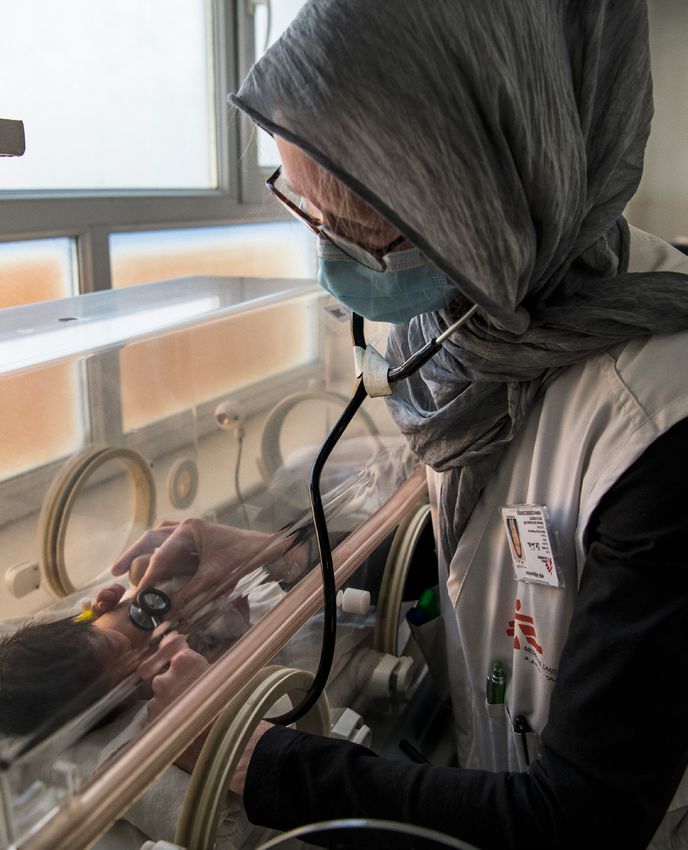
Table of contents

3    Executive summary

4    Introduction

6    Methodology

7    Humanitarian context 2020–2021: violence, economic hardship and uncertainty

9    Attacks on healthcare

12   Conflict, violence and insecurity: caught between the frontlines

14   Poverty puts healthcare beyond reach, especially for Afghans in rural areas

16   Delayed and obstructed access to healthcare results in serious medical complications
     or death

18   A health system failing to provide satisfactory care

21   Conclusion

Cover picture: Inside the neonatal Intensive Care Unit (ICU) at
Boost Hospital, Helmand’s primary provincial hospital in the
capital Lashkar Gah. © ANDREW QUILTY

|2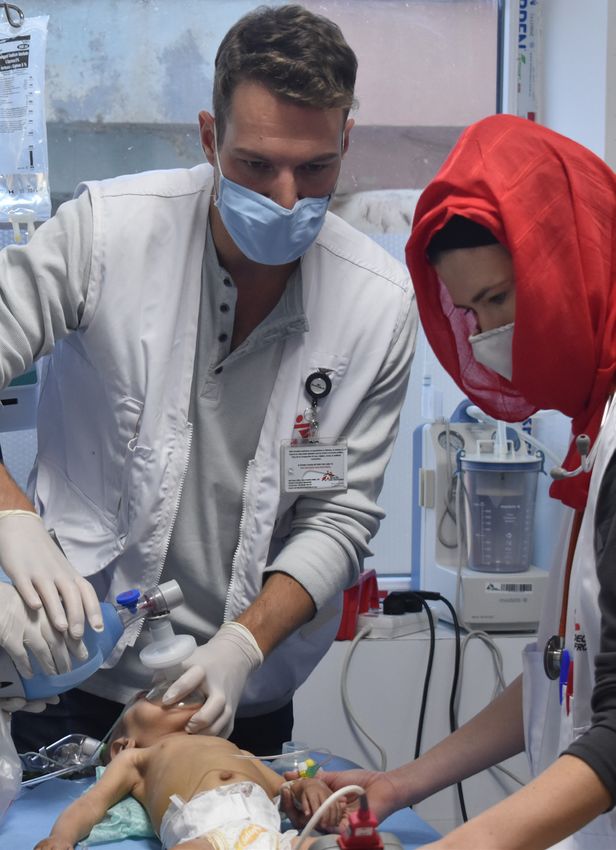
Executive summary
After 40 years of conflict, Afghanistan faces yet another period themselves and their families, as consumer prices soar. Many
of instability in 2021. Peace negotiations between the Afghan Afghans still rely heavily on humanitarian assistance to survive.
government and the Islamic Emirate of Afghanistan (IEA, also Direct medical and non-medical costs put healthcare further
known as the Taliban) have made little to no progress since they out of reach for people living in poverty. In responding to our
began in September 2020. Fighting between government forces survey, patients and their caretakers reported having to borrow
and armed opposition groups continues to claim thousands money, sell household goods or reduce spending on other
of civilian lives each year while crippling public infrastructure. essentials, such as food, in order to afford treatment, medicines
Violence and insecurity are pervasive throughout the country and transportation. Many were unable to seek or continue their
and show no sign of abating. Healthcare facilities in Afghani- treatment, with disastrous consequences to their health. MSF
stan are attacked more often than almost anywhere in the world, is one of the few organisations in Afghanistan offering medical
forcing their temporary or permanent closure and depriving services completely free of charge.
millions of access to vital medical services. The humanitarian
crisis, compounded by the health and socioeconomic shocks of In recent years, the international community has touted the
the COVID-19 pandemic, is worsening throughout the country. achievements of Afghanistan’s healthcare delivery model,
despite strong evidence that the health system is unable to
This briefing paper, produced by international medical humani- meet Afghans’ basic medical needs. Public health facilities in
tarian organisation Médecins Sans Frontières/Doctors Without Afghanistan are under-funded and under-resourced, lacking
Borders (MSF), features new medical data and accounts from qualified personnel, equipment, medicines and medical
patients, caretakers and MSF clinical staff in Helmand, Herat, supplies. Actors, such as MSF, have stepped in to fill important
Kandahar and Khost provinces. In surveying these groups, gaps in health service provision. However, the situation is not
MSF found that Afghans today are struggling to access basic sustainable, as humanitarian needs multiply and add further
necessities, including medical care, as a result of violence and pressure on to already overburdened medical facilities. When
insecurity, poverty, and an under-funded and under-resourced desperate patients turn to private facilities, in the hope of
health system. Every day, Afghans must undertake dangerous receiving better medical care, they accrue crippling debts and
journeys across active frontlines and mined roads, through no guarantees of quality treatment.
checkpoints and areas controlled by armed groups to seek
medical care. They are often unable or too afraid to leave their At the end of 2020, international donors announced consider-
homes, and, when medical emergencies happen, such delays able reductions in future funding assistance for the country,
can prove fatal. and some placed conditions on that assistance. This will
increase the pressure on the fragile public health system and
MSF brought these issues to public attention in reports released on health partners to meet the rapidly growing medical needs
in 2014 and 2020. We publish this new briefing to show that the of the Afghan population
persistent barriers that Afghans face when seeking healthcare
continue to this day. National and international stakeholders must recognise
that basic services, such as healthcare, are insufficient and
Poverty in Afghanistan is on the rise. The COVID-19 pandemic incapable of addressing Afghans’ immediate needs, and that
has worsened the financial hardship for Afghans. Many have now is not the moment to reduce humanitarian support to
lost their livelihoods as a result of border closures, reduced Afghanistan. Access to quality and affordable medical care for
commercial activity and job losses, and are receiving less in all must be made an urgent priority.
overseas remittances. It is getting harder and harder to feed
The Continued Struggle to Access Medical Care in Afghanistan
3|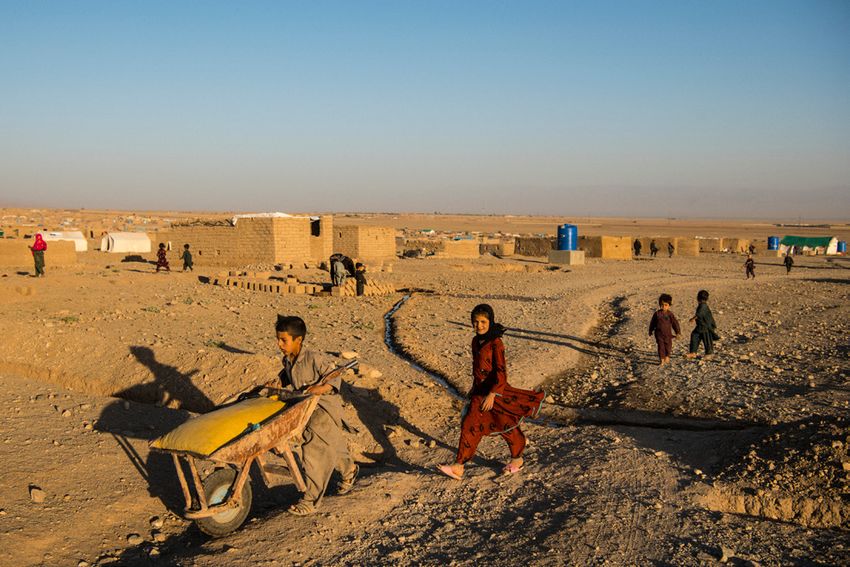
Introduction

2021 marks yet another period of instability in Afghanistan,                         Large parts of the population in Afghanistan are unable to
with intensifying hostilities and a worsening humanitarian                           access functioning medical facilities near their homes or obtain
crisis, compounded by the COVID-19 pandemic and its socio-                           quality, free medical care. The distances they have to travel, the
economic impact. National and international actors engaged                           dangers of armed conflict, violence and insecurity, pervasive
in negotiations on the political future of the country must not                      poverty, and the costs of receiving medical care remain the
overlook the dire conditions in which many Afghans live and                          most difficult access barriers for Afghans to overcome. At the
the daily struggles they face in accessing basic necessities,                        same time, under-funded and under-resourced healthcare
including healthcare.                                                                facilities are unable to deliver basic services. Each day, MSF
                                                                                     teams in Afghanistan witness the disastrous consequences of
This briefing provides an updated overview of MSF’s concerns                         these barriers on patients’ health.
regarding chronic barriers to accessing both routine and
lifesaving medical care in Afghanistan, and the inability of                        At the end of 2020, international donors – whose decisions
the health system to respond to the needs of the popula-                            have shaped the current model of healthcare financing and
tion. MSF first brought these issues to public attention in the                     delivery in Afghanistan – announced considerable reductions
2014 report, ‘Between rhetoric and reality: The ongoing                             in future funding assistance for the country, and some linked
struggle to access healthcare in Afghanistan’. Published as                         that assistance to politically motivated conditions.1 This will
international coalition forces were preparing to pull out from                      increase the pressure on the fragile public health system and
Afghanistan, it exposed the gap between donor narratives on                         on health partners to meet the rapidly growing medical needs
the success of the healthcare model in Afghanistan and the                          of the Afghan population.
unmet medical humanitarian needs witnessed by MSF. In 2020,
MSF published another report, ‘Reality check: Afghanistan’s
neglected healthcare crisis’, which showed that there had
been no progress in improving Afghans’ access to healthcare
and that, in some areas, the situation had deteriorated.

Among the 80 patients and caretakers surveyed in MSF-supported medical facilities in February 2021:
• 74 per cent identified cost as a key barrier to seeking health-                    • 56 per cent had borrowed money from relatives or acquaint-
  care (relating to travel, overnight accommodation, treat-                            ances to cover the costs of healthcare, and 38 per cent said
  ment and medication).                                                                that they had sold household goods or animals.
• 40 per cent identified healthcare costs as one of the most                         • 46 per cent reported delaying healthcare in the past year and
  pressing financial pressures on their household (payment                             31 per cent had suspended ongoing treatment, mainly due to
  for surgery and medical treatment, including chronic dis-                            medical costs and insecurity.
  eases).                                                                            • 33 per cent said that violence and insecurity was one of the
                                                                                       main obstacles to reaching medical care.

1 European Union External Action Service, 2020, https://eeas.europa.eu/sites/default/files/key_principles_paper_final_handover.pdf

|4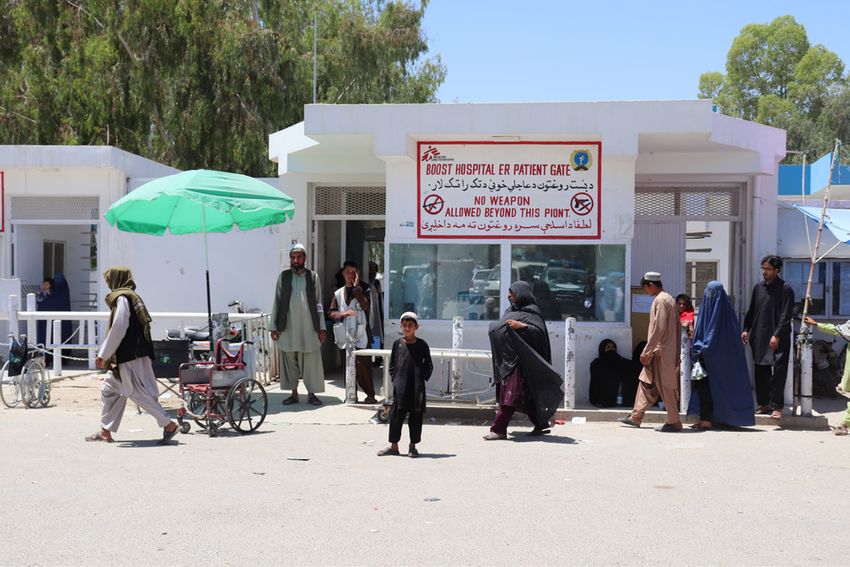
UZBEKISTAN                             TAJIKISTAN

                              TURKMENISTAN                                 Kunduz

                                                                              Kabul
                                      Herat
                                                                              Khost

                                                Lashkar Gah
                                                                                     PAKISTAN
                    IRAN                                 Kandahar

MSF’s work in Afghanistan 2020–2021
MSF is a medical humanitarian organisation, which operates        • Khost: MSF runs a 60-bed maternity hospital; one of the
under the principles of independence, impartiality and              busiest in Afghanistan. Data for 2020: around 14,400 deliver-
neutrality. Since the 1980s, MSF has provided medical care          ies assisted and 1,700 newborns admitted to the neonatal
throughout Afghanistan, in areas under the control of a variety     unit.
of political and armed factions. Currently, MSF runs projects     • Kunduz: A wound care clinic ran from 2017 to April 2020,
in five provinces:                                                  when activities were suspended due to COVID-19, and since
• Helmand: MSF supports the emergency, surgery, maternity,          2015 MSF has been supporting a district advanced post in
  inpatient, neonatal and paediatric departments in the             Chardara. Construction is currently underway of a new
  300-bed Boost hospital in Lashkar Gah. Data for 2020:             trauma hospital in Kunduz to provide life- and limb-saving
  around 111,600 patients admitted to the emergency room,           care for injuries caused by violence and accidents. Data for
  28,800 patients admitted to the inpatient department, 18,000      January to April 2020: around 8,500 dressing sessions and
  deliveries assisted, 5,000 major surgeries performed, and         830 emergency trauma consultations.
  2,200 children treated for severe acute malnutrition.           • Kabul: In June 2020, MSF was forced to close its activities
• Herat: MSF runs an outpatient clinic and outreach activities      in Kabul’s 100-bed Dasht-e-Barchi hospital following the
  for internally displaced people (IDP) and host communities.       murder of mothers, children and staff in the MSF-supported
  MSF also runs an inpatient therapeutic feeding centre             maternity ward. Until the 12 May attack, the MSF team in the
  (ITFC) and COVID-19 triage at the Herat Regional Hospital         hospital had assisted around 5,600 deliveries in 2020.
  (HRH). Earlier this year, MSF ran a 32-bed COVID-19 treat-
                                                                  In all locations MSF provides medical care free of charge. MSF
  ment centre. Data for 2020: around 70,500 consultations
                                                                  currently employs 2,000 Afghan staff and 100 international
  at the outpatient clinic, 1,700 children treated for severe
                                                                  staff around the country. In Afghanistan, MSF relies solely
  malnutrition and 350 patients treated at the COVID-19
                                                                  on private funding and does not accept funds from any
  treatment centre (now closed).
                                                                  government for its work. In 2020, MSF’s total expenditure in
• Kandahar: MSF provides screening and treatment for              Afghanistan was $35.3 million.
  patients with drug-sensitive and drug-resistant tuberculosis
  (DS-TB and DR-TB). Data for 2016–2020: around 119,700
  DS-TB screenings, 10,300 DS-TB consultations, 740 patients
  treated for DS-TB and 174 patients treated for DR-TB.

The Continued Struggle to Access Medical Care in Afghanistan
                                                                                                                           5|
Methodology

This briefing is a continuation of the two previous MSF reports       The results of the surveys and interviews cannot be extrapo-
on access to healthcare in Afghanistan, which focused first on        lated as countrywide results due to the narrow sample size
Kabul, Helmand, Khost and Kunduz provinces (2014), and then           and convenience sampling (as opposed to random sampling)
on Helmand and Herat provinces (2020).                                method. Data collection focused exclusively on patients who
                                                                      sought treatment at MSF medical facilities and did not include
This briefing is based on responses provided by 80 male and           patients from the wider population who may have chosen to
female patients and caretakers, which shed light on the current       go elsewhere. However, combined with the MSF medical data
obstacles preventing access to healthcare. These individuals          collected for the 2014 and 2020 reports, the results do provide
were surveyed over two weeks in February 2021 in MSF projects         a picture of the barriers to accessing healthcare that exist in
in Helmand, Herat, Kandahar and Khost provinces. Adding               Afghanistan. Since the patients and caretakers who participated
to this, 16 semi-structured interviews were carried out with          in our research were able to access healthcare in one of MSF’s
patients, caretakers and MSF staff between October 2020               facilities, the results may underestimate the true extent and
and March 2021. Additional health data and indicators were            types of barriers facing those who never managed to reach us.
collected from the 2020 and 2021 medical reports of health
facilities supported or run by MSF.

People in front of the main gate of the Boost hospital in Lashkar Gah. © ELISE MOULIN

|6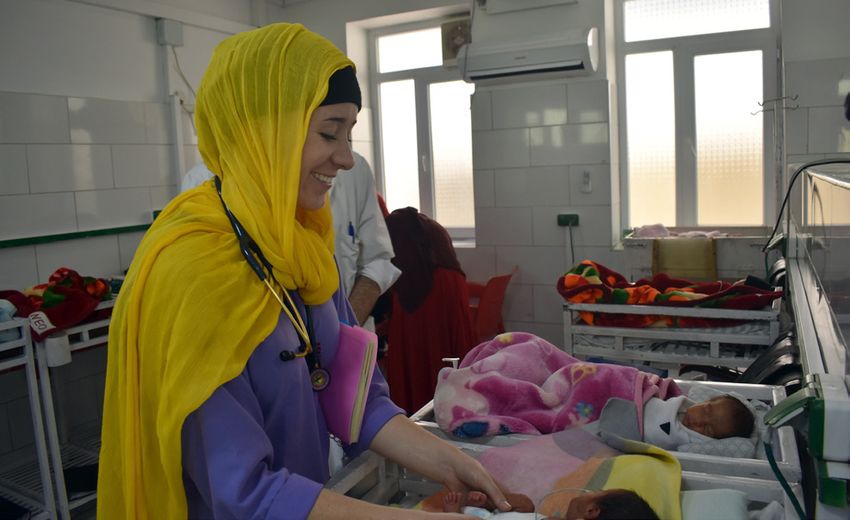
Humanitarian context 2020–2021:
Violence, economic hardship
and uncertainty

The magnitude and severity of health and humanitarian needs                           In the past year, have you or your family
in Afghanistan are overwhelming, with people affected across                          experienced displacement?
regions, gender and age. War, political instability and the
ongoing COVID-19 pandemic have had a devastating impact
on the population.

In 2021, the political situation remains uncertain, and the
fighting shows no signs of abating. An agreement signed                                              NO              YES
between the United States (US) and the Islamic Emirate                                              49%              51%
of Afghanistan (IEA, also known as the Taliban) in Doha in
February 2020 paved the way for a further reduction in the
number of US troops stationed in Afghanistan, with all foreign
troops expected to leave by 1 May 2021. It also began a process
of peace negotiations between the Afghan government and the
IEA, which formally commenced in September of that year. So
                                                                                      Source: MSF survey, MSF facilities in Helmand, Herat, Kandahar
far, the negotiations have not produced any meaningful results                        and Khost, 2021
and have not put an end to the violence. On the contrary, during
the final three months of 2020 the number of civilian casualties                      In all four provinces where MSF conducted the survey, the
increased in comparison to the same period in 2019, mostly as                         majority of those affected by displacement cited ongoing
a result of improvised explosive devices (IEDs) and targeted                          fighting between the government and armed opposition
attacks. In 2020, 8,820 civilian casualties were recorded,                            groups (AOGs), insecurity or direct threats against their family
including 3,035 deaths and 5,785 injured. Almost half of the                          as reasons for leaving.
victims were women and children.2 In what the IEA has viewed
as a violation of the Doha agreement, the Biden administration                        Why were you displaced?
announced in April 2021 that US troops would completely with-
draw from Afghanistan by 11 September of this year. The impact
of this decision and the end of a 20-year-long international                                                                       Other
military presence on political and security dynamics in the                                                                        (poverty, natural disaster)
                                                                                                                                   22%
country remains to be seen.

In 2020, violence forced around 400,000 Afghans to flee their
homes.3 Displaced people face inadequate living conditions
and struggle to secure jobs and basic necessities, heightening
                                                                                                Conflict and insecurity
their feelings of vulnerability and uncertainty about the future.
                                                                                                          78%
Around half of the patients and caretakers surveyed in February
2021 had been forcibly displaced at least once in the previous
12 months.4
                                                                                      Of the 41 respondents who experienced displacement in the past
                                                                                      year, four cited two reasons for being displaced, i.e. the total
                                                                                      number of responses for this question was 45.
                                                                                      Source: MSF survey, MSF facilities in Helmand, Herat, Kandahar
                                                                                      and Khost, 2021

2 UN Assistance Mission in Afghanistan, Afghanistan: Protection of Civilians in Armed Conflict Annual Report 2020, February 2021, https://unama.unmissions.org/sites/
  default/files/afghanistan_protection_of_civilians_report_2020_revs3.pdf
3 UN OCHA, Internal Displacement Due to Conflict, https://www.humanitarianresponse.info/en/operations/afghanistan/idps
4 The highest displacement rates were reported by MSF patients and caretakers in Herat, Helmand and Kandahar provinces: 75, 70 and 55 per cent of respondents
  respectively.

The Continued Struggle to Access Medical Care in Afghanistan
                                                                                                                                                               7|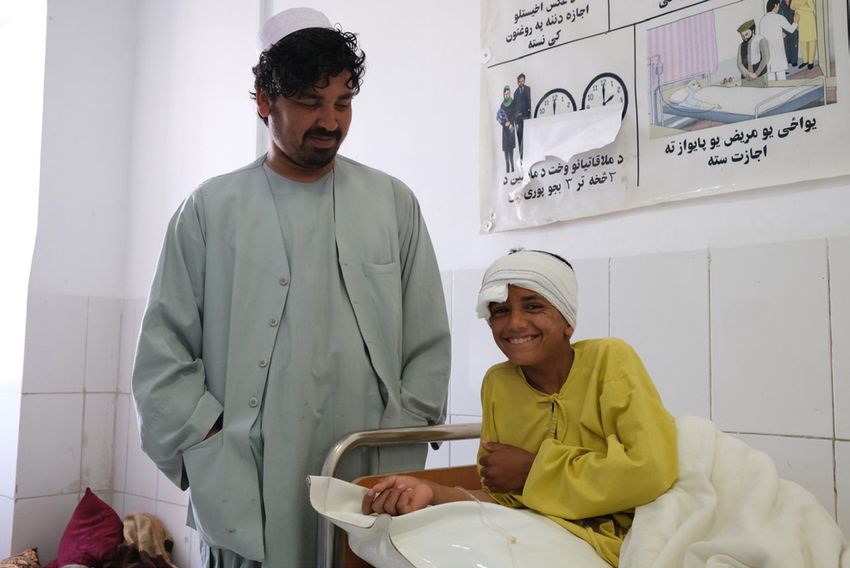
“I am from Badghis province. The reason we came here It is difficult to determine the full scale of the impact of the
is because of the fighting between the Taliban and the pandemic on Afghanistan’s healthcare system. COVID-19 has
government. The Taliban and government are not necessitated movement restrictions and caused delayed and
establishing peace with each other. The government kill interrupted healthcare. It has reduced the capacity of medical
the Taliban and when the Taliban find the opportunity, facilities to maintain regular services, due to the high numbers
they kill the government. Poor and innocent people of infected health workers on sick leave, further disrupted
have been suffering and try not to come between them.” immunisation campaigns, and worsened already-chronic
Female patient, MSF outpatient clinic, Herat vaccination gaps. It has also led to community reluctance to
province. seek healthcare due to fears of contracting the virus while in
medical facilities.
According to the United Nations, an estimated 18.4 million
Afghans will require humanitarian assistance in 2021, six From the outset, medical facilities in Afghanistan, including
times more than four years ago.5 Afghanistan is also facing those supported or run by MSF, were directly affected by the
shortfalls in expected rainfall and a moderate-to-high risk of COVID-19 pandemic. In Herat, as many staff became infected
drought, which will further affect people’s livelihoods and and could not provide care, MSF made the decision to reduce
access to food, and could force more families from their homes. the number of beds in the ITFC, halving the hospitalisation
capacity for several weeks in 2020. Our volume of activity and
The COVID-19 pandemic has placed additional strains on the response to malnutrition decreased significantly during this
health system. Since the beginning of the outbreak in Afghan period.
istan, nearly 57,000 people have tested positive for COVID-19
and 2,487 have died.6 As of mid-February 2021, at least 90 The socio-economic impact of the pandemic has been
health workers had died from the disease.7 Since cumula- immense. Patients surveyed shared their experiences of job
tive sample numbers are relatively low and testing is limited losses, reduced income, falls in remittances, increased debt
to government centres in cities like Kabul, the true scale of and worsening food insecurity, all of which may then negatively
COVID-19 transmission countrywide is likely to be much higher. impact access to healthcare.
“We migrated from Faryab province one and a half
years ago. We don’t have proper water, winter supplies
or any medicine. Our children go to sleep without
food, hoping to receive some the next day. We don’t
have money to buy anything. There is no market for
jobs in Herat. People work for 500 and 1,000 Afghanis
(the equivalent of US$6.50 and US$13) per day, we are
ready to work for 20 Afghanis (US$0.26).”
Male patient, MSF outpatient clinic, Herat province.
At the Afghanistan Conference at the end of 2020, donors
pledged US$12 billion for the period 2021–2024, far less than
the US$15.2 billion pledged in 2016 for 2017–2020. International
funding cuts are adding to the already substantial challenges
faced by healthcare and humanitarian actors working in
Noor Ahmad Nasrat, health promoter, speaking to a patient in
Afghanistan.
MSF’s COVID-19 treatment centre, Gazer Ga, Herat.
© WASEEM MUHAMMADI
5 UN OCHA, Afghanistan: COVID-19 Multi-Sectoral Response, Operational Situation Report, 18 February 2021, https://reliefweb.int/sites/reliefweb.int/files/resources/
operational_sitrep_covid-19_18_february_2021_final.pdf
6 Ministry of Public Health of the Government of Afghanistan, 6 April 2021, https://moph.gov.af/dr/%D8%AA%D8%AD%D9%84%DB%8C%D9%84-
%D8%A2%D8%AE%D8%B1%DB%8C%D9%86-%D8%A7%D8%B1%D9%82%D8%A7%D9%85-%DA%A9%D9%88%D9%88%DB%8C%D8%AF-19-%D8%AF%D8%B1-
%D8%AC%D9%87%D8%A7%D9%86-%D9%88-%D8%A7%D9%81%D8%BA%D8%A7%D9%86%D8%B3%D8%AA%D8%A7%D9%86
7 UN OCHA, Afghanistan: COVID-19 Multi-Sectoral Response, Operational Situation Report, 18 February 2021
|8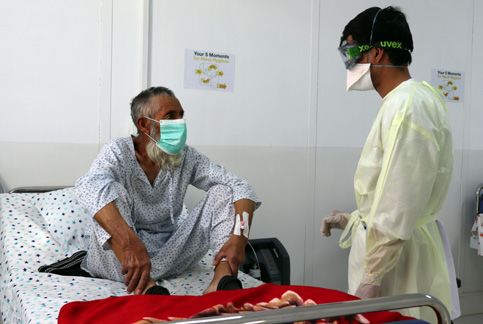
Attacks on healthcare
In the last two decades, all parties to the conflict, including The number of attacks against healthcare facilities in Afghan
armed opposition groups (such as the IEA), the Afghan govern- istan is among the highest in the world.8 In addition to creating
ment and international coalition forces, have demonstrated a climate of fear, such attacks severely limit access to vital
a deadly lack of respect for International Humanitarian Law. medical services by forcing health providers to suspend or
There have been direct attacks and threats against healthcare discontinue activities. The World Health Organization (WHO)
facilities, personnel and patients; killings; abductions; indis- estimates that up to three million people were deprived of
criminate attacks causing collateral damage; and the forced essential health services in 2020 as a result of health facili-
closure of medical facilities. ties forced to close by parties to the conflict.9
Attacks on healthcare – MSF’s experience in Afghanistan
On 12 May 2020, several armed men forced their way into the hospital in Kunduz. The consequences of the attack were
MSF-run maternity ward of the Dasht-e-Barchi hospital in devastating: 42 people were killed, including 24 patients,
Kabul. They shot dead 24 people, including 16 mothers, an 14 staff and four caretakers. The attack greatly reduced the
MSF midwife, and two children aged seven and eight. availability of lifesaving care in the region and left an indel-
A month later, MSF closed its project in the hospital, which ible mark on MSF in Afghanistan. MSF has been gradually
had served one million people – most of them from the Hazara re-establishing its operations in Kunduz since 2017.
community. The Dasht-e-Barchi maternity ward had been one
of MSF’s largest maternal healthcare projects worldwide, with On 2 June 2004, five MSF staff members were killed in an
almost 16,000 deliveries in 2019. This assault by unidentified ambush on a clearly marked MSF vehicle in the northwest
perpetrators shocked the country and the rest of the world for province of Badghis. When no arrests were made following this
its brutality. targeted assassination, MSF left Afghanistan, shutting facilities
in 13 provinces, where over 1,400 staff had provided medical
On 3 October 2015, a wave of targeted air strikes by US Armed care. MSF returned to Afghanistan in 2009.
Forces destroyed the main building of the MSF trauma
8 WHO, Surveillance System for Attacks on Health Care, https://extranet.who.int/ssa/Index.aspx
9 UN Assistance Mission in Afghanistan, Afghanistan: Protection of Civilians in Armed Conflict. Annual Report 2020, February 2021.
The Continued Struggle to Access Medical Care in Afghanistan
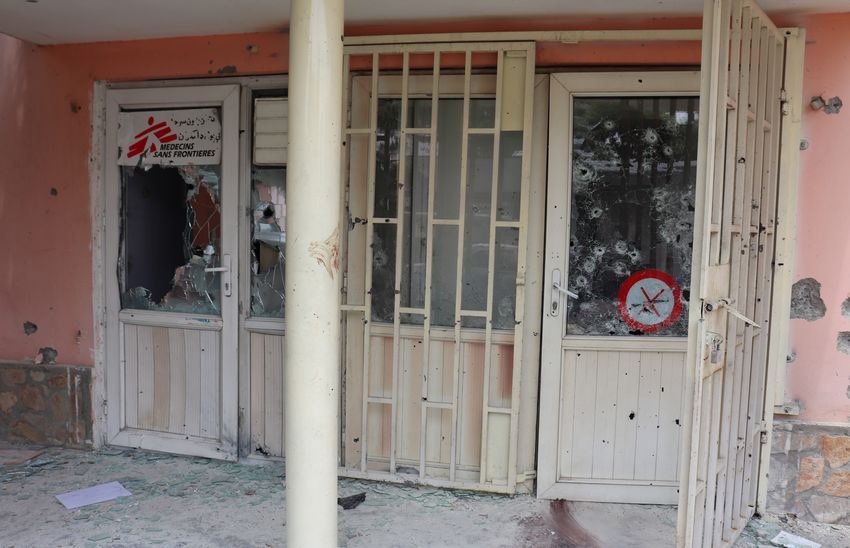
9|The entrance to the psychosocial unit and office of the Dasht-e-Barchi maternity in Kabul, after the attack on 12 May 2020. © FREDERIC BONNOT
|10 The Continued Struggle to Access Medical Care in Afghanistan
11|Conflict, violence and insecurity:
caught between the frontlines
In 2021, Afghans seeking medical assistance are forced to take 2013: In the past year, has a family member or
extreme risks and face insecurity, violence and criminality to close friend died as a result of their lack of access
reach healthcare facilities. This is consistent with MSF findings to healthcare?
reported in 2014 and early 2020, with current trends indicating
a potential deterioration of the situation.
Patients and caretakers say that they weigh up various factors YES
– including the possibility of mined roads and IEDs, ground 19%
fighting, checkpoints and criminality – before seeking medical
care. A third of those surveyed by MSF identified violence and
insecurity on the roads as a key obstacle to seeking healthcare
in 2020. In Helmand, in particular, this was cited by 60 per cent NO
of respondents. Movement at night is often impossible, even 81%
for ambulances, and the few taxi drivers willing to take the risk
charge enormous amounts.
“My son and one other person were injured when their Source: MSF survey, MSF facilities in Helmand, Kabul, Khost and
generator caught fire; he was burnt. We came straight Kunduz, 2013
here. A journey that should take one hour took four
hours. We come from Marja district. There is another
clinic three hours’ drive from our village, but the qual- 2021: In the past year, has a family member died
ity of care is not good. From 5pm until the morning as a result of their lack of access to healthcare?
the road is closed and you cannot come, even if you’re
dying you cannot come. The landmines are activated
at night and there is only one road. Sometimes people
passing get caught up in the fighting on the frontline.
Our area is surrounded by armed groups and even NO
73%
sometimes during the day we cannot travel.”
No answer
Male caretaker, Boost hospital, Helmand province. 1%
Patients trapped on the wrong side of the frontline arrive at YES
medical facilities in critical condition due to delays, which 26%
results in an increased number of deaths. Few health facilities
operate around the clock and it is common for some clinics
to close at noon. Since many patients wait until daylight to
take the road, due to insecurity, they do not always make it in Source: MSF survey, MSF facilities in Helmand, Herat, Kandahar
time to see a doctor. On average, 26 per cent of patients and and Khost, 2021
caretakers surveyed in February 2021 said that they had lost a
family member in 2020 due to a lack of access to healthcare. In
Helmand province, where violence is a major factor, this rose
to 45 per cent.
|12Ahmadullah with his nephew Samiullah, 12 years old, who suffered a gunshot wound to the head on 4 May 2021. © MSF/TOM CASEY
“My pains started in the evening. I thought they would “There were problems and security issues on the way
go away. When the call to prayer was given in the late to Kandahar. Sometimes we would wait for one or
evening, they started to worsen. I told the men in my two days due to fighting or due to constant rain and
family that we should go to hospital. They said that we flooding during winter. There have been times when we
will be attacked on the way and that I should tolerate have waited for five hours for the fighting between the
it until the next day. If I had come to hospital, maybe I Taliban and security forces to stop. The one-hour jour-
would not have lost my child. Because of the insecurity, ney would become five hours long. The road was secure
I lost my child. There are no taxis in Khost province. If in the past. Sometimes, we have to travel through the
you do not have a family car, you have no access to cars mountains and we feel very tired and in pain.”
in the villages. Even if you have a car, you cannot drive Male patient, MSF TB treatment centre, Kandahar
it because of security problems.” province.
Female patient, MSF maternity hospital, Khost
province. Furthermore, health facilities have limited capacity to treat
traumatic injuries and emergency cases. The influxes of war-
In Kandahar city, the majority of the patients enrolled in the wounded and internally displaced people can put additional
MSF DR-TB treatment programme come from the neighbouring strain on already overburdened facilities and risks a reduction
provinces of Helmand, Uruzgan, Zabul and Paktika. Every in overall services.
month, they must make long journeys, at times crossing multiple
frontlines, for their treatment. As a mitigating measure, MSF
provides accommodation, and supplies patients with a buffer
stock of medicines in case they cannot move due to fighting.
Between 11 and 14 October 2020, MSF witnessed the devas- to MSF by Emergency, an Italian NGO providing free surgical
tating impact of armed conflict on the civilian population and care for the war-wounded, as they faced a surge of patients.
health providers in and around Lashkar Gah city in Helmand
province. The MSF-supported Boost hospital admitted 68 In 2021, hostilities escalated again in Helmand. Between 3 and
patients, including women and children, who had been 11 May, Boost hospital admitted the overflow of patients from
injured by shelling, blasts and gunshots. They were referred Emergency and treated 93 people for war-related injuries.
The Continued Struggle to Access Medical Care in Afghanistan
13|Poverty puts healthcare beyond
reach, especially for Afghans in
rural areas
In 2020, the World Bank projected that the poverty rate in biggest financial pressures on their household. Over a third
Afghanistan would increase between 61 and 72 per cent over of respondents paid more than 500 Afghani (the equivalent
the year.10 It is estimated that 80 per cent of those who do work of US$6.50) in transport costs from their home to MSF health
have precarious jobs11 and earn low wages. Among patients facilities. This is more than three times the US$1.90 purchasing
surveyed in February 2021, 79 per cent declared that their power parity earned each day by about 40 per cent of the
family income had decreased in the past year. employed population in Afghanistan.12
In the past year, has your family income increased,
decreased or stayed the same? How much did you pay to reach this MSF facility?
500 Afghani
Stayed the same and more
15% 36%
Unknown
4%
Decreased Increased 1-499
79% 6% Afghani
45% 0 Afghani/free
15%
Source: MSF survey, MSF facilities in Helmand, Herat, Kandahar Source: MSF survey, MSF facilities in Helmand, Herat, Kandahar
and Khost, 2021 and Khost, 2021
“We lost one of our family members due to lack of
The economic crisis, exacerbated by the COVID-19 pandemic money. We were asked to pay the clinic 1,500 Afghanis
and related public health mitigation measures, is widely felt in (around US$19.50) but we had less than 20 Afghanis
Afghanistan. Higher prices for food and other goods, combined (US$0.26). We consider 1,000 (US$13) or 1,500 Afghanis
with lower wages and earnings, are driving large parts of the to be like a million, but it is nothing for them. We are
population deeper into poverty and food insecurity. As most living in the desert with no shelter. We have received no
Afghans depend on agriculture to make a living, they are support. No one can live a morning in this desert, but
vulnerable to frequent natural disasters such as flooding and we have been living here for days, weeks and months.”
drought. Male patient, MSF outpatient clinic, Herat province
(quoted above).
As poverty worsens across the country, Afghans are struggling
to afford basic necessities, including healthcare. Among the An estimated 75 per cent of Afghans live in rural areas.13 Many
patients and caretakers surveyed in February 2021, 40 per cent are cut off from health services by distance and poor roads and
identified healthcare costs (payment for surgery and other infrastructure, especially in contested areas and areas that are
medical treatment, including chronic conditions) as one of the outside of government control.
10 World Bank Group, Surviving The Storm: Afghanistan Development Update, July 2020, https://reliefweb.int/sites/reliefweb.int/files/resources/Afghanistan-
Development-Update-Surviving-the-Storm.pdf
11 UNDP, Afghanistan Country Page,https://www.af.undp.org/content/afghanistan/en/home/countryinfo.html Islamic Republic of Afghanistan Central Statistics
Organization, Afghanistan Living Conditions Survey 2016–17, https://reliefweb.int/sites/reliefweb.int/files/resources/alcs_2017.pdf
12 Asian Development Bank, Poverty Data: Afghanistan, 2019, https://www.adb.org/countries/afghanistan/poverty#:~:text=Poverty%20Data%3A%20Afghanistan,die%20
before%20their%205th%20birthday
13 UNDP, Human Development Reports: Urban Population, 2019, http://hdr.undp.org/en/indicators/45106
|14The Shahrak-e Sabz informal settlement for displaced people, located on the outskirts of Herat City. © ANDREW QUILTY
“There is no doctor in our village. There is one person Some patients reported buying less medicine than the
who knows how to read and write, and they have prescribed amount to limit their expenses or because they had
started dispensing medication, but if you take that you been unable to pay the full cost.
get worse. In the town three hours’ drive away, there
are some private clinics, but they’re no good. We live in “There are patients that cannot buy all the drugs
the desert with no access to healthcare. And there are because of financial problems; they buy half of them
economic issues. Some people can’t find the money to and then they cannot buy the rest. Where they live,
get help even if they have a patient at home; they wait there is no medical facility to provide TB medication.
for God to do something. I told a nurse from my district They come here because MSF gives medicine free of
who works here to find a health worker to come and charge.”
work in the village and I will give them my house.” MSF nurse, MSF TB treatment centre, Kandahar
Male caretaker, Boost hospital, Helmand province province.
(quoted above).
In February 2021, the overwhelming majority (81 per cent) of
the patients and caretakers surveyed said they had experienced
financial difficulties as a result of spending on healthcare. To
reach and pay for medical care, 56 per cent said that they had
been forced to borrow money in the last year, and 30 per cent
had to reduce spending on other essential needs, such as food.
This is consistent with trends recorded by MSF in both 2014 and
2020.
The Continued Struggle to Access Medical Care in Afghanistan
15|Delayed and obstructed access
to healthcare results in serious
medical complications or death
Many Afghans in need of medical care face long waits and neighbouring provinces, such as Farah (235 km away), Ghor
complicated journeys to overcome obstacles related to violence, (172 km) and Badghis (160 km). They travelled long distances
insecurity and cost; during which time their health condition when hours can mean the difference between life and death for
may seriously deteriorate. This can lead to dangerous coping ill or injured people.
strategies, which MSF has recorded over the past eight years.
Similarly, 42 per cent of the mothers who gave birth at the MSF
In February 2021: Khost maternity hospital last year came from other districts
• 46 per cent of patients and caretakers surveyed said they had within the province. In Afghanistan, many deliveries take
delayed seeking medical care when they were ill or injured in place at home without a skilled birth attendant. MSF teams
the past year, mainly due to costs and insecurity frequently admit women in serious condition who have
• 31 per cent had to suspend ongoing treatment, mainly due to attempted to deliver at home and suffered complications, such
costs and insecurity as post-partum haemorrhage.
At MSF facilities, our medical teams regularly witness the Deliveries at MSF Khost maternity hospital
consequences of late arrival, especially among children,
women, and patients with chronic diseases.
When MSF assessed the hospital in Lashkar Gah in 2010, we Total deliveries
14,400
found a 30 per cent mortality rate. This was largely as a result of
low staff numbers, and patients who were unable to reach the
hospital before their condition had become life-threatening. In
2020, the mortality rate was seven per cent. While more patients
are able to reach the hospital in time than before, some patients Complicated
continue to arrive with advanced medical conditions. In 2020, deliveries:
in the Boost hospital paediatric intensive care unit nearly 50 per about 1,700 = 12%
cent of child deaths due to severe acute malnutrition occurred
within 24 hours of admission – many had come too late and at a
very advanced stage of the illness.
Source: MSF medical data, MSF maternity hospital, Khost province,
2020
“The cases I see in our emergency room are very often in
a critical condition. One major problem is that many of
the children are brought to our facility by their families Deliveries at Boost hospital
when they are already very sick, and sometimes it is too
late for us to save them. The reasons for the late arrival
are dire economic conditions and travel from very
remote areas that are affected by conflict. The families Total deliveries
18,000
decide to take the costly, strenuous and dangerous trip
to Lashkar Gah only once their children need urgent
medical care. Conflict and poverty are also the reasons
that generally lead to malnourishment among children
in the region.” Complicated
deliveries:
MSF doctor, Boost hospital, Helmand province. about 3,000 = 17%
The situation is similar in other MSF facilities. In 2020,
patients travelled to the regional public hospital in Herat
province, where MSF runs an ITFC, from distant districts and Source: MSF medical data, Boost hospital, Helmand province, 2020
|16A medical team preparing for surgery in the operating theatre, Boost hospital, Lashkar Gah © TOM CASEY
“One of my aunts died during childbirth. At midnight TB, for instance, is a disease associated with high mortality
she went into labour and her husband asked his rates when patients are not given adequate treatment. The
mother to come and assist her, and they tried and virus is easily transmissible in enclosed and overcrowded
tried. At 8am, they decided to go to Mirwais Regional spaces, therefore putting people living in IDP or refugee camps,
Hospital. From the district where they live, it takes three as well as women and young children who are often confined
to four hours to reach the hospital. When she arrived, to the home, at high risk. To be cured, patients must complete
she had lost so much blood that she died.” the full TB treatment regimen, which lasts six to nine months.
MSF nurse, MSF TB treatment centre, Kandahar This can be particularly difficult for those who need to travel
province. hundreds of kilometres to reach the nearest treatment centre.
Those who interrupt or default on their treatment or take low-
Nearly half of patients and caretakers surveyed in February quality drugs can develop DR-TB, which is equally contagious
2021 stated that their illness or injury, or that of the person they and deadlier. At least 2,400 cases of DR-TB were registered in
are caring for, either did not improve or worsened because of Afghanistan in 2019,14 with many more Afghans likely affected
delays in seeking healthcare or suspending ongoing treatment. but who could not be reached or diagnosed. By providing
housing and food, and reimbursing transportation costs for
patients coming from far away, MSF aims to lift, or at least
minimise, access barriers for DR-TB patients, allowing people
to complete their treatment.
14 Sophie Cousins, Tuberculosis hits more men than women. But not in Afghanistan, The New Humanitarian, 24 February 2021, https://www.thenewhumanitarian.org/
news-feature/2021/2/24/tuberculosis-hits-more-women-in-afghanistan
The Continued Struggle to Access Medical Care in Afghanistan
17|A health system failing to provide
satisfactory care
Public healthcare in Afghanistan is based on the Basic Package Among the surveyed patients and caretakers who had visited
of Health Services (BPHS) and Essential Package of Hospital a public medical facility in the last year, 45 per cent said they
Services (EPHS), which were designed by international donors were not satisfied with the services provided. While their expe-
to cover primary healthcare needs and improve secondary and rience of the health system may be subjective, these patients
tertiary medical services.15 Under the BPHS, about 80 per cent and caretakers are not alone in identifying the shortcomings
of public health services are contracted out to international of public healthcare delivery. An assessment of the public
and national NGOs, with the remainder provided by the Afghan health system, conducted by the Ministry of Public Health and
Ministry of Public Health.16 published in November 2020, identified performance gaps and
challenges, and made recommendations to donors, authori-
The WHO reported that, as of 2018, 3,135 healthcare facilities ties and service providers for improving primary healthcare.18
were termed “accessible”. This meant that 87 per cent of the The Balanced Scorecard Report, the external monitor for the
population could access one of them with less than two hours BPHS system, published in September 2020, identified similar
travel from their home.17 However, quantity is only one part of concerns. It pointed to BPHS patients as being less satisfied due
the equation. MSF’s findings in 2014, 2020 and in this briefing to challenges with obtaining medication, waiting times, gaps in
show that availability and proximity do not equate to access knowledge of medical personnel, and less equitable access to
when patients cannot cover the cost of consultations, drugs, healthcare services, with fewer poor people seeking the BPHS
tests or transportation. Major gaps persist in the quality and services.19
functionality of the health system.
Many Afghans tend to perceive private healthcare as providing
Most of the patients and caretakers surveyed in February 2021 a more reliable quality of service. In our February 2021 survey,
had travelled to an MSF medical facility instead of to one 95 per cent of patients and caretakers said they had visited a
closer to their home (whether public or private) in response private medical facility in the past year at least once, compared
to a recent illness in their household. In Helmand and Khost, to 80 per cent who had visited a public facility. The main reasons
the rate was 80 per cent. People avoided going to nearer facili- given for choosing private care included more attentive and
ties for a variety of reasons. These included the requirement experienced medical personnel and better-quality medication.
to pay for medication, the poor quality of services provided, However, the private healthcare system in Afghanistan, which
disrespectful treatment of patients, a lack of attentive staff or has expanded in recent years, is plagued by its own set of
necessary medication, and overcrowding. challenges and is not a cure for the dysfunctions of the public
healthcare system. Half of the respondents stated that they had
“There is a public health centre close to my home. They to borrow money from relatives or acquaintances to cover the
don’t write your name and they make you wait, and costs of private healthcare in the last year. Sixty-one per cent
then they say that they don’t have the medication that of those surveyed who visited private facilities said they were
you need. I went one time to that health centre to get not satisfied with the service they received, primarily due to
vaccinated, but the staff shouted at me and I never the high cost of medication and fees. The overall dissatisfaction
went back. At the public clinic, the doctors only give rate was thus higher than for public medical facilities.
you three or four tablets; they say that you are lying
about being sick or about your child being sick, and
that you don’t need more medication.”
Female patient, MSF maternity hospital, Khost
province (quoted above).
15 In 2019, the BPHS and EPHS were merged into the Integrated Package of Essential Health Services (IPHS).
16 WHO, Afghanistan Country Profile, https://www.who.int/hac/crises/afg/background/profile/en/
17 WHO, Afghanistan: Health System, http://www.emro.who.int/afg/programmes/health-system-strengthening.html
18 Ministry of Public Health of the Islamic Republic of Afghanistan, Independent Assessment of the Design and Performance of Primary Health Care in Afghanistan,
November 2020.
19 Ministry of Public Health of the Islamic Republic of Afghanistan, The Balanced Scorecard Report, Basic Package of Health Services (BPHS), BSC 2020 – Round 2,
September 2020.
|18“I felt sick last year and then took TB medication for six “A few days ago, we admitted a patient with eclampsia
months and felt OK. But when I stopped the medication, to the maternity hospital. Patients with pre-eclampsia
my symptoms came back. I knew about TB because and eclampsia usually show symptoms during their
my mother died from it, but I didn’t really know the pregnancy like headaches, difficulty urinating and
symptoms. When I fell sick, I went to a couple of private abdominal pain. But people are poor and live far
doctors; one told me I had gastritis and another that away, and are not able to go to the doctor for check-ups.
I had a liver problem. I went to a public health centre Health workers in the villages are not gynaecologists
near my home, and they gave me medication that I or educated midwives. Women can stay home during
took for eight days, but then I discovered the medica- their pregnancy without receiving antenatal care. If a
tion had expired. I went to another medical facility woman with complications arrives at the hospital early,
and they gave me different medicine, for TB. When we can treat her. But if a woman has a ruptured uterus
my symptoms came back, I returned to the facility. I in the village and starts bleeding internally, she will not
was referred to Mirwais Regional Hospital and was arrive in time – she will die.”
examined and diagnosed with DR-TB.” MSF nurse, MSF maternity hospital, Khost province.
Female patient, MSF TB treatment centre, Kandahar
province (quoted above). Inconsistent staff attendance is another concern for patients
and caretakers. MSF has heard stories of people travelling long
Many of the problems facing public health providers and BPHS/ distances to reach a public medical facility, only to find that
EPHS implementers contracted to deliver medical services the doctors there do not work after midday. They are turned
relate to gaps in the healthcare financing model. Though tech- away and told to return the following morning. For many, this
nical expertise is one of the criteria evaluated when assigning is simply not an option.
contracts, a lot of weight is put on cost-effectiveness. Some
NGOs have sought to outbid each other to deliver medical care Furthermore, 55 per cent of the patients and caretakers surveyed
with the lowest (often unrealistic) price per capita. As insuf- in February 2021 reported having to pay for the drugs, medical
ficient resources are allocated to BPHS/EPHS implementers supplies, tests and equipment that will be used in their medical
and medical facilities run by the Ministry of Public Health, the care. This effectively places basic health provisions further out
entire public health system in Afghanistan is under-funded. of reach for people who cannot afford the extra costs.
This has left many public medical facilities without sufficient
staff and medical supplies, and directly impacts the quality of “I travelled seven hours from my home to come to Khost
care they can provide. This was a major complaint of patients city. Our family is very poor. My husband works in the
and caretakers who then sought assistance at MSF facilities. mountains; he breaks stones. We don’t have money
for healthcare. It is only when we find the money that
At times, facilities have no qualified medical staff at all, we come to Khost for treatment. Money is the biggest
according to patients and caretakers that MSF surveyed. A obstacle we face. One time I had pain in my abdomen
shortage of female health workers is especially problematic and I went to see the private doctor in my village. He
in BPHS facilities, which are meant to offer mother and child asked me to pay before giving me medication; we had
health services, and is a common reality in remote or insecure to wait four days to find the money so I could receive
areas of Afghanistan. For cultural and safety reasons, it is the medication. Another time my baby was sick. The
difficult for female doctors, nurses and midwives to work in doctor expected money immediately and we didn’t
areas where they do not have family to stay with or accompany have it. It was seven or eight days later that we were
them. This, combined with the limited cultural acceptance able to borrow money from a neighbour, and when we
of male healthcare providers for women, continues to pose a went back to the doctor, my baby was very poorly.”
serious obstacle to access to essential antenatal, obstetric and Female patient, MSF maternity hospital, Khost
postnatal care. province (quoted above).
The Continued Struggle to Access Medical Care in Afghanistan
19|Ruptures in drug supplies at public medical facilities are frequent. medical facility. Others risk their lives to reach free medical
Patients and caretaker respondents described doctors in public facilities supported or run by organisations such as MSF.
health facilities who referred patients to their own private clinics
where they would sell them the drugs they needed.
Perspective
According to the WHO, standard TB drugs, which fall under the
BPHS system, should be available free of charge countrywide.20 Following the onset of the COVID-19 pandemic in 2020, MSF
However, serious concerns remain about the quality of the adapted its medical facilities and protocols to reduce COVID-
drugs in the market and the challenges related to quality of 19 transmission and protect the health of staff and patients.
diagnostic services and staff. However, these changes unintentionally created additional
barriers for Afghan women in particular. For example, the
“I am from Uruzgan province. I was sick for a long time. MSF Khost maternity hospital restricted its admissions crite-
I tried different medicines from doctors there. They ria to women with obstetric complications in need of emer-
would help me improve just for five days and then I gency care and implemented a no-caretaker policy inside the
would get sick again. My disease reached the point hospital. Following this, the hospital saw a 40 per cent drop in
where I could not even fold a turban on my head and patient numbers in early June 2020. Changes in health-seeking
could not pray. Then, I came to the MSF hospital and behaviour were observed throughout Khost province; the total
they did complete medical tests and started me on a expected number of institutional deliveries in Khost was less
treatment. With the help of God and MSF’s hospital in 2020 compared with 2019. MSF estimates that around 5,000
treatment, my health has improved.” women chose to deliver at home last year instead of going to
Male patient, MSF TB treatment centre, Kandahar a medical facility. MSF has since relaxed its admission criteria
province (quoted above). to include non-emergency patients and has begun allowing
female caretakers back inside the hospital. The number of
Overall, the patients and caretakers MSF surveyed painted deliveries at the MSF Khost maternity hospital is rising once
a grim picture of the public healthcare services available in again and will likely soon reach pre-pandemic levels.
Afghanistan, at the primary level in particular. Trust in the
private system drives many Afghans to private clinics or hospi- It is essential that all health actors in Afghanistan, including
tals, where they face costs they can barely afford for care, whose MSF, take a step back and critically review their programmes
quality is not always guaranteed. Some favour local solutions, and the health outcomes they deliver to ensure that within
from traditional remedies to home deliveries, which run the their model of care patients’ needs remain the priority.
risk of patients developing complications far from a functioning
Kimberly Morris, a neonatal nurse, examining a baby in the newborn unit of MSF’s maternity in Khost. © ELISE MOULIN/MSF
20 WHO, Afghanistan: Tuberculosis, http://www.emro.who.int/afg/programmes/stop-tuberculosis-stb.html
|20Conclusion
Over the years, MSF has continued to expose the discrepancy Based on our assessment of needs in the country, MSF has made
between the promises of the donor-promoted model of public the operational choice to focus on secondary level healthcare
healthcare delivery and the reality on the ground. While services in five provinces: Helmand, Herat, Kandahar, Khost
Afghans struggle to overcome barriers to access healthcare, and Kunduz. Every day, MSF treats high numbers of severe
including armed conflict, insecurity and costs, public health cases that put our teams and facilities under strain and raise
facilities are under-funded, under-resourced and unable to concerns about our own capacity to maintain standards of care.
provide care that meets their needs.
The average monthly bed occupancy rate in Boost hospital’s
Despite widespread poverty, many Afghans feel compelled to general paediatric ward was 107 per cent in 2020 and reached
seek medical care at private health facilities. The staff there are 177 per cent in the first two months of 2021 partly due to an
perceived to be more experienced and attentive, and to offer influx of measles cases in children. About 3,215 children were
better quality medication and shorter waiting times than public treated in the first 18 weeks of 2021, nearly twice as many chil-
health facilities. However, treatment in private facilities leaves dren as in the whole of 2020, and a third were admitted due to
many Afghans, who are unable to cover their medical expenses, complications.
in significant debt.
Number of patients treated for measles at Boost
Faced with barriers to accessing both public and private hospital since 2018
medical facilities, people resort to dangerous coping strategies,
such as delaying seeking healthcare or interrupting treatment,
and face the risk of severe complications or death.
2018 4,813
The experiences of the Afghan healthcare system that patients
shared with MSF during the surveys and interviews com- 2019 768
pound our observations and the medical data collected from
MSF-supported health facilities.
2020 1,657
In 2020:
W1-18
• Half of child deaths in the Boost hospital paediatric 3,215
2021
intensive care unit that occurred as a result of severe acute
malnutrition occurred within 24 hours – in many cases, the 0 1000 2000 3000 4000 5000
patients had arrived too late.
After the Afghan Ministry of Public Health led a measles vaccination
• The majority of the children treated for measles at Boost
campaign in Helmand province in late November 2018, the trend of
hospital had not been vaccinated – a consequence of measles cases seen in Boost hospital dropped in 2019. Numbers
ongoing gaps in immunization coverage in the country. have been rising again since 2020.
More than half of measles patients arrived with complica- Source: MSF medical data, Boost hospital, 2018–21
tions like pneumonia and were admitted to the isolation
ward. In Khost province, between 2016 and 2019, 80 per cent of all
• The majority of the women who were admitted to Boost facility-based deliveries for which we have data happened at
hospital with obstetric complications came from distant the MSF maternity hospital. In no functioning health system
districts and arrived in a critical condition. should a single medical facility, in particular one that is
privately run, cover the overwhelming majority of obstetric
• At the MSF Khost maternity hospital, postpartum haemor-
needs of a province.
rhage was one of the most common obstetric complica-
tions, followed by antepartum haemorrhage, prolonged
Organisations like MSF continue to fill important gaps in the
labour, preeclampsia and eclampsia, and obstructed
healthcare system in Afghanistan. Yet, this situation is not
labour.
sustainable.
The Continued Struggle to Access Medical Care in Afghanistan
21|As the armed conflict continues and the humanitarian crisis policymakers must take an honest look at the shortcomings of escalates, all organisations and health providers, both public the current model of healthcare delivery in Afghanistan and and private, must considerably increase their capacity to work to make quality care available, accessible and affordable respond to Afghanistan’s health needs. Adequate humani- to all, especially the most vulnerable. tarian funding is only one part of the answer. Donors and MSF in Afghanistan Médecins Sans Frontières (MSF) began working in have prioritised increasing access to high quality medical Afghanistan in 1980, but left the country in 2004 when five services, with a strong focus on secondary healthcare. To staff members were killed in Badghis province. In October ensure its independence, MSF does not accept funding from 2009, MSF returned to Afghanistan due to serious concerns any government or international agency for its programmes about the deterioration of access to quality healthcare for in Afghanistan, relying solely on private donations from Afghans because of the conflict. Since MSF’s return, we around the world to carry out its work. |22
You can also read


