The Assessment of Thermal Conditions Using Humidex in Different Weather Conditions: A Case in Different Climates of Iran - Journal of Health ...
←
→
Page content transcription
If your browser does not render page correctly, please read the page content below

Heat stress in Iran Based on Humidex
                                              Original Article

The Assessment of Thermal Conditions Using
Humidex in Different Weather Conditions:
A Case in Different Climates of Iran
    Farideh Golbabaei1, PhD;                      Abstract
    Hamidreza Heidari2, PhD;                    Background: This study aimed to illustrate the applicability
   Aliakbar Shamsipour3, PhD                    of the Humidex index for assessment of outdoor thermal
                                                environments in a wide range of weather conditions in different
                                                climates in Iran.
                                                Methods: This is a cross-sectional study. Both field measurements
                                                (1452 measurements) and the long-term meterological data
                                                (between 1965 and 2009) were used in this research. After
                                                determining the appropriateness of correlation coefficients
                                                between these two types of data, only meteorological stations
                                                data were used to generalize the results to climatic regions. For
                                                this purpose, Arc/GIS 10.2 software was used.
                                                Results: The results showed three levels of comfort including
                                                safe, caution and stress regions by graphical maps. The results
                                                showed that the center and south of the country, especially at
                                                the middle and the end of the shift hours, experienced more
                                                thermal stress in summer months (ranging from 39.60±1.07 to
                                                49.29±2.13ºC for central areas and ranging from 47.76±2.59to
      1
       Department of Occupational               57.71±1.65ºC for southern areas. In the northern regions, most of
     Health, School of Public Health,           the measurements in different stations and time periods at spring
 Tehran University of Medical Sciences,
               Tehran, Iran                     were in caution condition and less than 1% of them experienced
  2
    Department of Occupational Health,          stress conditions.
      School of Public Health, Qom
                                                Conclusion: The dependence of this index on the minimum
  University of Medical Sciences, Qom,
                   Iran                         metrological parameters (temperature and humidity), which are
  3
    Department of Physical Geography,           easily measured and reported daily in meteorological stations,
    School of Geography, University of
           Tehran, Tehran, Iran
                                                and its non-dependence on the globe temperature, which is an
                                                unusual parameter in the measured metrological parameters, can
          Correspondence:                       be used as advantages of the Humidex for assessment of the heat
       Hamidreza Heidari, PhD;
  Department of Occupational health,            stress conditions in outdoor environments in different climates.
     School of Public Health, Qom
 University of Medical Sciences, Qom,           Please cite this article as: Golbabaei F, Heidari HR, Shamsipour AA. The
                 Iran                           Assessment of Thermal Conditions Using Humidex in Different Weather
        Tel: +98 25 37833361                    Conditions: A Case in Different Climates of Iran. J Health Sci Surveillance
  Email: Hr.heidari.tums@gmail.com              Sys. 2021;9(2):127-134.
     Received: 25 January 2021
      Revised: 20 February 2021
      Accepted: 29 March 2021                    Keywords: Thermal, Iran, Heat stress, Comfort, Climate, Humidex

Introduction                                                         Activity in such environments causes the human
                                                                  body to deviate from the state of thermal equilibrium,
Heat is one of the most harmful factors in the workplace,         which is called heat stress, and in such conditions,
which puts many people at risk, especially outdoor                the human body enters physiological responses to
workers in the hot seasons and threatens their health.            overcome the temperature pressure, which is called
Many jobs, such as road and asphalt workers, farmers,             heat strain. Consequences of long-term exposure to
construction workers, etc. are often done outdoors and            heat lead to heat exhaustion disorders, heat syncope,
the workers in these jobs are, therefore, more exposed            heat cramp, heatstroke,1 decreased physical and
to heat hazards than others.                                      mental function, decreased productivity,2, 3 increased

J Health Sci Surveillance Sys April 2021; Vol 9; No 2                                                                   127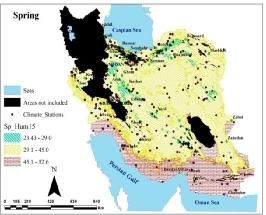
Golbabaei F, Heidari HR, Shamsipour AA

incidence of accidents, and decreased level of safety       basis and then predicts and reports the state of heat
in the workplace.4                                          stress using appropriate indicators.
    On the other hand, raising temperature induced              One of the most widely used experimental
by climate change and global warming can cause              indices is Humidex, which is a temperature and
increased rates of mortality and morbidity associated       humidity index, and was initially recommended for
with exposure to high ambient temperatures.5 Many           both outdoor and indoor environments. This index
countries experience heat-related mortality during          was originally developed in Canada and was one of
heatwaves throughout the summer.6 Additionally,             the thermal indicators used by the Meteorological
increase in ageing populations in high-income               Agency to determine the state of thermal stress and
countries and rapid urbanization in many low-               the presence or absence of thermal comfort in an area
income countries can exacerbate the health effects          to be used for public awareness.13
of hot weather for exposed people.7, 8 Some studies
                                                                Due to the conditions in Iran, which is mainly
performed on climate changes in Iran showed that this
                                                            located in the desert and semi-desert regions and
country would also be accompanied by an increase
                                                            experience hot summers in most parts of the country,
in temperature, particularly in the south and central
                                                            as well as the population of outdoor workers in this
regions in the decades to come.9 Climate changes and
                                                            country, which according to non-official reports
raising temperature can affect the outdoor workers
                                                            is estimated to be about three fold the number of
more. Outdoor workers are exposed to many types of
                                                            employees in indoor environments, this study aimed
hazards that depend on their type of work, geographic
                                                            to demonstrate a comprehensive view of the heat
region, season, and duration of time they work.
                                                            stress in Iran using the Humidex.
    For assessing the heat stress condition, a lot of
indices have been introduced in the last few decades,10     Methods
the use of which requires special equipment to
measure one or more environmental factors (dry              Climate Categorization
temperature, wet temperature, radiant temperature, air
velocity), occupational factors (estimation of thermal          According to the main aim of the study, which was
insulation of work clothes and work metabolism) and/        demonstrating a comprehensive view of heat stress
or physiological responses of the body to heat (core        situation in outdoor setting in Iran, different climates
body temperature, skin temperature, heart rate, weight      including hot and dry, hot and humid and temperate
loss due to sweating).5 In addition, the calculation of     regions with different intensity were selected. Climate
some of these indicators, such as the predicted heat        categorization was done based on DeMartonne climate
strain index (PHS) is long and complex and requires         classification after a few modifications for Iran.15
the use of a computer.6 In some of them, such as the        Therefore, nine different climates, as shown in Table
physiological strain index (PSI), the measurement           1, were considered for heat stress evaluation. The
process interferes with worker’s activities and is          climatic categorization was based on the prevailing
practically difficult to use in the workplace.7, 8 On the   weather in the hot seasons of the year and cold regions
other hand, the wet bulb globe temperature (WBGT)           were not included due to the nature of the research,
index, which is adopted as a standard and common            which involved the heat stresses. This categorization
index, has a relatively long measurement process and        was carried out aiming to generalize the results to all
its calculation depends on the globe temperature,           provinces of the country with the same weather.
which is not one of the common meteorological
                                                            Study Environments
parameters that are measured and recorded daily.11, 12
                                                                In this stage of the study, nine synoptic stations
    On the other hand, various studies showed that
                                                            from nine provinces of the country were selected
being aware of the risks and having the necessary
                                                            according to the climatic classification, so that each
training play an effective role in reducing exposure
                                                            province represented a climate in the country. Then,
to heat and preventing diseases and complications
                                                            one or more outdoor working environments at the
caused by heat.13, 14 Heat health warning systems that
                                                            closest distance to the selected meteorological stations
trigger community alerts and emergency actions in
                                                            were chosen for the study. The selected provinces and
response to forecasts of adverse weather conditions
                                                            outdoor workplaces are shown in Table 1.
can help the community to take protective measures
and avoid adverse health effects of excessive heat
                                                            Heat Stress Assessment Based on Humidex
exposures. Undoubtedly, one of the systems that
can play an important role in informing the public              To assess heat stress assessment, we used one of
and reducing heat hazards when heat waves occur             the most widely used empirical indices, Humidex or
is the Meteorological Organization. It can measure          HD index. This index is a temperature and humidity
atmospheric parameters affecting heat stress on a daily     index, which was initially recommended for both

128                                                               J Health Sci Surveillance Sys َApril 2021; Vol 9; No 2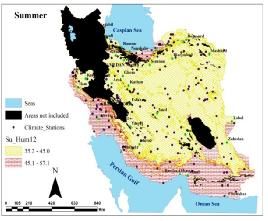
Heat stress in Iran Based on Humidex

Table 1: Description of the studied environments
Climate      Nominal category*                             Synoptic        Studied outdoor environments            Number of working
category                                                   stations                                                stations
1            Arid, cool and warm to very warm region Qom                   Open mine                               25
2            Semi arid, moderate and very warm region Ahvaz                Petrochemical products distribution     27
3            Semi arid, cool and warm region               Mashhad         Cement factory                          30
4            Arid, cool and warm region                    Kerman          Asphalt workplace                       30
5            Arid, cool and very warm region               Yazd            Railway maintenance                     24
6            Arid, moderate and very warm region           Bandarabbas Shipbuilding workplace                      27
7            Humid, cool and warm region                   Sari            Agricultural fields                     24
8            Semi Humid, cool and warm region              Gorgan          Construction workplace                  25
9            Post Humid, cool and warm region              Rasht           Municipal services                      30
*Cool in the nominal category is one of the properties of winter weather conditions, not necessarily spring and summer weather conditions
which is emphasized on in this study.

outdoor and indoor environments. This index was                         measurement data in this study and the data measured
definitively introduced in 1979 by Masterton and                        simultaneously in meteorological stations were
Richardson for correlating outdoor thermal discomfort                   calculated. After determining the appropriateness
of mild Canada’s areas.16                                               of correlation coefficients (r>0.87 for air temperature
                                                                        and r>0.84 for relative humidity in different stations),
    The value specified by this index indicates the
                                                                        only meteorological stations data were used to
average human sensation of heat from its environment
                                                                        generalize the results to climatic regions with similar
based on the combination of two parameters of
                                                                        temperature and humidity characteristics. For this
temperature and humidity. HD calculation is based
                                                                        purpose, Arc/GIS 10.2 software was used.
on a Thom’s index modification17 and it is expressed
through the merely empirical equations:                                     To generalize the studied stations to similar
                                                                        climatic regions in the country, we used the long-term
                                                       (Eq. 1)          data of each weather station (between 1965 and 2009).
                                                                        Then, the calculated values of HD for each station
                               ]×                       (Eq. 2)         were linked to similar climatic stations. The values
                                                                        of the indicator were categorized into the statistical
    where ta is the air temperature in Celsius, P is the                software media according to the proposed limits of
saturated vapor pressure of water in hPa, and RH is                     the index and then link to the climatic zoning of the
the relative humidity in percent.13                                     data in the GIS information layers.
    242 outdoor working stations from nine climatic                         Based on the proposed limits of the index,
regions including railway workers, farmers,                             three areas including safe or little discomfort
shipbuilding, steel, cement and asphalt industry,                       (20°C≤HD≤29°C), caution or some to great discomfort
etc. were evaluated in this investigation and                           (29.1°C≤HD≤45°C) and stress or dangerous limits
heat exposure of outdoor workers was assessed.                          (HD
Golbabaei F, Heidari HR, Shamsipour AA
Table 2: Mean and standard deviations (Mean±SD) of the measured environmental parameters in each synoptic station
Synoptic stations n* Spring Summer
ta (ºC) RH (%) ta (ºC) RH (%)
Qom 150 25.60±4.89 50.99±14.45 36.18±3.83 30.65±6.33
Ahvaz 162 31.14±3.80 51.34±10.23 39.56±5.13 35.90±10.44
Mashhad 180 30.95±3.81 40.94±5.98 33.39±3.76 46.00±8.10
Kerman 180 24.42±2.60 45.85±6.23 32.55±2.99 35.07±7.67
Yazd 144 37.45±2.50 34.78±4.78 37.19±4.29 32.39±6.16
Bandarabbas 162 35.45±2.81 60.66±7.71 38.40±2.42 61.73±9.93
Sari 144 19.52±2.75 75.71±9.73 31.23±3.26 65.01±10.05
Gorgan 150 27.42±2.06 54.32±9.88 33.64±3.02 63.97±8.29
Rasht 180 26.60±2.82 72.17±8.10 29.60±2.72 73.77±8.09
*
Number of working stations
Table 3: Mean and standard deviations (Mean±SD) of the Humidex in different times and synoptic stations
Synoptic stations Humidex (°C)
Time of day Spring Summer
Mean±SD Mean±SD
Qom 9 24.42±5.13 34.19±0.62
12 29.50±4.07 39.60±1.07
15 30.98±2.17 43.18±1.10
Ahvaz 9 34.54±1.80 40.39±2.45
12 38.46±4.35 47.76±2.59
15 40.24±4.93 52.06±4.16
Mashhad 9 29.51±4.11 35.92±0.91
12 36.91±2.22 39.54±4.11
15 36.42±2.02 43.57±1.97
Kerman 9 23.67±2.92 32.12±3.73
12 26.17±2.62 35.17±0.60
15 26.27±1.90 36.22±1.39
Yazd 9 39.64±1.21 34.03±1.29
12 43.79±1.69 40.75±1.56
15 44.26±3.45 49.29±2.13
Bandarabbas 9 45.38±1.39 53.27±0.55
12 48.16±0.44 56.68±1.97
15 53.11±3.05 57.71±1.65
Sari 9 22.77±1.63 36.68±1.90
12 22.95±3.65 42.99±0.83
15 24.24±3.82 44.95±0.48
Gorgan 9 31.34±1.61 41.66±2.89
12 32.58±0.63 48.04±3.68
15 34.48±0.44 48.60±0.80
Rasht 9 31.32±0.83 38.53±1.98
12 36.92±2.25 41.53±4.14
15 36.07±3.87 42.49±3.45
Test result df F P
One-way ANOVA between synoptic stations 8 383.86Heat stress in Iran Based on Humidex heat stress situations based on humidex indicated summer rather than the spring. Figure 1. illustrates significant differences between different synoptic the graphic maps of thermal stress situation in the stations as well as between different seasons (Spring country based on Humidex in spring and summer and Summer). As shown in Table 3, over time, from at different intervals of work shift. Thermal stress the beginning of the shift to the middle and end of the zoning was done based on the reference limits for shift, the humidex index increases. This means that the safe, caution and stress regions. Due to the nature of number of stations experiencing thermal discomfort research that involves the heat stresses, cold regions, increases over time, from the beginning to the middle which is showed by yellow color in maps, were not and end of the shift. This situation was worst in included in this study. Figure 1: Graphic maps of thermal stress situation in the country based on Humidex in spring (three maps on the right) and summer (three maps on the left) at 9, 12 and 15 o’clock. J Health Sci Surveillance Sys April 2021; Vol 9; No 2 131
Golbabaei F, Heidari HR, Shamsipour AA

Discussion                                                     spring and summer, respectively. Based on the mean
                                                               values of the index, only 25% of all measurements in
This study aimed to present a general view of thermal          different stations and time periods at spring were in
stress situations in warm seasons in different climates        safe condition. In addition, none of the measurements
of Iran. This assessment was performed based on the            was in safe condition at summer.
very common temperature- humidity index, Humidex,                  In a study using the UTCI index, the state of heat
indicating thermal stress situation in three levels of safe,   stress in the south and north of Iran was compared.
caution and stress areas. Many studies used metrological-      The findings showed that the southern coast of the
based indices to offer a comprehensive view of thermal         country had moderate to very severe heat stress for
conditions worldwide.14, 18-20 For example, thermo-            at least 6 months of the year, so that in August the
hygrometric index, THI, was used to assess heat stress         UTCI was recorded at 48, which indicates very severe
by estimation from the daily weather data. It has been         heat stress.22 However, in the north of the country,
observed that 72.99% days of summer months have                especially in the northwest and northeast, not only
discomfort scores ranging from 3 to 5. The number of           is there no heat stress, but also about 8 months of the
stress events was high in the month of May (59.37%).18         year cold stress is seen in these areas. These findings
Thermal indices such as humidex, which is calculated           confirmed the results presented in our research. The
only using recorded daily metrological parameters, have        safe conditions at spring were observed in Sari station
the advantage that they can be reported daily along            (the humid, cool and warm region in north of Iran),
with other atmospheric parameters. This can warn the           Kerman (the arid, cool and warm region in lower half
exposed people (occupational or public populations)            of central Iran) and the early hours of work day in
to take protective measures and keep themselves                Qom (the arid, cool and warm to very warm region
healthy. Heidari et al. showed that humidex could be           in the center of Iran). On the other hand, 74% of all
used as a substitute for WBGT in evaluating of outdoor         measurements in different stations and time periods
environments and had a good consistency with tympanic          at spring were in caution condition and less than
temperature of the exposed persons to heat.21                  1% of them experienced stress conditions at spring.
    Based on the results presented in maps of Figure           These values were about 70% and 30 % at summer
1, the center and south of the country experience the          for caution and stress situations, respectively. The
maximum thermal stress in summer months, so that               results of a similar study using Wet Bulb Globe
in no part of the country there are safe conditions; in        Temperature (WBGT) index in different areas of
contrast, most of them have experienced cautious or            Iran yielded similar results.15 In another study, which
stressful conditions, especially in the middle to the          investigated the trend of temperature changes in
end of the work shift. This condition was worst in             the coming decades with emphasis on heat stress
Ahvaz, Yazd and Bandarabbas stations (Table 1). In             in outdoor environments of Iran, it was found that
one comprehensive investigation performed in Iran,             the lowest WBGT index equal to 17.50±0.99°C was
the whole country was assessed to create climatic              related to the early morning hours (at spring and in
classification based on Tourism Climate Index                  the northern regions of the country) and the maximum
(TCI). The results show that with the exception of             values was equal to 35.10±0.55°C related to noon and
the Northwest Territories (the areas which are not             evening hours (at summer and in the southern regions
included in our research because it was assumed                of the country). In addition, it was found that most of
these areas were never involved with heat stress and           the areas affected by climate change were the central
probability of their placement in heat stress region           and southern regions of the country, and in 2075 the
was almost negligible) and in parts of the Northeast,          highest temperature increase was expected in most
which has favorable status in the summer, almost               parts of the country.23
in the entire country inappropriate conditions can                 Therefore, considering rising temperature in
be seen.19 Therefore, in non-occupational outdoor              the future over the entire of the country, especially
environments such as pleasure places, sports fields            Southern and Central regions, which is reported in
and so on, the heat stress is also the issue which             many studies,23-26 and humidex values obtained in this
should be paid more attention regarding the rising             study, it can be concluded that heat stress situation will
temperature in the future to take control measures.            be worse in future decades.
These findings are in tandem with the results of the
present study. More intense heat stress can be seen in              There are desert and very hot areas with long hours
the South (the cities of Bandarabbas and Ahvaz) and            of radiation of the sun in the center of Iran15. Moisture
Centre (the cities of Yazd and Qom) of the country.            is low in these areas and in some parts it is so low that,
In Southern regions such as Bandarabbas and Ahvaz,             as shown in Table 2, the moisture level is as low as
the humidex values during middle and end of work               30 to 40% at summer for nearly 44% of the studied
shift were determined ranging from 38.46±4.35°C to             stations. The southern areas of the country which
53.11±3.05°C, and 47.76±2.59°C to 57.71±1.65°C for the         have a desert climate and are very hot, due to the

132                                                                  J Health Sci Surveillance Sys َApril 2021; Vol 9; No 2
Heat stress in Iran Based on Humidex
vicinity of the Oman sea and the Persian Gulf, not only It should be noted that the values provided for
experience very high air temperature (38.40±2.42°C), thermal indicators are usually provided for healthy,
but also have high relative humidity (61.73±9.93%). young, and heat-acclimatized individuals, while
The combined effect of these two environmental many exposures in the workplace may involve
factors plays a vital role in heat stress incidence and people with different age groups, history of illness
discomfort in these areas. As the geographical maps and non-acclimatized. In addition, working in hot
show, throughout these areas heat stress exposure environments when accompanied with raising work
exists throughout shift hours in hot months, so that load, for example in the heavy works, or raising
the minimum and maximum average of humidex was the amount of thermal insulation, as well as having
obtained to be 34.54±1.80°C (in the case of Ahvaz, protective devices, can impose extra heat load on the
9:00 am, at spring) and 57.71±1.65°C (in the case of human body.
Bandarabbas, 3:00 pm, at summer), respectively. It
means that the minimum and maximum values of the Conclusion
index at summer (32.12±3.73°C for Kerman station
at 9.00 am and 57.71±1.65°C for Bandarabbas station The dependence of this index to the minimum
at 3.00 pm, respectively are nearly 3°C higher than metrological parameters (temperature and humidity),
the maximum limits of the Index defined for the safe which are all easily measured and reported daily in
conditions and nearly 12°C higher than the ones for meteorological stations, and its non-dependence on the
the caution conditions. globe temperature, which is an unusual parameter in
Since the air temperature in these regions is usually the measured metrological parameters have led to the
higher than the normal skin temperature (33°C‑35°C), expansion of the use of this index. The center and south
the body usually absorbs heat through convection and of the country areas experience more thermal stress in
radiation. Since the body cannot lose adequate heat summer months than other parts of the country. Most of
through convection and radiation, the only way to the measurements in different stations and time periods
dispose of the body heat is evaporation of sweat from at spring are in caution condition and less than 1% of
the skin surface.27 On the other hand, because of high them experience stress conditions at spring. Therefore,
humidity, in such conditions, the efficiency of heat with regard to these findings and the fact that outdoor
loss through evaporation is reduced. Thus, neglecting works in Iran are less organized and health supervision
the optimization of working conditions, work-rest such as provision of plenty of cool and healthy water,
cycles and provision of cool and healthy water can regular work and rest cycles, and proper shelter to rest
introduce major problems to workers which may may not be sufficient for them; thermal stress status can
lead to unbearable working conditions. Considering be more troublesome and will require special attention.
thermal insulation and moisture permeability of the
clothes required for proper heat exchange, heat stress Funding
will be aggravated if inappropriate characteristics of
clothes such as material, thickness, color and so on This research has been sponsored by Institute for
relating to weather conditions are to be used. Environmental Research of Tehran University of
Medical Sciences. (Grant No. 22837).
Moreover, in the northern regions of the country
(e.g. Sari and Rasht) due to the vicinity to the Caspian Acknowledgements
Sea on the one hand, and the existence of the Alborz
Mountains with a little distance from the sea on
This research has been sponsored by Institute for
the other hand, there are highly humid conditions
Environmental Research of Tehran University of Medical
(more than 70% in spring and summer). However,
Sciences. The authors would like to highly appreciate
fortunately, in the spring due to the relatively low
the university cooperation and the Environmental and
average air temperature (19.52±2.75 for Sari and
Occupational Health Center (EOHC) as well as Iran
26.60±2.82 for Rasht station), heat stress usually
meteorological organization for the provision of required
cannot be seen even in the middle and final hours of
data.
work shift. The situation will change in the summer
when warming air is combined with high humidity.
Conflict of Interest: None declared.
Therefore, as shown in Table 3, in the middle and
final hours of work shift, the humidex values are put
References
in caution or some to great discomfort area. This is
the case which has been well illustrated in maps of
1 Dehghan H, Mortazavi SB, Jafari MJ, Maracy MR.
Figure 1. This is compatible with the results of heat Cardiac strain between normal weight and overweight
stress assessment based on WBGT index throughout workers in hot/humid weather in the Persian Gulf.
the country15 and study of heat stress among farmers International journal of preventive medicine.
in the north of Iran.28 2013;4(10):1147.
J Health Sci Surveillance Sys April 2021; Vol 9; No 2 133Golbabaei F, Heidari HR, Shamsipour AA
2 Azmoon H, Dehghan H, Akbari J, Souri S. The heat stress in IRAN. Journal of Environmental Health
relationship between thermal comfort and light Science and Engineering. 2015;13(1):48.
intensity with sleep quality and eye tiredness in shift
16 Masterton JM, Richardson F. Humidex: a method of
work nurses. Journal of environmental and public
quantifying human discomfort due to excessive heat
health. 2013;2013.
and humidity: Environment Canada, Atmospheric
3 Kjellstrom T, Gabrysch S, Lemke B, Dear K. The Environment; 1979.
‘Hothaps’ programme for assessing climate change
17 Thom EC. The discomfort index. Weatherwise.
impacts on occupational health and productivity: an
1959;12(2):57-61.
invitation to carry out field studies. Global health
action. 2009;2(1):2082. 18 Bhattacharya R, Pal S, Biswas G, Karmakar S, Banik
R. An estimation of heat stress in tropics. Int J Eng Sci
4 Morabito M, Cecchi L, Crisci A, Modesti PA, Orlandini
Tech. 2012;4(10):4302-7.
S. Relationship between work-related accidents and hot
weather conditions in Tuscany (central Italy). Industrial 19 Farajzadeh M, Ahmad AA. Assessment and zoning of
health. 2006;44(3):458-64. tourism climate of Iran using tourism climate index
(TCI). 2010; 42 (71):4.
5 Dehghan H, Mortazavi SB, Jafari MJ, Maracy MR,
Jahangiri M. The evaluation of heat stress through 20 Thorsson S, Lindberg F, Björklund J, Holmer B, Rayner
monitoring environmental factors and physiological D. Potential changes in outdoor thermal comfort
responses in melting and casting industries workers. conditions in Gothenburg, Sweden due to climate
International Journal of Environmental Health change: the influence of urban geometry. International
Engineering. 2012;1(1):21. Journal of Climatology. 2011;31(2):324-35.
6 Parsons K, Bethea D. The development of a practical 21 Heidari H, Golbabaei F , Arsang Jang S , Shamsipour
heat stress assessment methodology for use in UK A. Validations of humidex in evaluating heat stress in
industry. Res Rep. 2002;8:20-5. outdoor jobs in arid and semi- arid climates of Iran.
Journal of health and safety at work. 2016;6(3):29-42.
7 Budd GM. Wet-bulb globe temperature (WBGT)—
its history and its limitations. Journal of Science and 22 Baaghideh M, Shakeri F, Mayvaneh F. Comparative
Medicine in Sport. 2008;11(1):20-32. Study of Thermal Stress on North and South Coasts of
Iran. J Health Res Commun. 2017; 3 (3) :1-11.
8 Gunga H-C, Sandsund M, Reinertsen RE, Sattler
F, Koch J. A non-invasive device to continuously 23 Heidari H, Golbabaei F, Shamsipour A, Rahimi-
determine heat strain in humans. Journal of Thermal Forushani A. Occupational Heat Stress in Outdoor
Biology. 2008;33(5):297-307. Settings Considering the Regional Climate Change in
the Future Decades in Iran. Iran Occupational Health.
9 Masuodian S. Investigation of Iran temperature at past
2019;16(2):33-47.
half-century. Geogr Res. 2005;54:29-45.
24 Rahimi J, Malekian A, Khalili A. Climate change impacts
10 Epstein Y, Moran DS. Thermal comfort and the heat
in Iran: assessing our current knowledge. Theoretical
stress indices. Industrial health. 2006;44(3):388-98.
and Applied Climatology. 2019;135(1-2):545-64.
11 Heidari H, Golbabaei F, Shamsipour A, Rahimi
25 Sharafi S, Karim NM. Investigating trend changes of
Forushani A, Gaeini A. The cut-off point for tympanic
annual mean temperature and precipitation in Iran.
temperature as a heat strain index for evaluation of
Arabian Journal of Geosciences. 2020;13(16):1-11.
outdoor workers: a field study. International journal of
occupational safety and ergonomics. 2018;24(2):224-32. 26 Abbasi F, Asmari M. Forecasting and assessment of
climate change over Iran during future decades by
12 Parsons K. Heat stress standard ISO 7243 and its global
using MAGICC-SCENGEN model. 2011.25 (1): 70-83
application. Industrial health. 2006;44(3):368-79.
27 Heidari H, Golbabaei F, Shamsipour A, Forushani
13 Alfano FRdA, Palella BI, Riccio G. Thermal
AR, Gaeini A. Consistency between sweat rate and
Environment Assessment Reliability Using
wet bulb globe temperature for the assessment of heat
Temperature―Humidity Indices. Industrial health.
stress of people working outdoor in arid and semi-arid
2010:1008190028-.
regions. The International Journal of Occupational and
14 Heidari H, Golbabaei F, Shamsipour A. Determination Environmental Medicine. 2018;9(1):1.
of air enthalpy based on meteorological data as an
28 Heidari H, Golbabaei F, Shamsipour A, Rahimi-
indicator for heat stress assessment in occupational
Forushani A, Gaeini A. Evaluation of heat stress
outdoor environments, a field study in Iran. Journal of
among farmers using Environmenta l and biological
research in health sciences. 2016;16(3):133.
monitoring: a study in north of Iran. International
15 Heidari H, Golbabaei F, Shamsipour A, Forushani AR, Journal of Occupational Hygiene. 2015;7(1):1-9.
Gaeini A. Outdoor occupational environments and
134 J Health Sci Surveillance Sys َApril 2021; Vol 9; No 2You can also read


