Otago LOOKING AFTER NZ FAMILIES COMPUTER SCIENCE'S EXTRAORDINARY SUCCESS CILLA MCQUEEN'S LOVE OF LANGUAGE THE GEOLOGY MUSEUM - University of Otago
←
→
Page content transcription
If your browser does not render page correctly, please read the page content below
Otago
                                 U NI V E R S I T Y   O F

   m     a    g    a     z   i   n     e
   ISSUE 23: JUNE 2009

LOOKING AFTER NZ FAMILIES
COMPUTER SCIENCE’S
EXTRAORDINARY SUCCESS
CILLA MCQUEEN’S LOVE
OF LANGUAGE
THE GEOLOGY MUSEUM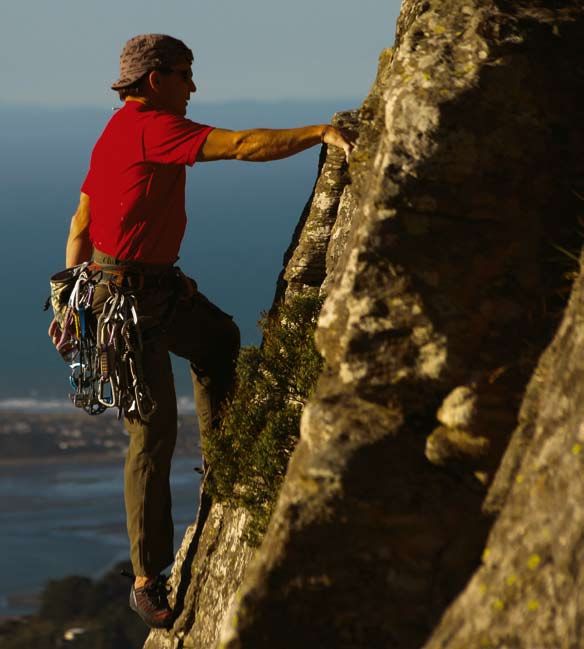
ExEcutivE Education

                                                                    The truly wise never cease to
                                                                         learn, adapt & evolve …

    uPcoMinG ExEcutivE Education couRSES:
    • Competitive Strategy – July 2009
    • Finance for Non-Financial Managers – August 2009
    • Project Management – September 2009
    • Corporate Sustainability – October 2009            All course fees include tuition, materials
    • Labour Negotiations – October 2009                 and 5 nights accommodation at the
                                                         University of Otago Executive Residence.
    • International Business Week 2009 – November 2009
    • Marketing Management – November 2009               www.otago.ac.nz/execeducation

2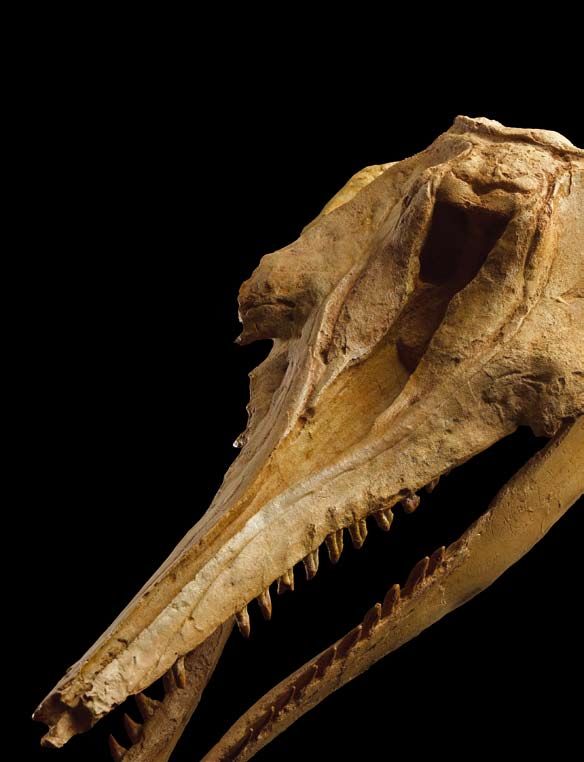
C O N T EN T S

    m a g a z i n e            U NI V E R S I T Y O F O T AG O

                 5                                                     28
  Vice-Chancellor’s comment                                           Opinion
                                                           Professor Andrew Bradstock on
                 6                       6
                                                             theology and public issues
            Family unit
   Otago’s new Centre for Research                                     30
      on Children and Families                                        InBrief
                                                                 Academic highlights
               10
 25 years of Computer Science
                                         10                            36
  A time of enormous change and                                      UniNews
       extraordinary success
                                                                       37
               17                                                  UniClippings
     Developing research
  Building health research capacity
      in the developing world
                                         17                            39
                                                                  Hocken legacy

               20                                                      40
       A voice of one’s own                                            Books
Otago poet and alumna Cilla McQueen
                                         20
               22                                                      42
                                                                   Alumni news
          True calling
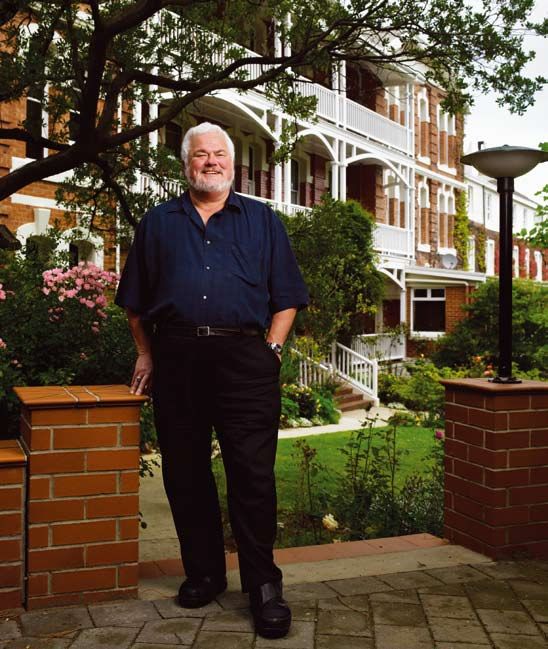
 Reverend Dr Peter Norris celebrates
      20 years at St Margaret’s                                        49
                                                            Whatever happened to …

               25                        22                   The Geology Museum

    To the ends of the earth
  Dr Eric Monasterio’s trek to raise
   awareness of bipolar disorder

                                         28

                                        23
                                       ISSUE NUMBER

                                                                                           3
TOTALLY WIRED
The Intelligent Choice for the Quality Conscious
University of Otago Magazine
A magazine for alumni and friends of the University of Otago
the well tempered turntable Issue 23 ~ June 2009
ISSN - 1175-8147
Whether you’re already a vinyl enthusiast or
joining the revival, you’ll find a wide range of EDITOR Karen Hogg
turntable options at Totally Wired. From the
DESIGNER Peter Scott
European made Project and Thorens models
starting at under $600 to the Well Tempered CONTRIBUTING WRITERS Simon Ancell
‘Amadeus’ – an exquisite example of lateral Andrew Bradstock
thinking and precision engineering. Elizabeth Lukeman
Grant McIvor
networks
Michael Metzger
Nicola Mutch
Rose Newburn
Ainslie Talbot
The new Tivoli NetWorks Global radio brings you
Rebecca Tansley
over 20,000 crystal-clear stations and podcasts
Mark Wright
from anywhere in the world. All it needs is a Nigel Zega
broadband connection, which can be wireless.
It’s also the best sounding FM radio and you can Ross Coombes
PHOTOGRAPHY
connect your iPod as well. NetWorks is capable Alan Dove
of streaming sound around the house and has a Ken George
second speaker option for stereo. Being the size Bill Nichol
of a bookshelf speaker the sound is wonderfully Graham Warman
rich. The remote controlled menus are easy to use
COVER Replica of the jaws of the extinct
and NetWorks looks gorgeous in Walnut, Cherry
dolphin Waipatia maerewhenua, found
or Wenge finishes, $995. in limestone in North Otago, and on
display at the University’s Geology
perreaux
Museum. The original is on loan to the
Otago Museum.
Photo: Bill Nichol
Perreaux are New Zealand’s most famous and ADVERTISING Ryan Helliwell
long established audio company. Now based in
Dunedin, they design and build some of the most PRINTING APN Print
advanced and powerful audio amplifiers in the CIRCULATION Office of Development and Alumni
world. From the ultra compact and affordable Relations
Sillhouette series through to the brand new
éloquence integrated amplifiers, there will be a
model that suits you perfectly. To update or change delivery address
Telephone 0800 80 80 98
Email magazine@otago.ac.nz
www.totallywired.co.nz Web www.otago.ac.nz/alumni/changedetails
Editorial contact details
VISIT Totally Wired in Dunedin’s historic Stuart Street Terrace Houses. University of Otago Magazine
EXPLORE our web site. CALL or email us for information. Marketing and Communications
PO Box 56
Dunedin
John Ransley BSc (Hons) Otago and Sharon Guytonbeck BA Otago.
New Zealand
Totally Wired Ltd. Telephone 64 3 479 8679
The Terrace Houses Fax 64 3 479 5417
217 Stuart Street, DUNEDIN
email info@totallywired.co.nz Email mag.editor@otago.ac.nz
www.totallywired.co.nz Web www.otago.ac.nz/otagomagazine
Phone (+64) 3 479 0444
NZ Toll Free 0800 909 101
Totally Wired support the World Wide Fund for Nature.
Choices made today will determine the future.
Become design conscious, consume less and help protect the environment. Copyright
Photo courtesy of Will Rayment©
You are welcome to reproduce material from the magazine after gaining permission from the editor.
All reproduced material must be appropriately acknowledged.
The University of Otago Magazine is published by the Marketing and Communications Division of
the University. The opinions expressed are not necessarily those of the University.
4
V I C E - C H AN C E L L O R ’ S C O MMEN T

   For nearly three years, Dunedin has been torn apart                 after Melbourne’s Telstra stadium, the second largest in
by controversy about whether to replace Carisbrook with                the southern hemisphere.
a multi-purpose covered stadium next to the University                     The University will be a key partner in this
campus on Anzac Avenue. While some people with long                    development, constructing its own buildings as part of
memories feel an atavistic sense of loyalty for Carisbrook,            the stadium complex. The buildings will open on to an
anyone who has used the place recently knows that it                   urban space to be known as the University Plaza. Our
has become embarrassingly outdated. Even to retain                     buildings will provide the campus centre for student
the present low level of use would have required an                    fitness, health and recreation, as well as educational and
upgrade costing ratepayers tens of millions of dollars.                research facilities. This plan replaces an earlier proposal
The proposed new stadium offers many exciting                          for a large multi-purpose building to be squeezed into
opportunities, but the Dunedin City Council and the                    the existing campus, to provide accommodation urgently
Otago Regional Council first had to decide whether such                needed under our Critical Space Plan.
a community facility was affordable.                                       The new buildings and the public plaza should form
   That decision has now been taken, and excavations                   a busy and attractive campus hub. The decision to build
have started to prepare for construction of a stadium that             the stadium, however, carries far greater significance
should be ready before the 2011 Rugby World Cup. The                   than any enhancements to our Dunedin campus.
stadium will have many uses beyond rugby, or even other                Successful research universities are virtually always based
sporting events. Consider, for example, the opportunity                in, or near to, vibrant cities with strong economic activity.
for large concerts in a fully enclosed venue that will                 In the face of determined and vitriolic opposition, our
take New Zealand’s fickle weather out of the equation –                political leaders have confirmed their ambition for the
with over 20,000 young people living nearby. This new                  future of Dunedin as a vibrant university city.
campus stadium will be unique in New Zealand and,

                                     Professor David Skegg Vice-Chancellor – University of Otago

                                                                                                                                       5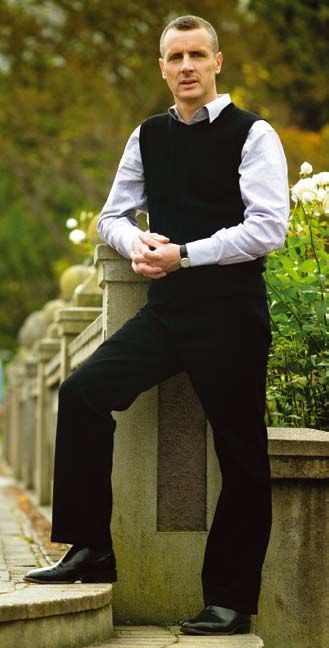
F EAT U R E

                                   Family unit
             T h e n e w C e nt r e fo r R e s e a r ch on C hi l d r e n and Fa m i l i e s
             continu e s O tag o’ s co m m it m e nt to chi l d d e v e l o p m e nt
                   and th e w e l l - b e in g of fa m i l i e s in this count r y.

         A five-year-old boy spills some milk. His parents               family unit to be under threat and, especially, where they
         yell at him, tell him not to do it again. The parents argue     see themselves as having caused the conflict.”
         loudly. Sometime later he repeats the mistake, spills milk          Harold adds that not quarrelling is not always the
         once more. His parents scold him. Then they announce they       solution: parents giving each other the silent treatment can
         are breaking up.                                                be just as bad. “Children generally know there’s something
            This was the tale that unfolded during a family interview,   wrong. It’s the emotional resources required to deal with
         part of a research project conducted at Iowa State University   the situation that is taxing to the child. Not speaking can
         in the 1990s and being observed by then graduate student        have negative effects for some children in the same way that
         Gordon Harold. In the mind of a troubled little boy, one        frequent and intense shouting can have for other children.”
         event had led to the other. His clumsiness had caused his           The priority Otago has long placed on studies in
         family to fall apart.                                           children’s well-being saw the establishment of the Children’s
            While Harold’s heart melted, his scientific mind planned     Issues Centre in 1995. Led by Professor Anne Smith until
         action. What effect, he wanted to know, does parents’           she retired in 2006, the centre developed an international
         arguing have on children? Or rather, how does adults’           reputation for research, ranging from children’s experiences
         management of conflict in their personal relationships          of the Family Court to the quality of early childhood
         affect children’s developing brains and, in particular,         education in New Zealand.
         how do these experiences affect children’s long-term                Now, the newly-established Centre for Research on
         development? It’s a research theme that’s stayed with him,      Children and Families has become the University’s latest
         in one form or another, for the rest of his career.             commitment to understanding ingredients of a happy
             Now, as the newly-appointed Alexander McMillan              childhood and also positive family life. Led by the chair, a
         Professor of Childhood Studies and Director of Otago’s          position created through the Leading Thinkers Initiative
         Centre for Research on Children and Families, Harold            and a $1.4 million donation from the Alexander McMillan
         explains it’s not the arguing, it’s how we’re arguing that      Trust, the centre is directed toward “conducting world-class
         matters.                                                        research aimed at informing practice and policy in the areas
           “Conflict is normal. It is not unhealthy for children to      of child development and family well-being”.
         understand that their parents may disagree, sometimes               For Harold, who also holds a personal appointment as a
         strongly. Where the reasons for the quarrel are understood      professor in the Department of Psychology, the centre will
         by the child and don’t threaten the child, they can usually     become home for his continuing interest in “the family as a
         cope pretty well.”                                              context for examining processes that underlie differences in
            What should be avoided, however, is conflict that is         children’s normal and abnormal emotional and behavioural
         frequent, intense and poorly resolved. “In particular,          development”. He sees scope for studies “specifically in
         children are very sensitive to whether they perceive the        relation to promoting understanding among practitioners,

6
policy-makers, welfare professionals,
 educators and, most importantly, parents
 as to ‘what hurts’ and ‘what helps’ children
 develop normally across all ages”.
     He holds an ongoing fascination with
 research methodologies that enable the
 respective role of genes and the environment
– nature and nurture, if you will – to be
 examined in a way that “overcomes some of
 the limitations inherent in more traditional
 research designs”.
     Harold is presently involved in several
 ongoing longitudinal projects looking at
 issues including the interplay between
 genetic and family environmental factors on
 children’s mental health, the early origins
 of childhood aggression and disruptive
 behaviour disorders, the long-term impact of
 domestic violence on children’s psychological
 development, and the implementation of
 effective intervention programmes aimed at
 assisting children in the context of parental
 separation and divorce.
     Building on this research platform, he is
 committed to creating a postgraduate and
 postdoctoral training forum that would
 ensure “the next generation of international
 calibre researchers within New Zealand”.
And he refers to the rich community of
 researchers already at the University working
 on topics of relevance to children and
 families in disciplines including psychology,
 law, education, sociology, social work,
 paediatrics and medicine as well as groups
 such as the Dunedin Multidisciplinary
 Health and Development Research Unit, the
 Christchurch Health and Development Study
 and the newly-established National Centre
 for Lifecourse Research.
    “Building links across these areas and
 research groups constitutes immense
 opportunity to promote the study of children
 and families in New Zealand,” Harold says.

                  Professor Gordon Harold:
  “Genuine opportunity is at hand to create
                                                 Photo: Alan Dove

     a bridge between research and its real-
   world applications that promote welfare
        and well-being among New Zealand
                     children and families.”

                                                                    7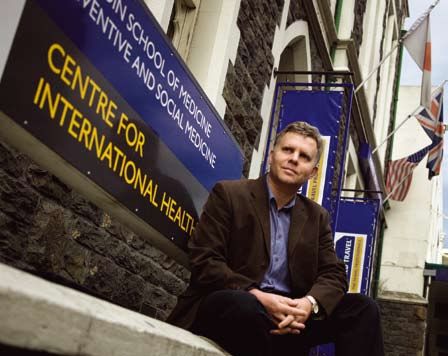
“In so doing, genuine opportunity is at hand to create a         moved to the University of Otago later the same year to take
     bridge between research and its real-world applications         up his position as holder of the Alexander McMillan Chair.
     that promote welfare and well-being among New Zealand               His studies have left him convinced of an important way
     children and families.”                                         to improve children’s lives and put them on a path to well-
        Today’s children are tomorrow’s adults, he points            adjusted adulthood: “Invest in the parents’ relationship”.
     out. “If we take a lifecourse approach to the study of well-        He cites a Cardiff study that looked at how to improve
     being, we know that many of our adult qualities – our           family relationships and household harmony. While one
     ability to communicate effectively, participate in successful   group of families undertook steps designed to focus on the
     relationships, enjoy a positive worldview – may be sourced      relationship between parents and their children, another
     in childhood. Rather than starting with adults and looking      group concentrated on ways to improve the interaction
     back, our task is to understand what is happening with          between couples (parents).
     children’s developing minds and personalities as they              “What we found was that where the couple’s relationship
     process life’s events. What sends children on different         was nurtured, the benefits were long-lasting for the whole
     trajectories? Why do some children cope well with               family. Where the parents focused on their children, the
     challenges, such as parental divorce, while other children      benefits for the children were present, but short-lived, and
     develop long-term, serious emotional and behavioural            the normal pattern of family tensions resumed quite quickly.”
     problems as a result? This is the type of fundamental               But clever studies have never been enough for Harold.
     question that research at the centre will address.”             His determination is to forge strong links between evidence-
        Born in Dublin (and, incidentally, attending the             based research and real outcomes in children’s lives. His
     same school as Thomas Barnardo, founder of Barnardo’s           record for doing so is impressive.
     Children’s Charity), Harold describes himself as having             His work has directly informed the United Kingdom’s
     been raised in the whanau-like, clan model of Irish             latest Domestic Violence Policy Framework Document. He
     family life. “Virtually every adult in the community saw        has also developed a risk-assessment instrument aimed
     themselves as being able to tell you off if you did anything    at allowing Family Court practitioners to assess the
     naughty.”                                                       psychological impacts of witnessing inter-parental conflict
        A talented middle-distance runner, he originally             and violence on children. Commissioned by the Children
     travelled to the United States on an athletic scholarship,      and Family Court Advisory Support Service in Wales
     with the intent of returning to Dublin to study history at      (funded by the Welsh Assembly Government), the approach
     university. Instead, his career took a different course as he   is presently being used in Family Courts across Wales, with
     was introduced to the scientific discipline of psychology at    the possible extension to family justice applications in New
     Iowa State University. There, he commenced postgraduate         Zealand.
     study at the Institute for Social and Behavioral Research           The Family Court work is very promising, admits Harold,
     working on a landmark study known as the Iowa Youth             but he thinks the value of such a risk assessment tool could
     and Families Project, examining the impact of economic          go further still. “Child protection services have systems
     pressure on families and children.                              designed to pick up indications of physical abuse. What
        He moved to Cardiff University in Wales in 1995, where       about children who are at risk of psychological damage?
     he completed his PhD and was appointed lecturer in                 “The WHO predicts depression will become the world’s
     psychology in 1998 and professor of psychology in 2008. He      second greatest cause of a loss of Disability Adjusted Life

          “The term ‘family’ carries a lot of currency in New Zealand …
          The very fact there is a Families Commission signals that the
          family is a highly valued entity … Couple this with the recent
          appointment of a new Children’s Commissioner and things
          look very promising indeed.”

8
Years (DALYs) by 2020, highlighting the significance of             What the very real interest and concern expressed about
 mental health to overall global quality of life in future years.    this most challenging aspect of parenting says to me is
 We know the conditions for depression can be set up in              that the conditions are right for a good public discussion
 childhood. The right support at the right time can change           about effective, non-violent ways of managing children’s
 a life.”                                                            behaviour.”
     These successes in achieving real-world outcomes                    Is New Zealand a good place to bring up kids? Given
 conceal another story, however, which is of the difficulty          his professional interest and credentials, we can perhaps
 and, sometimes, sheer luck involved in having research              be reassured by the fact that Harold, a father of two young
 acknowledged, much less acted upon, by relevant decision-           boys, has voted with his shipping container.
 makers.                                                                “The most important thing for children is a secure
     He contrasts this challenge for any applied researcher          environment. This means being able to experience freedom
 with the invitation, soon after he arrived in New Zealand,          while feeling safe. This is possible in New Zealand. When I
 to meet with relevant policy-makers in Wellington,                  was offered this job, aside from the outstanding professional
 facilitated by the Families Commission. “You can spend              opportunity, we knew we couldn’t pass up the chance to
 years trying to get an audience with the appropriate                provide the quality of life that is still attainable for children
 minister or policy-making office in the United Kingdom.            – and parents – in New Zealand.”
 My very first lecture in New Zealand, aimed at an academic              For all New Zealanders’ anxieties that children today
 audience, was attended by our electorate MP Pete Hodgson;           lack time, space and independence, he calls for perspective.
 that speaks very favourably of the level of commitment             “Imagine these concerns multiplied exponentially and you’ve
 evidenced by politicians and policy-makers in relation              got life for children in other parts of the world.”
 to matters that pertain to children and families in New                 And he reflects also on a study of UK families and
 Zealand.”                                                           children he conducted. “When asked ‘what have you
     These are the experiences that have left Harold with            learned by taking part in this project?’, a parent commented
 the heady feeling that, through the research programme              that participation had allowed her to conclude that they
 being established at the University of Otago, it might just be      were a ‘normal’ family.”
 possible to make a difference here.                                     The comment signals an important starting point for
    “The term ‘family’ carries a lot of currency in New              those committed to ensuring future generations benefit
 Zealand,” he comments. “That has been very apparent to              from having had a good start in life, he says.
 me. The very fact there is a Families Commission signals                When working with parents, educators, practitioners and
 that the family is a highly valued entity and I find that very      policy-makers, highlighting what helps children is as much
 encouraging. Couple this with the recent appointment                a priority as focusing on what hurts them.
 of a new Children’s Commissioner and things look very                  “Most parents do an excellent job at raising their
 promising indeed.”                                                  children and most children contend well with the
     This impression was reinforced by the family-issues             everyday challenges of family life,” believes Harold. “It
 packed news agenda during Harold’s first few months                 is understanding when parents and children may benefit
 in New Zealand. He arrived amid the fall-out from the               from support, which support works best for particular
 repeal of Section 59, closing parents’ legal defence against        individuals and families and how best to deliver that
 disciplining their children through force, and during the           support that should be a primary focus of contemporary
 nationwide cries of grief, anger and disbelief at the cruelty       research in this area.”
 inflicted on Rotorua toddler Nia Glassie.                               For researchers, as for children, a good environment is
     Child welfare was “certainly on the front pages”,               part of healthy growth. At Otago, says Harold, he’s pleased
 acknowledges Harold, adding that he was “impressed that             to be in the right position to pursue these questions.
 New Zealanders appear to care enough to have the debates”.             “Generating and disseminating high-quality research
     But he noted that the polarities engendered by the              on these matters is what the newly established Alexander
“smacking debate” may have obscured deeper issues. “Does             McMillan Chair and the research programme has been
 smacking a child inevitably cause long-term harm? Probably          established to facilitate. It’s an exciting and privileged
 not. Is that a reason to do it? No.”                                situation to be in.”
     The real issue, believes Harold, is around discipline.
“Parents have a responsibility to discipline their children.        Nicola Mutch
 Those who do smack their kids usually regret doing so.

                                                                                                                                         9
F EAT U R E

                   Dr Brendan McCane: “Technology has changed – but the
                                                                                  Photo: Alan Dove

                   fundamentals have not. The theory of computer science –
                   questions like how long is it going to take to complete this
                   computation and is there a better way of doing it? – changes
                   only slowly.”

10
Computer Science
25 years on
a r e l ativ e ly youn g d e pa rt m e nt, C o m p ut e r S ci e nc e has
s e e n e no r m ous chan g e and e x t r ao r dina r y succ e ss .
As Computer Science celebrates its first 25 years Possibly the greatest challenge faced by this young
at the University of Otago, staff can look back on a roller- department was an unprecedented worldwide surge in
coaster ride driven by technological changes that were student numbers. Computer science enrolments at Otago
unimaginable when the department began. doubled between the mid 1990s and 2004, a year that saw
They can also reflect on an enviable record of successful a record 86 students graduating. Then numbers fell rapidly
research, often linked with the progress of high-flying until stabilising last year.
graduates. Current Head of Department Dr Brendan McCane joined
Now, as the discipline settles down into some kind of the University as a lecturer as numbers started to skyrocket.
normality, if not predictability, it’s a good time to take stock “Neither position was comfortable,” he says. “We either
of what happened and plan for steady growth. had too little space and too few staff, or we had too many
A new world Butcher can take credit for that, too, being responsible
Chris Butcher graduated in computer science at 16, gained for the online multiplayer facility for Halo 2 and 3 on Xbox
his MSc at Otago at 18, and was diverted from his PhD to Live.
the US to help create one of the most popular video games “Halo was the first online console game that really broke
of all time. through to a wide audience,” he says. “We think of it as a
Halo, from Bungie Studios, sold more than 6.5 million global community, where people from all around the world
copies of its first version, set an industry record by earning can play with each other online from the comfort of their
more than $US125 million for the sequel and broke its own living rooms.
record with Halo 3, the most pre-ordered game in history. “We try to keep the game fresh by updating it and
Butcher was responsible for the artificial intelligence that releasing new things for our players to do. It seems to be
helped to make Halo such a success. working because people keep coming back to play even
Most first-person shooter games are based on a graphical though Halo 3 has been out for over a year now. I love that
engine, creating the effect of moving through a world as if my dad plays Halo even though the time zones make it hard
on a train, watching things slide past the window. for us to play together online very often.”
Halo creates a world where characters use virtual senses
to gain information about their surroundings and navigate Award-winning animation
through them – more artificial intelligence than graphics. When TVNZ reduced its presence in Dunedin, many former
This difference has made Halo the reason for many staff didn’t want to leave Dunedin. Ian Taylor wanted to
gamers to choose Xbox over the Sony Playstation and, at any continue working in television, so he started Taylormade
one time, up to half a million people can be playing online. Productions.
11staff. We can’t be certain what caused the spike in numbers, In 1966 programming and numerical analysis were
but it may well have been a global fad. taught as part of applied mathematics. In 1968 computer
“We don’t really know what caused the drop either, but science began to be mentioned and in 1970 the first
the dot-com bubble bursting in 2001 probably had a knock- computing paper was taught in the Faculty of Commerce.
on effect, and there is still a common misconception that A year later the Computing Centre was recognised as an
there are not many jobs and they are not well paid. independent entity with Cox as director.
“In fact the opposite is true – the number of job vacancies Within a decade the Minister of Education was being
is up and the number of skilled people is going down – advised of a chronic shortage of computing people and the
especially as the older people in the industry start to retire. Computing Centre was pushing for support for a dedicated
There is a global shortage of graduates, from New Zealand graphics laboratory under the influence of senior lecturer
to the US, UK and Europe.” Geoff Wyvill.
As numbers steady, the department can move into a new In 1984 the centre became the new Department of
era – and a new building. Rapid growth had seen different Computer Science in the Faculty of Science, with senior
sections being housed all over campus, but this year the lecturers Wyvill and McDonald, and the subject available as
Department of Computer Science will unite everyone in the a postgraduate diploma as well as a major for the BSc and
Owheo Building in Lower Union Street. MSc.
“It will be great to have everyone under one roof,” says Any lingering doubts as to the need for an organised
McCane, who took over in 2007 from Ian McDonald, who, centre for computing expertise were largely quashed when
in turn, had taken over from founding head Brian Cox in a working party found that computer-related courses
2000. Cox arrived at Otago as a lecturer in mathematics were already appearing in Science, Arts, Commerce and
and, in 1964, he was appointed “lecturer in charge of the Medicine.
computing centre” because of his experience with EDSAC 2, Students were also starting to make their mark in
an early British computing device. the later 1980s. Michael Macknight’s third-year project
He heard about Geoff Wyvill’s Graphics Lab and visited
the Department of Computer Science to see if they might be
able to work together.
“I was absolutely blown away by what I saw,” he says. “I
talked to Geoff and we realised that if we combined what
they were doing with what we were doing we could have
some fun and do good things. It was where the world was
headed at that time, but I had no idea that the ability to do it
was so close at hand.
“I don’t believe it would have happened anywhere else in
the world. It’s an old Dunedin story of a few people getting
together and doing a deal on a handshake.”
The University soon pulled back to concentrate on
its core business rather than what was seen as a risky
commercial enterprise, although the combination has
proved to be a winning one. Animation Research’s real-time animated graphics now
Wyvill is still on the board and computer science extend to Formula One.
students have staffed Animation Research Limited since
“I don’t believe it would have happened anywhere else in the
world. It’s an old Dunedin story of a few people getting together
and doing a deal on a handshake.”
12on digital storage of analogue data coincided with Animation Research Unit with Ian Taylor of Taylormade
departmental interest in using Apple Macintosh computers, Productions, and developing award-winning innovations in
and proved to be a major success. televised sport, documentaries and commercials (see below).
Macknight earned an A+, received the Otago Award in The Graphics Research Group was raising less positive
Science and used his research to set up ADInstruments, a publicity at its Albany Street home. Suspicions were raised
highly successful Dunedin company manufacturing data by the comings and goings of mainly young men all day and
acquisition systems for biological data (see page 16). all night, and the front window contained a lingerie-clad
Otago students also started competing in the skeleton. Brothel rumours circulated until the group moved
international Association for Computing Machinery (ACM) to Castle Street.
programming contest. Paul Sharp and Andrew Trotman Andrew Trotman, one of the group’s students, gained
were part of New Zealand’s first entry, and their 10th place further dubious fame when a Dunedin City Council
was the highest achieved by any non-American team. programmer died unexpectedly, leaving an anti-theft
Sharp entered again, with Otago’s John Gee, Craig program blocking the use of an important computer
McNaughton and Bruce Warrington. They beat CalTech program. Trotman took just 12 hours to break the security –
and UCLA to reach the final, where they fought off Stanford to the great relief of the council. He is now a senior lecturer
and Harvard to claim overall victory. in the department.
The Otago Daily Times trumpeted: “This is truly a world- On the business front, in 1994, the department
class performance that raises the mana of Otago University formalised a developing commercial arm by setting up
– and all Otago – to staggering heights.” Black Albatross, the Computer Science Applied Research
Over the next four years Otago showed consistent style Centre.
with two more teams placing in the top five in the world. Three years of successful work with Alliance Textiles
Paul Sharp and Craig McNaughton were also involved were followed by projects with New Zealand Aluminium
with Geoff Wyvill’s Graphics Research Group, starting an Smelters, Radio Otago, documentary producers NHNZ,
day one. Out of 12 animators, eight have at least a BSc in was first renamed Honda and this season became Brawn
computer science from Otago. GP, providing a stunning one-two finish in the opening
Paul Sharp and Stuart Smith, two of the first three to Australian Grand Prix, and a first in Malaysia.
join, now head the team that has created award-winning He managed on- and off-car software groups, then ran
television commercials, sports graphics packages and projects integrating systems across the team, including
computer-generated material for documentary films and video analysis, GPS data and track surveys, and he is
education. currently working on a driving simulator.
Aside from advertisements featuring water-skiing At Otago, Williams developed a technique for analysing
penguins, seagulls on fast ferries and gannets forming korus digital video streams to extract three-dimensional
in the sky, there are real-time animated graphics for sports co-ordinates of objects, which set him up for his career.
such as yachting, golf, cricket, gliding, adventure racing, air “Two key lessons from Otago have shaped my time
races and now Formula One. since,” he says. “Firstly, the PhD process taught me how to
They keep the plaudits coming in – and the company at produce solutions: defining a problem, understanding it and
the forefront of commercial computer graphics. solving it are crucial for any engineering enterprise, and that
ability is surprisingly uncommon.
Winning way “Secondly, Professor Brian Cox taught me about
Mark Williams doesn’t need computer games to get a feel attention to detail. It may be commas, apostrophes or
for Formula One fantasies. He’s been at the forefront of software testing: if everything is treated with rigour it will
world motor racing for a decade. always produce better results.”
Soon after Williams completed his PhD at Otago he And you don’t get better results in Formula One than
joined British American Racing (BAR) to develop on-car first past the post.
embedded control software.
He moved to the Jaguar Formula One team to run
their PC software group before returning to BAR, which
13“Computers are ubiquitous. Even phones are little computers now,
more powerful than the desktops of 10 to 15 years ago.”
AgResearch, the University and an ongoing relationship With student numbers rising again, McDonald retired
with Toyota. and McCane took over as head of department. He’s seen a
In 2000 health issues saw Cox hand over to his colleague few changes over the years.
of 20 years, Ian McDonald. The dot-com boom was at its “Computers are ubiquitous. Even phones are little
height and students had been flocking to computer science computers now, more powerful than the desktops of 10 to
with visions of making entrepreneurial fortunes. 15 years ago,” he says.
But within a short time the dot-com bubble burst, student “Technology has changed – but the fundamentals have
numbers peaked and began a swift decline. not. What we teach students is still similar to when we first
Changing times also took the wind from underneath started. Programming languages have changed, but we still
Black Albatross’s wings and the company was let go for a teach similar ways of thinking and solving problems.
nominal sum. “The theory of computer science – questions like how
McDonald decided the way to tackle the situation was long is it going to take to complete this computation and is
to put renewed effort into teaching with new papers and there a better way of doing it? – changes only slowly.”
new subjects, several pitched at Summer School activities. McCane sees strength in the collegiality of the
Students appreciated the efforts, with OUSA Teaching department and in its teaching.
Awards going to senior lecturers Dr Willem Labuschagne “Our teaching is strong overall. We’ve tried very hard to
(2004) and McCane (2005). provide a supportive environment for students, especially
Pushing the boundaries Reaching the stars
Each new animated movie we see seems to break new Lots of kids enjoy playing with remote-controlled toys. Dave
ground in realism – and Alexis Angelidis is one of the Ferguson is no exception – but he’s no longer a kid and his
people we have to thank. toys are currently trundling across the surface of Mars.
Angelidis completed his PhD at Otago’s Graphics Ferguson’s interest in artificial intelligence and robotics
Lab and, after work with Dunedin companies Character started at Otago.
Animation Technology and Animation Research Limited, he “Computer science at Otago was a fantastic experience,”
joined Pixar Animation Studios in California as technical he says. “The quality of the professors there was extremely
director. high, and they instilled in all of us the sort of number-eight
At Otago he had developed shape-modelling tools wire can-do attitude that inspired me to attempt seemingly
including sweepers and swirling-sweepers, and animation ridiculous things throughout my academic studies and
techniques for fluid simulation. career.
At Pixar he created smoke and vapour rendering “The honours programme, in particular, was an
technology used in Wall-E and Up, as well as 3D clouds and incredible opportunity to work closely with, and learn from,
some special effects for Up. Now he’s working on Cars 2. members of the department.”
Angelidis reckons he learned more than just computer Ferguson moved to the USA for a PhD in robotics at
science at Otago. Carnegie Mellon University (CMU), where he developed a
“The environment in Geoff [Wyvill]’s Graphics Lab was long-range navigation system for NASA’s Mars Exploration
enriched with a community of resourceful and imaginative Rovers, Spirit and Opportunity.
people,” he says. “It taught me to enjoy my work and the That went far beyond remote control as the rovers are
work of others. completely autonomous, like many of the robots Ferguson
“Now I develop and use software to push the has worked on.
technological boundaries, meet the visual requirements and In 2006 he joined computer giant Intel’s robotics
help our artists make great movies.” laboratory at CMU, where he was motion-planning lead for
14in our labs, largely due to the efforts of our teaching fellows. technology has reached physical limits and, although
The people are good and it’s a good place to work, and our multiple computers in one chip may help, some serial
research groups are world-class.” processing can’t go faster. Parallel programming is
much more difficult than serial programming so the
• The Graphics Lab is still led by Professor Geoff Wyvill,
challenge is to make it easy and effective.
whose ray tracer work led to the early competitive
advantage of Animation Research. • The Information Retrieval and Data Mining Group
seeks to improve how we find information in
• The Theory Group, headed by Professor Mike
documents, and ways to describe data and extract
Atkinson and Associate Professor Michael Albert,
information from it automatically to generate more
explores permuting patterns and machines. Permuting
information. This is already in evidence when we seek
machines modify the order of items in a stack or
something over the net and are offered other things
queue: for example, given a forklift working with two
that are related to our queries.
stacks of pellets, can the stacks always be rearranged
into a given order? While 25 years may not be a long time in the life of the
University, it has been a complex and changing time for the
• The Artificial Intelligence Group works with neural
Department of Computer Science.
networks and neuroscience, focusing, in particular, on
Records show almost 1,300 Otago graduates and looking
the mechanics of memory and language. Dr Alistair
at some of their success stories tends to suggest that the
Knott is developing a language learning system where
department’s future should be a bright one.
the computer acts as a teacher of foreign languages –
it’s already been applied to Mäori.
Nigel Zega
• The Systems Group is developing parallel With thanks to Dr Willem Labuschagne for assistance in gathering
programming to help speed up computers. Current information for this article.
a team entering the DARPA Urban Challenge for driverless
vehicles.
Entries had to obey Californian road rules while
navigating 60 miles of paved and unpaved roads,
intersections, parking lots and obstacle fields, as well as
interacting with more than 30 human-driven vehicles and,
perhaps more terrifying, each other.
Popular opinion reckoned the task was too difficult to
win the first prize of $US2 million, but 153 teams entered.
Just 35 made it to the qualifiers and only 11 reached the
final.
Five fell by the wayside, but, after four hours, Ferguson’s
vehicle romped home a clear winner, half an hour faster
than the second-placed car from Stanford.
Recently Ferguson moved to New York to do artificial
intelligence research for a computer-science-based hedge
fund, trying to understand the nature of financial markets
to reduce the risk associated with investing.
Otago Computer Science graduate Dave Ferguson
and his Mars rover.
15Michael Macknight:
He turned his
university project into
an internationally
successful company.
Global success
Photo: Alan Dove
Michael Macknight turned his computer Customer demand also spurred the writing of new
science project into an international company with 14 software to work with Windows and the resulting cross-
offices and more than 40 distributors worldwide. platform PowerLab led to further expansion.
ADInstruments is a world leader in data acquisition ADInstruments provides slightly different products
solutions for life scientists and educators. for education and advanced research, but the connections
It began with a third-year project to enable the then are invaluable.
new Apple Macintosh computers to replace expensive “People who learn as students on our equipment go
paper-based systems being used in the Department of on to research on that equipment because they know its
Physiology, where Macknight’s father Tony was head of potential,” says Macknight.
department. The “Macintosh digital storage oscilloscope” “Another reason for our success is that we are truly
was a success, which Macknight built on for his MacLab international. We have a big US market, but we are not
MSc project and developed into a Dunedin-based US-centric. We have always had to sell all over the world
company that now spans the globe. – we have products for China, Japan and Germany, for
ADInstruments has more than 23,000 systems in example – so we are still in a good position.
universities, hospitals, research institutes, pharmaceutical “We also have huge advantages working from
companies, contract research organisations and other Dunedin. We’ve never felt technologically disadvantaged
private industry research sectors. by being where we are. We can do more with less here –
Macknight had no idea of the future when he started the Kiwi attitude – and we have very loyal staff.
in the mid 1980s. “I was always interested in making “Our connections with the University are strong. Most
things and it was good to make something that would be of the 35 staff we have in the Dunedin office came to us
useful. It was also partly being in the right place at the through the University, as either students or staff, and we
right time,” he says. “The Mac had just come out that have equipment in many departments.”
year and was a better computer than any before in terms Macknight sees changing technology as a challenging
of ease of use. It made sense to use computers rather than opportunity to respond to in order to maintain a
dedicated instruments for recording data in life sciences.” competitive advantage.
When Tony Macknight showed the new system to “We are constantly developing new products for both
the world at a trade exhibition in Washington, there was scientists and educators. Their needs change all the time
immediate interest. and so do we.
MacLab and its associated software were initially sold “We have no shortage of ideas for staying ahead in the
only in New Zealand, but soon spread to the US and game – we just haven’t got the time to do all the things
elsewhere, with offices following demand. we would like to do.”
16A D VAN C EMEN T
Developing research
O tag o’ s n e w C e nt r e fo r I nt e r nationa l
H e a l th is h e l p in g to bui l d h e a l th r e s e a r ch
ca pacit y in th e d e v e l o p in g wo r l d.
Professor Philip Hill: “… it’s actually
working to identify those who have
the research talent and then helping
them develop that ability to be able to
compete on the international stage.”
Photo: Alan Dove
17Like many people who travel to Nepal, Professor Philip Hill hopes that this will be a point of difference for the
Hill was seeking some sort of enlightenment when he went centre because, even though western institutions host many
there on his three-month medical elective in 1991. students from developing countries on scholarships, very
He expected inspiration from the mountain grandeur, few become internationally competitive researchers, and
but was also hoping to understand the challenges of even fewer do so back in their own countries.
providing effective health care in a developing nation “In the developing country setting, a much lower
and how he might play a role. It led him to turn his mind proportion of the population actually train to a
towards community health. postgraduate level and, then, only a small proportion of
It is a path that ultimately saw him appointed the these have the right mix of gifts to thrive in research.
inaugural McAuley Professor of International Health and “It also depends on whether there is a career track. Many
foundation director of the University of Otago Centre for countries have so little money to spend on health in general
International Health, officially opened in March. so earmarking money for health research is not something
Both the chair and the centre were established under that is on their priority list.”
the Leading Thinkers Initiative through a significant $1.5 Hill’s own CV illustrates just how long that career track
million gift, made through Mercy Hospital by the Sisters of can be, even for someone from a developed nation.
Mercy and matched dollar-for-dollar by the Government The son of a surgeon who had spent time working in
under its Partnerships for Excellence Programme. missionary hospitals, he himself was not surgically inclined
A clinical epidemiologist with a strong track record in and his interest in the health needs of developing countries
infectious disease research in the Gambia, Hill’s focus is burgeoned on his elective in Nepal when he was exposed to
increasingly on training international students, equipping community health intervention programmes.
them to pursue much-needed research into the medical “I had to persuade the surgeon that I was working with in
problems affecting their local population. Nepal to let me go – that I wasn’t enjoying the surgery and
The new centre’s vision statement talks about being would prefer to look at some other things. He had the vision
a centre for international health with an international to do this.”
reputation and Hill says that is reflected in their two key After Nepal he worked to tailor his training, eventually
objectives. “One is to help build the research capacity of the undertaking advanced clinical training in infectious
countries we are involved with, to do research. diseases, at the same time as completing a Master of Public
“The second is to do projects in genuine partnership with Health and advanced training in public health.
local investigators, which ask research questions that are That path led him to the Gambia in 2001 as a clinical
relevant to their countries – and that those projects actually epidemiologist for the UK Medical Research Council
lead, either directly or indirectly, to changes in policy that (MRC) Laboratories.
might affect health outcomes.” Eighteen months into his time there he was asked to step
One of the key challenges is identifying individuals with into the breach and co-ordinate the tuberculosis research
a research make-up, he says. group after the head left.
“It’s not just about helping someone gain a degree – it’s “It worked out very well. We put in a five-year plan for
actually working to identify those who have the research the TB programme which was accepted with very positive
talent and then helping them develop that ability to be able reviews and we produced a very successful project that
to compete on the international stage.” yielded a lot of publications.”
New programme
The Master of Public Health (MPH) is one of the centre’s and living expenses. In the scholarship recipient’s second
key programmes as it looks to develop new research talent. year, the fund pays them a salary back in the Gambia.
The first MPH student has been brought here as a The two-year MPH includes papers on health
result of a generous donation from an Otago alumnus. economics, health statistics, epidemiology and clinical
Hill developed a proposal to leverage that money to create trials during the first year in Dunedin before recipients
a scholarship working with the MRC in the Gambia. return to their country to carry out research in the second
Under the arrangement, the centre pays the fees while year.
their Gambian partners pay for flights, accommodation
18So much so, they have now published their 50th paper
from their Gambian work, a study that shed new light on
factors affecting access to health care for sick children.
This work also brought him into closer contact with
the Gates Foundation, which included a project to develop
a surveillance system to monitor the introduction of
pneumococcal conjugate vaccine. This vaccine is being
introduced to the Gambia ahead of any other African
country.
Photo: Alan Dove
That association is set to continue, with Hill serving
on an advisory board for the Gates Grand Challenges
Programme – a multi-centre collaboration between Professor Philip Hill and Dr Uzoh Egere.
American and European institutes and a variety of field sites
across Africa. Community-based research opportunity
The Centre for International Health has forged ahead You would go a long way to find a more eloquent
since Hill arrived at Otago in February. This includes advocate for community-based public health research than
gaining official University Theme status for the Otago Dr Uzoh Egere, the inaugural Master of Public Health
International Health Research Network of researchers candidate at the Centre for International Health.
across the University, and a growing research and training A trained paediatrician, he had moved into the
reach with projects and students in several developing pneumococcal research field in the Gambia, working closely
countries. with Hill.
Hill is involved in supervising PhD students in the “I realised, when working as a paediatrician in Nigeria,
Gambia, Botswana and Cambodia, and the centre has just that most of the problems I was seeing by the bedside had
begun a new case contact study in Indonesia. This will their roots in the community, so I was looking forward to
assess a new diagnostic test for TB with plans for more having an opportunity to be part of a research team to get
studies, including a study looking at the reasons why people to the people in the communities.
stop taking TB medication. “The bedside gives a very limited picture of the problem
They have put a proposal into the Gates Foundation, in and when you get into the community, and do community
collaboration with the University of Otago, Christchurch, to research, you see the larger picture.”
assess a new breath test for TB, a project that won an Otago Egere says pneumococcal disease is a major problem
Innovation grant. worldwide, causing about one million deaths every year
They have funding towards a junior research fellow through diseases such as pneumonia, meningitis and blood
there and have found funding for an Indonesian student to infection, with most of the cases in Africa.
undertake an MSc in Epidemiology through the London He says programmes such as Otago’s teach vital skills
School of Hygiene and Tropical Medicine. they simply don’t learn at medical school, where the focus is
The centre is also involved with nutrition research in on developing clinicians.
Cambodia. “We could generate data from the bedside, but in the end
Closer to home, Ministry of Health funding has enabled we have to get epidemiologists and statisticians to make
them to employ Samoan-based senior research fellow Dr head or tail of it.
Tamasailau Sua’alii, who is beginning work on a project on “But getting involved in research and getting training
traditional birth attendants in Samoa. in research, as I am now, gives me more control over the
“There is a philosophical thing in all of that. It’s a information I come across and to work alongside the
statement of intent actually to put a Samoan into that job community to proffer lasting solutions,” he says.
and to develop Pacific Island researchers. I think it is going “One of the ways to solve the problem would be to
to bear huge fruit in time as we were fortunate to attract understand it. It is really not just about poverty. I think
someone of Dr Sua’alii’s calibre.” it also has to do with understanding these diseases in the
context of the environment where they are found, and
Mark Wright
coming up with appropriate and reasonable intervention
methods.”
19A L U MNI P R O F I L E
A voice of
one’s own
Po e t C i l l a Mc Q u e e n ta l k s about h e r
l if e b e tw e e n cu l tu r e s , h e r l ov e of
l an g uag e and h e r n e e d to w r it e .
“‘Edge’,” says poet Cilla McQueen, “is a word I am interested in.
‘Between’ is another.”
McQueen, who lives and works in Bluff, has had a long association
with the University of Otago, a rich connection which saw her awarded an
Honorary Doctor of Literature degree by the University last year. She has
also, since the mid 1980s, chosen to eke out a living as a poet rather than
pursue an academic career.
“I am often asked ‘how can you be away from the centre of the
University?’. But the edge of the academic world is also a ‘between’. I’m
grateful to have the connection and contact – and yet to be creatively free.”
Just as she moves easily between the academic and everyday worlds,
McQueen occupies a comfortable space between languages, between cultures
and between the roles of observer and participant.
“Here in Bluff, I live not just on the edge of the land, but between the
land and the sea,” she says.
“I was lucky to have a hugely interesting and stimulating time at university
early on. I am full of things to think about. I like to find out how my brain
reacts to information I can find out for myself.”
McQueen studied at the University of Otago, graduating in 1970 with an
MA with first class honours in French. In what she calls “that lovely student time”,
she performed in Otago University Drama Society productions as well as in plays at the
Globe Theatre.
Cilla McQueen: “I get such However, McQueen gave up acting when she decided to concentrate on writing.
pleasure out of writing. I’ll “I felt the plays I absorbed as a student may have influenced my first books,” she
sit down with a blankness. says. “A kind of received language. Since then I have followed a process of refining that
Words arise out of the language – to see if I might have something of my own to say – something original and
Photo: Alan Dove
environment around me, authentic.
distilled out of being me at “Although,” she says laughing, “nothing is original and authentic.”
that point in time.” McQueen’s poetry evolved not from a desire to be a writer, but from the need to write.
“I didn’t intend to be a writer. I intended to be a teacher. I thought I was a person who
was going to be around the arts, not in them.
20“By 1973, I had met and married Ralph Hotere. During “These days, there are a tremendous number of creative
the 1970s and early ’80s I taught English, French and Latin writing courses. My own work has had no overall direction
at Columba College and St Hilda’s [Collegiate]. I took the from a single mentor. Perhaps that’s why my work shoots off
role of keeping the house going, looking after our daughter, into different styles – but always in an attempt to find my
Andrea, so Ralph could paint. I was the amanuensis to own poetry.”
Ralph’s art – and I enjoyed that very much.” McQueen says Mäori language and culture informs her
McQueen says she began writing in a diffident way and life and has a huge bearing on her world view. Another
was surprised when her first manuscript was accepted for “between”.
publication – and even more so when the collection, called “As a first generation New Zealander, I think I embraced
Homing In, went on to win the New Zealand Book Award my New Zealandness with the fervour of an adopted child,
for Poetry. She has published 10 collections and a CD of her she says. Te reo and the experience of Mäori were deeply
poetry, and won two further New Zealand Book Awards for impressed on me with Ralph and, in the 1990s, in coming to
Poetry – in 1989 for Benzina (1988) and in 1991 for Berlin Bluff and being connected here to a large whanau.”
Diary (1990). Another important connection was her friendship with
McQueen, though, is quick to point out that, “like a the late Hone Tuwhare. A man great, she says, “in stature,
potter working with clay, the real excitement is not the pot, generosity and warmth”.
or that it’s on exhibition; the real excitement is that you’ve “It’s hard to believe he’s not still just up the road. He
drawn a shape out of earth. had a great understanding of my place between cultures. I
“After all this time I realise I am not interested in the feel I belong to both. I am able to move fairly comfortably
creation of something. My amazement and delight is in the between one and the other.”
language we’re made of – what it makes us do.” McQueen’s love of language has taken her to unfamiliar
She is captivated by the process of writing. places, including translating poetry from the original
“I get such pleasure out of writing. I’ll sit down with a Russian, a language she doesn’t speak. In 2007, she worked
blankness. Words arise out of the environment around me, with Dr Jacob Edmond, from Otago’s Department of
distilled out of being me at that point in time. English, translating poems by Dmitry Golynko.
“I don’t begin with a fixed idea of where I’m going. For “A translator is a transparent sliver between two
me, writing is an exploration – finding out as you write. The things,” she says. “The challenge for me, both as a poet
act of writing solidifies a piece of experience into a form. and a linguist, was to put across both the meaning and
“I don’t see poetry as a kind of crossword puzzle that the Russianness of the poetry. My delight was in using the
only a select few can hope to solve. For me, poetry is a way simplest form of my own language to give the best and
of putting down what I might know as clearly as I can.” closest approximation of the tone, feeling and meaning of
Or, to quote from one of McQueen’s own poems: the Russian.”
“poetry’s a It’s another illustration of how much she values her
voice to talk with connection with the University. A connection which, with
and a language the award of the Robert Burns Fellowship in 1985 and 1986,
for the voice to speak launched her career as a professional poet.
in nearest words to net the dream “The Burns Fellowship gave me the impetus to
and hold it long enough to see.” concentrate seriously on writing,” she says.
– from The Disappearance of a Car, Wild Sweets (1986) It’s an experience that has drawn many of New Zealand’s
finest writers to Dunedin. Last year, McQueen attended
“I have always been involved in language. When I met
a reunion celebrating the 50th anniversary of the Burns
Ralph I became more aware of the intensity of the visual
Fellowship.
artist, the intuitive quality of working because, like writing,
“It was a wonderful occasion. Spending time with
it is coming out of apparent nothing.”
people you know, whose work you know, all with one point
McQueen likens writing poetry to painting with
in common, all in one place; people who have developed
watercolours. “It’s about transparency,” she says. “Less is
an enduring and abiding fondness for Dunedin; people
more. You don’t know what you’re going to come up with.
who have added to the artistic life of the city and whose
You have to trust in your own abilities – the development
contribution has, in turn, been appreciated by Dunedin.”
of your own philosophy about the world and about the
medium you’re working with. Michael Metzger
21You can also read


