Neurobiological and Psychological Maintenance Mechanisms Associated with Anticipatory Reward in Bulimia Nervosa - Journal of Psychiatry and ...
←
→
Page content transcription
If your browser does not render page correctly, please read the page content below
jpbs.hapres.com

                                     Grant Report

                                     Neurobiological and Psychological Maintenance
                                     Mechanisms Associated with Anticipatory
                                     Reward in Bulimia Nervosa †
                                     Carol B. Peterson 1,*, Ann F. Haynos 1, Bryon A. Mueller 1, Ross D. Crosby 2,
                                     Stephen A. Wonderlich 2, Lisa M. Anderson 1, Carolyn M. Pearson 3,
                                     Molly Fennig 1, Erin Gallagher 1, Kathryn R. Cullen 1

                                     1   Department of Psychiatry and Behavioral Sciences, University of Minnesota,
                                         Minneapolis, MN 55454, USA
                                     2   Sanford Research, Fargo, ND 58122 USA
                                     3   Carter Psychology, Indianapolis, IN 46240, USA
                                     † This research was funded by the National Institute of Mental Health (R21
                                         MH119417-02).
                                     * Correspondence: Carol B. Peterson, Email: peter161@umn.edu.

                                     ABSTRACT

                                     The purpose of this investigation is to identify the anticipatory reward
                                     mechanisms that maintain binge eating and purging in bulimia nervosa.
                                     Emerging data indicate the importance of reward and anticipatory
                                     processes as maintenance mechanisms of bulimia nervosa that can be
                                     targeted in treatment. The proposed research will identify neurobiological
                                     and psychological anticipatory mechanisms of binge eating and purging
                                     using functional magnetic resonance imaging (fMRI), and ecological
                                     momentary assessment (EMA) in the natural environment. In this
                                     investigation, 60 adults (30 with bulimia nervosa and 30 matched
                                     comparison participants) will undergo negative and positive mood
                                     inductions followed by an fMRI food selection task (and a comparison
                                     shopping task) to examine neurobiological and affective responses to food
                                     and non-food reward anticipation. Participants with bulimia nervosa will
                                     complete two weeks of EMA examining real-time affect changes in relation
                                     to the anticipation of binge eating and purging. These methods will
                                     facilitate rigorous assessment of the links between neurobiological (fMRI)
  Open Access
                                     and naturalistic (EMA) data in anticipatory reward processes. Findings
                                     from this investigation will inform the conceptualization and treatment of
Received: 01 February 2021
                                     bulimia nervosa by identifying the role of reward anticipation in symptom
Accepted: 06 April 2021
                                     maintenance, providing a crucial framework for targeting these
Published: 08 April 2021
                                     anticipatory processes in existing and novel interventions.
Copyright © 2021 by the
                                     KEYWORDS: bulimia nervosa; fMRI; EMA
author(s). Licensee Hapres,
London, United Kingdom. This is
an open access article distributed   ABBREVIATIONS
under the terms and conditions
of Creative Commons Attribution
                                     BN, bulimia nervosa; CBT, cognitive behavioral therapy; EMA, ecological
4.0 International License.
                                     momentary assessment; fMRI, functional magnetic resonance imaging;

J Psychiatry Brain Sci. 2021;6:e210005. https://doi.org/10.20900/jpbs.20210005
Journal of Psychiatry and Brain Science 2 of 18
EDE, Eating Disorder Examination; SCID-5; Structured Clinical Interview
for DSM-5; PANAS, Positive and Negative Affect Schedule
INTRODUCTION
Bulimia nervosa (BN) is an eating disorder characterized by recurrent
episodes of binge eating and purging along with negative self-evaluation
of shape and weight. With prevalence rates of 1–3% [1], BN is associated
with significant medical and psychiatric comorbidity including mood,
anxiety, and personality disorders [2]. Although evidence-based
interventions including cognitive-behavioral therapy (CBT) have been
developed, BN often persists in spite of treatment [2–4], indicating
ineffectively targeted maintenance mechanisms. Treatment outcome data
suggest that only 30–45% of adults who receive treatment for BN exhibit
prolonged remission [5]. Further, BN is often characterized by a worsening
course in which symptom severity increases with duration of illness [6]
Existing BN treatments, including CBT, typically focus on immediate
antecedents and consequences of bulimic behavior. However, it is possible
that the reward derived from these behaviors may occur earlier, during
the anticipation of binge eating and purging. Determining the role of
reward anticipation in BN will facilitate the application of novel
interventions that more precisely target these maintenance mechanisms.
Current research suggests that BN results from a complex combination
of genetic susceptibility and environmental contributors including
adverse life events and sociocultural influences, along with predisposing,
precipitating, and maintaining factors [2]. Longitudinal data indicate that
weight and shape concerns, the internalization of the thin ideal, dieting,
and body dissatisfaction among youth are predictive of BN behaviors [7],
as well as relational and familial factors [8]. Adverse life events including
trauma are also associated with BN [9]. Accumulating evidence has
demonstrated the association between BN and phenotypic features
including behavioral inhibition and disinhibition, personality traits
(perfectionism, impulsivity, negative urgency), neurocognitive processes
(attention biases), and neurobiological responses (e.g., activation in
reward circuitry) [2]. Empirical findings are consistent with the
behavioral susceptibility theory, suggesting that genetic vulnerability
influences the responsiveness to food cues, appetite dysregulation, and
reward learning (which are associated with functional connectivity and
brain circuits associated with reward, described below) [2]. Research also
supports the critical role of emotion as a longitudinal risk factor [7] and a
precipitant of BN behaviors, as well as the likelihood that negative emotion
enhances the reward value of food-related stimuli [2,10].
Ecological momentary assessment (EMA) research, which measures
symptoms under real-time and real-world conditions, has also supported
an affect regulation model to explain the rewarding nature of bulimic
symptoms [11–13]. This research demonstrates that, at a group level, the
occurrence of binge eating and purging is precipitated by decreasing
J Psychiatry Brain Sci. 2021;6:e210005. https://doi.org/10.20900/jpbs.20210005Journal of Psychiatry and Brain Science 3 of 18
positive affect and increasing negative affect, which, respectively, increase
and decline after the occurrence of binge-eating and purging behaviors.
As a result, binge eating and purging may be negatively reinforced by the
reduction in the experience of negative affect and positively reinforced by
increases in the experience of positive affect. Laboratory research has
similarly established the temporal link between affect and bulimic
behaviors as well as self-reported planning of binge-eating and purging
episodes [14–16]. Emerging neurobiological data parallel findings from
EMA and laboratory studies to support the role of affective processing in
binge eating and purging among individuals with BN, particularly in two
neural circuits. The first is the striatal approach network, which involves
dopaminergic projections from the ventral tegmentum and the substantia
nigra to striatal regions including nucleus accumbens, caudate, and
putamen, which in turn receive regulatory input from frontal regions (e.g.,
orbitofrontal and ventromedial prefrontal cortex). Although multiple
parallel loops within this overall system have been described [12], the
ventral parts of the striatum (e.g., nucleus accumbens) are generally
implicated in positive affect as well as immediate reward receipt and more
dorsal portions of the striatum (e.g., caudate, putamen) are involved in
cognition and motor control enacting responses informed by a history of
reward learning [17]. The second network, the limbic threat network,
underlies the expression and regulation of negative affect [18] and
includes structures such as the amygdala, hippocampus, and insula that
underlie negative emotion, while associated frontal regions (e.g.,
dorsolateral prefrontal cortex, anterior cingulate cortex) serve a
regulatory function [18].
Individuals with BN have demonstrated enhanced reactivity in brain
regions associated with the striatal approach system (e.g., nucleus
accumbens, caudate, orbitofrontal cortex) and decreased reactivity in
regions associated with the limbic threat system (e.g., amygdala) [17–22]
during exposure to food cues, further supporting the premise that aspects
of binge eating (and, potentially, purging) are associated with the
processing of desirable affective states. Because binge eating and purging
as well as related cues have been shown to be associated with positive
reinforcement by increases in positive affect (and activity in the approach
network) and negative reinforcement through reduction of negative affect
(and decreased activity in the threat network), evidence-based behavioral
treatments of BN have generally focused on immediate precipitants and
consequences of these behaviors [23]. However, given that the majority of
individuals with BN (~75%) plan some or most of their binge-eating and
purging episodes [16,24], the rewarding effects of these behaviors may
also occur long before the occurrence of the behavior during the distal
anticipation stage, which is not emphasized in current models of BN.
Although reward disturbances associated with psychopathology have
often been understood in terms of generalized deficits and surfeits, more
recent models recognize that the reward processes that promote symptom
J Psychiatry Brain Sci. 2021;6:e210005. https://doi.org/10.20900/jpbs.20210005Journal of Psychiatry and Brain Science 4 of 18
expression are not homogenous within psychiatric populations [25,26].
Therefore, more comprehensive theories that parse different aspects of
reward processing have been encouraged to develop more accurate
models of psychiatric disorders [27]. The distinction between the
mechanisms of reward anticipation and reward consumption has
emerged as especially important, with data indicating that disturbances in
these different processes characterize different forms of psychopathology
[21] and stages of illness [28]. These anticipatory mechanisms are reflected
in patterns of brain activity, with individuals with addictive disorders
demonstrating greater striatal activity coupled with decreased striatal
connectivity to prefrontal structures during reward anticipation [29].
These data parallel animal models that indicate that dopamine release
shifts temporally from reward receipt to anticipation over repeated
negative or positive reinforcement trials [30,26]. In this context, reward
anticipation may be an important but neglected mechanism in the
conceptualization of BN, which may be particularly relevant during more
chronic, treatment resistant stages of the disorder. Although existing
maintenance models of BN have begun to address the role of anticipatory
reward, these models have not sufficiently examined the potential reward
mechanisms associated with more distal anticipation and planning.
Understanding anticipatory mechanisms in BN is critical for identifying
treatment targets for those who do not respond to standard treatments like
CBT, which typically focus on more immediate behavioral precipitants.
Along these lines, novel treatments are emerging that target anticipatory
reward separately from consummatory reward mechanisms associated
with eating behavior [31].
In sum, despite (a) the role of low positive affect and high negative
affect as precipitants of binge eating and purging, (b) the role of post-
behavioral increases in positive affect and decreases in negative affect (as
well as parallel neurobiological processes) as reward processes promoting
binge eating and purging, (c) robust clinical data supporting the frequency
of planned binge-eating and purging episodes in BN, and (d) emerging data
demonstrating the importance of reward anticipation in psychiatric
disorders, the psychological and neurobiological impact of binge-eating
and purging anticipation is unknown. The purpose of this study is to
investigate the psychological and neurobiological aspects of reward
anticipation in BN from the theoretical lens of behavioral susceptibility
and reward learning. Identifying these reward processes will expand
treatment targets to the anticipatory mechanisms of BN.
This investigation will use fMRI and EMA to examine anticipatory
reward among adults with BN (n = 30) and comparison participants (n =
30). Specifically, fMRI procedures will include two tasks: a food choice task
and a comparison (non-food related) shopping task. Affective and
neurobiological responses to both tasks following negative affect and
positive affect induction will be compared within participant groups with
duration of illness a moderator for the BN group. The BN group will also
J Psychiatry Brain Sci. 2021;6:e210005. https://doi.org/10.20900/jpbs.20210005Journal of Psychiatry and Brain Science 5 of 18
complete a two-week EMA protocol to investigate planning and
anticipation of binge-eating/purging behavior as well as affect in the
naturalistic environment (because the comparison participants will have
no history of binge eating, they will not complete these EMA procedures).
EMA and fMRI data will be examined to determine the relationship
between self-reported anticipation of binge eating and purging in the
natural environment and neurobiological responses on the fMRI food
choice task. The specific aims and hypotheses of the investigation are
described in the following section.
GRANT AIMS
Aim 1. Identify the Neural and Affective Reward Correlates of
Anticipating Binge Eating and Purging in BN
Hypothesis 1.1. We hypothesize that following negative mood
induction, participants with BN will show lower levels of self-reported
negative affect, lower levels of activation in regions of the limbic threat
network (e.g., amygdala, insula), and greater frontolimbic connectivity
during an fMRI food choice task compared to the shopping task. We
hypothesize that in contrast, healthy comparison participants will show
no differentiation in these responses between tasks after a negative mood
induction.
Hypothesis 1.2. We hypothesize that following positive mood induction,
participants with BN will show higher levels of self-reported positive
affect, higher levels of activation in regions of the striatal approach
network (e.g., nucleus accumbens, caudate), and lower frontostriatal
connectivity during an fMRI food choice task compared to the shopping
task. We hypothesize that in contrast, healthy comparison participants
will show no differentiation in these responses between tasks after
positive mood induction.
Hypothesis 1.3. We hypothesize that for participants with BN, illness
duration will moderate responses to an fMRI food choice task. Specifically,
we predict that longer illness duration will be associated with: (a) less
negative affect, less activation of the limbic threat network, and more
frontolimbic connectivity following the negative mood induction; and (b)
more positive affect, more activation of striatal approach regions, and less
frontostriatal connectivity following the positive mood induction.
Aim 2. Determine the Associations between Neurobiological,
Behavioral, and Self-Reported Reward Indices Responses to Binge-
Eating and Purging Behavior Anticipation in the Natural
Environment
Hypothesis 2.1. We hypothesize that the magnitude of EMA negative
affect reduction with binge-eating and purging behavior among
individuals with BN will be associated with the magnitude of limbic threat
J Psychiatry Brain Sci. 2021;6:e210005. https://doi.org/10.20900/jpbs.20210005Journal of Psychiatry and Brain Science 6 of 18
network activity and frontolimbic connectivity observed during an fMRI
food choice task in the negative mood induction condition.
Hypothesis 2.2. We hypothesize that the magnitude of EMA positive
affect increase with binge- eating and purging behavior among individuals
with BN will be associated with the magnitude of striatal approach
network activity and frontostriatal connectivity during an fMRI food
choice task in the positive mood induction condition.
Hypothesis 2.3. We hypothesize that greater EMA binge-eating and
purging frequency will correlate with greater magnitude of reductions in
negative affect and increases in positive affect associated with binge-
eating and purging anticipation as measured by EMA. We also hypothesize
that greater EMA binge-eating and purging frequency will also correlate
with fMRI measures of limbic threat and striatal approach network
activity, as well as connectivity among individuals with BN.
INNOVATION
(1) This study is the first to propose a novel approach to establish the
role of anticipatory reward mechanisms in a maintenance model of BN
and to examine reward anticipation independently from reward
consumption, which holds promise for identifying important novel targets
for the treatment of BN.
(2) This study administers an established food choice task during fMRI
to identify the extent to which the anticipation of binge-eating and purging
episodes impacts reactivity and connectivity of two key neural circuits
(threat and approach networks). Because there is little research on circuit
connectivity in response to disorder-relevant contexts in BN, this study
contributes added complexity to neurobiological models of binge eating
and purging.
(3) The combination of fMRI with EMA is an emerging novel approach
in psychiatric research [19,32–34] to examine the relations between
neuroimaging data and naturalistic behavior and affect in the “real
world”. Examining the link between self-reported affect and the neural
processes associated with anticipating binge eating and purging in the
scanner along with EMA is an innovative approach to establish the
ecological validity of fMRI findings. This study is also the first to examine
anticipation of binge eating and purging using EMA.
(4) This study provides a potential model for understanding the role of
illness duration in BN by examining the extent to which reward
anticipation strengthens over the course of the illness.
PRELIMINARY WORK
Neurobiological Changes in Reward and Emotion Regions Are
Associated with Binge-Eating and Purging Anticipation in BN
Our preliminary data suggest that the anticipation of binge eating
directly impacts brain regions associated with emotion and reward in BN.
J Psychiatry Brain Sci. 2021;6:e210005. https://doi.org/10.20900/jpbs.20210005Journal of Psychiatry and Brain Science 7 of 18
This pilot study [24] included nine females (mean age = 20.22, SD = 2.39),
six with BN and three with no eating disorder. In the scanner, following
negative mood induction, participants were shown pictures of palatable
food and were instructed to plan a binge-eating episode by selecting
pictures of foods that they were told that they could eat in private
following the scan. Participants completed a parallel “neutral” task in
which they were shown pictures of furniture that they could select to
furnish an apartment. Compared to the non-BN participants, the BN group
showed lower activation across the bilateral amygdala and greater
activation across the bilateral caudate during the binge-eating planning
compared to the furniture selection task. These findings suggest that binge
eating in BN may be rewarded through altered neurobiological responses
during the anticipated occurrence of binge eating and purging. However,
further data are needed to examine circuit-level alterations during binge-
eating and purging episode anticipation.
EMA-Measured Changes in Negative Affect and Positive Affect
Contribute to Binge-Eating and Purging Maintenance in BN and Other
Eating Disorders
Using EMA, our collaborative research team has demonstrated that the
trajectories of increases in negative affect and reductions in positive affect
that occur prior to the onset of binge eating (and purging) are followed by
negative affect reduction and positive affect enhancement after the
occurrence of the behavior. These findings have been replicated across
different types of eating disorders including BN, anorexia nervosa, and
binge eating in obesity [11,35,36]. These data support the premise that
reward processes (i.e., negative and positive reinforcement through affect
alteration) play a critical role in the maintenance of BN. However,
previous EMA studies have not examined the impact of the anticipation of
binge eating and purging on the trajectories of negative affect and positive
affect in the natural environment.
Frontostriatal Connectivity Patterns Are Related to Symptoms in
Binge-Eating Samples
We recently examined the resting state functional connectivity of
reward circuitry in 27 adults with binge-eating disorder compared with 21
control participants [37]. Compared to the control participants, the binge
eating disorder group showed lower resting state functional connectivity
in the striatal regions, with frontal regions (superior frontal gyrus)
mediating executive processes and posterior, parietal, and temporal
regions associated with emotional processing.
Summary
Our preliminary data indicate that abnormalities in affect-based
reward processes, as well as underlying disturbances in associated
J Psychiatry Brain Sci. 2021;6:e210005. https://doi.org/10.20900/jpbs.20210005Journal of Psychiatry and Brain Science 8 of 18
neurobiology (e.g., approach and threat circuits), contribute to the
perpetuation of binge-eating and purging behaviors in BN. Our data also
underscore that anticipation, independent of the behavior itself, may be
rewarding in BN. Taken together, these results suggest that the
neurobiologically-driven processes related to reward anticipation in
addition to reward receipt may be critical to BN maintenance.
RESEARCH APPROACH
Participants
60 participants (30 with BN, 30 sex-, age-, and ethnicity-matched
individuals without BN) will be recruited through online and community
and clinic advertising. Specifically, recruitment flyers will be placed in
local eating disorder treatment program locations, on college campuses,
and throughout the local community. In addition, advertisements will be
placed in mainstream and on-line advertisements, including social media.
Inclusion criteria: All participants: age 18–55; right-handed. BN group:
DSM-5 diagnosis of BN [38], defined as at least one binge eating and one
self-induced vomiting per week for the past three months; binge-eating
episodes are always accompanied by self-induced vomiting episodes;
stable dose (at least six weeks) of any medications impacting mood,
appetite, or weight (for example, stimulants, birth control pills,
antidepressant medications). Non-BN comparison group: no current or
past history of an eating disorder; no current medication impacting mood,
appetite, or weight. Exclusion criteria: history of gastric bypass surgery;
medical condition acutely affecting eating behavior and/or weight
including pregnancy, lactation, thyroid disease); current medical or
psychiatric instability (e.g., hospitalization required in the past three
months, acute suicidality); lifetime history of psychosis or bipolar
disorder; lifetime history of neurological disorder or head injury with
greater than 10 minutes loss of consciousness; inability to read English;
current substance use disorder; body mass index less than 19 kg/m2; MRI
incompatibility (e.g., braces, implanted medical device,
inability/unwillingness to complete scanning); food allergy that cannot be
accommodated through substitutions to the laboratory test snack.
Participants with current mood, anxiety, personality, and attentional
disorders will be included. Because these psychiatric comorbidities are
common among individuals with BN, excluding individuals with these
diagnoses would limit the generalizability of the study findings.
Methods, Measures, and Procedures
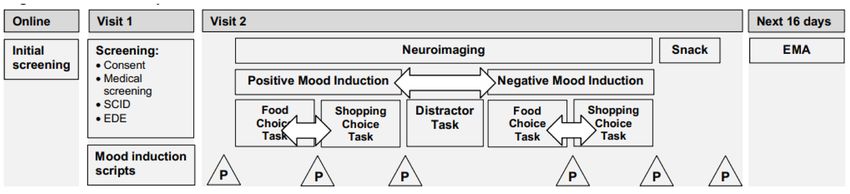
Study procedures are outlined in Figure 1.
Visit 1. Following informed consent procedures, participants with BN
will complete the Eating Disorder Examination (EDE) [39], a semi-
structured diagnostic and eating disorder assessment measure, with a
trained clinical interviewer to confirm BN diagnosis as well as to
J Psychiatry Brain Sci. 2021;6:e210005. https://doi.org/10.20900/jpbs.20210005Journal of Psychiatry and Brain Science 9 of 18
determine that binge-eating episodes are consistently accompanied by
self-induced vomiting. Recruiting individuals with this pattern of BN
symptoms will reduce potential heterogeneity (e.g., by excluding
individuals who sometimes purge without binge eating or vice versa) and
will enable us to examine binge eating and purging as a “unit” rather than
independently. The EDE will be used to rule out current and past eating
disorders among potential non-BN participants and to determine duration
of illness among BN participants. In addition, the Structured Clinical
Interview for DSM-5 (SCID-5; [40]) will be administered to characterize co-
occurring psychopathology including mood, anxiety, and substance-use
disorders as well as trauma and PTSD symptoms, and to identify any
exclusionary psychiatric disorders. Height and weight will be measured
using a digital scale and a stadiometer. Participants will generate a positive
and negative mood induction script [41]. For negative mood induction,
participants will be asked to provide several examples of times when they
“felt badly” about themselves, along with a rating (1–10) of how badly they
felt They will then be asked to write a detailed description of the event
when they felt most badly by re-imagining the experience and
remembering the details as vividly as possible [41]. Similar procedures
will be followed for the positive mood induction script. In addition, several
self-report assessment questionnaires will be administered for sample
description and secondary analyses including measures of emotion
regulation (Difficulties in Emotion Regulation Scale [42]; UPPS-P Impulsive
Behavior Scale [43]), clinical impairment (Clinical Impairment Assessment
[44]), behavioral inhibition (Behavioral Inhibition System/Behavioral
Activation system [45]), and current psychopathology (Beck Depression
Inventory [46], State Trait Anxiety Inventory [47]).
Figure 1. Overview of Study Procedures. Note: EDE = Eating Disorder Examination; P = Positive and
Negative Affect Schedule (PANAS) questionnaire; SCID = Structured Clinical Interview for DSM-5. Arrows
represent procedures that will be counterbalanced in a randomized order across participants.
Visit 2. Participants will be scheduled for early morning appointments
and will be asked to refrain from eating overnight prior to scanning and
to abstain from alcohol, drugs, nicotine, and caffeine for 24 h prior to the
second visit. Prior to scanning, participants will provide mood ratings on
the Positive Affect Negative Affect Schedule (PANAS) [48] and practice
versions of the in-scanner tasks to familiarize themselves with the
J Psychiatry Brain Sci. 2021;6:e210005. https://doi.org/10.20900/jpbs.20210005Journal of Psychiatry and Brain Science 10 of 18
procedures. During the fMRI, participants will undergo positive and
negative mood induction (counterbalanced) and will complete two tasks
(food choice and shopping choice tasks, also counterbalanced) in each
condition, resulting in a 2 (group) × 2 (food versus shopping task) design
that will be analyzed separately for positive and negative mood
conditions. During the mood induction, participants will be instructed to
vividly reimagine themselves in the situation that they had written about
during Visit 1 (i.e., positive or negative, depending on the condition) while
they listen to the researcher reading their script. Using the PANAS, they
will rate mood before and after each mood induction, as well as after each
task. In between the negative and positive mood conditions, participants
will complete a distractor task that involves counting backward in
increments of 3 for 60 s to neutralize mood. After scanning procedures,
participants will be provided an opportunity to consume a snack selected
during the food choice task in privacy and will receive an item viewed
during the shopping choice task. Participants will rate mood on the PANAS
before and after eating and receiving the item from the shopping task.
Participants will then complete a standardized relaxation procedure to
reduce any residual negative mood [18]. Participants will receive $100
after the completion of the second visit.
fMRI Behavioral Tasks. To assess the neural correlates of binge-eating
and purging anticipation, participants will complete an established food
choice task [49] paired with loss-of-control eating instructions while in the
scanner. In this task, participants provide ratings indicating preference for
consuming one of two presented foods ranging in caloric density and
percentage from fat, including “high-fat” foods (>30% of calories from fat)
that are typical of those consumed during binge-eating episodes. The 8-
minute task involves 76 food choices. As in prior investigations,
participants will be told that their food selections will determine which
food they will be given at a subsequent snack following scanning [49,50].
However, to avoid participants engaging in restrictive food choices, the
instructions will be modified, asking participants to “let yourself go and
eat as much as you want” during the snack. These instructions have been
used in established feeding lab procedures to elicit loss of control binge-
eating behavior [50] in individuals with and without eating disorders.
During the snack, participants will be provided with a large portion of one
of their highly-rated foods from the food choice task. They will eat in
private and have access to a private, unmonitored room/bathroom so that
they have the opportunity to binge eat (and, for participants with BN,
purge), if desired. They will then be asked to rate (on a scale of 0–5) the
extent to which they believed that they had engaged in a binge-eating
episode, overeaten, and experienced loss of control. During a comparison
shopping task, participants will provide ratings indicating their
preference for one of two non-food items $20 in value (e.g., home décor
items). The 8-minute task involves 76 item choices. After the scan and
J Psychiatry Brain Sci. 2021;6:e210005. https://doi.org/10.20900/jpbs.20210005Journal of Psychiatry and Brain Science 11 of 18
snack, they will be provided with an item that they had rated positively
during the fMRI shopping task to take home.
Neuroimaging Procedures
Scanning will be conducted with a 3 Tesla Siemens Prisma scanner at
the Center for Magnetic Resonance Research at the University of
Minnesota. A 32-channel receive only head coil will be used to obtain
images for all participants. High-resolution anatomical images will be
collected for each participant using a T1-weighted sequence (multi-echo
MPRAGE: 208 sagittal slices, TR = 2500 ms, TE = 1.81, 3.60, 5.39, 7.18 ms, TI
= 1000 ms, flip angle = 8°; FOV = 256 × 240 mm; voxel size = 0.8 × 0.8 × 0.8
mm isotropic; matrix size = 320 × 300) and T2-weighted sequence (SPACE:
208 sagittal slices, TR = 3200 ms, TE = 564 ms, variable flip angle, FOV = 256
× 240 mm, voxel size = 0.8 × 0.8 × 0.8 mm isotropic; matrix size = 320 × 300).
During the fMRI tasks, functional data will be acquired using the Human
Connectome Project multiband echo planar imaging sequence (MB-fMRI)
where 485 T2*-weighted whole brain functional volumes (72 contiguous
slices; TR = 800 ms, TE = 37 ms, flip angle = 55°, FOV = 208 × 208 mm; voxel
size = 2 × 2 × 2 mm; matrix = 104 × 104; multiband factor = 8, 8 min) will be
collected for each task.
Imaging Data Pre-Processing
Structural T1- and T2- weighted data will be pre-processed using the
Human Connectome Project (HCP) structural minimum preprocessing
stream which includes anatomical parcellation using FreeSurfer [51]. fMRI
data will be pre-processed using the HCP fMRI minimum preprocessing
stream. Volumes exceeding 0.5 mm of frame-wise displacement from the
previous volume will be removed using a confound matrix.
fMRI Activation Analysis
For each subject, fixed-effects analyses will be conducted to model food
choice and shopping using a canonical double-gamma hemodynamic
response function with a temporal derivative and local autocorrelation
correction. Implicit baseline trials will be left un-modeled to avoid over-
specification and incorrectly biasing percent signal change estimates. We
will extract average z scores from regions of interest (using FreeSurfer-
defined masks for bilateral amygdala, nucleus accumbens, caudate,
putamen, insula, anterior cingulate cortex, ventromedial
prefrontal cortex, and dorsolateral prefrontal cortex) from the food choice
versus shopping contrast for subsequent analyses.
Ecological Momentary Assessment (EMA)
To assess momentary variables, participants with BN will begin 16 days
of cell phone-administered EMA immediately following their fMRI visit.
Participants will complete two days of “practice” EMA ratings (that will not
J Psychiatry Brain Sci. 2021;6:e210005. https://doi.org/10.20900/jpbs.20210005Journal of Psychiatry and Brain Science 12 of 18
be used in the analyses) in order to improve data quality and to reduce
potential reactivity. EMA data will be collected using the ReTAINE® (Real
Time Assessment in the Natural Environment) data management system
and will include three types of daily self-report recordings [52]: (a) interval
contingent, in which participants complete EMA ratings at designated time
intervals; (b) signal contingent, in which participants respond to signals
from their EMA device (i.e., participants will be signaled at random five
times during the day and evening), and (c) event contingent, in which
participants provide EMA recordings in response to a specific event (i.e.,
before and after eating, binge-eating and purging anticipation event). EMA
signal contingent measures include ratings of positive and negative affect
using the PANAS [48] and Profile of Mood States [53], ratings of overeating
and loss of control based on EDE items [39] to determine binge-eating and
vomiting frequency, and questions related to momentary binge-eating and
purging anticipation (e.g., To what extent are you thinking about whether
or not to binge and purge?” “To what extent are you planning a binge-
eating and purging episode right now?” “To what extent are you planning
specific foods to eat in a binge?” (ratings (1–5)). In addition to the $100 they
will receive for completing scanning procedures, BN participants will
receive $100 after EMA with an additional $50 bonus if they respond to
80% or more of the EMA signals.
Statistical Analyses
Hypothesis testing will be conducted using multilevel mixed-effects
models based upon a general linear or generalized linear model,
depending upon distributional requirements. Analyses will be based upon
all available data and missing data will not be imputed. Covariates in
hypothesis testing will include sex and age.
Hypothesis 1.1. We hypothesize that following negative mood
induction, participants with BN will show lower levels of self-reported
negative affect, lower levels of activation in regions of the limbic threat
network (e.g., amygdala, insula), and greater frontolimbic connectivity
during an fMRI food choice task compared to the shopping task. We
hypothesize that in contrast, healthy comparison participants will show
no differentiation in these responses between tasks after a negative mood
induction.
A mixed-effects model based upon a general or generalized linear
(depending upon distribution of outcome) will be used to compare the
effects of group and task (food choice vs shopping task) on self-reported
negative affect (PANAS), activation within threat circuit regions of interest,
and frontolimbic connectivity in the negative mood induction. Models will
include a random intercept, and fixed effects for group, task, and group-
by-task interaction, with the test of the hypothesis based upon the
interaction. The pre-task affect assessment will be included as a covariate
in all affect models.
J Psychiatry Brain Sci. 2021;6:e210005. https://doi.org/10.20900/jpbs.20210005Journal of Psychiatry and Brain Science 13 of 18
Hypothesis 1.2. We hypothesize that following positive mood induction,
participants with BN will show higher levels of self-reported positive
affect, higher levels of activation in regions of the striatal approach
network (e.g., nucleus accumbens, caudate), and lower frontostriatal
connectivity during an fMRI food choice task compared to the shopping
task. We hypothesize that in contrast, healthy comparison participants
will show no differentiation in these responses between tasks after
positive mood induction.
A mixed-effects model will be used to compare the effects of group and
task (food choice vs shopping task) on self-reported positive affect (PANAS)
and activation in approach circuit regions of interest, and frontostriatal
connectivity in the positive mood induction. Models will include a random
intercept, and fixed effects for group, task, and group-by-task interaction,
with the test of the hypothesis based upon the interaction.
Hypothesis 1.3. We hypothesize that for participants with BN, illness
duration will moderate responses to an fMRI food choice task. Specifically,
we predict that longer illness duration will be associated with: (a) less
negative affect, less activation of the limbic threat network, and more
frontolimbic connectivity following the negative mood induction; and (b)
more positive affect, more activation of striatal approach regions, and less
frontostriatal connectivity following the positive mood induction.
Pearson correlations will be calculated to examine the relationship
between BN duration, self-reported affect (PANAS), neural activation in
threat and approach circuit, regions of interest, and frontolimbic and
frontostriatal connectivity in the BN food choice condition separately for
each mood state.
Hypothesis 2.1. We hypothesize that the magnitude of EMA negative
affect reduction with binge-eating and purging behavior among
individuals with BN will be associated with the magnitude of limbic threat
network activity and frontolimbic connectivity observed during an fMRI
food choice task in the negative mood induction condition.
The average magnitude of negative affect pre-to-post change with
binge-eating and purging anticipation will be calculated separately for
each individual from EMA data. Pearson correlations will be calculated to
examine the relationship between the average magnitude of negative
affect reduction following binge-eating and purging anticipation as
measured by EMA with the magnitude of activity in threat circuit regions
of interest and frontolimbic connectivity during the fMRI food choice task
in the negative mood condition.
Hypothesis 2.2. We hypothesize that the magnitude of EMA positive
affect increase with binge-eating and purging behavior among individuals
with BN will be associated with the magnitude of striatal approach
network activity and frontostriatal connectivity during an fMRI food
choice task in the positive mood induction condition.
Similar procedures as those described for Hypothesis 2.1 will be used
to examine the association between positive affect and activity in
J Psychiatry Brain Sci. 2021;6:e210005. https://doi.org/10.20900/jpbs.20210005Journal of Psychiatry and Brain Science 14 of 18
approach circuitry regions of interest and frontostriatal connectivity
during the fMRI food choice task in the positive mood condition.
Hypothesis 2.3. We hypothesize that greater EMA binge-eating and
purging frequency will correlate with greater magnitude of reductions in
negative affect and increases in positive affect associated with binge-
eating and purging anticipation as measured by EMA. We also hypothesize
that greater EMA binge-eating and purging frequency will correlate with
fMRI measures of limbic threat and striatal approach network activity, as
well as connectivity among individuals with BN.
Frequencies of binge-eating and purging episodes per week will be
calculated for each individual from EMA data. Pearson correlations will be
calculated between the frequency of binge-eating and purging behavior as
measured by EMA, the magnitude of changes in mood as measured by
EMA, and frontolimbic and frontostriatal activity/connectivity.
Power Analysis
Effect size estimates for fMRI comparisons between the BN and non-BN
groups are based upon earlier findings [18] in which the BN group showed
greater deactivation across the bilateral amygdala and greater activation
averaged across the bilateral caudate during a binge planning task
compared to a furniture selection task, with large effect sizes (d > 1.0)
observed for these differences. While estimates for negative and positive
affect differences between groups are not available, we expect these
differences to be much smaller, perhaps in the small-to-medium effect (d
= 0.40–0.50) range. Hypotheses 1.1–1.2: The proposed sample size of 60
participants (30 BN, 30 HC) provides a power of 0.87 to detect a group ×
task interaction with an effect size (d) of 0.40 and a power of 0.97 to detect
an effect size of 0.51. Thus, power should be adequate for affect
comparisons and excellent for activity/connection comparisons.
Hypothesis 1.3: The proposed sample size of 30 BN participants provides a
power of .78 to detect a mood induction-by-BN duration interaction with
an effect size of 0.51 and a power of 0.86 to detect an effect size of 0.58.
Hypotheses 2.1–2.3: The proposed sample size of 30 BN participants
provides a power of 0.81 to detect a bivariate Pearson correlation of 0.50.
SUMMARY AND FUTURE DIRECTIONS
This proposed study seeks to establish the psychological and
neurobiological mechanisms associated with anticipatory reward in BN to
support the importance of these processes in the maintenance of BN
psychopathology. The specific aims of this study are to examine the impact
of anticipatory reward and planning in BN on psychological, affective, and
neurobiological reward indices. Specifically, the results of this study will
demonstrate the neurobiological correlates of reward anticipation in the
context of positive and negative emotions as well as the associations
between these neurobiological processes and bulimic behavior in the
natural environment. The study findings will also determine the extent to
J Psychiatry Brain Sci. 2021;6:e210005. https://doi.org/10.20900/jpbs.20210005Journal of Psychiatry and Brain Science 15 of 18
which duration of illness is associated with the magnitude of these
psychological and neurobiological processes. Study findings will
potentially inform novel treatment targets of anticipated and “planned”
BN behaviors in existing and novel interventions, particularly the
possibility that more distal anticipatory processes can be targeted in
addition to more immediate behavioral precipitants. Subsequent
applications will determine the extent to which these anticipatory reward
processes occur in the varying levels of negative and positive affect, the
role of habit and duration of illness and the potential distinctions between
the anticipation of binge eating compared to purging.
CONFLICTS OF INTEREST
The authors report no conflicts of interest.
FUNDING
This grant is supported by R21 MH119417-02.
REFERENCES
1. Smink FRE, van Hoeken D, Hoek H. Epidemiology of eating disorders: Incidence,
prevalence, and mortality rates. Curr Psychiatr Rep. 2012;14:406-14.
2. Treasure J, Duarte TA, Schmidt U. Eating disorders. Lancet. 2020;14:899-911.
3. Keel PK, Mitchell JE, Miller KB, Davis TL, Crow SJ. Long-term outcome of
bulimia nervosa. Arch Gen Psychiatry. 1999;56:63-9.
4. Stice E, Bulik CM. Eating Disorders. In: Beauchaine TP, Hinshaw SP, editors.
Child and adolescent psychopathology. Hoboken (NJ, US): Wiley & Sons; 2008.
p. 643-70.
5. Steinhausen HC, Weber S. The outcome of bulimia nervosa: findings from
one-quarter century of research. Am J Psychiatry. 2009;166(12):1331-41.
6. Steinhausen HC. Outcome of eating disorders. Child Adolesc Psychiatr Clin N
Am. 2009;18(1):225-42.
7. Stice E. Interactive and mediational etiological models of eating disorder onset:
evidence from prospective studies. Annu Rev Clin Psychol. 2016;12:359-81.
8. Erriu M, Cimino S, Cerniglia L. The role of family relationships in eating
disorders in adolescents: A narrative review. Behav Sci. 2020;10(4):71.
9. Trottier K, MacDonald DE. Update on psychological trauma, other severe
adverse experiences, and eating disorders: State of the research and future
research directions. Curr Psychiatry Rep. 2017;19(8):45.
10. Frank GKW, Shott ME, DeGuzman MC. Neurobiology of eating disorders. Child
Adolesc Psychiatr Clin N Am. 2019;28(4):629-40.
11. Berg KC, Crosby RD, Cao L, Peterson CB, Engel SG, Mitchell JE, et al. Facets of
negative affect prior to and following binge-only, purge-only, and binge/purge
events in women with bulimia nervosa. J Abnorm Psychol. 2013;122(1):111-8.
12. Gross JJ. Antecedent- and response-focused emotion regulation: divergent
consequences for experience, expression, and physiology. J Pers Soc Psychol.
1998;74(1):224-37.
J Psychiatry Brain Sci. 2021;6:e210005. https://doi.org/10.20900/jpbs.20210005Journal of Psychiatry and Brain Science 16 of 18
13. Smyth JM, Wonderlich SA, Heron KE, Sliwinski MJ, Crosby RD, Mitchell JE, et
al. Daily and momentary mood and stress are associated with binge eating
and vomiting in bulimia nervosa patients in the natural environment. J
Consult Clin Psychol. 2007;75(4):629-38.
14. Cardi V, Leppanen J, Treasure J. The effects of negative and positive mood
induction on eating behaviour: A meta-analysis of laboratory studies in the
healthy population and eating and weight disorders. Neurosci Biobehav Rev.
2015;57:299-309.
15. Stice E. Risk and maintenance factors for eating pathology: a meta-analytic
review. Psychol Bull. 2002;128(5):825-48.
16. Abraham SF, Beumont PJ. How patients describe bulimia or binge eating.
Psychol Med. 1982;12(3):625-35.
17. Zhao Z, Yao S, Li K, Sindermann C, Zhou F, Zhao W, et al. Real-time functional
connectivity-informed neurofeedback of amygdala-frontal pathways reduces
anxiety. Psychother Psychosom. 2019;88(1):5-15.
18. Radeloff D, Willmann K, Otto L, Lindner M, Putnam K, Van Leeuwen S, et al.
High-fat taste challenge reveals altered striatal response in women recovered
from bulimia nervosa: A pilot study. World J Biol Psychiatry. 2014;15(4):307-16.
19. Fischer S, Breithaupt L, Wonderlich J, Westwater ML, Crosby RD, Engel SG, et
al. Impact of the neural correlates of stress and cue reactivity on stress related
binge eating in the natural environment. J Psychiatr Res. 2017;92:15-23.
20. Lee JE, Namkoong K, Jung YC. Impaired prefrontal cognitive control over
interference by food images in binge-eating disorder and bulimia nervosa.
Neurosci Lett. 2017;651:95-101.
21. Simon JJ, Skunde M, Walther S, Bendszus M, Herzog W, Friederich HC. Neural
signature of food reward processing in bulimic-type eating disorders. Soc
Cogn Affect Neurosci. 2016;11(9):1393-401.
22. Weygandt M, Schaefer A, Schienle A, Haynes JD. Diagnosing different binge-
eating disorders based on reward-related brain activation patterns. Hum
Brain Mapp. 2012;33(9):2135-46.
23. Linardon J, Fairburn CG, Fitzsimmons-Craft EE, Wilfley DE, Brennan L. The
empirical status of the third-wave behaviour therapies for the treatment of
eating disorders: A systematic review. Clin Psychol Rev. 2017;58:125-40.
24. Pearson CM, Chester DS, Powell D, Wonderlich SA, Smith GT. Investigating the
reinforcing value of binge anticipation. Int J Eat Disord. 2016;49(6):539-41.
25. Bohon C, Stice E. Reward abnormalities among women with full and
subthreshold bulimia nervosa: a functional magnetic resonance imaging
study. Int J Eat Disord. 2011;44(7):585-95.
26. Schultz W, Dayan P, Montague PR. A neural substrate of prediction and
reward. Science. 1997;275(5306):1593-9.
27. Zald DH, Treadway MT. Reward processing, neuroeconomics, and
psychopathology. Annu Rev Clin Psychol. 2017;13:471-495.
28. Berridge KC, Robinson TE, Aldridge JW. Dissecting components of reward:
ʻlikingʼ, ʻwantingʼ, and learning. Curr Opin Pharmacol. 2009;9(1):65-73.
29. Kaag AM, Reneman L, Homberg J, van den Brink W, van Wingen GA.
Enhanced amygdala-striatal functional connectivity during the processing of
J Psychiatry Brain Sci. 2021;6:e210005. https://doi.org/10.20900/jpbs.20210005Journal of Psychiatry and Brain Science 17 of 18
cocaine cues in male cocaine users with a history of childhood trauma. Front
Psychiatry. 2018;9:70.
30. Oleson EB, Gentry RN, Chioma VC, Cheer JF. Subsecond dopamine release in
the nucleus accumbens predicts conditioned punishment and its successful
avoidance. J Neurosci. 2012;32(42):14804-8.
31. Craske MG, Meuret AE, Ritz T, Treanor M, Dour HJ. Treatment for anhedonia:
A neuroscience driven approach. Depress Anxiety. 2016;33(10):927-38.
32. Flores LE Jr, Eckstrand KL, Silk JS, Allen NB, Ambrosia M, Healey KL, et al.
Adolescentsʼ neural response to social reward and real-world emotional
closeness and positive affect. Cogn Affect Behav Neurosci. 2018;18(4):705-17.
33. Price RB, Allen KB, Silk JS, Ladouceur CD, Ryan ND, Dahl RE, et al. Vigilance in
the laboratory predicts avoidance in the real world: A dimensional analysis
of neural, behavioral, and ecological momentary data in anxious youth. Dev
Cogn Neurosci. 2016;19:128-36.
34. Seidel M, King JA, Ritschel F, Boehm I, Geisler D, Bernardoni F, et al. The real-
life costs of emotion regulation in anorexia nervosa: a combined ecological
momentary assessment and fMRI study. Transl Psychiatry. 2018;8(1):28.
35. Engel SG, Crosby RD, Thomas G, Bond D, Lavender JM, Mason T, et al.
Ecological momentary assessment in eating disorder and obesity research: a
review of the recent literature. Curr Psychiatry Rep. 2016;18(4):37.
36. Berg KC, Crosby RD, Cao L, Crow SJ, Engel SG, Wonderlich SA, et al. Negative
affect prior to and following overeating-only, loss of control eating-only, and
binge eating episodes in obese adults. Int J Eat Disord. 2015;48(6):641-53.
37. Haynos AF, Camchong J, Pearson CM, Lavender JM, Mueller BA, Peterson CB,
et al. Resting state hypoconnectivity of reward networks in binge eating
disorder. Cerb Cortex. 2021 Mar 31;31(5):2494-504.
38. American Psychiatric Association. Diagnostic and Statistical Manual of
Mental Disorders. 5th ed. Washington (DC, US): American Psychiatric
Association; 2013.
39. Fairburn CG, Cooper Z, O’Conner ME. Eating disorder examination (Edition
16.0D). In: Fairburn CG, editor. Cognitive Behavior Therapy and Eating
Disorders. 16th ed. New York (NY, US): Guilford Press; 2008. p. 265-308.
40. First MB, Williams JBW, Karg RS, Spitzer RL. Structured Clinical Interview for
DSM-5-Research Version (SCID-5-RV). Arlington (VA, US): American
Psychiatric Association; 2015.
41. Westermann R, Spies K, Stahl G, Hesse FW. Relative effectiveness and validity
of mood induction procedures: A meta-analysis. Eur J Soc Psychol.
1996;26:557-80.
42. Bjureburg L, Ljottson B, Tull MT, Hedman E, Sahlin H, Lund LG, et al.
Development and validation of a brief version of the difficulties in emotion
regulation scale: the DERS-16. J Psychopathol Behav Assess. 2016:38(2):284-96.
43. Whiteside SP, Lynam DR. The five factor model and impulsitivy: Using a
structural model of personality to understand impulsivity. Pers Individ Differ.
2001:30(4):669-89.
J Psychiatry Brain Sci. 2021;6:e210005. https://doi.org/10.20900/jpbs.20210005Journal of Psychiatry and Brain Science 18 of 18
44. Bohn K, Fairburn CG. The clinical impairment assessment questionnaire
(CIA). In Fairburn CG, editor. Cognitive Behavior Therapy and Eating
Disorders. 16th ed. New York (NY, US): Guilford Press; 2008. p. 315-7.
45. Carter CS, White TL. Behavioral inhibition, behavioral activation, and
affective responses to impending reward and punishment: the BIS/BAS scales.
J Pers Soc Psychol. 1994;67(2):319.
46. Beck AT, Ward CH, Mendelson M, Mock J, Erbaugh J. An inventory for
measuring depression. Arch Gen Psychiatry. 1961:4:561-71.
47. Spielberger CD, Gorsuch RL, Lushene R, Vagg PR, Jacobs GA. Manual for the
State-Trait Anxiety Inventory. Palo Alto (CA, US): Consulting Psychologists
Press; 1983.
48. Watson D, Clark LA, Tellegen A. Development and validation of brief
measures of positive and negative affect: the PANAS scales. J Pers Soc Psychol.
1988;54(6):1063-70.
49. Foerde K, Steinglass JE, Shohamy D, Walsh BT. Neural mechanisms
supporting maladaptive food choices in anorexia nervosa. Nat Neurosci.
2015;18(11):1571-3.
50. Gianini L, Foerde K, Walsh BT, Riegel M, Broft A, Steinglass JE. Negative affect,
dietary restriction, and food choice in bulimia nervosa. Eat Behav. 2019;33:49-
54.
51. Fischl B, van der Kouse A, Destrieux C, Halgren E, Segonne F, Salat DH, et al.
Automatically parcellating the human cerebral cortex. Cereb Cortex.
2004;14:11-22.
52. Wheeler L, Reis HT. Self-recording of everyday life events: origins, types, and
uses. J Pers. 1991;59:339-54.
53. McNair DM, Lorr M, Droppleman LF. Manual for the Profile of Mood States.
San Diego (CA, US): Educational and Industrial Testing Service; 1971.
How to cite this article:
Peterson CB, Haynos AF, Mueller BA, Crosby RD, Wonderlich SA, Anderson LM, et al. Neurobiological and
Psychological Maintenance Mechanisms Associated with Anticipatory Reward in Bulimia Nervosa. J Psychiatry Brain
Sci. 2021;6:e210005. https://doi.org/10.20900/jpbs.20210005
J Psychiatry Brain Sci. 2021;6:e210005. https://doi.org/10.20900/jpbs.20210005You can also read


