MISSOURI CONSERVATIONIST - SERVING NATURE & YOU
←
→
Page content transcription
If your browser does not render page correctly, please read the page content below

MISSOURI  VOLUME 83, ISSUE 1, JANUARY 2022
          SERVING NATURE & YOU

CONSERVATIONIST
Enjoy the Experience
Winter is a good time to start
birding. At home, put out a feeder
and heated water source. This
is especially helpful with snow
cover or very low temperatures.
Bundle up and head outside for
a walk. Use a guide like Merlin
to help identify birds and learn
about their habitat, and log
your sightings on eBird. Less
foliage means you may see more
birds and hear more sounds.
Remember to wear proper
footwear and clothes. For a better
view take along binoculars.

Birding is a fun way to
Never Lose Touch.

                 For a place to go birding, check out short.mdc.mo.gov/Zvs.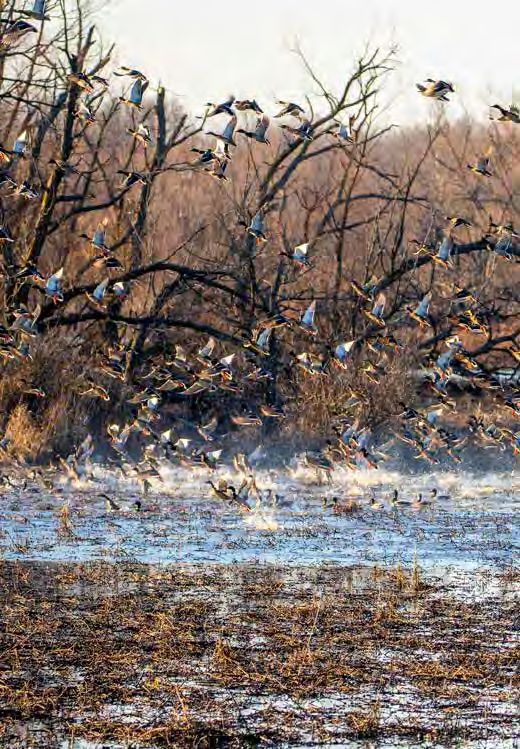
MISSOURI
                                                    CONSERVATIONIST

Contents                  JANUARY 2022
                          VOLUME 83, ISSUE 1

                                       10
                                                          ON THE COVER
                                                           Frost from a cold
                                                             January night
                                                     : NOPPADOL PAOTHONG
                                                          100mm macro lens, f-16
                                                             1/16 sec, ISO 800

                                                               GOVERNOR
                                                             Michael L. Parson

                                                     THE CONSERVATION COMMISSION
                                                       CHAIR Wm. L. (Barry) Orscheln
                                                       VICE CHAIR Mark L. McHenry
                                                      SECRETARY Steven D. Harrison
                                                      MEMBER Margaret F. Eckelkamp

                                                               DIRECTOR
                                                            Sara Parker Pauley
                                                           DEPUTY DIRECTORS
                                                       Mike Hubbard, Aaron Jeffries,
                                                         Jennifer Battson Warren

                                                            MAGAZINE STAFF

                                                          MAGAZINE MANAGER
                                                           Stephanie Thurber
                                                                 EDITOR
                                                            Angie Daly Morfeld
                                                           ASSOCIATE EDITOR
                                                              Larry Archer
                                                         PHOTOGRAPHY EDITOR
                                                              Cliff White
                                                               STAFF WRITERS
FEATURES                                                Kristie Hilgedick, Joe Jerek,
                                                              Dianne Van Dien

10                                                             DESIGNERS
                                                         Shawn Carey, Marci Porter
Annual Review                                              PHOTOGRAPHERS
                                                     Noppadol Paothong, David Stonner
Serving Nature and You:                                  CIRCULATION MANAGER
Fiscal Year 2021.                                            Laura Scheuler

                                                       mdc.mo.gov/conmag
DEPARTMENTS

 2 Inbox
 3	Up Front With
     Sara Parker Pauley
 4   Nature Lab
 5   In Brief
28   Get Outside
30
32
33
     Places To Go
     Wild Guide
     Outdoor Calendar                          28   Download this
                                                    issue to your
                                                    phone or tablet at
                                                    mdc.mo.gov/mocon.
                                                                              Download for
                                                                              Android
Inbox
Letters to the Editor               BEYOND BEING THERE                                             wrong! I enjoyed it so much that I read it aloud
Submissions reflect                 Thank you so much for running the article on                   to my husband and our little son. We had a lively
readers’ opinions and               the MDC photographers [Beyond Being There,                     conversation about each story, complete with our
may be edited for length            November, Page 11]. I’ve enjoyed the fruits of their           son acting out several of them.
and clarity. Email                  labor for many years. It was a pleasure reading                                            Mary Hudson Lee’s Summit
Magazine@mdc.mo.gov
                                    the commentary by each of them on some of their
or write to us:
                                    favorite photos. Gentlemen, your work is amazing.              I thoroughly enjoyed the recent article about the
MISSOURI
CONSERVATIONIST                                                     Daniel Morton St. Louis        photographers for MDC. Photography is an art form
PO BOX 180                                                                                         for Noppadol Paothong, and his pictures are easily
JEFFERSON CITY, MO 65102            I have been a reader of your fine publication for              identifiable, as he presents his subjects in an entirely
                                    over 40 years, and I must say your November issue              different way for the viewer. Stunning!
                                    has attained a new level of excellence. It is simply               I also got reacquainted with some of my favorites
                                    the best I have ever read. Apart from the usual                by David Stonner. Fabulous!
BEYOND PHOTOS                       wonderful photos and useful hunting articles, there                Just reading the background stories about finally
Your November                       are very informative articles about lesser appreciated         getting those perfect shots makes me appreciate
issue was superb.                   and seldom seen wildlife and an even greater                   their talents and dedication to their craft even
Aside from                          acknowledgement of the photographers who make                  more. We are so fortunate to see our beautiful state
the amazing                         your publication so special.                                   through their lenses.
photographs,                                                            Joel Alves St. Louis                                     Janet Gremaud via email
I especially
enjoyed the                         I was so happy to see the article in the November              Thank you for the article highlighting the work
article Moles and                   issue featuring photographers Noppadol Paothong                of photographers David Stonner and Noppadol
Shrews [Page 18].                   and David Stonner. I’ve enjoyed their photos in your           Paothong. It was their contributions to your
Randal Craft                        magazine for years. It’s about time we had a feature           magazine that attracted me to it. As a hobbyist
Brooklyn, NY                        article on the two of them. Do it again.                       photographer, I can appreciate the efforts required
                                                                 Linda Hillemann Ellsinore         to produce such intriguing photos. I like that they
                                                                                                   share the lens and settings used to get the shot.
                                    I’m not terribly artistic, so I didn’t think I would           Keep up the great work.
                                    be interested in Beyond Being There, but I was so                                                Curt Lewis Battlefield

Connect With Us!                     Conservation               Regional Offices
                                     Headquarters               Southeast/Cape Girardeau: 573-290-5730         Southwest/Springfield: 417-895-6880
     /moconservation
                                     573-751-4115               Central/Columbia: 573-815-7900                 Northwest/St. Joseph: 816-271-3100
          @moconservation            PO Box 180                 Kansas City: 816-622-0900                      St. Louis: 636-441-4554
                                     Jefferson City, MO         Northeast/Kirksville: 660-785-2420             Ozark/West Plains: 417-256-7161
     @MDC_online                     65102-0180

                                             MISSOURI CONSERVATION COMMISSIONERS                                  The Missouri Department of
                                                                                                                  Conservation protects and
Have a Question for                                                                                               manages the fish, forest,
a Commissioner?                                                                                                   and wildlife of the state.
Send a note using                                                                                                 We facilitate and provide
our online contact form at                                                                                        opportunity for all citizens to
mdc.mo.gov/commissioners.               Margy              Steven          Mark                 Barry             use, enjoy, and learn about
                                      Eckelkamp           Harrison        McHenry              Orscheln           these resources.

2 Missouri Conservationist | January 2022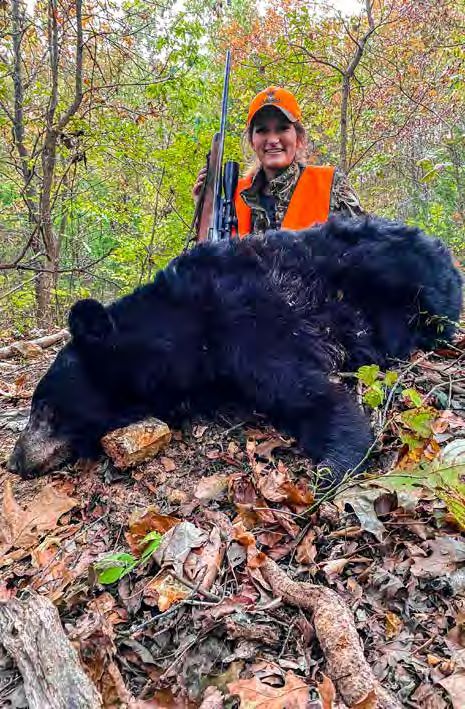
Up
Front
Want to see your photos
in the Missouri Conservationist?
Share your photos on Flickr at
flickr.com/groups/mdcreaderphotos-2022
or email Readerphoto@mdc.mo.gov.
with Sara Parker Pauley
_ I often get reflective as I head into a new year. As I
listened again to the speech given by Simon Roosevelt (great-
great grandson of Theodore Roosevelt), our 2020 Partners
Roundtable keynote speaker, his words captured me anew
in contemplating not only where we are as the conservation
community in effecting positive change for our resources,
but also as individuals. Taking a page from Thoreau, Simon
1 reflected, “Every moment is a meeting of two eternities, all
that is past and all that is yet to come.”
2 The perspective is a powerful one not only for the long view,
1 | Empty
hornets nest by but even as we launch a new year. As I contemplate the deci-
Karen McGillis, sions I need to make today that will build a healthier and wiser
via email version of the leader I want to be, it certainly resonates deeply
2 | Bird print as I consider my role of helping steward Missouri’s natural
in snow by resources.
Mark Duchesne, Will we as a society take the time to reflect on what we’ve
via Flickr
learned from the past and what new thinking will be required
3 | Winter fishing to best steward our natural resources — or will we decide it is
on Bull Shoals
someone else’s responsibility? Will we rise to the challenge or
Lake by Allison
Harrell, via email wither with the status quo?
My hope for all of us in this new year, as we contemplate
choices in how we will care for ourselves, others, and the pre-
3 cious resources that our lives depend upon, is that we will use
this present moment to contemplate the past, present, and
future, and then choose courageously.
SARA PARKER PAULEY, DIRECTOR
SARA.PAULEY@MDC.MO.GOV
Want another chance to see The Missouri Conservationist (ISSN 0026-6515) is the official monthly publication of the Missouri
Department of Conservation, 2901 West Truman Boulevard, Jefferson City, MO (Mailing address: PO
your photos in the magazine? Box 180, Jefferson City, MO 65102.) SUBSCRIPTIONS: Visit mdc.mo.gov/conmag, or call 573-522-
4115, ext. 3856 or 3249. Free to adult Missouri residents (one per household); out of state $7 per year;
out of country $10 per year. Notification of address change must include both old and new address
In the December issue, we plan to feature (send mailing label with the subscriber number on it) with 60-day notice. Preferred periodical postage
even more great reader photos. Use the paid at Jefferson City, Missouri, and at additional entry offices. POSTMASTER: Send correspondence
to Circulation, PO Box 180, Jefferson City, MO 65102-0180. Phone: 573-522-4115, ext. 3856 or 3249.
submission methods above to send us your best Copyright © 2021 by the Conservation Commission of the State of Missouri.
year-round pictures of native Missouri wildlife, Equal opportunity to participate in and benefit from programs of the Missouri Department of Conserva-
tion is available to all individuals without regard to their race, color, religion, national origin, sex, ancestry,
flora, natural scenery, and friends and family age, sexual orientation, veteran status, or disability. Questions should be directed to the Department of
engaged in outdoor activities. Please include Conservation, PO Box 180, Jefferson City, MO 65102, 573-751-4115 (voice) or 800-735-2966 (TTY), or
to Chief, Public Civil Rights, Office of Civil Rights, U.S. Department of the Interior, 1849 C Street, NW,
where the photo was taken and what it depicts. Washington, D.C. 20240.
Printed with soy ink
mdc.mo.gov 3
Nature
LAB
Each month, we highlight research
                                            by Dianne
                                            Van Dien

MDC uses to improve fish, forest,
and wildlife management.

                                                                                                   Most mountain lion sightings
 MOUNTAIN LION DETECTION                                                                           are reported with photos, often
                                                                                                   from game cameras. Sometimes

Making Sense                                                                                       it is difficult to tell whether
                                                                                                   the photographed animal is a
                                                                                                   mountain lion, bobcat, or house

of the Evidence                                                                                    cat. To assist with identification,
                                                                                                   the Large Carnivore Response
                                                                                                   Team brings cardboard cutouts of
                                                                                                   these cats to the photo location
_ Mountain lions are extirpated in Missouri, but                                                   and places them against the
in 1994 MDC confirmed the first mountain lion in the                                               background to determine the size
state since 1927. It’s the job of MDC’s Large Carnivore                                            of the animal in the photo.
Response Team (LCRT) to field reports from the public
and confirm which ones are truly mountain lions. The                               Getting quality DNA from scat or saliva left in
majority have no supporting evidence or turn out to                             the wounds of a lion-killed animal is challenging
be something else — bobcats, house cats, coyotes, or           MDC staff        because DNA degrades with exposure to sunlight
even hoaxes. In 28 years, only 87 reports have been               collect       and precipitation, and if scavengers feed on a car-
confirmed as lions.                                             evidence        cass, their DNA gets mixed in. Sometimes samples
    Most confirmations come from photos. When                  to unravel       yield no results.
LCRT staff investigate, they go to the area a photo                                “Opportunities to collect DNA are limited,” says
                                                                  details
was taken and attempt to confirm that the picture                               MDC State Furbearer and Black Bear Biologist Laura
is that of a lion. Some reports may have other types
                                                                  about         Conlee. “Although only 20 percent of our confirma-
of evidence, such as scat, hair, tracks, or a lion-killed      mountain         tions have had potential DNA, the samples we col-
deer or elk. Whenever possible, staff collect samples              lions        lect are still giving us pieces of information about
for DNA testing.                                                that pass       lions coming through Missouri.”
    “When we find a suspected lion-killed deer, we look          through           No breeding has been documented in Missouri.

                                                                                                                                         MOUNTAIN LION (TOP): JIM RATHERT; MOUNTAIN LION (BOTTOM): NOPPADOL PAOTHONG; FUR: DAVID STONNER; CUTOUTS: MDC
for bite grip marks on the deer’s throat and swab that          the state       “Mountain lions can travel very long distances when
area to pick up saliva,” explains Conservation Agent                            they disperse, and current evidence indicates that
Brad Hadley.                                                                    lions here are just passing through,” says Conlee.

Mountain Lion DNA Evidence                                                          Results from DNA so far:
at a Glance                                                                          • Only 1 female lion has
                                                                                       been detected in MO
                                                                                     • Lions are coming from western states,
Genetic samples are analyzed by the U.S. Forest
                                                                                       most often the Black Hills region
Service’s National Genomics Center. DNA is compared
to reference samples in a national database.                                         • Only one lion has been detected
                                                                                       more than once in MO

                  Depending on sample quality, DNA can tell us:
                    •   If it is from a mountain lion (lowest quality)
                    •   If lion is male or female
                    •   Probable population of origin
                    •   If the lion has been detected elsewhere (highest quality)

4 Missouri Conservationist | January 2022                                                    Learn more at short.mdc.mo.gov/Ztd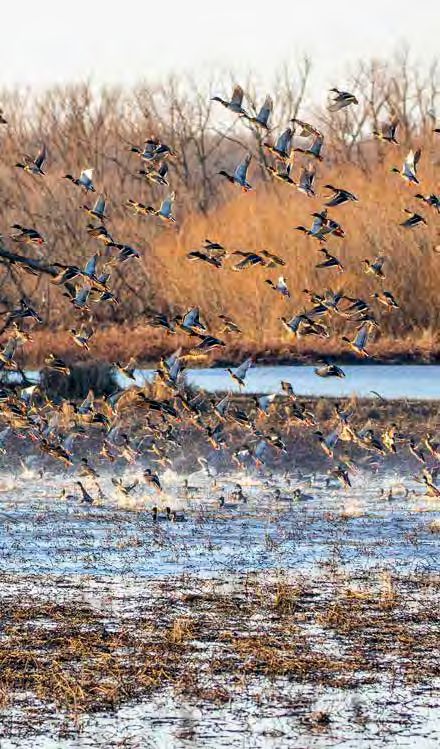
News and updates from MDC In Brief
MDC REPORTS
SUCCESSFUL
BEAR SEASON
HUNTERS HARVEST 12 BEARS
DURING HISTORIC SEASON
During the state’s inaugural bear
hunting season, Oct. 18–27, hunters
harvested 12 black bears from the
three identified zones. More than
6,330 hunters applied for 400 permits
for the season with the maximum total
harvest for the season being 40 bears.
“This was an incredibly successful
first bear hunting season for Missouri
given that we have a highly regulated
season, that bears in the state are
widely distributed throughout some
pretty rugged wilderness, and that
many hunters had never hunted bears
before,” said MDC State Furbearer and
Black Bear Biologist Laura Conlee. “A
harvest of 12 bears in our first season
is testament to the hunters. Bear
hunting is an extremely challenging
endeavor, especially under the
framework that we established.
This was a new experience for many
hunters, and they put in the work to be
successful and take advantage of this
new hunting opportunity.”
Conlee added that MDC took a
conservative approach in developing
its bear hunting regulations.
“Our highly regulated and limited
season included a sustainable
maximum harvest of 40 bears, which
is about 5 percent of our total bear
population,” Conlee said. “We also
prohibited baiting and the use of
dogs, limited hunting to 10 days,
and restricted the number of hunters
who could participate. With any new
season, it is difficult to predict hunter Congratulations to Kelsie Wikoff, Hume, on her harvest of this
success, so we took a conservative 268-pound boar (male bear) during Missouri’s first bear hunting
COURTESY: KELSIE WIKOFF
approach to limiting the number of season. She was among 12 Missouri hunters to harvest a bear.
hunters and length of the hunting Learn more about bear hunting in Missouri at
season to ensure a sustainable harvest mdc.mo.gov/bearhunting. Learn more about black bears in
in each bear management zone.” Missouri and MDC management efforts at mdc.mo.gov/bears.
mdc.mo.gov 5
In Brief

  GIVE A HOLIDAY GIFT
  BACK TO NATURE
  MDC foresters remind you not to throw that
  cut Christmas tree into the trash after the
                                                                      Ask MDC
                                                                           Got a Question for Ask MDC?
  holidays. Recycle it!                                                  Send it to AskMDC@mdc.mo.gov
       Many communities have a Christmas tree                             or call 573-522-4115, ext. 3848.
  recycling program. If your community is not
  among them, there are several creative ways
  to make further use of your tree.
       Place the tree in the backyard to offer     Q: What animal ate this
  cover for wildlife or under bird feeders to      deer? I’ve never seen an
  provide nesting locations in the branches.       animal pluck the hair and
  Add some post-holiday treats as ornaments        eat the skin of a deer?
  by coating pinecones with peanut butter and      h Probably a coyote. Usually
  adding bird seed.                                when you find a carcass intact, one
       Have your tree shredded or chipped for      lone coyote has fed on it. When
  mulch, or place cut branches over dormant        you find a carcass torn up, with
  plants to provide a bit of insulation during     pieces of hide and bone scattered
  the winter and to add organic matter as the      around, several coyotes have had
  needles fall.                                    a meal. The alpha coyote feeds on
       You can also sink the tree in a pond to     the main carcass while younger
  enhance fish habitat by giving them a place      and smaller coyotes run in and tear
  to rest, nest, and escape predators. Mul-        off pieces. The longer the carcass
  tiple trees make the best cover so work with     lays there, other scavengers, such     That lighter-colored inner bark is
  friends, family, and neighbors to combine        as vultures and opossums, feed on      noticeable when freshly exposed,
  efforts. Anchor the trees with concrete blocks   the remains. Since hair lacks food     leading foresters to refer to the
  and sink them at a depth of about 8 feet with    value, it tends to get pulled out or   process as “blonding.”
  the trees placed in a row.                       scratched off.                             Bark blonding on ash is directly
       If you used a balled live evergreen and                                            related to insect infestation — the
  your ground is still soft enough to dig, add     Q: What happened to this tree?         woodpeckers aren’t going to
  it to your home landscape for years of enjoy-    h This bark damage is related          tear up a tree if there’s nothing
  ment and wildlife cover.                         to emerald ash borer (EAB)             inside to eat. Native borers can
                                                   infestation. It’s caused by            attack stressed ash trees, but only
  WINTER TROUT HARVEST                             woodpeckers pursuing insect            the unchecked populations of
  BEGINS FEB. 1                                    larvae inside the ash trees, popping   emerald ash borer larvae lead to

                                                                                                                                 BLONDING: DAVID MATHEWS; DEER HAIR: TONY HICKEY; HONEYBEE COMBS: RICHARD HESEMANN
  MDC staff have stocked about 80,000 rain-        off pieces of bark as they forage.     woodpeckers blonding an entire
  bow trout in more than 35 urban area lakes                                              tree or several in one area.
  around the state for winter trout fishing.                                                  The good news is that EAB will
  Many of these areas allow anglers to harvest                                            only attack ash trees. The bad
  trout as soon as they are stocked, while other                                          news is that trees with extensive
  areas are catch and release until Feb. 1. Find                                          bark blonding are past the point
  locations at short.mdc.mo.gov/ZF3.                                                      of being saved by insecticidal
      Beginning Feb. 1, all urban area lakes                                              treatments. EAB-infested trees are
  allow the harvest of trout. The daily limit at                                          brittle and potentially hazardous.
  these locations is four trout with no length                                            If infested trees are near a home
  limit. All Missouri residents older than age                                            or other valuable property, it
  15 and younger than age 65 must have a                                                  is important to remove them
  fishing permit. All nonresidents over age 15                                            immediately. The infested wood
  must have a fishing permit. To keep trout, all                                          can be utilized or burned at the
  anglers regardless of age must have a Mis-         Bark blonding                        homeowner’s discretion.
  souri trout permit.
      Learn more about trout fishing at short.
  mdc.mo.gov/ZtL.

6 Missouri Conservationist | January 2022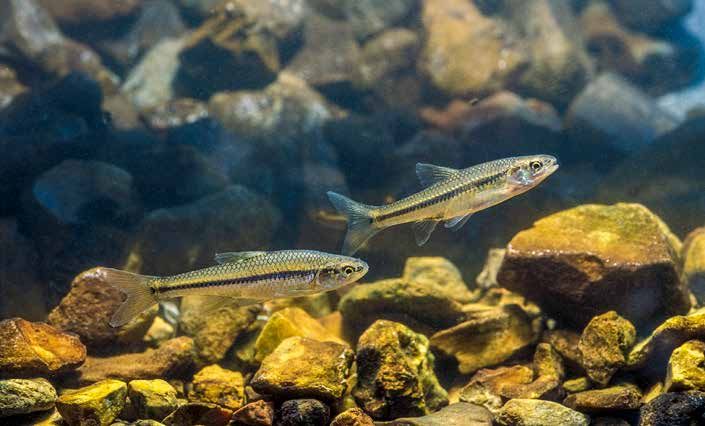
Within about five years, EAB will
kill nearly every ash tree (sometimes
younger, smaller trees escape death)
in the vicinity, unless the nearby
trees have genetic resistance. But
that’s rare; only about one in 1,000
trees exhibit natural resistance.                                                      Zachary White
    If an ash tree seems relatively                                                     CLINTON COUNTY
healthy as spring approaches,                                                         CONSERVATION AGENT
insecticide treatments in late April                                                      offers this month’s

                                                                                    AGENT
through May can be effective.
For more information, visit
short.mdc.mo.gov/ZtV.                             European honeybee combs

Q: I ran across this unusual
looking beehive on my farm
in Gasconade County. Is this
                                         populations occur throughout
                                         Missouri. The nest “comb” is
                                         suspended vertically and consists
                                                                                    ADVICE
a normal beehive? What                   of parallel double-layered sheets         The winter months usher in
kind of bee constructed it?              of hexagonal cells. These are made
h These are European honeybee            from wax secreted by worker
                                                                                   another season of outdoor
(Apis mellifera) combs. They typically   bees, who also use the nectar             opportunity — trapping,
seek out enclosed tree cavities, but     from flowers to produce honey in          a long-held tradition in
this swarm appears to have taken         their stomachs. The bees thicken          Missouri. Permits to harvest
up residence in the wrong spot,          the honey by regurgitating it onto
as far as winter survival goes. It’s     their mouths and exposing it to air.
                                                                                   furbearers by trapping
uncommon, but not incredibly rare.       Honey and pollen stored in nest           methods were first required
   European settlers introduced          cells nourish the adult bees in winter.   in 1953. Missouri is fortunate
the honeybee to North America            For more information on bees, visit       to have a wide range of
hundreds of years ago, and wild          short.mdc.mo.gov/Ztj.
                                                                                   furbearing species. From larger
                                                                                   mammals like coyotes and
                                                                                   bobcats to the small and rare
                                                                                   long-tailed weasel, our natural
                                                                                   areas contain an abundance of
                                                                                   furbearers. If you are new to
                                                                                   the sport, start out with basic
                                                                                   gear needed to trap one or
     What                                                                          two species. For guidance, visit
     IS it?                                                                        short.mdc.mo.gov/Zvx.
                                                                                   The Missouri Trappers
      Can you                                                                      Association is a good
     guess this
      month’s                                                                      resource for new trappers.
      natural                                                                      To find out more, visit
     wonder?                                                                       missouritrappers.com.
     The answer is on
         Page 9.                                                                   FOR MORE INFORMATION ABOUT
                                                                                   TRAPPING, SEASONS, AND
                                                                                   PERMITS, CHECK OUT A SUMMARY
                                                                                   OF MISSOURI HUNTING AND
                                                                                   TRAPPING REGULATIONS 2021
                                                                                   AT SHORT.MDC.MO.GOV/ZTA.

                                                                                                         mdc.mo.gov 7
In Brief

       SPECIES OF
      Conservation Concern

    ENDANGERED

   Topeka Shiner
   The U.S. Fish and
   Wildlife Service
   (USFWS) listed the
   Topeka shiner as a
   federally endangered                                                Experimental reintroductions of Topeka shiners
   species in 1998. Topeka                                             in north Missouri.

   shiners inhabited
                                            WHY IT’S                 MDC RESTORATION                      WHAT CAN
   the western tallgrass                    IMPERILED                EFFORTS                              YOU DO?
   prairie region of the                    Topeka shiners have      Topeka shiner restoration began      Avoid activities
   Midwest from Missouri                    declined dramatically    in 2013 in the Grand River           that reduce water
   and Kansas to South                      due to habitat           watershed. Topeka shiners were       quality, encourage
   Dakota. It occurred in                   destruction, reduced     reintroduced during 2013–2017        natural stream flows
   headwater streams of                     water quality, altered   into Little Creek and East Fork      and streamside
                                            stream hydrology,        Big Muddy Creek. Monitoring          vegetation,
   central and northern                     barriers to fish         showed survival, reproduction,       and follow best
   Missouri but is now                      movement, and extreme    and expanded distribution. These     management
   limited to two isolated,                 weather, including       experimental populations persist     practices for projects
   native populations.                      droughts and floods.     today without additional stocking.   near streams.

8 Missouri Conservationist | January 2022
APPLY ONLINE FOR SPRING
MANAGED TURKEY HUNTS
FIRST ELK Missouri youth, archery, and firearms turkey
HARVESTED BY hunters can apply online for 2022 spring turkey
ARCHERY managed hunts starting Feb. 1 at mdc.mo.gov/
Congratulations to Chris Irick, springturkeyhunts. Managed hunt details and
Pleasant Hope, who harvested application procedures are outlined on the site.
the first elk by archery methods Drawing results will be posted starting March 15.
in Missouri’s modern elk hunt- Spring turkey hunting youth weekend for 2022
ing history. Irick took the 6-by-6 will be April 9 and 10 with the regular spring sea-
bull elk in Shannon County on son running April 18 through May 8.
Oct. 18. Detailed information on spring turkey hunting
The elk hunting season will be available in MDC’s 2022 Spring Turkey Hunt-
by archery methods ran Oct. ing Regulations and Information booklet, available
16–24. The elk hunting season where permits are sold beginning in February. To
by firearms methods ran Dec. learn more about turkey hunting in Missouri, visit
11–19. MDC issued five permits short.mdc.mo.gov/Ztu.
to hunt elk in 2021. Learn more Buy Missouri hunting per-
about elk hunting in Missouri at mits from vendors across the
short.mdc.mo.gov/Ztb. state, online at mdc.mo.gov/
buypermits, or through the
MDC free mobile app — MO
Chris Irick is shown with his Hunting — available for
historic first elk harvested by
download through Google
archery methods in Missouri’s
Play for Android devices
TOPEKA SHINER MAIN: JIM RATHERT; TOPEKA SHINER RESEARCH: DAVID STONNER; SHINER RELEASE: BILL GRAHAM; ELK HUNT: COURTESY CHRIS IRICK; SEED BALL: NOPPADOL PAOTHONG
modern elk hunting history.
With him is Conservation or the App Store for Apple
Agent Logan Brawley. devices.
WHAT IS IT?
SYCAMORE SEED BALL
Sycamore trees fruit
from September through
October in the form of 1–1½
inches-wide solitary seed
balls, which persist through
winter. Each ball droops
on a 3–6-inch-long stalk
and contains hundreds of
seeds. The seeds, loosely
held together, disperse
on the wind, propelled
by hairs attached to each
one. Birds will feed on
the seeds, although they
are not preferred. By
spring, seed balls dry up
and fall to the ground.
mdc.mo.gov 9Sunset over Lake Wappapello PHOTOGRAPH BY JIM RATHERT 10 Missouri Conservationist | January 2022
Annual
Review
SERVING NATURE AND YOU
FISCAL YEAR JULY 1, 2020 - JUNE 30, 2021

                                       mdc.mo.gov 11
Message From the Director
I
t has been suggested that change We are fortunate because Missou- beetle. The long-term funding and
is happening at the fastest rate rians’ commitment to conservation authority granted to us by the citizens of
in history and yet at the slowest allows us to do long-term planning and Missouri are key to our success, and we
rate it will happen during the rest implementation — taking the long view, do not take this for granted. We strive
of our lifetimes. This is as true being science driven, and aligning our daily to earn your support by taking
in resource conservation as it is in any actions with our strategic vision. care of — and connecting Missourians
other field. In practice, this long-view approach with — nature and doing so under the
There are 12,000 species in the United is critical because conservation doesn’t umbrella of maintaining the trust you’ve
States — over 680 of those in Missouri happen overnight nor rarely if ever in placed in us.
— classified as species of greatest the short-term. Examples of long-term In this year’s annual review, you will
conservation need, meaning species conservation efforts include our multi- see the strides we continue to make in
with low, declining, or rare populations state restoration of tallgrass prairies protecting Missouri’s fish, forests, and
or facing threats and in need of conser- and a century-long study of our forests. wildlife, improving opportunities to get
vation attention. And the challenges It also means the restoration of game outdoors and enjoy nature, while keeping
that face these species are only on the species, such as whitetail deer, turkey, the public trust always top of mind.
TAYLOR LYNN PHOTOGRAPHY
rise — challenges such as habitat loss, and elk, as well as nongame species, such
introduction of invasive species, disease, as the brown-headed nuthatch, Ozark Sara Parker Pauley,
and more. hellbender, and American burying Director
12 Missouri Conservationist | January 2022State of Missouri
Operating Budget
Health and Social Services
Education
Government Services
Total State of Missouri Operating
Natural & Economic Resources
Budget for Fiscal Year 2021
$30,569,672,922
Transportation
Conservation
Missouri State
Operating Budget
MDC represents less than 1 percent of
the total state budget and receives no
state general revenue.
%
%
8%
9%
6%
.1%
.4
.2
2.
0.
9.
25
46
15
MDC Receipts MDC Disbursements
MDC gets the majority of its funding through the Funds are distributed throughout MDC to accomplish the
conservation sales tax. For every $8 spent on state's top conservation priorities.
taxable items, one penny goes to conservation.
Habitat Management. . . . . . . . . . . . . . . . . . . . . . $45,151,049
Conservation Sales Tax. . . . . . . . . . . $133,764,427
Fish & Wildlife Management. . . . . . . . . . . . . . . . $41,110,406
Permit Sales. . . . . . . . . . . . . . . . . . . . . . $41,501,740
Recreation Management. . . . . . . . . . . . . . . . . . . $21,142,189
Federal Reimbursements. . . . . . . . . . $31,356,723
Education & Communication . . . . . . . . . . . . . . $22,805,857
Sales and Rentals. . . . . . . . . . . . . . . . . . $7,715,213
Conservation Business Services. . . . . . . . . . . . . $31,550,743
Interest. . . . . . . . . . . . . . . . . . . . . . . . . . . $3,660,830
Staff Development & Benefits. . . . . . . . . . . . . . . . $6,749,588
Other Sources. . . . . . . . . . . . . . . . . . . . . . . $501,707
Capital Improvements . . . . . . . . . . . . . . . . . . . . . $17,479,400
Land Conservation & Partnerships . . . . . . . . . . . $3,074,615
1.7%MDC Takes Care of Nature WE PROTECT AND MANAGE MISSOURI’S FISH, FORESTS, AND WILDLIFE, SO YOU CAN ENJOY HEALTHY AND SUSTAINABLE RESOURCES NOW AND IN THE FUTURE. 14 Missouri Conservationist | January 2022
mdc.mo.gov 15
A man and his dogs enjoy a walk as the sun peeks through the
morning fog at Marais Temps Clair CA.

                                                                  This is the first time that a state has combined their State
Implement Comprehensive                                         Forest Action Plan, State Wildlife Action Plan, and other
Conservation Strategy                                           conservation strategies into a single framework and document.
Conservation agencies will only meet future fish and wild-      Missouri’s plan is serving as an example across the nation on
life commitments to the public within a system of healthy       how conservation work is completed today and into the future.
and connected habitats. MDC is proactively integrating its
conservation priorities and its partners’ priorities into a     Maintain, Improve Missouri’s
common framework, which includes the identification of a        Watersheds, Wetland Systems
prioritized network of lands and waters. The focus of the       Several research projects grew from a revised focus on the
habitat-based portion of the work will be within conserva-      ecological functions of Missouri’s watersheds and wetland
tion opportunity areas (COAs) and subset landscapes, called     systems:
priority geographies, that have specific objectives to accom-     • Coordinate aquatic conservation tools to prioritize land-
plish measurable goals at a landscape level.                         scape decision making
   The Missouri Comprehensive Conservation Strategy               • Develop a comprehensive bio-criteria for Missouri stream     MAN AND DOG: DAVID STONNER; HOG: NOPPADOL PAOTHONG
(CCS) integrates the Missouri State Wildlife Action Plan,            fish communities
Forest Action Plan, and other conservation priorities into        • Create a framework for ecological limits of hydrologic
a comprehensive plan, meeting the requirements of both               alterations
the U.S. Fish and Wildlife Service and U.S. Forest Service.       • Formulate fish community response to stream flow
The CCS, approved by the U.S. Forest Service in May 2021,            alterations
serves as a model framework, informing key conservation            These projects will guide future management decisions
opportunities and prioritization in community conserva-         within and between priority geographies, better analyze
tion, public access to nature, climate change resiliency, and   stream fish communities, and predict potential impacts on
ecosystem services.                                             aquatic communities.

16 Missouri Conservationist | January 2022
Eliminate Feral Hogs
The Missouri Feral Hog Elimination Partnership is made up of
agencies and organizations that are all committed to elimina-
tion of feral hogs from Missouri’s landscape. In calendar year
2020, the partnership established a unified incident command
system to manage feral hog elimination efforts in the state.
Since 2016, the partnership has eliminated feral hogs from
194 watersheds in the state. These watersheds encompass over
4.8 million acres of land, which represents a decrease of 52
percent of area occupied by feral hogs in Missouri. During 2020,
the partnership removed 12,635 feral hogs from Missouri’s
landscape and staff scouted over 1.5 million acres for feral hog
damage and signs of hogs. Partnership staff also assisted 766
private landowners in 2020.
In FY 21, MDC hired six new full-time feral hog trappers. The
department was also successful in securing federal Farm Bill
grant funding for feral hog elimination. In May 2021, agree-
ments were finalized that will provide MDC $1.5 million from
these grants for the next three years. Funds will be used to hire
four feral hog outreach specialists in partnership with Univer-
sity of Missouri Extension. These specialists will develop addi-
tional landowner relationships, publish a quarterly landowner
newsletter, communicate with county commissions, and collect
damage information. Funding will also be used to purchase
equipment for feral hog elimination efforts and to purchase
equipment to aid landowners in repairing feral hog damage.
In 2021, the General Assembly passed and Governor Parson
signed into law House Bill 369. This bill strengthens the penal-
ties for possessing and releasing feral hogs in Missouri and
clarifies the definition of feral hogs.
Climate Stressors and
Ecosystem Resiliency
MDC is developing a climate adaptation and resiliency plan,
integrating climate smart planning and adaptation efforts for
department operations. This internal effort will identify and
catalog existing efforts that can be strengthened, as well as
Probable feral swine Watersheds eleminated
identify future efforts to create more adaptive operations.
distribution in 2021 since 2016
MDC formed a team made up of members from all branches
of the department and identified outside advisors, including
Above: A map of the watersheds no longer impacted by
the University of Missouri, the U.S. Forest Service, and the
efforts hogs due to elimination efforts.
Right: More than 12,000 feral hogs have been removed from
U.S. Fish and Wildlife Service. A session on climate change was
Missouri woods. held at the annual partnership roundtable, which took place
virtually in October 2021.
mdc.mo.gov 17Peregrine Falcon Removed
from Endangered List
MDC approved the delisting of the peregrine falcon from
the Missouri Endangered Species List in August 2021.
Peregrine falcon populations nationwide plummeted in the
1940s–1960s due to the widespread use of pesticides like
DDT (dichlorodiphenyltrichloroethane). The peregrine was
placed on the federal endangered species list in 1970 and on
the Missouri state endangered species list in 1974. Peregrines
were removed from the federal endangered species list in 1999
due to intensive restoration efforts but remained on the state
list.
The Missouri peregrine falcon recovery goal of 10–12
breeding pairs in the state was exceeded in 2013 and now
stands at 14 active breeding pairs. These peregrine breeding
pairs are distributed across seven counties, reducing the
potential impacts of random events on the Missouri breeding
population. All peregrine breeding pairs in Missouri use
artificial nest boxes in urban areas around Kansas City and
St. Louis. When nest boxes are placed, the birds use them,
even though there are natural nesting sites available on rocky
cliffs or bluffs on the Missouri and Mississippi rivers. Two
breeding peregrine pairs have also been documented success-
fully nesting since 2012 in naturally occurring habitat along
the rocky bluffs on the Illinois side of the Mississippi River,
north of the greater St. Louis area.
Peregrines will remain a species of conservation concern
in the state. If the breeding population declines below seven
breeding pairs, the Peregrine Falcon Recovery Working Group,
in conjunctions with partners, will determine if expanded
monitoring or protection is needed.
A brown-headed nuthatch is fitted with a
radio transmitter. Efforts to restore brown-headed
nuthatches from Arkansas’ Ouachita National Forest to
Peregrine falcons have been removed
Missouri’s Mark Twain National Forest have been successful.
from the Missouri endangered
species list but remain a species
of concern.
Brown-Headed Nuthatch Reintroduction
In August and September 2020, many conservation partners
in Missouri and Arkansas worked together to restore a small
population of brown-headed nuthatches from Arkansas’
Ouachita National Forest to Missouri’s Mark Twain National
Forest. This pine-woodland-obligate may have left the state
in the early 1900s when large swaths of shortleaf pines were
logged from the Ozarks. But shortleaf pine management
over the last two decades in the Mark Twain National Forest
have restored enough acres of woodland to bring back the
brown-headed nuthatch. Forty-six birds were relocated from
Arkansas in 2020, followed by 56 more in 2021. Radio trans-
mitter tracking post-release and monthly surveys have tracked
survival, and nest success is being monitored. The project’s first
year was successful with no confirmed mortalities during trap-
ping, transport, or release.
18 Missouri Conservationist | January 2022Elk
The first modern elk hunting season was held in Missouri in
October and December 2020. After a nearly 150-year absence,
Missouri began restoring elk in the state in 2011 with help of
numerous stakeholders, including the Rocky Mountain Elk
Foundation. Over the past decade, the population has grown
at a rate capable of sustaining a regulated hunting season. Prior
to initiation of the first hunting season, Missouri’s elk herd met
three key biological benchmarks:
1. A population of approximately 200 individuals,
2. A population growth rate of approximately 10 percent,
averaged over three years,
3. A minimum bull to cow ratio of one bull per four cows.
Five hunters were drawn out of more than 19,000 applicants
for the inaugural hunt and the opportunity to pursue a bull elk.
All five hunters harvested a bull elk during the season.
As of June 1, 2021, there were an estimated 241 elk in
Missouri, not including the calves that were to be born later that
year. The Missouri Conservation Commission again approved
the department’s recommendation to issue five bull elk permits
for the 2021 elk hunting season, which was split between the
months of October and December.
MDC Launches Canine Unit
MDC launched a new canine unit through
its Protection Branch in the summer of
2021. The new unit, consisting of five dogs
and their conservation agent-handlers,
is stationed around the state and used as
necessary to work throughout Missouri.
According to MDC, the capabilities of
PEREGRINE FALCON, ELK: DAVID STONNER; BROWN-HEADED NUTHATCH: NOPPADOL PAOTHONG; K-9 AGENTS: VINCE CRAWFORD
canines are extensive in conservation-
related work, but common uses include
tracking, evidence recovery, search and
rescue, wildlife detection, and public
Astro Korra outreach programs. Another rapidly
growing use of canines is in the field of
endangered and invasive species.
The launch of the MDC canine unit is
supported through a partnership with
Penny both Diamond Pet Foods and Purina,
which sponsored the canine team and is
providing dog food. There are currently
36 other states using dogs in their
conservation efforts.
In the summer of 2021, five dogs
were commissioned as officers in the
Protection Branch’s new canine unit.
Those dogs include, from top left, Astro,
Tex Waylon Korra, Waylon, Tex, and Penny.
mdc.mo.gov 19MDC Connects People with Nature WE PROVIDE PLACES FOR YOU TO ENJOY NATURE AND OPPORTUNITIES FOR YOU TO LEARN ABOUT AND DISCOVER NATURE. 20 Missouri Conservationist | January 2022
mdc.mo.gov 21
St. Louis Community Land Trust
Community partners in St. Louis approved the formation of a
new community land trust, seeded with a $1 million funding
pledge from MDC over four years and a $1 million match from
private foundations and public sources. The new land trust,
formed by partners Build Missouri Health (an affiliate of the
Missouri Foundation for Health), the St. Louis Development
Corporation, and MDC, will acquire as many as 300 vacant lots
and manage them as open green space in collaboration with
neighborhood coalitions in north St. Louis.

More Access for Outdoor Recreation
MDC received a U.S. Department of Agriculture (USDA) grant
to double the size of the Missouri Outdoor Recreational Access
Program (MRAP) over the next two years. The program pays
landowners to allow public access to high quality wildlife
habitat for hunting, fishing, and nature viewing. The $2.23
million grant will allow MDC to add 15,000 acres to the popular
program. A record 14,000 visitors to MRAP properties pursued
deer, quail, small game, and turkey in FY 21. Find out more
about MRAP at mdc.mo.gov/mrap.

Top: Managing wetlands provide duck hunting
opportunities for hunters and their dogs.
Middle: MDC is exploring the expansion of
outdoor recreational opportunities, including
paddling sports like kayaking.
Bottom: Bowfishing is just one way to enjoy the bounty of
fishing opportunities in Missouri.

22 Missouri Conservationist | January 2022
Top: A young boy, with his two dogs, heads into the woods
during squirrel season. Squirrel season in Missouri is an
excellent way to introduce hunting to youth — the sport is
active, the season is long, and the bag limits are generous.
Middle: Missouri is a great place to fish, and these two
anglers are learning that at a young age.
Bottom: Conservation areas are a great place for birders.
New Focus on Outdoor Recreation
MDC has a new team focused on expanding nature-based
outdoor recreation on conservation areas. A recreational-use
program lead and five regional recreational-use specialists
are helping revise policies and update regulations to allow
more activities on conservation areas statewide. The goal is to
connect people with nature by providing a variety of activities
and options including hunting, fishing, wildlife viewing, and
hiking. This team is also exploring expanding opportunities for
bicycle riding, dispersed camping, paddle sports, rock climbing,
and more where appropriate and where it will allow different
people to explore the outdoors. MDC manages more than 1,000
conservation areas statewide. Search for activities and features
you are interested in at short.mdc.mo.gov/Z9o.
Virtual Programs
In calendar year 2020, staff provided over 3,000 educational
programs to help Missourians manage habitat and to facilitate
participation in outdoor activities including hiking, birding,
hunting, shooting, fishing, and more. Over 900 of these
programs were hosted virtually to keep everyone safe during
the height of COVID. During the peak of the pandemic, 47
percent of program attendees indicated they were first-time
customers.
Additionally, teacher workshops were refined to include a
virtual component. The new hybrid teacher workshop format
has reduced the in-person time by 50 percent, which will make
it more convenient for teachers to participate in trainings in the
future. Nature-based education is often most effective while
in nature and in-person. However, staff are confident lessons
learned providing virtual programs can be used to connect with
more citizens.
Conservation Partner Roundtable
MDC hosted its fourth annual (and first virtual) Missouri
Conservation Partners Roundtable in October 2020. While
we missed in-person interactions, the virtual format allowed
us to have record-setting attendance with more than 500
conservation partners (representing 230 organizations),
college students, and MDC staff participating. Ten concurrent
sessions were held on topics that fit the conference theme, A
New Era of Conservation: Exploring our Past, Present, and
Future. The event concluded with a question-and-answer
session with MDC leadership.
KAYAKERS, BOW FISHER, SQUIRREL HUNTER AND DOGS: DAVID STONNER; YOUTH HUNTERS AND DOG, BIRDWATCHERS, GIRLS FISHING: NOPPADOL PAOTHONG
mdc.mo.gov 23YAYA Campaign Securing the future of Missouri’s fish, forests, and wildlife will require the active participation of future generations. MDC is reaching out to the youth and young adult (YAYA) audiences with a new campaign aimed at generating more interest in outdoor recreation among young Missourians. The campaign — Never Lose Touch — was developed by MOJO Ad, an advertising firm staffed by strategic commu- nications students from the University of Missouri-School of Journalism. MOJO Ad developed a relevancy marketing campaign for fish, forest, and wildlife agencies to make nature more appealing to the YAYA audience. Three MOJO Ad teams conducted research, developed a campaign theme, and provided a marketing plan. The goal of Never Lose Touch is to generate more interest in outdoor recreation within the YAYA audience. The campaign’s effectiveness will be measured by youth engagement with MDC communications channels, including the MO Outdoors app and Nature Boost podcast downloads, Missouri Conservationist subscriptions, and web page hits. MDC Volunteer and Citizen/ Community Engagement Programs The work of MDC is multiplied by the dedicated corps of volunteers statewide who share the department’s passion for protecting Missouri’s fish, forest, and wildlife resources. Above and top right: Stream Team chapters seek to keep our waters clean. This group removed numerous bags of trash, including a car bumper, from the Missouri River. Remaining pictures: Never Lose Touch is a new campaign reaching young people and encouraging their connection with the outdoors, whether it be through fishing, birding, camping, hiking, canoeing, or more. 24 Missouri Conservationist | January 2022
Stream Team and the
Mississippi River Plastic
Reduction Pilot Project
Under the leadership of the Missis-
sippi River Cities and Towns Initiative,
the mayors of the Mississippi River in
partnership with the United Nations
Environment Programme, National
Geographic Society, and the University
of Georgia have launched an initiative
to combat plastic pollution along one
of the world’s greatest waterways. The
Stream Team Program partnered in
this pilot project, which included the
cities of St. Paul, Minnesota; St. Louis,
Missouri; and Baton Rouge, Louisiana;
in March and April 2021. The Greenway
Network Stream Team kicked off the
event in St. Louis with a launch of a
GPS bottle tracker. Stream Teams in
St. Louis tested the newly developed
Debris Tracker App at over 70 target
areas, surveying over 40,000 square
meters and logging over 28,000 litter
items. The results of these findings
will be used to determine how best
to address plastic pollution to protect
communities, the Mississippi River,
and the ocean.
Master Naturalist Chapters
Form Partnerships
The Chert Glades Master Naturalist
Chapter in Joplin has been partnering
with Webb City on a wetland and
prairie restoration project at the city’s
wastewater treatment plant.
The Osage Trails Master Naturalist
Chapter in Kansas City is partnering
with the Missouri River Bird Obser-
vatory on a project called KC Strike
where they are identifying buildings
in downtown Kansas City that have
a high rate of avian mortality due to
bird strikes.
Bob and Barb Kipfer, members
of the Springfield Plateau Master
Naturalist Chapter, spend a consid-
erable amount of their volunteer
time teaching students at the WOLF
school and hosting educational classes
for students on their property in the
Ozark hills in southern Missouri.
FAMILY FISHING, SLEEPING CANOEIST, STREAM TEAM, CAMPERS: DAVID STONNER; HIKERS: TOM PETRIE/BAD DOG PICTURES; LOOKING THROUGH BINOCULARS: RYAN MAGSINO @ UNSPLASH
mdc.mo.gov 25MDC Maintains Public Trust WE WANT YOU TO BE CONFIDENT THE FINANCES DEDICATED TO MISSOURI CONSERVATION ARE USED WISELY, AND DECISIONS CONCERNING MISSOURI’S FISH, FORESTS, AND WILDLIFE ARE GUIDED BY THE BEST AVAILABLE SCIENCE. 26 Missouri Conservationist | January 2022
Customer Experience
Surveys
MDC expanded its standardized customer surveys in FY 21
to include more nature center programs. Results from the
surveys are already being implemented. For example, through
the surveys, program participants revealed an interest in native
plant programs, so Kansas City staff partnered with Deep
Roots to roll out additional native plant programming.
   Those standard customer survey questions were added to
some of the Science Branch’s long-time post-season surveys
beginning in FY 21.
   Also, in FY 21, the team also rolled out an improved Conser-
vation Monitor Survey, used to gauge what all Missourians
think about MDC and the various programs and services
offered. The surveys, performed on a quarterly basis, provide
timely feedback so the data can drive improvement in various
programs and services.

Portal
MDC began working on an online customer portal in FY 21.
The portal will provide citizens with a one-stop-shop for all
the online or digital services frequently accessed. A single user
ID and password for the portal will replace multiple IDs and
passwords for each online service. Some examples of digital
services offered in the portal include:
  • Fish Kill Public Reporting
  • Wildlife Health Public Reporting
  • Stash Your Trash
  • George O. White State Forest Nursery Story Map
  • Missouri Lakes Fishing Prospects
  • Missouri Outdoor Recreational Access Program
      Story Map
  • Missouri Streams Fishing Prospects Story Map
  • Missouri Trout Fishing,
  • MO Outdoors
  • MoFWIS
  • MOMILLS
  • Mountain Lion Sightings Story Map
  • Small Mouth Bass Management Areas Story Map

Continuous Improvement
MDC’s reorganization took effect July 1, 2020, so the past year
has seen work across all branches, reviewing and updating
processes to redefine working groups, their roles, and respon-
sibilities. The new Strategic and Operational Planning process,
rolled out in FY 21, includes the development of FY 22 regional
plans as well as the implementation of an annual cycle to review
the Strategic Plan. ▲

                                                  mdc.mo.gov 27
Get
Outside Red-bellied
woodpecker
JANUARY
in
Ways to connect
with nature
Ohio horsemint
Catch a Rainbow
Cast your line and catch
a rainbow! MDC stocks
rainbow trout in certain
lakes and streams in winter.
If you’re interested in winter
fishing but for other species,
Missouri has you covered.
Bass, crappie, walleye, and
catfish are also popular for
anglers during the winter
months. For more information,
visit mdc.mo.gov/fishing.
VIRTUAL
Primitive Skills: Virtual
Moss and lichen Mullein
It’s Not Easy Being Green Bushcraft Series: Shelters
• Ohio horsemint: The basal leaves Wednesday • Jan. 19 • 12–1 p.m.
remain green through the winter and Location: Online only
have a mild, pleasant, minty scent. Registration required at short.mdc.mo.gov/Zt5.
• Mullein: A variety of insects overwinter This virtual program will give you an introduction on
building basic shelters in all types of situations. Start
in the fuzzy basal leaves of this biennial, time will be 12:05 p.m. using the Webex platform
which colors the winter landscape. and all registered participants will receive a link with
• Mosses and lichens: With the leaves off the the login information 24 hours prior to the event.
trees, the green of mosses and lichen really glow.
Great suffer
Natural Events horned damaged black
to See This Month owl ears and bears give
Here’s what’s going on breeding tail tips due birth to
occurs. to freezing. their cubs.
in the natural world.
Opossums Female
28 Missouri Conservationist | January 2022Find more events in your area at mdc.mo.gov/events
Feathered
Excavators
Have you noticed some busy
birds around your trees and
wondered, what’s going on?
No need for concern — they
are just foraging their next
meal. Chickadees, titmice,
nuthatches, and woodpeckers
use their tweezerlike bills to
pick insect and spider eggs
and pupae from crevices in tree call before you cut
bark where they overwinter. Carolina chickadee
VIRTUAL
Primitive Skills: Virtual
5 EASONS TO CALL
R
BEFORE YOU CUT
Learn if harvesting is right
Bushcraft Series: Useful for you and your woods
Cordage Plants Harvest the proper trees to
ensure a healthy forest
Wednesday • Jan. 12 • 12–1 p.m.
Location: Online only
Registration required at short.mdc.mo.gov/Zti.
Find a trained logger for the job
This virtual program will show common plants and Maximize timber sale income
materials to make different types of cordage. Start
time will be 12:05 p.m. using the Webex platform and
and save $$$ on taxes
all registered participants will receive a link with the
login information 24 hours prior to the event.
Ensure your overall satisfaction
with the timber harvest
Request a free
Howl at informational packet
the Moon about working with a
Red fox mating season professional forester to
peaks in January and take care of your woods.
February, as does their
nocturnal barking. If you
are near a forested area callb4ucut.com
or open area at night, you 877–564–7483
are sure to hear them.
Red fox
mdc.mo.gov 29Places to Go
KANSAS CITY REGION
Montrose
Conservation
Area
Former power plant water
source continues to draw
waterfowl, shorebirds
by Larry Archer
_ For decades, Montrose Lake
Conservation Area (CA) drew
thousands of waterfowl during
the winter due to the lake’s consis-
tently warm water coming from
the nearby power plant. Now, even
with the power plant gone, the
lake continues to draw waterfowl,
waterfowl hunters, and birders.
Located on 2,750 acres in Henry
County, the 1,600-acre Montrose
Lake was created in the 1950s to
provide cooling water for a coal-
fired electrical plant. The warm
water discharged from the plant
prevented the lake from freezing
over, said Wildlife Biologist Brian
Bokern.
“The hot water was key in the
wintertime because it used to keep
the lake from freezing over, and
waterfowl — no matter how cold it
was — always had a place to have
open water,” Bokern said. “So, it
has a long tradition of waterfowl
using it.”
Even though the plant is gone,
the lake continues to draw large
numbers and varieties of water-
fowl, shorebirds, and more, he
said. “It’s nothing to have 60,000 snow
“It just gets a little bit of every- geese on the area. You never know
thing,” he said. “You can see it what you’re going to have fly in it. It
there — shorebirds, seagulls, may be a hooded merganser or maybe
seagulls by the hundreds and a common merganser, a golden eye.
thousands at times.” You may have redheads, mallards,
Parts of the area are closed dur- pintail, I mean we get everything.”
DAVID STONNER
ing waterfowl hunting seasons, so —Montrose CA Wildlife Biologist
visitors should call before arriving. Brian Bokern
30 Missouri Conservationist | January 2022MONTROSE CONSERVATION AREA
consists of 2,750 acres in Henry County. From
Montrose, take Highway HH north 1.5 miles, then
SW 1151 (RA) north 1 mile to area headquarters.
38.3113, -93.9741
short.mdc.mo.gov/Ztx 660-693-4666
WHAT TO DO WHEN YOU VISIT
Birdwatching The eBird list of birds
recorded at Montrose CA is available
at short.mdc.mo.gov/Ztp.
Camping Individual campsites.
Fishing Black bass, catfish, crappie, white bass.
Hunting Deer (archery methods only)
and turkey. Regulations are subject to
annual changes. Refer to MDC’s regulation
page online at short.mdc.mo.gov/Zjw
for current regulations.
Also quail, rabbit, and squirrel
Waterfowl Hunting Morning draw.
DISCOVER MO OUTDOORS
Users can quickly and easily find
outdoor activities close to home, work,
or even while traveling with our free
mobile app, MO Outdoors. Available
in Android or iPhone platforms at
mdc.mo.gov/mooutdoors.
WHAT
TO
LOOK
FOR
WHEN
YOU
VISIT
American white pelican Bald eagle Double-crested cormorant Hooded merganser
mdc.mo.gov 31Wild
Guide
Did You Know?
Like other ground nesters,
Horned Lark
horned larks lose many young
to predators such as raccoons,
skunks, and weasels. Females
Eremophila alpestris avoid drawing attention to the
nest. If a predator does draw too
near, they perform a distraction
Status Size Distribution display similar to the “broken-
Common Length: 7¼ inches Statewide wing act” of killdeer.
H
orned larks prefer areas
with extensive bare ground.
Look for them in plowed
LIFE CYCLE FOODS
Considered one of Missouri’s Their diet includes both seeds and
agricultural regions, where earliest nesters, horned larks insects. During nesting season, insects
they prefer to nest before vegetation begin nesting on bare ground or are eaten more frequently, as the
has a chance to grow tall. Their in short grass, on golf courses, growing young require the additional
airports, or open agricultural protein. Most seeds are picked up from
camouflaged upperparts make them fields as early as February. the ground or from low plants.
inconspicuous, but they often occur Courtship songs and displays
begin in January and February.
in flocks, and their movement against The male flies up several hundred
the ground, and their distinctively feet, giving a tinkling song at its HUMAN CONNECTIONS
marked faces and “horns,” can help highest ascent. Then it zooms,
Early settlers in America, confronted
dartlike, to the ground, opening
you see them. Their song is a soft its wings at the last minute. with totally new species, often gave
twittering and tinkling sound, usually Young often fledge before spring good-singing birds names such as
plowing, but many are lost during “meadowlark” (which, for instance, is
delivered in flight. Their call is a
JIM RATHERT
field preparation. actually in the blackbird family).
lisping tsee or tzee-te-te.
32 Missouri Conservationist | January 2022 Discover more nature at mdc.mo.gov/field-guideYou can also read


