Goosenews - What's hiding behind the hill? GPS tracking of Pink-footed Geese Latest results of GSMP surveys - Monitoring - WWT
←
→
Page content transcription
If your browser does not render page correctly, please read the page content below
goose                                      news
     The newsletter of the Goose & Swan Monitoring Programme

                                            ISSUE No. 18 | AUTUMN 2019

What's hiding
behind the hill?
GPS tracking of Pink-footed Geese
Latest results of GSMP surveys
Editorial
Welcome to the 18th edition of GooseNews.

This edition marks the start of a season which       new sites, so that we can try to ensure
sees the 60th Icelandic-breeding Goose               good coverage during each census. A
Census (IGC; see page 15) and the sixth              recent study of GPS tagged Pinkfeet has
International Swan Census (see page 5) take          shown how technology can help us locate new
place. Both censuses monitor their respective        survey sites; with data collected during the
goose and swan populations at the flyway (i.e.       project identifying a number of possible new
international) scale; thus the data collected are    Pinkfoot roost sites that we previously did not
used to estimate the size of the whole population.   know about (see page 6).
However, these data, along with those from
other goose and swan surveys, also contribute        It is widely recognised that many bird surveys
to national estimates and earlier in 2019, the       would not be what they are without the
most recent estimates for wintering waterbirds in    considerable contribution from the networks of
Britain were published - see page 29.                volunteer observers. However, there are also
                                                     teams of volunteers providing essential support
Amongst the estimates listed for wintering geese,    behind the scenes, often in roles that
the largest by far is that for the Greenland /       may seem less inspiring than being out
Iceland Pink-footed Goose (510,000 individuals),     in the field (see page 8), and to them we must
one of the populations monitored by the IGC (see     also remember to give our sincere thanks.
page 14). Like other similar censuses, the IGC
aims to cover as many sites used by the geese        And so to all who contribute to goose and swan
as possible in order to estimate the total number    monitoring in Britain, Ireland and beyond, we
of geese in the population. This means that we       thank you for your continued support.
need to keep an eye out for any changes in the
distribution of the geese, particularly the use of   Colette Hall

2 | goosenews | ISSUE No.18 | AUTUMN 2019
Contents
                       2   Editorial
                       4   Survey dates 2019/20
                       6   What’s hiding behind the hill?
                       8   Volunteering backstage for the GSMP
                       10 Site focus: WWT Martin Mere
Photo: otto de Vries
                       12 Latest news from GSMP surveys
                       26 Capture and marking round-up
                       28 Conservation and research news

                                       goosenews | ISSUE No.18 | AUTUMN 2019 | 3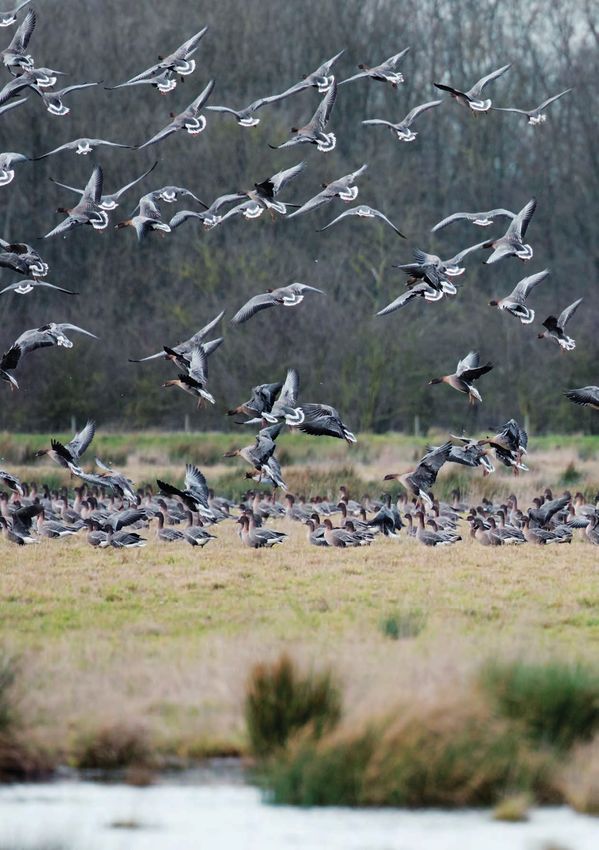
Survey dates for 2019/20
Icelandic–breeding Goose Census (ICG)                      Greenland White-fronted Goose Census
The IGC national organiser is                              The census is organised by the Greenland
Kane Brides (kane.brides@wwt.org.uk)                       White-fronted Goose Study
                                                           (https://greenlandwhitefront.org).
The coordinated census dates for autumn 2019               Please contact the organiser Tony Fox
are as follows:                                            (tfo@bios.au.dk) for further details about the census.
Pink-footed Goose: 19/20 october and
23/24 November                                             Count dates for the 2019/20 census are as follows:
Iceland Greylag Goose: 23/24 November                      Autumn and spring coordinated censuses:
                                                           14–18 December 2019 and 14–18 March 2020
Ideally, all sites supporting Pink-footed Geese should
                                                           We very much welcome counts from all other dates and
be covered during the october and November
                                                           times, but for the monthly counts we especially
counts, whilst those holding Iceland Greylag Geese
                                                           appreciate counts in the following periods:
should be covered in November.
                                                           23–27 November 2019, 18–22 January
  We would like to encourage all counters at sites
                                                           and 22–26 February 2020
within the range of Iceland Greylag Geese to also carry
out a count during September if the site also supports
British/Irish Greylag Geese. September counts are not
strictly coordinated but ideally should be carried out
                                                             Enter your counts online
during the middle of that month, although any counts         Counters taking part in the Icelandic-breeding
made during September will be of value.                      Goose Census (IGC), the International Swan
  If you are unable to count on the above dates, please      Census (ISC) or undertaking age assessments can
contact either your Local organiser or Kane Brides, so       enter data online using WWT’s Waterbird Monitoring
that we may try to arrange cover of your site by another     online website.
counter.                                                       You will need to register to use the system at
                                                             https://monitoring.wwt.org.uk/recording/, where
                                                             help pages are available to guide you through the
Help needed to cover IGC sites                               process of registering and entering counts.
Recent data from tracking GPS tagged Pinkfeet have             If you need any further information on how to use
revealed a number of possible new roost sites for            the website, please contact WWT’s Monitoring Unit
these geese (see the article on page 6). Therefore,          at monitoring@wwt.org.uk.
we are looking for counters who would be willing to
visit sites in Lanarkshire for the IGC in 2019 to
investigate further. We are also looking for counters      Reporting sightings
in Lancashire and Angus to cover current IGC sites
where a counter has retired.                               of colour-marked birds
  If you are a counter in one of these regions and you     To report a sighting of a colour-marked bird, please first
are interested in helping, please contact your Local       refer to the European Colour-ring Birding website
Organiser in the first instance. For any new counters or   (http://www.cr-birding.org/) where a list of project
for counters without a Local organiser, please contact     coordinators can be found, including for all WWT
Kane Brides (kane.brides@wwt.org.uk).                      projects. observations of marked birds can be
                                                           submitted directly to the relevant project coordinator or
                                                           in some cases by submitting sightings into online
                                                           databases. If you are unable to find a project that
  Find out more                                            matches the bird you observed, please submit your
                                                           details to the EURING Web Recovery Form at www.
  Visit WWT’s Waterbird Monitoring website at              ring.ac.
  https://monitoring.wwt.org.uk/our-work/                    If you would like to report a sighting of a colour-
  goose-swan-monitoring-programme/ to find out             marked bird that has been ringed as part of a WWT
  more about the Goose & Swan Monitoring                   project, please email your sighting to
  Programme (GSMP), including detailed survey              colourmarkedwildfowl@wwt.org.uk.
  results and all editions of GooseNews.                     Further information about submitting a sighting of a
    Details about all the GSMP surveys, including          colour-marked bird can be found on the WWT
  how to get involved, can be found on the website         monitoring website at https://monitoring.wwt.org.uk/
  at https://monitoring.wwt.org.uk/get-involved/.          our-work/uk-waterbirds/goose-swan-monitoring-
                                                           programme/colour-marking.

4 | goosenews | ISSUE No.18 | AUTUMN 2019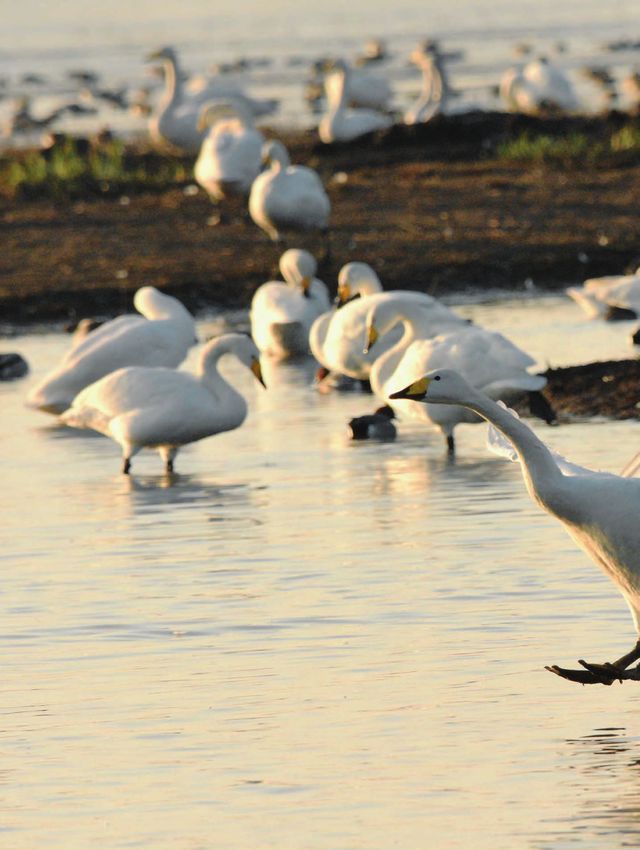
International Swan Census 2020                                 at around 7,000 birds up until 2015 when there was a
                                                               significant decline to just 4,392. Ireland has seen a
January 2020 sees the next International Swan Census
                                                               particularly large drop in numbers, with the census in
(ISC) take place across Europe. The census,
                                                               2015 recording just 21 birds compared with a peak of
coordinated by the IUCN SSC Swan Specialist Group, is
                                                               2,004 in 1990.
carried out every five years and aims to estimate the
                                                                  The 2020 census will result in updated flyway-scale
size and distribution of the three migratory swan
                                                               population estimates for these two populations, as well
populations in Northwest Europe: the Icelandic
                                                               as for the NW European Whooper (found predominately
Whooper, the Northwest Mainland Europe Whooper and
                                                               on mainland Europe) which, like its Icelandic
the Northwest European Bewick’s. The ISC in Britain,
                                                               counterpart, has been increasing. Results from the
Ireland and Iceland is coordinated by WWT in
                                                               census will also help researchers determine any
collaboration with I-WeBS, the Irish Whooper Swan
                                                               conservation needs for these populations across their
Study Group (IWSSG) and our Icelandic colleagues,
                                                               flyways; particularly for Bewick’s Swan, which in 2015
and with generous help from the WeBS network.
                                                               was classified as Endangered in the European Red List
  Although WeBS and I-WeBS cover a large proportion
                                                               of Birds1 due to the decline in the population, and for
of sites frequented by Whoopers and Bewick’s, in order
                                                               which there is an AEWA International Single Species
to attain complete coverage and a population estimate,
                                                               Action Plan2 in place.
we also need to survey areas that are not regularly
covered or not covered at all by these schemes, such as
feeding sites in agricultural areas. For some key sites,       The census in Britain and Ireland is due to take place
there may also be a need to undertake counts of                on the weekend of 11/12 January 2020,
roosting birds at dawn or dusk (rather than the daytime        corresponding to the International Waterbird Census.
counts) in order to obtain better estimates. The ISC also
involves collecting additional information on breeding         If you would like to get involved in the census, please
success and habitat use of the swans. Therefore, the           contact:
census requires additional help and support from the               Britain: Kane Brides (WWT)
volunteer bird recording networks in Britain and Ireland.          kane.brides@wwt.org.uk.
  Since the first census of the Icelandic Whooper Swan
population took place in 1986, the population has been             Republic of Ireland: Brian Burke (I-WeBS)
continually growing. The most recent census in 2015                bburke@birdwatchireland.ie.
reported a flyway total of 34,004 birds, which represents          Northern Ireland: Graham McElwaine (IWSSG)
more than a two-fold increase since 1986 when 16,731               grahammcelwaine@btinternet.com.
birds were recorded.                                             Further information about the census is also available
  In contrast, the Bewick’s Swan population has                on WWT’s Waterbird Monitoring website at https://
declined, with the overall census total falling from a peak    monitoring.wwt.org.uk/get-involved/isc-2020/.
of 29,277 in 1995 to 20,148 in 2015 (Beekman et al. In
                                                               1 See http://www.birdlife.org/europe-and-central-asia/european-red-
prep.). At the national level, although numbers in Britain       list-birds-0
and Ireland fell following the peak of 10,758 in 1990, the     2 See https://www.unep-aewa.org/sites/default/files/publication/
subsequent censuses saw the population remain stable             ts44_ssap_bewicks_swan.pdf

Age assessments                                                                        Coordinated Whooper
Age assessments will continue during 2019/20 as usual. The survey                      and Bewick’s Swan
periods vary between species and are shown below. If you are interested
in helping with these surveys, please contact WWT’s Monitoring Unit at                 age assessments
monitoring@wwt.org.uk.                                                                 Three coordinated census dates
                                                                                       are set each winter for age
Population                          Period                Notes
                                                                                       assessments of Whoopers and
Whooper Swan                        oct – Jan             focus on mid-Jan             Bewick’s: although assessments
Bewick’s Swan                       Nov – Feb             focus on mid-Jan             made at any time during the
Iceland Greylag Goose               oct – mid Nov         care needed with age         autumn/winter are welcome.
                                                          identification
British Greylag Goose               Aug – Sep                                          The coordinated dates for
Pink-footed Goose                   mid Sep – mid Nov                                  winter 2019/20 are as follows:
Bean Goose                          oct – Nov
                                                                                       19 November 2019
European White-fronted Goose        oct – Jan             focus on Jan
                                                                                       17 December 2019
Greenland White-fronted Goose       oct – Jan             focus on Dec
                                                                                       11/12 January 2020
Dark-bellied Brent Goose            Sep – Mar             focus on oct – Nov
                                                                                       (to coincide with the
Light-bellied Brent Goose           Sep – Mar             focus on oct – Nov
                                                                                       International Swan Census)
(both populations)
Barnacle Goose (both populations)   oct – Dec

                                                                                   goosenews | ISSUE No.18 | AUTUMN 2019 | 5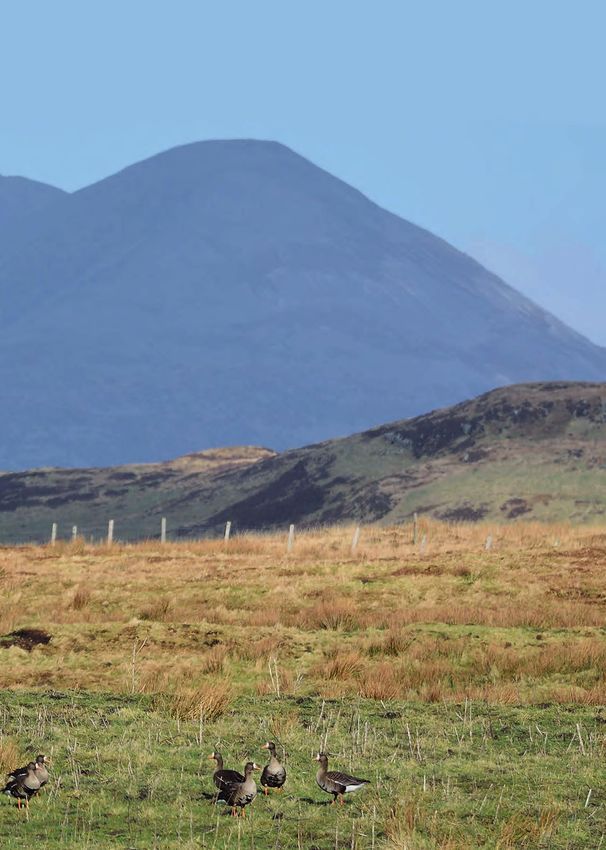
What’s hiding
behind the hill?
Carl Mitchell & Ian Patterson
GPS telemetry reveals where
Pink-footed Geese are roosting
at the time of the IGC counts.

                                            Photo: Graham Catley

6 | goosenews | ISSUE No.18 | AUTUMN 2019
The population of Greenland/ Iceland Pink-footed             additional 95,011 birds on uncounted sites (or 15.5% of
Geese has increased from approximately 50,000 birds          the revised population estimate including the missing
in 1960 to over half a million in 2016 and 2017.             birds). The comparable figures for October 2018 were
However, the overall winter distribution of Pinkfeet in      a population estimate of 441,000 counted birds, with
Britain appears to have remained largely similar to that     the 42 tagged geese alive during that autumn
reported in the 1960s (see Mitchell & Hearn 2004).           representing, on average, approximately 10,500
Although the number of geese roosting at some of the         unmarked birds. of the tagged geese, eight were
sites has greatly increased (e.g. Montrose Basin,            roosting on sites that were not counted, which
Angus) in line with the growth of the population, others     represents an estimated 84,000 additional birds on
have increased but subsequently decreased (e.g. Loch         uncounted sites (or 16% of the revised population
of Strathbeg, Aberdeenshire, and Dupplin Lochs,              estimate including the missing birds). Is the IGC
Perthshire). In some traditional areas, new roosts have      missing approximately a sixth of the population each
become occupied and are now regularly counted for            autumn? As the population has increased in the last
the Icelandic-breeding Goose Census (IGC) (e.g.              thirty years, although the broad geographic range of
Middlemuir, Aberdeenshire).                                  the wintering birds has remained rather similar, and
  WWT have been using Global Positioning System              some sites have seen comparable increases in site
(GPS) tags on Pink-footed Geese since December               use, other new roosts have become occupied within
2016 (see GooseNews 17:28–29). These have                    those areas, and the IGC coordinators, Local
provided great insight into the year-round movements         organisers and individual counters should be vigilant
of the geese within the UK, Iceland and Greenland (see       to new sites becoming occupied by roosting geese and
also https://sites.google.com/view/telemetry/home).          try to ensure count coverage where practicable.
  As an aside, the GPS data have also allowed the               The use of wetlands for roosting was examined in
distribution of the tagged geese to be mapped at the         more detail in Aberdeenshire throughout winters
time of the IGC counts. A preliminary examination of         2017/18 and 2018/19. In addition to the five main
the location of 54 of the GPS-tagged Pink-footed             roosts in the county, several other roosting sites were
Geese yielded 124 records on the weekends of the             identified: 22 in 2017/18 and 15 in 2018/19. The sites
october 2017/18 and 2018/19 IGC coordinated count            ranged from small permanent waterbodies to flooded
dates between 10pm and 4am, at a time when the               fields, but again, the number of birds roosting there
geese were assumed to be roosting. The examination           was not known. Six of these sites in the first winter and
included only one location from each evening, but            five in the second were used for at least ten goose
locations from successive nights were included, since        nights. of the 22 sites used in 2017/18, nine were used
the geese could have moved between sites within a            again in the following winter.
weekend.                                                        The tagged geese stayed at the newly identified
  The geese were recorded at 72% of the sites that are       Aberdeenshire roosts, on average, for seven nights in
regularly counted as part of the IGC (33 out of 46 sites).   2017/18 and for six nights in 2018/19 (a ‘stay’ being the
The examination also revealed several gravel pit             period during which a tagged goose was recorded at a
workings, flooded fields and small lochs that the tagged     given roost before moving to another roost or away
geese used which, as far as we are aware, have never         from Aberdeenshire). one of these sites, a set of small
been counted for the IGC. It is unlikely that these hold     pools near Peterhead, was used much more than
substantial numbers of geese (but see below) and             average by two of the tagged geese in 2017/18, for a
some may only be used infrequently – especially so           combined total of 13 stays and 228 goose nights (18
with seasonally flooded wetlands. However, several           nights per stay). one of the two geese was not
larger waterbodies were also used, including Loch            recorded in the UK in 2018/19, but the other stayed at
Skiach (Perthshire), Letham Moss (Upper Forth) and           the pools again five times, for a total of 111 nights (22
several waterbodies near Coldingham (Borders)                nights per stay).
including Loch Rickie, and these have the potential to          In response to this valuable new knowledge, this
hold larger numbers of geese.                                winter we will be seeking volunteer counters to cover
  Unfortunately, although we know where the tagged           as many of these potential new IGC sites as possible
geese were roosting, we don’t know how many birds            (see page 4). This early examination could be
were roosting at these uncounted sites, thus we can’t        extended to a more formal analysis and also include
be sure how many Pink-footed Geese are potentially           other species (such as Bewick’s Swan, where tracking
being missed by the IGC. one way to roughly estimate         may help identify additional roost sites at the ouse
how many Pinkfeet were roosting on uncounted sites           Washes). But it also sheds an important light on the
might be to assume that from a population estimate of        potential limits of the existing surveillance and the
515,800 birds counted in october 2017, each of the 38        ability of current technology to guide us to survey new
tagged geese alive during that autumn, represented,          sites.
on average, approximately 13,573 unmarked birds
(this, of course, assumes that the tagged geese are          References
distributed randomly through the population). of the         Mitchell, C. & R.D. Hearn. 2004. Pink-footed Goose Anser
                                                               brachyrhynchus (Greenland/Iceland population) in Britain
tagged geese, seven were roosting on sites that were           1960/61–1999/2000. Waterbird Review Series.
not counted, which, therefore, represents an estimated         ISBN 0-900806-43-5. WWT/JNCC, Slimbridge. 90pp.

                                                                                 goosenews | ISSUE No.18 | AUTUMN 2019 | 7
Volunteering
backstage for
the GSMP
Maurice Durham

My association with the team at WWT Slimbridge goes
back to 1990, when a Constant Effort Ringing Site (CES)
was established in the decoy wood at the centre, as part
of the national scheme organised by the British Trust for
ornithology. The scheme provides valuable trend
information on the abundance of adults and juveniles,
productivity and also adult survival rates for 24 species
of common songbird. over the subsequent years, I got to
know Baz Hughes, Richard Hearn and Carl Mitchell well,
which gave me some idea of what went on in WWT‘s
Research Department (as it was known back then), and
more especially the Monitoring Unit and its forbears. By
2007, I’d switched to working part-time (in the day job),
and so offered to start computerising historic ringing
data, as it would be the only way to preserve it and make
it available for any future studies. I hadn’t realised quite
how much there was at the outset!
   More recently, dealing with the historic data has taken
less of my time, and I’ve become more involved with the
wider work of the Unit. This has ranged from helping to
cannon-net Bewick’s Swans, to cataloguing and
archiving reports and data associated with the Goose &
Swan Monitoring Programme, and updating the
Monitoring Unit’s website.
   I qualified for my A Ringing Permit in 1986, and
although I don’t have a cannon-netting endorsement,
I’ve been involved with quite a few catches (mainly gulls
on landfill sites). I’ve therefore always been happy to join
WWT’s cannon-netting sessions, where I can use my
experience to help set the nets and process the birds
afterwards. on our less successful trips, the evening
discussions would occasionally turn to how to improve

8 | goosenews | ISSUE No.18 | AUTUMN 2019
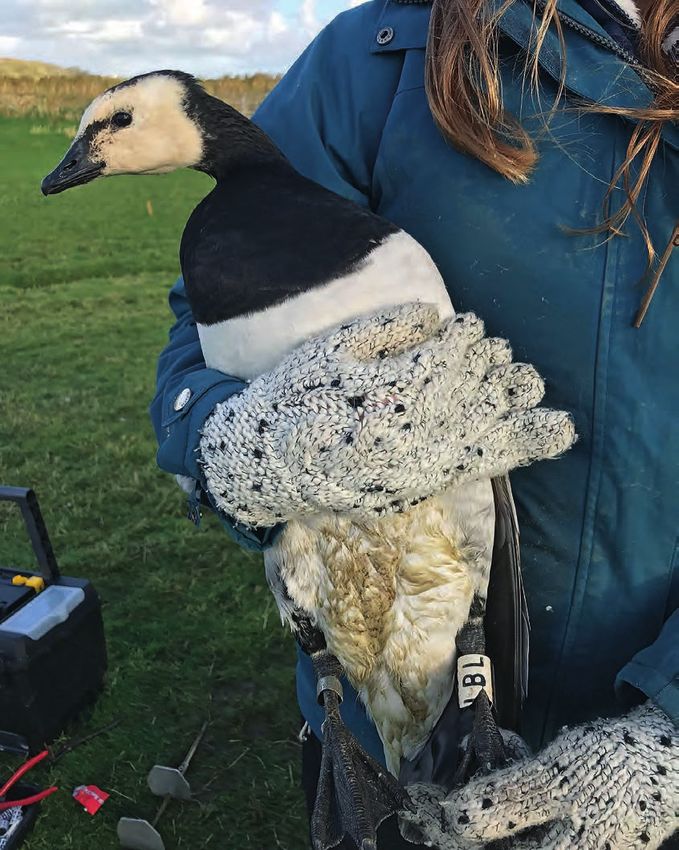
Volunteers are the life force behind most bird monitoring schemes. Without
their steadfast support, our knowledge of bird status would be significantly
poorer and many schemes would struggle to continue. Though the majority
of volunteers tend to be out in the field, a small number can be found
behind the scenes providing crucial support on scheme coordination.
Maurice has been helping at WWT Slimbridge for nearly 15 years and here
he tells us a little about what he’s been up to during his time as a volunteer.

     Photo: Sam Stafford / WWT

             the cannon-netting kit and make things         updating the main IGC reports, one of my next tasks is
              easier. So being of a fairly practical        to add regional reports (which some Local organisers
              inclination, I’ve now made a two-man hide     used to provide) to the website. In addition, I’ve also
              (Rich used to get very lonely in his          uploaded reports of the supplementary counts of
              previous one) and some keeping cages (to      Dark-bellied Brent Geese that were carried out
             hold birds during catches), as well as         between 1985 and 1994, so these too are now
            improving the kit storage here at Slimbridge.   available on the website.
               over the years, the various surveys            Most of this might seem a bit dry and not involve the
           undertaken by WWT had produced a large           excitement of being out in the field actively monitoring
           archive of data and reports, which had been      what is going on, or even analysing the results of
           stored in various offices and an external        surveys to determine population trends and breeding
           Portastore at Slimbridge. In 2016, it was        success. However, it’s really important to me that the
           decided that in order to free up office space    effort which went into surveys in the past should be
           and remove the Portastore, all the archive       readily available to people today. I just don’t have
           material was to be sent to an offsite storage    enough time to do it as quickly as I’d like!
           facility. This involved some 70 boxes of
           material for the Monitoring Unit, some of
          which dated back to the 1940s, and took quite
          a while to archive. However, it did have the
         major benefit that all the material is now           Many thanks for all your help
       catalogued so it can be identified and traced, for
                                                              The greatest strength of the GSMP and many
    the first time in many years for a great deal of it.
 And for me, some of the most exciting finds were Sir         other goose and swan monitoring projects lies
Peter Scott’s original goose and duck ringing field           in the tremendous volunteer input from you, the
notebooks, complete with his sketches on the covers.          counters, ring-readers and other participants.
  In going through the archive material, master copies        A big thank you to you all!
of various reports were found, including some early
Icelandic-breeding Goose Census (IGC) reports. So             We hope that you will continue to support the
we took the opportunity to review what was available          various schemes and through these, the
on the Monitoring Unit’s website to see if any were           conservation of swans, geese and wetlands
missing and also to identify any reports where the            throughout the UK and beyond.
quality could be improved. Having recently finished

                                                                             goosenews | ISSUE No.18 | AUTUMN 2019 | 9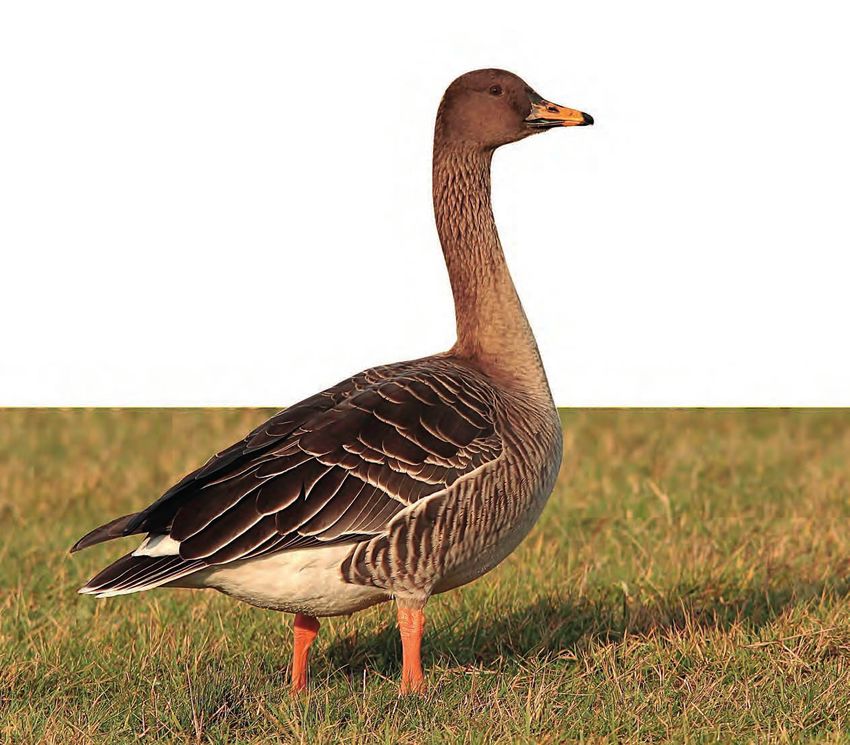
Site focus:
WWT Martin Mere
Maria Scullion & Louise Clewley

WWT Martin Mere is one of a number of sites in Lancashire that are monitored annually
for the Icelandic-breeding Goose Census, and where age assessments of Pink-footed
Geese and Whooper Swans are regularly undertaken. Here, Maria (Reserve Placement
Student) and Louise (Reserve Manager) provide a brief overview of the reserve.
Martin Mere is an internationally important wetland in        Ramsar site. All three of these designations refer to the
Lancashire that has been managed by WWT as a visitor          national and international importance of the site for
centre and nature reserve since 1974. It is situated in       wintering wildfowl, particularly the latter for Pink-footed
what used to be the largest freshwater lake in England        Goose and Pintail. At one time, the reserve was also
which was formed after the last ice age. This would have      significant for Bewick’s Swans. During the 1980s,
been a perfect habitat for migratory swans and geese,         numbers using the site increased, reaching a peak of
with most of the area being covered in water and              over 1,000 in 1990/91. But the increase was short
reedbed. However, the lake was drained in the 1800’s by       lasting, and what followed was a gradual decline during
a local land owner with the use of steam-powered pumps        the 1990s and 2000s, with few, if any, now recorded: in
to create land for crops on the fertile soil. The geese and   2018/19 we had one pair visit the site for a matter of
swans have since adapted to using this to their               minutes. A shift in the Bewick’s Swans’ winter
advantage and now spend hours in the fields feeding on        distribution in recent years, associated at least partially
crops such as potatoes and carrots.                           with climate change, has reduced numbers visiting
   The site itself now comprises 700 acres of mixed           sites in northwest Britain, and most birds that do
wetland habitat, including lowland wet grassland              venture this far north rarely bring cygnets with them.
(managed by our herd of English Longhorn cattle),             So, unless there’s colder weather in continental Europe
marsh, reedbed and open water. We manage the                  in the coming winters, it is unlikely that many Bewick’s
reserve for our overwintering wildfowl by topping the         will use the site in the foreseeable future.
fields in late summer/early autumn so new growth is             Martin Mere still supports internationally important
coming through as the birds start to arrive, thus providing   numbers of wintering Icelandic Whooper Swans, and
a good source of food. We can also alter the water levels     although peak counts vary year to year, as many as
across the site, so before the swans and geese arrive we      c. 2,500 may roost on site. The journey for these swans
increase the level on the Mere by about 1m to ensure          from their breeding grounds in Iceland is approximately
that the birds have plenty of space to roost and feed.        500 miles overseas to northwest Scotland, which they
   Martin Mere is a designated Site of Special Scientific     tend to do in one leg. They may then take a break for a
Interest (SSSI), Special Protection Area (SPA) and            few hours before continuing to Martin Mere. Some

10 | goosenews | ISSUE No.18 | AUTUMN 2019
Whoopers use Martin Mere as a stop off during their         grain throughout the winter and the waterbodies remain
migration, sometimes staying for a couple of weeks          unfrozen due to a constant movement of freshwater,
before moving south to the ouse Washes in Norfolk.          which also provides open water for roosting. The birds
However, the majority of swans that do stop at Martin       may also prefer to move shorter distances to feeding
Mere will stay here for the whole winter.                   sites when it is cold to save energy, which also makes
  over the years, researchers here have grown               the reserve much more of a convenient location.
attached to specific birds because of their incredible        once the birds begin to arrive, counts are held once a
stories. one bird, known to us by the name Virginia, has    week to ascertain numbers and preferred roosting
been returning since 1993, and possibly before. She         positions across the site. The counts are done at dawn
was first ringed at Martin Mere in 1993 as an adult bird    so observers must be in place before dawn with a
so is at least 27 years old! over the years she has had     scope and clicker at the ready. Throughout the season,
three different mates: she separated from the first,        The Mere (the main lake on site) was clearly the
which is a little unusual for Whoopers as they tend to      favoured position for both the Whooper Swans and
mate for life; her second disappeared and is thought to     Pink-footed Geese (the lake has deep water with easily
have died; and she has now been with her third mate for     accessible sides and islands to roost on), so one
at least eight years. She has occasionally visited our      observer covered this area during the count. However,
Welney reserve on the ouse Washes and, in fact, this        we also monitor other parts of the reserve namely,
last winter she completely bypassed Martin Mere and         Vinson’s and Sunley’s marshes (which takes one
was sighted in Worcestershire instead!                      observer), and Woodend Marsh and the Reedbed
  The migration of Pink-footed Geese is an incredible       (each of which takes one person to cover), meaning
feat. They migrate yearly from their breeding grounds       four observers are required to cover the whole site. our
(either in Iceland or Greenland) and winter almost          observers are currently three placement students and
exclusively in Britain. From Iceland to Martin Mere is      one member of reserve staff.
about 950 miles and from Greenland it is about 1,500          The Whooper Swans tend to leave at first light so
miles. When you think about the fact that juveniles will    counting them first is advisable. Luckily, as they are
also make that migration with their parents at only four    white, they stand out from the murky background,
or five months old, it really is amazing. Most Pinkfeet     making it easier to count them than counting the geese.
use Martin Mere as a stop off point on their migration      After this, it is easier to wait for the light to lift slightly in
further south to Norfolk; hence the peak count here         order to be able to distinguish the Pink-footed Geese
occurs early in the winter. The highest count recorded to   from any other roosting geese, such as Greylag,
date was in october 2014 when 45,000 roosted on site.       Canada and the occasional Greater White-fronted
Typically, we have around 4,000 that roost on site each     Goose. During 2018/19, we had comparatively lower
night throughout the winter, once the larger flocks have    numbers to those recorded in previous winters with just
passed through, although numbers do vary year to year.      under 15,000 Pink-footed Geese and 1,200 Whooper
  The Pink-footed Geese tend to start arriving at Martin    Swans being our peak counts. For the Pinkfeet, this
Mere in mid-September. In 2018, they made their first       may have been a consequence of the mild winter, with
appearance on 14 September but it wasn’t until october      many birds choosing to stay in Scotland rather than
that their numbers increased, with a peak roost count of    continue on to Lancashire. Similarly, the Whooper
14,430 birds on 15 October. The first Whooper Swans of      Swans may have chosen to winter at the ouse Washes
the season arrived on 23 September with numbers             in preference to Martin Mere: incidentally, record
increasing more rapidly in october, levelling out at        numbers of Whoopers were recorded at the ouse
around 600 birds roosting on the reserve, although the      Washes in January 2019.
number seemed to increase during cold snaps and be
lower when the weather wasn’t as bad. We think this is,     If you would like to contribute an article about the
in part, due to food being more readily available on the    site you cover for a GSMP survey, please contact
reserve during cold conditions, as we regularly supply      Colette Hall (colette.hall@wwt.org.uk).

                                                                                                                    Photo: WWT

                                                                               goosenews | ISSUE No.18 | AUTUMN 2019 | 11
Latest news from
GSMP surveys
The table below shows the total counts and the
breeding success* of goose and swan populations
wintering in Britain and Ireland, recorded during various
surveys in 2018/19, except the results for Greenland
White-fronted Goose which are for 2017/18. Surveys
were undertaken at an international or national scale,
or at a few key sites. See the individual population
reports that follow for further details.
* Age assessments comprise two measures of annual breeding
(reproductive) success (or productivity): the proportion of young
(first-winter) birds in non-breeding flocks, and the mean brood size
(number of young produced by successful breeding pairs).
More detailed results are available on the
GSMP web pages at https://monitoring.wwt.
org.uk/our-work/goose-swan-monitoring-
programme/species-accounts/ Photo: Mark Wilson
Population Total count1 Percentage young Mean brood size
(young per
successful pair)
Northwest European Bewick’s Swan - 11.5% 1.7
Iceland Whooper Swan - 16.1% 1.9
Taiga Bean Goose 262 2
5.0% (Slamannan) 1.3 (Slamannan)
Greenland/Iceland Pink-footed Goose 440,891 3
17.9% 2.0
European White-fronted Goose - 23.1% 2.46
9.29% (Islay) 2.97 (Islay)
Greenland White-fronted Goose 4 20,529 5
5.29% (Wexford) 2.90 (Wexford)
Iceland Greylag Goose 58,246 3 22.6% 2.08
British Greylag Goose - 40.8% (Tiree) 2.81 (Tiree)
4.0% (Islay) 1.01 (Islay
Greenland Barnacle Goose -
1.4% (Tiree) 1.08 (Tiree)
Svalbard Barnacle Goose 40,400 6 6.3% 1.74
Dark-bellied Brent Goose - 8.0% 1.88
East Atlantic Light-bellied Brent Goose - 5.9% (Lindisfarne) -
1 For the official UK population estimates 2 Combined total for the Slamannan 5 Flyway total. From; Fox, A.D., I.S. Francis,
(e.g. for calculation of national 1% Plateau (data provided by the Bean D. Norriss & A.J. Walsh. 2018. Report of the
thresholds) please refer to; Frost, T., G. Goose Action Group) and the Yare 2017/18 international census of Greenland
Austin, R.D. Hearn, S. McAvoy, A. Valley (data provided by RSPB). White-fronted Geese. Greenland White-
Robinson, D.A. Stroud, I. Woodward & S. 3 Flyway total. From; Brides, K., C. fronted Goose Study report. 16pp.
Wotton. 2019. Population estimates of Mitchell & S.N.V. Auhage. 2019. Status 6 Flyway total. Griffin, L. 2019. Svalbard
wintering waterbirds in Great Britain. and distribution of Icelandic-breeding Barnacle Goose distribution around the
British Birds 112: 130–145. The official geese: results of the 2018 international Solway Firth 2018–2019: Flock counts from
flyway population estimates (e.g. for census. Wildfowl & Wetlands Trust the Solway Goose Management Scheme
calculation of international 1% thresholds) Report, Slimbridge. 18pp. area. Final report to SNH. WWT, Slimbridge.
are those published by Wetlands 40pp.
International at http://wpe.wetlands.org. 4 Results presented for the Greenland
White-fronted Goose are from surveys
undertaken in 2017/18.
12 | goosenews | ISSUE No.18 | AUTUMN 2019Bewick’s and Whooper Swan
breeding success, 2018/19 Photo: otto de Vries
Julia Newth & Kane Brides
The majority of Bewick’s and Whooper Swan flocks across a good sample of flocks in England (few, if any
arriving in Britain and Ireland during late autumn and Bewick’s occur elsewhere in Britain), with a total of
early winter tend to comprise mainly of non- or failed 1,618 birds aged: 1,490 in Cambridgeshire/Norfolk/
breeders. Therefore, to make an assessment of the Kent, 11 in Lancashire (Ribble Estuary) and 117 in
overall breeding success for swans wintering in these Gloucestershire/Somerset. overall, 11.5% of the
countries, it is preferable to use age counts from later in swans aged were cygnets, which is a vast
the season, as by mid-winter the majority of families improvement on 5.7% recorded in 2017/18, and similar
will likely have arrived. Hence, for the 2018/19 season, to the previous ten-year mean (11.4% young, 2008/09–
coordinated age assessments for both species were 2017/18). These findings mirror those recorded by a
carried out in January 2019. coordinated international assessment that was carried
Good coverage of Whooper Swan flocks throughout out in ten countries across northern Europe (including
Britain and Ireland was achieved, with a total of 17,218 Britain) in December 2018. Preliminary results indicate
swans aged: 8,494 in England, 434 in Scotland, 2,304 that amongst the 9,262 Bewick’s Swans aged, 8.7%
in Northern Ireland and 5,986 in the Republic of Ireland. were young birds, which is a notable increase
overall, 16.1% of the birds aged were cygnets, and compared with the results from the 2017 assessment
although lower than the previous season (18.1% in when only 3.9% young was recorded.
2017/18) the percentage young was marginally higher
than the previous ten-year mean (15.9% for 2008/09– Our continued thanks goes to all who help with these
2017/18), suggesting that flocks wintering in Britain age assessments, particularly to Graham McElwaine
and Ireland had an average breeding season in 2018. and the Irish Whooper Swan Study Group who
Similarly, results for the Bewick’s Swan suggest that coordinated the Whooper Swan counts in Ireland. Our
2018 was an average breeding season for the birds thanks also to Wim Tijsen and Kees Koffijberg for the
wintering in Britain. Age assessments were made provision of the international Bewick’s Swan data.
goosenews | ISSUE No.18 | AUTUMN 2019 | 13Icelandic-breeding The 59th Icelandic-breeding Goose Census (IGC) took
place in autumn 2018 to assess the population size
Goose Census 2018 and breeding success of the Greenland/Iceland
Pink-footed Goose and the Iceland Greylag Goose.
Surveys took place across the flyway, with data
received from Iceland, Ireland, Britain, Norway and the
Kane Brides Faroe Islands.
During the october IGC weekend, a total of 440,891
Pink-footed Geese was counted, this being 14.5%
lower than the previous estimate of 515,852 birds in
2017. Given that Pink-footed Geese had a reasonable
breeding season during 2018 (see below), it is possible
that the 2018 census underestimated the true
population total and some birds may have remained in
northern Iceland at the time of the census in areas not
covered by the counts.
Fourteen sites held more than 10,000 Pinkfeet, with
Montrose Basin recording the highest number of
Pinkfeet (78,320) followed by the Beauly Firth
(25,200), Loch of Skene (25,195) and West Water
Reservoir (24,200). The breeding success was
monitored at various locations throughout Scotland
and England, with 22,089 Pink-footed Geese aged in
29 flocks. Breeding success was similar to the
mean for the previous decade with flocks
containing 17.9% young (mean 2008–2017:
18.1% ± 1.21 SE), with a mean brood size of
2.00 juveniles per successful pair (mean 2008–
2017: 2.00 ± 0.06 SE).
14 | goosenews | ISSUE No.18 | AUTUMN 2019The November 2018 count produced an Iceland
Greylag Goose population estimate of 58,426, which
although lower, is not too dissimilar to the previous Celebrating 60
estimate of 60,962 birds in 2017. At the time of the
census, 60,534 Greylags were counted on orkney years of the IGC
(although an estimated 18,500 of these were non-
migratory British birds) with a further 10,583 recorded The 60th census of Iceland Greylag and
in Iceland. Indications of a recent population decline Pink-footed Geese is due to take place in
have been previously reported and it is interesting that autumn 2019.
the population estimate remains well below the ten-
year average of 96,838 birds (2008–2017). However, The first census took place in 1960, when
monitoring this population remains challenging and it is one coordinated count was carried out in
uncertain the degree to which undercounting and other November at various locations in Britain. In
estimations affected the 2017 and 2018 population the decades that followed, the census grew
estimates. Given that c. 40,000 birds are shot in to include all countries along the flyway, and
Iceland every year and the unmonitored number of
as of 2001 it became known as the
birds shot in the UK is also likely to have increased
recently, as a result of SNH’s attempts to reduce the Icelandic-breeding Goose Census (IGC).
number of British Greylag Geese on orkney (where In our next edition of GooseNews (due out
Iceland Greylag Geese also occur), the trajectory of the in autumn 2020) we’ll take a look back
population needs careful monitoring.
across the last 60 years of the IGC,
Age assessments of Iceland Greylag Geese were
made at various locations in Caithness, Scotland, with reflecting on the changes we have seen in
1,378 birds aged amongst 17 flocks. The percentage of both the goose populations and amongst
young found amongst flocks (22.6%) was higher than the teams that have monitored them.
the previous year (19.9% in 2017) and higher than the
All 59 IGC reports, from the first in 1960 to
previous ten-year mean (mean 2008–2017: 21.9% ±
0.51 SE). The mean brood size was 2.08 goslings per the latest for 2018, are available to
successful pair, and lower than that of the recent download from the GSMP website at
ten-year mean (mean 2008–2017: 2.25 ± 0.08 SE). https://monitoring.wwt.org.uk/our-work/
goose-swan-monitoring-programme/
We are enormously grateful to the network of counters reports-newsletter/.
across the flyway who support the census, and without
whose continued support such coverage would not
be possible.
Photo: James Lees / WWT
goosenews | ISSUE No.18 | AUTUMN 2019 | 15Taiga Bean Geese wintering in Britain in 2018/19 Carl Mitchell Monitoring of Taiga Bean Goose wintering in Britain Slamannan. In winter 2017/18, 14.0% young was was undertaken at the Slamannan Plateau, Falkirk by recorded, but numbers declined, and in winter 2018/19 the Bean Goose Action Group and at the Yare Valley, there was 5.0% young and numbers increased; the Norfolk, by RSPB reserve wardens during winter opposite to what might be expected. Quite what is 2018/19. At the Yare Valley, where the number of driving the change in numbers at the site is not clear. wintering Bean Geese has been declining since The surveillance may suffer from low sample sizes 1993/94, the peak count was of 21 geese on 15 when determining breeding success, or there may yet December, three birds more than that recorded during be hitherto undetected connections with birds wintering the previous winter (18). The peak was short lived in Denmark one year and in Scotland the next. however, since throughout January the maximum was Since 2011, a number of Bean Geese from the a group of only 15–16 birds. There have been 21 or Slamannan flock have been caught and fitted with GPS fewer birds at this site since 2014/15, when there was tracking devices to help explain their migration routes. a maximum count of 47 birds. Two other Taiga Bean The resulting data have provided some fascinating Geese spent the majority of the winter on the east information on the birds’ movements, and one of the Norfolk coast in the Waxham area with Pink-footed tags is still transmitting. To follow their migration story Geese. The long and slow decline in numbers go to https://sites.google.com/view/scotlands- wintering in England probably reflects a decline in the bean-geese/migration. The use of overall flyway population and short-stopping of birds engraved neck collars on Bean Geese on the near continent. at Slamannan has also helped A peak count of 241 birds was recorded at open our eyes to the Slamannan on 6 February, 35 more birds than the comings and goings of the previous year (206). The first Bean Goose was seen wintering flock there. They on 27 September with 40 birds recorded two days appear to be relatively long- later and the last 22 birds were seen on 18 February. lived, with at least five (33%) of the Breeding success was estimated from a sample of 85 first fifteen birds caught in October 2011 still birds at Slamannan in late october: four birds were alive and well eight years later and regularly aged as first winter (5% young) with a mean brood being seen. Some also appear to show size of 1.3 young per successful pair in the three ‘extended families’ with offspring from one broods seen. Breeding success has been at, or below, year still associating with their parents 5% in four out of the last five years. The number of over several winters. Bean Geese wintering at Slamannan has fallen from 300 birds as recently as 2007/08, but the increase in Thanks to Angus MacIver numbers in winter 2018/19 is a welcome change of (Bean Goose Action Group), fortunes. However, there appears to be a mismatch Ben Lewis (RSPB) and Larry Griffin between annual breeding success and the for providing data reproduced here. number of birds over-wintering at Photo: Carl Dixon 16 | goosenews | ISSUE No.18 | AUTUMN 2019
Photo: Mark Wilson

Monitoring of British Greylag Geese
in key areas of Scotland in 2018
Carl Mitchell

A number of areas where the numbers of British                on Harris/Lewis, breeding success was also high
Greylag Geese are now being reduced through                 with 1,392 birds aged in November 2018 of which
shooting, in an attempt to alleviate agricultural           33.5% were young birds, and in spring 2019, 4,560
economic damage, are monitored and provide the              Greylag Geese were counted on the islands. Winter
basis for annual reporting. However, no count or            counts were undertaken on the Uists, where 5,571
assessment of productivity was undertaken on orkney         Greylag Geese were counted in late February 2019,
in 2018.                                                    an increase of 13.9% on the previous year.
  on Tiree, the late August count was 1,968 geese, a
3.5% decrease compared to 2017. Breeding success            Thanks to John Bowler (RSPB Scotland) for providing
was once again high with 1,428 birds aged and, of           counts and breeding success data from Tiree and to
these, 40.8% were young with a mean brood size of           Roddy MacMinn (SNH) for providing counts from the
2.81 per successful pair. This was the thirteenth year in   Uists and Harris/Lewis.
a row that breeding success was recorded at over 25%
young and the highest value since 2001.

                                                                           goosenews | ISSUE No.18 | AUTUMN 2019 | 17
Greenland White-fronted Goose population monitoring in 2017/18 Tony Fox, Alyn Walsh, Ian Francis and David Norriss The National Parks and Wildlife Service (throughout results were better than the age ratios in Ireland, with Ireland) and the Greenland White-fronted Goose Study 5.3% young at Wexford (among the lowest ever (GWGS; in Britain) have coordinated the annual survey recorded and well below the 12.1% average for of wintering Greenland White-fronted Geese each 1982–2016) and 5.0% elsewhere in Ireland (the lowest season since 1982/83. The survey aims to assess the ever recorded). annual abundance of the entire world population, and to As discussed in the last edition of GooseNews, we this end, GWGS gratefully acknowledges funding for think this low productivity relates to poor weather on this task from the WWT/JNCC/SNH Goose & Swan the nesting grounds. We have known for some time Monitoring Programme. that Greenland White-fronted Geese undergo a degree The objective has always been to undertake monthly of leapfrog migration, so the birds that breed in the counts from November through to March (April in former north of their range in west Greenland tend to winter in times, before the geese began to advance their spring the south of the range in winter (i.e. in Ireland; Kampp migration departure dates). However, we ask for et al. 1988). Geese that overwinter in Scotland are particular efforts to be invested in December and March those that tend to nest further south within the breeding during nominated international count periods, from range in the milder parts of central west Greenland, which we use the March count as the annual which tend to thaw much earlier. Disko Island assessment of population size. Although this means we temperature records (from the southern edge of the count the birds towards the end of their winter period in breeding area used by Irish geese), show that when Britain and Ireland, experience has shown that their full geese arrive to nesting areas, recent springs have numbers are much easier to monitor than in autumn, been substantially colder compared to those during the when some can be hidden away on remote peatland early 1990s when the geese were returning with well feeding areas, and in mid-winter, when they are often over 10% young to Wexford and Ireland (Figure 1). most dispersed. The geese stage in Iceland on their spring migration In this task, we are as ever inordinately grateful to the where they now spend four to five weeks acquiring fat loyal and steadfast army of counters that go and search deposits and nutrient stores for the onward journey to out the geese to age and count for us to be able to make Greenland and ultimate investment in reproduction. such an assessment. Their incredible efforts located However, no matter how good the level of body 20,529 geese in spring 2018, which was extremely condition the geese can achieve on their staging areas close to the count of 20,556 reported this time last year in Iceland in spring, having crossed the inland in GooseNews for spring 2017 (Fox et al. 2018), which Greenland ice cap the females still need to restore their in turn had been 9% up on the previous March 2016 depleted energy stores once arrived to their nesting count. The population continues to be rather grounds. This is necessary, not just to invest in laying a concentrated at two major resorts, Wexford Slobs in SE clutch of eggs, but also to maintain them through the Ireland (which supported 37% of the entire population in incubation period, when we know they spend more spring 2018) and the Scottish Inner Hebridean island of than 99.9% incubating each day (Stroud 1981). To Islay (26%). Despite little overall change in population arrive to sub-zero temperatures and a snow-covered size, numbers at Wexford actually increased by 8.4% landscape, with no above ground green growth of (from 7,047 in spring 2017 to 7,637 in spring 2018), forage plants and a frozen substrate, which inhibits while those on Islay fell by 13.3% (from 6,141 to 5,623) extraction of the nutritious below-ground storage parts showing some redistribution within the range between of plants, imposes energetic costs on geese from winters, at least during the spring count. Numbers arrival. Arriving to temperatures above freezing counted elsewhere in Ireland changed little between the enables females to acquire additional stores for two seasons (1,912 compared to 1,950), while numbers egg-laying and incubation from arrival, so it seems counted in Britain away from Islay increased a little in likely that these relatively small differences in 2018 (5,623 compared to 5,456). temperature on arrival may have critical consequences The lack of change in overall population size fits well for the geese later in the season. As widely reported in with another relatively poor breeding season in 2017, the scientific press, temperatures are generally based on field-sampled age ratios of geese. Amongst increasing in west Greenland, but for this critical early the geese aged on Islay, Dr Malcolm ogilvie recorded spring period for the Greenland White-fronted Geese, 9.3% young among 1,920 geese sampled, which is well this is not the case and a protracted period of cold below the average of 13.6% for the years 1982–2016. springs with heavier than usual snowfall has restricted observers elsewhere Britain found 11.6% young (from their ability to reproduce at levels equivalent to the 2,754 birds which were age determined). Both of these 1980s and early 1990s. 18 | goosenews | ISSUE No.18 | AUTUMN 2019
References
                                                                Fox, A.D., I.S. Francis, D.W. Norriss & A.J. Walsh, A.J. 2018. Report
                                                                  of the 2016/2017 international census of Greenland White-fronted
                                                                  Geese. Greenland White-fronted Goose Study and National Parks
                                                                  and Wildlife Service. 18 pp.
                                                                Kampp, K., A. D. Fox & D.A. Stroud. 1988. Mortality and movements
                                                                  of the Greenland White-fronted Goose Anser albifrons flavirostris.
                                                                  Dansk Ornitologisk Forenings Tidsskrift 82: 25–36.
                                                                Mitchell, C., I.S. Francis, L. Griffin, D.A. Stroud, H. Thomas, M.
                                                                  Weegman & A.D. Fox. 2011. Greenland White-fronted Geese:
                                                                  Investigating causes of low reproductive output in Greenland
                                                                  Spring 2010 fieldwork – report to Scottish Natural Heritage.
                                                                  Greenland White-fronted Goose Study/Wildfowl &Wetlands Trust
                                                                  report. 77pp.
                                                                Stroud, D.A. 1981. Breeding biology of the Greenland White-fronted
                                                                  Goose. Pp. 82–102. In: Fox, A.D. & D.A. Stroud (eds). Report of
                                                                  the 1979 Expedition to West Greenland. Greenland White-fronted
                                                                  Goose Study, Aberystwyth.

Figure 1. Plot of mean daily temperatures (taken at 12:00) at the University of Copenhagen Arctic Station on Disko Island
against the percentage young geese among aged samples at Wexford Slobs, southeast Ireland, in the subsequent autumn.
Temperature data are from the online data accessible from the Greenland Ecosystem Monitoring (GEM) database (http://
www.g-e-m.dk) and reproduced in this form with permission. Fitted regression line for all points is significant (r2 = 0.36,
F1,21 = 11.8, P = 0.025). Note all the springs since 2011 (shown as open symbols) have been cooler than average and
production of young has been correspondingly low, with the exception of 2016, a warm
spring when reproductive success recorded at Wexford was correspondingly high.

A moderate breeding year for
European White-fronted Geese
Kees Koffijberg & Kane Brides

A total of 273,652 individuals were counted as part of
age assessment counts carried out in Germany, The
Netherlands and the UK from october 2018 to                                                                     Photo: James Lees / WWT

February 2019, revealing 12.6% young in the
population. At the time of writing, data are still to be
received from other areas of the flyway; however, the           now migrating to the UK, but the relatively high
final assessment is expected to be close to this figure.        percentage of young does fit the pattern observed in
Compared to the previous ten years, breeding success            earlier years. Mean brood size was also recorded at
during 2018 was about average. However, as                      WWT Slimbridge, with 2.46 young per successful
previously mentioned in GooseNews a long-term                   breeding pair recorded amongst the 13 broods
significant decline in breeding success has occurred.           assessed.
   The percentage of young in The Netherlands (15.4%)             European White-fronted Geese arrived rather late at
were slightly larger than in Germany (12.1%), but this is       their wintering sites on the continent in autumn 2018,
mainly due to the 19.6% young recorded in a sample of           and so was the arrival of successful families. According
19,535 geese in Friesland (northern Netherlands).               to long-term monthly counts in The Netherlands, total
overall, variation between the other regions in both            numbers around mid-october were the lowest since
countries was actually very low (ranging from 10.6% to          2009. Initially, very few young birds were recorded in
13.2% young). In a large sample assessed in Germany,            the flocks, pointing at a repetition of the low breeding
mean brood size was 1.51 young per pair (amongst                success in 2017 (when a late arrival also occurred).
3,684 families), whilst in The Netherlands, mean brood          october age assessments showed only 8.8% young
size was 1.60 amongst the 456 families recorded:                birds, but after a mass arrival during late october and
based on preliminary data.                                      early November, the number of young increased to
   As usual, counts in the UK yielded a much higher age         11.7% in November and 12.8% in December and then
ratio of 23.1% young overall. Data were collected at            stayed around that level for the rest of the winter.
two sites, WWT Slimbridge (149 aged, 17.4% young)
and the RSPB reserve North Warren in Suffolk (171,              Our sincere thanks to the networks of observers who
28.1%). This small sample size reflects the low number          undertook age assessments across the flyway.

                                                                                   goosenews | ISSUE No.18 | AUTUMN 2019 | 19
Photo: Mark Wilson Greenland Barnacle Geese wintering in Scotland in 2018/19 Carl Mitchell on Islay, the most important wintering site in the UK for during spring and early summer which was still lying as Greenland Barnacle Geese, four coordinated counts late as August. For six out of the last seven years, were undertaken during winter 2018/19. These breeding success has been below 7.0% young. revealed 30,428 birds in November, 31,263 in There has been a recent increase in the number of December, 35,251 in January and 31,058 in March. Barnacle Geese caught in this population and marked The mean of these four counts was 32,000 birds which with engraved plastic leg rings. Catching has taken place represents a 21.9% decrease compared to the winter in Ireland, Scotland and Iceland. With so many birds now 2017/18 mean (40,989 geese). The over winter colour-ringed, it is well worth checking flocks for marked population there has now decreased by a third in the birds. The ringing in Iceland took place during the last three winters as a result of the management culls summer moult; there are now over 1,000 pairs nesting in that are taking place (see also GooseNews 14:10–11). the south of the county near Jökulsárlón. During the Breeding success is measured annually on Islay and winter, colour-ring sightings of these birds have been counts in winter 2018/19 revealed another poor reported from several areas of west Scotland and Ireland breeding season. Just over 8,000 birds were aged and – all within the range of the Greenland population. Thus, showed that just 1.1% were young with a mean brood it looks like the birds breeding in south Iceland probably size of 1.01 young per successful pair. on Tiree, a stem from the Greenland population and may have sample of 1,000 birds held just 14 young (1.4%) with a involved birds abandoning half of the spring migration. mean brood size of 1.08 young per successful pair. overall, 2018 was the worst breeding season since Thanks go to Malcolm Ogilvie and John Bowler for records began in 1959. Reports from several areas in providing age counts and SNH for providing counts East Greenland mentioned unusually heavy snow from Islay. 20 | goosenews | ISSUE No.18 | AUTUMN 2019
Svalbard Barnacle Geese in 2018/19
Larry Griffin

The small Solway Goose Management Scheme area                 and then trying to thread its way up through the
contained most of the goose activity on the Scottish          mountain valleys and passes of southern Norway
side of the Solway this winter probably because of the        across inland areas where we have not recorded these
fairly mild conditions, such that grass growth continued      geese before (Figure 2). This will have been due to
throughout much of the season. on moving into April           strong northerly winds down the coast of Norway
2019, warm dry conditions persisted and most of the           throughout 2 May when this bird started its migration
geese left the fields and headed onto their preferred         and which strengthened through to 4 May. It tried to
saltmarsh habitat to feed and by the second half of April     head through the mountains of southern Norway to
birds were starting to leave for Norway. There was an         reach the north coast staging areas of e.g. Vesterålen,
abrupt end to the count season on the Solway by 15            mostly following sheltered valley features, though
May as less than 1,000 birds remained at a time when          being thwarted after three attempts to cross between
there can often be closer to 10,000 and by 18 May             peaks of nearly 5,000m into a northerly wind and snow
there were none (in the previous five years the average       with the bird eventually making a decision to go back to
number of geese present in the period 13–18 May has           a more easterly route it had tried before after spending
been 6,700 ± 4,800).                                          the night on what was likely to have been a frozen lake.
   Again in spring 2019, through a contract with EDF          This bird eventually seemed to succumb after efforts to
Energy Renewables Limited (managed by Arcus                   continue heading north through the mountain chain
Consultancy Services Limited), it was possible to catch       during further periods of strong northerly winds and
and track eight female Barnacle Geese adding to the           snowstorms.
previous six (out of eight) with transmitters still
functioning since April 2018, giving 14 tracked birds in
total.                                                         b)
   It was apparent from the weather forecasts that some
of the tagged geese that had left the Solway as part of
the mass evening departures from Rockcliffe had faced
less than ideal wind conditions on crossing the North
Sea and one was lost during this period with another,
ringed “HAB”, getting batted further south than usual

 a)

                                                               c)

Figure 2. Migratory track of tagged barnacle goose
“HAB”; see text for details: a) the full GPS track from
the Solway to Norway at one second intervals; b) the
northerly winds which strengthened from 2–4 May
during the migration (snapshot taken from ‘earth.
nullschool.net’, blue = calm areas, brighter green
denser lines = stronger winds); c) detail of its efforts to
head north through mountain valleys with roost site on
frozen lake.

                                                                              goosenews | ISSUE No.18 | AUTUMN 2019 | 21
You can also read


