PRODUCT GUIDE - Overwatch Herbicide
←
→
Page content transcription
If your browser does not render page correctly, please read the page content below

PRODUCT GUIDE

Wheat   Barley   Canola

Features, Benefits
and Label Essentials
When we see things differently, we do things differently.
Outstanding Annual ryegrass Control
FMC’s Overwatch® Herbicide will change the way you see your Annual ryegrass is the most costly weed to control in
pre-emergent herbicide program. With the visual signature of Australia in terms of yield and the resulting revenue loss.
magenta Annual ryegrass in the field, you know Overwatch®
Overwatch® Herbicide provides a new level of
Herbicide is working hard for you throughout the season.
Annual ryegrass control in Durum wheat, Canola
It delivers crop safety, operational flexibility and reliable
and Barley, and a comparable level of control to the
control of Annual ryegrass, Bifora, Sowthistle, Wireweed and
current market standard in Wheat.
Silvergrass for up to 12 weeks after application. With FMC’s
Overwatch® Herbicide you will see the difference Excellent compatibility with a wide range of
in the paddock. herbicides, including trifluralin and tri-allate, makes
Overwatch® Herbicide ideal for broad spectrum,
robust weed control and resistance management
strategies.
Overwatch® Herbicide provides up to 12 weeks
of residual control.
Due to its unique mode of action, growers will see
Overwatch® Herbicide working in the field as Annual
ryegrass germinates, bleaches out and dies.
2 Overwatch® Herbicide | PRODUCT GUIDE
Up To 12 Weeks Of Weed Control Unique Group Q Herbicide
There are many variables that contribute to Belonging to the isoxazolidinone chemical
persistence of weed control by pre-emergent family, Overwatch® Herbicides, active
herbicides, such as soil type and weather ingredient, IsoflexTM, has a unique mode of
conditions. However, in general, growers action for weed control in Wheat, Barley
can expect up to 12 weeks control of Annual and Canola.
ryegrass with Overwatch® Herbicide.
Overwatch® Herbicide has proven effective
The series of pictures below were taken in for control of Annual ryegrass biotypes that
October 2019, 153 days after application of the have developed resistance to other modes
herbicides at the FMC dedicated field trial site of action.
near Goroke, Victoria. Overwatch® Herbicide
Overwatch® Herbicide provides an effective
continued to maintain control of Annual
tool in the fight against herbicide resistance
ryegrass at this point, while the control from
and will help prolong the useful life of
the adjacent pre-emergent herbicide standard
currently available herbicide options.
was little different from the untreated control.
Overwatch® @ 1.25 L/ha Boxer Gold# @ 2.5 L/ha Untreated Control
Picture. Overwatch® Herbicide vs Boxer Gold# and untreated control 153 days after application. Trial ID: 2019-OH-WH-RT-EFF-Vic-01
Broad Spectrum Activity Outstanding Agronomic Flexibility
Along with excellent Annual ryegrass control, With a nil re-cropping interval for Wheat,
Overwatch® Herbicide provides long-lasting Barley and Canola, Overwatch® Herbicide
control of many other weeds including allows greater flexibility when poor seed
Silvergrass, Sowthistle, Bifora, Lesser germination, dry or false breaks, or pest
loosestrife and Wireweed. infestations mean a block needs to
be re-sown.
Overwatch® Herbicide suppresses many other
grass and broadleaf weeds including Wild oats, When late paddock changes are needed
Brome grass and Wild radish. due to a late seasonal break, unavailability
of preferred seed variety, or changes in
With its wide spectrum of activity against both
commodity prices, the earlier choice of an
grasses and broadleaf weeds, Overwatch®
Overwatch® Herbicide application means
Herbicide can form part of an effective Integrated
one less problem to deal with.
Weed Management program by taking the pressure
off post-emergent herbicide programs.
Overwatch® Herbicide | PRODUCT GUIDE 3
Weed Spectrum

The unique active of Overwatch® Herbicide, IsoflexTM, has activity on a wide range of grass and broadleaf weeds.
In addition to the obvious benefit of direct weed control, weeds that are suppressed by Overwatch® Herbicide are
more readily outcompeted by the crop itself. This broad-spectrum activity allows growers to choose mix partners to
complement the overall herbicide program.

  4      Overwatch® Herbicide       |   PRODUCT GUIDE
Weed Spectrum of Overwatch® Herbicide Compared
             to Industry Standard Pre-Emergent Herbicides

                                                     Boxer Gold#              Sakura#             Luximax#              Rustler®

             MOA Group              Q                      J&K                    K                    T                      D

                                                      Prosulfocarb +
  Active                          Isoflex™                                 Pyroxasulfone          Cinmethylin         Propyzamide
                                                      S-Metolachlor

             Wheat

             Durum wheat
Registered
  Crops
             Barley

             Canola

             Annual ryegrass

             Silvergrass

             Bifora

             Sowthistle

             Wireweed

             Lesser loosestrife

             Barley grass

Registered   Wild oats
 Weeds
             Brome grass

             Phalaris

             Bedstraw

             Capeweed

             Prickly lettuce

             Wild radish

             Stone crop

             Toad rush

             Winter pulse crops         Please refer to the registered product label for specific pulse crop registrations.

                                                                             Control                     Suppression

                                                              Overwatch® Herbicide                |   PRODUCT GUIDE                5
The Visual Nature of
Overwatch® Herbicide

The unique Isoflex™ active powering Overwatch® Herbicide works by blocking carotenoid biosynthesis. After
absorption, susceptible germinating weeds are deprived of protective carotenoids which disrupts their ability to
photosynthesise. Weed seedlings that have absorbed Overwatch® Herbicide commonly emerge with a bleached
and/or magenta appearance. This visual signature of Overwatch® Herbicide is most evident in Annual ryegrass.
The affected seedlings then rapidly desiccate over a few weeks when their seed energy store is depleted.

                                               Pic. Annual ryegrass affected
                                                   by Overwatch® Herbicide

                                                                               Pic. Affected Wireweed in a wheat crop from
                                                                               Overwatch® Herbicide applied at 1.25 L/ha.

  6      Overwatch® Herbicide         |   PRODUCT GUIDE
Pic. Left to right : Barley, Wheat and Canola crops with typical bleaching
                                                  symptoms from pre-emergent application of Overwatch® Herbicide.

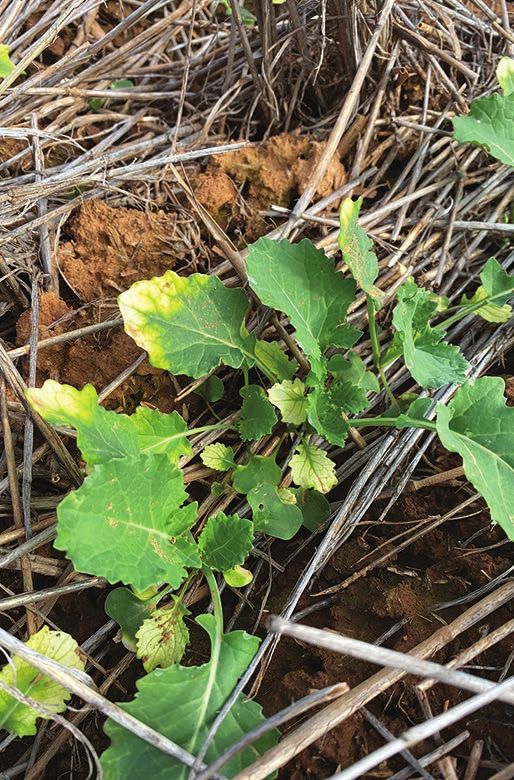
Herbicide Crop Effect
Many commercial pre-emergent herbicides may cause effects
on the crop through root pruning, reduction in crop vigour or reduced plant numbers.

The early season bleaching sometimes caused by Overwatch® Herbicide, is generally localised
and transient, as new leaves emerge unaffected. Crop bleaching then disappears, and under
normal growing conditions, there is no yield penalty.

In serious cases of overspraying or unfavourable conditions, phytotoxicity can also lead
to stunting and a reduction in crop plant populations (or thinning).

Knife Point Press Wheel (KPPW) sowing is recommended to ensure positional separation
between the seed and herbicide. Refer to the Overwatch® Herbicide label for further advice
on how to minimise the risk of crop phytotoxicity.

                                                     Overwatch® Herbicide          |   PRODUCT GUIDE             7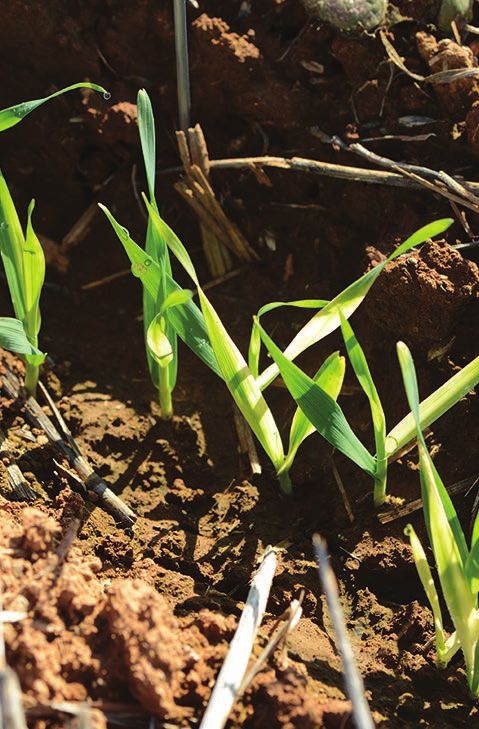
2020 Forbes Demonstration Site

Trial ID: 2020-OW-WH-GD-YLD-NSWN-334
Date sown : May 12, 2020
Crop type : Wheat (Beckom)
Treatment : Overwatch® Herbicide @ 1.25 L/ha + Gramoxone# 250
@ 1.6 L/ha vs Trifluralin @ 1.6 L/ha + Gramoxone# 250 @ 1.6 L/ha.
Aim: To compare the crop safety of Overwatch® Herbicide with
the grower standard on a commercial scale using Knife Point Press Wheel (KPPW) seeding system.

During this trial, a 50mm rainfall event washed herbicide treated soil into the sowing furrow.
The Overwatch® Herbicide treated crop showed some transient bleaching but there were no plant establishment or
crop development effects observed, and the crop grew out of the bleaching rapidly. However, the trifluralin treated
crop showed reduced crop biomass which persisted throughout the season. The need to maintain spatial separation
between the seed and trifluralin treated soil to minimise emerging seedling damage is well known and this trial
demonstrated Overwatch® Herbicide’s relative crop safety. The difference in crop growth, visually observed by
the servicing agronomist in the paddock, was confirmed with NDVI imaging.

                                                                                                           Overwatch® Herbicide
                                                                                                           strips at Forbes, NSW
                                                                                                           showing increased biomass
                                                                                                           compared to grower
                                                                                                           standard.

                                                                                                           Blue = Greater biomass
                                                                                                           Red = Less biomass

                                                                                                                        0.50        0.78

                                                                                                       0                                   1

      Overwatch® Herbicide
      demonstration at Forbes,
      NSW showing increased
      biomass compared                             Canopeo is an app tool for estimating crop development by measuring the
      to grower standard                           fraction of ground area covered by crop canopy. The images below, taken seven
      (foreground).                                weeks after sowing, show that the canopy cover of Overwatch® Herbicide was
                                                   39% compared to the grower standard of 28%.

                                                            Overwatch® Herbicide                           Grower standard
                                                                (39% Cover)                                  (28% Cover)

  8        Overwatch® Herbicide      |   PRODUCT GUIDE
Control of Annual ryegrass with Overwatch®
Herbicide Compared to Industry Standards

Annual Ryegrass Control in Cereals
Percent control of Annual ryegrass compared to other pre-emergent herbicides in Wheat and Barley.
Late season assessment (average 11 weeks after sowing). All side-by-side comparisons from 39 trials over 3 seasons (2015 – 2019).

                       Overwatch®                             Sakura#                                 Overwatch®                 Boxer Gold#                           Overwatch®                     Trifluralin 480 EC
                        1.25 L/ha                             118 g/ha                                 1.25 L/ha                  2.5 L/ha                              1.25 L/ha                           2.0 L/ha

      Trials : 20 (Wheat)                                                      Trials : 30 (16 Barley, 14 Wheat)                                             Trials : 18 (7 Barley, 11 Wheat)
      Average density : 108 pl/m2                                              Average density : 109 pl/m2                                                   Average density : 115 pl/m2
      Overwatch® average control : 83%                                         Overwatch® average control : 88%                                              Overwatch® average control : 80%
      Sakura average control : 84%                                             Boxer Gold average control : 76%                                              Trifluralin 480 EC average control : 70%
Efficacy (% Control)

                                                                               Efficacy (% Control)

                                                                                                                                                               Efficacy (% Control)
                                   Overwatch®              Sakura#                                       Overwatch®   Boxer Gold#                                                     Overwatch®      Trifluralin 480 EC
                                    1.25 L/ha              118 g/ha                                       1.25 L/ha    2.5 L/ha                                                        1.25 L/ha            2.0 L/ha

Annual Ryegrass Control in Canola
Efficacy of Overwatch® Herbicide against Annual ryegrass compared to other pre-emergent herbicides in Canola.
Late season assessment (average 11 weeks after sowing). All side-by-side comparisons from 14 trials over 2 seasons (2016 – 2017).

                                                                                                                                                                                                   Atrazine 900 WG
                        Overwatch® 1.25 L/ha                          Rustler® 500 SC 1.0 L/ha                                                Overwatch® 1.25 L/ha
                                                                                                                                                                                                       2.2 kg/ha

      Trials : 19                                                                                                     Trials : 10
      Average density : 147.5 pl/m2                                                                                   Average density : 130.3 pl/m2
      Overwatch® average control : 85%                                                                                Overwatch® average control : 86%
      Rustler 500 SC average control : 83%                                                                            Atrazine 900 WG average control : 82%
                       Efficacy (% Control)

                                                                                                                       Efficacy (% Control)

                                              Overwatch®     Rustler® 500 SC                                                                    Overwatch®    Atrazine 900 WG
                                               1.25 L/ha        1.0 L/ha                                                                         1.25 L/ha        2.2 kg/ha

                                                                                                                                              Overwatch® Herbicide                       |   PRODUCT GUIDE                 9
Finding the Best Fit for
Overwatch® Herbicide
                                                                                            Why Choose
Overwatch Herbicide Is A Weed
               ®
                                                                                            Overwatch®
Control Solution For Your Paddock,
Not Just For Your Crop                                                                      Herbicide for
With three key crops on label, broad weed spectrum activity
                                                                                              Wheat?
and great flexibility including a nil plant back to Wheat,
Barley and Canola, how do growers find the best fit?

1. Choose the field first
    • Consider herbicide history and mode of action
      rotation requirements.
                                                                          •   For excellent control of Annual ryegrass
    • Consider the weed spectrum.
                                                                          •   For outstanding length of control picking up later season
2. Then decide the crop                                                       germinations of weeds including Silvergrass, Sowthistle and
   •   By choosing Overwatch® Herbicide first, you’ll have more               Bifora.
       flexibility should planting decisions change due to seed           •   For a unique mode of action
       availability seed availability, timing of the break or commodity       Given the heavy reliance on Group K products (including
       price changes.                                                         Sakura#, Boxer Gold# and Butisan# ) rotating to Overwatch®
   •   Overwatch® Herbicide allows growers to change with the                 Herbicide’s Group Q mode of action helps to prolong the
       season without a complete program change.                              efficacy of this important Group.

                                                                          •   For market leading pre-emergent weed control in
3. Choose the mix partner that makes sense
                                                                              Durum Wheat.
   •   FMC supports the “mix and rotate” approach advocated
       by WeedSmart.                                                      Weed spectrum and mix partners
   •   Choose a partner herbicide based on the crop and the
                                                                          SCENARIO 1. Second year of Wheat, trifluralin
       paddock weed situation to broaden weed spectrum,
                                                                          resistant Annual ryegrass present and Wild radish
       improve control of key weeds and to delay the onset
                                                                          becoming problematic.
       of herbicide resistance.

                                                                          SUGGESTION: Overwatch® Herbicide + Callisto#
                                                                          •   Overwatch® Herbicide gives excellent Annual ryegrass control
                                                                              while reducing the risk of Group K resistance development.

                                                                          •   Overwatch® Herbicide and Callisto* partner to provide
                                                                              a higher level of pre-emergent Wild radish control.

                                                                          •   Consider harvest weed seed control, including seed
                                                                              destruction or chaff lining to stop weed seed set.

                                                                          SCENARIO 2. Durum Wheat, heavy Annual ryegrass
                                                                          population with Bifora issues.

                                                                          SUGGESTION Overwatch® Herbicide + Trifluralin
                                                                          •   With excellent crop safety in Durum wheat, Overwatch®
                                                                              Herbicide offers the best standalone pre-emergent control
                                                                              of Annual ryegrass available for Durum wheat.

                                                                          •   The addition of trifluralin will assist in early season control
                                                                              of Annual ryegrass, giving a greater overall result under
                                                                              heavy weed pressure.

                                                                          •   Consider a hay or pasture phase to reduce the weed seed
                                                                              bank, setting the paddock up for a cropping phase.
  10       Overwatch® Herbicide           |   PRODUCT GUIDE
Why Choose Why Choose
Overwatch® Overwatch®
Herbicide for Herbicide for
Barley? Canola?
• The leading pre-emergent herbicide for Annual ryegrass • The leading pre-emergent herbicide for control
control in Barley. of Annual ryegrass.
• For greater efficacy and weed spectrum compared to • For suppression of Wild radish.
current standards, with up to 12 weeks control.
• An outstanding weed control solution in combination
• For unique mode of action – Introduce a Group Q to allow with herbicide tolerant Canola systems including
a break from products containing a Group J (e.g. Arcade#, Clearfield#, Roundup Ready# and Triazine Tolerant.
Boxer Gold# ).
Weed spectrum and mix partners
Weed spectrum and mix partners
SCENARIO 1. Trifluralin resistant Annual ryegrass with
SCENARIO 1. Annual ryegrass history in a block planted heavy population of Wireweed in triazine tolerant Canola.
to Canola, however a combination of a dry start and poor
SUGGESTION: Overwatch® Herbicide + Atrazine
germination require the grower to spray a knockdown and
re-sow at a later timing. • Where previously Trifluralin would have been included in the
mix to help control the Wireweed, now Overwatch® Herbicide
SUGGESTION: Overwatch® Herbicide
can be used with excellent control of Wireweed.
• With a nil plant-back period to Wheat, Barley, and Canola,
• A combination of Atrazine and Overwatch® Herbicide
Overwatch® Herbicide gives you the option to re-sow with
provides excellent control of trifluralin resistant Annual
any one of these crops.
ryegrass populations.
• Re-sowing of late season Wheat or Barley into Overwatch®
Herbicide treated soil has negligible effect on yield or vigour. SCENARIO 2. A field requires a rotation into a Roundup
Ready# Canola system to help management of problematic
SCENARIO 2. A combination of Wild oats, Bifora and Wild radish.
trifluralin resistant Annual ryegrass are becoming a problem
SUGGESTION: Overwatch® Herbicide + Glyphosate
after two years of Wheat.
• The unique ability of Overwatch® Herbicide to suppress
SUGGESTION: Overwatch® Herbicide + Tri-allate
Wild radish in Canola takes some pressure
• Overwatch® Herbicide is extremely efficacious against Bifora. off glyphosate in this system.
• Mixing two modes of action, Overwatch® Herbicide’s Group • Overwatch® Herbicide’s length of control allows growers to
Q and tri-allate’s Group J, gives excellent control of Annual optimise the timing of later season glyphosate applications.
ryegrass and Wild oats.
Overwatch® Herbicide | PRODUCT GUIDE 11Applying Overwatch® Herbicide
Overwatch® Herbicide should be applied up to three days prior to Compatibilities
sowing, and incorporated by sowing (IBS) with knife point tynes
Overwatch® Herbicide is formulated as a suspension
and press wheels. Activity of Overwatch® Herbicide requires
concentrate. It is physically compatible with the following
placement near germinating weed seeds and in broadacre
herbicide active ingredients:
cropping this is most consistently achieved by mechanical
incorporation. Best results are achieved when applied to a moist Atrazine, Simazine, Glyphosate (excluding K-salt formulations),
soil profile and when sowing occurs soon after application. Metribuzin, Metazachlor, Paraquat, Pendimethalin, Propyzamide,
Weed control may be significantly reduced where there is Prosulfocarb, Triallate, Trifluralin, Terbuthylazine, Pyroxasulfone,
insufficient soil moisture to mobilise the active for uptake by the S-Metolachlor.
germinating weed seedling. This can be exaggerated when the
weeds germinate from depth where there is sufficient moisture Mixing
for sustained growth. When mixing Overwatch® Herbicide in a tank with other
products suited for pre-em application timing, the following
Efficacy of Overwatch® Herbicide can mixing sequence should be followed:
be reduced by the following factors
1. Water conditioning agents;
(alone or in combination):
2. Water dispersible granules (WG)/ Dry flowable products (DF);
• Excessively cloddy soil which creates shadowed areas that
do not allow for uniform spray coverage of soil. 3. Wettable powders (WP);
• Weed seeds germinating from moist soil deeper in the profile 4. Flowables or suspension concentrates
or seeds that germinate from the base of an overturned clod (e.g. Overwatch® Herbicide)
of soil which have no treated soil to pass through. 5. Emulsifiable concentrates (EC);
• Late germinating weeds. 6. Water-soluble concentrates (e.g. glyphosate);
• Poor performance of the knockdown herbicide application on 7. Surfactants and oils (e.g. On-Coarse®, Parachute®, BS1000#);
established weeds. Overwatch® Herbicide does not control
established weeds. 8. Soluble fertilisers.
• Heavy rainfall causing run-off that removes the active Clean out with water, or the most rigorous method in accordance
herbicide from the desired soil area. Erosion of treated soil with mix partner labels.
will also cause gaps in soil coverage, allowing weeds to
germinate unhindered.
• A stubble load heavy enough (>50% ground coverage) to
restrict the amount of active ingredient reaching the soil.
This is especially true in cases where the stubble is lying flat
on the ground.
• Paddocks covered in ash following stubble burning.
• Insufficient soil moisture to move the active ingredient within
the soil for ready uptake. This greatly depends on soil type,
however, in dry conditions this factor will be amplified where
clay content is over 35%.
• IBS application method displacing treated soil away from the
seed furrow therefore reducing the amount of active present
in the seed furrow, or on the ‘shoulder’ of the furrow.
12 Overwatch® Herbicide | PRODUCT GUIDECROPS WEED RATE CRITICAL COMMENTS
Wheat, Annual ryegrass (Lolium rigidum) 1.25 L/ha Apply prior to sowing and incorporate by sowing (IBS) with knife point
Barley & Bifora (Bifora testiculata), tynes and press wheels. Best results are achieved when applied to a
Canola moist soil profile and sowing occurs soon after application. Refer to
Hog weed/Wireweed
GENERAL INSTRUCTIONS for recommendations of best use. Efficacy of
(Polygonum aviculare)
Overwatch® Herbicide can be reduced by the following factors (alone or
Lesser loosestrife (Lythrum
in combination): • Excessively cloddy soil which create shadow areas that
hyssopifolia)
do not allow for uniform spray coverage of soil • Depth and distribution of
Silvergrass (Vulpia bromoides) weed seed. Weed seeds germinating from moist soil deeper in the profile
Sowthistle (Sonchus oleraceus) may not be controlled. Also seeds that germinate from the base of an
overturned clod of soil which has no treated soil to pass through.
• Late germinating weeds. • Poor performance of the knockdown
Suppression of:
herbicide application on established weeds. Overwatch Herbicide does
Barley grass (Hordeum murinum) not control established weeds. • Heavy rainfall causing runoff removes
Bedstraw (Galium tricornutum) the active from the desired soil area. Erosion of treated soil will also
Brome grass (Bromus spp) cause gaps in soil coverage allowing weeds to germinate unhindered.
Capeweed (Arctotheca • Heavy stubble load (>50% ground coverage) may restrict the amount
calendula) of active reaching the soil. This is especially true in cases where the
stubble is lying on the ground. • Paddocks covered in ash following
Phalaris (Phalaris paradoxa)
stubble burning • Insufficient soil moisture to move the active within
Prickly lettuce (Lactuca spp.) the soil for ready uptake. This greatly depends on soil type, however,
Wild oats (Avena fatua) in dry conditions this factor will be amplified in soils with clay content
Wild radish (Raphanus over 35%. • IBS application timing displaces treated soil away from
raphanistrum) the seed furrow therefore reducing the amount of active present in the
seed furrow or on the ‘shoulder’ of the furrow. Avoid overlapping spray
swaths. Especially in corners and headlands as this may increase crop
phytotoxicity. Refer to ‘General Instructions’ in this label for more crop
safety recommendations.
Crop Rotation Recommendations
It is important to note more generally that Overwatch® Herbicide
Overwatch® Herbicide
is predominantly broken down in the soil through microbial
Crop Interval Rainfall degradation. Microbial activity is typically favoured by moist and
Wheat warm aerobic soils. Prolonged dry periods and/or application to
soils that do not favour breakdown (e.g. low organic matter) may
Durum impede microbial degradation, resulting in extended re-cropping
0 days 0 mm
Canola intervals, even if interim rainfall exceeds the amount that will be
proposed on the label. Considerable variations in environmental,
Barley
edaphic and agronomic factors affecting the soil microbial
Chickpea activity, mean that it is not possible to absolutely eliminate all
200 mm risks and potential for damage to following crops. Additionally,
Oats
stress factors (e.g. excessive pH, disease etc) may accentuate
Lentils damage in sensitive crops.
Vetch 9 months 250 mm
Withholding Periods
Sub clover
Harvest: Barley, Canola, Wheat: Not required when used as directed.
Medic Grazing / stockfood: Barley, Canola, Wheat: DO NOT harvest,
350 mm
Lupins graze or cut for stock food or for seed for 12 weeks after
application.
Faba bean Please refer to your local FMC rep
for guidance on recommendations
Field Peas
Overwatch® Herbicide | PRODUCT GUIDE 13Frequently Asked Questions What other herbicides can be tank mixed with Overwatch® Herbicide? Overwatch® Herbicide is compatible with most commonly used pre-emergent herbicides and insecticides when applied as a tank mix. Correct mixing order, mixing practises and not over-filtering is critical. If unfamiliar with the intended tank mix, a properly performed small scale compatibility jar test can be useful. Please refer to the FMC mixing chart found at www.overwatchherbicide.com Can Overwatch® Herbicide be used in herbicide tolerant varieties of Wheat, Barley and Canola? FMC has trialed Overwatch® Herbicide in a number of herbicide tolerant varieties including Roundup Ready®, Triazine Tolerant, Clearfield# and multi trait Canola varieties. Overall performance, including crop safety and weed control, is comparable to the conventional varieties in Wheat, Barley and Canola. What is the risk of Annual ryegrass developing resistance to Overwatch® Herbicide? The active ingredient Bixlozone (Isoflex™ Active) belongs to the Isoxazolidinone chemical family, which is mode of action Group Q, which is a sub group of HRAC mode of action Group Q. While the introduction of Bixlozone does provide a unique mode of action, weed scientists have been able to produce resistant biotypes under laboratory conditions, indicating that resistance to Overwatch® Herbicide can occur under field use. This lab work emphasises the importance of an integrated weed management strategy to prolong the useful life of all herbicides including Overwatch® Herbicide. FMC advocates the use of the WeedSmart Big 6. By mixing and rotating herbicide groups, along with using cultural practices including harvest weed seed destruction, growers can extend the useful life of all herbicides. Can I use Overwatch® Herbicide in a disc seeding system? An IBS (Incorporated By Sowing) application of Overwatch® Herbicide with correct seed placement and use of a knife point tynes and press wheels is regarded as the safest sowing configuration. Trial work with disc seeding has demonstrated that there may be reduced crop safety due to the greater influence of rainfall, seed placement and the presence of stubble. FMC will share its experiences and results with the disc sown system once more work is undertaken. It has been established that Wheat is the most tolerant crop to Overwatch® Herbicide, followed by Canola and Barley. Can I use trailing harrows? Crop safety is enhanced by the separation of treated soil from the emerging seed. When using harrows or other trailing equipment, treated soil can be displaced into the furrow that may result in enhanced crop effect. How is Overwatch® Herbicide broken down in the soil? Overwatch® Herbicide is predominantly broken down through microbial degradation. Microbial activity is typically favoured by moist, warm and aerobic soil conditions. Please read the label for plant-back restrictions. Does Overwatch® Herbicide wash off stubble? While Overwatch® Herbicide is relatively soluble and will wash off stubble, the amount of stubble will influence the consistency of the band of herbicide that reaches the soil. Reduced effectiveness may occur when heavy stubble (>50% ground coverage) restricts the amount of active ingredient reaching the soil. 14 Overwatch® Herbicide | PRODUCT GUIDE
Notes

        Overwatch® Herbicide   |   PRODUCT GUIDE   15
This guide is not a substitute for reading the product label. Always read the label before use.
Additional technical information for Overwatch® Herbicide can be found at
www.overwatchherbicide.com
For further details, contact your local FMC representative
Sales
Derek Burgess Regional Sales Manager - Western 0428 643 014
Jim Brussen Area Business Manager - WA 0417 135 560
Brian Staines Area Business Manager - WA 0407 483 941
Angus Wilson Regional Sales Manager - Northern 0428 783 004
Scott Ariell Area Business Manager - QLD 0409 961 794
Andrew Burrows Area Business Manager - QLD North 0451 532 809
Peter Henderson Area Business Manager - NSW Central 0448 046 925
Kevin Melmeth Area Business Manager - QLD SE 0417 648 064
Simonne Read Regional Sales Manager - Southern 0438 728 240
Greg Bennett Area Business Manager - VIC 0429 009 909
Emma Dunbar Area Business Manager - NSW Southern 0427 792 933
Kent Hair Area Business Manager - VIC Western 0438 758 804
Yan Wu Area Business Manager - SA East 0439 426 007
Jock Neumann Area Business Manager - SA West 0437 275 293
Matthew White Area Business Manager - VIC SE & TAS 0448 037 692
Technical Extension Specialist
Stephen Fischer Technical Extension Specialist - VIC 0427 468 930
David Johnson Technical Extension Specialist - QLD 0401 140 536
Stephen Pettenon Technical Extension Specialist - WA /SA 0428 780 001
Mark Yerbury Technical Extension Specialist - NSW 0448 889 909
*Llewellyn RS, Ronning D, Ouzman J, Walker S, Mayfield A and Clarke M (2016.) Impact of Weeds on Australian Grain Production: the cost of weeds to Australian grain
growers and the adoption of weed management and tillage practices. Report for GRDC. CSIRO, Australia.
ALWAYS READ AND FOLLOW LABEL DIRECTIONS. FMC, Overwatch, Rustler, On Course are registered trademarks of FMC Corporation or an affiliate.
© 2020 FMC Corporation. All rights reserved. 12/2020. # Non FMC Trademarks.
FMC Australasia Pty Ltd
Phone: 1800 066 355
Overwatch®
www.fmccrop.com.au
Herbicide | PRODUCT GUIDE 16You can also read


