4MOST - 4m Multi-Object Spectroscopic Telescope
←
→
Page content transcription
If your browser does not render page correctly, please read the page content below
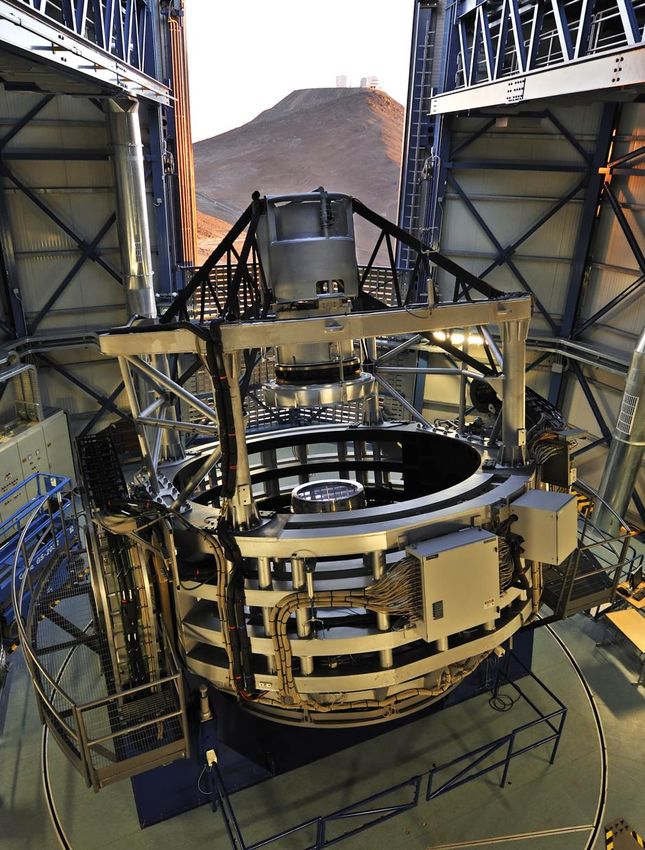
4MOST – 4m Multi-Object
                      Spectroscopic Telescope
  Maria Bergemann – Project Scientist MPIA
  Wolfgang Gaessler – Local Project Manager
  Michael Lehmitz – Electronics Engineer

               AstroTechTalk 4MOST
                    29 May 2015

www.4MOST.eu        consortium of 15+ institutes

                                                   1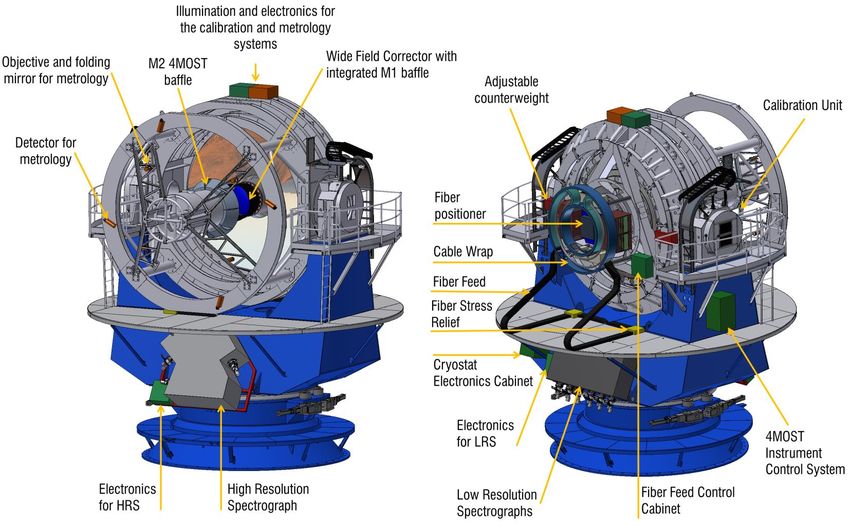
4MOST on VISTA Telescope
- 3.7 meter aperture
- 2400 fibers
     - 1600 Low Resolution (5000 λ/Δλ)
            -   395-895 nm coverage
     - 800 High Resolution (18000 λ/Δλ)
             - 395-440, 500-555, 605-675 nm windows
-   ~1.45” fiber apertures
-   2.5◦ linear field diameter (4 square degrees)

     4MOST | AstroTechTalk | 2015.05.29 | W. Gaessler   2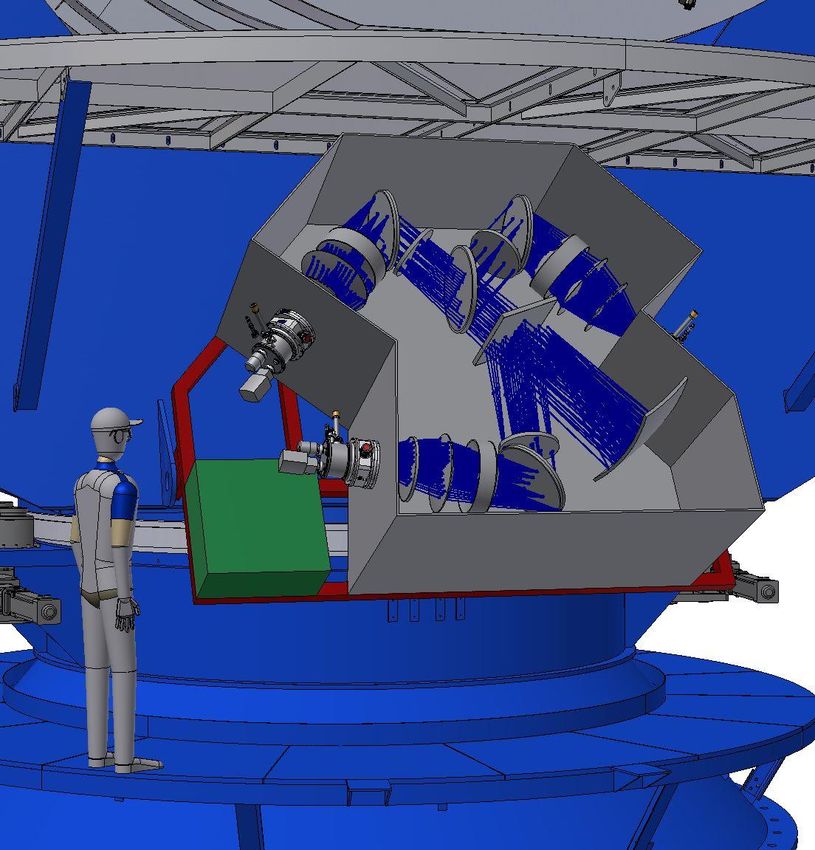
4MOST System

4MOST | AstroTechTalk | 2015.05.29 | W. Gaessler   3
4MOST Low Resolution Spectrographs

•   LRS Concept (5000 min resolution)
•   3-channel
•   Off-axis Schmidt Collimator
•   Dioptric Cameras
•   6k x 6k detectors
•   Standard cryostat
•   May achieve extended wavelength
    coverage
    – 390-950 nm

CRAL now exploring and advancing
designs

    4MOST | AstroTechTalk | 2015.05.29 | W. Gaessler   4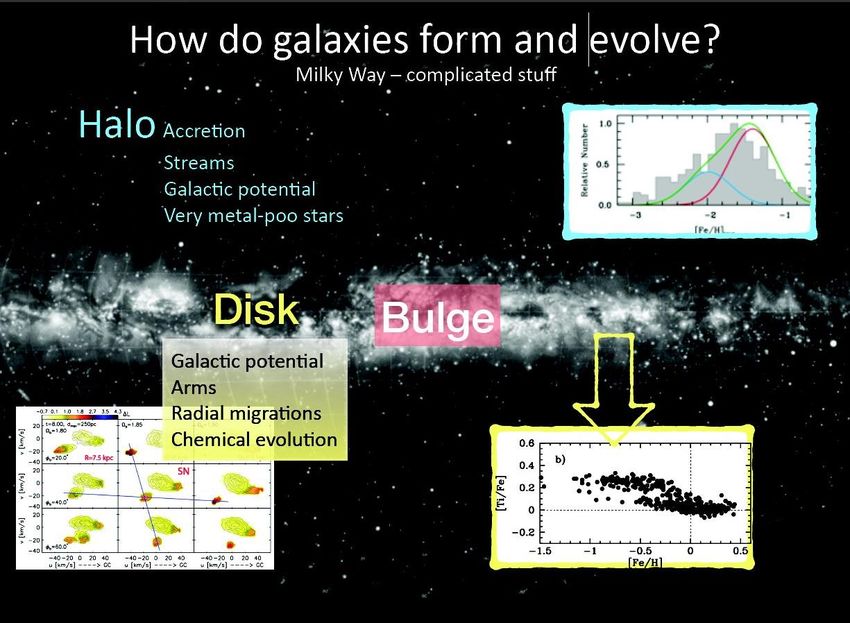
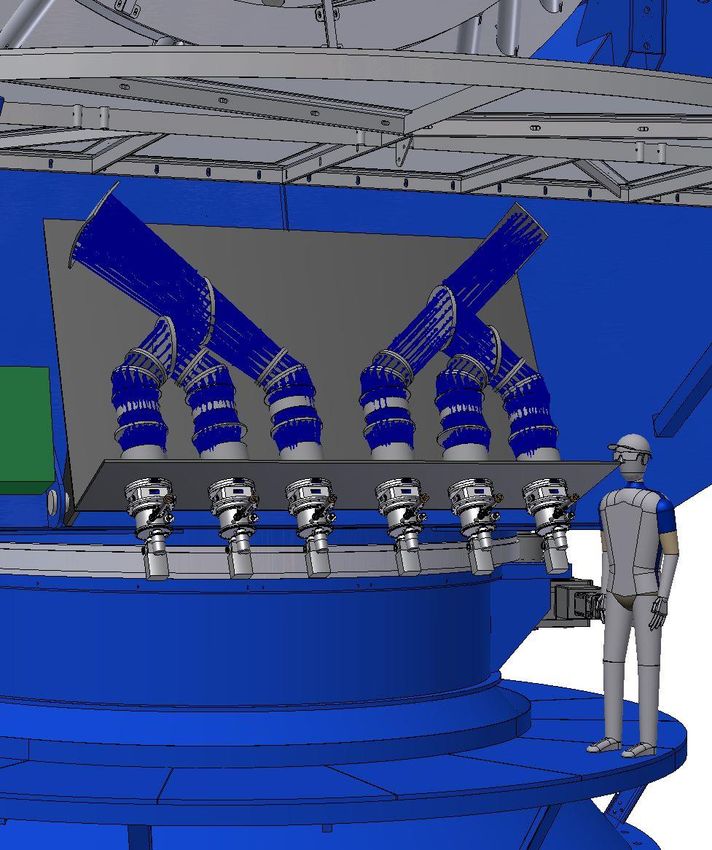
4MOST High Resolution Spectrographs

                                                     Volume Phase Holographic Gratings
• HRS Concept
• 3-channel
• Off-axis Schmidt
  Collimator
• Dioptric Cameras
• 6k x 6k detectors
• Standard cryostat

• LSW advancing design
  4MOST | AstroTechTalk | 2015.05.29 | W. Gaessler                                       5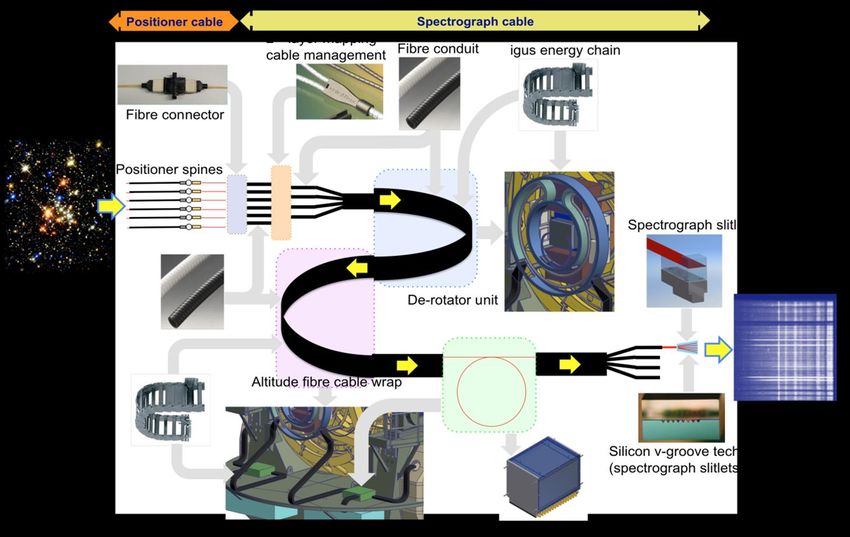
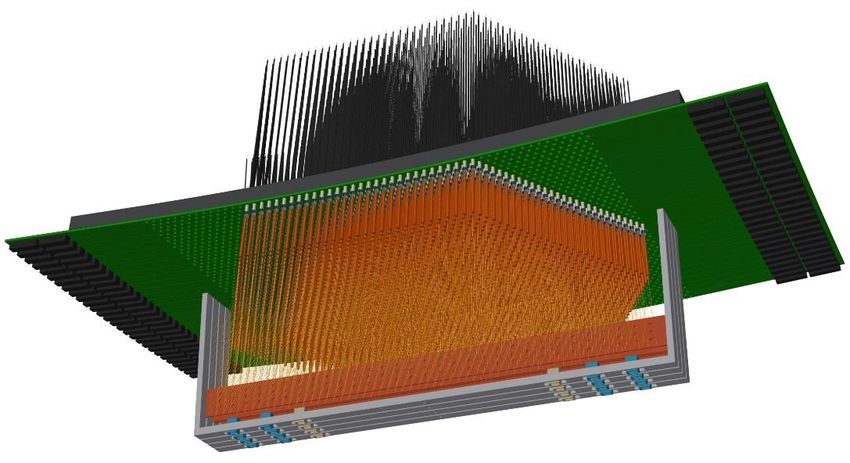
4MOST Fiber Positioner (AESOP)
                                                        Echidna

•   2400 fibers using Echidna tip/tilt technology
•   Large, overlapping patrol areas enables sparse
    fibers for high resolution spectrograph
•   Pitch ~10 mm, Patrol R: ~1.2x pitch
•   Closest separation ~10 arcsec
•   Reconfiguration time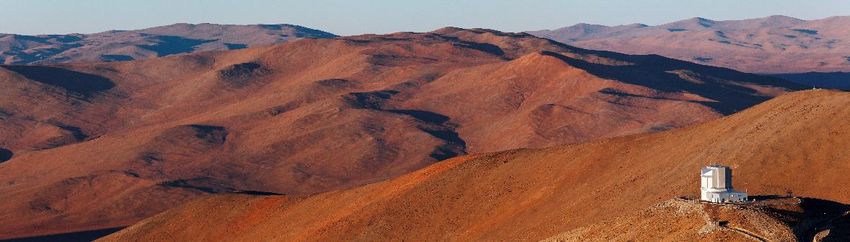
4MOST Fibre Feed

4MOST | AstroTechTalk | 2015.05.29 | W. Gaessler   7
HRS Efficiency Waterfall Diagram

      Telescope Mirror Coatings

                           Fiber Feed FRD          Collimator
                                                                           Camera

         WFC/ADC                                           Diffraction Grating
                                                                                 Detector

                              Beam Splitter

4MOST | AstroTechTalk | 2015.05.29 | W. Gaessler                                            8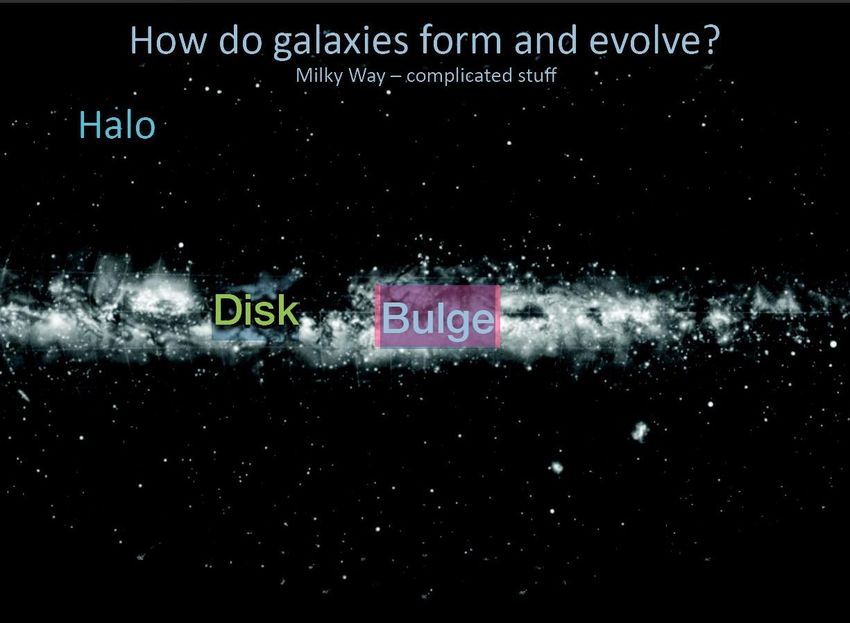
4MOST Sensitivity – Seeing

  1.5” fiber aperture coupling efficiency with seeing.
       Left is for median 0.8” seeing – 72% is coupled into fiber aperture.
       Right is for 90%ile 1.15” seeing – 52% is coupled into fiber.
Moffat function with beta = 3.0 assumed for seeing profile.   ≥24% Efficiency required for 90%ile seeing.
     4MOST | AstroTechTalk | 2015.05.29 | W. Gaessler                                              9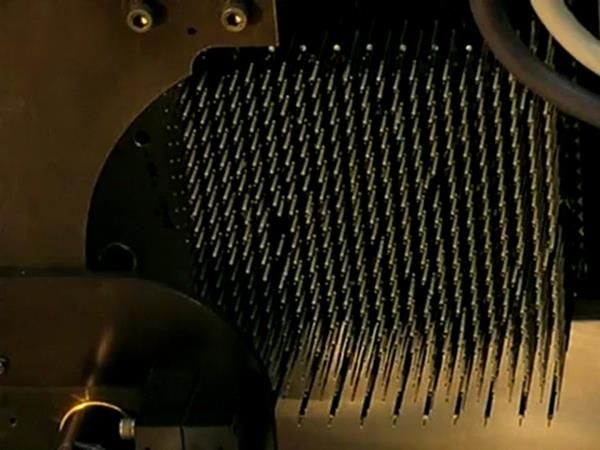
4MOST Timeline and Costs
Schedule
• 05/2016 PDR – Preliminary Design Review
• 12/2017 FDR – Final Design Review
• 01/2021 PAE – Preliminary Acceptance Europe
• 06/2021 PAC – Preliminary Acceptance Chile -> Science Operation Phase 1 (5y)
• 06/2023 FAC – Final Acceptance Chile
• 08/2023 – 10/2031 Science Operation Phase 2

Costs
• ~ 14.5 MEuro (estimated costs) + 2.9 MEuro (20% contingency) = 17.4 MEruo
• ~ 10.5 secured
• De-scope option: Only one 3 channel LRS (Low Resolution Spectrograph)

 4MOST | AstroTechTalk | 2015.05.29 | W. Gaessler                          10
Design Reference Surveys
• 4 Galactic Surveys                               Most than more
      – GAIA complements
      – Understand structure of Milky Way
      – Main interest of MPIA

• 4 Extra Galactic Surveys
      – eROSITA complements
      – Understand evolution of active
        galxies
      – EUCLID complements
      – Constrain dark energy

4MOST | AstroTechTalk | 2015.05.29 | W. Gaessler                    11
4MOST | AstroTechTalk | 2015.05.29 | W. Gaessler 12
4MOST | AstroTechTalk | 2015.05.29 | W. Gaessler 13
Conclusion
 •   Multi object spectroscopic telescope
 •   2400 fibers
 •   More than 25 Million objects
 •   8 Design Reference Surveys
 •   Complete GAIA, eROSITA and EUCLID data
 •   Understand the structure of the Milky Way
 •   Understand the evolution of active galaxies
 •   Constrain dark energy properties
In the end, 4MOST will be a powerful and capable facility!
 4MOST | AstroTechTalk | 2015.05.29 | W. Gaessler       14
4MOST | AstroTechTalk | 2015.05.29 | W. Gaessler 15
You can also read


