Waikato, Ngā Tai ki te Puku - Fire Plan for - Fire and Emergency New Zealand
←
→
Page content transcription
If your browser does not render page correctly, please read the page content below

Fire Plan for
Waikato, Ngā Tai ki te Puku
                      2021–2024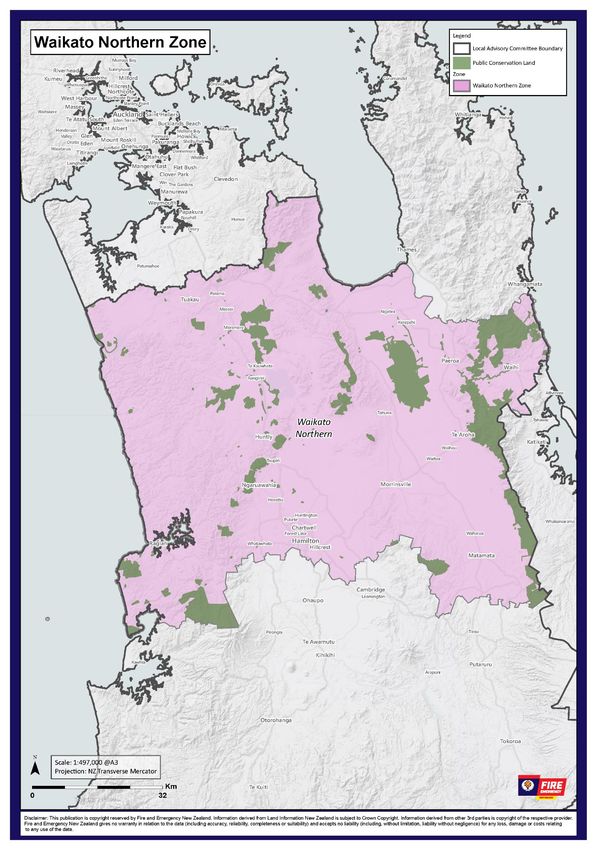
Document Title: Waikato Fire Plan – Draft for consultation
Published: 23 April 2021
Document review date: June 2021 based on consultation feedback
Status of this document
This document is issued by Fire and Emergency New Zealand.
Recommendations for change
The document, its content and specific processes are not to be altered except through Fire
and Emergency New Zealand document management processes.
Requests or recommendations for changes to this material should be sent to Region
Manager, Ngā Tai ki te Puku.

© 23 April 2021 Fire and Emergency New Zealand
Fire Plan for - Waikato, Ngā Tai ki te Puku

Table of contents
Introduction ........................................................................................................................................................ 2
 Required by legislation ..................................................................................................................................... 2
 Content of the fire plans .................................................................................................................................. 2
 Consultation ..................................................................................................................................................... 3
   Key stakeholders ............................................................................................................................................ 3
 Review and amendment................................................................................................................................... 3
Description of the fire plan area......................................................................................................................... 4
National Framework for Fire Control ................................................................................................................. 7
 Our policies ....................................................................................................................................................... 7
Fire seasons ........................................................................................................................................................ 8
 Trigger thresholds for changing fire seasons ................................................................................................... 8
Prohibiting fires in the open air (section 52) ...................................................................................................... 9
 Trigger thresholds for prohibiting fires in the open air under section 52 ........................................................ 9
Restricting and prohibiting activities (section 52) ............................................................................................10
 Trigger thresholds for restricting or prohibiting activities under section 52 .................................................10
 Activities and risk mitigation ..........................................................................................................................11
  Forestry operations ......................................................................................................................................11
  Activities in rural areas .................................................................................................................................11
  Hot works .....................................................................................................................................................12
  Cultural cooking fires....................................................................................................................................12
  Powerline auto-reclosures ...........................................................................................................................12
  Rail transport operations .............................................................................................................................12
Communicating changes in fire seasons and restrictions or prohibitions .......................................................12
Fire permits.......................................................................................................................................................13
   Council bylaws, regional plans, legal covenants or restrictions ...................................................................13
   When a permit is needed .............................................................................................................................13
   Fire types ......................................................................................................................................................13
   Permits in prohibited fire seasons or during prohibitions under Section 52 ...............................................14
Fire breaks ........................................................................................................................................................14
Fire hazard removal ..........................................................................................................................................15
   Reporting fire hazards ..................................................................................................................................15
   Assessment of fire hazards ...........................................................................................................................15
   Outcomes from the assessment...................................................................................................................15
   Fire hazard removal notice (section 65) .......................................................................................................16
   Imminent danger notice (section 68) ...........................................................................................................16
Compliance and enforcement ..........................................................................................................................17
 Fire and Emergency’s role ..............................................................................................................................17
Contact us .........................................................................................................................................................17
Appendix 1 – Schedule of stakeholders ...........................................................................................................18
 National-level stakeholders ............................................................................................................................18
 Area-level stakeholders ..................................................................................................................................20

23 April 2021                                                                                                                                                         i

Fire Plan for - Waikato, Ngā Tai ki te Puku

Appendix 2 - Zone information.........................................................................................................................22
 Coromandel Zone ...........................................................................................................................................22
 Waikato Northern Zone..................................................................................................................................29
 Waikato Central Zone .....................................................................................................................................36
 Taupō Zone .....................................................................................................................................................42
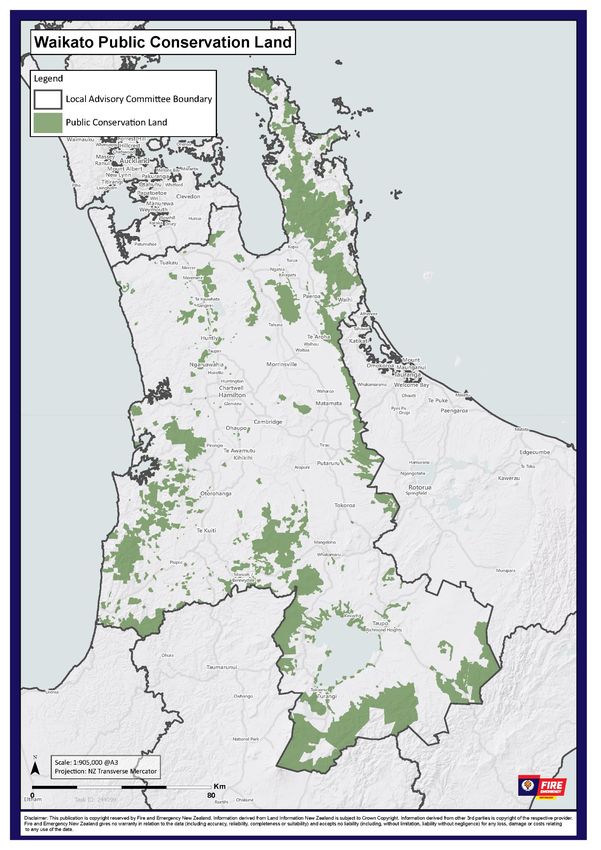
 Public conservation land ................................................................................................................................49
Glossary ............................................................................................................................................................51

23 April 2021                                                                                                                                                        ii

Fire Plan for - Waikato, Ngā Tai ki te Puku

Document drafting information
 Owner                      Region Manager, Ngā Tai ki te Puku
 Steward                    PRFO and Area Manager, Waikato District
 Last reviewed              20/04/2021
 Review period              Every three years

Record of amendments
 Version         Date             Author               Brief description of amendment
 V0.1            March 2021       Waikato District     First draft
 V0.2            6/4/2021         Angel McSaveney      Review of plan for national consistency
                                  (Technical Writer)   Transferred to updated national template
                                                       Returned for further work
 V0.3            19/4/2021        Dean Latus           Second draft
 V0.4            20/4/21          Angel McSaveney      Reviewed and prepared for public consultation
                                  (Technical Writer)

Document review and consultation
 Name                                Title                           Business Area                  Date
                                                                                                    [Date]

Approval
Approved and issued on [date].

 Full Name:
 Title: Region Manager
 Date:

                                                                        Signature

Add another block of other signatures as required

23 April 2021                                                                                                           1
Fire Plan for - Waikato, Ngā Tai ki te Puku

Introduction
Required by legislation
Fire plans are required by section 22 of the Fire and Emergency New Zealand Act 2017 and the Fire and
Emergency New Zealand (Fire Plans) Regulations 2018.
According to Regulation 5 of the Regulations, the purpose of a fire plan is to:
   •   provide transparency and predictability in relation to the use of Fire and Emergency’s fire control
       powers under sections 52 to 58 and 62 to 68 of the Fire and Emergency New Zealand Act 2017 in
       each local area; and
   •   ensure that the particular fire risk conditions in each local area are considered by Fire and
       Emergency when it establishes policies and procedures for, and exercises fire control powers within,
       that local area.
This means that we must explain how we set locally appropriate triggers for changing fire seasons for
outdoor fires to require permits, or to prohibit fires and even restrict activities that may cause unwanted
fires. This helps people to understand what to expect, how to plan for this and what they need to do to
comply with any requirements.
We need to take into account the local fire risk conditions, and not just apply a blanket standard across the
country, as all of our areas have different levels of risk, so what may be appropriate for one area of the
country may not be suitable somewhere else.

Content of the fire plans
Fire plans must:
   •   describe the particular fire risk conditions that exist or are likely to exist in the local area. This means
       that each fire plan is accurate and relevant for its area, and the fire plan can be broken down into
       specific zones within the area where fire risk conditions or control measures differ.
   •   set out the policy for fire control in the local area. This sets out when and why we restrict or prohibit
       fires in the outdoors or restrict activities that may cause unwanted fires.
   •   set out the procedures to be followed for fire control in the local area, including details of the
       processes that Fire and Emergency will follow, and the factors that Fire and Emergency will consider,
       when deciding to:
    o issue notices of prohibitions or restrictions for fire control under section 52 of the Act
    o declare a prohibited or restricted fire season in relation to the local area, or a part of that area,
        under section 56 of the Act
    o issue notices in relation to firebreaks under section 62 of the Act
    o issue notices to remove or destroy vegetation or other things on land under section 65 of the Act.
    This means that our communities understand how we have come to those decisions, and that we can
    show that they are evidence-based decisions that don’t impact on recreational and economic activities
    unnecessarily.
A fire plan must be consistent with:
   •   Fire and Emergency’s national strategy
   •   any local planning by Fire and Emergency in respect of the local area
   •   any current operational service agreement and memorandum of understanding that Fire and
       Emergency has with other agencies or people relevant to the local area
   •   any relevant Fire and Emergency policies.

23 April 2021                                                                                                      2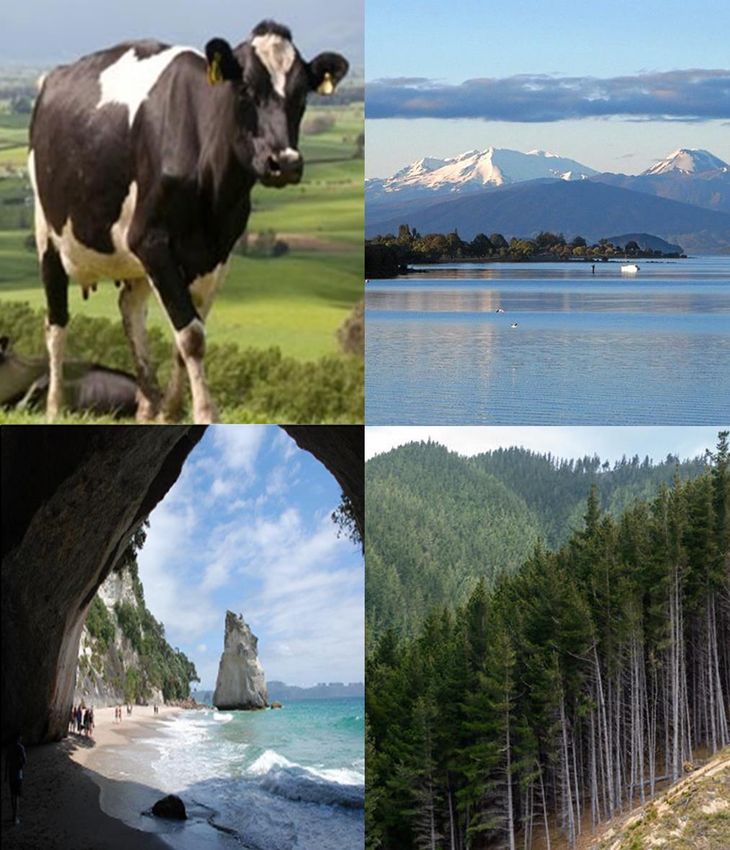
Fire Plan for - Waikato, Ngā Tai ki te Puku

A fire plan must cover the entire local area that it relates to, but we can break each area down into smaller
zones to manage them individually. This ensures that each fire plan is relevant to everywhere within its
area.
Fire plans are not about how we fight fires in the local area, or the resources available to do so. This plan is
about how, when and why Fire and Emergency will exercise its fire control powers to reduce the incidence
of unwanted fires in the area.

Consultation
Before issuing a fire plan for a local area, or an amended fire plan, Fire and Emergency must:
   • publish a notice that:
    o gives an overview of the content of the proposed plan
    o states where you can see and read a copy of the plan
    o specifies how you can make a submission on the plan and where to send your submissions
    o specifies the closing date and time for submissions
   •   consider every submission received by the closing date and time for submissions.
This notice must be published in the Gazette, or in a newspaper circulating in the local area, or a website.

Key stakeholders
A list of those key stakeholder involved in the creation of the plan, its maintenance and relevant decision
making is included as the stakeholder schedule in the appendices of the plan.

Review and amendment
Fire and Emergency may amend a fire plan at any time, but we must review the fire plan for each local area
at least once every 3 years, or if there are significant changes to the boundaries of the local area.
When we review the fire plan for a local area, we must confirm that the fire plan remains appropriate for
that area; or amend the fire plan, as necessary, and consult on changes.

23 April 2021                                                                                                      3
Fire Plan for - Waikato, Ngā Tai ki te Puku

Description of the fire plan area
Overview of whole area

 Geography          The Waikato landscape is diverse with sandy coastal zones, flat pasture lands,
                    large, protected areas (Tongariro National Park etc., Forest Parks), alpine zones,
                    modified by New Zealand's largest river, and remnant wetland areas. For the
                    purposes of this fire plan the area is separated into four zones.

 Demographics       At Fire and Emergency New Zealand, we have an in-depth knowledge of the
                    demographics for each of the communities we serve. These demographics help us
                    to understand the type of support each of our communities might need and how
                    we communicate with them.
                    We use this knowledge in all aspects of our work, including our delivery of the 4Rs
                    of emergency management and for fire control measures, such as declaring the
                    beginning and end of fire seasons, prohibiting and restricting the use of fire, and
                    issuing fire permits.
                    Around 10% of New Zealand’s total population and 14.7% of the Māori population
                    lives within the Plan Area.
                    Parts of the area such as the Coromandel Peninsula and Taupō have strong tourism
                    links which sees the population increase significantly over the summer months.
                    The area is experiencing significant population growth with an ageing population.
                    The population of the area is 458,202.

                     Age group             % of population        Ethnicity               % of population
                     Under 15              21%                    European                74%
                     15 –29                20%                    Māori                   24%
                     30-64                 43%                    Pacific Islands         5%
                     65+                   16%                    Asian                   10%
                                                                  Other                   2%

 Zones              Because of the different fire risk conditions that exist in different parts of the fire
                    plan area, the area is divided into several different fire season zones to allow for
                    appropriate fire control measures to be applied locally:
                         •   Coromandel Zone
                         •   Waikato Northern Zone
                         •   Waikato Central Zone
                         •   Taupō Zone
                         •   Public conservation land
                    This plan area also includes zones which are part of neighbouring area fire plans:
                         •   Te Ūpoko Shared Ruapehu Rural Zone (Manawatu-Whanganui)
                         •   Auckland Waikato Rural Shared Zone (Auckland)
                    Each zone is described and its relevant trigger thresholds and other factors for
                    changing fire seasons are listed in the Appendices.

23 April 2021                                                                                                   4
Fire Plan for - Waikato, Ngā Tai ki te Puku
New Zealand Fire and Emergency has entered into an operational service agreement with the
Defence Force New Zealand Defence Force. The New Zealand Defence Force exercises fire control
powers in relation to certain defence areas listed in a schedule to the agreement.
None of the scheduled defence areas are in the Waikato local area. Any New
Zealand Defence Force activities, including training activities, are subject to Fire
and Emergency’s fire control powers, including fire permit requirements.
Frequency of On average, this area experiences:
elevated fire • 10.8 days of very high to extreme fire danger (based on Scion fire danger
danger climate data for seasonal severity).
Fire history The known fire history for this area will be shown in the zone profiles.
23 April 2021 5Fire Plan for - Waikato, Ngā Tai ki te Puku 23 April 2021 6
Fire Plan for - Waikato, Ngā Tai ki te Puku

National Framework for Fire Control
The National Framework for Fire Control consists of policies, procedures and tools that enable Fire and
Emergency to manage fires – using fires where appropriate and restricting or prohibiting them when there
is a risk of unwanted fire. These all resolve in the Checkitsalright.nz website, the fire permit application
system with additional information on our public webpage.
Fire and Emergency has a number of statutory fire control powers that can be applied to help reduce risk,
as follows:
   •   Setting fire seasons
   •   Prohibiting fire in open air or revoking the prohibition
   •   Prohibiting or restricting other activities or revoking the prohibition or restriction
   •   Fire permitting
   •   Control of fire breaks
   •   Fire hazard management

Our policies
The current internal-use policies and associated supporting processes that guide our decisions and actions
are:
Fire seasons, prohibitions and restrictions policy, relating to sections 52 to 58 of the Act and decisions to:
   •   declare or revoke a prohibited or restricted fire season
   •   prohibit fire in open air or revoke a prohibition
   •   prohibit or restrict activities that may cause a fire to start or spread and revoke prohibition or
       restriction.
Fire permitting policy, supporting the policy above and defining actions for:
   •   supporting a member of the public who is applying for a fire permit
   •   assessing a fire permit application
   •   granting or renewing a fire permit
   •   refusing to grant or renew a fire permit
   •   suspending or cancelling a fire permit
   •   operational decisions when responding to an alarm of fire in open air.
Fire hazard removal policy, relating to sections 65 to 67 of the Act and decisions about what to do when:
   •   a potential fire hazard is reported to Fire and Emergency
   •   we are assessing a potential fire hazard
   •   we arrange for the removal or destruction of a confirmed fire hazard.
Compliance and enforcement policy, covering how we monitor and take action to identify and influence
landowners and others to comply with the requirements of the Act and other relevant legislation. This
covers activities which:
   •   reduce harm from unwanted fire
   •   support the safe use of fire as a land management tool and reduce harm if fire escapes control
   •   minimise avoidance of the Fire Emergency levy
   •   reduce non-compliance with any legislation or regulations under which Fire and Emergency New
       Zealand has a compliance function.
Note: work is also under way to define policy and guidance for both internal and stakeholder audiences,
covering:

23 April 2021                                                                                                     7
Fire Plan for - Waikato, Ngā Tai ki te Puku
Fire breaks- relating to sections 62 to 64 of the Act to support decisions and actions relating to
requirements for landholders to:
• make and clear any firebreak on the landholder’s land:
• remove any vegetation or other thing from an existing firebreak.
Fire seasons
Fire seasons are used to inform people about the requirements for or restrictions on lighting fires in the
open air, and to limit the use of fire to protect communities from the consequences of unwanted fire.
Fire and Emergency can declare or revoke a prohibited or restricted fire season in an area, and uses its Fire
seasons, prohibitions and restrictions policy and associated processes to manage this.
Fire seasons are applied to geographic zones based on:
• the fire environment (fuel types, curing, weather, topography, historic trends)
• fire climatic zones
• topographical boundaries/features (rivers, roads, coast lines, forest and national park boundaries).
• fire control considerations.
One of three types of fire season is in force at any time in an area or zone:
Open fire season Fires may be lit in open air, without restriction.
Applies whenever there is not a prohibited or
restricted fire season in place.
Restricted fire Lighting a fire is riskier than usual. A fire permit is
season required and may also have specific conditions to
make sure fires can be safely lit and remain under
control.
Prohibited fire Lighting fires in the open air is not permitted. Existing
season fire permits are suspended. However, fire permits
may still be granted in exceptional circumstances (see
Error! Reference source not found.).
Changes to fire seasons are publicly notified, including by publishing details on Fire and Emergency’s
website and social media.
It is important that stakeholders know what the current fire season is and understand how they can comply
with the requirements.
To see what the current fire season is within a local area (or zone within an area) go to checkitsalright.nz.
Trigger thresholds for changing fire seasons
In consultation with stakeholders, Fire Weather System triggers have been set for declaring restricted and
prohibited fire seasons within the fire plan area or fire permit zone within that area. The trigger thresholds
identify when prevailing weather conditions create ongoing potential for problem fires.
23 April 2021 8Fire Plan for - Waikato, Ngā Tai ki te Puku
The trigger thresholds make use of:
• the Remote Automatic Weather Station (RAWS) climatology data for the fire plan area or zone.
o historical fire data for the fire plan area or zone.
Other factors such as resource availability, other emergency events etc., may also feed into a decision to
declare or revoke a fire season.
Other fire risk conditions may also feed into the decision to declare or revoke a fire season. Examples
include, but are not limited to:
• Socio-economic factors - cultural cooking fires
• Public knowledge – awareness of the risks
• Proximity to property or other values
• Ability to provide an effective response
• Impacts from natural disasters
• People – increasing the risk of fire.
• Impact of other events that increase the risk of the outbreak or spread of fire
Forecast weather trends must be taken into consideration when declaring a change in fire season. An
upcoming rain event may defer a change in season, or forecast dry weather and strong winds may indicate
a need to change season days before the trigger threshold would otherwise be reached.
Prohibiting fires in the open air (section 52)
There are times when Fire and Emergency may need to prohibit fires in the open air, outside of the usual
fire season changes. This control is used in extreme circumstances, for example when:
• large or multiple incidents occur that put firefighting resources under strain, e.g. Port Hills fire
• extreme fire weather conditions occur during a restricted fire season, e.g. strong dry winds, high
temperatures associated with very low humidity
• emergency events occur, e.g. the rupture of the Marsden Point fuel pipeline, increasing the fire
hazard in a specific area.
We can only prohibit fires in the open air when fire risk conditions exist or are likely to exist in the area, and
the prohibition or restriction is necessary or desirable for fire control.
Fire and Emergency may also prohibit fires in the open air while the Epidemic Preparedness (COVID-19)
Notice 2020 is in force, without needing to consider fire risk conditions or other factors. This might happen
if our response capabilities are affected by COVID, and we aren’t able to respond effectively if there is an
unwanted fire.
Trigger thresholds for prohibiting fires in the open air under section 52
Guidelines for setting trigger thresholds for applying section 52 have not yet been developed. At this stage
there are no agreed thresholds in the Waikato Zones.
Any thresholds will consider additional fire weather indices and weather forecasting information.
23 April 2021 9Fire Plan for - Waikato, Ngā Tai ki te Puku
Restricting and prohibiting activities (section 52)
There are times when fire risk conditions are such that certain activities may cause a fire to start or spread.
Examples of these activities include but are not limited to:
• roadside mowing
• cutting or welding operations that involve the use of portable gas, disc grinder or arc welding
equipment that produces sparks, flames or heat, generally known as ‘hot works’
• chainsaw thinning to waste/tree felling
• mowing, ploughing or harrowing fields
• use of fireworks.
Section 52 of the Act allows us to prohibit or restrict one or more activities in an area or areas, when our
assessment is that:
• the activity, (including access to an area) may cause a fire to start or spread and adequate controls
are not available,
• fire risk conditions exist or are likely to exist in the area,
• the prohibition or restriction is necessary or desirable for fire control purposes,
• there’s an inability to adequately mitigate the assessed risk.
Prohibition or restriction means:
When an activity is… It means the activity…
Prohibited must not be undertaken at all by any person while the prohibition is in effect (except
if it is an excluded activity that relates to the carrying out of essential services in the
area).
Restricted can be undertaken subject to certain conditions, such as restrictions on:
• the times of the day
• the manner in which it is undertaken.
If we have restricted or prohibited access to a location under Section 52, we can’t prevent someone who
lives or works in the location from entering, nor prevent someone from carrying out essential services
there.
Trigger thresholds for restricting or prohibiting activities under section 52
Guidelines for setting trigger thresholds for applying section 52 have not yet been developed.
At this stage there are no agreed thresholds in the Waikato Zones.
Any thresholds will consider additional fire weather indices and weather forecasting information.
These powers must only be used as a last resort if voluntary compliance or stakeholder self-management of
risks can’t be achieved.
Before using these powers, decision-makers need to:
• consult with stakeholders and consider the possible financial stakeholder implications of putting
restrictions or prohibitions in place
• work with stakeholders to identify risks and issues and provide information/education around fire
weather science so stakeholders can self-manage risks. Stakeholders own the risks and are
responsible for developing practical mitigation strategies.
The list of stakeholders to consult with is included in the information for each zone in the appendices
23 April 2021 10Fire Plan for - Waikato, Ngā Tai ki te Puku
Activities and risk mitigation
The following activities are known to have caused fires in this area under increased fire risk conditions.
Guidance information for mitigating the risk from these activities is included where available.
Further information about mitigating the risk of activities and other fire safety tips can be found on
checkitsalright.nz.
Forestry operations
Forest Fire Risk Management Guidelines contain advice on mitigating the risks, in relation to fire weather
indices, and ongoing fire weather predictions for prolonged drought and extreme fire weather.
When fire weather conditions require them, mitigations may include:
• Reducing working hours
• Starting operations earlier in the day
• Patrolling work sites for an hour after operations cease
• Having firefight equipment on hand with trained staff
Chainsaw thinning to waste/tree felling
Forest managers and Fire and Emergency will agree on thresholds for implementing mitigation options,
such as:
• Starting the production day earlier (Summer Daylight Savings), with chainsaw operations beginning
at first light. Working to early afternoon then patrolling for 1 hour after the last tree has been felled.
• Moving to forest blocks with a less extreme fire risk, and/or changing forest operation to non-
chainsaw type work (regen pulling etc.)
Activities in rural areas
Controlled burning
We have had a number of controlled burns on farms escape into neighbouring properties, so will work on
educating our farming communities about safe burning in the outdoors, and ensuring permit conditions are
met.
Roadside mowing
We will advise local authorities of the prohibited season and suggest they cease mowing or similar until
prohibition ends. If any emergency works are needed, we’ll suggest carrying out works using hand tools, or
doing the work at dawn or dusk.
Mowing, ploughing or harrowing fields
We will consult with local landowners on what mitigations they will apply during times of increased fire
risk. We will advise of fire season changes via normal channels (Federated Farmers etc.) and suggest that
operation cease until conditions are suitable.
23 April 2021 11Fire Plan for - Waikato, Ngā Tai ki te Puku
Hot works
We will advise of fire season changes via normal channels and suggest operation cease until conditions are
suitable. If any emergency works needed, they would use their own procedures and policies.
We are working on:
• Educating companies that do hot works
• Using the Forest Fire Risk Management Guidelines as an educational tool
• Establishing relationships with these local companies
• Establishing working relationships with Federated Farmers, and local forestry companies.
Cultural cooking fires
Cultural cooking fires have been known to escape during extreme fire risk conditions. Cultural cooking fires
are allowed during prohibited fire seasons without a permit in most cases, so we will work with our
communities to educate them about safe use of cultural fires.
More information is available at https://checkitsalright.nz/reduce-your-risk/hangi-umu-and-lovo
Powerline auto-reclosures
We will advise lines companies of fire season changes via normal channels and suggest operation cease
until conditions are suitable.
Rail transport operations
Advise of fire season changes via normal channels and suggest operation cease until conditions are
suitable. If any emergency works needed, they would use their own procedures and policies.
Communicating changes in fire seasons and restrictions or prohibitions
It’s important that people planning to light fires in the open air know whether they can do so safely and
legally, so they need to know what the current fire season is in the area, whether any other prohibition
applies, and whether a permit is required.
Fire season changes, and restrictions and prohibitions under section 52 of the Act, are publicly notified to
our communities, stakeholders and partners in a number of ways.
Modes of communication include, but are not limited to:
• Direct contact with our partners and stakeholders, including email
• Social media
• Email and text directly to permit holders
• Check It’s Alright website https://www.checkitsalright.nz or 0800 336 942
• Fire sign management – these are changed to reflect season status with additions of “Fire Permit
required” or “Total fire ban”.
23 April 2021 12Fire Plan for - Waikato, Ngā Tai ki te Puku
Fire permits
The information included with a fire permit helps people understand how to light a fire safely, and to
reduce the risk of their fire burning out of control. Fire permits carry conditions which vary based on the
current local fire risk conditions.
Fire risk conditions vary by time and other factors such as fuel and topography, so the acceptable
conditions for burning are set for each fire permit.
Fire permits may also be suspended or cancelled in certain circumstances, such as: where fire risk
conditions change, for fire control purposes, or as fire seasons change/prohibitions are imposed.
Council bylaws, regional plans, legal covenants or restrictions
No matter the current fire season, council bylaws and regional plan rules relating to smoke and air pollution
must also be followed, even if Fire and Emergency has issued a fire permit.
There may also be legal covenants or restrictions which restrict the ability to light a fire in some areas,
regardless of the fire season. For example, if there are power pylons or other infrastructure nearby.
Therefore, even if you don’t need a permit, you may not be able to light fires in some places.
You will also need landowner or occupier approval before lighting a fire, even if Fire and Emergency has
issued a fire permit.
When a permit is needed
The need for a fire permit is based on:
• type of fire
• the fire season or restrictions or prohibitions on fires in the open air.
Fire types
Some fire types may be allowed in restricted and prohibited fire seasons by making them:
• Authorised (no permit required)
• Permit required
For more information on fire types, see Open air fires – rules and permits on the Fire and Emergency
website www.fireandemergency.nz.
Authorised fire types in a restricted fire season
Authorised fire types in a restricted fire season, i.e. those fire types not requiring a fire permit because they
are not ‘fires in open air’, include:
• gas-operated appliances
• charcoal barbeques or grills
• wood-fire pizza oven
• chiminea
• cultural fires
• braziers
• fire pits/bowls
• open drum and manufactured incinerators.
23 April 2021 13Fire Plan for - Waikato, Ngā Tai ki te Puku Authorised fire types on public conservation land in a restricted fire season Department of Conservation says that fires may be lit only in designated permanent Department of Conservation fireplaces at overnight campsites or amenity areas, and only when there is no prohibition in place. You can light campfires for cooking and warmth in the backcountry (areas that are over an hour's walk from the nearest road end) only if: • there is no fire ban in place, and • there are no notices prohibiting fires there, and • the fire is at least 3 metres away from trees and anything that could catch fire, and • the fire is smaller than 0.5 m in width and in height. For information about fires that can be lit on public conservation land, visit https://www.doc.govt.nz/our- work/fire/ Authorised fire types in a prohibited fire season Authorised fire types in a prohibited fire season, i.e. those fire types not requiring a fire permit because they are not ‘fires in open air’, include: • gas-operated appliances • charcoal barbeques or grills • wood-fire pizza oven • chiminea • cultural fires. Authorised fire types on public conservation land in a prohibited fire season Department of Conservation says that the only authorised fire type on public conservation land (PCL) in a prohibited fire season, i.e. a fire type not requiring a fire permit because it is not a ‘fire in open air’, is gas- operated appliances. Permits in prohibited fire seasons or during prohibitions under Section 52 Fire and Emergency may grant permits during a prohibited fire season, or when there is a prohibition under section 52 of the Act, when the fire or activity is necessary to prevent, reduce, or overcome any hazard to life or because of any other serious emergency. We may grant fire permits during a prohibited fire season if weather or other conditions have temporarily reduced the fire hazard, so as to make it apparently safe to light a fire. Permits issued in a prohibited fire season (e.g. for biosecurity reasons) remain active when the fire season changes. Fire breaks Fire and Emergency has the authority under Section 62 of the Fire and Emergency New Zealand Act 2017 to require landholders to make or clear firebreaks on the landholder’s land, or keep them clear, if we think it’s needed for fire control. We will work with affected landholders on a case-by-case basis, and try to reach a voluntary solution before we would use our powers to require firebreaks. Further guidance has not yet been developed, so each situation would be dealt with individually. 23 April 2021 14
Fire Plan for - Waikato, Ngā Tai ki te Puku

Fire hazard removal
If Fire and Emergency reasonably consider that vegetation, or some other thing, is a fire hazard, meaning
that it likely to endanger people or property by increasing the risk of outbreak or spread of fire, we can
require that vegetation or thing to be removed or destroyed.
We will work with you to fix the issue first, but Fire and Emergency has the authority under section 65 of
the Fire and Emergency New Zealand Act 2017 to legally require you to do it. You then have 1 month to fix
the problem, although you can appeal against the requirement. Any appeal must be made within 14 days
and will be handled through Fire and Emergency’s dispute resolution scheme.
Our fire hazard removal powers apply to land, but not to anything on or inside a building. Local councils
have the authority to address fire risk related to buildings, such as hoarding.
If it’s urgent (an imminent threat) we can tell you and fix the problem ourselves immediately in order to
keep people and property safe.

Reporting fire hazards
Anyone who becomes aware of a fire hazard or is worried about the potential of something being a fire
hazard can report it to Fire and Emergency – see Submit a Fire Hazard Assessment Request at
www.fireandemergency.nz/at-home/fire-hazards-in-your-community/ for the Potential Fire Hazard Advice
form.

Assessment of fire hazards
Fire and Emergency will assess whether there is a potential for the fuel to cause harm or damage to people
or property if a fire starts. We will assess the likelihood of a fire starting and the consequences in terms of
risk to human life, structures and other values.
We will not enter a property (apart from going to the front door) without permission from the occupier.
If permission is not granted or an occupier cannot be located, we will assess the potential fire hazard from
outside of the property or speak with the occupier of the neighbouring property to request access to better
view the potential fire hazard.
If we need to, a Fire and Emergency inspector can enter and inspect land that is not a home or marae (or a
building associated with a marae) in order to determine whether certain materials (including timber, dry
plant cuttings and ‘other flammable material’) are being stored outside a building in a way the creates a fire
hazard to the building, another building, or to any road or other public place (see regulation 13(4) of the
Fire and Emergency New Zealand (Fire Safety, Evacuation Procedures, and Evacuation Schemes)
Regulations 2018).
A Fire and Emergency inspector must obtain a warrant to enter and inspect land that is a home or marae
(or a building associated with a marae).
We can take photographs of private land (or things on private land) from public land, so long as we don’t
take pictures of an area or thing that a person can reasonably expect to be private (e.g. a photo that
includes a view into a shower or a secluded area where someone is sunbathing).

Outcomes from the assessment
The assessment will recommend one of the following courses of action:
1. No further action, because the vegetation or other thing does not present a fire hazard. The matter
   may be referred to another agency such as the local council if appropriate, e.g. hoarding or vermin
   infestation.
2. Providing education and information to the occupier or owner of the land, and/or to the complainant,
   on how to mitigate any risks from fire, where the notice threshold has not been reached but the
   assessment indicates that proactive action would be helpful.

23 April 2021                                                                                                   15
Fire Plan for - Waikato, Ngā Tai ki te Puku

3. Providing the occupier or owner with the opportunity to voluntarily mitigate the risk within an
   appropriate time period, as the threshold for issuing a Fire hazard removal notice (s 65) has been met.
   If they won’t do this voluntarily, we will issue a Fire hazard removal notice (s 65) to the occupier or
   owner of the land. The notice gives them one month to remove or destroy the vegetation or other
   thing increasing the risk of the outbreak or spread of fire.
4. Providing verbal notice to the owner or occupier of the land that we are taking immediate action to
   remove or destroy any vegetation or other thing on the land, that is a source of imminent danger,
   under s 68. This power would only be used where there is an ‘almost certain’ likelihood of a fire starting
   or spreading at any moment, which would put life or property at risk. Note: This power will be used
   very rarely.

Fire hazard removal notice (section 65)
Fire hazard removal notice (s 65) is formal written notification under s 65 of the Act to an occupier or
owner of land that they must remove or destroy the ‘vegetation or other thing’ that has been assessed as
meeting the threshold for issuing a notice.
The notice:
   •   describes the vegetation or other thing that must be removed or destroyed, including a map if
       practicable identifying the specific location or extent of the vegetation or other thing
   •   explains the risk that Fire and Emergency reasonably considers that the vegetation or other thing
       presents
   •   specifies the actions that must be taken to mitigate the fire hazard risk, e.g. how much vegetation
       must be removed or destroyed.
We will always give the occupier or owner the opportunity to fix the issue voluntarily, before we go with
issuing a notice.
The occupier of the land where the fire hazard is located is primarily responsible for its removal or
destruction. If the land is unoccupied, then the responsibility passes to the owner of the land.
Occupier, in relation to any place or land, means any person in lawful occupation of that place or land; and
includes any employee or other person acting under the authority of any person in lawful occupation of
that place or land.

Imminent danger notice (section 68)
An Imminent danger notice is verbal notification under s 68 of the Act to an occupier or owner of land that
Fire and Emergency is going to enter the land and remove or destroy any vegetation or other thing on land
that we consider is a source of imminent danger from fire to life, property, or any road.
Anyone receiving the verbal notice should be able to understand:
   •   that Fire and Emergency has decided that [description of fire hazard] is a source of imminent danger
       to [life, property, and/or road]
   •   why the fire hazard is a source of imminent danger
   •   that Fire and Emergency has arranged for the [removal or destruction] of the fire hazard under s 68
       of the Act by [name of contractor] on [date]
   •   any arrangements for the storage of items removed from the land, and the terms under which the
       owner/occupier can retrieve those items.
In the event of an actual fire, our powers to deal with an emergency take effect.

23 April 2021                                                                                                   16
Fire Plan for - Waikato, Ngā Tai ki te Puku Compliance and enforcement Fire and Emergency’s role The Act gives Fire and Emergency compliance and enforcement responsibilities, and powers to support interventions in cases of non-compliance. In line with this, we have developed a comprehensive Risk Reduction Strategy, supported by a Compliance and enforcement policy. Compliance activities generally focus on education and awareness, followed by issuing warnings. If compliance is still an issue, then more formal enforcement powers may be used. Where there are cases of serious or repeated non-compliance, Fire and Emergency may use infringement notices or prosecute. For more information on Fire and Emergency’s compliance and enforcement policies and procedures and other relevant topics, visit www.fireandemergency.nz/about-us/compliance-and- enforcement/ Contact us Fire and Emergency - Waikato District Region2FirePlans@fireandemergency.nz Ph. 07 839 4996 23 April 2021 17
Fire Plan for - Waikato, Ngā Tai ki te Puku

Appendix 1 – Schedule of stakeholders
This schedule of stakeholder includes those who should be involved in the creation of these fire plan and their amendments, or consulted before making use of
the powers of section 52 of the Fire and Emergency New Zealand Act 2017, or notified when this happens. Zone-level stakeholders are listed with each zone’s
description and triggers in Appendix 2.

National-level stakeholders
Stakeholders that need to be involved in fire plans but are managed at a higher level than the fire plan area.

 Stakeholder                 Fire plan development      Fire plan amendment         Changing fire season to        Section 52 fire prohibitions   Section 52
                                                                                    prohibited                                                    restrictions/prohibitions
                                                                                                                                                  on activities
 Department of
                             Consult while creating     Consult while creating      Notified                       Notified                       Notified
 Conservation
 NZ Defence Force            Consult while creating     Consult while creating      Notified                       Notified                       Notified
 Environmental Protection
                             Consult while creating     Consult while creating      Notified                       Notified                       Notified
 Authority
 Federated Farmers NZ
 Land Information NZ         Consult while creating     Consult while creating      Notified                       Notified                       Notified
 Taituarā - Local Govt
 Professionals Aotearoa
 (SOLGM)
 Local Government NZ         Consult while creating     Consult while creating      Notified                       Notified                       Notified
 Forest Owners Association   Consult while creating     Consult while creating      Notified                       Notified                       Notified
 NZ Farm Forestry
                             Consult while creating     Consult while creating      Notified                       Notified                       Notified
 Association
 Te Uru Rākau                Consult while creating     Consult while creating      Notified                       Notified                       Notified
 Crown Forestry
 NZ Manuka Group

23 April 2021                                                                                                 18
Fire Plan for - Waikato, Ngā Tai ki te Puku
Stakeholder Fire plan development Fire plan amendment Changing fire season to Section 52 fire prohibitions Section 52
prohibited restrictions/prohibitions
on activities
Ministry for Primary Consult while creating Consult while creating Notified Notified Notified
Industries
Te Puni Kōkiri
Ngā Whenua Rāhui
Apiculture New Zealand
Fish and Game
Waka Kotahi NZ Transport
Agency
Dairy New Zealand
Ministry of Education
New Zealand Police
23 April 2021 19Fire Plan for - Waikato, Ngā Tai ki te Puku
Area-level stakeholders
Include stakeholders that are relevant to your plan area. Also consider stakeholders in neighbouring areas if there are cross-boundary issues.
Stakeholder Fire plan Fire plan Changing fire season Section 52 fire Section 52
development amendment to prohibited prohibitions restrictions/prohibiti
ons on activities
Emergency Management Bay of Plenty Consult while Consult while Notify via normal Notify via normal Notify via normal
creating amending plan channels channels channels
Waikato Federated Farmers Consult while Consult while Notify via normal Notify via normal Notify via normal
creating amending plan channels channels channels
Hauraki/Coromandel Federated Farmers Consult while Consult while Notify via normal Notify via normal Notify via normal
creating amending plan channels channels channels
CDEM Kawerau District Council Consult while Consult while Notify via normal Notify via normal Notify via normal
creating amending plan channels channels channels
Iwi:
• Ngāti Hako
• Ngāti Whanaunga
• Ngāti Maru
• Ngāti Maru/Hauraki Collective
Consult while Consult while Notify via normal Notify via normal Notify via normal
• Ngāti Tamaterā
creating amending plan channels channels channels
• Ngāti Porou
• Ngāti Hei
• Ngāti Tara Tokanui
• Ngāti Puu
• Waikato Tainui
Forestry companies Consult while Consult while Notify via normal Notify via normal Notify via normal
creating amending plan channels channels channels
Public Notify via normal Notify via normal Notify via normal
Public consultation Public consultation
channels channels channels
Department of Conservation: Consult while Consult while Notify via normal Notify via normal Notify via normal
creating amending plan channels channels channels
23 April 2021 20Fire Plan for - Waikato, Ngā Tai ki te Puku
Stakeholder Fire plan Fire plan Changing fire season Section 52 fire Section 52
development amendment to prohibited prohibitions restrictions/prohibiti
ons on activities
• Hauraki Waikato Taranaki conservancy
• Central North Island conservancy
This list can be added to during public consultation
23 April 2021 21Fire Plan for - Waikato, Ngā Tai ki te Puku
Appendix 2 - Zone information
Coromandel Zone
Geography The Coromandel Peninsula on the North Island of New Zealand extends 85 kilometres
north from the western end of the Bay of Plenty, forming a natural barrier protecting
the Hauraki Gulf and the Firth of Thames in the west from the Pacific Ocean to the
east. It is 40 kilometres wide at its broadest point.
The peninsula is steep and hilly and largely covered in bush. The Coromandel Range
forms the spine for most of the peninsula, with the Moehau Range at the northern
end providing the highest point at nearly 900 metres.
Demographics At Fire and Emergency New Zealand, we have an in-depth knowledge of the
demographics for each of the communities we serve. These demographics help us to
understand the type of support each of our communities might need and how we
communicate with them.
We use this knowledge in all aspects of our work, including our delivery of the 4Rs of
emergency management and for fire control measures, such as declaring the
beginning and end of fire seasons, prohibiting and restricting the use of fire, and
issuing fire permits.
Owing to the nature of the land, much of the Coromandel's population clusters in a
small number of towns and communities along the south-eastern and south western
coasts. Only five towns have populations of over 1000 (Coromandel, Whitianga,
Thames, Tairua, and Whangamatā), and of these only Thames, with 7,380 people, and
Whitianga, with 6,160 people, have populations of over 5000.
Several small towns dot the coast of the Firth of Thames in the southwest. Other
small towns on the peninsula include Te Puru, Matarangi, Whangapoua, Tapu,
Whiritoa, Hikuai, Port Jackson, Port Charles, Tairua, Pauanui and Colville. The
population of several of these centres is highly seasonal, with many holiday homes in
the Coromandel.
During the summer holiday period around Christmas and New Year, visiting families
and travellers from around the North Island add significantly to activity in the area,
particularly in Whangamatā, Whitianga, Matarangi, Tairua and Pauanui.
Population density decreases with both distance from the coast and distance north.
Of the main population centres, only Coromandel, Colville, Matarangi and Whitianga
lie in the north of the peninsula, and much of the interior remains virtually
uninhabited.
Please refer to the demographics section for the whole area for information on age
and ethnicity profiles.
23 April 2021 22Fire Plan for - Waikato, Ngā Tai ki te Puku
Climate/weather Coromandel rises to 900m above sea level. The climate in Coromandel is warm and
temperate. The rainfall in Coromandel is significant, with precipitation even during
the driest month. In Coromandel, the average annual temperature is 15.2 °C. The
annual rainfall is 1255 mm.
The Coromandel does not have very distinct seasons. As the region has a lengthy
coastline, it enjoys a subtropical/oceanic climate with year-round moderate
temperatures and no particular rainy season. Climate change predictions show
prolonged dry spells with increased risk of high rainfall events occurring from ex
tropical cyclones.
Land cover/land Land cover Hectares
use Artificial surfaces
Built-up area (settlement) 2,988
Surface mine or dump 90
Transport infrastructure 86
Urban parkland/open space 562
3,726
Bare or lightly vegetated surfaces
Sand or gravel 530
Landslide 3
Alpine grass/herbfield 0
Gravel or rock 30
Permanent snow or ice 0
562
Water bodies
Lake or pond 53
River 331
Estuarine open water 3,686
4,071
Croplands
Short-rotation cropland 16
Orchard, vineyard or other perennial crop 505
521
Grassland, sledge and saltmarsh
High producing exotic grassland 41,933
Low producing grassland 1,154
Tall tussock grassland 0
Depleted grassland 0
Herbaceous freshwater vegetation 329
Herbaceous saline vegetation 911
23 April 2021 23Fire Plan for - Waikato, Ngā Tai ki te Puku
Flaxland 10
44,337
Land cover Hectares
Scrub and Scrubland
Fernland 8
Gorse and/or broom 525
Mānuka and/or kānuka 38,061
Broadleaved indigenous hardwoods 12,203
Sub-alpine scrubland 0
Mixed exotic scrubland 108
Matagouri or grey scrub 0
50,905
Forest
Deciduous hardwoods 95
Exotic forest 29,354
Forest - harvested 1,501
Indigenous forest 88,918
Mangrove 1,310
121,178
Other
Not land 0
Industry Industry Contributes to Affected by use Needs to be
increased risk of fire control protected by
of fire in high measures using fire
risk conditions control
measures
Agriculture and horticulture ☐ ☒ ☒
businesses
Forestry ☐ ☒ ☒
Local Authorities (road side ☒ ☒ ☒
mowing)
Lifeline Lifeline utility/ other infrastructure Contributes to Affected by use Needs to be
utilities/other increased risk of fire control protected by
of fire in high measures using fire
infrastructure
risk conditions control
measures
Power lines ☒ ☒ ☒
There is no natural gas distribution network in the Coromandel.
23 April 2021 24Fire Plan for - Waikato, Ngā Tai ki te Puku
Recreational The Coromandel is well used by trampers and campers. Public conservation land
locations makes a substantial part of the Coromandel and public use may be disrupted by fires.
Some forestry blocks with public access may be affected by section 52 closures:
Whangamatā Mountain Bike track as an example.
Cultural and Marae, iwi and hapū have strong cultural connections throughout the Coromandel.
recreational Their use of traditional cooking methods uses fires in the outdoors. Hāngī fires and
activities and cultural fires need to be catered for.
events
Hāngī fires are authorised fire types and generally Fire and Emergency regulations
need not impact these activities.
Pyrotechnic displays are managed by WorkSafe. Fire and Emergency has a role,
following our H4-2 POP Pyrotechnic display written agreement policy, and H4-2 SOP
Provide written agreement for pyrotechnic display procedure.
Large scale events that might be cancelled because of a restriction on activities can
have a significant economic impact.
Many outdoor events such as mountain bike races, back country running events,
hunting opportunities may be affected by Fire and Emergency exercising its fire
control powers.
Cultural and recreational activities Contributes to Affected by use Needs to be
and events increased risk of fire control protected by
of fire in high measures using fire
risk conditions control
measures
Hāngī ☐ ☒ ☐
Fireworks ☒ ☒ ☐
Other annual event during peak fire ☐ ☐ ☐
season?
Special risk areas Special risk areas Contributes to Affected by use Needs to be
increased risk of fire control protected by
of fire in high measures using fire
risk conditions control
measures
Coromandel Forest Park ☐ ☒ ☒
Due to the values at risk, public conservation lands are kept in a restricted fire season
when they are not in a prohibited fire season. Even when the surrounding zone goes
to an open fire season, public conservation land will remain in a restricted fire
season.
Known fire There are no long-term fire hazards listed for this zone in the Fire Hazard Removal
hazards Case Management System.
Frequency of On average, this zone experiences:
elevated fire • 6.2 days of very high to extreme fire danger (based on Scion fire danger
danger climate data for seasonal severity)
23 April 2021 25Fire Plan for - Waikato, Ngā Tai ki te Puku
Fire history The known fire history for this zone includes:
Year Fire Cause
2021 Port Jackson Unknown
2020 Pumpkin Hill Unknown
2018 Fletchers Bay Fire works
2016 Comers Road Escaped bonfire
Predominant The predominant fuel type in this zone is native and exotic forestry with
fuel type concentrated urban areas and farmland.
Thresholds Build-up Index (BUI) is the most relevant fire weather index to monitor for where
forest is the predominant fuel type.
Build Up Index (BUI)
0-40 40-60 >60
Open Restricted Prohibited
Representative The Remote Access Weather Stations (RAWS) used to decide whether we have
Remote reached the trigger thresholds are:
Automated
• Manaia
Weather
Stations • Whangamatā
• Waikawau Bay
• Waihi
We will consider the forecast for these locations when declaring or revoking a fire
season. We will look at the RAWS as a group to inform fire season changes.
23 April 2021 26You can also read


