South East suicide prevention & postvention Listening with care to the voices of children our system hadn't previously heard - Andrea King ...
←
→
Page content transcription
If your browser does not render page correctly, please read the page content below
South East suicide prevention & postvention
Listening with care to the voices of children our
system hadn’t previously heard
Andrea King – Assistant Director, Programmes (CYP), NHSE/I South East Region
andrea.king2@nhs.net
Our wider strategic context
The picture
    ▪   Suicide overall remains relatively low in the UK
    ▪   Nonetheless, it is the leading cause of death in young people in the UK,
        accounting for 14% of deaths in 10-19 year olds and 21% of deaths in 20-34
        year olds.
    ▪   ICS Suicide Prevention focus tended to be Adult Centric in the South East
    ▪   There were opportunities through investment in real-time surveillance and
        our wider work to integrate Safeguarding and CYP MH more closely, to
        consider CDOP JAR functions & Learning Reviews (SCRs)
    ▪   Local ICS leaders were requesting local (independent) analysis – led by
        NHSE/I
2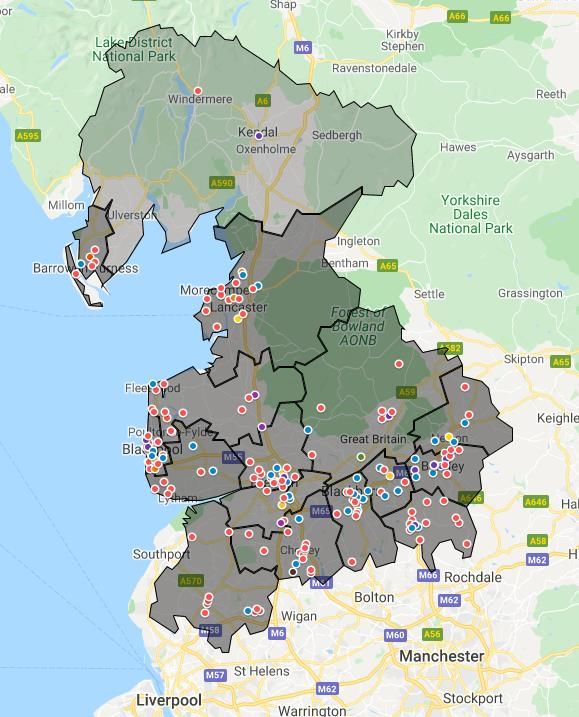
3               Our Strategic Context – Pre and Post COVID-19 Lockdown
Partnership with:
• Coroners
• Public Health
• Social Care
                                                                               Analysis over a
• CCGs & Providers                                                              5 year period
                                          Hampshire, IOW, Southampton
• Police Forces                           Portsmouth (0-18) CYP Suicide            2015-20
• Schools & Colleges                           Prevention Analysis

• STP/ICS Suicide Prevention Leads

                                             Shared South East
                                                                             Kent and
                      Buckinghamshire
                     (0-25) CYP Suicide
                                              Commonalities               Medway (0-18)
                         Prevention                                       & Care Leavers

                                                                                           Multi-agency
                                                                                             Systems
                                                                                             Leaders
                                           Berkshire (0-25)
                                            CYP Suicide                                     facilitation
                                             Prevention                                      (NHSE/I
                                                                                              broker)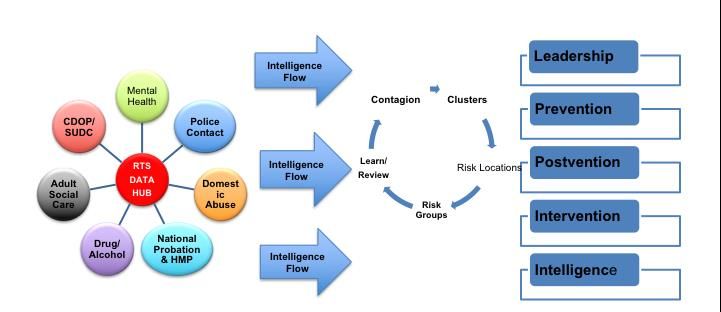
4
           Local/Sub-Regional Findings

▪   SEN and academic pressure – dyslexic children and children with
    wider SEN needs being vulnerable in times of academic pressure
▪   Neuro-diversity - Autism wait times for diagnosis, with little
    preventative support – but a potential ‘systems diverter’
▪   70% overall experienced trauma and adversity
▪   Previous bereavement and self-harm was evident for some
▪   Previous self-harm and suicide attempts – query postvention support
▪   CDOP and JAR variability – led to Safeguarding Board &
    Independent Scrutiny recommendations
The crucial findings across the South East
We need to think again
    ▪   System intelligence, and trust, regarding Equality and Diversity was missing
    ▪   Key vulnerabilities linked to social exclusion and marginalisation – the
        ‘othering’ affect – which was previously invisible, a specific focus on:
         ❑   Neuro-diversity
         ❑   Our community of colour (BAME)
         ❑   Our rainbow community (LGBTQ+)
         ❑   The interface with faith and belief (loss of belonging, hidden networks or both support
             and exclusion)
    ▪   We weren’t asking the questions – what do we say?
    ▪   New questions for the Police, Health, Social Care within first 24-48 hours of
        loss to suspected suicide – targeting postvention support
5
    ▪   ZSA training sent out to the multi-disciplinary workforce across SE
6

    Joint Agency Response (JAR) is usually triggered
    when a child dies unexpectedly, including where
    suicide is suspected

    Professionals meet to understand the cause and
    factors contributing to the death, co-ordinate support,
    safeguard those most affected and learn lessons

    It requires the Police to appoint a lead investigator, to
    fully and sensitively investigate the circumstances and
    relies on prompt multi-agency information sharing/co-
    ordination
The questions we now ask

    ▪   The questions we’re asking together have changed (based on this learning and co-design with Police,
        health and social care frontline staff) to include:

         –   Whether the child is subject to child protection planning or supportive intervention? Whether the child
             was in care or was recently a care leaver?

         –   Whether the child has a learning difficulty or SEND need?

         –   Whether the child was open to CAMHS (Child Adolescent Mental Health Service) or other mental
             health provisions?

         –   Have there been previous attempts of suicide, or concerns regarding self-harm or suicide ideation?

         –   What is the child’s ethnicity, faith or cultural heritage?

         –   Has the child expressed any personal feelings concerning their sexual orientation and/or gender
             identity?

7
How does that help us support loved ones and
friends?
    ▪   These questions are likely to help the chair of the JAR to identify an
        appropriate keyworker, a single named point of contact who will be available
        to those most affected by the loss

    ▪   It helps us ensure specific support services are available to those most
        affected and reduce the likelihood of further harm or loss of life- the
        keyworker is accessible to signpost those affected to sources of support.

    ▪   They are also expected to be the families voice amongst other professionals
        which may prove useful to schools as they attempt to provide bereavement
        support to the child’s friends, peers and school/college/university
8
        communities.
Why it matters
Developing emotional intelligence as a system – building trust
    ▪   Changes were implemented by the first Police Force (Hants) and Named
        Nurses providers (HIOW) within 7 days of Board agreement – significant
        partnership momentum. (Other Police Forces quickly followed suit)
    ▪   This enables to understand who has been affect and how; to target
        postvention support for the ‘significant others’ affected by the loss (who are
        c.40% more likely to develop suicidal ideation)
    ▪   CDOP & Independent Scrutiny changes (improving understanding, changing
        commissioning/service design).
    ▪   ICS impact was tangible – CYP Suicide Prevention Strategies emerged – in
        one area community investment in suicide prevention and postvention
        support led by those our children and community trust (e.g. BAME,
9       LGBTQ+).
The change that has followed nationally
▪ The questions being rolled out now by the National College of Policing
across England (following discussion with ACPO representatives)
▪ Changes have been adopted all-age in the South East (adult & child)
▪ Zero Suicide Alliance training accessed by thousands of members of the
workforce in SE – ZSA training looks likely o change in light of SE learning
▪ Dialogue with Tammy Coles (Head of MH, PHE)
▪ Publication by Bristol University NCMD publication and Prathiba Chitsebesan
(Chair of the national Clinical Reference Group):
❖ Exploring national child mortality data – to ask the equality and diversity questions that we have
identified (the impact of exclusion/marginalisation)
❖ The potential to invest in community partnership (BAME, LGBT+, SEND)
10❖ Understanding further hidden impact of faith and belief (post IICSA)1
Final Thoughts
This work has had a notable impact on our multi-professional South
East Leaders and Frontline workers – building emotional intelligence
and sensitivity to diversity was crucial – it impacted all of us. We had to
stop and think again
We recognised a hitherto hidden picture – a picture in which social
exclusion, marginalisation and ‘othering’ was having tangible impact
Understanding the role of faith and belief – the potential to partner in
communities, to build trusted support (preventative and postvention)
Breaking down barriers between safeguarding and mental health to
enable systems agilityBenefits of RTS – ‘Real Time Learning’ CYP –Suicide Prevention Shared Learning Event. Wednesday 12th May 2021 Louise Thomas – North West Coast Clinical Network Programme Manager Neil Smith – Senior Advisor, North West Coast Clinical Network Russel Clarke – Deputy Head Teacher, Haslingden High School
13
       Lancashire South Cumbria Context

▪ ICS Leadership
▪ Multi Agency Governance
▪ Real Time Surveillance Established
▪ Strong Links with Children's Safeguarding and CDOP
▪ Real Time intelligence led response capability
▪ Early Learning culture
14 ICS LOGIC MODEL ACTION PLAN
15                 Data – Real Time Alerts Process

                           1 Hour                                24 Hours                         Daily

                                      Record death details and              ‘Alert’                       Review data
 Police attend report                                                       notification
  of sudden death
                                       ID suspected suicide/                                              analysis refresh
                                         drug related death                 sent to ICS                   dashboard

                                                                                       Monthly/
                                                          Key Pathways                 Weekly                  Primary Care
                                                                                       Reports
     Shared Learning                                      Informing                                            Public Health
                                                                                                               MH providers
     - Safe Guarding
     responses
                                    - KEY OUTPUTS             - Prevention                                   Drug and alcohol
     - Contagion/Cluster                                                                                           CCG
     (Post incident                                          - Intervention                                       Police
     response)                                                                                                Local Authority
                                                             - Postvention
Real Time Surveillance- Data Connectors and Flow Model Intelligence Led approach 16
17            ICS Real Time Surveillance Key Guiding Principles

1.   Suicide Prevention is everyone's Business.
2.   We agree to share information and data across organisations to increase learning   and
     new action opportunities.
3.   We will be intelligence led in all our responses to real time information.
4.   We will work together and collaboratively to increase our capacity to prevent self harm
     and suicide.
5.   We share the ‘prevention’ challenge and accept mutual accountability to reduce suicide
     and self harm.
6.   Rapid delivery of local responses to local problems supported by timely research and
     analysis.
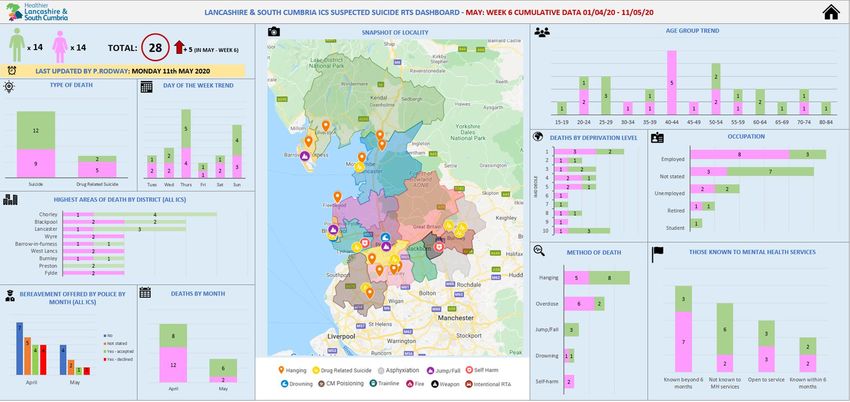
RITS DASH BOARD EXAMPLEReal Time Surveillance Product-
18
IIexICS ICS DASH BOARD
ampleRTS YEAR 1 SUSPECTED SUICIDE MAPPING
Circled in red are cluster areas of hanging cases
(pink dots) which was most prevalent in
Blackpool, Preston, Rossendale and Chorley
There is a line of suicide by overdoses from
Blackburn to Burnley with some cases in Preston
too (blue dots circled in yellow)Schools Critical Incident Learning Event
21       Critical Incident – Context

1.    October 2019 -Haslingden High School – Child ‘R’ aged
     17 years Completed suicide from road bridge near
     school
2. January 2020 – Haslingden High School – Child ‘J’ aged
     14 years attempt suicide same location.
3. January 2020 – Coal Clough Acadamy – Child ‘O’ aged
     15 years completes suicide at home address.
What Worked Well.
Hngden High What worke
d well continued...
First 24 hours……
• Managed the immediate situation
• Close liaison with the police
• Managed the end of school given the A56 being closed and emergency
services still at the scene
• Immediate conversation with the LCC media team
• Met with specific staff (teachers that day, form tutor etc)
• Broader communication strategy. Communication with all stakeholders
(parents, students, staff, governors, external agencies)
• Briefings with staff and students - Assemblies
• Nominating a named person to be the sole contact for the family in school –
conversations with the family
• Contacted local councillor
• Arranging for the school nurse to come into school the next day – allocate
areas
• Similar arrangement with the police and sought other services
• Began to develop a spreadsheet identifying vulnerable students and staff
• Left school at roughly 11pmWhat Worked Well – After 24 Hours.
What worked well continued...
After the first 24 hours…
• Met with students and staff on the vulnerable list – triaged
• Contact with specific external agencies as required
• Strategy discussion – well prepared
• Fielding daily calls from parents or members of the community
• Accessed support for whole staff – arranged for the 4 Samaritans
counsellors to come into school
• Suicide awareness training for all staff
• Meeting with community policing team and the East Lancashire Press
Officer for the police
• Contacting Jason Milburn, founder of ‘Jack’s club’. Assembly for the year
group
• Meeting a prominent local councillor within two days of the incident
• Educational Psychologist conversation (supported by a member of SUDC)
• Review of CPOMS and student’s records
• 1 hour information session for parents – ‘How we work together to keep
children safe’. Recorded and online survey used to collect responses
• Didn’t feel as though the finger was being pointed with immediate externalWhat didn’t work well? • Overwhelmed with information from external agencies – in excess of 15 calls in the first 12 hours, whilst trying to formulate plans – Vicky Wagstaff (emailed a summary) • Time to prepare for staff and student briefings • The reputation of the school within the local community (not having a voice) • The critical incident policy – not a practical tool
How would we do things differently?
How would we do things differentlyHow
    do we do things differently?
Need to develop a guided record sheet for a detailed chronology:

https://www.education-ni.gov.uk/sites/default/files/publications/de/guide-to-
managing-critical-incidents-in-schools.pdf
Possible areas for Development.
Possible areas for development….
▪ Schools should always be a central part of the strategy discussion –
opportunities to reassure school leaders
▪ Possible internal allocation for liaison with external agencies for support
(advantages and disadvantages of this proposal)
▪ Family liaison officer for the family encouraged to contact the school and
introduce themselves
▪ Local authority have a clear system for support (critical incident team)
▪ Onsite support – extremely challenging and intense period
▪ Planned debriefs that schools can be walked through at a specific time after
the event – 1 month?
▪ An external voice that validates/promotes publicly the school’s approach and
work with external agenciesPossible areas for Development.
Possible areas for development….
▪ Development of the school website in relation to wellbeing and avenues for
support
▪ ‘School parents online’ – developing a representative group of parents who
perform a specific role in school and if appropriate, can play an active role
on social media that is designed to de-escalate and signpost to school
▪ Schools to group their support mechanisms, such as counsellors, pastoral
staff
▪ Social media strategy – social media manager to be nominated in school
▪ Linked to a local school leader who has dealt with similar
▪ Take/present agreed actions to LASSH28
Questions and ObservationsYou can also read


