ROADSIDE TREE PLANTING MANUAL - June.2020 - Roads for Water
←
→
Page content transcription
If your browser does not render page correctly, please read the page content below

ROADSIDE TREE PLANTING MANUAL

                                June.2020
Authors
Celestine M. Kilongosi2; Nancy C. Kadenyi1; Luwieke Bosma1; Frank Van Steenbergen1; Theophilus M. Kioko1; James R. Messo4; Bosco K. Kidake5; and
                                                               Bernard K. Kigwa3

                                                                   Author affiliations
                                                           MetaMeta Research, Netherlands
                                                           1

                                                               World Agroforestry (ICRAF)
                                                               2

                                                       3
                                                        Kenya Forestry Research Institute (KEFRI)
                                            Jomo Kenyatta University of Science and Technology (JKUAT)
                                            4

                                        Kenya Agricultural and Livestock Research Organization (KARLO)
                                        5

                                                      To connect with the authors, please contact:
                                                Celestine Kilongosi; Email: kilongosicelestine@gmail.com
                                   Nancy Kadenyi; Email: nkadenyi@metameta.nl /nancykadenyi@gmail.com

                                                                                                                                                   2
Table of Contents

1. General information                                    5   6.2.4 Watering Established Trees                     22
1.1 Introduction                                          5   6.2.5 Know when to water                             23
1.2 Reading Guide                                         6   6.3 Working with the community and nursery growers   23
2. Tree selection                                         6   7. Maintenance and post-planting management          24
3. Setting up and managing a tree nursery                11   7.1 Mulching                                         24
3.1 Nursery site selection                               11   7.2 Staking                                          24
3.2 Water source for the tree nursery                    11   7.3 Lopping                                          24
4. Designing Roadside Plantations                        12   7.4 Pollarding                                       25
4.1 Principles of roadside planting                      12   7.5 Coppicing                                        25
4.2 Planting designs                                     13   7.6 Pruning                                          25
4.3 Road safety                                          15   7.7 Mowing                                           29
5. Pre-Planting Management                               15   7.8 Replacement                                      29
5.1 Site preparation                                     15   7.9 Fencing                                          29
5.1.1 Determine the size of planting area                16   8. Recommendations                                   30
5.1.2 Competition control                                16   9.Summary                                            31
5.1.3 Preparation of the soil                            17   References                                           33
5.2 Tree species and site matching                       17
5.2.1 Site matching                                      17
6. Tree planting and watering                            18
6.1 Pit preparation and Tree establishment               18
6.1.1 Seedling handling before planting (hardening up)   18
6.1.2 Tending after planting                             20
6.2 Watering                                             21
6.2.1 Early Morning                                      22
6.2.2 Evening                                            22
6.2.3 Watering Newly Planted Trees                       22

                                                                                                                        3
List of photos                                                             List of tables

Photo 1: Photos of some of the roadside tree species (http://          9   Table 1: Roadside tree species selection (Gilman & Sadowski, 2007)      7
tropical.theferns.info/)                                                   Table 2: List of common roadside tree species and their                 8
Photo 2: Roof water harvesting in Kwa Vonza, Kitui County (Photo      11   characteristics (source: http://tropical.theferns.info/)
credit: MetaMeta)                                                          Table 3: A sample list of shrubs suitable for roadside tree planting    9
Photo 3: Road drift water harvesting in Kitui county (photo credit:   11   Table 4: List of grasses for roadside planting                         10
MetaMeta)                                                                  Table 5: Road Safety Mitigation Measures                               16
Photo 4: assorted flower plants, Flower Tree, Landscape green         13
belt(source: PNGWing, n.d.)
Photo 5: Avenue plantation (Source: MetaMeta)                         14
Photo 6: Grasses used as a greenbelt (Source: Wikipedia)              14
Photo 7: How to water an established tree (Credit: DeJohn, 2019)      22
Photo 8: Collective community participation in designing RWH          23
structures (Source: MetaMeta)
Photo 9: A properly pruned branch. (Source: Wikipedia)                27

List of figures

Figure 1: Tree species selection app                                   7
Figure 2: Roadside tree barriers and dust movement                    15
Figure 3: Issues to watch for when pruning (Source: Wikipedia)        27

                                                                                                                                                       4
1. General information                                                            that can be accumulated from roadside tree planting like reducing the air
1.1 Introduction                                                                  pollution levels in the country. The air in Kenya’s capital, Nairobi, and other
                                                                                  major cities is very polluted by industrial activities and the many motor
                                                                                  vehicles powered by diesel and petrol. They release particulate matter into
Humans and other living things depend on water for life and health.               the air, affecting the health of thousands of city dwellers. These negative
People living on Arid and Semi-Arid Land (ASAL) face water shortages,             outcomes can be averted by roadside tree planting. The dust generated by
long periods of droughts, and sporadic intense outbursts of rainfall. In          the many vehicles traversing the worn-out and unpaved roads in rural areas
ASAL regions, soil erosion is a big challenge that is exacerbated by road         is quite alarming.
construction. Hard road surfaces change the hydrology and alternate
subsurface flows, and they often generate higher run-off flows with higher
velocity. In this way, roads cause problems such as erosion, gully formation,
waterlogging, and washing away of fertile soil. These issues greatly affect
roads, the landscape, and adjacent farmland. However, the negative effects
can be turned into positive impacts through planting trees and other types
of vegetation, coupled with water harvesting. Safeguarding roads, the
environment, and farmland is essential to ensuring resilient and thriving
livelihoods.
Roadside tree planting can make significant improvements to the quality of
                                                                                                                                               Source: (MetaMeta)
roads and the environment and can protect key natural resources, especially
in ASAL regions where vegetation is essential in binding the soil with organic
matter that aids in enhanced infiltration and water retention in the soil. Road   Apart from the health benefits, roadside tree planting can help in achieving
corridors can be a focus area for the restoration of vegetation cover, as         the goal of 10% tree cover as stipulated in Kenya’s vision 2030. Trees hold
vegetation supports many additional benefits, such as trapping dust and           the soil firmly in the ground and help to slow and absorb runoff, averting
reducing run-off flows. Several studies indicate that the benefits accumulated    local environmental problems.
from roadside tree planting include better soil formation by shedding dead
leaves, increased water quality by reducing sediment flow, reduced erosion,       Currently, Kenya’s forest cover is at 7.6%. A combination of the several
road beautification, flood control as the trees slow and absorb road runoff,      aforementioned advantages and the challenges that can be averted by
windbreaking, providing important pollinator habitats, improving peoples’         roadside tree planting inform the need for this manual, which can be a
health, and protecting crops (Steenbergen et al., 2019; Perez et al., 2016).      guide to road users and the general public. The main objective of the
                                                                                  manual is to highlight step-by-step procedures for roadside tree planting,
Despite the long list of the benefits of roadside tree planting, this practice    maintenance, and management strategies as well as the benefits that can
has not been widely adopted in developing countries. For instance, in Kenya,      be accumulated from this activity. This manual provides useful working
several tree-planting initiatives have been developed. However, these             information to road engineers/designers, urban planners, field workers, and
initiatives focus mainly on tree planting on farmland, forgetting the benefits    farmers in Kenya.

                                                                                                                                                                    5
Section 5 - Pre-planting management: This section summarizes site
                                                                                  preparation, tree species selection, and site matching.
                                                                                  Section 6 - Tree planting and watering: This section provides a step-by-
                                                                                  step guide of tree planting. It also discusses proper tree watering regimes
                                                                                  to enhance tree survival and foster collaborative work between communities
                                                                                  and nursery out-growers.
                                                                                  Section 7 - Maintenance and Post-Planting Management: This section
                                                                                  summarizes general maintenance operations and requirements. The
                                                             Source: (MetaMeta)   necessary tools for each activity are also illustrated.
                                                                                  Section 8 - Cost-benefit analysis: This section summarizes the monetary and
1.2 Reading Guide                                                                 social benefits of roadside tree planting and the resources required for the
                                                                                  achievement of these benefits.

Sections covered in the manual are:                                               Section 9 - Recommendations: This section recommends activities that can
                                                                                  be undertaken for successful roadside tree planting. Some of the activities
Section 1 - Introduction: The introduction outlines the main purpose of the       include the active involvement and participation of the government,
manual and the benefits of roadside tree planting according to studies            community engagement, regulations, awareness creation, and multi-
conducted in other countries. It also highlights how roadside tree planting       stakeholder engagement.
assists in achieving the country’s vision 2030 on improving forest cover.
                                                                                  Section 10 - Summary: This section summarizes the general socioeconomic
Section 2 - Tree selection: This section summarizes specific criteria to be       benefits of tree planting and why trees are to be planted along roads. The
used in selecting suitable roadside tree species for roadside planting            organizations that deal with tree planting in Kenya are also highlighted, as
and the process of analyzing the suitability of streets for tree planting.        are links for possible follow up.
This section also identifies general tree selection considerations based on
community needs and desires.
Section 3 - Setting up and running a tree nursery: Before trees are               2. Tree selection
planted, they are set in a nursery for establishment. This section summarizes
nursery site selection, design and construction, alternative sources of water
for use in the nursery, pest and disease management, and planning and             The right tree in the right position is the key principle in roadside tree
record-keeping for good management and survival of seedlings.                     planting, as the roadside environment is harsh. To fully realize the benefits
                                                                                  of roadside trees, tree species should be carefuly selected according to
Section 4 - Designing Roadside Plantations: This section summarizes the           the site’s typology, the hardness of the tree species, a clear above and
general principles of roadside tree planting and available planting designs.      below ground site analysis, and the ability of the tree species to improve
The section also discusses road safety measures that are very important           drainage, trap dust, and reduce surface runoff. Selection criteria are based
factors to consider when designing roadside plantations.                          on the medicinal, nutritional, economic and ecological value of the trees, as

                                                                                                                                                                  6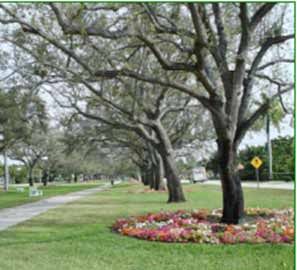
well as their adaptability, thecultural values associated with specific tree         Cultural             Utilities such as structures (buildings) and power lines
species, and their ability to absorb carbon dioxide. Chosen trees should be          constraints          (the selected trees should not grow tall enough to
evergreen so they will trap dust throughout the year, especially during the                               distupt power lines, but if that is the case there must
dry season when the dust is a nuisance to farms and households located                                    be a pollarding strategy.
near the road. Some trees are a source of food, especially those that
                                                                                     Limitation           Space and planting location (are you planting along
provide fruit to the communities living adjacent to the road and passersby
                                                                                     constraints          a superhighway, at junctions, or corners, etc.?)
such as school children. Shade is also very important to passersby who
walk long distances on their way home in the scorching sun. Table 1 outlines
factors to consider tree selection.

Table 1: Roadside tree species selection (Gilman & Sadowski, 2007)

 Site factors           Characteristics to consider
 Social factors         Purpose of the trees: beauty, fruit, shade, serving as
                        windbreaks, a filter of pollutants
                        Functional utility: medicinal, nutritional, economic
 Economic factors       Establishment costs
                        Maintenance and management costs
 Institutional          Landscape policies, framework, and plan
 factors
 Tree characteristic    Flowering, adaptability, diversity, tolerance, structure,
 factors/ Resistance    wind tolerance; resistance to termites, drought, poor
 to urban               soil, cold, high temperatures, diseases and pests,
 environments           and mechanical damage; crown, height, and canopy
                                                                                                          Figure 1: Tree species selection app
                        density
                        Selected trees should have a good canopy, providing
                        shade to cool the area along the road, making it            The World Agroforestry Centre, the University of Copenhagen, and other
                        more comfortable for the pedestrians.                       partners have developed an android application (vegetationmap4africa)
 Education factors      Knowledge, skills, experience, expertise                    to help those in landscape restoration to make better decisions on suitable
 Environmental          Climatic conditions (heat, drought, and waterlogging        trees and shrub species. Users can select the tree species via the web,
 Constraints            tolerance), soil conditions,                                smartphone, and Google Earth interfaces. The steps for using the tool are
                                                                                    found at this link. The app can be used in offline mode and provides the user
                        The selected trees should be adaptable to various           with information about natural vegetation and useful species. The app so far
                        conditions such as drought.

                                                                                                                                                                     7
covers Burundi, Ethiopia, Kenya, Malawi, Rwanda, Tanzania, Uganda, and         5.   Senna siamea     Yellow cassia,    Medium-sized (rarely exceeding
Zambia, and it has the following capabilities:                                                       Bombay            20 m in height), evergreen
1. The app shows the distribution of potential natural vegetation                                    blackwood         (drought resistant), ornamental,
                                                                                                     (English)         fast-growing
2. The app includes a species selection tool—‘the right tree for the right
   place’—that accounts for the goods and services desired                     6.   Senna            white cassia,     Medium-sized, evergreen
                                                                                    spectabilis      mhomba            (drought resistant) ornamental,
3. The app links tree species to online databases                                                    (Kiswahili)       fast-growing, boundary marker
4. The app informs users about the trees and shrubs that originally            7.   Vitex payos      Chocolate Berry   Drought resistant tree found near
   occurred at the location of interest                                                                                rock outcrops, high water tables
5. The app identifies potential ecotypes within species and recommends         8.   Berchamia        brown ivory       Grows naturally, adaptable
   well-adapted seed sources for particular sites. (Kindt et al., 2015)             discholar                          in semi-desert and grassland
                                                                                                                       regions
Sample trees suitable for roadside planting are shown in Table 2.
                                                                               9.  Terminalia        Bastard almond    Evergreen, tall tree
                                                                                   catappa
Table 2: List of common roadside tree species and their characteristics        10. Anthocephalus     Prosea            Evergreen, tall tree with large
(source: http://tropical.theferns.info/)                                           chinensis                           foliage
                                                                               11. Cassia fistula    Golden shower     Evergreen, medium-sized tree
 No. Scientific name     Common Name        Criteria for selection
                                                                                                     tree              with large leaves
 1.   Jacaranda          Jacaranda          Evergreen, grows 5-16 m tall,      12. Pongamia          Pongam            Evergreen, medium-sized tree
      mimosifolia                           ornamental, fast-growing,              pinnata                             with dense foliage
                                            drought-resistant, termite         13. Ficus             Bunyan tree       Semi-evergreen tree with
                                            resistant, sprouts easily if           benghalensis                        spreading canopy and compact
                                            damaged                                                                    leaves
 2.   Spathodea          Nandi flame        Grows to be a large tree, up       14. Ficus religiosa   Sacred Fig        Semi-evergreen tree with shiny
      campanulata                           to 25 m, with a broad crown;                                               leaves
                                            ornamental, drought-resistant,
                                                                               15. Gmelina           Gmelina           Deciduous tree with hairy leaves
                                            termite resistant
                                                                                   arborea
 3.   Delonix regia      Flame tree         Deciduous, medium-sized tree
                                                                               16. Putranjiva        Putranjiva tree   Evergreen tree with shiny leaves
                                            with spreading canopy; drought-
                                                                                   roxburghii
                                            resistant, termite resistant
                                                                               17. Croton            Croton            Evergreen tree, well adapted to
 4.   Azadirachta        Neem               Fast-growing, evergreen, drought
                                                                                   macrostachyus                       a dry climate and numerous side
      indica                                and pest resistant
                                                                                                                       roots

                                                                                                                                                           8
Photo 1: Photos of some of the roadside tree species (http://tropical.theferns.info/)

                                                                               Table 3: A sample list of shrubs suitable for roadside tree planting

                                                                                                                 Common
                                                                                No.     Scientific Name                        Criteria for Selection
                                                                                                                 Name
                                                                                1.      Bougainvillea            Bougainvillea Evergreen, climbing shrub
                                                                                        spectabilis                            producing stems up to 10 m
                                                                                                                               long, ornamental
                                                                                2.      Lantana camara           Wild Sage     Evergreen, can grow up to 2 m
                                                                                                                               tall, erosion control
                                                                                3.      Vernonia                 Common        Drought tolerant, ornamental,
                                                                                        angustifolia             ironweed      stalks are 2-3 ft tall
                                                                                4.      Tecoma stans             Yellow bells Commonly knowns as a roadside
                                                                                                                               weed, ornamental, adapts
                                                                                                                               well in tropical and subtropical
                                                                                                                               environments
Table 3 presents some pollution-tolerant shrubs that can be used in roadside
planting.

                                                                                                                                                                        9
i. Bougainvillea spectabilis            ii. Lantana camara (Wild Sage)       Table 4: List of grasses for roadside planting
            (Bougainvillea)                                                         No. Scientific Name        Common Name             Criteria for Selection
                                                                                        Bouteloua              Sideoats grama/         Excellent drought tolerance
                                                                                    1.
                                                                                        gracilis               mosquito grass
                                                                                        Sporobolus             Prairie dropseed        Perennial, deciduous,
                                                                                    2. heterolepis                                     ornamental grass with hair-like
                                                                                                                                       leaves
                                                                                           Pennisetum          Kikuyu grass            Very fast-growing grass, good
                                                                                           clandestinum                                shade tolerance, excellent cold
                                                                                     3.
                                                                                                                                       tolerance, and has the ability
                                                                                                                                       to smother weeds.
  Source: (Stock photo)                    Source: (Wikipedia)                             Stenotaphrum   Pemba grass/                 Excellent shade tolerance,
                                                                                     4.    secundatum     buffalo grass/ St.           completely
                                                                                                          Augustine grass
                                                                                           Chloris gayana Zimbabwe grass               Shade tolerant grass, suitable
 iii. Vernonia angustifolia (Common          iv. Tecoma stans (Yellow bells)         5.
                                                                                                                                       for weed and erosion control
              ironweed)

                                                                                                  i. Kikuyu grass                           ii. Zimbabwe grass

                                           Source:http://tropical.theferns.info/
  Source: (Pinterest)
                                           viewtropical.php?id=Tecoma+stans

                                                                                                                                    Source: https://asepsis-kenya.com/
In the list, Kikuyu, Pemba, and Zimbabwe grasses can be used as footpaths             Source: Stock Photo
                                                                                                                                    product/zimbabwe-grass-plugs
on road pavements or for beautification purposes. Table 4 provides a list of
grasses that can be used.

                                                                                                                                                                         10
3. Setting up and managing a tree nursery recommended height for transplanting trees is between 30 cm and 45
cm.
In setting up a nursery, several factors are taken into consideration:
the nursery site selection, design, and construction; pest and disease 3.2 Water source for the tree nursery
management; and planning and record keeping. There are two types of
tree nurseries;
Nursery establishment requires enough water for proper management and
1. Temporary Nursery – This is established in or near the planting site and
the development of good, healthy seedlings. Different water harvesting
can be used for a year or two (one or two seasons).
technologies have been developed. For instance, road surfaces, drainage
2. Permanent Nursery – This nursery is meant to serve a longer period, channels, and culverts can be used to redirect water for recharge or
hence seedlings can be raised from year to year. The size of the nursery productive use. Water can be stored in soaking pits or storage reservoirs
is dependent on the number of seedlings to be raised. such as ponds, water pans, and borrow pits. The harvested water can be
used in tree nurseries, for tree planting, and for additional vegetation. Some
water harvesting techniques that can be a source of water for the nursery
3.1 Nursery site selection are:
The selection of the area for a nursery is very important and should be sited
as centrally as possible to the sites to be planted. Critical points to consider i. Rooftop catchment: Intercepts
in the selection of a nursery area are: rainwater from hard roof surfaces
• The area should be well drained and free from waterlogging and conveys water to a storage
tank via a system of gutters.
• The plants should be exposed to direct sunlight
• The nursery should be close to a water source for ease of irrigation.
Photo 2: Roof water harvesting in Kwa
Road water harvesting has been occasionally used for roadside tree
Vonza, Kitui County (Photo credit: MetaMeta)
planting. ii. Road drift: A low causeway
• The area should be well protected from pets and wild animals. can be a simple way to recharge
shallow groundwater when built
• The area should be flat or gently sloping, with a slope ranging from 0
to function as a sand dam. It
to 30 degrees.
functions in slowing down the
• The number of seedlings depends on the planting pattern used, which flow upstream and building up
can either be square or rectangular. The recommended spacing sand, thereby allowing the water
between two lines is either 10 cm or the width of your palm, and to reach underground storage,
spacing between the plants is 10 cm (ICRAF, 2013). Further, the contributing to recharge.
Photo 3: Road drift water harvesting in Kitui
county (photo credit: MetaMeta)
11c. Planting should be both functional and aesthetic to serve a definite
purpose such as traffic delineation, screening, erosion control, etc.
iii. Runoff harvesting: The runoff d. Where possible, especially in rural areas, planting designs should
from roads can be harvested and reflect naturalistic conditions, with informal flowing arrangements of
stored in an on-farm pond or a material ecologically adapted to the site and purpose of the design. Avoid
reshaped borrow pit. This water symmetrical, straight-line arrangements.
can be used in the nursery to
water seedlings. e. Form and shape should be used for harmony and contrast. Round-
headed or spreading plants form more desirable masses, while columnar or
Source: (MetaMeta) conical shapes add greater visual emphasis. As they mature, plants change
size and can quickly overgrow a particular planting site. Avoid planting
trees too close together such that they limit the potential width or height
4. Designing Roadside Plantations development of either plant. For example, trees that grow up to 30 ft should
be planted at least 3-4 ft from sidewalks or concrete areas. Trees that grow
30-50 ft tall should be planted 5-6 ft from sidewalks. Trees that grow more
All roadside landscape planting designs should conform to the general than 50 ft tall should be planted at least 8 ft from sidewalks.
principles of transportation, landscape, and environmental design. Roadside
planting and roadway design should be correlated to achieve an overall
unified plan (Hasan et al., 2018).
4.1 Principles of roadside planting
There are a few mandatory rules for landscape planting design. Good
design depends upon the knowledge and creativity of the designer.
However, a few basic guidelines, as reported by Steenbergen et al. (2019),
include: Source : Roads for water, n.d.
a. The designer should first gather knowledge of any special problems
that may affect the location or survival of the plant material (soil data,
utilities, water table, contour grading plan, etc.).
f. Shrub use should be limited because of high maintenance costs, their
b. Highway planting should achieve a mass effect to be in scale for the relatively short life, and large quantities of plants necessary to achieve large
viewer traveling at the design speed of the highway. Planting design should masses. Small flowering trees generally require less maintenance, live longer,
also achieve a well-balanced combination of both planted areas and open and can create larger and taller plant masses.
spaces.
12g. Consider the plant’s adaptability to various environmental, climate, k. Avoid placing trees and shrubs over underground utility lines and
and soil conditions. Some of the tree species’ characteristics include cold drainage pipes. Avoid planting trees under overhead utility lines unless the
hardiness, salt spray tolerance, soil moisture requirements, drought tolerance, mature tree size is recognized as a tree type recommended for this purpose.
insect susceptibility, disease resistance, ease of transplanting, sunlight or Avoid placing trees and shrubs in the centre of proposed drainage swales
shade tolerance, and availability of trees or seedlings. and in front of drainage pipe discharges.
h. Plant selection should emphasize the use of native plants to the
greatest extent possible. Efforts should be taken, when appropriate, to use
regionally native plants for landscaping. However, the design should also 4.2 Planting designs
strive to use the best plant selection possible for the prospective site and
design concept.
Different tree planting designs can be applied depending on the
i. Avoid selecting plants that have the potential to invade areas intended purpose of the plantation as well as the availability of space.
adjacent to the highway right-of-way and adversely harm other plant Only one species of trees should be planted for a long distance of the
communities. Such plant species include prosopis spp, water fern (Salvinia road (Randhawa &Mukhopadhyay, 1986). This is because this setting is
molesta), wild garlic (Allium vineale), and prickly pear (Opuntia spp). more beautiful, gives a wavy appearance to the skyline, and makes the
j. Creating naturalized plant areas using decorative native shrubs, management and gap-filling of the trees easier. The same authors report
perennial bulbs, daylilies, and wildflowers can be effective in providing that trees should be planted 12 m apart in the row and at least 5-6 m
colourful focal areas along the highway. away from the edge of the road so that they have enough space to spread
and not interfere with the traffic. If a road is as wide as 30 m or more,
double rows of trees should be planted, with rows spaced 10-12 m apart.
According to the authority guidelines, no trees or shrubs should be planted
on the inside of cut-slopes, around curves, or on the inside curve of an
embanked road.
Photo 4: assorted flower plants, flower trees,
Source: Miami-Dade County, 2007
landscape green belt (source: PNGWing, n.d.)
Source: (MetaMeta)
13The different types of roadside tree planting designs are avenue Other benefits that can be achieved from a well-implemented greenbelt
plantations, greenbelt plantations, and vegetative roadside barriers, as include:
described in the subsequent sections.
• Control of rainwater runoff
• Increase of underground water levels
1. Planting along avenues (avenue plantation) • Prevention of soil erosion
Avenue plantation involves a straight • Increased biodiversity index
path or road with a line of trees Grasses (Table 3) and shrubs (Table 2) can be used as greenbelt vegetation.
or large shrubs running along each Grasses reduce the velocity of flow, trapping sediments and reducing
side. It helps in minimizing dust loads, roadside erosion.
gaseous pollutants, and noise pollution
from traffic. Evergreen and deciduous
trees are effective in minimizing air 3. Design of roadside vegetative barriers
pollution by filtering, intercepting, and
Photo 5: Avenue plantation (Source:
effectively absorbing pollutants for Several decisions must be made when designing roadside vegetative
MetaMeta) environmental improvement. barriers: the combination of trees and shrubs, the porosity of the barrier,
and the number of tree lines.
2. Planting along avenues (avenue plantation) The selection of species will determine the plant spacing, i.e., the distance
between the shrubs and trees. Shrubs, for instance, grow at a much closer
Greenbelt plantations are made spacing than trees; this should be taken into consideration when determining
up of species of trees and shrubs the combination of species to be planted. The general guidance for row
selected to reduce the effect of plantings is to plant larger trees at 3 to 5 m apart, larger shrubs at 2.5 to
pollutants. According to Pokhriyal & 4 m apart, and smaller shrubs at 1.5 to 2.5 m apart. Single-row plantings
Nautiyal (1991), the use of a green should only be used on higher-value land and where space is limited. When
belt resulted in a 27% reduction of possible, it is preferable to have plantings of two to four rows to protect
dust particles in London (Hyde Park). a larger area. One- and two-row plantings are cost-effective options but
Maher et al. (2013) reported that require a uniform and high survival rate.
more than 50% of particulate matter
Photo 6: Grasses used as a greenbelt Figure 2 shows the different types of roadside plantings. Porous barriers
is reduced by roadside tree planting
(Source: Wikipedia) have the most beneficial impact on dust control. Dust capture is enhanced
and even more if the leaves are hairy.
by turbulence in the planting caused by the presence of irregularities such
However, Perez et al. (2016) note that there is limited information on how as branches, leaves, and complex leaf structures. The more irregularities
effectively roadside tree lines intercept dust. the structure contains, the more dust and pollutants will be trapped. In
comparison, almost all dust will “leap” over solid barriers, and little will be
14intercepted. Porous plantings allow a large part of the airflow to traverse speeds. This is best achieved with double rows of trees and bushes. This
the planting. Dust will be trapped better, because there is more contact with would balance both effects: trapping dust and other pollutants and bringing
the leaves of the trees and shrubs. To achieve a good degree of porosity, downwind velocity on the leeward side.
plantings should be approximately 5 to 20 m wide, consisting of tall trees
with a bush layer underneath.
4.3 Road safety
Safety is the main concern for highways and streets, thus an important
factor to contemplate when designing roadside plantations is road safety.
Trees can cause accidents, and special mitigation measures are necessary
at certain speeds to avoid them (Perez et al., 2016). Trees near the road
can present a fixed object hazard. Grass, weeds, brush, and tree limbs
can obscure or limit a driver’s view of traffic control devices, approaching
vehicles, wildlife and livestock, and pedestrians and bicycles (Federal
Highway Administration, 2008). Controlling vegetation helps reduce crashes
and injuries (Training on Roads for Water and Resilience, n.d.; Perez et al.,
2016). Table 2 shows safety mitigation measures depending on the speed
zone, keeping signs visible to drivers.
5. Pre-Planting Management
5.1 Site preparation
Appropriate planning of the planting location is very important for
good root development of trees. The main aim of site preparation is to
create favourable growing conditions for seedlings. Site preparation also
Figure 2: Roadside tree barriers and dust movement
creates space for root development (Canker, 2020). In urban setups, site
preparation may require some planning, unlike in rural settings. In preparing
the site for tree planting, the size of the planting area should be well
Hagen and Skidmore (1971) investigate the effectiveness of windbreaks determined, the competing vegetation should be removed, and the soil
and establish that the porosity of a windbreak should be less than 35 should be prepared. The three steps for site preparation are:
percent (including roadside planting) to have a significant effect on wind
15a) Determine the size of the planting area 5.1.1 Determining the size of the planting area
b) Remove the competing vegetation The planting area has to be shallow and wide to suit the development of
roots, because most of the root growth happens within the upper 12 inches
c) Prepare the soil
of the soil. Three measurements to consider when estimating the planting
area are:
Table 5: Road Safety Mitigation Measures a. Width: The planting area should be 3 to 5 times as wide as the roots or
root ball.
Speed zone Road safety mitigation method
The impact force is unlikely to exceed human b. Depth: The planting area should be shallow enough to allow for the
40 km/h topmost root to be 1 to 3 inches above the soil surface (Gilman & Sadowski,
tolerances, so no specific mitigation is needed.
A minimum lateral distance from the road edge 2007). Planting a tree too deep limits the soil oxygen available for root
50 km/h of 1 m should be maintained to reduce incidental respiration. This can cause several problems, including the death of the tree.
interaction between vehicles and trees. c. Volume: There needs to be enough loose soil in the planting area for
at least 10 m beyond intersection adequate root growth. The amount of soil needed for healthy root and tree
Intersections on the approach and departure growth depends on the tree species, size at maturity, expected lifespan, and
side environmental stress factors (Trees Energy Conservation, 2019).
at least 3 m between driveway
Driveways
and tree
60 km/h 5.1.2 Competition control
Lane merge 3.6 m lateral distance from the
locations road edge Planting sites have weeds and other competing vegetation that have to be
3.6 m lateral distance from road evacuated before tree planting. Evacuating the competing vegetation can
Curves edge for gentle curves; barrier for either be done mechanically or chemically. Mechanical site preparation
moderate/tight curves involves loosening the soil and consolidating organic matter to supply short
term vegetation control. This avoids competition for water, sunlight, and
The impact force is highly likely to exceed human
nutrients that are required for the development. Chemical site preparation
tolerances.
is less labour-intensive compared to mechanical site preparation. Both
70-100 km/h Safety barriers are the most appropriate mechanical and chemical location preparation techniques can be effective,
mitigation (wire rope safety barrier, guard rail, or but each has its limitations.
other approved safety barrier that is suitable in
high-speed environments). Mechanical location planning is expensive and may lead to compaction,
causing soil disintegration. On the other hand, chemical site preparation
Source: (Agujetas Perez et al., 2016) involves the use of pesticides, which can be naturally destructive to the
living biological system. Despite the challenges, location preparation
is fundamental for a high success rate. Both mechanical and chemical
competition control mechanisms include:
16a. Herbicides: It is important to apply herbicides according to the 5.2 Tree species and site matching
manufacturers’ directions, and sometimes a license is needed to apply
herbicides in an area.
Urban/roadside vegetation includes trees, shrubs, and herbs on public
b. Multiple tilling can help control weeds and vegetation. One option is to
and private lands (parks, streets, and backyards), all intercepted within a
till once or twice during the dry season and once again immediately before
landscape dominated by paved surfaces. This kind of vegetation plays a
planting. Precautions must be taken if heavy equipment is used to prevent
vital role in moderating micro-climates, sequestering greenhouse gases such
soil compaction, especially if the soil is wet.
as CO2, and aiding in the percolation of water and beautification. Table
c. Plastic sheeting: A sheet of dark plastic staked over the planting area 1 shows some of the tree species that play this vital role. Before planting
for 2 to 3 weeks during the growing season kills grass and weeds. Remove trees along the road, one has to determine species site suitability to ensure
the sheet before planting the tree. proper selection of the trees to be planted. The trees selected should have
d. Hand weeding is labor and time-intensive, making it practical only for unique characteristics (Plan et al., 2003) as presented in section 2.
small planting areas.
e. Stripping the sod is sometimes necessary to remove sod from the 5.2.1 Site matching
planting site. Topsoil might be removed in some locations, and thus it
The site location offers clues on potential stresses that will impact tree
is necessary to add topsoil or compost when planting (Trees Energy
health and maintenance. For instance, a tree located alongside a downtown
Conservation, 2019).
sidewalk will probably require more maintenance than one located in a very
dark park. Sites with pedestrian and vehicle traffic require special attention.
5.1.3 Preparation of the soil a. Streets, Sidewalks, and Other Paved Areas
Soil conditions of the planting area greatly influence the ability of the tree If tree is positioned near a street, sidewalk, bike path, or other paved area,
to survive and mature. Problems with soil conditions should be identified several site factors must be considered. For instance;
during site selection and corrected before planting. However, this is not
• Pedestrian and vehicular areas - For any site near where pedestrians
always possible. If planting must continue without site preparation, the soil
or vehicles travel, tree species selection is critical. Species with thorns
in the planting area has to be loosened thoroughly to enhance root growth.
or prickly foliage or soft, messy fruit should be avoided. Trees with
Do not disturb the bottom of the planting area to reduce the settling of the
drooping branches would force frequent pruning. For public safety, it
planting area. The soil has to be pressed down if disturbed to decrease
is always important that traffic lights, signs, and intersections not be
settling. To enable the roots to penetrate the soil surfaces, roughen the sides
obstructed by trees. Select a species tolerant to high salt levels within
of the planting area (The American Rhodes Society, 2020 & Jason Griffin,
the soil if the tree is positioned near a road where de-icing salts are
n.d.).
used.
• Conflicts with roots and pavement - Tree roots may grow under asphalt
or cement pavement, which might cause the pavement to crack and
buckle (Urban Forestry, 2019). Some communities have tried using root
17barriers and root training to avoid root-pavement conflict with differing d. Site Activities
types of root barriers, from cylinders to herbicide strips placed within
The type of activities (past, current, and future) on the site can help in
the planting site. These measures are designed to physically deflect
evaluating planting options. Has construction occurred on the site that will
the roots away from the pavement. In some cases, these measures are
have changed soil conditions? How many people or vehicles use the area
implemented to prevent root growth near sidewalks, but they will also
around the site? Are there safety concerns associated with tree planting, like
limit tree growth. Root training is an option that uses chemical and
personal welfare or property damage? Will the trees be protected against
physical barriers, deep fertilization, and irrigation or aeration structures
compaction, vandalism, or potential injuries? This kind of data can usually be
to enhance the soil conditions within the deeper soil horizons. If the
determined by visiting the site and talking with folks who are familiar with
barriers are successful, the roots will grow deeper, avoiding surface
the area. The landholder or local planning departments are good resources
problems like cracked sidewalks.
for locating plans for the positioning.
b. Structures
Trees must be far enough from buildings to permit correct crown and root
development (Gilman & Sadowski, 2007). Trees that grow large, like 6. Tree planting and watering
oaks, should be planted at a minimum of 15 ft from a building. Small and 6.1 Pit preparation and Tree establishment
medium-sized trees are also planted closer to the building, but regular
pruning is also required (Gilman & Sadowski, 2007).
c. Utility Lines Generally, tree planting should start immediately after the rainy season
begins. Holes should be dug preferably 1-2 weeks before the rains
Utility lines for water, sewer, phone, electric, or cable may cause problems commence. For instance, in Kitui County and other similar areas, planting is
for trees. When selecting a site, check for underground or aboveground considered ideal during the October-December rains.
lines that may interfere with the long-term growth of the tree.
PRECAUTION: If possible, plant on a cloudy day to enhance the survival of
• Above ground utility lines - If the tree positioning has aboveground your seedlings. Select only healthy and strong seedlings of at least 30 cm in
utility lines, select a small-growing species that may top out at a height for planting. The number of seedlings earmarked for planting should
minimum of 5 ft below the wire, or select a species with a narrow crown not exceed available labour. This will minimize waste due to unplanted
and place it so that it will not grow into the utility line (Valerie 2004; seedlings left in the field at the end of the planting period.
Trees-energy-conservation, 2019).
• Below ground utility lines - The planting site should be located a
minimum of 12 ft from a serious underground utility line for big trees 6.1.1 Seedling handling before planting (hardening up)
(Gilman 2004; Sather et al., 2004). A standard misconception about For a few weeks (1 month) before the planting season begins, seedlings
tree roots is that they actively grow into sewer and water lines. Roots earmarked for planting should be well prepared for the harsh field
will follow a path of effort and only grow into sewer and water lines conditions. To achieve this:
that are broken.
• Reduce the watering frequency by half
18• Expose the seedlings to more sunshine
• Root prune frequently
The following is a step-by-step guide to tree planting: iii. Dig out the remainder of the
hole and move the soil one foot
i. Planting holes should be dug away from the hole.
before the rainy season commences
if possible, since water collects in
the hole and improves survival even Source: (Wikipedia)
when there is less rain. Neil (2013)
suggests that you should dig a hole
of 30 cm x 30 cm (the distance from
iv. Hold the young tree in the hole, roots first. Keep the soil at bay and
your wrist to your elbow), 45 cm x
gently press it down onto the roots.
45 cm, or 60 cm x 60 cm (especially
in dry areas). The dimensions of the
hole will depend on the size of the
seedling. The planting hole softens
the soil so that the roots of the tree
Source: Gardens Illustrated, 2020) can easily penetrate; loose soil can
catch and contain more moisture.
Source: (Valerie, 2019) Source: MetaMeta
ii. Use a small spade and cut of
chuck out of the ground, turn it
over, and split the hole into almost v. Look for the “collar” on the sapling – this is often the point where the
in half. The pit must be 1ft wider tree has grown above ground. The top of the collar should be level with the
and 1ft deeper than the tree’s roots top of the soil (Chesshire, 2018). A properly planted seedling should have a
(Chesshire, 2018). root collar (the zone between root and stem) even with ground level (Indiana
Department of Natural Resources, 2020).
Source: iStock vi. Seedlings planted too deep, too shallow, or J-rooted (tap root
facing up) will not fulfill their capacity to produce roots and foliage, and
19they are less likely to survive (Engledow, 2013). Place the seedling back into 6.1.2 Tending after planting
the hole and stamp the ground with your foot to make it stand firm.
i. Weed control
PRECAUTION: Long-rooted plants should be planted with caution to avoid
Remove weeds by uprooting them as soon as they appear. A jembe is useful
the development of coiling roots, which promotes poor root development.
for clear weeding. Spot weeding can be adopted to save time/labour.
Pruning/trimming of elongated roots is recommended before planting.
The spot weeded area should be twice as big the tree height or at least
cover a 2 m diameter. Weeding should be done two or three times in one
rainy season to help the immature root system access as much as water as
possible.
Source: (Utah State University, 2010)
Source: (Jones, 2020)
i. Gently compact the surface ii. Catchment repair
around the planting spot by hand
and by foot to increase contact Catchment structures should be repaired or be reinforced whenever
between the tree roots and soil. necessary or during the weeding time.
iii. Replanting (beating up)
Replacement of dead trees should be done two weeks after planting. This
Source: (The loop, 2016)
20activity will depend on the availability of extra seedlings in the nursery. 6.2 Watering
iv. Protection
a. Protection from animals/livestock Trees perpetually lose water to the atmosphere. Water is the most limiting
This can be done using dead branches of thorny Acacia species as a fence. factor for tree survival and development. Water shortages severely harm
In other circumstances barbed wire can be used, if available, to keep young plants that have not acclimatized to the new environment after
animals away. Patrol officers can be deployed to enhance protection. In planning. Trees will experience inferior growth, infestation by pests, and
other cases, leave a ring approximately 10 cm wide directly adjacent to the even death. Watering of young and newly planted trees will enhance their
base of the tree. This can help protect the roots from scratching by hens or survival throughout the year. Watering of plants throughout a dry season
roving animals (Chesshire, 2018). should be emphasized. For example, during the dry season, one tree can be
watered with 10 litres of water twice a week to enhance the possibility of
survival. The time of the day you water your plants influences the amount of
water accessible for plant use within the soil.
Source: (Elfick, 2020)
b. Protection from termite attack
Termites will attack trees that are under stress. The first step in stress
reduction is to minimize competition through proper and timely weeding. Watering of newly planted plants in the evening or early morning reduces
Second, remove all debris from your planting site as soon as possible to the quantity of water lost through evaporation and the amount of water
avoid attracting termites. needed to maintain growth and adapt to the new environment.
21Drip irrigation using waste bottles is a good option. Small holes drilled into March-April-May (MAM) rains for roots to get well established in the soil. It
bottle caps release water slowly into the soil, penetrating the roots of the is important to enhance dampness through watering and mulching the soil in
plant and making it thrive. This helps to reduce workload and provide water those early times after planting in case nature does not provide the regular
to trees over time efficiently without water loss through evaporation. soaking through rainfall. During hot, dry weather periods in ASAL regions,
new trees could need watering as frequently as three times per week to
6.2.1 Early Morning
ensure that the root ball does not dry out.
The best time to water your trees is in the morning before outside
6.2.4 Watering Established Trees
temperatures begin to rise. This takes advantage of the fact that winds are
generally less strong, thus reducing water loss through evaporation. Large established trees can be watered by wetting the soil surrounding the
plant’s roots (DeJohn, 2019). This region is known as the “root zone,” and
6.2.2 Evening
it serves as a capacity tank from which the tree draws moisture. Most roots
If your schedule prevents you from watering your trees in the morning, water spread 1½ to 3 times as wide as the tree’s canopy but are not very deep
them in the late afternoon instead. Watering your plants 2 or 3 hours before (usually in the upper 6 to 12 inches of soil). This depends upon the size
sunset provides the leaves time to dry off, decreasing the probability of of the plant and the type of soil. Shallow or compacted soils can resulti n
fungal infection. shorter or wider root zones. Water the complete root zone area each time
6.2.3 Watering Newly Planted Trees you irrigate.
Young, newly planted trees need additional watering if drought prevails.
Water does not move sideways in soil. Watering should be done wherever
it is specifically required. For young, newly planted trees, concentrate water
over the foundation ball and the planting area to ensure survival. This can
be achieved by creating a circular mound of soil three to four inches high
around the plant at the edge of the area where you planted. For the first
few months after planting, most of the tree-root area is still inside the initial
root ball, with some roots reaching down to develop past this space. The
root ball and the surrounding soil should be kept evenly moist to encourage
healthy root growth by applying mulch, e.g., sand to reduce soil moisture
loss. To ensure high water retention, trees should be planted with soil mixed
with charcoal dust.
Some months (e.g., 3 months) after the tree has been properly established,
expand the watering zone to cover the whole area beneath the canopy.
It takes 2 rainy seasons for the tree to be established. For example, within
ASAL regions, the best time to plant trees is October-November-December
(OND), enabling a short period requiring watering and relying on the
Photo 7: How to water an established tree (Credit: DeJohn, 2019)
22It is commonly assumed that tree roots are a mirror image of the tree 6.3 Working with the community and nursery growers
canopy. Some well-established trees’ roots grow beyond the canopy or the
drip line (Pomery, 1987). Although some anchor roots can reach deep into
the soil, most of the tree-root area is limited to the upper soil layer. When Working with the community and different tree growers provides farmers
watering established trees, provide deep, soaking irrigation to the entire with support across the forestry value chain, from seedlings to sawmills, and
area beneath the tree canopy and extending several feet beyond the drip involves different interventions such as:
line by loosening the soil around the tree (DeJohn, 2019) following the line
• Provision of top-quality forestry inputs and knowledge
of the last leaf/stem (photo 8). Preferably, dampen the soil to a depth of
10 inches whenever you water. To avoid rot, do not apply water to the zone • Provision of extensive training and lifetime support: Through this
directly around the trunk support, farmers receive deep training, from initial land surveys and
site preparation to planting and seedling care, through to long-term
6.2.5 Know when to water
monitoring and maintenance services for the lifetime of every tree
How frequently your trees need water depends on the weather, type and planted. As a result, farmers are confident that they are growing the
development of the tree, root depth, and soil type. Generally, trees ought best trees and applying best practices.
to be watered once or twice a week during the planting season just in case
• Tree harvesting, processing & sales
there is no rainfall that particular week/season. Once you start watering,
you should continue regularly until the rain reappears. It should be noted
that plants use 3 to 5 times as much water during the hot, dry season as they
do during the wet season.
Adjust your watering plan with the season and when there are critical
weather changes. To avoid wilting, young plants need to be watered more
often than older and well-established plants. After they have established (in
1 or 2 years), allow a slight drought between watering regimes. The plants
will get acclimatized and become more drought tolerant.
Points to note:
• Seedlings, like other living organisms, require water for life.
• In water, the nutrients that the seedlings depend on are dissolved and
are taken up by the plants through their hair roots. Watering is normally
done twice in a day: in the morning and the evening for seedlings
exposed to sunshine.
• Seedlings in the shade can be watered once a day. During the rainy
season, watering is unnecessary.
Photo 8: Collective community participation in designing RWH structures
(Source: MetaMeta)
237. Maintenance and post-planting management 7.2 Staking
Maintenance is one of the factors to consider before embarking on tree Staking provides extra support, protection, or help to the tree to stay
planting. Trees should not be planted until the necessary resources for anchored. In the case of roadside tree planting, staking protects trees
maintenance have been arranged. According to Steenbergen (2015), from destruction from animals (since they are young and palatable) and
some of the key maintenance strategies are preventing physical contact passersby. Staking can be done with the use of sticks. However, staking is not
of the seedlings with livestock as well as watering during the dry season. to be done on all newly planted trees; only stake the following:
Managing a roadside tree properly enhances public safety, making the i. Bare-root trees or trees with a small root ball
city more livable and improving the environment (Hasan et al., 2016).
Maintenance shall include, but is not limited to: ii. Trees planted in areas with lots of foot traffic
iii. New trees that cannot stand on their own or that begin to lean
7.1 Mulching iv. Tall, top-heavy trees with no lower branches
v. Young trees, if you live in a very windy area or if the soil is too wet or
loose. (Davey, 2017)
All tree pits and individual shrub
pits are mulched with appropriate
material to reduce the rate of soil
moisture water. Organic mulch, such
as shredded bark or pine straw,
helps conserve moisture and keeps
weeds at bay (DeJohn, 2019).
To prevent rot, do not pile mulch
against the trunk (Pomery, 1987). Source: (Fredericksburg, 2019)
Having grass grow under trees is Source:(Kadenyi, 2017)
beneficial, as it acts as a cover crop
or natural mulch; hence, more water
will be retained in the soil. 7.3 Lopping
Lopping is a form of harvesting in which only the lower branches are cut and
Source: (Pennington, 2019)
24new branches re-sprout along the lower portion of the stem. This harvesting 7.5 Coppicing
method can be used to reduce branches that may interfere with traffic.
This is a particularly suitable method for the production of firewood and
small poles (withies). It is one of the most widely practiced harvesting
methods for dryland species. When the main stem has reached the desired
dimensions, it is cut at the base of the trunk. New shoots develop from the
stump or roots. Only three to four vigorous shoots should be allowed to grow
to full size. The others should be cut back to prevent competition for growing
space
Several rotations of coppicing are usually possible with most species. The
length of the rotation depends on the size of the specific or desired wood
products. After several harvests, the sprouting vigor will diminish, but this will
Source: (Meilby & Puri, 2007) Source: (MetaMeta) vary from species to species.
7.4 Pollarding
This is a tree harvesting system whereby all branches are removed but the
main trunk is left standing. After the branches are cut off, new shoots are Source: (Forestrypedia, 2018).
allowed to sprout from the main stem and form a new crown. When the https://forestrypedia.com/coppice-
tree loses its sprouting vigor, the main stem can also be cut for use as large system-detailed-note/
diameter poles. An advantage of this method is that the new shoots are high
enough off the ground that they are out of reach of most grazing animals.
7.6 Pruning
Pruning usually involves the removal of smaller and lower branches of trees.
Pruning can be a major source of firewood and wood for other purposes.
Branches should be cut clearly and as close as possible to the main stem.
Branches are also used as mulch between tree rows in alley cropping
Source: (Forestrypedia, 2018).
systems.
https://forestrypedia.com/coppice-
system-detailed-note/
25The main objective of pruning is to add value to the trees, and it is mostly The most common types of tree pruning are:
undertaken at the end of the dry season to serve the following purposes:
i. Crown thinning, which involves selectively removing some secondary
(Federation, 2011)
branches (particularly weak branches) to bring out the crown structure,
• To increase light reaching crops without altering the overall size or shape of the tree. This method increases
light and air penetration, which in turn promotes better form and health of
• To check on the spread of pests and diseases
the tree (Hibberd, n.d). (Do not overdo crown thinning on mature trees.)
• To promote straight stem growth
ii. Crown raising/lift, which is the removal of the lowest branches and the
• To give room for mechanized farm operations; and preparation of lower branches for future removal. This method shortens low
• To improve growth rate of trees and the quality of poles or timber while branches to regularly suppress their growth and, in turn, force more growth
providing immediate products. in the upper branches. For roadside tree planting, removing lower branches
allows more clearance.
• To reduce competition between trees and adjacent cropland (the best
pruning is two-thirds of the maximum tree height) (Makee, 2016).
• To controls plant size and shape
• To keep shrubby evergreens well-proportioned and dense
• To remove unwanted branches, waterspouts, suckers, and
undesirable fruiting structures that detract from plant appearance
• To improve the quality of the trunk for timber production
• To minimize shading
Source: (Woodland & Garden Tree
Source: Chestnut trees (2020)
Services, 2004)
iii. Crown reduction, which involves removing larger branches at the top of
the tree to reduce its height. When done properly, crown reduction pruning
is different from topping, because branches are removed immediately
above lateral branches, leaving no stubs. Crown reduction is the least
desirable pruning practice. It should be done only when necessary.
Source: (Africa Wood Grow) Source: (Bartlett Tree Experts, 2016) iv. Crown cleaning, which is the selective removal of dead, dying, and
diseased wood from the crown.
26The main issues to look out for in
pruning are branch stubs, rubbing
branches, water sprouts, sucker
growth, closely spaced branches, Photo 9: A properly pruned
and weak, narrow crotches. branch. (Source: Wikipedia)
Figure 3: Issues to watch for when
pruning (Source: Wikipedia) i. Secateurs
A good pair of secateurs is probably one of the most important tools. It cuts
branches of up to 3/4 inches in diameter.
Proper branch pruning
• Cut a small branch or twig about 1/4 inch above the bud.
• To shorten a branch or twig, cut it back to a side branch or cut about
1/4 inch above the bud.
• Always prune above a bud facing the outside of a plant to force the
new branch to grow in that direction (University of Minnesota Extension,
2020).
• Use the right, sharp tools such as a pruning saw to minimize damage to
the tree.
• Cuts should be slanted to prevent water entry and rotting (Makee, Bypass secateurs (Source: amazon) Falcon secateurs (Indiamart)
2016).
ii. Loppers
The use of the right tools in pruning makes the work easier and helps you
do a good job. Keeping tools well-maintained and sharp will improve their Loppers are similar to pruning shears, but their long handles provide greater
performance. There are many tools for pruning, but the following will suffice leverage needed to cut branches up to 1 1/2 inches in diameter.
for most applications:
27You can also read


