Recovery Plan State and Local Fiscal Recovery Funds - 2022 Report
←
→
Page content transcription
If your browser does not render page correctly, please read the page content below
Recovery Plan

State and Local Fiscal Recovery
Funds
2022 Report

The County of Rockland
                                                        2022 Recovery Plan

Contents
General Overview...........................................................................................................................2
   Executive Summary............................................................................................................................. 2
   Uses of Funds ....................................................................................................................................... 2
Socioecological Conditions and Aid to the Community ...........................................................3
   •      Public Health (EC 1): ................................................................................................................... 3
Social Conditions and The Built Environment ...........................................................................8
   •      Negative Economic Impacts (EC 2):........................................................................................ 8
Social Conditions and Public Health Response ...................................................................... 13
   •      Public Health-Negative Economic Impact: Public Sector Capacity (EC 3) ................. 13
   •      Premium Pay (EC 4): ................................................................................................................. 14
   •      Water, sewer, and broadband infrastructure (EC 5): ........................................................ 14
   •      Revenue Replacement (EC 6): ................................................................................................ 14
Promoting Equitable Outcomes ................................................................................................. 15
   Labor Practices................................................................................................................................... 17
Performance Report .................................................................................................................... 22
Project Inventory.......................................................................................................................... 23

The County of Rockland 2022 Recovery Plan Performance Report                                                                                            1
General Overview
Executive Summary
As the County continues to navigate through the SLFRF expenditures, we will continue
to conduct participatory meetings with various stakeholders. The County, all branches of
Government, and community members/organizations, share a common goal of successfully
reviving and rebuilding the County of Rockland. Together, we will maintain a focus on promoting
resilience, bridging County-wide gaps, fostering mutual working relationships, and establishing
community level buy-in to build a healthier and sustainable environment within the County of
Rockland.
Uses of Funds
The County of Rockland, through the ARPA department, has maintained a clear
objective to uphold a continuous emphasis of encouraging a renewed focus on human rights,
equal and equitable opportunity, cultural competence, and humility while allocating SLFRF
funds. It is our goal, through our SLFRF use of funds and looking through the lens of many
social determinants of health, that we as a county create a Whole Person, Whole Community,
Whole County approach to reviving and rebuilding Rockland.
The County of Rockland 2022 Recovery Plan Performance Report 2Socioecological Conditions and Aid to the Community
• Public Health (EC 1): Continued monitoring of COVID-19 cases through the County
dashboard will guide in the distribution of Personal Protective Equipment as well as
evaluating any other COVID-19 mitigation efforts that may aid in the reduction of
increased cases. Furthermore, by surveying the community, both in person and through
a digital platform, the County will be better equipped to identify any other public health
services.
• 1.1 COVID-19 Vaccination (Mobile Vaccination Van and Shelter)
o As the many variants of the COVID-19 virus made their way to Rockland County,
it became evident that the disproportionately affected communities were those of
a lower socioeconomic status, a more confined built environment, and individuals
who had reduced access to testing and care. The drive through vaccination
shelter and mobile vaccine clinic would allow the Department of Health to
respond to the COVID-19 pandemic, flu epidemic, and any other critical public
health needs directly into the communities that need them the most. Providing a
quicker, more accessible response.
• 1.5 Personal Protective Equipment (PPE Bags)
o The County of Rockland used SLFRF funding to purchase and distribute
Personal Protective Equipment to various individuals and community
organizations between March 3, 2021, and December 31, 2021, throughout all of
Rockland County.
• 1.8 COVID-19 Assistance to Small Businesses (Reviving Rockland Restaurant
Grant)
o This Grant Program was established to combat the negative economic and
employment impacts caused by the COVID-19 pandemic. During the height of
the COVID-19 pandemic, restaurants were one of the first establishments to be
shut down and the last to be open at full capacity. Results from our survey to
restaurants identified that the outdoor dining option was what enabled them to
stay afloat during one of their most fiscally difficult times, while keeping their
entire staff, even with limited capacity. With the extreme popularity of outdoor
dining options and increased capacity opportunities, the County recognized the
need to keep the momentum going by creating a grant to help alleviate the
additional costs of associated outdoor dining expenses. Individual grants, to
reimburse past expenses or fund future expenses related to outdoor dining, will
be awarded to select applicants who meet the eligibility requirements. Applicants
must describe how the COVID-19 Pandemic negatively affected their business
and how the eligible items helped or will help resolve the problem. They must
include information about how outdoor dining sustained or helped to sustain their
business, how outdoor dining helped their staff maintain employment, what
percentage of their staff lives in the County of Rockland, how much their staff is
paid (excluding tips), and if health benefits are available through their business
for staff and their families.
The County of Rockland 2022 Recovery Plan Performance Report 3o Eligible entities are Rockland based businesses that are not permanently closed,
have the capacity for outdoor dining, and include businesses where the public or
patrons assemble for the primary purpose of being served food or drink including,
Restaurants, Food stands, food trucks, Bars, saloons, lounges, taverns,
Bakeries, Delis, Cafes, Breweries, Wineries and/or microbreweries, Other similar
places of business in which the public or patrons assemble for the primary
purpose of being served food or drink. The Reviving Rockland Restaurants Grant
Program aims to provide funding for Rockland County restaurants by reimbursing
qualified restaurant expenses that were or will be used for outdoor dining to aid in
the prevention of the spread of COVID-19. This equipment includes, but is not
limited to tents, heat lamps or other electric heating equipment, additional tables
and chairs for outdoor dining, market umbrellas, plexiglass shields, tarps, patio
fencing, other items related to outdoor dining, such as construction of outdoor
seating and cleaning materials may be considered.
• 1.11 Community Violence Interventions
o Preventing and responding to Community Violence is paramount in ensuring a
safe built environment. As referenced in the Final Rule, Community Violence is a
public health challenge that was exacerbated by the pandemic and has
disproportionately impacted low-income communities. Exposure to violence can
create serious short-term and long-term harmful effects to health and
development, and repeated exposure to violence may be connected to negative
health outcomes. Addressing community violence as a public health issue may
help prevent and even reduce additional harm to individuals, households, and
communities. The County of Rockland plans to use SLFRF funds to invest in
holistic approaches in violence prevention that are rooted in targeted outreach
and addressing root causes.
o In 2020 the County of Rockland, led by our DSS department, surveyed the
community to identify trends believed to be the cause in the uptick in community
violence. Respondents varied from young adults/parents to community
members/government agencies that encompassed a wide range of our towns,
villages, and municipalities. The survey asked a variety of questions to determine
a sense of how this current focusing event has affected our communities and
asked for solutions that many believed could help alleviate the issue. While
aggerating the data, the County found a large majority stated that drugs, gangs,
easy access to guns, poverty, lack of youth programming, lack of social
cohesion, and an unsafe built environment were the predominant contributing
factors towards the increase in community violence. Solutions believed to
potentially eradicate this ever-growing concern would include a focus on cultural
competence, community buy-in, and constructing a better, safer built
environment.
The County of Rockland 2022 Recovery Plan Performance Report 4o Our method will use public health frameworks and evidence-based practices to
interrupt the spread of violence. The proposed Transformational Impacts
Program will identify the root cause of violence in individuals, households, and
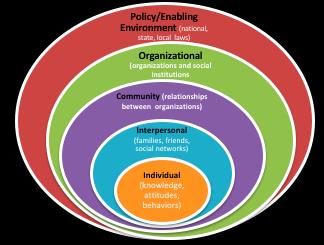
communities, using the socioecological framework (SEF) and nationally
recognized, evidence- based methodologies (Community Youth Mapping, CURE
Violence Global). Through a better understanding of the complex interplay
between the many levels of the SEF, the equity focused initiative will mediate
historic and present conflicts, transform thinking and behaviors of those at the
highest risk, change the norms that support violent activity, provide de-escalation
training, and provide consistent and accessible support to sustain the positive
transformation. Through a multi-level stakeholder (Law Enforcement, Youth,
Families, Schools, Community Based Organizations, Government Entities)
assessment, it is our hope that addressing and healing generational and
environmental trauma will help to provide a safe atmosphere and restore a sense
of trust and pride for our communities for many generations to come. This
program supports our overall strategy and goal to create a stronger, resilient,
more sustainable County.
The County of Rockland 2022 Recovery Plan Performance Report 5• 1.12 Mental Health Services
Access
Opportunities
Mental Resources
Health
Training
o While the need for mental health care and substance use treatments rapidly
increased throughout the COVID-19 Pandemic, there was a shortage of mental
health professionals. This created a new barrier to accessing mental health and
substance use disorder services. The Pandemic’s negative impact on access to
mental health and substance use services also emphasized pre-pandemic
access barriers. Prior to the pandemic, there was limited access and shortage of
resources to mental health and substance use services particularly, for those
who were not insured. Respondents identified that the pre-pandemic issues
worsened with the surge of COVID-19. The County’s efforts to improve access
and resources to mental health and substance use services include the following
evidence-based grant initiatives:
o Restructuring Rockland’s Resources- Behavioral Health Call Center (311)-
Through a collaborative effort with multiple departments throughout the county,
led by the Rockland County Department of Mental Health, the Rockland County
Behavioral Health Call Center will provide a single phone number for Rockland
residents to be able to access all aspects of the Rockland County Behavioral
Health System of Care (RCBHSOC). The call center will provide a dedicated
number for residents who are experiencing a behavioral health (mental health,
chemical dependency, developmental disability) issue that need support,
treatment, mobile-response, or information. The call center will be staffed by
trained individuals 24 hours a day 7 days a week/365 days a year to provide
information and support, referral for services and supports, or connection to
mobile response, 911 or 988-suicide hotline.
o Mobile Response and Stabilization Service (MRSS): In 2020, the County of
Rockland began our own MRSS team (the CARE team) to fill a large gap in our
crisis services. Starting during the COVID-19 Pandemic, the team had unique
The County of Rockland 2022 Recovery Plan Performance Report 6learning experiences getting the program off the ground and was well received
and continues to be utilized. Rockland is currently the first and ONLY county in
NYS to have this program and plans to explore options to expand services using
SLFRF funds. The proposed learning collaborative will include best-practice
presentations featuring examples from the field and lessons learned; intensive
small group (maximum of 8 states/sites) facilitated peer-to-peer learning;
individual monthly coaching; data collection and analysis; affinity group
opportunities; and access to resources and tools to support design and
implementation.
o Community Respite Center: The County of Rockland has recently been
awarded the New York State Regional Crisis Stabilization Center. To target the
needs of the team of caregivers, for individuals with Mental Health or Substance
Use Challenges, the County is proposing to use SLFRF funding to provide a
respite program opportunity. This program would give caregivers resources to
experience a positive “break” and a renewed focus on their health to better
provide care.
The County of Rockland 2022 Recovery Plan Performance Report 7Social Conditions and The Built Environment
• Negative Economic Impacts (EC 2): Through surveys and in-person qualitative
assessments, collaboration with intergovernmental departments, Community Based
Organizations, Not for Profits, and Small Businesses, the County continues to develop a
response to the negative economic impacts through allocation of SLFRF funds. Through
various studies (housing needs assessment, shared path feasibility study), and public
health frameworks (SWOT, CATWOE), the County will continue to map out the
allocation of SLFRF funds with a Whole Person, Whole Community, Whole County
mindset.
• 2.15 Long-term Housing Security: Affordable Housing
o As we begin to revive and rebuild the County through the built environment, the
need for affordable passive housing is evident in both our impacted and
disproportionally impacted communities. Our proposed programs under this
expenditure:
▪ Affordable Passive Housing, creating a more concerted effort on long
term, environmentally sustainable options
▪ Loan Flexibilities, to aid in the long- term affordable housing investment
▪ A Collaborative effort with our Community Development Home ARP funds
to potentially acquire or rehabilitate rental housing
▪ Predevelopment activity and Site Work
Through the development of new housing opportunities via our proposed SLFRF allocation, the
County will evaluate and promote the following:
▪ Healthier population, healthier outcomes, and healthier economy
▪ Improved infrastructure
▪ Improved perception of affordable housing
▪ Increased opportunities for younger adults, seniors
▪ Increased collaboration and participation at a multi sector level
• 2.22 Strong Healthy Communities: Neighborhood Features that Promote Health &
Safety
o Neighborhoods are key determinants to health. When understanding how to
improve better health outcomes, especially at a community level, the built
environment and its social characteristics can shape opportunities for barriers or
promotion to overall health, especially in disproportionately impacted
communities. When identifying interventions, they should be community oriented,
allowing for buy-in from the residents themselves. Through creation of a more
empowered and resilient community, the interventions will be more sustainable
via community “ownership.”
o The proposed ARPA expenditure is a County- wide, all-encompassing project to
improve the built environment. Defined by the CDC as all the physical parts of
where we love and work (e.g., homes, buildings, streets, open spaces, and
infrastructure), the built environment influences an individual and community’s
public health. According to the Final Rule, “Treasury recognizes the connection
between neighborhood-built environment and physical health outcomes,
including risk factors that may have contributed to disproportionate COVID–19
The County of Rockland 2022 Recovery Plan Performance Report 8health impacts in low-income communities. The final rule also recognizes that the
public health impacts of the pandemic are broader than just the COVID–19
disease itself and include substantial impacts on mental health and public safety
challenges like rates of violent crime, which are correlated with a neighborhood’s-
built environment and features. As such, neighborhood features that promote
improved health and safety outcomes respond to the preexisting disparities that
contributed to COVID–19’s disproportionate impacts on low-income
communities.” Through a retrospective study, the county evaluated the
Community Health Assessment (CHA), Community Health Implementation Plan
(CHIP), and identified the increased level of chronic disease (HBP, High
Cholesterol, Heart Disease), severe housing problems (26%), physical inactivity
(24%), attributed to extreme vulnerability to the pandemic. Through Treasury’s
outlined expenditure categories: Negative Economic Impact and Services to
Disproportionally Impacted Communities, and through a THRIVE model method
(pictured below), the ARPA department is proposing a whole county, whole
community approach through the following projects:
•Cultural •Housing
•Economic capital •Transportation
•Access •Access
•Environmental quality
Socioecological Built
Factors Environment
Health
Social Capital
Institutions
•Public Health Institutions
•Community based •Social cohesion
organizations •Trust within community
•Faith based organizations •Engagement/Collaboration
o Rockland County Open Spaces: To create sustainability, it is critical that the
residents of Rockland have supportive buy-in to the revitalization project. By
creating open spaces/community gardens/parks/ playgrounds, the communities’-
built environments will improve and capacity to move about the County will be
more accessible than ever before. More importantly, communities with have
more ownership within their neighborhoods, helping in the overall concept and
design of the new proposed area. These open spaces will integrate communities,
fostering mutual respect of the many diverse cultures that make up the County to
The County of Rockland 2022 Recovery Plan Performance Report 9create a larger connection of partnerships and cultural competence, while
promoting Rockland’s rich history through educational programs. With
development of various open space concepts/green infrastructure around the
County, the following will occur:
▪ Multi sector collaboration (e.g., County Departments, Municipalities, Not
for Profits)
▪ Educational programs year round
▪ Historical Tours of Rockland- link the entire county to its roots and to itself
▪ Outdoor activity promotion- physical activity, STEM programs
▪ New art and themes to each space, more representation
▪ Safer walkability and biking ability options throughout the County of
Rockland
o Shared Use Path: To promote healthy activities, education, and expand
accessibility within the County, the project will attach a walking and bicycling
path, which is also handicapped accessible, from the southernmost portion of
Rockland County (Palisades, NY) to the northern most portion of Rockland
County (Stony Point, NY), along or near the Hudson River whenever possible.
Throughout this pandemic, Rockland County has seen a significant increase in
bike riding, walking, and running from residents as well as community members
from surrounding areas in the Hudson Valley. The Shared Use Path would be
intended to integrate communities from all over Rockland, invite visitors to learn
of the cultural and historical stories of our County, provide additional modes of
transportation, highlight environmental sustainability, and assist in improving our
economic development and supporting our small businesses. While creating a
shared use path, it is important to evaluate the existing infrastructure and identify
areas of low activity to determine potential Social Determinants of Health that
inhibit opportunities to physical activity in certain areas. Developing the path will
begin with a feasibility study to identify the socioeconomic demographics of the
existing and proposed paths, while stressing a Crime Prevention Through
Environmental Design (CPTED) study to ensure safety and a more sustainable
built environment.
• 2.29 Loans or Grants to Mitigate Financial Hardship (Small Business Rescue
Reimbursement Grant Program)
o The ARPA Department is currently developing the Rockland Small Business
Rescue Grant Program to combat the negative economic and employment
impacts caused by the COVID-19 pandemic. Individual grants, to reimburse past
expenses or fund future expenses, will be awarded to select applicants who meet
the eligibility requirements. All Applicants will be required to describe how the
COVID-19 Pandemic negatively affected their business and how the eligible
items helped alleviate the financial hardships experienced during the pandemic.
They must include information about how this funding could help them offset
revenue loss, maintain their staff employment, and (if applicable) a list of
increased costs.
o Eligible businesses are Rockland County based privately owned micro-
businesses, small businesses, enterprises, or sole proprietorships, that offer fee-
The County of Rockland 2022 Recovery Plan Performance Report 10based goods or services and have fewer than 500 employees and annual
revenues up to $1 million. Businesses include but are not limited to Indoor Arts,
Entertainment, and Recreation, Pet Grooming, Boarding, and Walking,
Restaurants, Eateries, Food Stands and Food Trucks, Bars, Bakeries, Cafes,
Breweries/Wineries Catering, Delis, etc., Bookstore/Stationary, Housekeeping,
Fitness Centers, Florists, General Retail, Salons/Spas, Bicycle shops, Other
Consumer Service Firms (i.e., Architectural, Design, Marketing). Eligible
business expenses include but are not limited to Commercial/Retail Rent (up to 6
months), Safety Investments (Including PPE and Cleaning Supplies), Software
Fees, Marketing Fees (advertising and promotion), Credit Card Processing Fees,
Supplies (operational items).
• 2.34 Assistance to Impacted Nonprofit Organizations (Impacted or
Disproportionately Impacted)
o Nonprofits play a fundamental role in creating more equitable and thriving
communities. Throughout the lifecycle of the ARPA expenditures, not for profit
participation will be integrated through grant opportunities. In addition to adding
funding opportunities throughout the proposed expenditure categories listed, a
few individual grant opportunities will be developed:
o Food Security Grant Program: This grant was established to reimburse
Rockland Based organizations that distributed food to communities in the County
of Rockland that have been disproportionately impacted by the COVID-19
pandemic. Individual grants to reimburse past expenses will be awarded to select
applicants who meet the eligibility requirements below. All Applicants must
describe how the COVID-19 Pandemic negatively affected the organization and
how the eligible items helped resolve the problem. They must include information
about the statistics of the percent increase of the need for food, how the need fell
in communities with socioeconomic disadvantages and a quantifiable increase in
need.
o Eligible entities are Rockland County Based organizations that are not
permanently closed. These entities include but are not limited to Food Pantries,
Food Banks, Community-based organizations, Faith-based organizations, Non-
profit organizations. Reimbursing qualified expenses incurred from March 3,
2021, to the date of contract, that were used to assist communities and
individuals in the County of Rockland experiencing food insecurities due to
COVID-19. Eligible expenses include, but are not limited to barriers/partitions,
cleaning supplies, food distribution space/pantry rental, vehicle rental.
o Nonprofit Rescue Reimbursement Grant Program: Developed to combat the
negative economic and staffing impacts caused by the COVID-19 pandemic.
Individual grants, to reimburse past expenses or fund future expenses will be
awarded to select applicants who meet the eligibility requirements. All Applicants
will be required to describe how the COVID-19 Pandemic negatively affected
their organization and how the eligible items helped alleviate the financial
hardships experienced during the pandemic. They must include information
The County of Rockland 2022 Recovery Plan Performance Report 11about how this funding could help them offset revenue loss, maintain their staff,
and (if applicable) a list of increased costs.
o Eligible Not-Profits must be Rockland based. Eligible expenses include but are
not limited to Rent (up to 6 months), Safety Investments (Including PPE and
Cleaning Supplies), Software Fees, Increased Costs for Supplies (operational
items).
The County of Rockland 2022 Recovery Plan Performance Report 12Social Conditions and Public Health Response
• Public Health-Negative Economic Impact: Public Sector Capacity (EC 3)
• 3.3 Public Sector Workforce: Other (Frontline Worker Fund)
o Frontline workers have been integral in responding to COVID-19. As our County
was faced with the many hardships that came with the pandemic, at one point
having the highest mortality rate per capita in the entire Country, it was our
frontline workers that were expected to support us at the same risking their lives.
A Frontline Worker Fund would be allocated to frontline workers (EMS, EMT,
Firefighters) who could not work remotely, and who faced “heightened risks” due
to the nature of their work.
• 3.5 Public Sector Capacity: Administrative Needs (Regional eSourcing
Procurement Software)
o The Regional eSourcing, Contract Management and eMarketplace Procurement
software (“Regional eSourcing Procurement software”) will benefit the County of
Rockland’s ARPA Department as well as many additional departments in the
mission to Revive and Rebuild Rockland. Expanding the eSourcing Procurement
software from solely County-wide to Regional creates a Regional online
marketplace for all local governments and non-profits to access contracts
awarded by five counties. A central repository for such information will save
participants time, enforce accountability, and provide a unified structure for the
procurement process. These highlights will attribute to fair, innovative, and cost-
efficient procurement solutions.
o Many of ARPA’s future proposed projects will require proper procurement
measures in accordance with Uniform Guidance. The Regional eSourcing
Procurement software would not only assist the ARPA Department in ensuring
compliance with Uniform Guidance, it will also help the ARPA Department to
view the bids of other Counties, States and National Cooperative Contracts to
create evidence-based investments with reputable contractors. This software
also allows for the ARPA Department to view the bids of Local Governments and
Nonprofit Organizations to eliminate the potential risk of duplication of funds.
o In addition to the benefits for the ARPA Department, there are benefits for
participating Counties, Local Governments and Nonprofit Organizations.
▪ For Counties, this software will also Increase spend analysis among the
five counties to leverage purchasing volume, increase cooperative
solicitations/contracts issued by the five counties, provide Contract
Management, and provide a “Shared Service” model where local
governments and Nonprofit Organizations can participate in County bids
to aggregate volume and purchase through the marketplace. The
marketplace would contain contracts that can be piggybacked, from the
five counties, would be available free of charge to all local governments
and non-profit organizations within the five counties The Regional
eSourcing Procurement software will also aid all vendors in developing
their regional online marketplace presence.
The County of Rockland 2022 Recovery Plan Performance Report 13▪ While this software offers excellent opportunities for participating
Counties, Local Governments, and Nonprofit Organizations, it also will
help to lower barriers to the competitive bidding process for small,
minority owned, women-owned, and service disable veteran businesses.
This platform will help to create a more extensive and equity-focused bid
process for local businesses who were all negatively affected by the
COVID pandemic. The software will also assist these same businesses in
developing their online sales capability through the marketplace.
• Premium Pay (EC 4): At this juncture, The County of Rockland has decided to not use
SLFRF funding towards Premium Pay.
• Water, sewer, and broadband infrastructure (EC 5): At this juncture, The County of
Rockland has not decided if SLFRF funding will be used towards Water, sewer, and
broadband infrastructure.
• Revenue Replacement (EC 6): The County of Rockland has decided to not use SLFRF
funding towards Revenue Replacement.
The County of Rockland 2022 Recovery Plan Performance Report 14Promoting Equitable Outcomes
The entire County of Rockland was impacted by the COVID-19 pandemic, at one point
having the highest mortality rate per capita in the Country. It has always been, and will continue
to be, the County’s goal to utilize our SLFRF funds to reach all our residents and communities
that reside in Rockland to create a better, more sustainable County of Rockland.
Throughout the engagement process, the County continues to conduct a fair and just
process of data collection and assessment of need. Our continued outreach to community
members through multiple avenues that include in person contact and telecommunication, as
well as other digital capabilities to ensure a larger, often underrepresented resident base will
allow an equal opportunity to convey their concerns and ideas on the use of the SLFRF funds.
With full transparency throughout the entire process, the County is approaching all funding
allocation categories with a logic model and Specific, Measurable, Attainable, Relevant, Time-
based (SMART) goals to assess equitable outreach and services to communities and continues
to be open and upfront with the public and other intergovernmental departments. Furthermore, a
lean strategy to any evidence-based interventions using a Plan, Do, Study, Act (PDSA), SWOT,
and CATWOE framework to ensure the County is measuring outcomes and identifying possible
unintended consequences throughout the process to avoid a loss of opportunity, inequitable
practices, and allow for scalable improvements. In doing so, the County achieves the following:
o The County of Rockland’s ARPA Department ensures that all
flyers/advertising is translated into the various languages that represent the
very diverse communities that reside in the County
o A user-friendly grant portal, that can be translated in multiple languages, to
assist in a more streamlined application process and more effective monitoring
and compliance
o Free Uniform Guidance training from our Procurement department to ensure
compliance with all Federal Regulations
o Continuous IT training and technical support held via in person, virtual
meetings, or telephone
o More interdepartmental Collaboration- ensuring current trends are evaluated,
data is relevant, and needs are met across the board
o Multiple iterations of a full ARPA Comprehensive Plan, determine the acute
needs of the community/County
o Multiple in person site visits/ meetings with other local government entities,
local businesses and organizations, and various individuals and families that
represent the whole of the County
With the use of multiple types of outreach opportunities, on foot advertising, email blasts,
digital correspondence, culturally aware in translating – flyers, website, portal; our goal for
continued community voice and buy-in is ever present. Multiple meetings with other government
agencies, not for profits and faith-based organizations, attending collaboratives, walking through
communities, hosting in person community focus groups, we have seen an increase in interest
in our existing grants and future expenditure plans. We will continue this outreach and expand
our efforts to more groups and individuals as we continue to move forward with other proposed
expenditures.
The County of Rockland 2022 Recovery Plan Performance Report 15Identifying obstacles of completing applications or difficulty acquiring certain required
documentation, the County has been focused on making sure enough capacity training is
available to our applicants for a more streamlined process. With more outreach and support
offered, more applications have been started and a new opportunity for dialogue between
applicant and County has developed. Through an analysis of the application process, the
County found both impacted and disproportionately impacted applicants had difficulty with the
application process. Once dialogue and training were established, applicants found the portal
easier to apply, the County created check lists to offer a starting point and more guidance,
provided multiple channels of communication, and hosted meetings and focus groups.
With a concentration of equity and a more accessible and easier to use guide to apply,
the current SLFRF allocations have been distributed throughout the various towns, villages, and
municipalities. With the recent allocation of funds to beneficiaries and subrecipients, the word of
mouth from community members has increased and more small businesses and not for profits
have reached out to apply. With a renewed focus on open dialogue and fostering a mutual
working relationship with our county community, we have built more trust and increased our
opportunities to serve all in the County.
The County of Rockland 2022 Recovery Plan Performance Report 16Community Engagement
As discussed in promoting equitable outcomes, The ARPA Department continues to
remain mindful to the community’s emerging needs while also fostering the County’s
collaborative efforts with CBO’s and faith-based organizations. All fliers, Public Service
Announcements (PSA’s), surveys, and outreach efforts have been translated to the multiple
languages that reflect the diversity within the County. Use of funds surveys, use of data, raw
data from Department of Social Service, Department of Health, Department of Mental Health,
Community Health Implementation Plan, Community Health Assessment, ALICE Reports,
developed an ARPA Task force as well as subsection Taskforces depending on the Expenditure
Category are several methods used to ensure community engagement and remain current to
the concerns of the communities we serve. Community collaborative meetings are held monthly,
with ARPA giving updates on opportunities and gaining feedback on limitations and concerns. In
addition, ARPA has performed additional in-person outreach to gain community buy-in and
establish trust.
Recognizing the geographic, cultural, structural, and language limitations of its various
community members, the County intends to continue direct outreach specifically related to
SLFRF to communities that have been historically underserved. A Comprehensive Plan on
potential projects that are eligible for the use of SLFRF funds was created and distributed to the
Legislature, all branches of Government, intergovernmental departments, and Nonprofit
organizations to gain feedback.
Labor Practices
At this time, the County has not procured any Infrastructure projects, but will ensure
compliance with all requirements applicable to any potential future project.
The County of Rockland 2022 Recovery Plan Performance Report 17Use of Evidence
As the County continues to gather data from community engagement and multi
departmental collaboration, all allocation categories and current and proposed use of funds are
based on both qualitative and quantitative data analysis. These sources of data have been
developed and assessed via a Learning Agenda, logic model, and the use of SMART goals,
allowing the County to identify gaps, organize proper methods of evidence and evaluation, build
capacity, and develop trainings, foster collaboration, and evidence-based sharing, and reinforce
organizational change. The County has reviewed both internal and possible external sources in
our approach for using evidence and evaluation that will support the overarching efforts to
create an evidence-based strategy for more sustainable interventions.
For every current and future expenditure, The County of Rockland has decided to
consider for SLFRF funds, multiple evidence-based practices and research has been conducted
prior to establishing a project in the Comprehensive Plan. Once all data and statistics are
obtained, the ARPA Department Logic Models, SWOT, CATWOE, and balancing and
reinforcing feedback loops are completed to ensure there are no unintended consequence and
any risk of duplication of funds.
The following links have been used for each current project:
1.8 COVID-19 Assistance to Small Businesses (Reviving Rockland Restaurant Grant)
1. Customer demand for outdoor dining rose due to the Delta variant. NRA. (n.d.).
Retrieved December 5, 2021, from https://restaurant.org/education-and-
resources/resource-library/customer-demand-for-outdoor-dining-rose-due-to-the-delta-
variant/
2. National statistics. NRA. (n.d.). Retrieved December 17, 2021, from
https://restaurant.org/research-and-media/research/industry-statistics/national-statistics/
3. Food delivery app revenue and Usage Statistics (2021). Business of Apps. (2021,
November 4). Retrieved December 3, 2021, from
https://www.businessofapps.com/data/food-delivery-app-market/
4. Perri, J. (2021, November 15). Which company is winning the restaurant Food Delivery
War? Bloomberg Second Measure. Retrieved December 20, 2021, from
https://secondmeasure.com/datapoints/food-delivery-services-grubhub-uber-eats-
doordash-
postmates/?utm_source=email&utm_medium=press&utm_campaign=press_request
5. Durbin, D.-A., & Press, T. A. (2021, April 20). Food delivery will thrive even after COVID
restrictions ease, drawing out tensions between delivery apps and restaurants. Fortune.
Retrieved December 20, 2021, from https://fortune.com/2021/04/20/restaurants-food-
delivery-apps-fees-commission-doordash-uber-eats-grubhub/
6. Eats, U. (2020, July 21). Food for thought: Listening to and learning from restaurants.
Uber Newsroom. Retrieved December 20, 2021, from
https://www.uber.com/newsroom/food-for-thought-listening-and-learning-from-
restaurants/
7. New York State National Restaurant Association. (2021, December 9). New York’s
Restaurants Faring Far Worse than National Average.
8. Remote Food Orders are now restaurants' primary source of revenue. Convenience
Store News. (2021, December 14). Retrieved December 20, 2021, from
The County of Rockland 2022 Recovery Plan Performance Report 18https://www.csnews.com/remote-food-orders-are-now-restaurants-primary-source-
revenue
9. Facts. Why Tipping Works. (n.d.). Retrieved December 20, 2021, from
https://whytippingworks.com/facts/
10. Federal Reserve Bank of St. Louis. (2021, December 9). How closing restaurants and
hotels spills over to total employment. Saint Louis Fed Eagle. Retrieved December 20,
2021, from https://www.stlouisfed.org/on-the-economy/2020/april/closing-restaurants-
hotels-spills-total-employment#
11. Protect our restaurants. Protect Our Restaurants. (n.d.). Retrieved December 20, 2021,
from https://www.protectourrestaurants.com/
12. Yang, Y., Liu, H., & Chen, X. (n.d.). Covid-19 and restaurant demand: Early effects of
the pandemic and stay-at-home orders. International Journal of Contemporary
Hospitality Management. Retrieved December 20, 2021, from
https://www.emerald.com/insight/content/doi/10.1108/IJCHM-06-2020-0504/full/html
13. Norris, C. L., Taylor, S.,Jr, & Taylor, D. C. (2021). Pivot! how the restaurant industry
adapted during COVID-19 restrictions. International Hospitality Review, 35(2), 132-155.
doi:http://dx.doi.org/10.1108/IHR-09-2020-0052
14. Lusk, K. (2021, Mar 31). City dwellers gained more access to public spaces during the
pandemic – can they keep it? The Conversation : Environment + Energy Retrieved from
https://www.proquest.com/newspapers/city-dwellers-gained-more-access-public-
spaces/docview/2507336519/se-2
15. Cutting-Jones, H. (2021, Apr 19). From haute cuisine to hot dogs: How dining out has
evolved over 200 years – and is innovating further in the pandemic. The Conversation
U.S. Retrieved from https://www.proquest.com/newspapers/haute-cuisine-hot-dogs-how-
dining-out-has-evolved/docview/2514836739/se-2
16. Lippert, J. F., Furnari, M. B., & Kriebel, C. W. (2021). The impact of the COVID-19
pandemic on occupational stress in restaurant work: A qualitative study. International
Journal of Environmental Research and Public Health, 18(19), 10378.
doi:http://dx.doi.org/10.3390/ijerph181910378
17. Ding, L., & Jiang, C. (2021). Restaurant proactive philanthropic activities and customer
loyalty: A scenario-based study during the COVID-19 pandemic period. International
Hospitality Review, 35(2), 260-279. doi:http://dx.doi.org/10.1108/IHR-08-2020-0045
18. New York COVID-19 Restaurant Impact Snapshot. New York State Restaurant
Association. (n.d.).
https://www.nysra.org/uploads/1/2/1/3/121352550/ny_survey_covid_impact_press_relea
se.pdf
19. Survey shows New York’s restaurant industry still crushed ... New York State Restaurant
https://www.nysra.org/uploads/1/2/1/3/121352550/ny_survey_covid_impact_press_relea
se.pdf
20. Local Restaurant Owners, State Restaurant Association Urge Gov’t to Replenish
‘Restaurant Revitalization Fund’ as Outdoor Dining Season Ends. New York State
Restaurant Association. (n.d.).
https://www.nysra.org/uploads/1/2/1/3/121352550/ny_survey_covid_impact_press_relea
se.pdf
21. State Restaurant Association Survey: No Expectation of Return to Normalcy Any Time
Soon Among Restaurant Operators. New York State Restaurant
The County of Rockland 2022 Recovery Plan Performance Report 19https://www.nysra.org/uploads/1/2/1/3/121352550/ny_survey_covid_impact_press_relea
se.pdf
22. Hanners, K. A., & Redden, S. M. (2021). Communicating values to cultivate sustainable
occupational identity: How restaurant workers resist service work
stigma. Sustainability, 13(15), 8587. doi:http://dx.doi.org/10.3390/su13158587
2.29 Loans or Grants to Mitigate Financial Hardship (Small Business Rescue
Reimbursement Grant Program)
1. Census, U. S. (n.d.). Small Business Pulse Survey: 01/03/2/22 - 01/09/2022. Small
Business Pulse Survey Data. Retrieved January 19, 2022, from
https://portal.census.gov/pulse/data/#data
2. Small businesses and the Economic Recovery: Work in Progress. Office of the New
York State Comptroller. (n.d.). Retrieved January 19, 2022, from
https://www.osc.state.ny.us/reports/small-businesses-and-economic-recovery-work-
progress#:~:text=As%20of%20October%2017%2C%202021,referred%20to%20as%20
October%202020).&text=One%20in%20five%20small%20businesses%20also,return%2
0to%20%E2%80%9Cnormal%20operations.%E2%80%9D
3. New York's economy and finances in the COVID-19 ERA (March 18, 2021). Office of the
New York State Comptroller. (n.d.). Retrieved January 19, 2022, from
https://www.osc.state.ny.us/reports/impact-covid-19-march-18-2021
4. As small businesses continue to struggle globally, women and minority-led ones are
hardest hit. Meta. (2021, April 8). Retrieved January 19, 2022, from
https://about.fb.com/news/2021/04/latest-state-of-small-business-report/
5. Sundaram, A. (2021, April 9). U.S. small business closures are ticking back toward covid
pandemic highs. CNBC. Retrieved January 19, 2022, from
https://www.cnbc.com/2021/04/09/small-business-closures-tick-back-toward-covid-
pandemic-highs.html
6. New York Small Business Economic Profile. (n.d.). Retrieved January 19, 2022, from
https://cdn.advocacy.sba.gov/wp-content/uploads/2019/04/23142654/2019-Small-
Business-Profiles-NY.pdf
7. U.S. Small Business Economic Profile. SBA.gov. (n.d.). Retrieved January 20, 2022,
from https://cdn.advocacy.sba.gov/wp-content/uploads/2020/06/04144224/2020-Small-
Business-Economic-Profile-US.pdf
8. Millions of small businesses closed in 2020: The long recovery ahead. Small Business &
Entrepreneurship Council. (n.d.). Retrieved January 20, 2022, from
https://sbecouncil.org/2021/01/21/millions-of-small-businesses-closed-in-2020-the-long-
recovery-ahead/
9. Serrano, A. (2020, July 24). How many jobs do small businesses really create? Fundera.
Retrieved January 20, 2022, from https://www.fundera.com/blog/small-businesses-job-
creation
10. 2019-2021 Rockland County Small Business Report. NYS Department of Labor
11. Small Business Facts: Small Business Job Creation. April 2022.
https://cdn.advocacy.sba.gov/wp-content/uploads/2022/04/22141927/Small-Business-
Job-Creation-Fact-Sheet-Apr2022.pdf
12. H&R Block Small Business Resilience Series Study: Minority-Owned Small Businesses
Still Heavily Impacted by Pandemic. April 2022 https://www.globenewswire.com/news-
release/2022/04/21/2426492/0/en/H-R-Block-Small-Business-Resilience-Series-Study-
Minority-Owned-Small-Businesses-Still-Heavily-Impacted-By-Pandemic.html
The County of Rockland 2022 Recovery Plan Performance Report 2013. Small Business Owners Exhausted, but Optimistic Heading into 2022. January 2022.
https://www.linkedin.com/pulse/small-business-owners-exhausted-optimistic-heading-
/?trackingId=enHumNEKZYtrL3%2FSXDimyg%3D%3D
14. As inflation soars, major corporations are posting record profits. But small businesses
are feeling the squeeze. April 2022. https://www.cbsnews.com/news/inflation-profits-
corporate-small-business/
15. New Normal for Small Businesses: Inflation, Supply Delays, and Labor Shortages Still
Hampering Full Pandemic Recovery. April 2022. https://eig.org/new-normal-for-small-
businesses-inflation-supply-delays-and-labor-shortages-still-hampering-full-pandemic-
recovery/
16. The Effects of Inflation on U.S. Small Businesses. July 14, 2022.
https://www.business.org/finance/accounting/effects-of-inflation-on-small-businesses/
2.22 Strong Healthy Communities: Neighborhood Features that Promote Health & Safety
(Rockland Resilience Restoration Grant)
1. Nature Conservancy
2. Engemann, K., Pedersen, C. B., Arge, L., Tsirogiannis, C., Mortensen, P. B., &
Svenning, J.-C. (2019, March 12). Residential green space in childhood is associated
with lower risk of psychiatric disorders from adolescence into adulthood. PNAS.
Retrieved December 20, 2021, from https://www.pnas.org/content/116/11/5188
3. Lu, Y., Chen, L., Liu, X., Yang, Y., Sullivan, W. C., Xu, W., Webster, C., & Jiang, B.
(2021). Green spaces mitigate racial disparity of health: A higher ratio of green spaces
indicates a lower racial disparity in SARS-COV-2 infection rates in the USA.
Environment International, 152, 106465. https://doi.org/10.1016/j.envint.2021.106465
4. Attitudes towards urban green during the COVID-19 pandemic via Twitter. May 2022.
https://www.sciencedirect.com/science/article/pii/S0264275122001469
5. Climate Solutions Double as Health Interventions
6. Green Spaces and Mortality: A systematic Review and Meta-analysis of Cohort Studies,
2019
7. Spending at least 120 minutes a week in nature is associated with good health and
wellbeing. Junes 2019. https://www.nature.com/articles/s41598-019-44097-3
8. Resiliency and Equity in a Time of Crisis: Investing in Public Urban Green Space is Now
More Important Than Ever in the U.S.
2.34 Assistance to Impacted Nonprofit Organizations (Impacted or Disproportionately
Impacted) (Food Security Grant Program)
1. https://foodprint.org/issues/food-justice
2. https://nifa.usda.gov/funding-opportunity/community-food-projects-cfp-competitive-
grants-program
3. https://www.investinginfood.com/grant-opportunities/
4. https://www.grantwatch.com/grantnews/grants-that-can-help-fix-food-deserts-by-funding-
communities/
5. https://www.rand.org/blog/2020/03/food-access-challenges-and-solutions-brought-on-
by.html
6. https://www.ers.usda.gov/topics/food-nutrition-assistance/food-security-in-the-us/
7. https://www.consumerreports.org/food/americans-turning-to-food-banks-during-the-
pandemic-a6629016730/
The County of Rockland 2022 Recovery Plan Performance Report 21Performance Report
Through Quarterly Reporting, Annual Reporting, and monitoring of the open grants in
our Grant Management Portal, the ARPA Department closely monitors the use and success of
the open grant opportunities.
At this time, we have not fully closed out a grant opportunity to fully determine its
performance but can advise that the current opportunities have been well received.
The County of Rockland 2022 Recovery Plan Performance Report 22Project Inventory
Project PH – 001 - Personal Protective Equipment
Funding amount: $20,378.89
Project Expenditure Category: 1-Public Health – 1.5 Personal Protective Equipment
Project Overview
The County of Rockland used SLFRF funding to purchase and distribute Personal
Protective Equipment to various individuals and community organizations between March 3,
2021, and December 31, 2021, throughout all of Rockland County.
Goal
• To provide PPE to communities that were directly impacted by the COVID-19 virus in
Rockland varied from seniors, low to moderate income households, multi-generational
households, the homeless, and the sick and homebound.
Use of Evidence
• Through our partnerships with our local not for profits, faith-based organizations, food
pantries, community centers, and other county departments, we were successful in
reaching a higher percentage of community members.
• We set up giveaway events, partnering with our local Department of Health during their
vaccination pods, had drive-thru events with our OFA, dropped off PPE packages to
senior housing complexes, held events at our local community centers, and delivered
PPE to soup kitchens for the homeless population.
• Serves Disproportionately Impacted Low-income Households and populations, Impacted
low or moderate income Households and populations, Disproportionally Impacted
Nonprofits operating in Qualified Censes Tracts
Performance Report
• As we distributed our PPE, throughout all of 2021, specifically in the QCT, we saw more
community engagement/support, as well as reduction in COVID cases. Our proactive
approach provided much needed solace to individuals and families who could not afford
PPE.
Project 1.8 – RRR: Reviving Rockland Restaurant Grant Program
Funding amount: $500,000.00
Project Expenditure Category: 1-Public Health – 1.8 COVID-19 Assistance to Small
Businesses
Project Overview
Restaurants in particular have experienced and continue to experience an undesirable
outlook as a result of the COVID-19 pandemic Many restaurants may have faced periods of
The County of Rockland 2022 Recovery Plan Performance Report 23closure reduced capacity and saw declining revenues as customers were unable to dine-in.
These closures also had significant negative impacts on restaurant employment and the
economy
The County of Rockland has established the Reviving Rockland Restaurants Grant
Program to combat the negative economic impacts caused by the COVID-19 pandemic As
restaurants began to reopen in June 2020 they were limited to only 25 capacity indoors
further exacerbating the economic stress of recovering from the financial hardships imposed
by the pandemic In an effort to safely recoup the additional customer capacity base and
bring them back to safe operations outdoor dining became a staple for our restaurants The
addition of outdoor dining brought back Rockland based employees comforted loyal patrons
to return and kept restaurants from closing Unfortunately in order to operate outdoor dining
additional expenses were incurred perpetuating the economic strain to remain open The
Reviving Rockland Restaurant Grant Program will aid our restaurants to offset increased
outdoor expenses and maintain sustainable outdoor dining opportunities Individual grants to
reimburse past expenses or fund future expenses ranging from $5000.00 - $25,000.00 will
be awarded to select applicants who meet the eligibility requirements below and will
continue until the total grant amount of $500,000.00 is expended.
Eligible entities are Rockland based businesses that are not permanently closed have
the capacity for outdoor dining and include businesses where the public or patrons
assemble for the primary purpose of being served food or drink including but not limited to:
o Restaurants
o Food stands/food trucks
o Bars, saloons, lounges, taverns
o Bakeries
o Delis
o Cafes
o Breweries, Wineries, and/or microbreweries
o Other similar places of business in which the public or patrons assemble for
the primary purpose of being served food or drink
• Link: https://rocklandgov.com/departments/county-executive/reviving-and-rebuilding-
rockland/grants/#RRRGP
Goal
• To provide reimbursement assistance to restaurants who shifted their operation to
include outdoor dining to increase capacity and promote safe return for their customers
and employees, while also recovering financial profit loss. Through this program,
restaurants would be given a sustainable opportunity to continue outdoor dining as a
permanent option as well as buffer the financial burden of the winter months resulting in
the closed use of outdoor spaces.
Use of Evidence
• In May 2020, US employment in restaurants was 37% lower than in May 2019, a result
of the COVID-19 pandemic. 54% of NY restaurant operators said it was unlikely their
restaurant will still be in business six months from now, if there are no additional relief
packages from the federal government. This assistance also safely returns Rockland
The County of Rockland 2022 Recovery Plan Performance Report 24based, low/mod income employees back to the workforce, ensuring financial stability in
their home.
• Serves Impacted Small Businesses that experienced a negative economic impact and
Disproportionately Impacted Low-income Households and Populations
• Total project spending that is allocated towards evidence-based interventions:
$500,000.00
• Please see Use of Evidence Section 1.8 COVID-19 Assistance to Small Businesses
(Reviving Rockland Restaurant Grant) – for additional evidence-based data
Performance Report
• This grant has currently assisted 11 Restaurants.
• The aggregate of the grant awards is $216,968.62.
Project 2.22 – RRROS: Rockland Resilient Recreation Grant Program
Funding amount: $5,000,000.00
Project Expenditure Category: 2 – Negative Economic Impact – 2.22 Strong Health
Communities: Neighborhood Features that Promote Health and Safety
Project Overview
The negative public health impacts of the COVID-19 pandemic have fallen most severely
on economically disadvantaged communities, exacerbating pre-existing disparities in health
outcomes. The built environment, and risk factors associated with them, play a key role in
determining public health outcomes. As defined by the Center for Disease Control (CDC),
the built environment includes all the physical parts of where people live and work (e.g.,
neighborhoods, streets, open spaces, buildings, etc.). Research has shown that disparate
health outcomes could be attributed to increased risk factors of the built environment
(population density, spatial patterns, etc.), placing economically disadvantaged communities
at an increased risk during the pandemic. Aside from the COVID-19 disease itself, the public
health impacts of the pandemic include substantial impacts on mental health and public
safety challenges, which are also correlated with the built environment.
The SLFRF program has recognized the connection between the built environment and
public health outcomes and has acknowledged the need for investments in the built
environment of economically disadvantaged communities. The final rule includes
enumerated eligible uses in disproportionately impacted communities for developing
neighborhood features, such as urban green spaces, that promote improved health and
safety outcomes. These investments in urban green spaces, including parks, green spaces,
and recreational facilities, will directly respond to the disproportionate impacts of the COVID-
19 pandemic by improving built environments and promoting equitable public health
outcomes.
The County of Rockland has established the Rockland Resilient Recreation Grant
Program, with ARPA funds, to reduce health inequities in the county by developing and
enhancing public urban green spaces in communities that were disproportionately impacted
by the COVID-19 pandemic. The Rockland Resilient Recreation Grant Program will foster
The County of Rockland 2022 Recovery Plan Performance Report 25You can also read


