Preparation of Synthetic Clays to Remove Phosphates and Ibuprofen in Water - MDPI
←
→
Page content transcription
If your browser does not render page correctly, please read the page content below
water
Article
Preparation of Synthetic Clays to Remove Phosphates and
Ibuprofen in Water
Rosa Devesa-Rey * , Jesús del Val, Jorge Feijoo                      , José P. González-Coma          , Gonzalo Castiñeira
and Lorena González-Gil

                                          Defense University Center at the Spanish Naval Academy, University of Vigo, Plaza de España 2, Marín,
                                          36920 Pontevedra, Spain; jesusdv@cud.uvigo.es (J.d.V.); jfeijoo@cud.uvigo.es (J.F.);
                                          jose.gcoma@cud.uvigo.es (J.P.G.-C.); gonzalo.castineira@cud.uvigo.es (G.C.);
                                          lorena.gonzalez@cud.uvigo.es (L.G.-G.)
                                          * Correspondence: rosa.devesa.rey@cud.uvigo.es

                                          Abstract: The main objective of this study consists in the synthesis of a layered double hydroxide
                                          (LDH) clay doped with magnesium and aluminum in order to test the removal of phosphates and
                                          ibuprofen in water. Two different LDH composites are assessed: oven-dried (LDHD ) and calcined
                                          (LDHC ). Single adsorptions of phosphate and ibuprofen showed up to 70% and 58% removal in water,
                                          when LDHC was used. A poorer performance was observed for LDHD , which presented adsorption
                                          efficiencies of 52% and 35%, respectively. The simultaneous removal of phosphate and ibuprofen in
                                          water showed that LDHC allows a greater reduction in the concentration of both compounds than
                                          LDHD . Phosphate adsorption showed a close agreement between the experimental and theoretical
                                          capacities predicted by the pseudo-second-order model, whereas ibuprofen fitted to a first-order

                                          model. In addition, phosphate adsorption showed a good fit to an intraparticle diffusion model and
                                   to Bangham model suggesting that diffusion into pores controls the adsorption process. No other
Citation: Devesa-Rey, R.; del Val, J.;    mechanisms may be involved in ibuprofen adsorption, apart from intraparticle diffusion. Finally,
Feijoo, J.; González-Coma, J.P.;          phosphate desorption could recover up to 59% of the initial concentration, showing the feasibility of
Castiñeira, G.; González-Gil, L.          the recuperation of this compound in the LDH.
Preparation of Synthetic Clays to
Remove Phosphates and Ibuprofen in        Keywords: eutrophication; hydrotalcite; adsorption; kinetics
Water. Water 2021, 13, 2394. https://
doi.org/10.3390/w13172394

Academic Editor: Jiangyong Hu             1. Introduction
                                                Phosphates are a critical element from a water quality point of view. Its concentration
Received: 30 July 2021
Accepted: 28 August 2021
                                          may be increased in water as a result of the hydrological and hydrochemical characteristics
Published: 30 August 2021
                                          of the catchment site, land uses, or the presence of point sources of contamination, such as
                                          the use of detergents or wastewater. Phosphates in water may come from erosive processes
Publisher’s Note: MDPI stays neutral
                                          or lixiviation [1] or to anthropogenic inputs, such as wastewater treatment plants (WWTPs),
with regard to jurisdictional claims in
                                          detergents, organic fertilizers, or other wastes [2].
published maps and institutional affil-         An excess of this compound favors the excessive oxygen consumption in water,
iations.                                  initiating its depletion and a eutrophication process that can even cause an anoxic situation
                                          in water [2,3]. Eutrophication is one of the main water quality problems, consisting in
                                          an excessive nutrient accumulation in water, typically nitrates and phosphates, which
                                          results in a series of undesirable damages to the environment (excessive algae growth,
Copyright: © 2021 by the authors.
                                          deterioration of the water quality, variation of the organoleptic properties, decrease of the
Licensee MDPI, Basel, Switzerland.
                                          light reaching the deeper layers, etc.) [4]. Phosphate sources to be controlled include the
This article is an open access article
                                          use of detergents, fertilizers, waste, and industrial effluents, among others.
distributed under the terms and                 On the other hand, the increasing presence of pharmaceutical and personal care
conditions of the Creative Commons        products (PPCPs) in wastewater is of great concern. The term PPCPs includes drugs,
Attribution (CC BY) license (https://     cleaning products, cosmetics, fragrances, and hormones. Their elimination in conventional
creativecommons.org/licenses/by/          WWTPs is very deficient because they are found in low concentration levels and because
4.0/).                                    the treatment systems have not been specifically designed to eliminate this type of organic

Water 2021, 13, 2394. https://doi.org/10.3390/w13172394                                                       https://www.mdpi.com/journal/water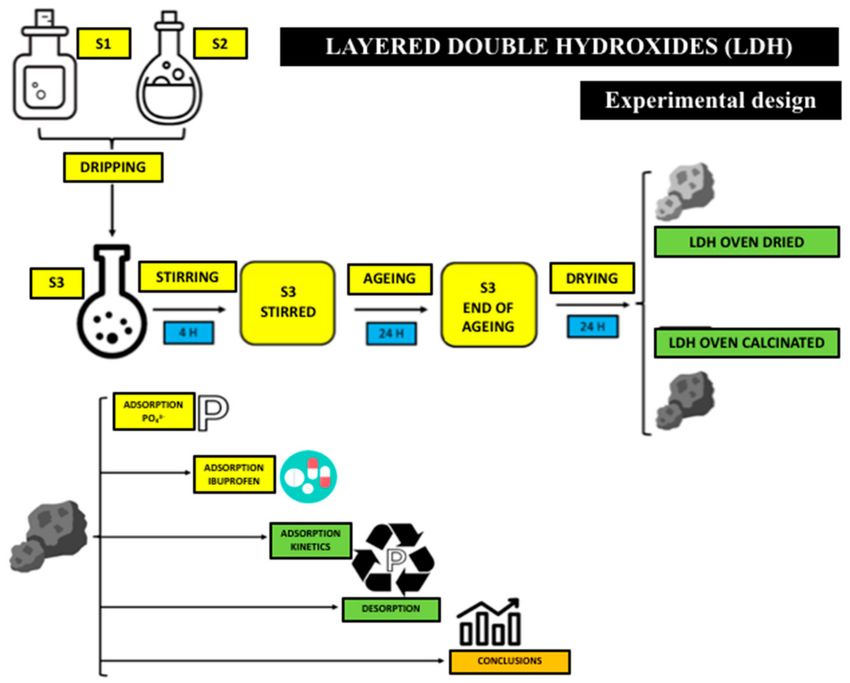
Water 2021, 13, 2394                                                                                           2 of 12

                       micropollutants. However, their effects are worrying since continuous exposure can lead
                       to endocrine system alterations, antibiotic resistance, or fetal exposure, among others [5,6].
                       There are still knowledge gaps on the ecotoxicity, sub-lethal effects, and effective treatment
                       processes for PPCPs [7]. The treatment of pharmaceutical compounds is considered of great
                       importance due to their recalcitrant nature, capacity to bioaccumulate, potential toxicity,
                       and their alteration of the endocrine system [8]. Several studies have demonstrated the
                       ability of bioreactors to remove these compounds from water, both by adsorption and
                       by biotransformation or degradation, making it possible to optimize biological processes
                       to jointly and efficiently remove both conventional (organic matter and nutrients) and
                       emerging pollutants such as the PPCPs [9,10].
                             In this study, ibuprofen will be analyzed as a representative element of the family
                       of pharmaceutical compounds. It is an anti-inflammatory drug sold in millions annually,
                       without the need for a prescription and to practically all audiences. Actually, it is widely
                       used in the treatment of ailments, both at home and in hospitals. Once administered to
                       the patient, between 40 and 90% of the pill is eliminated through the urine, as the human
                       body is not capable of metabolizing more than a small part of it, thus the rest goes to the
                       sewage and will reach the WWTPs. The incomplete removal of PPCPs, such as ibuprofen,
                       in different water and wastewater treatment processes results in the occurrence of PPCP
                       compounds in various environmental compartments [7,11].
                             Adsorption is a good alternative for removing impurities from wastewater as it
                       presents advantages such as flexibility, reduced cost, or simplicity, among others. Ad-
                       sorbents widely employed in the literature include iron, active aluminum, fly ashes, ion
                       exchange resins, active carbon, and clays [12–15]. These adsorbents exhibit some com-
                       mon characteristics such as strong physical and chemical bonds, selectivity, high volume
                       adsorption, and a great capacity to develop the process efficiently.
                             Removal of phosphates and ibuprofen were tested in this study with a clay syn-
                       thetized in the laboratory. Clays are a good option to act as purifiers of polluted waters of
                       agricultural and industrial origin. They are based on phyllosilicates with good adsorbent
                       properties, thanks to their accessible and expandable internal surfaces. Their negative elec-
                       tric charge structures undergo charge compensation by interlaminar cations, thus granting
                       a great adsorption capacity.
                             Synthetic clays can be prepared in the laboratory to improve water treatment with a
                       combination of cation layers, carbonate, and hydroxyl anions and water forming hexagonal
                       or octahedral structures. Among the minerals included in this group, those derived from
                       layered double hydroxides (LDH) with different intercalated anions may be employed
                       to adsorb pollutants from the water [16]. LDH shows similarities in terms of structure,
                       properties, and characteristics with hydrotalcite, a natural mineral composed of layers of
                       magnesium and aluminum intercalated with carbonates and hydroxides. For this reason,
                       LDH are often called hydrotalcite (HT)-type materials.
                             Layered double hydroxides are characterized by having a variable crystalline structure
                       depending on the proportion of di- and trivalent metals. It is necessary to keep an adequate
                       proportion, as higher proportions could generate a hydroxide of the trivalent cation,
                       whereas lower ratios could form a divalent metal hydroxide [17], being the optimal ratio
                       between M2+ /M3+ is 2:1 or 4:1.
                             Several authors found significant phosphate retention in LDH, which could be func-
                       tionalized with biochar [18], achieving good results at an adsorbent dosage of 4 g/L. Zhu
                       et al. [19] synthesized a Ca-Al-Fe LDH and could observe over 90% of phosphate removal
                       in a 25 mg/L concentration after 30 min. Kim et al. [20] found phosphate adsorption of
                       68–73% of a solution of 16.31 mg/L after 24 h. Maia et al. [21] found effective adsorption at
                       lower dosages and described the adsorption as a pseudo-second-order model, which could
                       be affected by the presence of other anions in the sample.
                             In what concerns the pharmaceutical compounds, LDH has shown important ad-
                       sorption capacity and catalytic activity as well as the possibility of a regeneration process,
                       which could explain the importance of gaining knowledge of these compounds applied to
Water 2021, 13, 2394 3 of 12
wastewater [22]. Santamaría et al. [23] proposed a synthesis ratio M2+ :M3+ for the adsorp-
tion of non-steroidal anti-inflammatory drugs and observed a good adsorbate-adsorbant
affinity. In addition, Rosset et al. [24] found that acetylsalicylic acid on ZnAl layered double
hydroxide could remove up to 90% of the solute and could be used for up to 6 cycles.
Thus, efficiency in adsorption is related to pollutant removal, equilibrium features,
but also to the kinetics of the process. The solute will be first transported into the water
column, then will diffuse across the film surrounding the sorbent particles and next to the
pores of the sorbent. One of these steps will be the slowest and will control the fate of
the adsorption [25]. Pseudo-first and pseudo-second-order kinetics are among the most
employed fittings employed in the literature. Equation (1) represents the linear form of the
pseudo-first-order model [26]:
k1
log(qe − qt ) = logqe − t (1)
2.303
where qe and qt (both in mg/g) are the concentration of adsorbed phosphate and ibuprofen
at equilibrium and at a defined time t, respectively, and k1 (1/min) is the rate constant of
pseudo-first-order adsorption. The k1 parameter is the time-scaling factor whose value
decides how fast the equilibrium in the system can be reached [27]. Some authors sug-
gest that pseudo-second-order approximates better to the adsorption processes. There-
fore, sorption kinetics were also described using a pseudo-second-order model following
Equation (2) [28]:
1 1 1
= 2
+ t (2)
qt k2 qe qe
where k2 (g/mg min) is the equilibrium rate constant of pseudo-second-order adsorption.
If the pseudo-second-order kinetic equation is applicable, the plot of t/qt against t should
give a linear relationship, from which qe and k2 can be determined from the slope and
intercept of the plot. Plazinski et al. [27] described this adsorption as a chemical reaction
occurring on the solid surface with the sorption rate being proportional to the actual
solute concentration in the bulk solution and to the number of unoccupied adsorption
sites. Azizian [29] proposed a relationship between pseudo-first and pseudo-second-order
models, where the sorption process would obey a pseudo-first-order kinetic at high initial
concentrations, while pseudo-second-order kinetics model would predominate at lower
initial solute concentrations.
Chien and Clayton [30] developed an expression to evaluate the kinetics of phosphate
sorption and release in soils (Equation (3)), where α (min mg/g) was the initial sorption
rate, and β (g/mg) was related to the extent of surface exposure and activation energy for
chemisorption:
1 1
qt = ln(αβ) + ln t (3)
β β
In order to determine whether the adsorption process is directed only by intraparticle
diffusion or if it is more complex, an experiment will be fitted to the intraparticle diffusion
model [31] following Equation (4):
qt = k p t0.5 + C (4)
where, kp is the intraparticle diffusion rate constant (mg/g min0.5 ) and C is the intercept
(mg/g), and it is related to the thickness of the boundary layer. Other authors have found
an influence of the intraparticle diffusion on phosphate removal [32,33], and this paper
will also analyze the ibuprofen pattern.
Finally, following Equation (5), experimental data will be fitted to the Bangham
model [34]:
C0 k0 m
log log = log + α log t (5)
C0 − qt m 2.303VWater 2021, 13, 2394 4 of 12
where, C0 is the initial adsorbent concentration in solution (mg/L), V is the solution volume
(L), m is the weight of adsorbent used per liter of solution (g/L), qt (mg/g) is the amount
of adsorbent retained at time t, and α (Water 2021, 13, 2394 5 of 12
2.2. Materials and Solutions
Reagents employed in this study (AlCl3 , MgCl2 , NaOH, KH2 PO4 ·H2 O, and ibuprofen)
were purchased from Sigma Aldrich. To assess the adsorption of an organic and an
inorganic compound by each LDH composite, different initial concentrations of phosphate
and ibuprofen solutions were tested, varying the concentration from 2.5 to 20 mg/L.
2.3. Batch Adsorption Experiments
Adsorption experiments were carried out in 100 mL Erlenmeyer flasks placed in
orbital shakers at room temperature and 150 rpm shaking speed. Different experiments
were carried out to compare the efficiency of oven-dried (LDHD ) or calcined hydrotalcite
(LDHC ). Given the efficiency observed in the literature [37,38], a high solid:liquid ratio
was tested and, thus 1:200 (w/v) was analyzed both for phosphates and ibuprofen, and the
time of treatment was set at 42 min based on a set of preliminary results carried out. Exper-
iments were performed with solutions of phosphate and ibuprofen separately. Finally, an
adsorption experiment was tested with a solution of both compounds. Then, the samples
were taken, and the dispersions were filtered by a microsyringe (0.45 µm). To determine
the phosphate concentration of the filtrate, it was selected a wavelength of 690 nm in a
spectrophotometer (model UV/VIS Spectrometer Lambda XLS, PerkinElmer, Waltham,
MA, USA), determined by the molybdenum blue method. Ibuprofen was measured in
filtered samples at a wavelength of 220 nm in the spectrophotometer. Ibuprofen adsorption
measurements were registered by using an UV/VIS Lambda XLS double beam spectropho-
tometer (Perkin Elmer, USA) with a fixed slit width (1.5 mm) and 1 cm quartz cells. All
experiments were run in triplicate.
2.4. Kinetic Study of Pollutant Adsorption
Adsorption behavior was analyzed by performing a kinetic analysis carried out by
means of batch adsorption experiments. Erlenmeyer flasks were placed in an orbital shaker
at 150 rpm and 25 ◦ C, using 0.125 g and a starting concentration of 20 mg/L. Aliquots were
extracted at 1, 5, 10, 20, and 40 min for analysis of phosphates and ibuprofen and filtered
through a 0.45 µm pore size membrane before analyzing.
The adsorption capacity for the LDHC was calculated at each time, qt (mg/g), follow-
ing Equation (6):
(C0 − Ct )·V
qt = (6)
W
where C0 and Ct (mg/L) are the concentrations of phosphate or ibuprofen in the solution
before and after treatment, respectively, V is the volume of the wastewater used during
batch experiments (L) and W (g) is the mass of LDHC .
The percentage of phosphate or ibuprofen removed from wastewater was calculated,
both for LDHD and LDHC , following Equation (7):
Ct
Pollutant removal (%) = 1 − x 100 (7)
C0
The difference between the initial concentration and the one measured in solution
will offer the adsorbed concentration. Therefore, on the basis of the phosphate or ibupro-
fen removed after treatment of wastewater, the adsorption capacity of each LDH used
was calculated.
Kinetic adsorption onto the LDHC was studied using different kinetic models: pseudo-
first-order [26], pseudo-second-order [28], Chien–Clayton model [30], intraparticle diffu-
sion [31], and Bangham model [34].
2.5. Study of the Recovery of the Adsorbate
On completion of the adsorption process, the adsorbent composite was recovered
from the solution with centrifugation at 4000 rpm for 2 min followed by microfiltration.Water 2021, 13, 2394 6 of 12
Experiments of phosphate recovery were carried out by adding 5 mL of distilled water
to the solid. Only LDHC was employed, as it showed the best results in the previous
experiment. Batch desorption was carried out for 10 min at 150 rpm in an orbital shaker.
The adsorbent was then separated from the distilled water by filtration, and the released
phosphate was measured in a spectrophotometer using the method described above.
3. Results and Discussion
3.1. Formulation of an Adsorbent Composite for Removing Phosphates and Ibuprofen
from Wastewater
Table 1 shows the pollutant adsorption tests, carried out using both LDHD (oven-
dried LDH) and LDHC (calcined LDH), for different initial concentrations of phosphate.
Adsorption was lower for the LDHD , with average adsorption of 52.5% and no significant
variations between treatments. However, LDHC adsorbed an average of 70% of phosphate,
with the maximum adsorption observed at the highest tested concentration, 20 mg/L,
where the adsorption reached a percentage of 77.3%.
Table 1. Adsorption results for hydrotalcite when testing phosphate solutions from 2.5 to 20 mg/L.
C0 and Ct refer to initial and final concentration, respectively. Variation coefficients (%) of triplicates
were under 10% in all cases.
LDHD (Oven-Dried) LDHC (Calcined)
Ct (mg Ct (mg
C0 (mg/L) Adsorption (%) Adsorption (%)
PO34− /L) PO34− /L)
2.5 1.1 55.4 1.4 57.8
5 2.6 47.8 3.6 71.2
10 5.0 49.8 7.3 73.5
20 8.6 56.8 15.5 77.3
Structurally, there was a significant difference between oven-dried and calcined LDH.
Moustafa et al. [39] analyzed the Zeta potential of Zn-Fe LDH nanoparticles and confirmed
the high stability of the solid as well as the electrostatic interaction between the metals
and the pollutant. The zero-point charge of Mg/Al-LDH showed a positive surface, which
benefits the phosphate adsorption, although it is pH-dependent [40]. Oven drying forms
the hydrotalcite-like compounds, which lose the layered structure when it is treated above
450–500 ◦ C, forming bimetallic oxides [41]. However, calcined LDH has a “memory effect,”
which enables the reconstruction of its original structure after hydration and immobilizes
hazardous anions for balancing the charge, which could occur by intercalation and surface
sorption [42,43]. Although calcination is usually carried out at high temperatures, there are
studies that report that treatments at 280 ◦ C, in FeCuNi-LDH, produce a larger surface area
compared with treatments at 550 ◦ C [44]. In addition, an important effect to be considered
is the inhibitory effect on the sorption due to coexisting anions in the environment [42].
Regarding ibuprofen adsorption onto the LDHC and LDHD composites (Table 2),
results showed the same pattern as phosphates, with the highest adsorption achieved when
using the LDHC . Average adsorption of 58% was observed in this case, whereas adsorption
decreased to an average of 35% when using LDHD .Water 2021, 13, 2394 7 of 12
Table 2. Adsorption results for hydrotalcite when testing ibuprofen solutions from 2.5 to 20 mg/L.
Adsorption refers to the percentage of ibuprofen retained by the solid with respect to the initial
concentration in the solution. Variation coefficients (%) of triplicates were under 10% in all cases.
LDHD (Oven-Dried) LDHC (Calcined)
Ct (mg Ct (mg
C0 (mg/L) Adsorption (%) Adsorption (%)
ibuprofen/L) ibuprofen/L)
2.5 0.8 32.0 1.3 52.0
5 2.2 44.0 2.2 44.0
10 2.7 27.0 6.9 69.0
20 7.5 37.5 13.5 67.5
MgAl-LHD has shown its potential as a drug carrier, typically intercalating solutes
in the layer space during co-precipitation [45], leading to an increase of inner space from
7.89 Å to 14.71 Å. Therefore, sorption capacity may differ when ibuprofen is added to the
solution after LDH has been synthesized, as ibuprofen may exceed the space available for
solute assimilation. Scarce studies have been found related to ibuprofen removal from
water using LDH. Kumari et al. [46] tested a ZnAl-LDH for diclofenac sodium removal in
water and doped the structure with Bi2 O3 to increase size. In these conditions, ibuprofen
adsorption was significantly increased, although adsorption occurred apparently on the
outer surface.
In the specific case of the mixed solutions of phosphate and ibuprofen, it can be
seen that in both cases, LDH shows a greater adsorption capacity for ibuprofen than for
phosphate (Table 3). Compared to the behavior shown by each LDH composite when
there is only one contaminant in the water, the amount of phosphate adsorbed decreases
while that of ibuprofen increases, especially in the case of LDHD (10 percentage points less
of phosphate and almost 20 percentage points more of ibuprofen). As it happens in the
previous cases, LDHC shows the highest adsorption of both compounds.
Table 3. Results for adsorption of mixed solutions containing phosphate and ibuprofen varying from 2.5 to 20 mg/L.
Variation coefficients (%) of triplicates were under 10% in all cases.
LDHD (Oven-Dried) LDHC (Calcined)
Phosphate Ibuprofen Phosphate Ibuprofen
C0 Ct Adsorption Ct Adsorption Ct Adsorption Ct Adsorption
(mg/L) (mg/L) (%) (mg/L) (%) (mg/L) (%) (mg/L) (%)
2.5 1.0 38.0 1.5 58.0 1.2 48.0 1.8 72.0
5 2.3 46.8 3.2 64.0 3.4 68.0 2.4 48.0
10 4.9 48.9 4.5 45.0 6.9 69.0 6.7 67.0
20 7.0 35.0 10.1 50.5 14.3 71.5 14.1 70.5
3.2. Evaluation of the Adsorption of Phosphates and Ibuprofen in the Composite: Kinetic Study
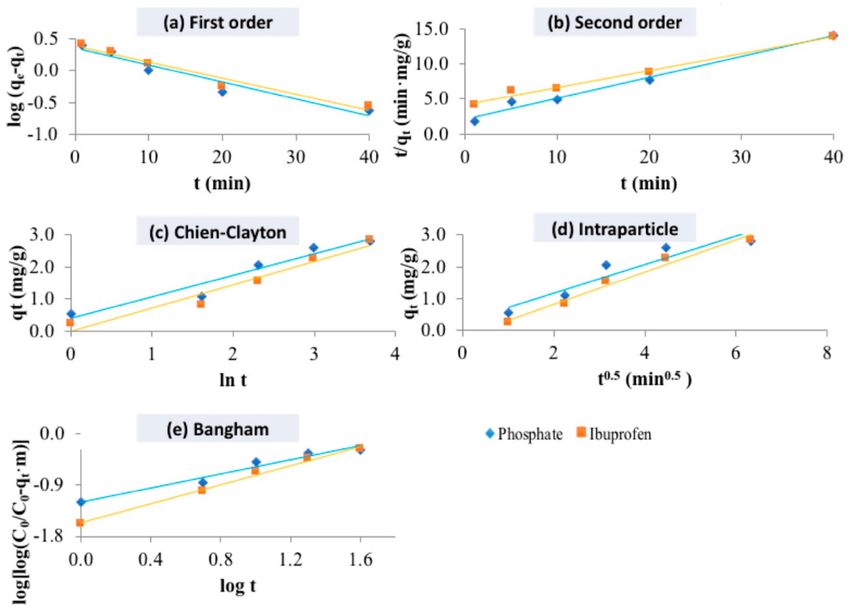
The adsorption of phosphate or ibuprofen onto calcined LDH was conveniently repre-
sented by kinetic models, which were helpful to predict the adsorption behavior of these
compounds. Thus, in the experiments carried out with an initial concentration of 20 mg/L,
the 52% of phosphate was adsorbed in the first 10 min of experiments, whereas ibuprofen
needed 20 min to reach the 57% of adsorption onto LHDC . After 40 min of treatment,
phosphate and ibuprofen removed from solution exceed 70% of the initial concentration.
The kinetic coefficients obtained when fitting to a pseudo-first-order equation showed
similarities between phosphate and ibuprofen adsorption onto LDHC (Table 4). Thus,
phosphate adsorption gave a theoretical capacity of 2.238 mg/g, whereas ibuprofen slightly
increased the capacity to 2.882 mg/g. Figure 2 shows the correlation between the experi-Water 2021, 13, 2394 8 of 12
mental data and the theoretical data when they were described by using the pseudo-first-
order kinetic model.
Table 4. Comparison of kinetic parameters for pseudo-first-order, pseudo-second-order, Chien–
Clayton, intraparticle diffusion, and Bangham kinetic models.
LHDC
Kinetic Model Kinetic Parameters
Phosphate Ibuprofen
qe exp (mg/g) 2.822 2.860
qe calc (mg/g) 2.238 2.882
Pseudo-first-order
k1 (1/min) 0.061 0.082
r2 0.928 0.998
qe exp (mg/g) 2.822 2.860
qe calc (mg/g) 3.347 4.137
Pseudo-second-order
k2 (1/min) 0.043 0.014
r2 0.982 0.989
α 1.219 0.734
Chien–Clayton model β 1.489 1.375
r2 0.940 0.948
kp 0.453 0.509
Intraparticle diffusion
C 0.268 -0.202
model
r2 0.898 0.978
α 0.620 0.838
Bangham model k0 0.003 0.002
r2 0.963 0.994
Figure 2. Kinetic plots for the adsorption of phosphate and ibuprofen onto calcined layered double hydroxide (LHDC )
applying different kinetic models: (a) pseudo-first-order, (b) pseudo-second-order, (c) Chien–Clayton model, (d) intraparticle
diffusion model, and (e) Bangham model.Water 2021, 13, 2394 9 of 12
Table 4 includes the kinetic parameters obtained after modeling the experimental
data following the pseudo-second-order kinetic model and Figure 2 shows the variation
of the experimental data when they were adjusted to this pseudo-second-order kinetic
model, revealing that there was a close agreement between the experimental and theoretical
capacities predicted by the model. The best capacities predicted by the model (4.137 mg/g)
were achieved when adsorbing ibuprofen.
Regarding the kinetic parameters obtained after applying the Chien–Clayton kinetic
model (Table 4), it was observed that the α value predicted by this model to the evaluation
of phosphate was higher (1.219) than that obtained for ibuprofen (0.734).
Moreover, in order to evaluate the possibility of other factors affecting the adsorption
process, such as surface adsorption, ion exchange, complexation, complexation–chelation,
or microprecipitation, experimental data were analyzed by an intraparticle diffusion model.
The slope of the linear part of the curve of qt vs. t0.5 indicates the rate of adsorption con-
trolled by intraparticle diffusion (see Figure 2). When the intercept—C—equals zero, then
the intraparticle diffusion is the only controlling step. However, if C does not pass through
the origin, it indicates that there are other processes involved in the rate of adsorption.
In this case, the intraparticle diffusion model gave C values higher than 0 for phosphate,
which indicates that there are other processes, apart from the intraparticle diffusion, in-
volved in the rate of adsorption. Instead, when analyzing the behavior of ibuprofen, it can
be concluded that intraparticle diffusion is the only mechanism involved in its adsorption.
The higher kp showed by ibuprofen indicates that there is greater intraparticle diffusion for
this compound than for phosphate. This suggests that mixtures of both compounds will
decrease the phosphate diffusion rate to a greater extent. This is in agreement with what
was observed experimentally in this study.
Finally, experimental data were fitted to the Bangham model [34], and log [log (C0 /(C0
− qt m)] values were plotted against log(t) in Figure 2. The linearity of these plots confirms
the applicability of the Bangham equation and indicates that diffusion of phosphate into
pores of the adsorbent controls the adsorption process [34] although according to the
intraparticle diffusion model, other processes were also involved. Results were poorer for
ibuprofen, which confirms the fact that only intraparticle diffusion models its behavior.
Overall, for all the kinetic fittings, high correlation coefficients (r2 ) were obtained with
values between 0.898 and 0.998 (see Table 4), although the best r2 were obtained using
the first-order kinetic model for ibuprofen and pseudo-second-order kinetic model for
phosphate. Several authors observed a pseudo-second-order in similar LDH [47,48] for
nutrients in water, whereas ibuprofen kinetics have received less attention.
3.3. Evaluation of the Recovery of Phosphates from the Composite
Desorption was carried out in this study to adsorbed phosphate in LDHC with water.
The initial phosphate concentration was 20 mg/L, and the treatment was able to recover
up to 11.77 mg/L after 10 min of treatment, which supposes the 59% of the phosphate
in the initial solution. The interest in the recovery of phosphate relies on the fact that
it is a material that could be revalorized as a fertilizer. Phosphate recovery is a matter
of great concern due to the depletion of natural sources of phosphorus [49]. In fact, the
European Commission has included phosphate rock in the list of 20 critical raw materials,
being considered an irreplaceable raw material with great economic impact. Thus, other
authors have also paid attention to its recovery in water. Nuryadin et al. [47] also found
promising results in its desorption using 1 N NaOH in ZrO2 /Mg-Fe LDH. In addition,
Onishi et al. [50] tested the potential of these materials to act as phosphorus fertilizer
analyzing the release sorption.
4. Conclusions
The adsorption performance of phosphate and ibuprofen in a layered double hydrox-
ide (LDH) clay doped with magnesium and aluminum was investigated in this study. This
work demonstrates that LDH composites are capable of removing both contaminants fromWater 2021, 13, 2394 10 of 12
wastewater, although the calcination of the LDH is recommended instead of oven-dried
LDH, as it significantly increased the adsorption capacity. Phosphate was more efficiently
removed when analyzing single solutions, reaching adsorptions up to 70% after 20 min.
Instead, ibuprofen seems to diffuse better in mixed solutions, reaching adsorptions up to
64%, on average. Different kinetic models explain their behavior, with ibuprofen fitting to
a pseudo-first model and phosphate to a pseudo-second-order model. Finally, phosphate
could be efficiently recovered from wastewater, with recoveries up to 59% in 10 min.
Author Contributions: Methodology, J.F. and L.G.-G.; investigation, G.C.; writing—original draft
preparation, R.D.-R.; writing—review and editing, J.d.V., J.F., L.G.-G., and J.P.G.-C.; project admin-
istration, R.D.-R.; funding acquisition, R.D.-R. All authors have read and agreed to the published
version of the manuscript.
Funding: The authors thank the Defense University Center at the Spanish Naval Academy (CUD-
ENM) for all the support provided for this research (Project PICUD-2020-03).
Institutional Review Board Statement: Not applicable.
Informed Consent Statement: Not applicable.
Conflicts of Interest: The authors declare no conflict of interest.
References
1. Nash, D.M.; Halliwell, D.J. Tracing phosphorous transferred from grazing land to water. Water Res. 2000, 34, 1975–1985. [CrossRef]
2. Devesa-Rey, R.; Iglesias, M.L.; Díaz-Fierros, F.; Barral, M.T. Total phosphorous distribution and bioavailability in the bed
sediments of an Atlantic basin (Galicia, NW Spain): Spatial distribution and vertical profiles. Water Air Soil Pollut. 2009, 200,
341–352. [CrossRef]
3. Li, J.; Zheng, B.; Chen, X.; Li, Z.; Xia, Q.; Wang, H.; Yang, Y.; Zhou, Y.; Yang, H. The use of constructed wetland for mitigating
nitrogen and phosphorus from agricultural runoff: A review. Water 2021, 13, 476. [CrossRef]
4. Álvarez-Vázquez, L.; Fernández, F.J. Optimal control of a bioreactor. Appl. Math. Comput. 2010, 216, 2559–2575. [CrossRef]
5. Chaturvedi, P.; Shukla, P.; Giri, B.S.; Chowdhary, P.; Chandra, R.; Gupta, P.; Pandey, A. Prevalence and hazardous impact of
pharmaceutical and personal care products and antibiotics in environment: A review on emerging contaminants. Environ. Res.
2021, 194, 110664. [CrossRef] [PubMed]
6. Pironti, C.; Ricciardi, M.; Proto, A.; Bianco, P.M.; Montano, L.; Motta, O. Endocrine-disrupting compounds: An overview on their
occurrence in the aquatic environment and human exposure. Water 2021, 13, 1347. [CrossRef]
7. Reyes, N.J.D.G.; Geronimo, F.K.F.; Yano, K.A.V.; Guerra, H.B.; Kim, L.-H. Pharmaceutical and personal care products in different
matrices: Occurrence, pathways, and treatment processes. Water 2021, 13, 1159. [CrossRef]
8. Kannan, K.; Reiner, J.L.; Se, H.Y.; Perrotta, E.E.; Tao, L.; Johnson-Restrepo, B.; Rodan, B.D. Polycyclic musk compounds in higher
trophic level aquatic organisms and humans from the United States. Chemosphere 2005, 61, 693–700. [CrossRef]
9. Gonzalez-Gil, L.; Mauricio-Iglesias, M.; Carballa, M.; Lema, J.M. Why are organic micropollutants not fully biotransformed? A
mechanistic modelling approach to anaerobic systems. Water Res. 2018, 142, 115–128. [CrossRef]
10. Gonzalez-Gil, L.; Krah, D.; Ghattas, A.-K.; Carballa, M.; Wick, A.; Helmholz, L.; Lema, J.M.; Ternes, T.A. Biotransformation of
organic micropollutants by anaerobic sludge enzymes. Water Res. 2019, 152, 202–214. [CrossRef]
11. Jurado, A.; Vázquez-Suñé, E.; Pujades, E. Urban groundwater contamination by non-steroidal anti-inflammatory drugs. Water
2021, 13, 720. [CrossRef]
12. Acosta-Herrera, A.A.; Hernández-Montoya, V.; Castillo-Borja, F.; Pérez-Cruz, M.A.; Montes-Morán, M.A.; Cervantes, F.J.
Competitive adsorption of pollutants from anodizing wastewaters to promote water reuse. J. Environ. Manag. 2021, 293, 112877.
[CrossRef] [PubMed]
13. Das, T.K.; Scott, Q.; Bezbaruah, A.N. Montmorillonite-iron crosslinked alginate beads for aqueous phosphate removal. Chemosphere
2021, 281, 130837. [CrossRef] [PubMed]
14. Vecino, X.; Devesa-Rey, R.; Moldes, A.B.; Cruz, J.M. Formulation of an alginate-vineyard pruning waste composite as a new
eco-friendly adsorbent to remove micronutrients from agroindustrial effluents. Chemosphere 2014, 111, 24–31. [CrossRef]
15. Vecino, X.; Devesa-Rey, R.; de Lima Stebbins, D.M.; Moldes, A.B.; Cruz, J.M.; Alcantar, N.A. Evaluation of a cactus mucilage
biocomposite to remove total arsenic from water. Environ. Technol. Innov. 2016, 6, 69–79. [CrossRef]
16. Jawad, A.; Peng, L.; Liao, Z.; Zhou, Z.; Shahzad, A.; Ifthikar, J.; Zhao, M.; Chen, Z.; Chen, Z. Selective removal of heavy metals by
hydrotalcites as adsorbents in diverse wastewater: Different intercalated anions with different mechanisms. J. Clean. Prod. 2019,
211, 1112–1126. [CrossRef]
17. Zubair, M.; Daud, M.; McKay, G.; Shehzad, F.; Al-Harthi, M.A. Recent progress in layered double hydroxides (LDH)-containing
hybrids as adsorbents for water remediation. Appl. Clay Sci. 2017, 143, 279–292. [CrossRef]Water 2021, 13, 2394 11 of 12
18. Azimzadeh, Y.; Najafi, N.; Reyhanitabar, A.; Oustan, S.; Khataee, A.R. Modeling of phosphate removal by Mg-Al layered double
hydroxide functionalized biochar and hydrochar from aqueous solutions. Iran. J. Chem. Chem. Eng. 2020, 40, 565–579. [CrossRef]
19. Zhu, R.; Yan, L.; Song, W.; Ma, Z.; Jia, R.; Sun, S. Mechanochemical synthesis of Ca-Al-Fe layered double hydroxide for efficient
phosphate removal from aqueous solution. Mater. Express 2021, 11, 524–532. [CrossRef]
20. Kim, T.-H.; Lundehøj, L.; Nielsen, U.G. An investigation of the phosphate removal mechanism by MgFe layered double
hydroxides. Appl. Clay Sci. 2020, 189, 105521. [CrossRef]
21. Maia, M.A.; Dotto, G.L.; Perez-Lopez, O.W.; Gutterres, M. Phosphate removal from industrial wastewaters using layered double
hydroxides. Environ. Technol. 2020, 6, 1–11. [CrossRef]
22. Nava-Andrade, K.; Carbajal-Arízaga, G.G.; Obregón, S.; Rodríguez-González, V. Layered double hydroxides and related hybrid
materials for removal of pharmaceutical pollutants from water. J. Environ. Manag. 2021, 288, 112399. [CrossRef]
23. Santamaría, L.; Vicente, M.A.; Korili, S.A.; Gil, A. Progress in the removal of pharmaceutical compounds from aqueous solution
using layered double hydroxides as adsorbents: A review. J. Environ. Chem. Eng. 2020, 8, 104577. [CrossRef]
24. Rosset, M.; Sfreddo, L.W.; Perez-Lopez, O.W.; Féris, L.A. Effect of concentration in the equilibrium and kinetics of adsorption of
acetylsalicylic acid on ZnAl layered double hydroxide. J. Environ. Chem. Eng. 2020, 8, 103991. [CrossRef]
25. Rudzinski, W.; Plazinski, W. Theoretical description of the kinetics of solute adsorption at heterogeneous solid/solution interfaces.
On the possibility of distinguishing between the diffusional and the surface reaction kinetics models. Appl. Surf. Sci. 2007, 253,
5827–5840. [CrossRef]
26. Lagergren, S. About the theory of so-called adsorption of soluble substances. Sven. Vetenskapsakad. Handingarl 1898, 24, 1–39.
27. Plazinski, W.; Rudzinski, W.; Plazinska, A. Theoretical models of sorption kinetics including a surface reaction mechanism: A
review. Adv. Colloid Interface Sci. 2009, 152, 2–13. [CrossRef]
28. Ho, Y.S.; McKay, G. Pseudo-second order model for sorption processes. Process. Biochem. 1999, 34, 451–465. [CrossRef]
29. Azizian, S. Kinetic models of sorption: A theoretical analysis. J. Colloid Interface Sci. 2004, 276, 47–52. [CrossRef] [PubMed]
30. Chien, S.H.; Clayton, W.R. Application of Elovich equation to the kinetics of phosphate release and sorption in soils. Soil Sci. Soc.
Am. J. 1980, 44, 265–268. [CrossRef]
31. Weber, W.J.; Morris, J.C. Kinetic of adsorption on carbon from solutions. J. Sanit Eng. Div. ASCE 1963, 89, 31–60. [CrossRef]
32. Islam, M.; Mishra, S.; Swain, S.K.; Patel, R.; Dey, R.K.; Naushad, M. Evaluation of Phosphate Removal Efficiency from Aqueous
Solution by Polypyrrole/BOF Slag Nanocomposite. Separat Sci. Technol. 2014, 49, 2668–2680. [CrossRef]
33. Acelas, N.Y.; Martin, B.D.; López, D.; Jefferson, B. Selective removal of phosphate from wastewater using hydrated metal oxides
dispersed within anionic exchange media. Chemosphere 2015, 119, 1353–1360. [CrossRef]
34. Aharoni, C.; Ungarish, M. Kinetics of activated chemisorption Part 2.-Theoretical models. J. Chem. Soc. Faraday Trans. 1 1977, 73,
456–464. [CrossRef]
35. Sahin, O.I.; Saygi-Yalcin, B.; Saloglu, D. Adsorption of ibuprofen from wastewater using activated carbon and graphene oxide
embedded chitosan–pva: Equilibrium, kinetics, and thermodynamics and optimization with central composite design. Desalin.
Water Treat. 2020, 179, 396–417. [CrossRef]
36. Vargues, F.; Brion, M.A.; Rosa da Costa, A.M.; Moreira, J.A.; Ribau Teixeira, M. Development of a magnetic activated car-
bon adsorbent for the removal of common pharmaceuticals in wastewater treatment. Int. J. Environ. Sci. Technol. 2021,
18, 2805–2818. [CrossRef]
37. Wang, X.-J.; Zhu, X.-P.; Lan, L.-M.; Zuo, H.-B. Removal of chromium from laboratory wastewater using preparation-adsorption
technology with a Mg/Al/Cr layered compound. RSC Adv. 2016, 6, 85595–85602. [CrossRef]
38. Zhu, J.; Zeng, B.; Mo, L.; Jin, F.; Deng, M.; Zhang, Q. One-pot synthesis of Mg[sbnd]Al layered double hydroxide (LDH) using
MgO and metakaolin (MK) as precursors. Appl. Clay Sci. 2021, 206, 106070. [CrossRef]
39. Moustafa, D.; Mahmoud, R.; El-Salam, H.M.A.; Shehata, N. Utilization of residual zinc–iron-layered double hydroxide after
methyl orange management as a new sorbent for wastewater treatment. Appl. Nanosci. 2021, 11, 709–723. [CrossRef]
40. Cheng, F.; Nie, F.; Zhao, C.; Wu, X.; Lu, J.; Jiang, D.; Pan, J. Phosphorus adsorption characteristics and mechanism of biochar
loaded Mg/Al-LDHs composites. Nongye Gongcheng Xuebao/Trans. Chin. Soc. Agric. Eng. 2021, 37, 226–234. [CrossRef]
41. Gao, Z.; Sasaki, K.; Qiu, S. Structural Memory Effect of Mg–Al and Zn–Al layered Double Hydroxides in the Presence of Different
Natural Humic Acids: Process and Mechanism. Langmuir 2018, 34, 5386–5395. [CrossRef] [PubMed]
42. Zhong, P.; Ping, K.; Qiu, X.; Chen, F. Sorption of humic acid to layered double hydroxides prepared through ion thermal method.
Desalin. Water Treat. 2017, 93, 109–119. [CrossRef]
43. Lu, H.; Liu, S.; Zhang, H.; Qiu, Y.; Zhao, J.; Zhu, Z. Decontamination of arsenic in actual water samples by calcium containing
layered double hydroxides from a convenient synthesis method. Water 2018, 10, 1150. [CrossRef]
44. Kostić, M.; Radović, M.; Velinov, N.; Najdanović, S.; Bojić, D.; Hurt, A.; Bojić, A. Synthesis of mesoporous triple-metal nanosorbent
from layered double hydroxide as an efficient new sorbent for removal of dye from water and wastewater. Ecotox. Environ. Saf.
2018, 159, 332–341. [CrossRef]
45. Dasgupta, S. Controlled release of ibuprofen using Mg Al LDH nano carrier. IOP Conf. Ser. Mater. Sci. 2017, 225, 012005. [CrossRef]
46. Kumari, P.; Pal, B.; Das, R.K. Superior adsorptive removal of eco-toxic drug diclofenac sodium by Zn–Al LDH·xBi2 O3 layer
double hydroxide composites. Appl. Clay Sci. 2021, 208, 106119. [CrossRef]
47. Nuryadin, A.; Imai, T.; Kanno, A.; Yamamoto, K.; Sekine, M.; Higuchi, T. Phosphate adsorption and desorption on two-stage
synthesized amorphous-ZrO2 /Mg–Fe layered double hydroxide composite. Mater. Chem. Phys. 2021, 266, 124559. [CrossRef]Water 2021, 13, 2394 12 of 12
48. Zhang, J.; Xia, Q.; Hong, X.; Chen, J.; Liu, D. Synthesis of layered double hydroxides with nitrate and its adsorption properties of
phosphate. Water Sci. Technol. 2021, 83, 100–110. [CrossRef]
49. Sena, M.; Seib, M.; Noguera, D.R.; Hicks, A. Environmental impacts of phosphorus recovery through struvite precipitation in
wastewater treatment. J. Clean. Prod. 2021, 280, 124222. [CrossRef]
50. Onishi, B.S.D.; dos Reis Ferreira, C.S.; Urbano, A.; Santos, M.J. Modified hydrotalcite for phosphorus slow-release: Kinetic
and sorption-desorption processes in clayey and sandy soils from North of Paraná state (Brazil). Appl. Clay Sci. 2020,
197, 105759. [CrossRef]You can also read


