MPCS and the MARCO POLO Mission - H. Boehnhardt, G. Cremonese, L.M. Lara and the MPCS Study Team - CDTI
←
→
Page content transcription
If your browser does not render page correctly, please read the page content below
MPCS and the MARCO POLO Mission
H. Boehnhardt, G. Cremonese, L.M. Lara

      and the MPCS Study Team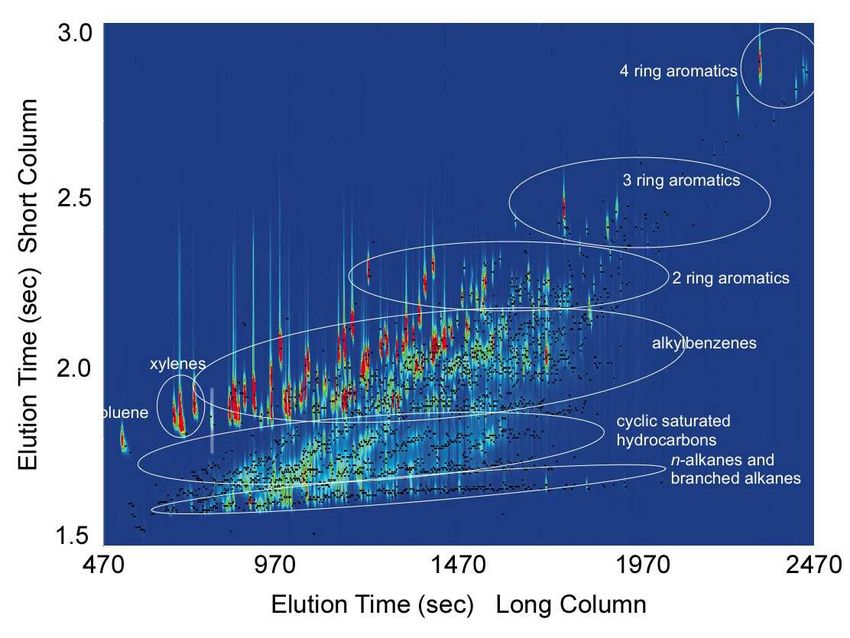
Science Mission Goal of MarcoPolo
           :

:

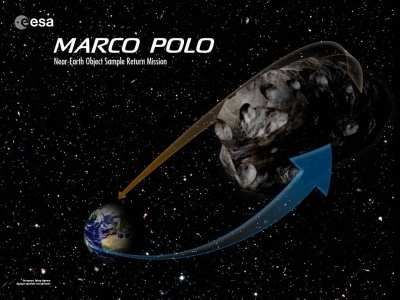
    To return a sample from a near-Earth asteroid belonging
                  to a primitive class to Earth
           sample ~ several 10 grams of surface material

    Key questions of the mission to be addressed by laboratory
    analysis of the sample and supported by orbiter and in-situ
                           experiments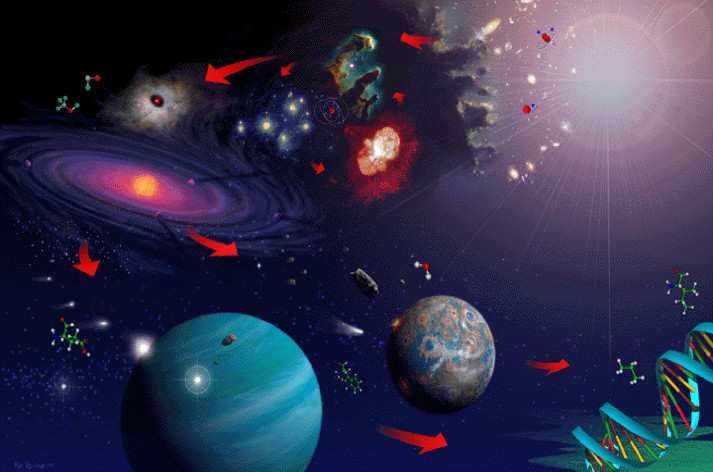
Do NEAs of primitive classes contain
pre-solar material yet unknown in
meteoritic samples?

                                       What are the physical properties and
                                       evolution of the building blocks of
                                       terrestrial planets?

     What are the nature and
     the origin of the organics
     in primitive asteroids
     and how can they shed
     light on the origin of
     molecules necessary for
     life?

                                       What were the processes occurring in
                                       the primitive Solar System and
                                       accompanying planet formation?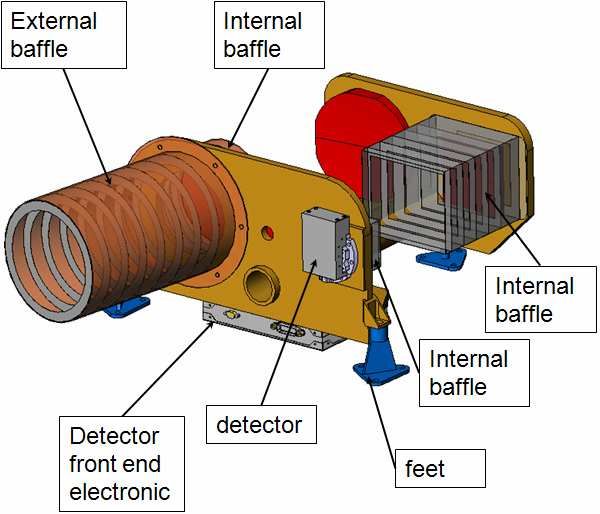
Scientific Objectives of the MarcoPolo Mission
    :
         A. Characterize the chemical and physical environments in the early solar nebula

             B. Define the processes affecting the gas and the dust in the solar nebula

                       C. Determine the timescales of solar nebula processes

                           D. Determine the interstellar grain inventory

                 E. Determine the stellar environment in which the grains formed

              F. Define the interstellar processes that created and formed the grains

        G. Determine the diversity and complexity of organic species in a primitive asteroid

                            H. Understand the origin of organic species

                    I. Provide insight into the role of organics in life formation

                       J. Determine the global physical properties of a NEA

 K. Determine the physical processes and theirchronology that shaped the surface structure

L. Characterize the chemical processes that shaped the NEA composition (e.g. volatiles, water)

M. Link the obtained characterization to meteorites and Interstellar Dust Particles (IDPs) and
                       provide ground truth to the astronomical database
MarcoPolo Overview

• Landing and surface sampling by orbiter is the prime goal
• Sample return and lab experiments on Earth are key for
  science success
• Orbit and in-situ science before and after landing
   – to enable identification and selection of scientifically most rewarding
     landing sites
   – to put sampling site into scientific context
   – to perform science that is not possible to be performed with the sample
     alone
   Object ID   Prelim. Designation   Taxonomic spectral   Estimated diameter   Rotation period
                                             class               (km)                (h)
    162173          1999 JU3                Cg                   0.92                7.7
    162998        2001 SK162                 T                   1.52                68
    65679           1989 UQ                  C                   0.76               7.73
                  2001 SG286                 D                   0.35               Tbd
ESA Defined Mission Scenario

 Target: 1999 JU3                              Backup       DSM 2 & 3
                                          (     launch   )
 Launch from Kourou, direct escape:                                     Dec.
                                                                         2020         Arrival:
  Vinf ~ 3.15-3.3 km/s, Dec = 0o                          Dec. 2019                  Feb. 2022
                                              DSM 1
 6 year mission, 17 months at asteroid
                                                                                X-band
 Single spacecraft + return capsule
                                                      Launch:
 ROM budgets:                                        Dec. 2018
   • ~ 1440 kg launch mass capability
   • Power ~ 500 W                                Re-entry:
   • Instrument total mass: ~ 25 kg               Dec. 2024

 ∆V (incl. margins):
                                                                                 Departure:
   • Total in/out transfer < ~ 1500 m/s                                           Jul. 2023
                                                         DSM 4
   • Near-asteroid phase < ~ 50-100 m/s
 Re-entry velocity ~ 11.9 km.s-1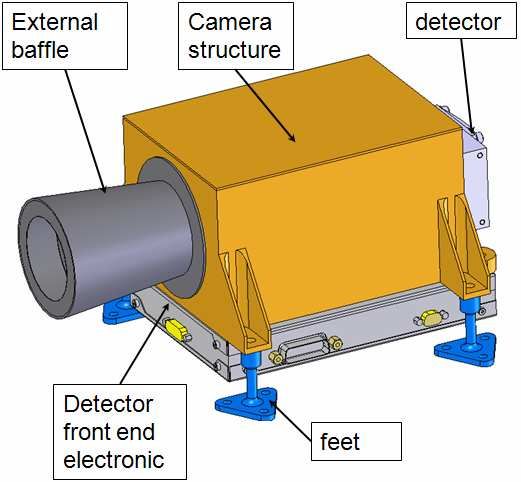
European Industry System Studies
               Astrium Ltd - Astrium GmbH/SAS/ST, Deimos, DLR, Selex Galileo
               OHB - Aerosekur, GMV, Qinetiq, SENER
               TAS-I - NGC, Selex Galileo, TAS-F

   Design iterations and consolidation were performed
   Mass margins comfortably sit within ESA requirements at this stage

  Courtesy of Astrium Ltd           Courtesy of OHB          Courtesy of Thales Alenia Space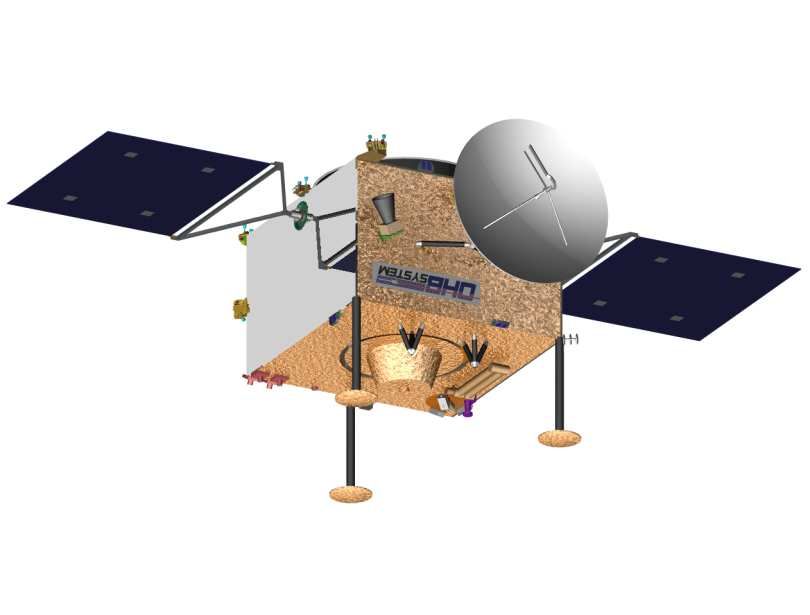
MarcoPolo Baseline Payload
• Baseline payload is capable of fulfilling the science requirements of the mission
Apart from the sampling equipment:

                • Orbiter:

                • Considerable scientific interest to fly:
                             • a lander & touch-down instruments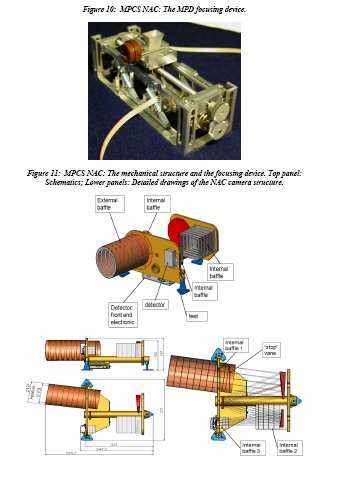
MPCS Instrument Concept
      • MPCS = visible imaging system covering all needs of the
                     science mission to this respect
      • 4 instrument units: NAC, WAC, CUC, CSU

WAC                                  NAC

                                                               + CSU
CUC                                                        electronic box
MPCS Instrument Concept
• 3 independent cameras
– WAC in orbit: shape, surrounding of asteroid, context for NAC
(f/6.5 dioptric system, 16mm aperture, 19.5”/px, fixed focus: ~2km –
∞, 1filter)
– NAC in orbit: shape, terrain, composition (3/8 filters), landing site
(f/8 3 mirror axis optics, 82mm aperture, 3.1”/px, variable focus:
150m – 2.5km – ∞, 3mm/px @ 200m, ≥8 filters)
– CUC@surface: sampling area constitution, grains & layering,
composition
(f/16 dioptric system, 12mm aperture, 10.3”/px, variable focus:
~10cm surface depth from 1m distance, 50µm/px @ 1m; filters TBD,
study contract with Kayser-Threde company)
• 1 common support unit CSU = PCU + CDPU
– PCU = power control unit
– CDPU = command and data processing unit
– both units (PCU, CDPU) as main and redundant
– operational interface between MPCS units and to S/CMPCS Study
• Study performed by European science & engineering
institute consortium between Jan. to Aug. 2009
– Submitted to ESA and part of MarcoPolo Mission documents
(Yellow Book released on Dec. 1, 2009)
• Study responsibilities
– WAC+NAC optomechanics: Univ. Padova (G. Cremonese, S.
Debei)
– CUC optomechanics: DLR Berlin-Adlershof (H. Michaelis)
– CDPU: IDA Braunschweig (H. Michalik)
– PCU: IAA Granada (L. M. Lara, J.M. Castro)
– Thermal aspects: UPM (I. Perez-Grande)
– Detector system, system engineering, calibration, study lead: MPS
Katlenburg-Lindau (H. Boehnhardt, H. Perplies, G. Tomasch)
• Performed without DLR funding
– but now DLR funded industry study contract for CUCMarcoPolo – Next Steps (hopefully) • 1 Dec. 2009: Mission Yellow Book presentation (followed by review) • mid Feb. 2010: Down-selection of CV mission (3-4 out of 6) • spring 2010: 2nd mission study phase (industry) • spring 2010: AO for scientific instruments • summer 2010: instrument selection • early 2012: final selection of CV missions for implementation • mid 2012: start mission/instrument implementation phase • mid/end 2013: PDR • mid/end 2015: CDR • mid 2018: flight acceptance (for launch in 2019)
MPS Tasks for MPCS - A Possible Scenario
 • MPS responsibilities
      –   PIship & science lead
      –   detector system for all three cameras
      –   system engineering (TBD)
      –   system integration
      –   calibration
      –   data pipeline (TBD)

 • MPS manpower (TBD)
          Function            Total work     MPS work       DLR funded work
                                power         power              power
PIship + science + pipeline       4           1 S + 1PD        1 E + 1PD
      Management                  1                 0             1E
     Detector system              4               1E + 1T       1E + 1T
System eng. + calibration        2(3)         1E (+ 1T)           1E
    Total work power            11(11)             5(6)            6
You can also read


