Macrophages in microgravity: the impact of space on immune cells
←
→
Page content transcription
If your browser does not render page correctly, please read the page content below
www.nature.com/npjmgrav

                  REVIEW ARTICLE                            OPEN

                  Macrophages in microgravity: the impact of space on immune
                  cells
                                                                                                                                   2✉
                  Christopher Ludtka1, Justin Silberman                 2
                                                                            , Erika Moore     2
                                                                                                  and Josephine B. Allen

                      The effects of a microgravity environment on the myriad types of immune cells present within the human body have been assessed
                      both by bench-scale simulation and suborbital methods, as well as in true spaceflight. Macrophages have garnered increased
                      research interest in this context in recent years. Their functionality in both immune response and tissue remodeling makes them a
                      unique cell to investigate in regards to gravisensitive effects as well as parameters of interest that could impact astronaut health.
                      Here, we review and summarize the literature investigating the effects of microgravity on macrophages and monocytes regarding
                      the microgravity environment simulation/generation methods, cell sources, experiment durations, and parameters of interest
                      utilized within the field. We discuss reported findings on the impacts of microgravity on macrophage/monocyte structure, adhesion
                      and migration, proliferation, genetic expression, cytokine secretion, and reactive oxygen species production, as well as polarization.
                      Based on this body of data, we make recommendations to the field for careful consideration of experimental design to complement
                      existing reports, as the multitude of disparate study methods previously published can make drawing direct comparisons difficult.
                      However, the breadth of different testing methodologies can also lend itself to attempting to identify the most robust and
1234567890():,;

                      consistent responses to microgravity across various testing conditions.
                      npj Microgravity (2021)7:13 ; https://doi.org/10.1038/s41526-021-00141-z

                  INTRODUCTION                                                                                 MICROGRAVITY MODELS
                  During extended time during spaceflight, astronauts experience                                Cellular research under simulated and true microgravity has
                  significant changes to their health and immune system1. When                                  revealed a variety of biological processes that are significantly
                  immune system functionality is altered, the ability to recognize                             impacted by changes in gravity. While a great deal has been
                  antigens, defend against foreign invaders, and orchestrate repair                            learned, much remains unknown, in part due to the scarcity of
                  are significantly hindered. This alteration in immune functionality                           prolonged spaceflight opportunities caused by their associated
                  leads to an increased risk of infection, however, how spaceflight                             costs and logistics. As such, several ground-based or alternative
                  impacts immune and health functionality is still unknown2,3. To                              strategies have been developed to simulate or achieve micro-
                  expand the field of human spaceflight, scientists seek to under-                               gravity. Ground-based simulators allow researchers to gather
                                                                                                               preliminary data before space experimentation. Several compara-
                  stand the specific mechanisms through which immune function-
                                                                                                               tive studies and reviews have been written to validate, compare,
                  ality is changed and develop countermeasures for these effects.
                                                                                                               contrast, and define many different microgravity experimental
                  Many of the functions of the immune system are largely                                       methods5–7.
                  monitored and regulated by immune cells known as monocytes/                                     The primary methods of simulating microgravity in cell culture
                  macrophages. Monocytes and macrophages are present in all                                    and methods used in many of the manuscripts included in this
                  tissues and are critical for initial host immune responses, tissue                           review are two-dimensional or three-dimensional (2D or 3D) cell
                  development, homeostasis, and tissue repair4. To learn more                                  culture through 2D or 3D clinorotation. Fundamentally, clinorota-
                  about how the immune system is affected in spaceflight,                                       tion changes cells’ perception of Earth’s gravitational pull, from
                  monocytes/macrophages are key targets of microgravity                                        constant 1-g towards Earth to a consistently changing direction
                  experiments4.                                                                                during rotation of cells in culture7. 2D clinorotation rotates cells at
                     In this review, we evaluate the study of monocytes and                                    a particular speed that matches the sedimentation rate of the cells
                  macrophages in microgravity over the past 30 years. Due to the                               in culture. At the correct speed, cells are in continuous “free-fall”
                  recent emergence of models in this area, we believe now is a                                 through the media, thus simulating weightlessness. An example of
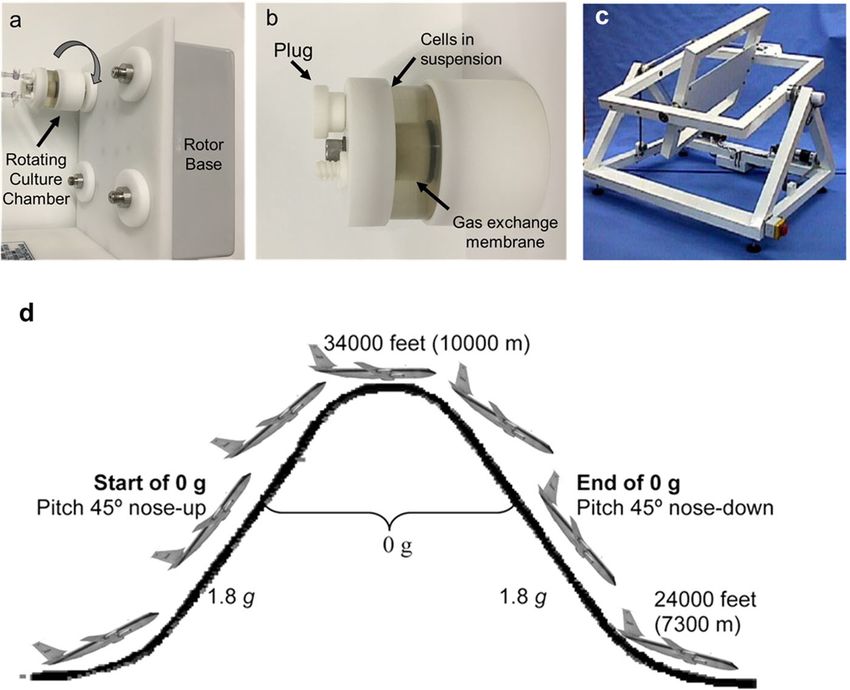
                  valuable time to review the state of the field. Through this review,                          this system is NASA’s rotating wall vessel (RWV) (Fig. 1a, b), in
                  we aim to provide a central hub for current methods and findings                              which cells are in 3D culture while aggregated on microcarrier
                  on monocytes/macrophages in microgravity. To start, we discuss                               beads8. 3D clinorotation is achieved using random positioning
                  conventional methods and devices used to study microgravity. We                              machines (RPM) (Fig. 1c), which rotate samples on two separate
                  then analyze the current research efforts towards elucidating the                            frames such that the average direction of the gravity vector is near
                  macrophages changes that occur in microgravity. We conclude                                  zero. For the methods mentioned, there are variations in the
                                                                                                               number of rotation axes, speed, and direction of rotation
                  with closing remarks highlighting commonalities across the
                                                                                                               depending on the sample.
                  breadth of research and provide some perspective on where the
                                                                                                                  Parabolic flight and sounding rockets are also used as a method
                  field is headed.                                                                              for microgravity studies with periods of 20–30 s and 4–5 min of

                  1
                   J. Crayton Pruitt Family Department of Biomedical Engineering, University of Florida, Gainesville, FL, USA. 2Materials Science and Engineering, University of Florida, Gainesville,
                  FL, USA. ✉email: jallen@mse.ufl.edu

                  Published in cooperation with the Biodesign Institute at Arizona State University, with the support of NASA
C. Ludtka et al.
2
1234567890():,;
Fig. 1 Representative examples of experimental methods used to simulate microgravity. Panels a, b show digital images of a rotating wall
vessel (RWV) bioreactor. Here vascular cells are grown in culture chambers which are then rotated concentrically around a single axis. Panel c
shows a RPM with two independently driven perpendicular frames83. Panel d shows the parabolic flight trajectory84 used to create short-
duration microgravity exposure.
weightlessness, respectively. These methods utilize a parabolic behaviors4. M2 is induced by stimulation with IL-4, IL-10, and IL-
flight pattern which induces periods of microgravity (Fig. 1d). Each 13, which causes a decrease in antigen presentation and an
device, strategy, or method used to simulate or achieve increase in receptors associated with debris clearance12. For
microgravity has some limitations—including exposure to hyper- simplicity, macrophage phenotype is kept binary (M1, M2) in
gravity, microgravity duration, and altered culture conditions— many in vitro experiments reviewed here, however, important
that must be considered when interpreting simulated micro- work has shown that there is a spectrum of activation levels in
gravity studies. While these methods are common and have macrophages with less distinct properties in vivo13. M1 and M2
advanced the field of microgravity studies, it should also be noted macrophages vary in their gene expression, surface marker
that studies in simulated microgravity are strengthened by expression, and cytokine secretion profiles, which results in
correlative studies in space that validate these methods and the wide-ranging cellular functions and behaviors. In this review, we
corresponding results9. focus on aspects of macrophage biology under investigation in
these microgravity studies. Excellent, comprehensive reviews of
normal macrophage biology and function in health and disease
MONOCYTES AND MACROPHAGES are presented elsewhere, particularly in the context of the
Monocytes, commonly known as precursors to macrophages, vasculature14–16. As spaceflight has a notable effect on astronaut
originate from the bone marrow and circulate through the blood. vasculature17,18 and vascular endothelial cells are also affected by
As a part of the inflammatory immune response, monocytes exposure to microgravity19–21, these evaluations are particularly
circulating in the blood adhere to the endothelium and relevant.
extravasate towards tissues in need of immune intervention.
During and after monocyte migration towards their destination,
both macrophages and monocytes produce many pro- MICROGRAVITY EFFECTS ON MACROPHAGES
inflammatory cytokines such as tumor necrosis factor alpha Not surprisingly, cells of the immune system are particularly
(TNF-alpha), interleukin 1 (IL-1), IL-6, IL-8, and IL-12 to further susceptible to microgravity conditions22–26. This may be due to
promote the immune response and recruit more inflammatory their unique functionality regarding inflammation and stresses
cells10. Alongside their adhesion functionality and other respon- within the body or their reliance on blood circulation, which can
sibilities in the immune response, monocytes most notably be altered in the body by microgravity conditions18. Based on
differentiate into macrophages11. Macrophages are significant numerous studies evaluating aspects of macrophage biology
players in the initiation, propagation, and resolution of inflamma- under the effect of real and simulated microgravity, macrophages
tion. Macrophages undergo phenotypic differentiation into demonstrate many sensitivities to changes in gravity, both in their
“classically activated” M1 macrophages, which are pro- short and long term responses22. However, given the differences
inflammatory and “alternatively activated” M2 macrophages, between the cell sources used in studies (described in Table 1), as
which are pro-healing. The M1 phenotype is induced in vitro with well as the microgravity platforms, and experimental variables
common factors associated with pathogen recognition such as such as microgravity duration, it is difficult to directly compare
lipopolysaccharide (LPS), zymosan, or IFN-γ, which increase studies and challenging to interpret results27. Table 2 outlines the
phagocytosis, production of ROS, and other inflammatory various experimental platforms, cell types, durations, and results in
npj Microgravity (2021) 13 Published in cooperation with the Biodesign Institute at Arizona State University, with the support of NASAC. Ludtka et al.
3
Table 1. Summary of major macrophage cell sources used in microgravity experiments.
Cell type Description
Primary macrophages/monocytes Cells harvested and isolated from living tissue samples, such as blood or immune cell-rich organs (e.g., bone
marrow, spleen)
RAW 264.7 cells Murine macrophage-like cell line from an Abelson murine leukemia in BALB/c mice
U937 cells Human leukemic myelomonocytic cell line that differentiates into a macrophage-like phenotype
NR8383 cells Rat alveolar macrophage cell line isolated from lung tissue
B6MP102 cells Murine bone marrow-derived macrophage factor-dependent cell line
J-111 cells Human acute monocytic leukemia cell line, but contaminated with HeLa cells (HPV-related endocervical
adenocarcinoma)
the literature. Collectively, however, microgravity (real and/or report a reduction in the expression of cell adhesion molecule
simulated) is shown to induce changes in macrophage metabo- (ICAM-1) and no significant changes in CD18 expression26. As
lism, signal transduction, proliferation, cytokine secretion, differ- discussed later in the Adhesion and Migration section, CD18 is
entiation, cytoskeletal structure, gross morphology, locomotion, involved in cell-extracellular matrix binding and ICAM-1 (i.e., CD54)
gene expression, and inflammatory response28–30. Any number of in cell–cell binding interactions. They also categorized immunos-
these changes can contribute to an altered immune response tained f-actin and vimentin based on their micromorphological
while in space. organization (i.e., strings, clusters, clouds) for comparison between
11-day and 30-day spaceflight samples and differentially oriented
Structural effects controls. While micromorphological changes in f-actin were less
prevalent, there was a significant difference in vimentin micro-
Macrophages are large cells that have well-characterized structural
morphology following 30-days in spaceflight in terms of the
features, which correspond with many of their functional roles. For
categorized cytoskeletal strings and clusters. However, the authors
example, resting macrophages have irregular cell borders and
do note that these differences may result from the technical
pseudopodia pushed out in all directions31. Activated M1
failure of their planned on-orbit fixation, as increased culture time
macrophages have their actin cytoskeleton arranged throughout
and atmospheric reentry while unfixed are potential confounding
the cytoplasm, while presenting more lamellopodia and filopodia.
variables.
In contrast, M2-polarized macrophage have a rounded structure
In another spaceflight study of U937 cells, Paulsen et al.
with actin located primarily around the nucleus32. These structural
reported that the actin cytoskeleton was greatly disturbed and
and morphological differences depend on rearrangement of the
tubulin expression was disorganized43. They speculate that these
cytoskeleton, particularly actin filaments, which are phenotype
results could indicate a dysfunction macrophage phenotype, one
and function specific33. Thus cytoskeletal actin arrangement
with reduced cytoskeletal-associated functionality, i.e., regarding
enables both M1 and M2 functionalities34. As the cytoskeleton
migration and phagocytosis. Collectively, work has shown that in
plays a critical role in numerous cellular processes, disruptions in
response to microgravity, macrophage structural changes appear
its structure could lead to downstream effects on cell functionally,
to be cell type and duration dependent, with acute effects being
such as vesicle transport, phagocytosis, and migration34–36. Like
observed followed by some degree of adaptation. As will be
many immune cell types in the body, exposure to microgravity
discussed later, there is a connection between cytoskeletal
promotes structural changes in macrophages. Interestingly,
reorganization and direct modulation of gene expression44–46,
structural changes in macrophages are acute, occurring within
therefore mechanical force transduction onto the nucleus, which
seconds, and are transient. For example, within seconds of
occurs within seconds, could play a substantial role in the effects
reaching microgravity in a suborbital rocket experiment (10−4 to
of microgravity seen on macrophages47. Indeed, structural
10−5 g), primary human macrophages undergo cytoskeletal
changes often accompany functional changes, the ability of
changes with increases in both cell and nuclear volume and
macrophages to adapt during microgravity is critical for human
surface area29. These structural changes, which do not correlate to
health during spaceflight.
changes in lysosomes or actin matrix, are followed within minutes
by adaptation back towards their pre-exposure state29. Following
this type of short term suborbital flight and return to Earth’s Adhesion and migration
normal 1-g, no detectable structural changes were observed29. Macrophage adhesion and migration are critical processes for
This rapid (8–15 s) effect of microgravity on macrophage structure maintaining physiological homeostasis. During macrophage
and morphology was also reported during parabolic flight by recruitment to sites of local inflammation, macrophages transmi-
increased cell spreading37. When considering more long-term grate through the endothelial cell wall, basal membranes, and
(72 h) effects on macrophage structure, the culture of U937 in connective tissues. This transmigration is governed by proper
simulated microgravity via a RWV bioreactor resulted in a decrease cell–cell interactions between monocytes/macrophages and
in actin protein expression accompanied by cytoskeletal disorga- endothelial cells through integrins and selectins on the cell
nization and reduced cell proliferation38. Similar disorganization of surface. The function of monocytes/macrophages to properly
cytoskeletal structural proteins, specifically, beta tubulin and extravasate through the stepwise process of (1) rolling, (2)
vinculin, along with cell shape changes were also seen in the J- activation, (3) adhesion, and (4) transmigration is crucial to their
111 macrophage cell line under (RPM) simulated microgravity39 success as early responders during the innate immune response48.
and true spaceflight40. Though they are used frequently to assess Dysfunction of macrophage migratory processes is associated
monocytic lineage cells41, it should be noted that the J-111 cell with increased susceptibility to infection49,50, therefore a great
line is believed to be contaminated with HeLa cells42. For deal of work has been done to understand how microgravity
comparison, Tauber and colleagues demonstrated that following exposure affects this process and can lead to negative effects on
11 days in space aboard the International Space Station, there was astronaut health. For example, CD18 is a necessary integrin for
no significant change in the amount of f-actin and vimentin binding to the extracellular matrix and ICAM-1 is critical for
cytoskeleton in human primary macrophages, though they do monocyte/macrophage extravasation. Reported data surrounding
Published in cooperation with the Biodesign Institute at Arizona State University, with the support of NASA npj Microgravity (2021) 134
Table 2. Outline of experimental platforms, cell types, durations, and results in the literature of macrophage microgravity research.
Experiment platform Paper Cell type Time in µg Results
Clinorotation (simulated µg) Shi 2020 Primary mouse 12 d Macrophage differentiation from hematopoietic progenitor cells and functional polarization
impaired in µg; RAS/ERK/NFκB pathway gravisensitive
Wang 2015 Primary mouse 24 h Simulated µg activates p38 MAPK-C/EBPβ pathway; increased arginase expression;
upregulated IL-6, downregulated IL-12B
npj Microgravity (2021) 13
Brungs 2015 NR8383 4h Reduced ROS production in µg; diminished Syk phosphorylation; NFκB nuclear
translocation unaltered
Paulsen 2015 BV-2 microglial cells; U937; 1 d; 3 d; 5 d Reduced ICAM-1 expression in BV-2 cells; increased ICAM-1 expression in U937 and primary
Primary human human macrophages
Wang 2014 RAW 264.7; Primary mouse 24 h LPS-induced TNF-α expression in µg reduced, but not IL-1β; increased HSF-1 in µg; nuclear
translocation of NFκB unchanged
Adrian 2013 NR8383 30–180 m ROS release is reduced in µg, responding rapidly and reversibly
Paulsen 2010 U937 5m Non-stimulated macrophages had enhanced tyrosine phosphorylation and c-jun activation;
PMA-stimulated macrophages had reduced tyrosine phosphorylation and c-jun activation
Maier 2006 U937 24 h; 72 h Upregulation of hsp70; inhibited proliferation; altered cytokine secretion in µg
Hsieh 2005 RAW 264.7 2d Reduction in nitric oxide and cytokine production; flavonoids compensated for loss of
macrophage function in 3D culture
Maccarrone 2003 U937 2–72 h No expression of active 5-LOX or apoptosis, in contrast to lymphocytes
Hashemi 1999 Primary human 24 h Normal IL-1 synthesis
Random position machine Meloni 2006 J-111 1 h; 24 h Cell motility severely reduced in µg; actin, tubulin, and vinculin structures affected
C. Ludtka et al.
(simulated µg)
Limb suspension (simulated µg) Liu 2015 Primary rat 28 d µg increased monocyte recruitment, E-selectin and MCP-1 expression, and NFκB activation
in abdominal aorta
Suborbital/sounding rocket (real Thiel 2019 Primary Human 353 s µg induces cell geometry changes, rapid cytoskeleton reorganization, and rapid adaptation
µg) of the cytoskeleton
Vogel 2019 U937 300 s HIF-1 differently regulated in altered gravity; some genes have rapid response and
adaptation, others altered only after 5 min. in µg
Thiel 2018 U937 300 s Transcriptome greatly altered in µg; 99.43% of all initially altered transcripts adapted after
5 min.
Paulsen 2015 U937 378 s No detectable effect on ICAM-1 mRNA expression
Parabolic flight (real µg) Vogel 2019 U937 20 s HIF-1 differently regulated in altered gravity; some genes have rapid response and
adaptation, others altered only after 5 min. in µg
Thiel 2018 U937 20 s Transcriptome greatly altered in µg; 99.43% of all initially altered transcripts adapted after
5 min.
Paulsen 2015 BV-2 microglial cells; U937; 20 s Rapid, reversible downregulation of ICAM-1 in BV-2 cells; upregulation of ICAM-1 in
Primary human differentiated U937 cells; Primary human inconclusive
Adrian 2013 NR8383 22 s ROS release is reduced in µg, responding rapidly and reversibly
Paulsen 2010 U937 20 s 1.3-fold increased MEK phosphorylation; rapid p53 phosphorylation in non-stimulated
U937 cells
Armstrong 1995 B6MP102 20 s Macrophages respond to µg within 8 s, with increased cell spreading
Spaceflight (real µg) Shi 2020 Primary mouse 12 d Macrophage differentiation from hematopoietic progenitor cells and functional polarization
impaired in µg; RAS/ERK/NFκB pathway gravisensitive
Tauber 2017 Primary human 11 d; 30 d Decreased ICAM-1 and surface-bound fucose; CD18 and CD14 surface expression unaltered
Thiel 2017 NR8383 15 m Immediate oxidative burst inhibition followed by extremely rapid adaptation to µg
Published in cooperation with the Biodesign Institute at Arizona State University, with the support of NASAC. Ludtka et al.
5
Severe reduction in motility attributed to disruption of cytoskeleton; actin, tubulin, vinculin
Inflammatory phenotype and cytokine production impacted by spaceflight; LPS-stimulated
the influence of microgravity on ICAM-1 and CD18 expression is
Disturbed actin, disorganized tubulin, and reduced CD18, CD36, MHC-II expression in µg
varied. Previous work has demonstrated increased ICAM-1
stimulation; reduced monocyte/macrophage count; upregulated ROS genes post-flight
expression in U937 macrophages in microgravity aboard both
Monocytes had reduced phagocytic ability, oxidative burst, and degranulation after
Increased macrophage proliferation; reduced IL-6 secretion; reduced differentiation
suborbital and parabolic flights, as well as in simulated
Spaceflight can increase anti-inflammatory mechanisms; altered response to LPS
microgravity in 2D clinostats51. Similarly, an increase was also
seen under simulated microgravity in primary human M2-
polarized macrophages in clinostat rotation. In contrast, however,
Greater secretion of IL-1 and TNF of LPS-stimulated macrophages in µg
murine BV-2 microglial cells, which are macrophages residing in
the central nervous system, showed reduced ICAM-1 expression
cells showed reduced IL-6, TNF-α, IL-10, and increased IL-1b in µg
in both clinorotation and parabolic flight51. With data from real
Kinetics of protein kinase C are modified during spaceflight.
microgravity, Tauber et al. reported that primary human
macrophages cultured aboard the International Space Station
showed reduced expression of cell adhesion integrin ICAM-1,
Upregulation of ICAM-1 in differentiated U937 cells
though CD18 did not significantly change between gravity test
conditions26. Their immunofluorescence staining imaging and
Enhanced secretion of TNF, IL-6, and nitric oxide
resulting image analysis data at 11-day and 30-day time points
were compared to differentially oriented 1-g controls. Of note,
changes in ICAM-1 expression under microgravity are reported to
be rapid, reversible, and linked to cytoskeletal function51–53. In a
more clinical evaluation, when assessing monocytes isolated
directly from astronauts upon returning from spaceflight,
expression levels of adhesion molecule CD62L, also known as
L-selectin, was also found to be decreased54. CD62L is a
Normal IL-1 synthesis
necessary homing receptor for monocytes to circulate through
distribution affected
peripheral tissues, playing a role in interactions with endothelial
cells for the purpose of extravasation. A decrease in CD62L
expression indicates a decrease in adhesive and tissue migration
spaceflight
capabilities54. Interestingly, other researchers did not see a
Results
statistically significant difference in the expression of CD13,
CD11, CD62L, or ICAM-1 in post-flight blood-derived mono-
cytes55. CD13, also known as alanine aminopeptidase, is
Time in µg
associated with homotypic cell adhesion in monocytes, though
22 h; 25 h
13–16 d
6 d; 9 d
appears to potentially show activity in leukocyte migration as
5–11 d
6–8 d
well56; CD11 is the alpha component of numerous integrins,
13 d
10 d
24 h
5d
9d
5d
including the previously mentioned CD18, that mediate mono-
cyte/macrophage and other leukocyte adhesion57. Collectively,
these studies show evidence that the expression of cell adhesion
Primary mouse (spleen sample)
Primary human (blood sample)
Primary human (blood sample)
Primary rat (peritoneal sample)
integrins is altered to varying degrees in both simulated and
actual microgravity, and also varies with species and tissue-type.
In addition to adhesion, migration as a parameter has also been
shown to be markedly reduced in J-111 macrophage cells in
spaceflight40. There appears to be a gravisensitive effect on the
Primary human
cell membrane affecting cell adhesion integrins as well as cell
structural proteins, rather than a slower transcriptional or
B6MP102
B6MP102
Cell type
proteolytic mechanism51.
J-111
U937
U937
U937
In addition to CD18 and ICAM-1, CD14 expression has also
been investigated on macrophages in microgravity. A key aspect
of macrophage immunological function is the recognition of
Armstrong 1995
foreign elements and their associated molecular domains, such
Hashemi 1999
µg microgravity, s second, m minute, h hour, d day.
Paulsen 2015
Paulsen 2014
Crucian 2011
Chapes 1999
Chapes 1992
Hatton 1999
Meloni 2011
as pathogen-associated molecular patterns (PAMPs). Pattern
Baqai 2009
Kaur 2005
recognition receptors on the cell surface, such as CD14, bind
Paper
these domains to trigger macrophage response. Tauber et al.
reported that surface expression of CD14 was not significantly
changed under microgravity compared to 1-g controls26.
However, CD14 expression is dependent on the vector of gravity:
samples under 1-g oriented “facing up” (apical surface up, basal
surface down) had nearly 4X greater CD14 expression than those
at 1-g “facing down” (basal surface up, apical surface down)26.
Experiment platform
Table 2 continued
The results from these studies provide insight into how the
modulatory effect that microgravity has on adhesion and
migration processes could be the cause of impaired immune
function during spaceflight. Macrophage adhesion and mobility
processes are critically important to maintaining physiological
homeostasis, and how these processes are affected by space-
flight is important for astronaut health.
Published in cooperation with the Biodesign Institute at Arizona State University, with the support of NASA npj Microgravity (2021) 13C. Ludtka et al.
6
Proliferation hypergravity, suggesting that the cells underwent some degree of
The dynamics of macrophage proliferation is critically important in adaptation to the new gravitational conditions via rapid counter-
governing health and disease58. Tissue resident macrophages are regulation. They also noted quick adaptation of >98% of the
thought to proliferate at low levels in steady-state conditions, but transcripts to microgravity within the 300 s of suborbital rocket
proliferation rates strongly increase after macrophage depletion or flight. Upon comparison of the affected transcripts between these
under inflammatory conditions or infection59,60. This normal different microgravity platforms, they identified 58 transcripts they
process of varied proliferation is strongly linked to macrophage speculate may be gravity-regulated47. Thiel and colleagues also
function in inflammation, therefore an understanding of how assessed the transcriptional effects of ion channel inhibition in
microgravity affects proliferation is important. The interest in the microgravity, as ion channels have been speculated to be involved
effect of spaceflight on macrophage proliferation dates back in mechanical force transduction for cellular processes. However,
decades to work that showed increased proliferation of murine they found that only 2.4% of microgravity-affected transcripts
bone marrow-derived macrophages following 6–7 days of space- could be attributed to ion channel effects, potentially supporting
flight37. More recently, Tauber et al. found that this observed their hypothesis that cytoskeletal force transduction may be a
proliferation was dependent on the vector of gravity, which more significant effector on genetic regulation changes in
macrophages “facing down” (basal surface up, apical surface microgravity. Shi et al. also evaluated the genetic expression of
down) undergoing higher levels of proliferation compared to macrophages in microgravity via RNA-sequencing of murine bone
samples “facing up” (apical surface up, basal surface down)26. They marrow- derived macrophages. They reported a downregulation
likened this apparent increase in macrophage proliferation to that of genes associated with proliferation and differentiation under
seen under inflammatory conditions58. In contrast, time- both rotary culture simulated microgravity as well as spaceflight.
dependent inhibition of U937 cell proliferation under RWV Compared to 1-g controls, rotary culture exhibited 1267 differen-
simulated microgravity has also been reported38. In relation to tially expressed genes (DEGs), and spaceflight exhibited 2270
spaceflight, Hatton and colleagues reported a significant decrease DEGs. Using gene ontology bioinformatics, the authors analyzed
in U937 cell proliferation in spaceflight compared to 1-g ground the DEGs for trends regarding specific biological processes,
controls61. However, their in-flight 1-g centrifugation control also finding the noted downregulation in proliferation and differentia-
demonstrated significantly reduced proliferation compared to the tion pathways, as well as upregulation of apoptotic and RNA-
ground control. As a possible mechanistic insight, it is proposed splicing processes in spaceflight macrophages and upregulation in
that microgravity exposure leads to downregulation of cdc25B, a translation28. They also confirmed the downregulation of these
phosphatase critical for G2/M phase transition in the cell cycle. It is markers of proliferation via RT-PCR. The myriad of effects seen in
believed that microgravity slows cell growth at the G2 phase in macrophage response to microgravity may result in part from
U937 cells, leading to decreased proliferation38. Interestingly, altered signaling pathways, as Shi et al. also reported via gene
while proliferation was decreased, there was a lack of apoptosis of expression analysis the downregulation of the RAS, ERK (also
U937 cells under RWV simulated microgravity62. Given that known as MAPK), and NFκB signaling pathways and upregulation
microgravity induced upregulation of HSP70 (heat shock protein), of the p53 signaling pathway28. Of particular interest, they found
a major stress protein that protects myeloid cells such as U937 that changes in the ERK and NFκB pathways could be rescued by
from apoptosis, this is not entirely surprising38. Further support for respective agonizts. As these pathways represent many different
enhanced cell viability under microgravity is seen through the biological processes within the cell, their altered regulation could
mild transient expression of pro-apoptotic genes, which adapt create multifarious downstream effects. Another group assessed
back within minutes47. Wang and colleagues noted the induction changes to NFκB signaling using a rat hindlimb unweighted
of CCAAT-enhancer-binding protein (C/EBPβ) expression from model, which is another method presented for simulation of
primary mouse macrophages exposed to RWV simulated micro- microgravity64. They noted significantly greater monocyte and
gravity. This inflammation-regulated transcription factor modu- macrophage adhesion to the aortic epithelium, though this was
lates genes involved in monocyte/macrophage proliferation, as attributed to increased NFκB activation in the vascular epithelium
well as differentiation and immune response63. Collectively, this rather than monocytes or macrophages64. Additionally, a different
work shows that the proliferation of macrophages is affected by study reported no alterations in the ERK/MAPK pathway for
microgravity. Macrophage proliferation is a highly regulated monocytic U937 cells after 5 min of clinostat rotation and
process that is governed by in situ environmental conditions. seemingly minimal effect on NFκB activation65. The variety of
Altered ability to regulate proliferation in response to inflamma- microgravity simulation or testing methods, cell types, assessment
tion or infection could result in an altered immune response and methodologies, and resulting data make it difficult to determine
have health consequences in flight. definitive signaling pathway reactions to microgravity. As a more
focused example of genetic alterations from microgravity, other
Gene expression researchers showed that hypoxia-inducible factor 1 alpha (HIF-1α),
which is speculated to play a role in monocyte/macrophage
Gene expression studies provide invaluable insight into molecular
activation, is also differentially regulated in altered gravity, though
mechanisms by which cells and tissues are affected by micro-
HIF-1α-dependent gene expression adapted after 5 min of
gravity. Genetic insight into macrophages increases knowledge of
microgravity30. HIF is a supporter of the innate immune response
immune response and human health during spaceflight. Research
and antibacterial action; macrophages experiencing hypoxia
on the genetic expression of macrophages in microgravity has
undergo a metabolic change to become more angiogenic,
yielded interesting findings. For example, transcriptomics analysis
mitogenic, and pro-invasive66. Collectively, this points to the
via microarray of U937 cells exposed to either parabolic flight (20 s
influence of microgravity on regulating HIF expression in
of microgravity) or suborbital rocket (300 s of microgravity)
macrophages and the broader impact on macrophage recruit-
revealed 1709 and 4667 differentially regulated transcripts,
ment, activation, and response to inflammation.
respectively47. The transcripts affected in parabolic flight included
those associated with DNA replication and microtubule-based
processes, while transcripts from suborbital flight included Cytokine production and immune response
intracellular transport, mRNA processing, RNA and enzyme Cytokine secretion has been shown to be affected by microgravity
binding, post-translational regulation, cell cycle regulation, and by numerous studies27,37,38,54,67–70. Several of the major cytokines
cell division. The respective research group found that the trends of interest focused on in previous studies are IL-1, IL-6, IL-10, IL-12,
in transcript expression following microgravity were reversed in and TNF-alpha. These cytokines are important mediators of the
npj Microgravity (2021) 13 Published in cooperation with the Biodesign Institute at Arizona State University, with the support of NASAC. Ludtka et al.
7
inflammatory response, and their decreased production has complicated. Attempting to standardize methods by focusing on
deleterious effects on the body’s ability to appropriately combat commonly used cell types, preparation methods, and microgravity
infection71. The normal function of these cytokines involves environment simulation/generation strategies will help to improve
systemic inflammation, T- and B-lymphocyte activation and the consistency of results in the future.
stimulation, as well as the induction of acute phase reaction
proteins. IL-6 acts as both a pro-inflammatory and anti- Reactive oxygen species
inflammatory mediator as it can inhibit IL-1 and TNF-alpha, and
Regarding the immune response against viruses, bacteria, and
stimulate IL-10. IL-1 and IL-12 are inflammatory cytokines which
fungi, macrophages produce reactive oxygen and nitrogen
are involved in fever and epithelium adhesion factor expression,
species (ROS, RNS, respectively) to degrade pathogen proteins.
and T-cell differentiation, respectively. IL-10 is an anti-
For example, M1 “pro-inflammatory” macrophages have upregu-
inflammatory agent that can reduce major histocompatibility
lated expression of inducible nitrogen oxide synthetase (iNOS), a
complex class II (MHC-II) and co-stimulatory signal expression on
potent producer of reactive nitrogen species. The oxidative burst
macrophages, increased MHC-II expression being considered a
reaction resulting from the production of ROS is inhibited for
hallmark of M1 polarization72. TNF-alpha is also related to systemic
macrophages while in microgravity26,55,76,77. Adrian et al. reported
inflammation, stimulating fever, and increasing macrophage
a reduction in ROS in microgravity that occurred rapidly and
phagocytosis. Importantly, the effects on the production of these
reversibly in the span of seconds using clinostat and parabolic
cytokines by macrophages experiencing microgravity are not
flight models76. This significant reduction in ROS production by
always in agreement with the literature. Using IL-1 as an example,
macrophages under clinostat simulated microgravity was inde-
one study reported a decrease in IL-168 after stimulation with
pendently corroborated by Brungs et al.78. Thiel et al. also
radiolabeled phorbol ester while another reported near a
reported immediate inhibition of ROS in a spaceflight study
complete lack of any IL-1 secretion by monocytes in a spaceflight
aboard the International Space Station followed by rapid
study with stimulation of concanavalin A (ConA)73. Conversely,
adaptation (again, on the order of seconds) with extremely rare
another study reported no difference in IL-1 production between
onboard real-time data to directly evince the gravisensitivity of
monocytes in clinorotation and 1-g controls, with anti-CD3
oxidative burst. In the study, by Adrian et al., a delay in
stimulation74 while a study of U937 cells in RWV simulated
macrophage phagocytosis under clinorotation was also seen.
microgravity by Maier et al. actually demonstrated increased IL-1
Phagocytosis was significantly reduced after 30 min in clinorota-
secretion with no stimulation38. This is consistent with a study by
tion, but appeared to recover as no significant difference was seen
Chapes et al that reported increased IL-1 secretion, as well as TNF-
compared to non-clinorotation controls at 60 and 180 min76. ROS
alpha secretion, though in LPS stimulated bone marrow-derived
are important for immunological defense and clearance of
macrophages in spaceflight versus 1-g LPS-stimulated controls70.
pathogens, as well as modulation of the immune response79
The authors of another study demonstrated decreased TNF-alpha
and differentiation80 of macrophages; this work demonstrates a
secretion and unchanged IL-1 secretion in LPS-stimulated RAW
reduction in ROS as a result of microgravity, reinforcing the notion
264.7 cells in rotary culture. They also speculate that differences in
that microgravity could increase susceptibility to disease through
their results compared to the previous work could be the result of
ROS reduction.
different culture temperature conditions as they also used LPS
stimulation69. Interestingly, a later study by Chapes et al.
investigating peritoneal macrophages harvested from rats that Polarization
underwent spaceflight found an increased secretion of TNF-alpha Given the influence macrophage phenotype can have on
as well as IL-675. Maier also reported an increase in TNF-alpha, IL- macrophage function, many microgravity studies have also
12, and IL-2, in addition to a large increase in IL-8 secretion considered the impact of microgravity on macrophage pheno-
compared to controls. A major aspect of the immune function of type. Shi et al. found that microgravity inhibited the differentiation
macrophages also comes from their expression of MHC class I and of macrophages from hematopoietic progenitor cells (in both
II. While many cells within the body basally express MHC-I, which rotary culture simulated microgravity and spaceflight) as well as
can be upregulated in an inflammatory response, the role of their subsequent polarization into M1 and M2 phenotypes
macrophages as an antigen presenting cell for T-lymphocyte compared to those differentiated under normal gravity28. They
activation is affected through their expression of MHC-II. Paulsen also found that microgravity downregulated genes associated
et al. noted a statistically significant increase in MHC-I and with macrophage polarization. This inhibition of macrophage
decrease in MHC-II expression in U937 cells following 5 days in polarization agrees with earlier work by Armstrong et al. in bone
spaceflight. CD36, a scavenger receptor associated with phagocy- marrow-derived macrophages after spaceflight. They observed
tosis, was also decreased under the influence of microgravity. The decreased expression of Galectin-3 (also known as MAC-2), a
authors speculate that cytoskeletal disruption might contribute to protein involved in macrophage activation in addition to cell
the decrease in CD36 expression43. adhesion and migration, as well as MHC-II, another marker of
As noted, differences in experimental design lead to differing macrophage activation that is associated with macrophages’ role
results, as for macrophages in microgravity, IL-1 production has as antigen presenting cells. IL-6 secretion, associated with
been shown to increase38,54, decrease68, or remain balancing M1 and M2 polarization, was also decreased in
unchanged27,69. Similarly, IL-6 production has been reported to microgravity experienced macrophages which indicates an overall
increase27,63,75 or decrease37,54,67,69 under the effects of micro- decrease in macrophage phenotype plasticity. Contrary to a
gravity; IL-10 increases27 or decreases54; IL-12 decreases63,67,69 or decrease in macrophage polarization, Wang et al. reported
remains unchanged27. Likewise, TNF-alpha has been reported to upregulation of arginase 1, which is a consequence of increased
increase38,70,75 or decrease27,54,67,69. Determining the causes of C/EBPβ63. Arginase 1 is notable as a hallmark of alternatively
these differing results can prove difficult when not only cell activated macrophages, i.e., M2 macrophages, and is also
sources and microgravity methods differ, but also macrophage important for cell proliferation as well as inhibiting the production
stimulation. As seen above, numerous additives to media have of nitric oxide, a key signaling molecule of M1 macrophages81. As
been reported in the literature including macrophage phenotype such, Wang et al.’s results could indicate the induction of an M2
stimulators such as LPS with or without IFN-γ27,37,54,67,69,70, ConA73, phenotype resulting from microgravity. The work of Paulsen et al.
and IL-463. As LPS, IFN-γ, and ConA are mitogens to drive an contributes to the hypothesis of M2 polarization. They noted a
inflammatory cellular response (i.e., M1 macrophages) and IL-4 distinct subtype of “activated and ameboid” BV-2 microglial cells
stimulates an M2 response, interstudy comparisons are further with a simple rounded cell shape in their clinostat experiments51.
Published in cooperation with the Biodesign Institute at Arizona State University, with the support of NASA npj Microgravity (2021) 13C. Ludtka et al.
8
Activated, ameboid microglia are considered to have undergone 2. Institute of Medicine (IOM). Safe Passage: Astronaut Care for Exploration Missions.
M2 polarization, and they function to block pro-inflammatory (National Academies Press, US, 2001).
cytokines while promoting tissue repair and the release of 3. Hughes‐Fulford, M. To infinity … and beyond! Human spaceflight and life sci-
neurotrophic factors, promoting healing in CNS tissue82. While ence. FASEB J. https://doi.org/10.1096/fj.11-0902ufm (2011).
4. Varol, C., Mildner, A. & Jung, S. Macrophages: development and tissue speciali-
M2 polarization is likely to occur as a result of microgravity, this
zation. Annu. Rev. Immunol. https://doi.org/10.1146/annurev-immunol-032414-
work also demonstrates that macrophage polarization is likely to 112220 (2015).
be downregulated or transient. Additional studies with genetic 5. Brungs, S., Hauslage, J. & Hemmersbach, R. Validation of random positioning
reference for M1 and M2 associated markers are needed to more versus clinorotation using a macrophage model system. Microgravity Sci. Technol.
adequately profile fluctuations in monocyte/macrophage expres- https://doi.org/10.1007/s12217-019-9687-0 (2019).
sion as a result of microgravity. 6. Wuest, S. L., Richard, S., Kopp, S., Grimm, D. & Egli, M. Simulated microgravity:
critical review on the use of random positioning machines for mammalian cell
culture. BioMed. Res. Int. https://doi.org/10.1155/2015/971474 (2015).
CONCLUSION 7. Herranz, R. et al. Ground-based facilities for simulation of microgravity: organism-
specific recommendations for their use, and recommended terminology. Astro-
The literature on the effects of microgravity on monocyte/
biology https://doi.org/10.1089/ast.2012.0876 (2013).
macrophages is diverse in its methodology. While rapidly 8. Hammond, T. G. & Hammond, J. M. Optimized suspension culture: the rotating-
occurring changes are seen in macrophages when exposed to wall vessel. Am. J. Physiol. Renal Physiol. https://doi.org/10.1152/
microgravity, which often are observable within seconds of ajprenal.2001.281.1.f12 (2001).
exposure29,30,47,51,76–78, the effects of microgravity are often 9. Albrecht-Buehler, G. The simulation of microgravity conditions on the ground.
reversible51,76 or quickly adapted to after the initial ASGSB Bull. 5, 3–10 (1992).
response29,30,77. Other work focused on the long-term effects of 10. Duque, G. A. & Descoteaux, A. Macrophage cytokines: involvement in immunity and
microgravity, using a time span of days to weeks26,28,29,51,77,78. The infectious diseases. Front. Immunol. https://doi.org/10.3389/fimmu.2014.00491 (2014).
disparate use of numerous cell types and platforms when 11. Epelman, S., Lavine, K. J. & Randolph, G. J. Origin and functions of tissue mac-
rophages. Immunity https://doi.org/10.1016/j.immuni.2014.06.013 (2014).
assessing microgravity can make direct comparisons difficult.
12. Mantovani, A. et al. The chemokine system in diverse forms of macrophage acti-
However, the wide range of methods and cells tested can also be vation and polarization. Trends Immunol. https://doi.org/10.1016/j.it.2004.09.015
seen as an advantage when attempting to make more generalized (2004).
statements regarding the effects microgravity has on macro- 13. Mosser, D. M. & Edwards, J. P. Exploring the full spectrum of macrophage acti-
phages. Seeing which measured variables demonstrate more vation. Nat. Rev. Immunol. https://doi.org/10.1038/nri2448 (2008).
robust and consistent responses across these different testing 14. Zhang, X. & Mosser, D. M. Macrophage activation by endogenous danger signals.
conditions and methods can help to highlight the most J. Pathol. https://doi.org/10.1002/path.2284 (2008).
gravisensitive aspects of macrophage cellular biology. Several 15. Moore, E. M., Suresh, V., Ying, G. & West, J. L. M0 and M2 macrophages enhance
research groups have also focused on stepwise studies, utilizing vascularization of tissue engineering scaffolds. Regen. Eng. Transl. Med. https://
doi.org/10.1007/s40883-018-0048-0 (2018).
several microgravity platforms to evaluate effects on macro-
16. Moore, E. M. & West, J. L. Harnessing macrophages for vascularization in tissue
phages, as well as shed some light on the possible validity of these engineering. Ann. Biomed. Eng. https://doi.org/10.1007/s10439-018-02170-4
simulated or alternative microgravity systems in replicating results (2019).
from true spaceflight39,40. This stepwise approach is very helpful 17. Demontis, G. C. et al. Human pathophysiological adaptations to the space
for validating observations and indicating where certain platforms environment. Front. Physiol. https://doi.org/10.3389/fphys.2017.00547 (2017).
may not be as reliable for approximating spaceflight. Continuation 18. Grigoriev, A. I., Kotovskaya, A. R. & Fomina, G. A. The human cardiovascular
of this stepwise assessment utilizing multiple comparisons is system during space flight. Acta Astronaut. https://doi.org/10.1016/j.
necessary to move the field of microgravity biology forward. actaastro.2009.11.013 (2011).
However, the variety of cell types used across experiments, which 19. Ramaswamy, V., Dirr, E. W. & Allen, J. B. The effect of simulated microgravity on
differentiation of porcine blood-derived vascular stem cells. Stem Cells Dev.
range from primary human monocytes, to primary murine
https://doi.org/10.1089/scd.2015.0297 (2016).
macrophages, to histiocytic lymphoma cells, to tissue-specific 20. Ramaswamy, V., Goins, A. & Allen, J. B. Altered functions of human blood-derived
polarized macrophages, presents another pressing issue in vascular endothelial cells by simulated microgravity. Gravitational Sp. Res. https://
comparing results across studies. Indeed, authors have indicated doi.org/10.2478/gsr-2016-0001 (2020).
that differing cell types even within their own studies contribute 21. Maier, J. A. M., Cialdai, F., Monici, M. & Morbidelli, L. The impact of microgravity
to contrasting results51. If comparability of research results to and hypergravity on endothelial cells. BioMed. Res. Int. https://doi.org/10.1155/
in vivo human is desired, the use of primary human cell sources is 2015/434803 (2015).
optimal26. In order to attain comparable results, multiple 22. Clément, G. Fundamentals of Space Medicine. (Springer Publishing, 2011).
microgravity modalities, including true spaceflight as a golden 23. Crucian, B. E. et al. Immune system dysregulation during spaceflight: potential
countermeasures for deep space exploration missions. Front. Immunol. https://
standard comparison if possible, should be considered. Careful
doi.org/10.3389/fimmu.2018.01437 (2018).
consideration of cell source given the intended research focus 24. Frippiat, J. P. et al. Towards human exploration of space: the THESEUS review
should also be conducted to ensure research relevancy and series on immunology research priorities. npj Microgravity https://doi.org/
adequate comparisons. 10.1038/npjmgrav.2016.40 (2016).
25. Horneck, G. et al. Humex, a study on the survivability and adaptation of humans
to long-duration exploratory missions, part I: lunar missions. Adv. Sp. Res. https://
DATA AVAILABILITY doi.org/10.1016/S0273-1177(03)00568-4 (2003).
All data in this paper can be found in previous publications cited within the text. No 26. Tauber, S. et al. Cytoskeletal stability and metabolic alterations in primary human
new datasets were generated or presented in this manuscript. macrophages in long-term microgravity. PLoS ONE https://doi.org/10.1371/
journal.pone.0175599 (2017).
27. Baqai, F. P. et al. Effects of spaceflight on innate immune function and anti-
Received: 1 December 2020; Accepted: 26 February 2021; oxidant gene expression. J. Appl. Physiol. https://doi.org/10.1152/
japplphysiol.91361.2008 (2009).
28. Shi, L. et al. Spaceflight and simulated microgravity suppresses macrophage
development via altered RAS/ERK/NFκB and metabolic pathways. Cell. Mol.
Immunol. https://doi.org/10.1038/s41423-019-0346-6 (2020).
REFERENCES 29. Thiel, C. S. et al. Rapid morphological and cytoskeletal response to microgravity in
1. Blaber, E., Marçal, H. & Burns, B. P. Bioastronautics: the influence of microgravity human primary macrophages. Int. J. Mol. Sci. https://doi.org/10.3390/
on astronaut health. Astrobiology https://doi.org/10.1089/ast.2009.0415 (2010). ijms20102402 (2019).
npj Microgravity (2021) 13 Published in cooperation with the Biodesign Institute at Arizona State University, with the support of NASAC. Ludtka et al.
9
30. Vogel, J. et al. Expression of hypoxia-inducible factor 1α (Hif-1α) and genes of 57. Naeim, F. Hematopathology (Academic Press, 2008).
related pathways in altered gravity. Int. J. Mol. Sci. https://doi.org/10.3390/ 58. Hashimoto, D. et al. Tissue-resident macrophages self-maintain locally through-
ijms20020436 (2019). out adult life with minimal contribution from circulating monocytes. Immunity
31. Douglas, S. D. & Tuluc, F. (eds James, Shanahan & Harriet, Lebowitz) Ch.67, 8th https://doi.org/10.1016/j.immuni.2013.04.004 (2013).
edn. In Williams Hematology. (McGraw-Hill Education, 2010). 59. Sieweke, M. H. & Allen, J. E. Beyond stem cells: self-renewal of differentiated
32. Pergola, C. et al. Modulation of actin dynamics as potential macrophage subtype- macrophages. Science https://doi.org/10.1126/science.1242974 (2013).
targeting anti-tumour strategy. Sci. Rep. https://doi.org/10.1038/srep41434 60. Davies, L. C. et al. A quantifiable proliferative burst of tissue macrophages
(2017). restores homeostatic macrophage populations after acute inflammation. Eur. J.
33. Kaplan, G. Differences in the mode of phagocytosis with Fc and C3 receptors in Immunol. https://doi.org/10.1002/eji.201141817 (2011).
macrophages. Scand. J. Immunol. https://doi.org/10.1111/j.1365-3083.1977. 61. Hatton, J. P. et al. The kinetics of translocation and cellular quantity of protein
tb02153.x (1977). kinase C in human leukocytes are modified during spaceflight. FASEB J. https://
34. Vereyken, E. J. F. et al. Classically and alternatively activated bone marrow derived doi.org/10.1096/fasebj.13.9001.s23 (1999).
macrophages differ in cytoskeletal functions and migration towards specific CNS 62. Maccarrone, M. et al. Creating conditions similar to those that occur during
cell types. J. Neuroinflammation 8, 58 (2011). exposure of cells to microgravity induces apoptosis in human lymphocytes by 5-
35. Duleh, S. N. & Welch, M. D. WASH and the Arp2/3 complex regulate endosome lipoxygenase-mediated mitochondrial uncoupling and cytochrome c release. J.
shape and trafficking. Cytoskeleton https://doi.org/10.1002/cm.20437 (2010). Leukoc. Biol. 73, 472–481 (2003).
36. Rougerie, P., Miskolci, V. & Cox, D. Generation of membrane structures during 63. Wang, C. et al. Microgravity activates p38 MAPK-C/EBPβ pathway to regulate the
phagocytosis and chemotaxis of macrophages: role and regulation of the actin expression of arginase and inflammatory cytokines in macrophages. Inflamm. Res.
cytoskeleton. Immunol. Rev. https://doi.org/10.1111/imr.12118 (2013). https://doi.org/10.1007/s00011-015-0811-3 (2015).
37. Armstrong, J. W., Gerren, R. A. & Chapes, S. K. The effect of space and parabolic 64. Liu, H. et al. Simulated microgravity promotes monocyte adhesion to rat aortic
flight on macrophage hematopoiesis and function. Exp. Cell Res. https://doi.org/ endothelium via nuclear factor-κB activation. Clin. Exp. Pharmacol. Physiol. https://
10.1006/excr.1995.1020 (1995). doi.org/10.1111/1440-1681.12381 (2015).
38. Maier, J. A. M. Impact of simulated microgravity on cell cycle control and cytokine 65. Paulsen, K. et al. Microgravity-induced alterations in signal transduction in cells of the
release by U937 cells. Int. J. Immunopathol. Pharmacol. https://doi.org/10.1177/ immune system. Acta Astronaut. https://doi.org/10.1016/j.actaastro.2010.06.053 (2010).
039463200601900205 (2006). 66. Riboldi, E. et al. Hypoxia-mediated regulation of macrophage functions in
39. Meloni, M. A., Galleri, G., Pippia, P. & Cogoli-Greuter, M. Cytoskeleton changes and pathophysiology. Int. Immunol. https://doi.org/10.1093/intimm/dxs110 (2013).
impaired motility of monocytes at modelled low gravity. Protoplasma https://doi. 67. Hsieh, C. L., Chao, P. D. L. & Fang, S. H. Morin sulphates/glucuronides enhance
org/10.1007/s00709-006-0210-2 (2006). macrophage function in microgravity culture system. Eur. J. Clin. Invest. https://
40. Meloni, M. A. et al. Space flight affects motility and cytoskeletal structures in doi.org/10.1111/j.1365-2362.2005.01551.x (2005).
human monocyte cell line J-111. Cytoskeleton https://doi.org/10.1002/cm.20499 68. Schmitt, D. A. et al. The distribution of protein kinase C in human leukocytes is
(2011). altered in microgravity. FASEB J. https://doi.org/10.1096/fasebj.10.14.9002555 (1996).
41. Drexler, H. G., Dirks, W. G. & MacLeod, R. A. F. False human hematopoietic cell 69. Wang, C. et al. Microgravity inhibition of lipopolysaccharide-induced tumor
lines: cross-contaminations and misinterpretations. Leukemia https://doi.org/ necrosis factor-α expression in macrophage cells. Inflamm. Res. https://doi.org/
10.1038/sj.leu.2401510 (1999). 10.1007/s00011-013-0676-2 (2014).
42. Nelson-Rees, W. A. & Flandermeyer, R. R. HeLa cultures defined. Science https:// 70. Chapes, S. K., Morrison, D. R., Guikema, J. A., Lewis, M. L. & Spooner, B. S. Cytokine
doi.org/10.1126/science.1246601 (1976). secretion by immune cells in space. J. Leukoc. Biol. https://doi.org/10.1002/
43. Paulsen, K. et al. Severe disruption of the cytoskeleton and immunologically jlb.52.1.104 (1992).
relevant surface molecules in a human macrophageal cell line in microgravity - 71. Murphy, K. & Weaver, C. Janeway’s Immunbiology 9th edn. (Garland Science,
Results of an in vitro experiment on board of the Shenzhou-8 space mission. Acta Taylor & Francis Group, 2017).
Astronaut. https://doi.org/10.1016/j.actaastro.2013.06.007 (2014). 72. Yao, Y., Xu, X. H. & Jin, L. Macrophage polarization in physiological and patho-
44. Thorpe, S. D. & Lee, D. A. Dynamic regulation of nuclear architecture and logical pregnancy. Front. Immunol. https://doi.org/10.3389/fimmu.2019.00792
mechanics—a rheostatic role for the nucleus in tailoring cellular mechan- (2019).
osensitivity. Nucleus https://doi.org/10.1080/19491034.2017.1285988 (2017). 73. Cogoli, A. The effect of hypogravity and hypergravity on cells of the immune
45. Tajik, A. et al. Transcription upregulation via force-induced direct stretching of system. J. Leukoc. Biol. https://doi.org/10.1002/jlb.54.3.259 (1993).
chromatin. Nat. Mater. https://doi.org/10.1038/nmat4729 (2016). 74. Hashemi, B. B. et al. T cell activation responses are differentially regulated during
46. Gruber, E. J. & Leifer, C. A. Molecular regulation of TLR signaling in health and clinorotation and in spaceflight. FASEB J. https://doi.org/10.1096/fasebj.13.14.2071
disease: mechano-regulation of macrophages and TLR signaling. Innate Immun. (1999).
https://doi.org/10.1177/1753425919838322 (2020). 75. Chapes, S. K., Simske, S. J., Forsman, A. D., Bateman, T. A. & Zimmerman, R. J.
47. Thiel, C. S. et al. Rapid coupling between gravitational forces and the tran- Effects of space flight and IGF-1 on immune function. Adv. Sp. Res. https://doi.org/
scriptome in human myelomonocytic U937 cells. Sci. Rep. https://doi.org/10.1038/ 10.1016/S0273-1177(99)00456-1 (1999).
s41598-018-31596-y (2018). 76. Adrian, A. et al. The oxidative burst reaction in mammalian cells depends on
48. Muller, W. A. Getting leukocytes to the site of inflammation. Vet. Pathol. https:// gravity. Cell Commun. Signal. https://doi.org/10.1186/1478-811X-11-98 (2013).
doi.org/10.1177/0300985812469883 (2013). 77. Thiel, C. S. et al. Rapid adaptation to microgravity in mammalian macrophage
49. Calandra, T. & Roger, T. Macrophage migration inhibitory factor: a regulator of cells. Sci. Rep. https://doi.org/10.1038/s41598-017-00119-6 (2017).
innate immunity. Nat. Rev. Immunol. https://doi.org/10.1038/nri1200 (2003). 78. Brungs, S., Kolanus, W. & Hemmersbach, R. Syk phosphorylation - A gravisensitive
50. Lolis, E. & Bucala, R. Macrophage migration inhibitory factor. Expert Opin. Ther. step in macrophage signalling. Cell Commun. Signal. https://doi.org/10.1186/
Targets https://doi.org/10.1517/14728222.7.2.153 (2003). s12964-015-0088-8 (2015).
51. Paulsen, K. et al. Regulation of ICAM-1 in cells of the monocyte/macrophage 79. Roux, C. et al. Reactive oxygen species modulate macrophage immunosuppres-
system in microgravity. Biomed Res. Int. https://doi.org/10.1155/2015/538786 sive phenotype through the up-regulation of PD-L1. Proc. Natl Acad. Sci. USA
(2015). https://doi.org/10.1073/pnas.1819473116 (2019).
52. Carpen, O., Pallai, P., Staunton, D. E. & Springer, T. A. Association of intercellular 80. Zhang, Y. et al. ROS play a critical role in the differentiation of alternatively
adhesion molecule-1 (ICAM-1) with actin- containing cytoskeleton and α-actinin. activated macrophages and the occurrence of tumor-associated macrophages.
J. Cell Biol. https://doi.org/10.1083/jcb.118.5.1223 (1992). Cell Res. https://doi.org/10.1038/cr.2013.75 (2013).
53. VandenBerg, E., Reid, M. D., Edwards, J. D. & Davis, H. W. The role of the cytos- 81. Rath, M., Müller, I., Kropf, P., Closs, E. I. & Munder, M. Metabolism via arginase or
keleton in cellular adhesion molecule expression in tumor necrosis factor- nitric oxide synthase: two competing arginine pathways in macrophages. Front.
stimulated endothelial cells. J. Cell. Biochem. https://doi.org/10.1002/jcb.20011 Immunol. https://doi.org/10.3389/fimmu.2014.00532 (2014).
(2004). 82. Stansley, B., Post, J. & Hensley, K. A comparative review of cell culture systems for
54. Crucian, B., Stowe, R., Quiriarte, H., Pierson, D. & Sams, C. Monocyte phenotype the study of microglial biology in Alzheimer’s disease. J. Neuroinflammation
and cytokine production profiles are dysregulated by short-duration spaceflight. https://doi.org/10.1186/1742-2094-9-115 (2012).
Aviat. Sp. Environ. Med. https://doi.org/10.3357/ASEM.3047.2011 (2011). 83. Borst, A. G. & Van Loon, J. J. W. A. Technology and developments for the random
55. Kaur, I., Simons, E. R., Castro, V. A., Ott, C. M. & Pierson, D. L. Changes in monocyte positioning machine, RPM. Microgravity Sci. Technol. https://doi.org/10.1007/
functions of astronauts. Brain Behav. Immun. https://doi.org/10.1016/j. s12217-008-9043-2 (2009).
bbi.2004.12.006 (2005). 84. Karmali, F. & Shelhamer, M. The dynamics of parabolic flight: flight characteristics and
56. Mina-Osorio, P. et al. CD13 is a novel mediator of monocytic/endothelial cell passenger percepts. Acta Astronaut. https://doi.org/10.1016/j.actaastro.2008.04.009
adhesion. J. Leukoc. Biol. https://doi.org/10.1189/jlb.1107802 (2008). (2008).
Published in cooperation with the Biodesign Institute at Arizona State University, with the support of NASA npj Microgravity (2021) 13You can also read


