HOUSING PLAN INTRODUCTION - City of Aliso Viejo
←
→
Page content transcription
If your browser does not render page correctly, please read the page content below

HOUSING PLAN
INTRODUCTION
Located in southwestern Orange County, Aliso Viejo is approximately bisected by Highway
73 with Laguna Beach bordering to the southwest, Laguna Woods to the north, Laguna
Hills to the east, and Laguna Niguel and unincorporated County lands to the south. A
primarily residential community, Aliso Viejo offers a wide variety of housing opportunities
and has adequate schools, employment, shopping, parks, and open space for the recreation
and leisure needs of its residents.

The Aliso Viejo Planned Community, which comprises
the majority of the City, began development in the
early 1980s. Following rapid growth in the 1980s and
1990s, residential portions of the planning area reached
build-out soon after the City’s incorporation on July 1,
2001, becoming the 34th city in Orange County.

At the time of incorporation in 2001, the City’s vacant
or underutilized sites were entitled with non-residential uses as specified in the Aliso Viejo
Master Development Agreement approved by the County in 1988. However, with the
City’s adoption of its first General Plan in 2004, the opportunity for additional housing
within the community became part of the General Plan process. The Community Benefit
Overlay (CBO) concept, outlined in the Land Use Element, allowed modification to
existing entitlements: 1) if the proposed development could be shown to provide added
benefit to the community, and 2) if property owners were willing to forego or amend the
1988 entitlements under the Master Development Agreement. One such community
benefit was the provision of housing affordable to very-low- and low-income households.
Through the CBO mechanism, the potential for new construction of housing affordable to
lower-income households was greatly increased, and the concept furthered local, regional,
and state housing goals.

                                 ALISO VIEJO GENERAL PLAN
                                            H-1
PURPOSE OF THE HOUSING ELEMENT
The Housing Element serves as a guide for future residential growth in Aliso Viejo and
establishes a strategy for meeting the community’s housing needs. The Housing Element is
designed to achieve the following objectives set forth in state law:
     1)   Identify adequate sites for a range of housing opportunities;
     2)   Assist in the development of adequate and affordable housing;
     3)   Address constraints to meeting the City’s housing needs;
     4)   Conserve and improve the condition of housing; and
     5)   Promote equal housing opportunities for all persons.

SCOPE AND CONTENT OF THE HOUSING ELEMENT
The Housing Element is a mandated component of the General Plan and satisfies the
requirements of State planning law. The Housing Element contains two parts – the Housing
Plan and the Community Profile. The Housing Plan has three sections: 1) Introduction;
2) Issues, Goals and Policies; and 3) Housing Programs. In the Issues, Goals and Policies
section, potential housing issues are identified and discussed, and goals and policies are
established to address these issues. The Housing Plan describes how the goals and policies
will be achieved and implemented.

The Community Profile, contained in the General Plan as Appendix C, and part of the
Housing Element, analyzes community demographics and housing stock characteristics,
potential constraints to housing development, and identifies resources to meet the
community’s housing needs.

RELATIONSHIP TO OTHER GENERAL PLAN ELEMENTS
California planning law requires the Housing Element to be consistent with other General
Plan elements. Development policies contained in the Land Use Element, which establish
the location, type, density, and distribution of land uses, including housing, support the
goals of the Housing Element by identifying suitable locations for a variety of housing
types.

All policies and programs within this Housing Element have been analyzed and found to
be consistent with the other elements of the General Plan.

PUBLIC PARTICIPATION
Public participation is an important component of the Housing Element update process.
Government Code §65583(c)(8) states that "The local government shall make diligent
effort to achieve public participation of all the economic segments of the community in

                                ALISO VIEJO GENERAL PLAN
                                           H-2
the development of the housing element, and the program shall describe this effort." Public
participation played an important role in the formulation and refinement of the City’s
housing goals and policies.

City residents and many other interested parties were encouraged to participate in the
Housing Element update process and to identify housing issues of concern, recommend
strategies, review the draft element, and provide recommendations to decision-makers.

A Housing Element web page was established to provide interested persons with
information including Frequently Asked Questions, meeting announcements, reference
materials, and also included an online survey regarding housing needs in the community.

Persons and organizations representing the interests of lower-income households and
persons with special needs, as well as affordable housing developers, were specifically
targeted in the City’s notification list (Table H-1).

The following public meetings were conducted regarding the 2021 Housing Element
update:

       May 19, 2021 City Council study session

       August 18, 2021 City Council public meeting

       ____________ City Council public hearing

Notices of all public meetings were posted on the City’s website, and also mailed to all
persons and organizations on the Housing Element interest list in advance of each meeting.
The draft Housing Element was also was posted on the Housing Element website and made
available for review at City Hall, and notices were also mailed to the interest list when the
draft Housing Element was published.

                                 ALISO VIEJO GENERAL PLAN
                                            H-3
Table H-1
                                       Housing Element Notification List

                                           League of Women Voters
Kennedy Commission                                                                 OC Association of Realtors
                                           PO Box 1065
17701 Cowan Ave., Suite 200                                                        25552 La Paz Road
                                           Huntington Beach, CA 92647
Irvine, CA 92614                                                                   Laguna Hills, CA 92653

                                                                                   Jamboree Housing Corp.
Public Law Center                          Habitat for Humanity of Orange County
                                                                                   17701 Cowan Avenue
601 Civic Center Drive West                2200 S. Ritchey St.
                                                                                   Suite 200
Santa Ana, 92701                           Santa Ana, CA 92705
                                                                                   Irvine, CA 92614

The Related Companies of California        Community Housing Resources, Inc.       South County Outreach
18201 Von Karman Ave Ste 900               17701 Cowan Avenue, Suite 200           26776 Vista Terrace
Irvine, CA 92612                           Irvine, CA 92614                        Lake Forest, CA 92630

Dayle McIntosh Center                                                              Brittany Irvin
                                           OC Housing Providers
South County Branch                                                                Province Group
                                           25241 Paseo de Alicia, Suite 120
24012 Calle De La Plata # 110                                                      26 Corporate Plaza #260
                                           Laguna Hills, CA 92653
Laguna Hills, CA 92653                                                             Newport Beach, CA 92660

                                                                                   Neighborhood Housing Services of
OC Business Council                        OC Housing Trust
                                                                                   Orange County
2 Park Plaza, Suite 100                    198 W. Lincoln Ave., 2nd Floor
                                                                                   198 W. Lincoln Ave., 2nd Floor
Irvine, CA 92614                           Anaheim, CA 92805
                                                                                   Anaheim, CA 92805

                                           City of Laguna Woods
                                                                                   City of Laguna Hills
BIA/OC                                     Attn: Community Development Director
                                                                                   Attn: Community Development Director
17744 Sky Park Circle #170                 24264 El Toro Road
                                                                                   24035 El Toro Rd
Irvine, CA 92614                           Laguna Woods, CA 92637
                                                                                   Laguna Hills, CA 92653

City of Mission Viejo                      Community Outreach Coordinator          City of Laguna Niguel
Attn: Community Development Director       Regional Center of Orange County        Attn: Community Development Director
200, Civic Center                          P.O. Box 22010                          30111 Crown Valley Pkwy
Mission Viejo, CA 92691                    Santa Ana, CA 92702-2010                Laguna Niguel, CA 92677

                                           Dan Schmid
City of Laguna Beach                                                                Moulton Niguel Water District
                                           Welcoming Neighbors Home
Attn: Community Development Director                                                P.O. Box 30203
                                           23676 Birtcher Dr.
505 Forest Ave.                                                                     Laguna Niguel, CA 92607
                                           Lake Forest, CA 92630
Laguna Beach, CA 92651-2394

                                           ALISO VIEJO GENERAL PLAN
                                                      H-4
South Orange County Wastewater                               Brandon Young
                                 El Toro Water District
Authority                                                    Mitchell M. Tsai, Attorney At Law
                                 24521 Los Alisos Boulvard
34156 Del Obispo Street                                      155 South El Molino Ave, Ste. 104
                                 Lake Forest, CA 92630
Dana Point, CA 92629                                         Pasadena, CA 91101

                                 ALISO VIEJO GENERAL PLAN
                                            H-5
ISSUES, GOALS, AND POLICIES
The goals, policies, and implementation programs of the Housing Element address three
Citywide issues:

     1)   Providing opportunities for a variety of housing;
     2)   Maintaining quality neighborhoods and housing units that meet the needs of all
          income groups; and
     3)   Assisting special needs households and ensuring fair housing practices.

VARIETY OF HOUSING OPPORTUNITIES
Housing needs vary depending on many factors, such as age, income, family type,
household size, and mobility. A well-balanced community includes a variety of housing
options. Providing a range of housing opportunities helps ensure that households of all
types and sizes can find a home in Aliso Viejo that suits their needs.

                Goal H-1   Encourage a diversity of housing types and provide
                           affordability levels within Aliso Viejo to meet the needs of
                           community residents.
 Policy H-1.1   Identify sites appropriate for the development of a variety of housing
                types and price ranges to meet the needs of all socioeconomic segments
                of the community through the disbursement of affordable units in
                projects.
 Policy H-1.2   Encourage through the use of density bonuses and rezoning to allow for
                residential development, development of affordable housing
                opportunities throughout the community, as well as development of
                housing for elderly and low- and moderate-income households near
                public transportation services.
 Policy H-1.3   Identify physical, legal, economic, and other constraints to the
                development of housing and collaborate with other public and private
                agencies to overcome such factors.
 Policy H-1.4   Ensure that a portion of future residential development is affordable to
                low- and very-low-income households by designating certain sites as
                having the potential to be used for residential uses.

                               ALISO VIEJO GENERAL PLAN
                                          H-6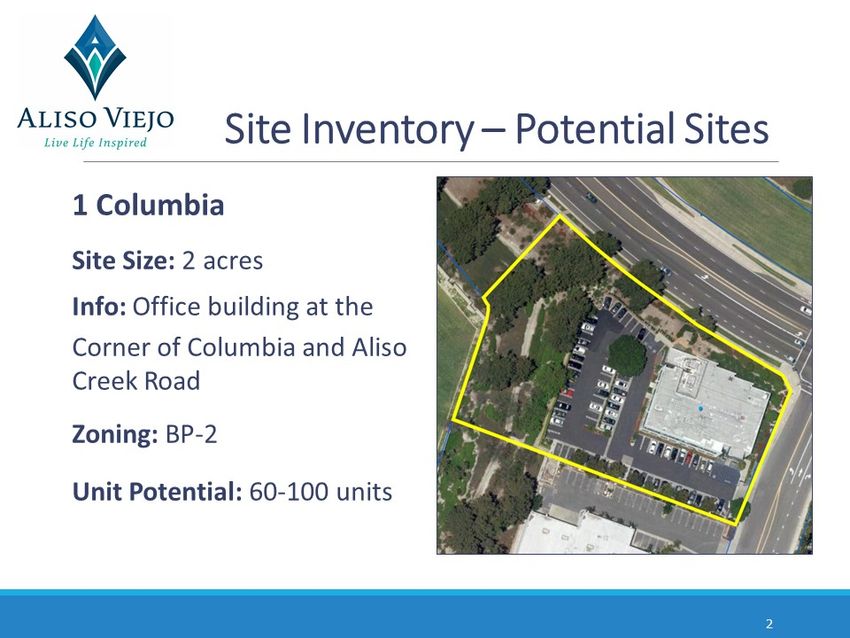
Policy H-1.5   Encourage development of mixed-use neighborhoods that incorporate
                all levels of housing with commercial and business park development in
                existing and future developments.
 Policy H-1.6   Encourage the use of grant funds to purchase available residential units
                in order to increase the supply of rental and ownership units that are
                affordable to low- and moderate-income households.

HOUSING AND NEIGHBORHOOD PRESERVATION
Housing and neighborhood preservation addresses two important issues: 1) improving the
condition of Aliso Viejo’s residential stock and neighborhoods; and 2) maintaining the
supply of affordable housing. The first aspect of housing and neighborhood preservation
is to provide a safe and aesthetically pleasing living environment. Improving the character
of Aliso Viejo’s neighborhoods also influences property values and overall quality of life.
The other aspect of housing and neighborhood preservation is ensuring that access to
affordable housing opportunities for lower-income households is provided throughout the
community.

                Goal H-2    Create safe and aesthetically pleasing neighborhoods, and
                            provide adequate housing to meet the needs of all household
                            types and income groups.
 Policy H-2.1   As the City matures, maintain the quality of the housing stock through
                code enforcement as well as appropriate coordination with homeowner
                associations with regards to on-street parking, landscape maintenance,
                and water quality.

 Policy H-2.2   Promote increased awareness of the importance of property
                maintenance to long-term housing quality and property values, and
                encourage community and neighborhood involvement in neighborhood
                preservation through public information and awareness, the Aliso Viejo
                Community Association (AVCA), City newsletters, e-news, cable
                television, and informational brochures at the public counter at City Hall.

 Policy H-2.3   Work to preserve the affordability of publicly assisted and privately-
                financed housing units and to discourage their conversion to market-rate
                housing by requiring condominium conversions to provide very-low-
                and low-income units, with a focus on units that currently are or were
                previously affordable units that may have expired or are at risk of
                expiring.

                                ALISO VIEJO GENERAL PLAN
                                           H-7
EQUAL ACCESS TO HOUSING
Special circumstances may impede some persons and households from finding decent,
affordable housing. The City has a responsibility to ensure that all persons have access to
housing, regardless of race, religion, gender, familial status, marital status, national origin,
color, age, disability, or source of income. To ensure that all groups have equal access to
housing, the City should ensure the continuation of unimpeded access to a full range of
housing opportunities.

                 Goal H-3     Ensure that all persons and household types have equal
                              access to housing.
 Policy H-3.1    Identify and participate in programs and provide incentives through
                 density bonuses and rezoning to encourage residential projects that
                 include housing for seniors, low- and moderate-income groups, or
                 special needs groups.

 Policy H-3.2    Encourage the provision of housing and services for special needs groups,
                 such as the homeless, the disabled, and victims of domestic violence by
                 providing City grants to agencies providing services to persons in these
                 groups.

 Policy H-3.3    Collaborate with developers, landlords, home-seekers, tenants, real
                 estate and lender groups, and other private for-profit and non-profit
                 agencies to ensure that individuals and families seeking housing in Aliso
                 Viejo are not discriminated against.

 Policy H-3.4    Maintain a variety of housing types that complement the employment
                 opportunities within the community and encourage a jobs/housing
                 balance, provided that the City’s long-range fiscal land use objectives are
                 met.

                                  ALISO VIEJO GENERAL PLAN
                                             H-8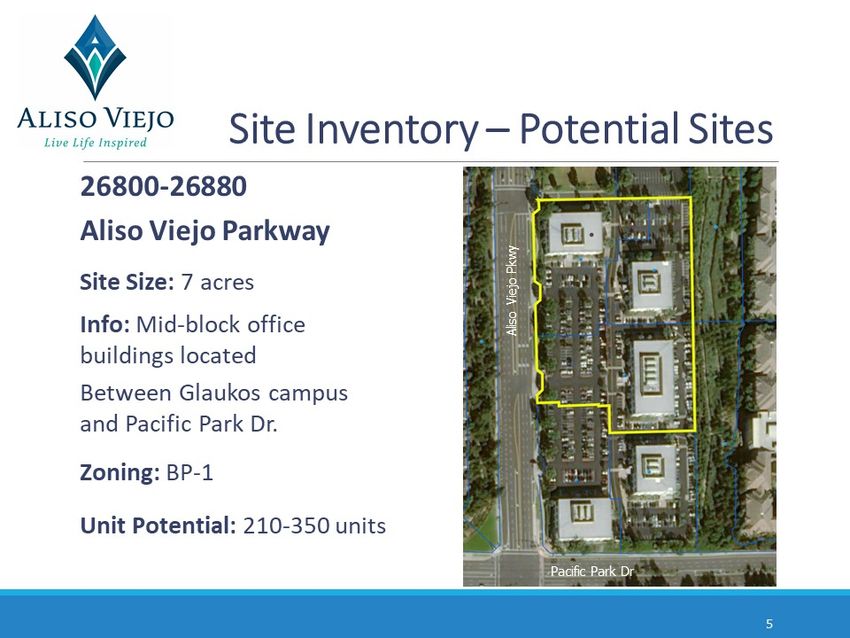
HOUSING PROGRAMS
This Housing Plan identifies specific action programs the City will implement to further its
housing goals and policies during the 2021-2029 planning period. The programs, arranged
under four headings and presented in numerical order, are designed to accomplish the
following:
Identify adequate sites to maintain a variety of housing opportunities;
Conserve and improve the existing housing stock;
Facilitate the development and maintenance of affordable housing;
Address and remove unnecessary governmental constraints; and
Ensure equal housing opportunity.
HOUSING POLICY MAP
The Housing Policy Map (Figure H-1) depicts the locations having potential for future
housing development during this planning period (see also Appendix C and Housing
Program 1, Adequate Sites for Affordable Housing.
VARIETY OF HOUSING OPPORTUNITIES
1. Adequate Sites for New Housing
Aliso Viejo’s share of the region’s new housing need for the 2021-2029 planning
period as established by the Southern California Association of Governments
(SCAG) in the Regional Housing Needs Assessment (RHNA) is 1,195 units. Of
these, 390 units are designated for very-low-income households, 214 are for
low-income households, 205 are for moderate-income households, and 386 are
for above-moderate-income households.
State law requires cities to identify adequate sites with appropriate zoning to
accommodate the additional housing need for the planning period. In
compliance with the requirements of state law, the City will carry out the actions
described below in order to identify and rezone adequate sites commensurate
with its housing need during the planning period.
ALISO VIEJO GENERAL PLAN
H-9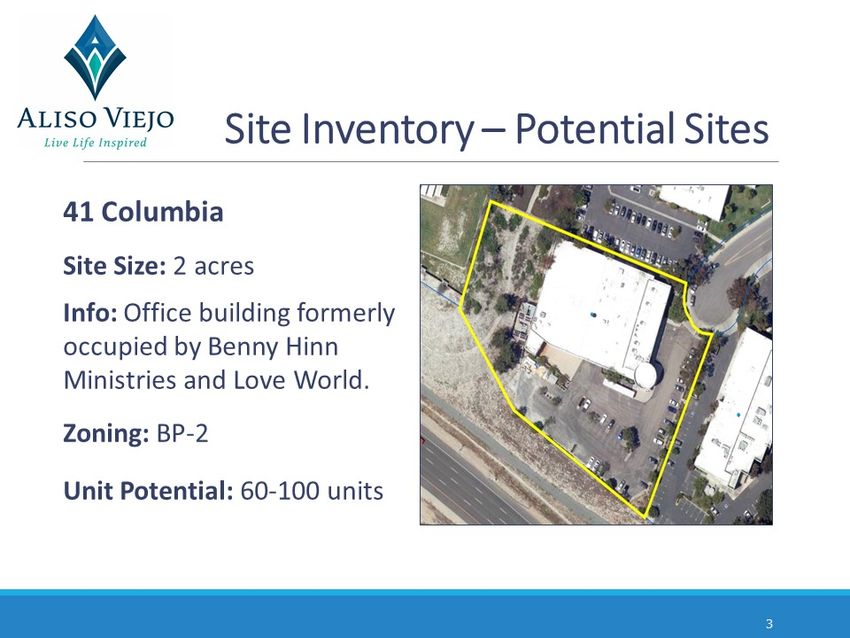
ALISO VIEJO GENERAL PLAN
H-10 Within the first three years of the planning period, the City will process
amendments to the General Plan and zoning regulations to
accommodate 100% of the shortfall of potential lower-income housing
units to accommodate the RHNA allocation as identified in Table CP-
25. Sites to be rezoned shall be selected from the candidate sites listed in
Table CP-26 and shall comply with the provisions of Government Code
§65583.2.h and §65583.2.i.
City staff will provide assistance to applicants for housing developments
on sites to be rezoned during the review process.
The City will facilitate affordable multi-family development on these
sites by supporting funding applications, allocating funds from the
Affordable Housing Trust Fund, and/or approving modifications to
development standards.
The City will report annually to the California Department of Housing
and Community Development on its progress in implementing this
program.
The City will monitor project approvals and comply with the no net loss
requirements of Government Code Sec. 65863.
Responsible Agency: Planning Department
Funding Source: General Fund
2. Facilitate the Provision of Affordable Housing
State Density Bonus law (Government Code Sec. 65915 et seq.) establishes
incentives to encourage the provision of affordable housing, and Chapter 15.58
of the Zoning Code provides local regulations and procedures to implement
State requirements. AB 2345 (2019) amended State law to revise density bonus
incentives that are available for affordable housing developments. The City will
process a Code amendment concurrent with adoption of the Housing Element
to update the City’s density bonus regulations in conformance with current State
law.
The City has also established an affordable housing fund to assist in the provision
of affordable housing. To date, the City has collected approximately $2.5
million in affordable housing in-lieu funds. The majority of the existing funds are
from the Canyon Point condo conversion. The remaining balance is from a 12-
unit CBO project, Ventana Ridge, as well as a small percentage from the
Glenwood and Vantis CBO projects. In 2016, the City provided a loan of $2.25
million for the construction of 198 affordable units at 100 Freedom Lane, 50 of
which are at or below 50% AMI and 148 units are at or below 60% AMI.
ALISO VIEJO GENERAL PLAN
H-11The priority for the use of in-lieu funds will be to assist the provision of
extremely-low- and very-low-income rental housing, which may include
purchasing affordability covenants on existing rental units and/or providing
incentives to non-profit developers of rental housing. These funds may also be
utilized to retain affordable status on units that may require City intervention
and the associated administrative costs.
In 2021, the City allocated $154,650 of affordable housing in-lieu funds to
purchase a condominium unit, which is leased to a non-profit organization for
use as transitional housing.
Responsible Agency: Planning Department
Funding Source: In-Lieu Housing Fund
3. Homeownership Assistance Programs
The City recognizes the importance of providing homeownership opportunities
for lower- and moderate-income households. The City will continue to monitor
the availability of homeownership programs that are supported by other
agencies and make this information available to prospective homeowners in
Aliso Viejo. Such programs may include the Mortgage Credit Certificates,
California Housing Finance Agency, mortgage revenue bonds, CDBG, and
HOME.
The City will investigate the feasibility of developing its own homeownership
assistance program with the use of CDBG funds (see Program 2).
Timeframe: Annual updates to information posted on the City
website
Responsible Agency: Planning Department
Funding Source: General Fund; homebuyer assistance programs
Program Objective: Provide home buyer assistance information to potential
homeowners in Aliso Viejo.
4. Section 8 Housing Choice Vouchers
The Section 8 Housing Choice Vouchers program extends rental subsidies to
very-low-income households and seniors who spend more than 30 percent of
their income on rent. The amount of subsidy is equal to the difference between
the excess of 30 percent of monthly income and actual rent. The program is
administered by the Orange County Housing Authority (OCHA). The City will
provide information regarding the Section 8 program on the City website and
other locations in the City.
ALISO VIEJO GENERAL PLAN
H-12Timeframe: Throughout the planning period
Responsible Agency: Orange County Housing Authority
Funding Source: HUD Section 8 funds
Program Objective: The City will continue to promote the use of Section 8
Housing Choice Vouchers in Aliso Viejo with the
objective of expanding assistance to very-low-income
households. Specifically, the City will make referrals to
OCHA, advertise the program on the City website and
in newsletters, and distribute information at the public
counter at City Hall.
5. OCHA Special Needs Groups Rental Assistance Program
In addition to the Section 8 Housing Choice Vouchers program, the Orange
County Housing Authority (OCHA) administers rental assistance programs
targeting special needs groups, including families whose children are at risk of
being placed in out-of-home care, persons with disabilities, the homeless, and
seniors. These programs include:
Family Unification: This program provides Section 8 assistance to
families whose children are at risk of being placed in out-of-home care
or delayed in returning from care because of the families’ inadequate
housing.
Aftercare for Disabled: This program provides Section 8 assistance
specifically for disabled applicants.
Shelter Plus Care: This program provides Section 8 assistance to homeless
persons with disabilities.
HOPE IV - Elderly Independence: This program provides Section 8
assistance to frail seniors.
The City will continue to promote these assistance programs on the City website
and other locations.
Responsible Agency: Planning Department
Timeframe: Throughout the planning period
Funding Source: General Fund
Program Objective: Continue to assist OCHA in promoting its Special Needs
Groups Rental Assistance Programs in Aliso Viejo with
the objective of expanding assistance to additional
households with special needs. Specifically, the City will
make referrals to OCHA, advertise the program on City
website and newsletters, and distribute information at
the public counter at City Hall.
ALISO VIEJO GENERAL PLAN
H-136. City Grants for Special Needs Groups
The City currently provides local community assistance grants for human and
social service groups, including domestic violence shelters and homelessness
prevention. Since 2005, the City has provided approximately $34,000 in grants
to Laura’s House, a State-approved comprehensive domestic violence agency
serving residents in southern Orange County. Their target population is battered
women and children who are coping with the effects of domestic violence,
needing emergency shelter, support, education and counseling. The City has also
provided over $83,000 in community assistance grants to South County
Outreach (SCO). SCO provides services that include food and rental and utility
bill financial assistance to Aliso Viejo individuals and families consisting of
seniors, youth, children, the disabled, unemployed and those in crisis.
In addition, the City provides non-competitive grants to after-school and senior
programs. Since 2003, the City has provided Age Well Senior Services (formerly
South County Senior Services), which provides adult day care for older adults
with multiple chronic illnesses, with approximately $188,000 in grant funding.
On an annual basis, the City solicits community assistance grant applications
from a variety of local non-profit service based organizations and the allocation
of funding fluctuates depending on City budgetary constraints.
Timeframe: Throughout the planning period
Responsible Agency: Community Services Department
Funding Source: General Fund
Program Objective: The City will allocate 50% of its Human and Social
Services community assistance grant budget to
incorporate homelessness prevention programs,
programs for the disabled, and domestic violence
support programs into the annual cycle of grant
funding.
HOUSING AND NEIGHBORHOOD PRESERVATION
7. Code Enforcement
The Code Enforcement Program is operated through the City’s Building
Department. Code Enforcement staff responds to complaints related to
substandard housing, property maintenance, overgrown vegetation, trash and
debris, improper occupancy, and other nuisance and zoning complaints. In
addition, the City will continue to implement and enforce the most recent
provisions of the California Building Code.
ALISO VIEJO GENERAL PLAN
H-14Timeframe: Throughout the planning period
Responsible Agency: Building Department, Code Enforcement Division
Funding Source: General Fund
Program Objective: The City’s Code Enforcement Staff will continue to
enforce property maintenance standards and adopted
City Building and Zoning codes. The City will promote
the importance of property maintenance to long-term
housing quality and property values, and encourage
community and neighborhood involvement in
neighborhood preservation through the Aliso Viejo
Community Association (AVCA), City newsletters, e-
news, cable television, and informational brochures at
the public counter at City Hall. As opportunities
become available, the City will consider directing
resources to assist home rehabilitation.
8. Conservation of Existing and Future Affordable Units
Aliso Viejo has several multi-family housing projects with units affordable to
households earning lower incomes. None of these is at risk of converting to
market-rate housing during this Housing Element period. Should there be a
change in the status of these housing projects, the City will monitor the deed
restrictions or affordability covenants of affordable housing and pursue options
to preserve the affordable housing units.
Timeframe: Throughout the planning period
Responsible Agency: Planning Department
Funding Source: General Fund
Program Objective: Annually, the City will monitor the status, notify
residents of potential conversion to market rate
housing, and pursue options to preserve the units.
REDUCE GOVERNMENTAL CONSTRAINTS TO HOUSING
9. Streamlined Residential Permit Processing
In order to facilitate affordable housing development, the City will offer
streamlined priority processing for applications that include affordable units.
Assistance will include pre-filing meetings to clarify application requirements,
ALISO VIEJO GENERAL PLAN
H-15expedited review of application materials, and administrative assistance with
grant funding applications.
Timeframe: Throughout the planning period
Responsible Agency: Planning Department
Funding Source: General Fund
Program Objective: Minimize permit processing time to reduce
development costs for affordable housing.
10. Transitional/Supportive Housing, Emergency Shelters and Low Barrier
Navigation Centers
Transitional housing, supportive housing, emergency shelters and low barrier
navigation centers help to address the needs of persons who are homeless or at
risk of becoming homeless.
Emergency shelters provide short-term aid to persons who are homeless and
involve limited supplemental services. Transitional and supportive housing, in
contrast, is directed at removing the basis for homelessness. Transitional and
supportive housing is provided for an extended period of time and may be
combined with other supportive services to assist in the transition from
homelessness to self-sufficiency.
AB 2162 (2018) amended State law to require that supportive housing be a use
by-right in zones where multi-family and mixed uses are permitted, including
non-residential zones permitting multi-family uses if the proposed housing
development meets specified criteria. AB 101 (2019) added the requirement that
low barrier navigation centers meeting specified standards be allowed by-right
in areas zoned for mixed use and in non-residential zones permitting multi-
family uses pursuant to Government Code Sec. 65660 et seq. The City is
currently processing a Code amendment to allow supportive housing and low
barrier navigation centers consistent with State law.
Timeframe: Code amendments in 2021
Responsible Agency: Planning Department
Funding Source: General Fund
Program Objective: Encourage the provision of transitional/supportive
housing, emergency shelters and low barrier navigation
centers consistent with state law.
ALISO VIEJO GENERAL PLAN
H-16EQUAL ACCESS TO HOUSING
11. Affirmatively Furthering Fair Housing
The City contracts with the Fair Housing Foundation (FHF) to provide fair
housing services. FHF services are directed to promote housing opportunities for
all persons regardless of race, religion, sex, family size, marital status, ancestry,
national origin, color, or disability.
Municipal Code Chapter 15.66 establishes procedures to ensure reasonable
accommodation in housing for persons with disabilities. The City will continue
to offer reasonable accommodation in conformance with fair housing law.
Aliso Viejo was also a participating jurisdiction in the preparation of the Orange
County Analysis of Impediments to Fair Housing Choice (AI). Regional goals and
strategies to address fair housing are described in the AI Executive Summary
(pages 6-7). In addition to the region-wide goals and strategies, the following
specific goals have been established for Aliso Viejo:
1. In collaboration with the Orange County Housing Authority (OCHA):
a. Attend quarterly OCHA Housing Advisory Committee to enhance
the exchange of information regarding the availability, procedures,
and policies related to the Housing Assistance Voucher program and
regional housing issues.
b. Support OCHA's affirmative fair marketing plan and de-
concentration policies by providing five-year and annual PHA plan
certifications.
c. In coordination with OCHA and fair housing services provider,
conduct landlord education campaign to educate property owners
about State law prohibiting discrimination based on household
income.
2. Through the City's fair housing contractor:
a. Provide fair housing education and information to apartment
managers and homeowner associations on why denial of reasonable
modifications/accommodations is unlawful.
b. Conduct multi-faceted fair housing outreach to tenants, landlords,
property owners, realtors, and property management companies.
Methods of outreach may include workshops, informational booths,
presentations to community groups, and distribution of multi-lingual
fair housing literature.
ALISO VIEJO GENERAL PLAN
H-17Timeframe: Throughout the planning period
Responsible Agency: Planning Department
Funding Source: County Housing Funds
Program Objectives: Continue to support fair housing services in Aliso Viejo
by advertising fair housing services on the City website
and at the public counter at City Hall, library, post
office, and other community locations.
Continue to implement administrative procedures set
forth in Municipal Code Chapter 15.66 to ensure
reasonable accommodation in housing for persons with
disabilities.
Continue to implement actions to affirmatively further
fair housing as described in the 2020-2024 Orange
County Analysis of Impediments to Fair Housing
Choice.
ENERGY CONSERVATION
12. Encourage Energy Conservation
The Zoning Code includes a Green Building Program that offers incentives such
as expedited processing and/or fee waivers when project proponents agree to
incorporate environmentally sensitive sustainable and energy efficient
construction techniques into their projects. Expedited permit processing is
provided for all building permits for solar voltaic, solar thermal systems,
tankless water heaters, windows and/or doors containing glass, high-efficiency
heating, ventilation, and air conditioning (HVAC) systems. Furthermore, the
Solar Energy Education Program complements the Green Building Program by
encouraging use of passive solar systems in new and rehabilitated residential
construction to improve energy efficiency of housing units. Daytime interior
lighting costs can be significantly reduced or eliminated with the use of
properly designed and located skylights, which can be easily installed at
reasonable expense in existing houses, thereby substantially reducing electricity
costs and energy consumption. Solar energy is a practical, cost effective, and
environmentally sound way to heat and cool a home. Other opportunities for
energy conservation in Aliso Viejo include continued implementation of State
Title 24 building construction standards, complying with Energy Star
conservation standards, and considering appropriate building orientation and
landscaping during the development/design review process through
implementation of the Zoning Ordinance.
ALISO VIEJO GENERAL PLAN
H-18Timeframe: Throughout the planning period
Responsible Agency: Planning Department
Funding Source: General Fund
Program Objective: Encourage energy conservation.
QUANTIFIED HOUSING OBJECTIVES
The City’s objectives for new housing construction, rehabilitation, and conservation for
the 2021-2029 planning period are summarized in Table H-1.
Table H-1
Quantified Objectives – 2021-2029
Income Category
Extremely
Program Category Low Very Low Low Mod Upper Totals
New Construction 195 195 214 205 386 1,195
Rehabilitation
Conservation 528 528
ALISO VIEJO GENERAL PLAN
H-19C OMMUNITY P ROFILE
APPENDIX C:
COMMUNITY PROFILE
Contents
Introduction ............................................................................................................. 1
Demographic and Housing Analysis ...................................................................................... 1
Population Characteristics ..................................................................................................... 1
Age Characteristics ............................................................................................................... 2
Occupation and Labor Participation .................................................................................... 2
Household Characteristics .................................................................................................... 3
Overcrowding ..................................................................................................................... 4
Household Income and Overpayment ................................................................................. 5
Special Needs Populations ................................................................................................... 7
Housing Stock .................................................................................................................... 15
Housing Age and Condition ............................................................................................... 16
Housing Tenure and Vacancy ............................................................................................. 16
Housing Costs and Affordability ......................................................................................... 18
At Risk Rental Housing ...................................................................................................... 20
Affirmatively Furthering Fair Housing ................................................................................. 21
Resources and Opportunities .................................................................................... 28
New Housing Needs.......................................................................................................... 28
Residential Sites Inventory ................................................................................................. 28
Financial Resources ............................................................................................................ 29
Opportunities for Energy Conservation .............................................................................. 31
Constraints Analysis ................................................................................................. 32
Market Constraints ............................................................................................................ 32
Governmental Constraints ................................................................................................. 33
Environmental, Infrastructure, and Public Service Constraints ............................................. 43
Evaluation of the Prior Housing Element ................................................................... 47
ALISO VIEJO GENERAL PLAN
CP-iC OMMUNITY P ROFILE
List of Tables
Table CP-1 Population Trends: Aliso Viejo and SCAG Region ....................................................... 1
Table CP-2 Age Characteristics .................................................................................................... 2
Table CP-3 Employment by Industry........................................................................................... 3
Table CP-4 Employment by Occupation – Aliso Viejo and SCAG Region .................................... 3
Table CP-5 Household Size by Tenure ........................................................................................ 4
Table CP-6 Overcrowding by Tenure: Aliso Viejo and SCAG Region........................................... 5
Table CP-7 Overpayment by Income Category ........................................................................... 6
Table CP-8 Extremely-Low-Income Households .......................................................................... 7
Table CP-9 Elderly Households by Income and Tenure ............................................................... 8
Table CP-10 Disabilities by Type – Aliso Viejo ............................................................................. 9
Table CP-11 Disabilities by Type for Seniors - Aliso Viejo and SCAG Region ................................ 10
Table CP-12 Developmental Disabilities – Aliso Viejo .................................................................. 11
Table CP-13 Female-Headed Households ................................................................................... 13
Table CP-14 Nearby Homeless Shelters....................................................................................... 15
Table CP-15 Housing Stock – Aliso Viejo and SCAG Region........................................................ 15
Table CP-16 Housing Units by Year Built – Aliso Viejo and SCAG Region ................................... 16
Table CP-17 Housing Tenure: Aliso Viejo and SCAG Region ....................................................... 17
Table CP-18 Housing Tenure by Age Group ............................................................................... 17
Table CP-19 Vacant Units by Type ............................................................................................. 18
Table CP-20 Affordable Housing Costs – Orange County ........................................................... 19
Table CP-21 Median Sales Price for Existing Homes: Aliso Viejo and SCAG Region .................... 19
Table CP-22 Spending on Rent ................................................................................................. 20
Table CP-23 Inventory of Assisted Rental Housing ..................................................................... 21
Table CP-24 Regional Housing Needs 2021-2029 – Aliso Viejo ................................................. 28
Table CP-25 Residential Land Inventory ................................................................................... 30
Table CP-26 Candidate Parcels for Rezoning ............................................................................. 30
Table CP-27 Residential Development Standards ...................................................................... 35
Table CP-28 Parking Requirements by Use ................................................................................ 36
Table CP-29 Permitted Residential Land Uses by District ........................................................... 38
Table CP-30 Planning and Development Fees ........................................................................... 40
Table CP-31 Road Improvement Standards ................................................................................ 41
Table CP-32 Progress in Achieving Quantified Objectives 2013-2021......................................... 47
Table CP-33 2013-2021 Housing Element Program Evaluation .................................................. 48
ALISO VIEJO GENERAL PLAN
CP-iiC OMMUNITY P ROFILE
INTRODUCTION
The City strives to achieve a balanced housing stock that meets the varied needs of all
income segments of the community. To accomplish this goal, a comprehensive assessment
of community housing needs, obstacles to future housing opportunity, and an assessment
of available resources must be undertaken.
DEMOGRAPHIC AND HOUSING ANALYSIS
Factors such as age, cultural preferences, household size, occupation, and income combine
to influence the types of housing needed and the ability to afford housing. These
demographic characteristics, balanced with an analysis of existing housing stock conditions,
help determine a community’s housing needs.
The statistics included here are from recent data from the U.S. Census, the California
Department of Finance (DOF), the California Employment Development Department
(EDD), the Southern California Association of Governments (SCAG), and other relevant
sources.
POPULATION CHARACTERISTICS
Aliso Viejo’s population in 2020 was approximately 50,044. As the City has approached
full development population growth has slowed, with an increase of only about 550
persons during the 5-year period from 2015 to 2020 (Table CP-1).
Table CP-1
Population Trends: Aliso Viejo and SCAG Region
ALISO VIEJO GENERAL PLAN
CP-1C OMMUNITY P ROFILE
AGE CHARACTERISTICS
A community’s housing needs are affected by the age characteristics of residents. Typically,
each age group has distinct lifestyles, family type and size, incomes, and housing
preferences. As people move through each stage of life, housing needs and preferences
change.
The share of Aliso Viejo’s population under 18 years of age is 24.6%, which is slightly
higher than the regional share of 23.4%. Aliso Viejo's seniors (65 and above) make up
about 8.3% of the population, which is substantially lower than the regional share of 13%
(Table CP-2).
Table CP-2
Age Characteristics
OCCUPATION AND LABOR PARTICIPATION
Employment has an important impact on housing needs. Different jobs and income levels
affect the type and size of housing a household can afford. In addition, employment
growth within a region typically results in an increase in housing demand.
According to recent Census data, Aliso Viejo has 28,899 workers living within its borders
who work across 13 major industrial sectors (Table CP-3). The most prevalent industry is
Education & Social Services with 5,407 employees (18.7% of total) and the second most
prevalent industry is Professional Services with 4,971 employees (17.2% of total).
The most prevalent occupational category in Aliso Viejo is Management, in which 15,763
(54.5% of total) employees work. The second-most prevalent type of work is in Sales,
which employs 7,190 (24.9% of total) in Aliso Viejo (Table CP-4).
ALISO VIEJO GENERAL PLAN
CP-2C OMMUNITY P ROFILE
Table CP-3
Employment by Industry
Table CP-4
Employment by Occupation – Aliso Viejo and SCAG Region
HOUSEHOLD CHARACTERISTICS
A household is defined by the Census as all persons who occupy a housing unit, which may
consist of a family, a single person, or unrelated persons sharing a housing unit. Persons
residing in group quarters such as dormitories or retirement homes are not considered
households. A community’s household characteristics serve as an important indicator of
the type and size of housing needed.
ALISO VIEJO GENERAL PLAN
CP-3C OMMUNITY P ROFILE
Household size is an important indicator of housing need. The presence of families with
children, students, and elderly persons, among other groups, can have different effects on
the household size in a community.
Recent Census data reported that the most commonly occurring household size is two
persons (29.2%) while the second-most commonly occurring household size is one person
(24.2%). Aliso Viejo has a slightly higher share of single-person households than the SCAG
region overall (24.2% vs. 23.4%) and a much lower share of large households with 7+
persons than the SCAG region overall (0.6% vs. 3.1%). This suggests that the need for
smaller units is significantly greater than for large units, especially among renters (Table CP-
5).
Table CP-5
Household Size by Tenure
OVERCROWDING
The Census defines overcrowding as households with more than one person per room,
excluding kitchens, bathrooms, and porches. Overcrowding can result when a shortage of
larger units exists within a community or in cases where high housing costs force families
to take on additional roommates or choose smaller units. Overcrowding also tends to
accelerate deterioration of housing. Therefore, maintaining a reasonable level of
occupancy and alleviating overcrowding are important objectives.
ALISO VIEJO GENERAL PLAN
CP-4C OMMUNITY P ROFILE
Table CP-6
Overcrowding by Tenure: Aliso Viejo and SCAG Region
According to recent Census data, overcrowding in Aliso Viejo is much less prevalent than
for the County as a whole. Only about 1 percent of owner households and 6 percent of
renter households in Aliso Viejo were reported to be overcrowded compared to 6 percent
of owners and 22 percent of renters throughout the SCAG region (Table CP-6). Housing
Program 1, Adequate Sites for New Housing, will help to alleviate problems associated
with overcrowding by expanding housing opportunities in the City. Housing Program 2,
Facilitate the Provision of Affordable Housing, and Housing Program 3, Homeownership
Assistance Programs, can reduce the problem of overcrowding for large-renter households
by making it more feasible for these households to rent or purchase suitable homes. In
addition, Housing Program 4, Section 8 Housing Choice Vouchers, and Program 5, OCHA
Special Needs Groups Rental Assistance Program (Family Unification), can assist renter-
households experiencing overcrowding by making rental assistance available to facilitate
moving into larger units.
HOUSEHOLD INCOME AND OVERPAYMENT
Income is one of the most important factors affecting housing opportunities available to a
household, determining the ability to balance housing costs with other basic necessities.
While housing choices, such as tenure (owning versus renting) and location are mostly
income-dependent, household size and type also affect the proportion of income that can
be spent on housing.
“Overpayment” is defined as paying more than 30 percent of gross income for housing
expenses, including utilities. Overpayment is much more prevalent among lower-income
households, as shown in Table CP-7.
ALISO VIEJO GENERAL PLAN
CP-5C OMMUNITY P ROFILE
Table CP-7
Overpayment by Income Category
Extremely-Low-Income Households
Housing the extremely-low-income population (below 30% of area median income) can
be especially challenging. Table CP-8 provides a breakdown of extremely-low-income
households by race, ethnicity and tenure. The race/ethnicity with the highest share of
extremely-low-income households in Aliso Viejo is Black, non-Hispanic (22.4%
compared to 7.7% of total population). About 12 percent of renter households had
extremely-low incomes as compared to approximately 5 percent of owners.
ALISO VIEJO GENERAL PLAN
CP-6C OMMUNITY P ROFILE
Table CP-8
Extremely-Low-Income Households
SPECIAL NEEDS POPULATIONS
Certain groups have greater difficulty finding decent, affordable housing due to special
needs and/or circumstances. Special circumstances may be related to one’s employment
and income, family characteristics, disability, and household size, among others.
Consequently, certain segments of residents in Aliso Viejo may experience a higher
prevalence of housing cost burden, overcrowding, or other housing problems.
Under state law, “special needs” groups include senior households, persons with
disabilities, large households, single-parent households, homeless persons, and agricultural
workers. This section provides a discussion of the housing needs facing each of these
groups, as well as programs and services available to address housing or related needs.
Senior Households
Many senior households have special needs due to relatively low, fixed incomes, physical
disabilities or limitations, or dependency needs. Specifically, people aged 65 years and
older often have four main concerns:
Housing: Many seniors live alone and/or are renters.
Income: People aged 65 and over are usually retired and living on a fixed
income.
Health care: Seniors are more likely to have health issues or disabilities.
ALISO VIEJO GENERAL PLAN
CP-7C OMMUNITY P ROFILE
Transportation: Some of the elderly rely on public transportation. A significant
number of seniors with disabilities may require alternative transportation.
According to recent HUD data, about 20.5% of elderly households have incomes less than
30% of the surrounding area income (compared to 24.2% in the SCAG region) and 30.4%
have incomes below 50% of median income (compared to 30.9% in the SCAG region)
(Table CP-9).
Table CP-9
Elderly Households by Income and Tenure
There are four senior-living complexes in Aliso Viejo; The Covington located at 3 Pursuit,
Renaissance at the Wellington located at 24903 Moulton Parkway, Vintage Aliso (2C
Liberty), and Liberty at Aliso (100 Freedom). The Covington includes 180 units; 155 of
which are for independent living. The Wellington provides 233 units for senior residents;
approximately half of the units are designated for independent living and the other half
are for assisted living. The rental costs for both the independent and assisted living units at
the two facilities are above-moderate. Vintage Aliso provides 202 senior apartments while
Liberty at Aliso includes 200 senior apartments (two units at each complex are for
managers).
Various programs can address the special needs of seniors, including but not limited to
congregate care, supportive services, rental subsidies, shared housing, and housing
rehabilitation assistance. For the frail elderly, or those with disabilities, housing with
architectural design features that accommodate disabilities can help ensure continued
independent living. Seniors with mobility or self-care limitations also benefit from
transportation alternatives. Senior housing with supportive services can be provided for
those who require assistance with daily living.
Numerous programs and services assist Aliso Viejo seniors. Age Well Services is located in
neighboring Laguna Woods, and Advocates for Senior Choices is located in nearby Mission
Viejo. Age Well Services offers assistance to seniors with referrals for in-home help, personal
ALISO VIEJO GENERAL PLAN
CP-8C OMMUNITY P ROFILE
care or housekeeping, Medicare, medical information, assisted living care, physicians,
attorneys, and also a range of adult day services that include social and educational
activities, exercise, and special outing and events. For seniors that have mobility
restrictions, the Age Well Services Transportation program provides door-to-door driver-
assisted services Monday through Friday. Case managers also facilitate the Meals-on-
Wheels program that operates in south Orange County. The Meals-on-Wheels program
provides meals to individuals 60 years of age and older, who are living at home and unable
to prepare their own meals or go out to eat, and have little or no assistance to obtain
adequate meals. Age Well Services is licensed by the State of California Department of
Health Services.
The programs available in Aliso Viejo to assist seniors with special housing needs include
Housing Program 6, City Grants for Special Needs Groups, Housing Program 4, Section 8
Housing Vouchers, and Program 5, OCHA Special Needs Groups Rental Assistance
Program (Hope IV – Elderly Independence), which provide rental assistance to seniors.
Housing Program 11, Affirmatively Furthering Fair Housing, assures the City’s commitment
to support fair housing services for all residents.
Persons with Disabilities
Physical, mental, and/or development disabilities may prevent a person from working,
restrict mobility, or make it difficult to care for oneself. Disabilities often result in special
housing needs related to limited earning capacity, the lack of accessible and affordable
housing, and higher health costs. Some residents suffer from disabilities that require living
in a supportive or institutional setting. Recent disability statistics for Aliso Viejo residents
as reported by the Census Bureau are presented in Table CP-10 while disability data for
seniors are shown in Table CP-11.
Table CP-10
Disabilities by Type – Aliso Viejo
ALISO VIEJO GENERAL PLAN
CP-9C OMMUNITY P ROFILE
Table CP-11
Disabilities by Type for Seniors - Aliso Viejo and SCAG Region
Ambulatory and cognitive disabilities are the most prevalent types of disabilities for the
general population in Aliso Viejo. Among seniors, the most prevalent disability types are
ambulatory (14 percent) and independent living (12 percent).
Living arrangements for persons with disabilities depend on the severity of the disability.
Many live at home independently or with other family members. Strategies that can assist
those with disabilities include special housing design features, income support for those
who are unable to work, and in-home supportive services for persons with medical
conditions. Such services may be provided by either public or private agencies.
The City enforces the accessibility requirements contained in the California Building Code,
Other regulations that affect housing for persons with special needs are discussed in the
Governmental Constraints section of this report.
Developmental Disabilities
As defined by federal law, “developmental disability” means a severe, chronic disability of
an individual that:
Is attributable to a mental or physical impairment or combination of mental
and physical impairments;
Is manifested before the individual attains age 22;
Is likely to continue indefinitely;
Results in substantial functional limitations in three or more of the following
areas of major life activity: a) self-care; b) receptive and expressive language; c)
ALISO VIEJO GENERAL PLAN
CP-10C OMMUNITY P ROFILE
learning; d) mobility; e) self-direction; f) capacity for independent living; or g)
economic self-sufficiency;
Reflects the individual’s need for a combination and sequence of special,
interdisciplinary, or generic services, individualized supports, or other forms of
assistance that are of lifelong or extended duration and are individually planned
and coordinated.
The Census Bureau does not report developmental disabilities. According to the U.S.
Administration on Developmental Disabilities, an accepted estimate of the percentage of
the population that can be defined as developmentally disabled is 1.5 percent. Many
persons with developmental disabilities can live and work independently within a
conventional housing environment. Those with more severely disabilities may require a
group living environment where support is provided. The most severely affected
individuals may require an institutional environment where medical attention and physical
therapy are provided. Because developmental disabilities exist before adulthood, an
important issue in supportive housing for those with developmental disabilities is the
transition from the person’s living situation as a child to an appropriate level of
independence as an adult.
The California Department of Developmental Services (DDS) reported that approximately
726 persons in Aliso Viejo experienced some type of developmental disability (Table CP-
12).
Table CP-12
Developmental Disabilities – Aliso Viejo
The State Department of Developmental Services (DDS) provides community-based
services to persons with developmental disabilities and their families through a statewide
ALISO VIEJO GENERAL PLAN
CP-11You can also read


