Handling of Wastewater - A Technical Guidance for the MARITIME - Shipping
←
→
Page content transcription
If your browser does not render page correctly, please read the page content below

MARITIME

A Technical Guidance for the
Handling of Wastewater
in Ports of the Baltic Sea Special Area   Baltic Marine Environment
                                             Protection Commission
under MARPOL Annex IV

           Shipping                              December 2019

           helcom.fi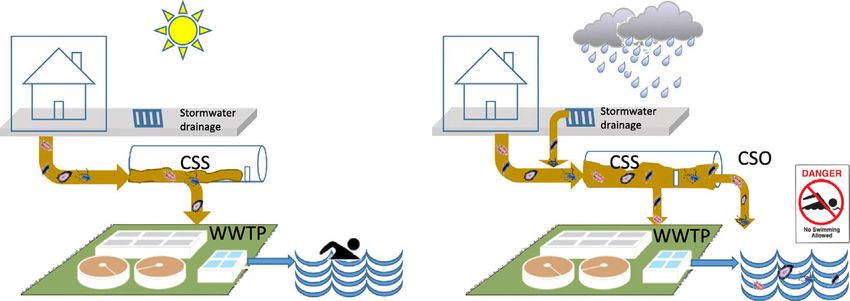
A Technical Guidance for the Handling of Wastewater in Ports
of the Baltic Sea Special Area under MARPOL Annex IV
Published by:
Helsinki Commission – H ELCOM
Katajanokanlaituri 6 B
00160 Helsinki, Finland
www.helcom.fi
This report was developed by the Development and Assessment Institute in Waste
Water Technology at RWTH Aachen University (PIA) on behalf of the Federal Maritime
and Hydrographic Agency of Germany (BSH) and in collaboration with the German
Federal Ministry of Transport and Digital Infrastructure (BMVI).
For bibliographic purposes this document should be cited as:
“A Technical Guidance for the handling of wastewater in Ports of the Baltic Sea
Special Area under MARPOL Annex IV”
© 2019 Baltic Marine Environment Protection Commission
(Helsinki Commission – HELCOM)
All rights reserved. Information included in this publication or extracts thereof, with
the exception of images and graphic elements that are not HELCOM’s own and
identified as such, may be reproduced without prior consent on the condition that
the complete reference of the publication is given as stated above.
Authors: Thomas Nellesen, Dr. Katja Broeg, Dr. Elmar Dorgeloh, Markus Joswig,
Dr. Susanne Heitmüller
Contributors: Anna Bobo Remijn, Axel Borchmann, Jan von Häfen, Octavio Marin
Layout: Dominik Littfass
Special thanks to the HELCOM MARITIME Working Group and the HELCOM PRF
Platform for their valuable input and guidance.
2
Executive Summary                                                                         A Technical Guidance for the Handling of Wastewater in Ports
                                                                                                 of the Baltic Sea Special Area under MARPOL Annex IV

Executive summary
           The Baltic Sea, the biggest brackish sea     alternatively at sea but only after treatment with
           worldwide, is a highly sensitive sea area    advanced on-board sewage treatment plants ca-
           and faces increasing maritime traffic        pable of reducing the nutrient input into the sea
at the same time. Connected with the Atlantic           according to Resolution MEPC.227(64), which
Ocean only via the Kattegat, a shallow strait, com-     stipulates a reduction of 70% nitrogen and 80%
plete water exchange in the Baltic takes around         phosphorus levels.
30 years. As a consequence, the constant input of          Passenger ships not equipped with an on-
hazardous substances and nutrients like nitrogen        board sewage treatment facility according to the
and phosphorus causes accumulation over time.           specifications will have to discharge the sewage
    Eutrophication caused by the extensive input        (black water) in a PRF.
of nutrients leads to excessive algae growth and           The lack of experience with sewage handling in
oxygen depletion. Although the amount of total          ports requires the development of new and inno-
nutrient input is decreasing, values are still too      vative approaches to manage these new challeng-
high to effectively combat eutrophication.              es. To support this process, this study document
    The HELCOM Baltic Sea Action Plan (BSAP) is         provides a “Technical Guidance” for the handling
an ambitious program to restore the ecological          of wastewater in ports. Data from Baltic Sea ports
status of the Baltic marine environment by 2021.        and shipping companies on the composition and
It includes measures to reduce the input of nutri-      handling of sewage from passenger ships have
ents from various sources. With respect to mari-        been collected and evaluated. On the basis of this
time activities the BSAP has been a great success.      data and the results from our own studies, this
In 2011, the International Maritime Organization        paper offers recommendations to port operators
(IMO) designated the Baltic Sea a Special Area for      and shipping companies, including
sewage discharges from passenger ships under            — information on how to avoid potential prob-
Annex IV of the MARPOL-Convention. The propos-              lems with the acceptance of the wastewater,
al was submitted to IMO by the Baltic Sea riparian      — and options for pre-treatment in ports and
States, prepared and supported by the HELCOM                mobile solutions.
Maritime Working Group as a result of a long pro-
cess of negotiations and a common effort of all
Contracting Parties to the Helsinki Convention.
    The final decision was reached in April 2016 by
the IMO Marine Environment Protection Commit-
tee (MEPC). The new regulations will take effect
for all passenger ships on 1 June 2021 while new
passenger ships built on or after 1 June 2019 will
have to comply from that date on. For direct pas-
sages between St. Petersburg and the North Sea
there is an exemption until 1 June 2023.
    When the Special Area regulations come into
force, passenger ships which carry more than
12 passengers1 will be limited to either discharg-
ing sewage into Port Reception Facilities (PRF), or

1 Note that MARPOL Annex IV only applies to ships
engaged in international voyage of 400 gross tonnages
(GT) and above, or certified for more than 15 persons
(including crew and passengers).

                                                                                                                                                         3
List of Abbreviations                                                                     A Technical Guidance for the Handling of Wastewater in Ports
                                                                                                 of the Baltic Sea Special Area under MARPOL Annex IV

List of Abbreviations
ANF 		                  Advanced Notification Form
AWN 		                  Advanced Waste Notification
AOX 		                  Adsorbable Organic Halides
ASCI 		                 Alaska Cruise Ship Initiative
BW 		                   Black water
BODn 		                 Biological oxygen demand in n days
BSAP 		                 Baltic Sea Action Plan
CLIA 		                 Cruising Lines International Association
COD 		                  Chemical oxygen demand
CSO 		                  Combined sewer overflow
CSS 		                  Combined sewer system
EPA 		                  Environmental Protection Agency
FOG 		                  Fat, oil and grease
GW 		                   Grey water
HELCOM 		               Baltic Marine Environment Protection Commission - Helsinki Commission
H2S 		                  Hydrogen sulfide
IMO 		                  International Maritime Organization
MARPOL 		               International Convention for the Prevention of Pollution from Ships
MWTP 		                 Municipal Wastewater Treatment Plant
NH4-N 		                Ammonia-Nitrogen
NO2-N 		                Nitrite-Nitrogen
NO3-N 		                Nitrate-Nitrogen
NSF 		                  No Special Fee
Ntot 		                 Total Nitrogen
p.e. 		                 Population equivalent
PRF 		                  Port Reception Facilities
Ptot 		                 Total Phosphorus
SOB 		                  Sulfur-oxidizing bacteria
SRB 		                  Sulfur-reducing bacteria
STP 		                  Sewage Treatment Plant
TA 		                   Type Approval
TKN 		                  Total Kjeldahl Nitrogen
TOC 		                  Total Organic Carbon
TSS 		                  Total Suspended Solids
Qd 		                   Dilution (Qd) = (Qi)/ (Qe)
Qe 		                   Effluent (Qe)
Qi 		                   Influent (Qi)

                                                                                                                                                         4
List of tables and figures                                                                A Technical Guidance for the Handling of Wastewater in Ports
                                                                                                 of the Baltic Sea Special Area under MARPOL Annex IV

Tables and figures
List of Figures                                      List of Tables
Figure 4-1: Average cruise ship size in the Baltic   Table 3-1: Effluent standards during type
Sea over the years                                   approval

Figure 4-2: Flow diagram of conventional             Table 4-1: Composition of black water (BW)
processes of a MWTP modified from MWTP
Lynetten                                             Table 4-2: Quantity of black water

Figure 4-3: Image of the different PRF types         Table 4-3: Common sources and characteristics
                                                     of grey water
Figure 5-1: Flow chart of wastewater discharge
in PRFs                                              Table 4-4: Grey water composition according to
                                                     EPA, ASCI and TUHH
Figure 5-2: Discharge time of each type of PRF
                                                     Table 4-5: Quantity of grey water
Figure 5-3: System used by UniTechnics to
control the H2S production in the Port of Kiel       Table 4-6: Wastewater requirements for the
                                                     discharge point
Figure 5-4: Distribution of sulfur in different pH
values                                               Table 5-1: Solutions for better discharge options
                                                     in ports
Figure 5-5: Effect on receiving waters when a CSO
event occurs                                         Table 5-2: Number of PRF providers to select
                                                     from (CLIA Exercise 2016)
Figure 5-6: Diurnal pattern of a wastewater
treatment plant                                      Table 5-3: Ammonia concentration in mixed
                                                     black- and grey water system influent
Figure 5-7: Diurnal pattern for Qi without and
with temporary storage                               Table 5-4: Parameters examined in the port

                                                     Table 5-5: Impact of different H2S concentration
                                                     on humans

                                                     Table 5-6: Compilation of prime parameters
                                                     pH-value, sulfide and temperature in comparison
                                                     with the limiting values to be complied with and
                                                     the demand for action

                                                     Table 5-7: Pollution loads of different waste
                                                     streams

                                                     Table 5-8: population equivalent of different ship
                                                     sizes with untreated black- and grey water

                                                     Table 5-9: Daily food waste stream on an average
                                                     cruise ship

                                                                                                                                                         5
Contents                                                          A Technical Guidance for the Handling of Wastewater in Ports
                                                                         of the Baltic Sea Special Area under MARPOL Annex IV

           Contents
           Executive summary				3
           List of Abbreviations 			4
           Tables and figures				5
           List of Figures				5
           List of Tables				5

           1. Introduction				7
              1.1. Background				7
              1.2. Material and Methods			 7

           2. Definitions				8

           3. Legal basis				9
              3.1. IMO MARPOL Annex IV			                    9
              3.2. Special Areas			 9
              3.3. MEPC Guidelines on implementation
              of effluent standards and performance tests
              for sewage treatment plants		 10
              3.4. EU Directive on Port Reception Facilities 11

           4. Background information			                     12
              4.1. Maritime traffic in the Baltic Sea 		    12
              4.2. Wastewater characteristics		             12
              4.3. Wastewater Treatment Systems (WTS)       14

           5. Challenges and options			     15
              5.1. General capacity issues		15
              5.2. Technical issues			 18
              5.3. Other issues				26

           6. Conclusions				27
              6.1. For ports				27
              6.2. For cruise ships			 27

           7. References				28

                                                                                                                                 6
1. Introduction A Technical Guidance for the Handling of Wastewater in Ports
of the Baltic Sea Special Area under MARPOL Annex IV
gards to sewage discharge in Annex IV. Sewage
has to be distinguished from grey water. Both
1. Introduction
are human waste streams that are generated by
vessels. Sewage specifically comes from toilets
and medical facilities and is also known as black
water. Grey water on the other hand consists of
drainage from showers, washbasins, laundry fa-
cilities and galleys. Both waste streams contain
nutrients and therefore contribute to eutrophica-
1.1. Background tion if discharged untreated into the sea. Howev-
er, given that these waste streams are often mixed
The Baltic Sea is one of the most densely traf- whilst at sea, it is necessary for them to be treated
ficked shipping areas of the world. Cargo, tanker, as ‘sewage’ together.
passenger and container ships are the most com- Passenger ships operating in the Special Area
mon ship types accounting for 80% of the traffic not equipped with an advanced on-board sewage
of International Maritime Organization (IMO) ves- treatment plant must store their sewage on board
sels in the Baltic Sea. Around 6% of these vessels and discharge it to a PRF. It is the duty of ports
are passenger ships. to guarantee that vessels can discharge sewage
Although the proportion of discharges from without undue delay and that the PRF meets the
ships is small, when compared to other sources, requirements of the passenger ships when the
wastewater discharges from ships contribute to Special Area is established. HELCOM has exten-
marine pollution in the Baltic Sea in general and sively promoted the reception of wastewater and
especially to the release of nutrients. Due to the other wastes in ports. However, there are still many
slow water exchange with the North Sea these nu- challenges that must be overcome. A lack of expe-
trients have accumulated over a long time period, rience with wastewater acceptance at present, es-
leading to the Baltic’s current eutrophication and pecially in the case of smaller ports in communities
oxygen deficiency issues. with limited infrastructure means that flexible and
In 2007, the Baltic Marine Environment Pro- sometimes innovative solutions will be required.
tection Commission - Helsinki Commission (HEL- This “Technical Guidance” sets out these prob-
COM) adopted the Baltic Sea Action Plan (BSAP), lems and presents possible solutions.
which aimed to restore the Baltic Sea ecosystem
to good health by 2021, including reducing sew-
age pollution from ships to a minimum.
With respect to maritime activities it was a great 1.2. Material and Methods
success. In 2011, IMO designated the Baltic Sea a
Special Area for sewage discharges from passen- The “Technical Guidance” has been developed
ger ships under MARPOL Annex IV. The proposal of based on the information from own surveys and
the Baltic Sea riparian States to IMO was prepared additional literature research.
and supported by the HELCOM Maritime Working PIA (“Prüfinsitut für Abwassertechnik”) has
Group as a result of a long process of negotiations developed a questionnaire for port authorities
and a common effort of all Contracting Parties. and municipal wastewater treatment plants in
In April 2016, a decision was reached by the order to determine the current state of PRFs and
IMO Marine Environment Protection Committee to identify problems linked to receiving sewage
(MEPC). The new regulations will take effect for from passenger ships (Questionnaire template in
all passenger ships on 1 June 2021 while new pas- Annex 8.5). The questionnaire served as a basis
senger ships built on or after 1 June 2019 will have for a summary of the problems currently faced
to comply from that date on. For direct passages when handling cruise ship generated wastewater.
between St. Petersburg and the North Sea there is Additionally, it has provided information of cur-
an exemption until 1 June 2023. rently available and planned PRF infrastructure.
When the Special Area regulations come into In addition to the questionnaire, a literature re-
force, passenger ships which carry more than 12 search was performed to help evaluate the results
passengers will be limited to either discharging and identify possible solutions for the acknowl-
sewage into Port Reception Facilities (PRF), or edged problems.
alternatively at sea but only after treatment with Also included is data from the HELCOM Over-
advanced on-board sewage treatment plants ca- view 2014 [3] and 2018 [38], the Cruise Baltic [2],
pable of reducing the nutrient input into the sea and the CLIA Exercise 2016 [33].
according to Resolution MEPC.227(64), which An exercise by the Cruise Lines International
stipulates a reduction of nitrogen and phospho- Association (CLIA) in 2016 reported that of the 30
rus levels by 70% and 80% respectively. ports visited by 29 cruise ships, 46% faced PRF
It should be noted that MEPC defined the related problems; due to various reasons. The is-
thresholds for phosphorus and nitrogen in re- sues were considered together with the problems
72. Definitions A Technical Guidance for the Handling of Wastewater in Ports
of the Baltic Sea Special Area under MARPOL Annex IV
mentioned in the PIA questionnaire in order to
provide a comprehensive overview, including the
perspective of the shipping industry. An effort was
made to distinguish between problems in/for the
port and problems for the ship. In addition, the
results of the survey were compared with those
of other studies on discharge and handling of
wastewater in ports, such as N. Butt 2007 [36] and
M. Wilewska-Bien et al., 2018 [37] to name a few.
The quality and volume of wastewater from
cruise ships have been investigated in order to
distinguish between black and grey water. Data
2. Definitions
was collected mainly from studies performed by
the US Environmental Protection Agency (EPA)
and the Alaska Cruise Ship Initiative (ASCI). Other
sources include reports authored by researchers
at the University of Technology Hamburg (TUHH),
cruise ship operators (E.g. TUIs and AIDAs Envi- The terminology concerning wastewater handling
ronmental Report) and manufacturers of ship and treatment is inconsistent in regards defini-
sewage treatment plants like Scanship. tions used in political directives, legal regulations
The US EPA provides data on the separate and technical standards. The definition for each
waste streams of grey water (e.g. accommoda- term can often be different depending on source.
tion, galley, laundry etc.). All information and data In ports where both maritime and on-land regu-
was summarized and used as a basis for calculat- lations can apply, a clear common understanding
ing the reasonable scale and size of PRFs. In addi- of the different terminologies is essential.
tion, the summarized data has been used to pro- The most significant difference is the meaning
vide recommendations to improve the treatment of “sewage”. In maritime regulations the term
and storage options whilst at sea and reduce “sewage” has a different meaning than the term
problems within ports. “wastewater” in on-land regulations which is
Furthermore, in order to estimate how much used synonymously for “sewage”. As per defini-
wastewater is produced it was necessary to gath- tion in MARPOL Annex IV sewage means
er information on cruise ships in the Baltic Sea
and the profile of an “average ship” determined — drainage and other wastes from any form of
from cruise ships traveling the Baltic. This average toilets and urinals
was then used as the basis for calculations in or- — drainage from medical premises (dispensary,
der to ascertain the projected capacity needed for sick bay, etc.) via wash basins, wash tubs and
PRFs to fulfill the requirements that have been set scuppers located in such premises
out (see Chapter 4.1). — drainage from spaces containing living ani-
However, this “Technical Guidance” does not mals; or
serve as a blueprint for planning a PRF. It is intend- — other wastewaters when mixed with the drain-
ed only to serve as a framework and must be adapt- ages defined above.
ed to port-specific infrastructure requirements.
If no other wastewater streams (e.g. grey water) are
mixed in, sewage mainly consists of black water. By
contrast the term “wastewater” (on-land used syn-
onymously for “sewage”) covers all water polluted
by the human life including all grey water streams
as per normative standard EN 16323.
The most relevant definitions contained in
maritime regulations, European directives and
normative standards are listed in Annex I.
83. Legal basis A Technical Guidance for the Handling of Wastewater in Ports
of the Baltic Sea Special Area under MARPOL Annex IV
3. Legal basis
above 400 gross tonnage (GT) must be equipped
3.1. IMO MARPOL Annex IV with one of the following:
The International Maritime Organization (IMO) is a — a sewage treatment plant type approved by
specialized agency of the United Nations and was the Administration according to Resolution
established in Geneva in 1948. The IMO Conven- MEPC.227(64) as modified by Resolution
tion entered into force in 1959. The original man- MEPC.284(70),
date was principally concerned with maritime — a sewage comminuting and disinfecting sys-
safety and the prevention of oil pollution. In 1973, tem including facilities for the temporary
the IMO adopted the “International Convention storage of sewage when the ship is less than 3
for the Prevention of Pollution from Ships” (MAR- nautical miles from the nearest land,
POL 73), which has been amended by the Proto- — a holding tank of sufficient capacity for the
cols of 1978 and 1997 and continues to be updat- retention of all sewage, in regard to the oper-
ed. MARPOL refers to – besides the prevention ation of the ship, the number of persons on-
of pollution by oil – other pollution sources like board and other relevant factors.
noxious and harmful substances in bulk, garbage,
exhaust emissions and sewage. The regulations According to the provisions in Regulation 11 of MAR-
concerning sewage are recorded in MARPOL An- POL Annex IV the discharge of sewage from ships is
nex IV which is currently ratified by 142 member prohibited when closer than 12 nautical miles to
states and three associated members, which rep- the nearest land unless the ship has an approved
resent 96.25% of the world tonnage.1 The Annex and functional sewage treatment plant. As an alter-
entered into force on 27 September 2003. A re- native the sewage can be comminuted and disin-
vised Annex IV was adopted on 1 April 2004 and fected using an approved system and the distance
applied from 1 August 2005. to the nearest land is no more than 3 nautical miles.
For the discharge of sewage from ships, MAR- When discharging from a sewage holding tank the
POL Annex IV contains regulations regarding: discharge must be at a moderate rate and the ship
must be proceeding en-route at a minimum speed
— definitions, of 4 knots as defined in Resolution MEPC.157(55)
— the ships’ equipment, (Recommendation on standards for the rate of dis-
— systems for the control of sewage discharge, charge of untreated sewage from ships).
— the provision of PRF for sewage, and
— requirements for survey and certification.
As defined in Regulation 1 of MARPOL Annex IV, 3.2. Special Areas
sewage is defined as:
In general, global rules on ships’ sewage such as
— drainage and other waste from any form of toi- the MARPOL Annex IV, have typically addressed
lets or urinals, the sanitary concerns of sewage – rather than the
— drainage from medical premises (dispensary, nutrient content of sewage. At the same time the
sick bay, etc.) via wash basins, wash tubs and Baltic countries have applied increasingly strin-
scuppers located in such premises, gent nutrient limits to sewage discharges from
— drainage from spaces containing living ani- land. The considerable investments in sewage
mals, or treatment on land increased public awareness
— other wastewaters when mixed with the drain- and questioned the international maritime rules
ages above. allowing sewage discharges from ships at sea. A
recent major development resulting from over
According to Regulation 9 of MARPOL Annex IV, ev- four decades work in addressing sewage from
ery ship certified to carry more than 15 persons or passenger ships as a pollution source has been
the IMO declaring the Baltic Sea a Special Area for
sewage in 2011.
1 IMO 2018; Status of Conventions; as at 12.06.2018 This decision was based on a joint application
93. Legal basis A Technical Guidance for the Handling of Wastewater in Ports
of the Baltic Sea Special Area under MARPOL Annex IV
by the Baltic Sea countries and the dates for the took 27 years to be fully ratified in 2003. Ongoing
enforcement of the regulations were decided by developments in the design and effectiveness of
IMO in April 2016. The Baltic Sea was the first area sewage treatment plants resulted in a revision
in the world to receive this status and be enforced to the guidelines to improve the protection of
by the IMO. marine environments. The revised guidelines in
The Special Area regulations will come into ef- Resolution MEPC.159(55) adopted in 2006 apply
fect from 1 June 2021 for existing IMO-registered to equipment installed on board ships from 1 Jan-
passenger ships. For new passenger ships, the uary 2010 (Table 3-1) and include more stringent
regulations will apply from 1 June 2019. For direct effluent standards.
passages between St. Petersburg and the North The sewage treatment plants are certified by
Sea, provisions have been made for a delay un- the Administration to meet certain standards as
til 1 June 2023. The Special Area regulations will provided for in the MEPC Guidelines on imple-
concern passenger ships which carry more than mentation of effluent standards and performance
12 passengers. They will be limited to discharging tests for sewage treatment plants in
sewage into land-based PRFs, or whilst at sea pro-
vided that extensive treatment with an advanced — Resolution MEPC.2(VI)
on-board sewage treatment plant has taken place. — Resolution MEPC.159(55)
— Resolution MEPC.227(64) as amended by Res-
olution MEPC.284(70)
3.3. MEPC Guidelines on In section 4.2 of MEPC.227(64) additional effluent
implementation of effluent limits for nitrogen and phosphorus removal are
standards and performance tests for set out. The requirements of MEPC.227(64), with
sewage treatment plants the exception of the requirements in section 4.2,
will apply to sewage treatment plants installed on
The second resolution of the sixth session of or after 1 January 2016 on:
the MEPC provided the first international efflu-
ent standards and guidelines for performance — ships, other than passenger ships, in all areas;
tests for sewage treatment plants (Resolution — and passenger ships outside MARPOL Annex IV
MEPC.2(VI)). Although it was adopted in 1976, it Special Areas.
Table 3-1: Effluent standards during type approval
MEPC.2(VI) MEPC.159(55) MEPC.227(64)
BOD5 [mg/l] 50 25 25 Qi/Qe
COD [mg/l] - 125 125 Qi/Qe
TSS [mg/l] 100* 35 35 Qi/Qe
Fecal coliforms [cfu/100ml] 250 100 100
Residual Chlorine [mg/l] - 0.5 0.5
pH [-] - 6.0 – 8.5 6.0 – 8.5
Ntot [mg/l] - - 20 Qi/Qe**
or 70% reduction
Ptot [mg/l] - - 1 Qi/Qe**
or 80% reduction
*100 mg/l during type approval on board, 50 mg/l during type approval on land
**for passenger ships intending to discharge in Special Areas
103. Legal basis A Technical Guidance for the Handling of Wastewater in Ports
of the Baltic Sea Special Area under MARPOL Annex IV
The requirements of these guidelines, including
those in section 4.2, will apply to sewage treat-
ment plants installed on: 3.4. EU Directive on Port Reception
Facilities
— new passenger ships2 when operating in the
Baltic Sea Special Area and intending to dis- At EU level, the Directive on Port Reception Facili-
charge treated sewage effluent into the sea on ties (Directive 2000/59/EC) is relevant to the issue
or after 1 June 2019; of delivery and management of waste water from
— existing passenger ships, other than those ships in ports. The Directive requires all EU mem-
specified in the sub-paragraph below, when ber state to ensure that adequate port reception
operating in the Baltic Sea Special Area and in- facilities are available to receive and manage the
tending to discharge treated sewage effluent waste from ships normally visiting the ports. The
into the sea on or after 1 June 2021; and legislators reached agreement on a new Directive
— from 1 June 2023 for existing passenger ships on Port Reception Facilities (‘PRF’) for the delivery
en route directly to or from a port located out- of waste from ships on 12 December 2018 (Direc-
side the Baltic Sea Special Area and to or from tive 2019/XX/EU)[44].
a port located east of longitude 28˚10’ E within The new Directive, which will repeal the cur-
the Special Area that do not make any other port rent PRF Directive, aims at reducing discharges of
calls within the Special Area and intending to waste from ships at sea by ensuring the availabil-
discharge treated sewage effluent into the sea. ity and use of adequate port reception facilities,
thereby protecting the marine environment.
Alternatively, the sewage needs to be discharged The PRF Directive has a wide scope of applica-
to PRFs. tion: it covers all types of vessels, including fishing
Sewage treatment plants installed between 1 vessels and recreational craft, and all the ports
January 2010 and 1 January 2016 on ships other visited by those vessels. Besides covering oily
than passenger ships operating in MARPOL An- waste, tank washings containing oil and noxious
nex IV Special Areas and intending to discharge liquid substances, and garbage, the Directive also
treated sewage effluent into the sea should covers sewage from ships, as defined in the MAR-
comply with the requirements in Resolution POL Annex IV.
MEPC.159(55). All waste from ships (including sewage) needs
Sewage treatment plants installed prior to 1 to be delivered to ports in accordance with the
January 2010 on ships other than passenger ships MARPOL discharge norms before departure from
operating in MARPOL Annex IV Special Areas and an EU port, unless the ship has sufficient dedicat-
intending to discharge treated sewage effluent ed storage capacity on board. The new Directive
into the sea should comply with the requirements also requires ships the advance waste notification
in Resolution MEPC.2(VI). before arrival to an EU ports, as well as the infor-
An overview on the effluent standards is mation from the waste receipt. This information,
given in Table 3-1. A sewage treatment plant which has to be electronically reported, is crucial
should meet the effluent standards when test- for effective monitoring and enforcement.
ed for its Certificate of Type Approval by the The new Directive puts in place a dedicated in-
Administration. During the type approval test, spection regime to check that ships comply with
which must last for at least 10 days, a min- the mandatory delivery requirement. The inspec-
imum of 40 effluent samples are taken. For tion regime will be supported by a union based
compliance with the standards for BOD5, COD, targeting mechanism to allow for risk-based ap-
TSS, fecal coliforms, Ntot and Ptot the geometric proach for inspections.
mean of the 40 results must be below the estab- The new rules also provide more guidance on
lished thresholds. However, no IMO regulation what constitutes an ‘adequate’ PRF, distinguish-
provides for effluent standards for compliance ing between both operational and environmental
monitoring during operation of the sewage conditions in line with MARPOL Guidance, and
treatment plants. strengthens the role of the waste reception and
handling plans and the requirements for consult-
ing all relevant stakeholders on the plans.
2 A new passenger ship is a passenger ship:
— for which the building contract is placed, or in the
absence of a building contract, the keel of which is
laid, or which is in similar stage of construction, on
or after 1 June 2019;
— or the delivery of which is on or after 1 June 2021.
114. Background information A Technical Guidance for the Handling of Wastewater in Ports
of the Baltic Sea Special Area under MARPOL Annex IV
4. Background information
4.1. Maritime traffic in the Baltic Sea
The Baltic Sea is a brackish inland sea with intense
maritime traffic. More than 9% of the global mari-
time trade volume and 117 million ferry passengers
called at Baltic Sea ports in 2012 [1]. Recently, cruise
ship tourism has expanded and more than 4 million
passengers were recorded in the Baltic Sea ports
in 2015, compared to 1 million in 2000 [2]. Further-
more, ships traveling the Baltic Sea are increasing in
size and passenger numbers (Figure 4-1).
The data used to calculate an “average cruise
ship for 2018” derives from HELCOM [3] and
Cruise Baltic [2]. As such, the average ship is able
to carry 2431 passengers including crew, has a
size of 65673 GT and a construction date of 2001.
This ship serves as a basis for the calculations in
Figure 4-1. Average cruise ship size in the Baltic Sea over the years this “Technical Guidance”.
4.2. Wastewater characteristics
Table 4-1: Composition of black water (BW)
Parameter Unit Average BW Average BW Average BW 4.2.1 Black water/sewage
concentration on concentration on concentration on Black water or sewage includes any waste con-
Cruise Ships1 Cruise Ships2 Cruise Ships3 taminated by human excrement and other efflu-
COD [mg/l] 1140 6325 7400 ent (liquid waste), such as from urinals and toi-
BOD5 [mg/l] 526 3475 3700 lets. Black water discharge from ships is globally
regulated. Due to its high nutrient content, (Table
Alkalinity [mg/l] 325 - 382
4-1), it contributes to eutrophication, as stated in
TKN [mg/l] 111 - 620 the studies conducted by the US EPA [4-7] and sci-
Ammonia [mg/l] 78.6 783 - entific work by Köster et al., 2016 [10] and Ohle et
al., 2008 [16].
NO3 / NO2 [mg/l] 0.325 - -
The quantity of black water generated per day
Ntot [mg/l] - 850 - is dependent on the system used onboard the
Ptot [mg/l] 18.1 78.25 160 ship. E.g. a vacuum-system needs less water com-
TSS [mg/l] 545 3700 pared by a gravitational system (Table 4-2).
1) Based on data collected by the EPA in 2004 and 2005, when Black water is mixed with grey water
2) Based on data collected by the TUHH in 2015, 5 Ships 13 samples
4.2.2 Grey water
3) Based on data collected by Ohle P. et al., 2009 The composition of grey water is dependent on
the source of wastewater and the type of cruise
ship (Table 4-3). For example, wastewater from
the kitchen has the highest proportion of organ-
Table 4-2: Quantity of black water ic material in the grey water mix (Table 4-4). The
pollutant levels in grey water are comparable to
Unit Min Max Mean untreated municipal wastewater on land [8, 9].
Black water L/P*d 15 102 31 The amount of grey water generated differs
from vessel to vessel and depends on the activ-
Based on data collected by the EPA, TUHH, ASCI, TUI, AIDA and Scanship. ities offered on board of each individual vessel
(Table. 4-5).
12Table 4-3: Common sources and characteristics of grey water
Waste Source Characteristics
Automatic clothes washer bleach, foam, high pH, hot water, nitrate, oil and grease,
oxygen demand, phosphate, salinity, soaps, sodium,
suspended solids, turbidity
Automatic dish washer bacteria, foam food particles, high pH, hot water, odor,
oil and grease, organic matter, oxygen demand, salinity,
soaps, suspended solids, turbidity
Sinks, including kitchen bacteria, food particles, hot water, odor, oil and grease,
organic matter, oxygen demand, soaps, suspended
solids, turbidity
Bathtub and shower bacteria, hair, hot water, odor, oil and grease, oxygen
demand, soaps, suspended solids, turbidity
Based on data collected by the EPA 2008 p.68
Table 4-4: Grey water composition according to EPA, ASCI and TUHH
Parameter Unit Average conc. Average conc. Average conc.
in GW of cruise in GW of cruise in GW of cruise
ships1 ships2 ships3
Alkalinity [mg/l] 53.8 57.8
BOD5 [mg/l] 1140 354 865
COD [mg/l] 1890 1000 1150
Chloride [mg/l] 125
Conductivity [µS/cm] 427 2250 895
pH 67% 7.67 8.05
between 6-9
Hexane extractable [mg/l] 54.5 - -
material
TOC [mg/l] 535 481 -
TSS [mg/l] 704 318 -
Turbidity [NTU] 224 - -
Cadmium [µg/L] 0.452 0.541 -
Chromium [µg/L] 16.7 4.17 -
Lead [µg/L] 12.3 19.3 -
Copper [µg/L] 510 483 -
Nickel [µg/L] 29.7 48.7 -
Zinc [µg/L] 2540 790 -
Ammonia [mg/L] 2.13 2.21 4.75
NO3 / NO2 [mg/l] 0.0872 0.009 -
TKN [mg/l] 26.2 11.1 -
Ptot [mg/l] 10.1 3.34 6.48
Ntot [mg/l] - - 22
1) Based on data collected by the EPA in 2004
2) Based on data collected by the ASCI
3) Based on data collected by the TUHH
Table 4-5: Quantity of grey water
Unit Min Max Mean
Grey water L/P*d 172 350 221
Based on data collected by the EPA, TUHH, ASCI, TUI, AIDA and Scanship.
134. Background information A Technical Guidance for the Handling of Wastewater in Ports
of the Baltic Sea Special Area under MARPOL Annex IV
4.3. Wastewater Treatment Systems
(WTS)
4.3.1 Advanced Wastewater Treatment
Systems (AWTS)
Ship sewage treatment plants have to be type
Table 4-6: Wastewater requirements at the discharge point of a MWTP (Germany) approved. The type approval (TA) process follows
MEPC guidelines on the implementation of efflu-
Parameter ent standards and performance tests for sewage
treatment plants as mentioned in chapter 3.3 of
COD BOD5 NH4-N Ntot Ptot
[mg/l] [mg/l] [mg/l] [mg/l] [mg/l] this Guidance. Once the TA certificate has been is-
sued the system is considered to be permanently
Class 1 MWTP functional. Compliance monitoring is therefore
150 40 - - -
6000 kg/d BOD5
The purification of wastewater involves using
Requirements for German MWTP from “Annex I of Wastewater Regulation” naturally occurring processes at a larger scale.
A modern MWTP uses biological, chemical and
physical purification stages.
The processes are optimized in order to comply
with legal requirements for the discharge point
of a MWTP (Table 4-6). These requirements con-
cerning threshold values become increasingly
stringent as more people are connected to the
MWTP. In which 1 population equivalent (p.e.) cor-
responds to a 60 g biochemical oxygen demand
(BOD5) over five days [91/271/EEC].
Compliance monitoring is an obligatory part
of the operation of the municipal sewage treat-
ment plant on land. The EU has created an urban
wastewater treatment directive [91/271/EEC] as a
framework which can be further tightened by the
individual member states (e.g. German Wastewa-
ter Regulation). The minimum annual number of
samples for compliance monitoring shall be deter-
mined according to the size of the treatment plant
and be collected at regular intervals during the year.
4.3.3 Port Reception Facilities (PRF)
For the handling of wastewater in ports there are
three possible types of Port Reception Facilities
(Figure 4-3):
— Fixed facilities (sewer connection)
— Floating facilities (barge)
— Mobile facilities (tank trucks)
Figure 4-3: Different PRF types
145. Challenges and options A Technical Guidance for the Handling of Wastewater in Ports
of the Baltic Sea Special Area under MARPOL Annex IV
In smaller ports which can only provide tank trucks
and/or barges for the reception of sewage, techni-
5. Challenges and options
cal issues can cause more severe consequences.
Capacity is limited and is often insufficient to accept
the intended amount of wastewater. Furthermore,
in case of mobile PRF usage, the equipment for
discharge should be fully functional and well main-
tained in order to prevent spilling accidents and
5.1. General capacity issues avoid contamination. Connecting and disconnect-
ing multiple times increases the risks of accidents
or damage to the ship. In addition, the unpleasant
odors often negatively impact passengers.
5.1.1 Unavailability of PRF The availability and deployment time depend on
the respective tank truck or barge provider and can
Challenges therefore lead to unforeseen delays. According to
In light of the new requirements mandated for a the CLIA-Exercise in 2016, during 565 port calls inves-
Special Area, all ports in the Baltic Sea at which tigated, 220 issues were reported by the cruise ships:
cruise ships call that have no fixed-PRF installed
face challenges. At EU level, also non-compliance — No facility available (12.7%)
with the new EU Directive may present a problem. — Use of facility technically not possible (5.9%)
Highly frequented ports, like Tallinn, Stockholm, — Undue delay (21.8%)
Copenhagen and St. Petersburg have a combina-
tion of all types of PRFs. However, smaller ones Limited discharge capacity results in longer service/
like Wismar and Nynäshamn are only equipped deployment time. The constant provision of tank
with mobile and/or floating facilities. Receiving all trucks and barges involves a high logistical effort.
sewage via a mobile PRF (tank trucks, barges) in- Issues related to the available treatment ca-
evitably leads to problems with discharge speed pacity of the municipal wastewater treatment
and capacity for both ports and passenger ships. plant (hydraulic and pollution load capacity) are
Due to the increasing demand for capacity faced adressed in chapter 5.2.1 and 5.2.6.
by ports on the Baltic, these issues are expected
to become increasingly exacerbated.
Solutions
Improvement of discharge options in ports
Table 5-1: Solutions for better discharge options in ports Ideally, both types of PRF (fixed and mobile)
should be available to meet the needs of passen-
Type 1 — High discharge rate ger ships. A combination of fixed, floating and
Installation of a fixed PRF — Low vulnerability to failures mobile PRFs allows for a flexible response in case
— High capacity of issues with individual PRFs.
Type 2 — High flexibility This said, based on results from the CLIA-Ex-
Combination of all types of PRFs — Low vulnerability to failures ercise 2016, the most effective ports are always
— Highest discharge rate those which can allow the discharge of the waste-
Type 3 Optimization of: water via fixed PRF at the pier. Good examples
Optimization of existing PRF — Pump capacity of this are the ports of Helsinki and Stockholm.
— Storage capacity However, due to the different infrastructural con-
— (dis)connection time ditions of the ports the installation of fixed PRFs is
— Higher number of barges & tank trucks in service not always feasible.
In order to achieve better discharge efficiency, a
continuous optimization process of the available
PRFs in the Baltic Sea region should be sought.
Table 5-2: Number of mobile PRF providers to select from (CLIA-Exercise 2016) Table 5-1 summarizes the potential solutions.
How many PRF providers can the ship Amount reported by participating ships Operators for discharge
select from in the port? (maximum) Based on the CLIA-Exercise 2016 there are only
1 12 a small number of providers for the discharge of
wastewater via barges and/or tank trucks in Baltic
2 5
Sea ports. Table 5-2 shows the average of existing
3 1 providers in ports.
Average: 1.39 The limited number of providers inevitably
leads to monopolies and a lack of competition
and thus, to high prices. This is especially relevant
155. Challenges and options A Technical Guidance for the Handling of Wastewater in Ports
of the Baltic Sea Special Area under MARPOL Annex IV
Average Ship* Port
No on board
Treatment
All Treatment Systems:
excluding
MEPC.227(64) 4.2
On Board Discharge in PRF
Blackwater 60m³
Treatment including (Fixed, Tank Trucks, Barges)
Greywater 520m³ Discharge at Sea
MEPC.227(64) 4.2
Exceedance of
discharge standard in No capacity issues
ports?
Capacity issues
Insufficient Unavailability of
Failure of PRF
discharge speed PRF
✓ Improvement of capacity ✓ Improvement of discharge options in ✓ Provision of redundant pumping
ports system
✓ Provision of additional pump stations
✓ Temporary storage ✓ Time capacities for repairs
✓ Maintenance training
Technical Issues:
Hydraulic Organic
Odore Corrosion Clogging
Overload Overload
Solution: Solution: Solution: Solution: Solution:
✓ Treatment on board of ships ✓ Pre-treat ment on board of ✓ Sewer Flushi ng ✓ Temporary st orage ✓ Pre-treat ment on board of
ships ships
✓ Treatment in t he port ✓ Selective treat ment of ✓ Improvement of sewer
✓ Treatment in t he port individual waste water streams network ✓ Improvement of municipal
✓ Const ruction measures waste water treat ment plant
✓ Const ruction measures ✓ Av ailability of alternative
discharge possibilities ✓ Treatment in t he port
✓ Temporary st orage
✓ Selective treat ment of
individual waste water streams
MWTP
No discharge standard violation
*. Average Cruise ship in the Baltic sea 2341 Pax + Crew
Figure 5-1: Flow chart of wastewater discharge in PRFs with special attention
on associated problems and challenges
165. Challenges and options A Technical Guidance for the Handling of Wastewater in Ports
of the Baltic Sea Special Area under MARPOL Annex IV
for cruise ships when calling at a port that does causes are insufficient pumping capacity and
not have a no-special-fee (NSF) system. Ideally, lacking communication between port authorities
the cruise ship industry should have the oppor- and ship operators.
tunity to choose between different providers. The
resulting competition between providers should
lead to an adjustment of prices and an overall Solutions
improvement of services. It would be advisable
to develop “key-indicators” for each provider so Improvement of discharge/pump capacity
as to make it possible for their performance to be Based on the HELCOM Overview 2014/17, cruise
measured and compared. ships spend between 8 and 11 hours at berth. In-
sufficient discharge/pumping capacity resulted in
Temporary storage a disproportional delay mainly in ports working
In the event of technical problems, it would be with tank trucks and barges.
recommendable for a port to be able to fall back In order to reduce discharge time, each port
on alternative solutions/PRFs. In addition to the should have at least a fixed PRF (see also previous
availability of tank trucks and barges, temporary chapter). In an ideal scenario, the combination
storages could be an option to offset the impact of all types of PRF leads to significantly shorter
of any issues. These would mitigate technical discharge periods. Improving discharge capacity
failures and bolster storage capacity in ports for is best achieved by combining barges and fixed
short periods. The temporary storages should be facilities so long as the ship is able to provide the
designed in a way that minimizes the impact on required additional discharge hoses and pumps.
the environment and human health e.g. odors
(see technical solution 5.2.2). Provision of additional pump stations
By providing additional pump connections on
both sides (ship and port), the pumping capac-
ity, and thereby the discharge capacity, can be
5.1.2 Insufficient discharge speed increased.
Challenges Longer discharge period / time for discharge
A critical aspect of the delivery of wastewater from Should it not be possible to implement the solu-
passenger ships is ensuring a sufficient discharge tions mentioned above and upgrade the PRFs
speed. According to the CLIA-Exercise 2016, un- and ship facilities, longer service times in the re-
due delay caused by discharge problems was spective ports must be considered and integrated
reported in 21.8% of the calls. This proportion is into both short term and long term planning.
also confirmed by the PIA-Questionnaire with
27%. The reasons for insufficient discharge speed
can depend on various factors, though the main
5.1.3 Failure of pumping system
Challenges
According to the PIA Questionnaire, in 18% of the
port calls, pumping systems failures were report-
ed. This leads to delays in the discharge of waste-
water and thus, to prolonged stays in the port.
Discharge time
16
Furthermore, if discharge is temporarily impossi-
14 ble (see also previous chapter) alternatives must
Discharge time [h]
12 be available as quick as possible.
10
8
6 Solutions
4
2
0
Provision of additional pumping system
Tank Trucks Barges Fixed All types In case of a failure in the pumping system there
should be provision for a redundant replacement.
Thereby, in case of failure, the exchange is easier
Figure 5-2: Discharge period depending on type of PRF used (Data from PIA to handle and faster for both sides (ship and port).
Questionnaire)
Provision of spare parts
All spare and wearing parts which are integral to
the discharge process like pumps, valves, pipes
should be readily available for replacement.
175. Challenges and options A Technical Guidance for the Handling of Wastewater in Ports
of the Baltic Sea Special Area under MARPOL Annex IV
Some municipal treatment plants are designed
Availability of alternative discharge possibilities to receive sewage mainly from households and
(e.g. tank trucks) are mainly equipped for reducing carbon and
According to the CLIA Exercise most ports offer a nutrients. They are not prepared to treat sewage
“Plan B” if the discharge in to the sewer system is mixed with oil and other substances like chlorine
temporary impossible. Tank trucks are most com- (see Annex IV, information on sewage treatment).
mon method because of their high flexibility. Therefore, sewage from ships will most likely be
classified as industrial waste and not as house-
Staff training hold sewage once it is discharged in the port. As
The staff should be trained on the exchange of the a result, ports are forced to find other, likely more
installed pumping system in case of failure. This expensive, solutions to treat such mixed sewage
should lead to shorter downtimes and can be further from ships. The increased costs of treatment will
enhanced by the adequate availability of spare parts. likely have to be reflected in harbor fees. [12]
Each port’s specific waste management plans
dictate their discharge standards. As such, they
may vary from port to port. The port specific dis-
charge standards of the port of Kiel are shown in
5.2. Technical issues Annex II as an example.
Solutions
5.2.1 Additional discharge standards
Pre-treatment of sewage on board / in port
Challenges (without chlorination) or dilution
A port’s acceptance of sewage is dependent on Sewage treatment (on board): To comply with
the respective discharge standard and the quality the required discharge standard at the port, the
of the sewage. This can lead to challenges if a dis- vessel should perform pre-treatment of the sew-
charge standard is exceeded. The lack of a clear age. The on-board treatment system should be
description as to what constitutes sewage in MAR- tested according to IMO Resolution MEPC 227
POL is problematic for on-shore treatment, be- (64) excl. section 4.2 and should not chlorinate
cause as there is no definitive information about the wastewater.
its composition and thus, exactly how discharge Sewage treatment (in port): Alternatively, in
standards apply to it. This is partly because MAR- order to meet the required discharge standard
POL Annex IV black water can be anything from the port can carry out a pre-treatment process
pre-treated wastewater, to various undefined before the sewage is discharged into the sewer
additives of grey water, to untreated and poorly system or the MWTP. Treatment options are de-
stored wastewater. pendent on the size of the port and the amount
of sewage received.
Dilution of sewage with less concentrated waste-
water: The sewage can be mixed with wastewater
from less concentrated wastewater streams. Grey
water drawn from accommodation sources is well
suited for this purpose. Table 5-3 shows the ammo-
Table 5-3: Ammonia concentration in mixed black- and grey water influent nia-nitrogen concentration of black water mixed
with different volumes of grey water. The mixing of
Unit Ammonia-Nitrogen the waste water can, for example, be carried out in
Black water + 50 % of a mixing tank on board.
[mg/l] 150
accommodation grey water
Monitoring of critical parameters
Black water + 100% accommodation grey water [mg/l] 82
In wastewater processes, the following parameters
Black water + 100% accommodation grey water are recommended to be analyzed. Total Organic
[mg/l] 68
+ 100% laundry water
Carbon (TOC), Chemical Oxygen Demand (COD),
Black water + 100% accommodation grey water Biological Oxygen Demand in five days (BOD5),
[mg/l] 50
+ 100% laundry + 100% galley grey water Total Phosphorus (Ptot), Total Nitrogen (Ntot), Total
Kjeldahl Nitrogen (TKN), Nitrite-Nitrogen (NO2-N),
Source: W. Chen, Hamworthy 2010 [13]
Nitrate-Nitrogen (NO3-N), and for industrial waste
additionally Adsorbable Organic Halides (AOX),
heavy metals and situational parameters.
According to our survey, 73% of the ports use
only a monitoring system for the flow rate and vol-
ume of the received wastewater. Other parameters
185. Challenges and options A Technical Guidance for the Handling of Wastewater in Ports
of the Baltic Sea Special Area under MARPOL Annex IV
for the chemical characterization, as listed in Table
Table 5-4: Parameters analyzed in the port 5-4 are usually not part of the current wastewater
monitoring. For selecting the right additional pa-
Parameter Unit Laboratory/Online Application rameters to be monitored, the connected waste-
(% of ports monitoring the water treatment plant should be consulted. This is
parameter) important in order to react on discharge standard
Flow [m³/h] Online 73% exceedance and to inform the MWTP.
Temperature [°C] Online 45%
pH [-] Online 55%
Conductivity [mS/cm] Online 27% 5.2.2 Hydrogen sulfide (H²S) and odor
TOC [mg/l] Online 9%
Challenges
COD [mg/l] Laboratory 45%
According to the PIA Questionnaire 45% of the
BOD5 [mg/l] Laboratory 18% ports face odor problems when handling sewage
Ptot [mg/l] Online 18% from ships. The odor is caused by substances in
Ntot [mg/l] Laboratory 18% the wastewater. Of these substances, H2S is of par-
ticular importance, due to its characteristic odor
TKN [mg/l] Laboratory 9%
of rotten eggs. The odor nuisance of H2S arises
NO2-N / NO3-N [mg/l] Laboratory 9% even at minor concentrations in the air [14]. With
AOX [µg/L] Laboratory 27% larger concentrations health risks emerge for hu-
Chlorine [mg/l] Online 9% mans and animals in the area (Table 5-5).
Hydrogen sulfide is a component of the natu-
Heavy metals [µg/L] Laboratory 18%
ral sulfur cycle and is produced endogenously in
Source: PIA Questionnaire 2017 [Annex V] mammals, like humans [15]. It is then excreted
through the faeces in the form of proteins and or-
ganic matter. These substances are then reduced
to H2S under anaerobic conditions by microor-
ganisms (Acidithiobacillus spp.). This process can
Table 5-5: Impact of increasing H²S concentrations on humans start on board of the vessel if the stored wastewa-
ter is not kept properly aerated. Outside of suffi-
Concentration of H2S Effect on humans cient oxygen exposure there are other parameters
[ppm] that must be managed (Table 5-6).
0,001 Odor threshold
0,1 Minimum Inhibitory Concentration (=MIC)
Solutions
3-5 Explicit odor nuisance
10 Maximum Allowable Concentration (=MAC) The biological production of H2S, like many biologi-
20 Intolerable odor nuisance cal processes, depends on the surrounding environ-
ment. For example, there are thresholds that need
50-100 Irritation of the respiratory tract
to be adjusted to reduce the H2S production. The fol-
100-200 Loss of olfactory sense lowing table shows thresholds, values for typical sew-
500 Headache, uncoordinated movements, vertigo age from ships and demand for actions (Table 5-6).
Source: https://www.ncbi.nlm.nih.gov/books/NBK219913/ Separation of sewage streams to minimize H2S
(food waste and galley water)
Food waste and galley water contain high concen-
trations of organic matter which demand oxygen
when degrading. As a result, the oxygen concen-
tration decreases in the storage tank and anaer-
obic conditions develop. These conditions may
Table 5-6: Compilation of relevant parameters, pH-value, sulfide and temperature in comparison with increase the formation of H2S within in the stor-
their respective thresholds and the demand for action in order to avoid H²S generation age tank. By separating this wastewater stream
anaerobic conditions can be reduced.
Parameter Threshold Sewage from ships Demand for action
Chemical and/or technical solutions on board or
pH-value 6,5 - 10 4,7 – 6,3 increase pH
in port (aeration, closed systems, additives, pre-
sulfide max. 2,0 mg/L 0,3 – 3,7 mg/L reduce sulfide cipitation, biofilter)
temperature max. 35°C max. 27°C no demand for action Aeration: Aerobic biological degradation pro-
cesses result in oxygen consumption in the waste-
Source: UniTechnics [17] threshold values for the Port of Kiel
water until an anaerobic environment is created.
195. Challenges and options A Technical Guidance for the Handling of Wastewater in Ports
of the Baltic Sea Special Area under MARPOL Annex IV
This leads to anaerobic biological degradation
processes and the formation of odor noxious sub- 5.2.3 Corrosion
stances as product. By aeration of the storage tank/
treatment tank the wastewater remains aerobic Challenges
and the formation of odor noxious substances is re- Sewage contains various ingredients with corro-
duced. This is important for long journeys and the sive effects on concrete and steel like:
resulting long storage times for wastewater.
— H2S
Dosage of additives — NH3 / NH4
Chemical oxidation: Additives like chlorine, — HCl
ozone, hydrogen peroxide, and potassium per-
manganate are used to oxidize the odor com- Since sewer systems are often built from the afore-
pounds chemically. These chemicals are not mentioned materials, corrosion may occur. Accord-
odor compound specific and will react with other ing to DWA (German Association for Water Manage-
constituents in the wastewater. Therefore, more ment, Wastewater and Waste) [18], concrete pipes
oxidative chemicals have to be added than stoi- make up 38% of all existing sewer pipelines in
chiometrically required. It should be noted that Germany, this is comparable to other countries. In
the use of chlorine can be problematic. This is Poland, concrete pipes account for more than half
particularly the case for ports with AOX limits. of the operating sewers in some cities [19].
Oxidation inhibiter: By adding oxidation inhib- The rate of sulfide formation is dependent on
itors, the oxygen content in the wastewater can several factors such as pH, temperature, nutri-
also be regulated. The application of nitrate salts ents, hydraulic retention time, pipe surface, and
is a widely used method of sulfide control. The biofilm [20]. Concrete corrosion after both short
nitrate creates anoxic conditions and prevents and long-term exposure to sulfuric acid can in-
fermentation, so H2S is not formed. In the process crease the risk of catastrophic structural failure in
Nitrate serves as an electron acceptor for biologi- concrete sewers. Likewise, important infrastruc-
cal actions, very similar to aeration, in the collec- ture like pumps and storages suffer from the ef-
tion system. fects of corrosion as well.
Precipitation: Chemical precipitation in order
to precipitate sulfides from odor compounds us-
ing iron and other metallic salts. Iron salts (e.g. Solutions
FeCl3) are commonly used with the benefit, that
iron salts precipitate sulfide without significantly No direct discharge into existing sewer
altering the wastewater chemistry. If the sewer system is not resistant to corrosion, direct
pH adjustment: One technique used to keep discharge should be avoided. Upgrading the sewer
odor noxious substances like H2S in solution is pH with a chemically resistant material (e.g., stoneware
control. Maintaining a pH above 9 will keep most or plastics) would also have a positive effect.
of the H2S in ionized form and prevent its release in
the gaseous phase. Possible chemicals to increase Additional treatment in the port
the pH are lime milk or Lye (e.g. caustic soda). To control biogenic production of corrosive sub-
stances (e.g. H2S), additional treatment in the
Technical solutions port is necessary.
A closed design of the system or the storage tank Oxygen injection: Oxygen injection is often used
prevents odor noxious substances like H2S from to control biogenic production of H2S in sewers,
escaping into the air. Alternatively, a filter system since oxygen reduces the growth of the anaerobic
is also possible. sulfur-reducing bacteria (SRB). For these bacteria
Standard filter cartridges for the manhole odor the atmospheric oxygen is toxic since the SRB lack
eliminator contain activated carbon-based filter the enzymes superoxide dismutase and catalase
media. Other options can be installed depending for detoxing the oxygen superoxide radical. They
on what gases are present. Another option is the can only proliferate in anaerobic environments.
sealing of the manhole. After this, the air from the Caustic shock-loading (= e.g. NaOH): Periodic
manhole can be pumped through a bio filter or caustic shock-loading is a commonly used meth-
activated carbon filter. od for controlling sulfide levels in sewers. Caustic
20You can also read


