Diagnosis and Management of Neuroblastoma - Gregory Yanik MD University of Michigan Medical Center - CIBMTR
←
→
Page content transcription
If your browser does not render page correctly, please read the page content below

Diagnosis and Management of
      Neuroblastoma
          Gregory Yanik MD
University of Michigan Medical Center
Neuroblastoma: A puzzling disease
•   Signs and Symptoms: Variable.
•   Biology: Variable.
•   Staging: New.
•   Response Grading: Good luck
•   Therapy? Depends on type.
•   CIBMTR Forms? Good luck.

CIBMTR Form F2400: Neuroblastoma
• Q.12. Is subsequent HCT planned. In COG = Yes.
• Q31. Donor: Autologous (99%). Never cord. Rarely allo (1%)
• Q42. Product type: PBSC. Never marrow.
• Q72. Was product manipulated pre-infusion: No
• Q158. Conditioning Regimen: Myeloablative.
   Most common: a) Thiotepa- Cyclophosphamide
                    b) Carboplatin-Etoposide-Melphalan
                    c) Busulfan-Melphalan
                    ATG: No, Irradiation with HCT: No
• Q346. Is additional therapy planned.
      Q.353. Local radiotherapy: Yes
      Q.356: Immunotherapy: Yes (Dinutuximab)
CIBMTR Form 2450: Neuroblastoma
•   Q7. Did pt receive a 2nd HCT. Yes (Planned)
•   Q16. Graft failure: I’ve never seen it happen
•   Q19-33: Not relevant. No GVHD in auto-HCT
•   Q39. Liver prophylaxis: Typically is Ursodiol.
•   Q46. VOD / SOS: Defined using CTCv5.0
•   Q75-92. Assessment. (Common answers)
Q79. By Molecular Tests: No Q.92. By Radiology: Yes
Q82. By Flow Cytometry: No Q.95. By Clinical / Heme: Yes
Q85. By Cytogenetics: Sometimes

Neuroblastoma: We know so much.
One of a handful of tumors with a specific marker:
      Urine catecholamines (VMA, HVA).

One of first tumors with its own tumor specific scan:
      MIBG scans

One of the first tumors to use “maturation agents”
      Cis retinoic acid (Accutane).

We often can do so little. Historically, one of the least
treatable malignancies in the pediatric population.
Neuroblastoma: Basics
• 2nd most common solid tumor in children.
• 1 per 7000 births. Only 750 new cases per year in US.
• Average age at diagnosis = 22 months. 95% of cases are < 10 yrs

                 Abdominal mass: neuroblastoma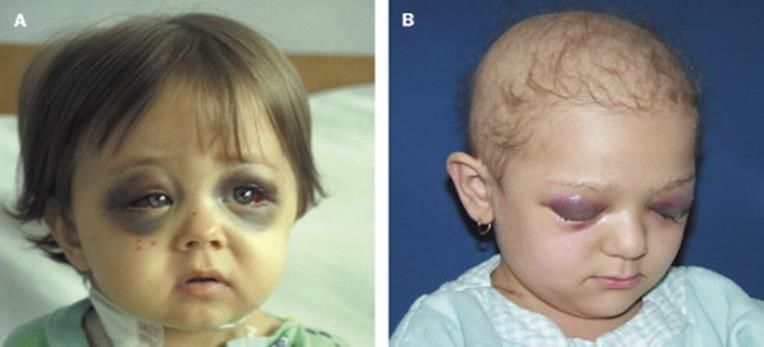
Portrait of a Tumor

              Patterns of Classification                    Histology
 Clinical

Age, Stage

                 Radiological                    Biological
                   MIBG scans              MYCN, Alk mutations
                                  Permission for use of graphics: (c) Transgene S.A.
Diagnosing NBL: Look in 3 places

                Bone
               Marrow
  Bones                      Tissue /
              • BM biopsy     Nodes

• MIBG scan                 • CT / MRI
                            • Biopsy
Diagnosing NBL: Surgical Biopsy

 Biopsy: Small round    Bone marrow
   blue cell tumor     Clusters of cells
                          (rosettes)
Round Blue Cell Tumors: Four types

  Neuro-                        Ewings
 blastoma                      sarcoma

                                 Non-
 Rhabdo-                       Hodgkins
myosarcoma                    Lymphoma
Neuroblastoma: Terms are confusing
• It’s a spectrum.
High Tumor differentiation Poor
Ganglio-
Normal Nerve Neuroblastoma
neuroblastoma
Fibrilla
Typically retains some Typically: highly
nerve structure, with undifferentiated. Little
fibrillary material and background fibrillary
axons, but abnormal. material or axonal
structure.Neuroblastoma: Terms are confusing
• It’s a spectrum.
Tumor differentiation
Ganglio-
Normal Nerve Neuroblastoma
neuroblastoma
Fibrilla
Typically, Typically:
• Low stage • Higher stage
• Younger (< 18 mo) • Older (>18 mo)Diagnosing NBL: CT / MRI
Normal CT scan of abdomenNBL
Radiographic Signs: Neuroblastoma
• Aorta pushed forward
• Calcifications inside the mass
• Kidney is pushed down.
Diagnosing NBL: Urine catecholamines
    Measure VMA and HVA
    - Spot collection, not 24-hour.
    - Levels are age dependent.
    - Normal ~ < 10-15 mg/gm creat
    What does all this even mean?
Diagnosis: Urine catecholamines
Norepinephrine Epinephrine
Metanephrine
HVA
Excreted in
the urine.
VMA
Measure the end-products: VMA and HVADiagnosis: Urine catecholamines
Noradrenaline Norepinephrine Epinephrine Adrenaline
Metanephrine
HVA
Excreted in
the urine.
VMA
Measure the end-products: VMA and HVADiagnosis: Urine catecholamines
Norepinephrine Epinephrine
Metanephrine
HVA
Excreted in
the urine.
VMA
Measure the end-products: VMA and HVAThus, where does Neuroblastoma arise? • Neuroblastoma arises in cells that make epinephrine (Epi) and norepinephrine (NE). • Two normal places produce Epi / NE a. Sympathetic nerves Epi / NE b. Adrenal gland Make Epi / NE • Thus, NBL arises in cells along the spinal cord (called ganglia) that transmit nerve impulses, or in the adrenal gland.
Neuroblastoma: Tumor Cytogenetics
   What does MYCN amplification mean
Normally: we have 2 copies of MYCN on chromosome 2p
Amplified: > 2 copies are present
 1st reported 1980’s (Look, Seeger)
Associated with:
    Aggressive Disease.
    Inferior survival
    Treat as High risk (any stage)
Neuroblastoma: Tumor Cytogenetics
• MYCN: Amplified in 30% of high stage disease
All other stages: present in < 10%.
Treat as high risk if present.
• ALK mutations: Seen in 8% of all NBL.
Risk of Familial NBL and ALK
Therapy: Add ALK inhibitors
• Gain of 17q. Most common. Seen in 70% of NBL
• Ploidy (DNA content): Hyperdiploid is favorable.Diagnosing NBL: MIBG scans Required Evaluation: • Surgical Biopsy. • Bilateral Marrow Bx • CT / MRI • Urine catecholamines • MIBG scans
MIBG: Background                               Looks like norepinephrinee

MIBG: Meta-IodoBenzylGuanidine
  Developed at University of Michigan (1979)
  Structurally similar to norepinephrine.
                                                          MIBG
MIBG imaging: Began in 1983.
  90% of neuroblastoma are MIBG avid.

MIBG therapy: Began in 1987.
  Historically: For relapsed / refractory disease.
  Current focus: Move MIBG into frontline therapy
                  (COG ANBL1531)
Neuroblastoma: Clinical signs
• How do children present:
Abdominal Mass: Very common. Painless.
Limping, Not walking: Bone involvement. Painful.
Pallor, Fatigue: Anemia, Thrombocytopenia.
• Look at the eyes:
Raccoon’s eyes: Periorbital Bruising Horner’s syndrome: Triad
Ptosis, Anhidrosis, Meiosis.Spectrum of Behavior: Age dependent
Infants / Toddlers (0-18m) Age> 18 months
• 30% of cases. • 70% of cases.
• Less aggressive. • Very aggressive.
• Prognosis > 85%. • Prognosis < 50%.
• Lower stage (Stage 1-2-3, 4s). • Majority present
• Arise from neural crest cells with metastases.
that hadn’t fully matured. • Arise from cells that
• Spontaneous regression common. have mutated.
Prognosis declines with ageCase presentation: 4 year old male
Left adrenal mass on MRI. MIBG avid in one spot.
CT: Pre-op MIBG scan
Biopsy performed. Do NOT attempt resection at Dx.
Bone marrow was negative.
Tumor biology: MYCN amplified.
What stage is the patient?What stage is the patient?
Depends upon what staging system we use.
We have a new staging system: INRG
International Neuroblastoma Risk GroupINRG Staging Cohn, JCO 2009 INSS system: Old system. NOT used any longer. Staged patients 1 – 4. Staging was surgically dependent. INRG: New system. Based on CT/MRI Image Dependent Risk Stratification (IDRF) New Stages: L1, L2, M and MS (Not Stage 1-4) Staging is not based upon skill of the surgeon. THIS IS OUR NEW STAGING SYSTEM
INRG Staging: Comparison to INSS
           INSS (OLD)                                   INRG (NEW)
Stage 1: Localized. Complete resection     Stage L1: Localized tumor
                                           On CT / MRI:
Stage 2: Localized, incomplete resection   • Confined to 1 body compartment.
 2a. Regional nodes negative               • Does not involve vital structures.
 2b. Regional nodes abnormal
                                           Stage L2: Local-Regional Tumor.
Stage 3: Unresectable. Crosses midline.    • Tumor encasing vessels.
                                           • Tumor infiltrating adjacent organs.
Stage 4: Metastatic disease                • Tumor invading neuroforamen.
                                           • Involves 2 contiguous body regions.
Stage 4S: Infants < 1 year.
• Localized tumor                          Stage M: Metastatic disease
• Stage 1 or 2, with skin, liver or BM
• BM < 10%. No bone disease.               Stage MS: Infants < 18 mo, with mets
                                           limited to skin, liver, and/or marrow.
                                                                Cohn, JCO 2009
Does the patient even qualify as having high risk disease? 4 year old, L2 disease, MYCN amplified
High Risk Candidates: EFS < 50%
INRG: S. Cohn, JCO 2009
International Data Base            Overall n=8800
COG, SIOPEN, German, Japan            EFS 63%
                                      OS 70%
Total = 8800 neuroblastoma

                   Stage 1, 2, 3, 4S
                                              Stage 4 (M)
                     (L1, L2, MS)
                                            EFS 35%, OS 42%
                   EFS 83%, OS 91%

     Ganglioneuroblastoma          Neuroblastoma
            EFS 97%                   EFS 83%
            OS 98%                    OS 90%

                   MYCN non-amplified       MYCN Amplified
                       EFS 87%               (any stage NBL)
                        OS 93%              EFS 46%, OS 53%
“High Risk” is Also Age Dependent
Patients > 18 months in age:
Stage Age MYCN
L2 > 18 months Amplified
M > 18 months Any
Patients < 18 months in age:
Stage Age MYCN
L2, M, MS < 18 months AmplifiedTherapy is based upon risk
Surgery vs
Low Risk Observation
Interm Risk Chemo Surgery
High Risk Chemo Surgery HCT XRT Ab
Induction Consolidation Maint.Current therapy for high risk neuroblastoma
Therapy is built upon 30+ years clinical trials.
1980’s 1990’s 2000’s
Local Accutane
BMT Radiation
Accutane
+ Immuno-therapy
Chemo #1
Chemo #2
Chemo #3
Chemo #4
Chemo #5
Stem Cell Harvest
Surgery
+ Chemo Current Transplant Techniques
• Single Transplants
• Tandem TransplantsNeuroblastoma: Historical Perspective
Major Transplant Trials in North America
COG
CCG-321-P CCG-3891 COG-A3973
ANBL0532
Can BMT be done? Is BMT even useful? Stem cells? Are 2 BMT
Best donor? BMT vs Continued Role of “purging” better than 1?
Allo vs Auto Chemotherapy stem cells? Yes.
Autologous BMT superior Yes to stem cells.
No to Purging.
Marrow as donor source
1980 1990 2000 2010Neuroblastoma: Historical Perspective
Major Transplant Trials in North America
COG
CCG-321-P CCG-3891 COG-A3973
ANBL0532
Can BMT be done? Is BMT even useful? Stem cells? Are 2 BMT
Best donor? BMT vs Continued Role of “purging” better than 1?
Allo vs Auto Chemotherapy stem cells?
ALK gene
abnormalities
Immuno-therapy (Dinutuximab)
1980 1990 2000 2010CCG-321P (1984 – 1991)
First North American BMT trial for NBL.
Transplant type 4 year Disease Free Survival
Autologous 45%
Allogeneic 25%
Matthay, JCO 1994
Established role for autologous transplants in NBL.
Sibling donor only.
Bone marrow as stem cell source.
Transplanted at end of induction therapy.Neuroblastoma: Historical Perspective
Major Transplant Trials in North America
COG
CCG-321-P CCG-3891 COG-A3973
ANBL0532
Can BMT be done? Is BMT even useful? Stem cells? Are 2 BMT
Best donor? BMT vs Continued Role of “purging” better than 1?
Allo vs Auto Chemotherapy stem cells?
1980 1990 2000 2010CCG-3891 (1991-1996) Matthay, NEJM 1999
After Induction: Patients randomized to either:
Transplant or 3 more cycles of induction chemo.
One of the largest COG Neuroblastoma trials to date.
BMT arm
34% 3-yr EFS
Chemo arm 22% 3-yr EFSNeuroblastoma: Historical Perspective
Major Transplant Trials in North America
COG
CCG-321-P CCG-3891 COG-A3973
ANBL0532
Can BMT be done? Is BMT even useful? Stem cells? Are 2 BMT
Best donor? BMT vs Continued Role of “purging” better than 1?
Allo vs Auto Chemotherapy stem cells?
1980 1990 2000 2010COG A3973 (2001-2006)
First major test of Stem Cells in Neuroblastoma Therapy.
Stem Cells collected after 2 cycles chemo. Given after 5.
“Purging” process done in lab to remove possible tumor.
1
Tumor free survival
0.75
unpurged (n=245)
2 yr EFS = 49 +/ -3%
0.5
purged (n=244)
2 yr EFS = 47 +/ - 3%
0.25
Bone marrow collection Stem cell collection
1980-1990’s 2000 - Present
p= 0.7881
0
0 12 24 36 48 60
Months from randomization
Kreissman.Neuroblastoma: Historical Perspective
Major Transplant Trials in North America
COG
CCG-321-P CCG-3891 COG-A3973
ANBL0532
Can BMT be done? Is BMT even useful? Stem cells? Are 2 BMT
Best donor? BMT vs Continued Role of “purging” better than 1?
Allo vs Auto Chemotherapy stem cells?
1980 1990 2000 2010Tandem BMT: COG ANBL0532
Park J, JAMA 2019
Topotecan-Cytoxan
BMT #1
(CEM)
BMT #1 BMT #2
Induction Cytoxan-Thiotepa (CEM)
• Opened 2007.Closed 2012.
• Stem cells collected after cycle 2.
Tandem HCT
Single
HCTTandem BMT: ANBL0532
Park J, JAMA 2019
Single HCT Tandem P-value
3-yr EFS 48% 62% 0.006
3-yr OS 69% 74% 0.25Current COG NBL Study: ANBL1531
Arm E Arm A & B: Tandem BMT. ± MIBG
ALK+ Cycle 1
Crizotinib Arm C: MIBG. Single BMT.
Cycle 2 Arm D: MIBG non-avid (10%)
and HCT. Restarted x 1–
Given thru Induction.,
Held during apheresis
starting with cycle 2.
Arm E: ALK mutation (10%)
Harvest
year post-HCT
Cycle 3
Arm A Arm B Arm C
Cycle 4-5 Cycle 4-5 MIBG MIBG
Arm D
Tandem Tandem Cycle 4-5 Cycle 4-5 Cycle 4-5
BMT BMT
Tandem Tandem
All arms get radiation and BuMel
BMT BMT
immunotherapy post-BMTQUESTIONS
“The red circles are your red blood cells.
The white circles are your white blood cells.
The brown circles are donuts. We need to talk.”You can also read


