Consultation and Engagement Report - Te Tai o Poutini Plan
←
→
Page content transcription
If your browser does not render page correctly, please read the page content below

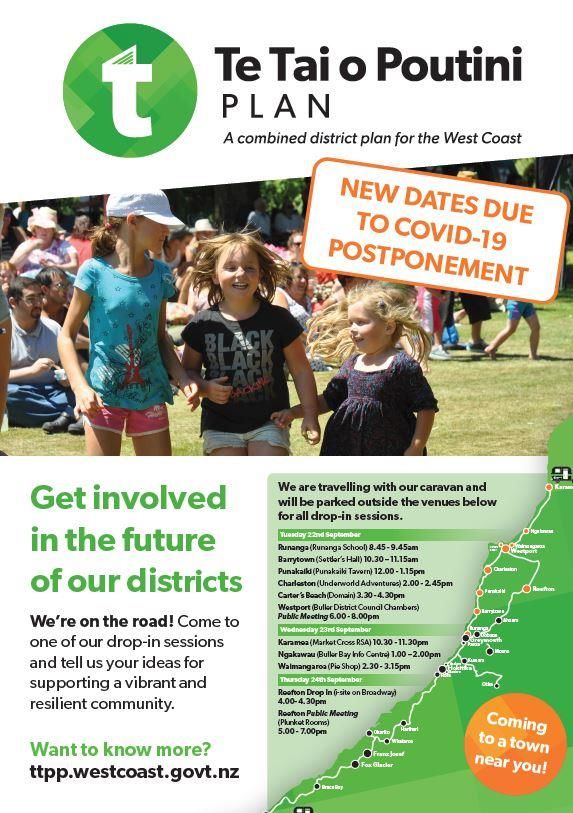
Consultation and Engagement Report June 2019 – October 2020 Introduction Te Tai o Poutini Plan team undertook informal engagement over the period of June 2019 to October 2020. The aim was to check in with the community that we have a good understanding of the issues and potential options for managing these so we can prepare relevant and practical policy responses in the Te Tai o Poutini Plan (TTPP) that represents our communities views. We ran a roadshow around the Plan during March 2020 (Westland and part of Grey) and September 2020 (Buller and part of Grey), and had eight workshops with different interest groups around key key topics. As well as feedback gathered at our engagement events, we had 70 responses to our questionnaires as well as individual feedback forms and emails. How we engaged Placed based factsheets and questionnaires for Reefton, Westport, Hokitika and Greymouth Te Tai o Poutini Plan roadshow with our Conversation Caravan – drop in sessions at 22 locations across the Coast in March and September 2020 Consultation Hui at Arahura Mārae Public meetings at Greymouth, Hokitika, Reefton and Westport Numerous on-on-one meetings with key stakeholders (iwi, business, industry, heritage and environment) A purpose built website for the Te Tai o Poutini Plan consultation General factsheets and questionnaires for settlements, natural hazards, historic heritage, mining and biodiversity. What you told us Across the West Coast housing availability and affordability are significant concerns in many settlements and towns. There is a significant lack of housing for workers in some towns. Short term rental/Air BnB type accommodation is seen as a key driver of a lack of housing. Natural hazards are a concern for many communities. Communities are looking for Te Tai o Poutini Plan to provide a consistent and clear way forward for natural hazard management, including how to undertake managed retreat. Future development needs to avoid exacerbating the natural hazard risk. Improving the attractiveness of settlements and towns was a key concern for people in a range of locations across the Coast.

Significant natural areas are a concern in the rural areas. There is a need for good information and
process to engage affected landowners, to identify what is and isn’t significant and provide mechanisms
to support and compensate affected landowners.
Feedback by themes
How towns and settlements grow
Feedback identified that key issues for towns and settlements are:
Adapting to impacts of changing industries and economy. There was a lot of feedback that Covid 19
reinforced the need for a diverse and resilient economy for the Coast
Where settlements are growing, new commercial and industrial activities need to be designed and
located in such a way that the character and amenity of residential areas is retained
Where settlements are subject to specific threats from natural hazards we need to reduce the risk and
new development must be located in less hazardous locations.
There was a strong theme that residential and community values need to be given a high priority. People
want to see more certain zoning that ensures that community values are protected. Growth and
development would benefit from clearer planning and control – this includes things such as supporting
the town centres and better managing rural subdivision and commercial activities occurring in rural
areas.
Specific zoning for rural lifestyle and medium density type developments was preferred, as is zoning for
commercial activities in settlement centres in smaller towns to allow them to grow. Design guidelines
were suggested as a way to help get better outcomes in several settlements.
Need for future thinking was a key theme – more residential housing is needed, planning for managed
retreat and enabling the redevelopment of areas such as the Greymouth CBD.
The need to provide for more residential housing – and diversity in housing types – was a key theme.
There is a need for housing for older adults, smaller rural residential section sizes and more flexibility for
different housing types. The impact of short term rental accommodation on housing availability was a
major concern but there was support for the opportunity that homestay/hosted accommodation
provides for homeowners.
Historic Heritage
Historic heritage is hugely valued on the West Coast. Feedback identified that the key issues for historic
heritage are:
Historic heritage helps communities identify with their surroundings and provides tourism and
development opportunities. However, the cost of repairing and maintaining these features means
they are falling into disrepair
Adaptive reuse can encourage buildings to be maintained but can dilute their value.
Historic heritage value can occur at different scales, something might be of value locally but not
nationally.
There was a strong theme that earthquake strengthening costs are a major concern for historic heritage
and that this is a barrier to avoiding “demolition by neglect”. There was strong feedback that we need to
think of heritage in the wide sense – beyond buildings – sites, access to sites and heritage context are
important.
Recognising, celebrating and supporting heritage through adaptive reuse and interpretation was a key
theme.
Natural Areas and Biodiversity There are four key issues for natural heritage ensuring that the relationship of Māori with their culture, traditions and customary rights are protected alongside significant natural heritage areas protecting the significant and outstanding values of natural heritage in such a way that fosters an ethic of stewardship and enables positive actions by landowners. how to protect significant natural heritage, while allowing for, and where possible enabling, economic, cultural and social development of West Coast Communities. creating certainty for landowners and development sectors around what natural heritage areas and features are significant and should be protected, and what types and locations of development are likely to be acceptable. Significant natural areas were raised as a concern in many locations with strong emphasis on the need to provide good information and engage affected landowners. Cumulative effects and ensuring these are managed was a key theme as was the opportunity of harnessing tourism to achieve environmental objectives. There was broad support for some Permitted Activities in significant natural areas. These included: construction of walkways, Poutini Ngāi Tahu cultural use, vegetation clearance to erect or protect powerlines; operation of existing roads, tracks, structures; operation maintenance and repair of lawfully established activities; clearance within 5m of an existing building. There was broad support for some potential incentives to support landowners of significant natural areas. These include providing additional development rights for tourism related activities and additional subdivision rights or transferrable subdivision rights where areas are legally protected. Mining and Quarrying There was only a small amount of feedback on this key topic. Common themes were the need to address reverse sensitivity and conflicts between mining and other land uses, particularly rural residential locations. Providing for continuity of operations was a key concern of the industry, with a desire for simple processes which avoid duplication of regulation. Community concerns related principally to monitoring and ensuring that adverse effects of mining are managed well. There was across the board support to better identify where mining and quarrying is, and is not, ok.
Natural Hazards
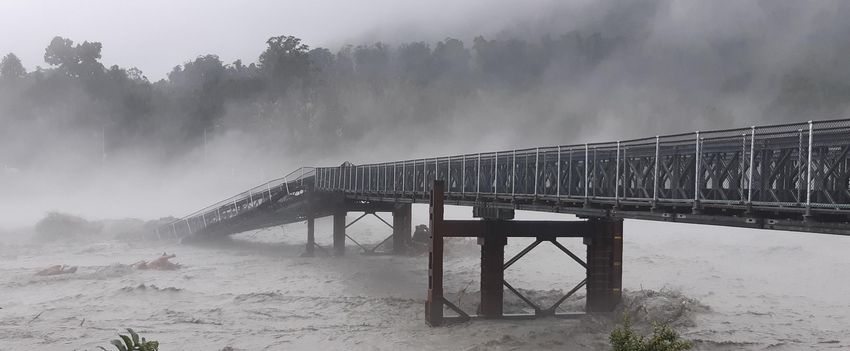
There was strong support for the 4-pronged approach to natural hazards:
1. Avoid the hazard - If there are known natural hazards in areas that are not developed, zoning to
   prevent future development in these areas. In other words, don’t put people and assets in harm’s way
2. Accommodate the natural hazard - In some locations where the hazard can be managed with lower
   risk to people and property use measures that anticipate hazard risk – for example raising floor levels
   against flooding, provide alternative inundation pathways and require relocatable houses.
3. Protect from the natural hazard - Currently the most commonly used method for some types of
   natural hazard, this involves holding the line using natural buffers (e.g. sand dune restoration,
   wetland enhancement or creation, beach nourishment) or hard structures (e.g. seawalls, groynes).
4. Retreat from the natural hazard - Moving existing people or assets away from the hazard in a
   managed way over time, or as a consequence of damage after a hazard event. For example, by zoning
   areas that people can move to, and having rules preventing rebuilding if property is destroyed by a
   hazard

Key themes were around being forward thinking transparent, science based and communicating well.

Natural hazards were mentioned as a major concern at nearly every location on the West Coast.
Feedback was that a strong clear and consistent approach to natural hazards is needed and that future
development needs to avoid exacerbating the natural hazard risk. Managed retreat options were a focus
of discussion at many settlements.
Feedback by location
Buller
There were three key themes that came through strongly -
Natural hazards and the need to be forward thinking and have a plan for managed retreat in
locations such as Westport, Punakaiki and Granity.
Housing availability and a lack of rental housing for workers was a concern in all parts of Buller.
Concerns were also expressed about the impacts on community of short-term rental
accommodation/Air BnB. Support was expressed for the opportunity that homestay/hosted
accommodation provides, however.
Design guidelines could be used to recognise special environments such as Punakaiki and Reefton
Grey
There were five key themes
Ideas in the Greymouth CBD Redevelopment Plan appear to be supported and should be translated
through the Plan.
Significant natural areas were raised as a concern in many locations. The need to provide good
information and engage landowners, to clearly identify what is and isn’t significant and provide
mechanisms such as biodiversity credits to compensate landowners.
Support for settlement centres/precinct to allow small towns to grow business, particularly in
Barrytown, Blackball, Ahaura, Paroa
Growth and development would benefit from clearer planning and control – this includes things
such as supporting the Greymouth CBD, controlling design at Moana, and better managing rural
subdivision and commercial activities occurring in rural areas.
Natural hazards are a concern – though mainly in coastal locations.
Westland
There were three key themes
Natural hazards were mentioned as a major concern at every location. Feedback was that a strong
clear and consistent approach to natural hazards is needed and that future development needs to
avoid exacerbating the natural hazard risk. Managed retreat options were a focus of discussion at
Okarito, Franz Josef and Hokitika.
Housing availability and a lack of rental housing for workers was a concern in all parts of Westland.
Air BnB was blamed for a lack of housing in a number of locations including Haast, Franz Josef and
Hokitika.
Erosion of or a lack of amenity in settlements is a concern in many locations – though the detail of
concerns is generally specific to the settlement e.g. Heliport in Franz Josef, airstrip at Okarito, town
centre amenity in Whataroa
What’s next?
Consultation
Identify Issues, Technical work to fill gaps [Evidence]
Develop draft
Objectives and Develop draft Testing draft provisions
Rules and
Other Methods Draft Plan for Notification & Submissions
Policies
(2019-2021) Informal
(2019-2022) Proposed Te Tai o Decisions
Feedback
Poutini Plan
(Aiming for Hearings of
Section 32 submissions
2022)
Evaluation Report
Decisions on
(2023)
submissions (2024)
Appendix
Feedback by location

Location      Key TTPP Issues Raised
Whataroa      Poor town centre amenity
              Onerous consent requirements for signs
Franz Josef   Heliport causing poor amenity in the town centre
              Development should be 200m from Faultline
              Formation of legal roads should be a Permitted Activity
              Need for consistent application of rules
              Uncertainty of the natural hazards is affecting ability to borrow
              Significant need for affordable and rental housing – Air BnB is a big problem
Bruce Bay     Erosion and what is planned to manage this
Haast         No worker accommodation
              Houses all being used for Air BnB
              Lack of housing – need more subdivision
              Need to protect biodiversity – explore ways of funding
              Need for more resource consent condition and Permitted Activity monitoring
              Flood protection and natural hazard management
              Relocatable houses could be an option
              Need secure water supply and waste water treatment
Hannah’s      DOC is adjacent neighbour for all properties – boundary encroachment regularisation
Clearing      issues
              Erosion concerns as well as flooding
Fox Glacier   Natural hazard management critical
Okarito       1999/2000 community plan should apply
              Formation of paper roads should require Resource Consent
              Hazard protection from sea inundation
              Home businesses should be allowed to operate in the settlement
              Support hosted visitor accommodation – not unhosted
              Need a clear approach to protection works
              Need somewhere for managed retreat to – terrace above the town?
              Need to identify Māori historical sites
              Conflict between visitors and residents – need to focus visitors at nodes and separate
              from community areas
              Landscape values are important
              Don’t want to see Commercial operations on the airstrip – noise.
Kaniere       Natural hazard management critical – need to identify eroding areas and keep
              development out of them
Hokitika      Need to move back from the sea
              People have often protected SNAs – but need cost assistance for management
              Transferrable development rights could be tricky
              Need a plan for flood management in town
              Need for accommodation – nowhere for staff to live
              Need to allow for residential upstairs in the town centre
              Too many hoops to try new business ideas in the town centre
              Town precincts important – all the towns are different
              Need to allow Indigenous Forest harvesting under the Forests Act to continue
              SNAs/Landscape/Biodiversity/Climate change are priorities

                                                                               6
Location    Key TTPP Issues Raised
            Consents are costly and put people off doing things like renewable generation
            Need a rural residential zone – Blue Spur, Stafford Road
            Shouldn’t having mining next to rural residential – particularly noise impacts
            Need more enforcement and compliance – in accordance with a clear process in the
            Plan
            Costs with DOC as affected party on consents
Arahura     SNAs = what approach on Māori Freehold land
            More areas within DOC estate should be available for accommodation
            Need to get away from coastal hazards/earthquake/tsunami
            Why can’t commercial areas have residential
            Allow for more home occupations – but not industry
            AirBnB a concern – generating more traffic
            Identify areas for visitor accommodation along main roads
            Who will monitor the plan?
            Need clear policies around engagement with Māori re Plan Changes
            Need communication policies in Poutini Ngāi Tahu chapter
Kumara      Town centre zone would be good
            Recent developments in the community have been positive
Greymouth   Need to engage landowners on SNAs
            Embrace the heritage
            More residential in the CBD
            More defined urban/rural boundary
            Not just sprawl – where’s the town centre
            Signs – resource consents for community signs – huge cost
            Need a spatial plan for Greymouth – where want commercial incl. Visitor
            accommodation – Air BnB should be commercial zone – support Queenstown Lakes
            approach
            Historic building status makes redevelopment hard
            Perceptions on Māwhera land make redevelopment hard
            Site sizes in town are small – amalgamate titles?
            Grass old carparks
            Natural hazards need a consistent approach
            Need to enforce the plans – and consistently interpret them
            Too many commercial activities in rural areas
            SNAs are a land grab
            Need for biodiversity protection
            Rental accommodation is very tight -need more
            Repurpose heritage buildings to Air BnB
            Upstairs of shops is empty – need to allow more activities there
            SNA work needs to be done urgently - what is and isn’t high value
            How can the Coast be compensated for providing a public/national good?
Paroa       Need to be future focussed
            Urgent to identify what is significant and what isn’t – including on conservation land
            Increased flooding as a result of development in the back of Paroa
            Need more local shops
            Entrance to town around Paroa
            Concerned about potential impacts of SNAs
Dobson      Keen to conserve biodiversity
            Blackball could benefit from a settlement centre
            Need to be aware of natural hazards

                                                                             7
Location Key TTPP Issues Raised
Ahaura Strong community services and hub – could benefit from a settlement centre
Council consenting process hard – not enabling
SNAs are a land grab
Moana Wilderness track will have a big impact – accommodation and cycle support
Development needs to be more controlled (size, design, height)
Moana is big enough – needs to stop growing
No rental accommodation for workers – people forced to live in motorhomes at the
holiday park
Runanga Scrapping the 30m2 requirement for building consents was a great thing – need more
of that kind of enabling measure
Concerned about SNAs – doesn’t reflect the unique West Coast culture –Interested in
the idea of biodiversity credits to recognise that contribution
Mining- key issue is where does the money go – 2016-2018 1.5% of value of gold paid
as royalties, $2 billion estimated to come out of Waiuta – not coming back to the Coast
Barrytown Need to better interpret and provide access to broad history in the area e.g. Parnell
Terraces, McMillan Rd, Ancient Dune Forest
1 ha subdivisions have caused loss of farmland
Reverse sensitivity vs farming and hall.
Support for a settlement centre precinct
Rural zoning too permissive = losing farms to 1ha blocks – need a Plan about where to
subdivide, not just everywhere
Need more scope for community and heritage interpretation signs – just not business
signs.
Transferrable development rights for mining and SNAs should be explored
Punakaiki Need to be forward thinking on hazards – identify where and how will do managed
retreat
Insufficient enforcement of current plan provisions for scenically sensitive zone – not
getting outcomes intended
Too much short-term rental – Air BnB – hollowing out community, nowhere for
workers and family to live – people turning residential into full time commercial Air
BnB
Could there be a policy around a max % of Air BnB in an area
Locals are more important than tourists – very opposed to a tourist zone
oppose helicopters as intrusive
Need to support community resilience – rental accommodation and jobs
Concerns about SNAs – erode property rights, no compensation or financial assistance
with management – interest in transferrable development rights but can’t be tokenistic
Need better site-specific design standards – not just one size fits all current approach
(e.g. for setbacks)
Need a local source of rock for protection works
Punakaiki Masterplan needs to integrate with Dolomite Point
Need a plan for additional housing – south of Charleston?
Need to have site sizes that reflect demand – not just 10 acres
Need small footprint houses and recognise visual impacts
Is there scope for infill? If restricted house size and height
Keep the Paparoa Character Area as currently written in the Buller Plan
Charleston Settlement Centre Precinct supported
Need to identify land for further residential and business(tourism) development
Coastal retreat at Beach Road
Need for infrastructure to support tourism
Cycle trail will drive more demand
8Location Key TTPP Issues Raised
Carter’s Beach Cycle trails positive – need more support facilities
Manuka/kanuka as an important habitat for threatened species
Westport Need to draw upon existing vision work at Punakaiki and the LTP
Need to support vibrancy and amenity of town centre
Need to recognise climate change as a threat – need both mitigation and adaptation
Need to consider cumulative effects including in terms of on-site wastewater and
drainage
Karamea Tourism positive – cycle and walking trails
Need to consider climate change impacts – move community towards elevated areas
Resilience of infrastructure a huge concern
Allow for a diversity of potential future business options
Fertile soils and growing conditions hugely important – lots of potential horticulture
options
Ecosystem services (insects, health environment, water quality) from conservation
land benefits the farming/horticulture sector
Should allow for home businesses
Hosted Air BnB/glamping is good
Need for older adult housing
Current residential zoned land is in flooding areas- need to move up
Waimangaroa Concern about houses built on beachfront and ridges – here for wildness
Hosted Air BnB is good
Reefton Housing shortage – shortage of rentals and owner occupied options
Need more business – not just cafes
Home businesses viable due to fibre – are good
Compact town is a positive – development should fit with grid patter
Need for retirement housing – not just Council – retirement village?
Air BnB should require consent
Air BnB taking up rental housing
A wider range of section sizes (smaller) and options for semi-detached and attached
housing would be good
Keep out big box retail
Preserve the amenity of the entry areas to town
Support design guidelines for town centre – include Buller Road – use colour scheme
designed a few years ago
Intermingled community works well
Protect more heritage – Countrywoman’s Institute, Railway building and turntable,
Hopper at Terrace mine
9You can also read


