A Systems Approach to Infrastructure Delivery - Brunel International Lecture Series - Institution of Civil ...
←
→
Page content transcription
If your browser does not render page correctly, please read the page content below
Brunel International
                      Lecture Series

A Systems Approach
to Infrastructure Delivery
Part 2: Putting the principles into practice

                                               ice.org.uk
A Systems Approach to Infrastructure Delivery: Part 2
A Systems Approach to Infrastructure Delivery: Part 2
Foreword
In December 2020, the Institution of and others, formed the basis for this second,
Civil Engineers (ICE) published A Systems case study-based, report.
Approach to Infrastructure Delivery (SAID)1.
This report captured the conclusions of a To paint as rich a picture as possible, we selected
review that I led into improving the delivery five projects at various stages of delivery. We
of complex infrastructure projects. examined whether the principles had been applied
in part or in whole and, if they hadn’t, whether
I carried out my review in the context of a series their use would have led to an improved outcome.
of high-profile projects that had ran into serious
difficulties. Unfortunately, these problems In addition to the project case studies, we
were not one-offs. One of the most striking have included an example of an organisation
pieces of evidence, we discovered, was work in the infrastructure supply chain that has
Andrew McNaughton
from benchmarking consultancy Independent looked to develop its capability to support a
SAID project lead
Project Analysis that showed that, globally, more Systems Approach to Infrastructure Delivery. I
than two-thirds of mega and major projects am particularly pleased we have been able to
disappointed their owners in terms of cost, include this case study (from Costain) as I believe
schedule or a failure to meet desired outcomes2. it is important to dispel the suggestion that the
principles of SAID are largely relevant only for
SAID made the case that a wider and more asset owners. This is not true. Achieving better
skilful use of systems thinking was needed to outcomes from projects via the SAID principles
reverse this situation. This need will only grow demands that all organisations working on
“One of the most striking pieces of as infrastructure projects are required to deliver
a more complex range of outcomes via the
projects make fundamental changes to how they
engage with each other and carry out their work.
integration of diverse technologies alongside
evidence, we discovered, was work traditional civil engineering works. Since our first report, the UK Government’s
Infrastructure and Projects Authority (IPA) has
from Independent Project Analysis The first SAID report set out eight principles to
help any organisation adopt a Systems Approach
to Infrastructure Delivery. The response to
updated its infrastructure investment pipeline,
highlighting potential investments with a value of
up to £650bn over the next 10 years. The IPA has
that showed that, globally, more the study was overwhelmingly positive and
many people contacted me and ICE to ask if we
challenged the industry to take a systems-focused
and data-driven approach to delivering this work3.
than two-thirds of mega and major
could provide further guidance and, in particular,
real-world examples related to the principles. I strongly believe that the two SAID reports
provide a solid foundation for responding to
projects disappointed their owners Therefore, during 2021, with the support of
infrastructure engineering software company
the IPA’s challenge and achieving the outcomes
from infrastructure investment that the public
Bentley Systems, we initiated a series of industry demands. I would like to thank colleagues
in terms of cost, schedule or a failure roundtables to explore what the principles
meant to the leaders of some of the UK’s biggest
from across the industry and beyond who have
supported this work over the past two years.
to meet desired outcomes” projects. These discussions, together with a
series of extended interviews with these leaders
I look forward to continuing to work with you
to make the changes we so urgently need.
1 ice.org.uk/knowledge-and-resources/briefing-sheet/a-systems-approach-to-infrastructure-delivery
2 Merrow E (2011) Industrial Megaprojects: Concepts, Strategies and Practices for Success
3 Infrastructure and Projects Authority (2021) Transforming Infrastructure Performance: Roadmap to 2030
2 3
A Systems Approach to Infrastructure Delivery: Part 2                                                                                                                A Systems Approach to Infrastructure Delivery: Part 2

                                                                                                      Contents
    About this report

    This second Systems Approach to                     Bentley Systems international director of
                                                                                                                  Executive summary p07
    Infrastructure Delivery report is
    a response to requests from the
                                                        public policy and advocacy Mark Coates.
                                                                                                                  Purpose of this report p09
                                                        They would like to thank the many
    infrastructure sector for ICE to
    provide more practical insight into
                                                        organisations and individuals who                         Infographic: Your print-out-and-share summary of SAID p10
                                                        shared their insights during the drafting
    how to deliver a systems approach,
                                                        of this report. Particular thanks are due                 Deep Dive case studies
    wherever possible drawing on
                                                        to the following organisations:
    real-world project experience.                                                                                     01 Tideway p12
                                                        n Anglian Water Strategic Pipeline Alliance
    The bulk of this report therefore consists
    of a series of deep dives into lessons
                                                        n Arcadis                                                      02 British Antarctic Survey’s
                                                        n Bentley Systems
    from five projects and programmes:
    Tideway, Crossrail, East West Rail, the
                                                        n British Antarctic Survey                                		       Infrastructure Modernisation Programme p18
                                                        n Centre for Digital Built Britain
    British Antarctic Survey’s Infrastructure
    Modernisation Programme and Anglian
                                                        n Centre for Systems Engineering and                           03 Crossrail p22
                                                        Innovation, Imperial College London
    Water’s Strategic Pipeline Alliance. It also
    draws on insight from Costain on the
                                                        n Costain                                                      04 East West Rail p28
                                                        n Crossrail
    challenges of developing the capability
    to adopt a systems approach within a
                                                        n East West Rail                                               05 Anglian Water’s Strategic Pipeline Alliance p32
                                                        n EDF
    large supply-chain business.
                                                        n HS2                                                          06 Costain’s systems approach capability p38
    We then highlight four themes that run              n Infrastructure and Projects Authority
    across the deep dives, drawing on a                 n KPMG                                                    Cross-cutting lessons p42
    series of ICE roundtable discussions held           n Major Projects Association
    throughout 2021 on the SAID principles,             n Microsoft                                               Recommendations p46
    sponsored by Bentley Systems.                       n National Highways
                                                        n Project 13 Early Adopters Group
    Lastly, we present some
                                                        n Science Policy Research Unit,
    recommendations for future actions by
                                                        University of Sussex
    ICE to support the implementation of a
                                                        n Tideway                                     Find out more: ice.org.uk
    systems approach.
                                                        n Turner and Townsend
    The project was led by former Balfour                                                             Author: Andrew Crudgington; Lead contributor: Mark Coates;
    Beatty chief executive Andrew                                                                     Editorial manager: Michelle Harbi; Designer: James McCarthy;
    McNaughton with the support of                                                                    Graphics: Anthea Carter, Paul Weston;
                                                                                                      P10-11 infographic: Cognitive; Sub-editor: Lucien Howlett

4                                                                                                                                                                                                                       5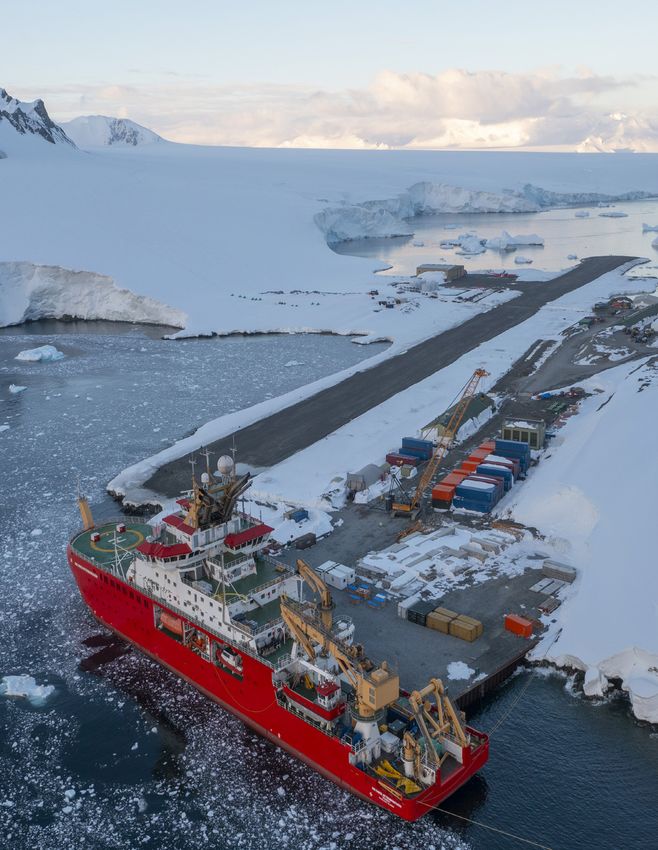
A Systems Approach to Infrastructure Delivery: Part 2                                                                                  A Systems Approach to Infrastructure Delivery: Part 2

                                                        Executive summary
                                                        The core of this report consists of six case studies:
                                                                                                                               To deliver projects
                                                        ■ Tideway
                                                        ■ Crossrail
                                                                                                                               effectively, owners
                                                        ■ East West Rail
                                                        ■ British Antarctic Survey’s Infrastructure Modernisation Programme
                                                                                                                               need to create an
                                                        ■ Anglian Water’s Strategic Pipeline Alliance
                                                        ■ Costain’s systems approach capability
                                                                                                                               integrated and
                                                        Each of these case studies provides valuable practical insight into
                                                                                                                               collaborative enterprise
                                                        the implementation of the eight SAID principles (see overleaf).
                                                        In addition, the SAID team has drawn out four cross-cutting
                                                                                                                               that embraces all of
                                                        themes from the case studies:                                          the key organisations
                                                        Keep the end in mind throughout the entire project                     working on a project
                                                        It is not enough to start with the end in mind – it must be there
                                                        throughout, until the end. Across our case studies, we found that
                                                        staying focused on the outcomes drove better decision-making
                                                        and ensured that the consequences of those decisions were
                                                        tracked, documented and understood by all.

                                                        Ensure we are all in this together
                                                        Project delivery arrangements need to ensure that we really are
                                                        all in this together. In our case studies, we found that traditional
                                                        contractual and organisational structures were not up to the
                                                        challenges created by modern, complex infrastructure projects.
                                                        To deliver projects effectively, owners need to create an integrated
                                                        and collaborative enterprise that embraces all of the key
                                                        organisations working on a project.

                                                        Think hard about leadership
                                                        The scale, complexity, duration and range of disciplines involved
                                                        in delivering a project makes leadership that is aware of its own
                                                        limitations essential. Good leaders can ensure that a project’s
                                                        vision is shared by delivery partners, stakeholders and external
                                                        groups. They also have the important task of passing the baton
                                                        on as a project moves through its lifecycle, ensuring that the
                                                        right voices and leaders are prominent at the right time.

                                                        Do you have to deliver it all at once?
                                                        The bigger and more complex a project is, the harder it is to
                                                        deliver it in one go. Delivering projects with upgrades and
                                                        obsolescence in mind makes it possible to deliver outcomes
                                                        in stages. Crossrail’s chief executive, Mark Wild, has publicly
                                                        challenged other megaprojects to identify their minimum viable
                                                        product (MVP) as part of early-stage development.

6                                                                                                                                                                                         7
A Systems Approach to Infrastructure Delivery: Part 2 A Systems Approach to Infrastructure Delivery: Part 2
Purpose of this report
The eight SAID principles This report:
■ Helps professionals involved in infrastructure projects to
accelerating, shifting more of the functionality of infrastructure
systems into the digital space.
deepen their understanding of the benefits of adopting a
Systems Approach to Infrastructure Delivery The review identified eight principles for improving project delivery
■ Provides practical insight on how to realise those benefits in this environment (see facing page).
Why we need a Systems Approach to What has happened since the first report?
Infrastructure Delivery
Systems thinking has moved to the heart of the
Too many projects disappoint their owners and the public UK infrastructure programme
The first SAID report, published in December 2020, was the result The first SAID report points a way forward for infrastructure
of a major review commissioned by ICE against the backdrop of a delivery and complements a raft of industry/government
number of high-profile projects coming in late, over budget and initiatives that are being managed by the Infrastructure and
failing to meet the expectations of their owners and users. Project Authority. These include the Construction Playbook4,
01 THINK OUTCOMES, 02 CLOSE THE GAP 03 OWNERS MUST 04 FUTURE-PROOF Project Routemap5 (to whose systems integration model the
NOT EDIFICES Close the gap between OWN PROJECTS PROJECTS Our research found that the infrastructure sector struggled to SAID review team has contributed) and the Transforming
Owners must clearly define infrastructure and sectors Owners should give direction Use the V-cycle process to deal with the complexity of many modern projects. Professionals Infrastructure Performance: 2030 Roadmap (TIP).
the user outcome so that adapting better to on everything, from establish systems architecture, need to become better at planning, constructing and, most
engineers and technology technological change. functional requirements manage technology importantly, integrating the complex systems that will deliver TIP, in particular, is closely aligned with the goals of SAID and
developers can deliver for Cherry-pick best practices to for the operational system development and upgrade it a service to users. This service also needs to support the is grounded in a system-of-systems model that was developed
that use. improve delivery efficiency. to data requirements and with minimal disruption. achievement of a much wider set of outcomes than the sector by the UK Government in partnership with industry. This model
acceptable technology and has traditionally dealt with. takes key societal outcomes as codified in the UN Sustainable
innovation risks. Development Goals and links them directly to the built and natural
For example, asset owners and the public are increasingly systems that help to deliver them. The IPA and the Construction
expecting infrastructure investments to contribute to the Leadership Council have committed to using this model to take
decarbonisation of the UK and the levelling up of its economy. a systems approach to selecting and delivering interventions that
All of this is happening when the rate of change in technology is can improve infrastructure performance.
05 THINK SHOVEL WORTHY, 06 BAKE IN SYSTEMS 07 AGILE LEADERSHIP 08 DATA OILS YOUR PROJECT
NOT SHOVEL READY THINKING Agile leadership adapts to Owners should define the
Front-end project Bake systems thinking and multiple risks in complex vital data for delivering the
development gives clearer risk management into the systems. Spread authority service, the appropriate
project definition, creates project DNA. Design an through empowerment collaboration model and share
a more stable delivery organisation and structure models that listen to the right it through the supply chain.
environment and improves that mirrors how you’re voices at critical moments, Collaborating around shared
stakeholder engagement going to manage risk. enable skilled front-line data increases productivity,
and management. people to make decisions and enables integration and boosts Read the first SAID report at
support baton handovers. operational performance. www.bit.ly/icesaid1report
View our animated film explaining the Systems Approach to Infrastructure Delivery at www.bit.ly/icesaid
4 www.gov.uk/government/publications/the-construction-playbook
5 www.gov.uk/government/publications/improving-infrastructure-delivery-project-initiation-routemap
8 9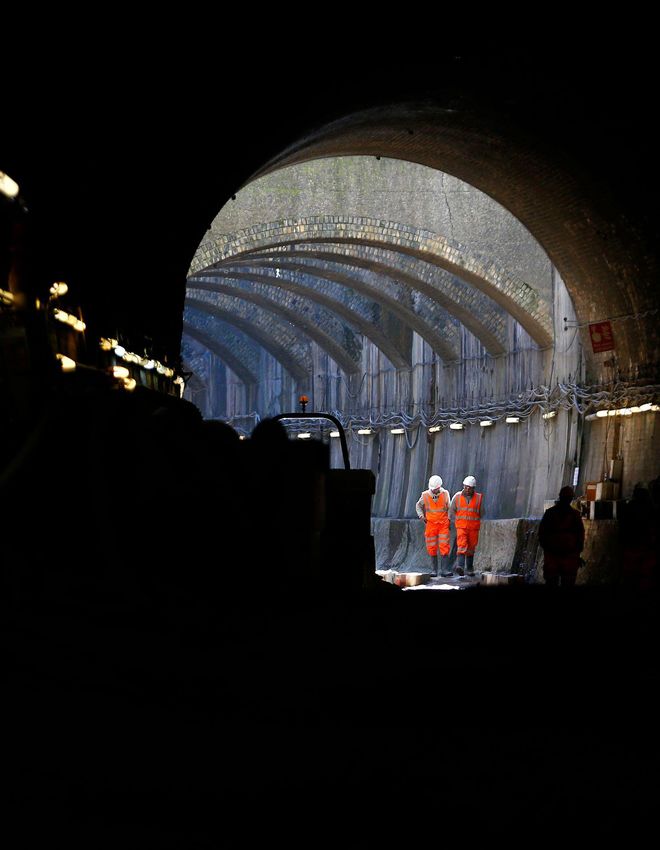
A Systems Approach to Infrastructure Delivery: Part 2   A Systems Approach to Infrastructure Delivery: Part 2

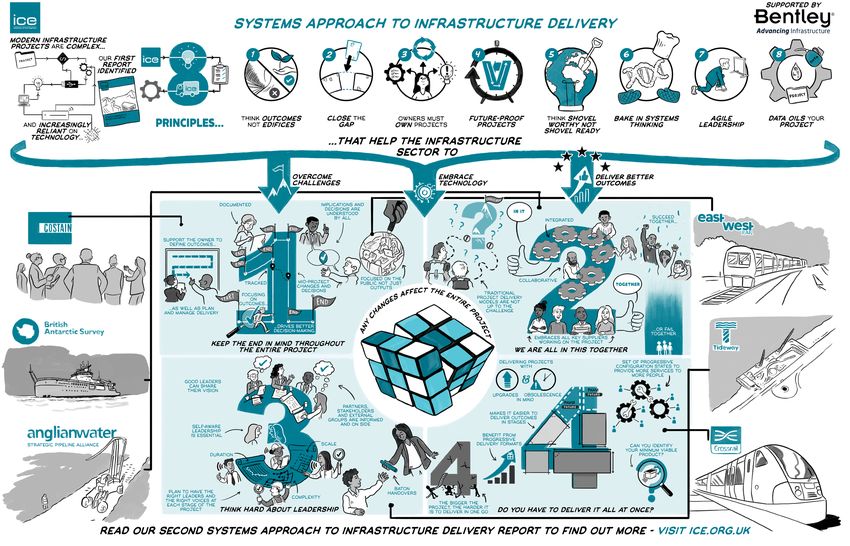
Infographic: Your print-out-a nd-share summary of SAID
A Systems Approach to Infrastructure Delivery: Part 2                                                                                                                        A Systems Approach to Infrastructure Delivery: Part 2

                                                                               Deep dive

                                                                             01 Tideway
                                                                             Front-end planning and the ‘owners must own’ principle are
                                                                             proving crucial in reconnecting London with the River Thames

                                                                             Summary of insights                                                   Extensive front-end work was needed to package up the project so
                                                                             ■ Identity and narrative matter. Tideway is clear that constructing   that it was attractive to equity investors and supply-chain partners.
                                                                             a tunnel is only a means to an end in reconnecting Londoners          This has delivered benefits right through the project’s lifespan.
                                                                             to the Thames. This has supported strong relationships with
                                                                             stakeholders and ensured that the civil engineering voice does not    Identity and narrative matter
                                                                             dominate within a multidisciplinary project.                          BTL is clear that its goal is to reconnect London with the River
                                                                             ■ The V-cycle was not just a tool for systems engineers at Tideway    Thames and not to deliver a set of physical assets. To this end,
                                                                             – it helped the project organisation to define responsibilities,      BTL trades and is known to the public as Tideway. As reported
                                                                             allocate resources and ultimately focus on bringing an enterprise     in the first SAID report, the project has worked hard to reinforce
                                                                             into operation.                                                       this identity in its external and internal communications. Tideway
                                                                             ■ ‘Owners must own’ meant committing significant resources to         believes this focus has helped it to build constructive relationships
                                                                             creating a high-quality reference design and delivery schedule that   with residents and wider stakeholders.
                                                                             established the ‘what’ and ‘how’ of the project. It also meant
                                                                             having an owner with the strength and focus to ensure that the        Using the V-cycle to bake systems thinking into a
                                                                             project was delivered to the design with minimal changes.             project organisation
                                                                             ■ Front-end planning between Thames Water and Tideway                 At Tideway, the processes encapsulated in the V-cycle have been
                                                                             and a delivery strategy based on three large joint ventures kept      helpful not just as a systems engineering tool but also as a way
                                                                             interfaces to a manageable level.                                     of baking this outcome-based thinking into the project DNA
                                                                             ■ The health and safety of all workers, no matter who their direct    (see Fig 1.1, overleaf).
                                                                             employer is, has been seen as a crucial element of the project
                                                                             system. Tideway management took responsibility for standards          At the next level of detail, Tideway is clear that this outcome
                                                                             and their enforcement across the project. Staff working for           will be achieved by bringing into operation the services that will
                                                                             supply-chain organisations were considered ‘its’ people.              be supported by the infrastructure delivered by the project. The
                                                                             ■ Standardisation. Tideway, Thames Water and the joint ventures       V-cycle process requires the owner to deliver a very high-quality

                                                        Tideway is one
                                                                             agreed a common set of mechanical and electrical (M&E)                specification on the left-hand side of the V and then commit to a
                                                                             specifications and suppliers. This has considerably reduced risk      high standard of quality and risk management through the base
                                                                             and complexity, although Tideway does have to be alert to the         and right-hand side.

                                                        of the largest       risk of a key supplier underperforming.
                                                                                                                                                   This process has helped Tideway to ensure that key processes and

                                                        infrastructure
                                                                             Background                                                            roles were clearly defined at an early stage, allowing resources
                                                                             Tideway is one of the largest infrastructure projects currently in    to be allocated and key staff to feel empowered. It also helped
                                                                             progress in Europe. The project is being delivered by Bazalgette      to establish responsibility for integration at different levels, for

                                                        projects currently   Tunnel Limited (BTL), a licensed infrastructure provider created
                                                                             to finance, build, maintain and operate a 25km super-sewer
                                                                                                                                                   example between civil engineering sub-systems, with the existing
                                                                                                                                                   ‘classic’ sewer network and with the control system.

                                                        in progress in
                                                                             under the Thames (see Fig 1.2, page 17). The project is due to be
                                                                             completed in 2024.                                                    Senior team responsibilities and handover points are mapped
                                                                                                                                                   on the V-cycle. Tideway has planned for how different voices

                                                        Europe               Thames Water’s decision to create a separate entity to deliver
                                                                             the project has had an important influence on subsequent events.
                                                                                                                                                   should rise and fall during the lifecycle, balanced against the
                                                                                                                                                   benefits of continuity.

12                                                                                                                                                                                                                             13
A Systems Approach to Infrastructure Delivery: Part 2 A Systems Approach to Infrastructure Delivery: Part 2
Fig 1.1: Tideway’s systems engineering V-cycle As an example, Tideway chief technical officer Roger Bailey has
been closely involved at points 1, 3 and 4 in Fig 1.1, essentially
allowed Tideway to go to the market for delivery contractors
with a design that was overall approximately 30% complete, and
acting as an ‘owner within the owner’. This means that the same 100% complete for the system design and hydraulics. Tideway
person has been involved in establishing outcomes before moving was clear that it did not want the joint-venture delivery partners
1
on to drive the creation of the detailed systems requirements. unpicking the design so put in place strong change control
4
Operations Meanwhile, Andy Alder, the programme director, has led delivery procedures, limiting significant design changes to single figures
Investment Concept
decision design
and at the base of the V, during which time Bailey has been preparing during the 10-year project, which has operated on more than
maintenance
to receive the assets and bring them into service. 20 sites across 14 London boroughs.
Operations System validation plan System
concept validation Similarly, at the inter-organisational level, Tideway and Thames Tideway was equally keen to provide strong leadership on the
Water worked hard at an early stage to clarify roles and minimise project’s schedule. A six-month period of optimised contractor
System verification plan System
System
requirements
verification and interfaces between the two organisations. Thames was also involvement was used to tease out innovation on how the project
deployment 3
Sub-system heavily involved as promoter and ultimate operator in the was to be delivered, allowing progress in key areas such as
verification plan
High-level Sub-system specification of the assets Tideway is delivering. Post-completion standardisation of M&E equipment. Tideway also worked with
design verification
Unit/device of its enabling activity, Thames Water stepped back slightly and Ofwat, its economic regulator, to create a highly credible programme
test plan
concentrated on work it needed to carry out on the remainder of and budget that was grounded in an extensive risk register.
Pa
ion
Detailed Unit/device
rti
rat
its network to be able to accept the new infrastructure, leaving
tio
design testing
eg
nin
Int
Tideway to focus on its construction and integration. Once the budget and programme were set, the project’s leadership
g
Production
manufacture was wary of any significant reopening. In part this is because the
and onsite The role of consultancy Jacobs as delivery partner has also been project’s development control order places significant constraints
assembly
crucial. As a one-off project, Tideway does not have access to the on areas such as noise and environmental impact, so well-meaning
2 human resources of a serial client so has used Jacobs to rotate the changes – for example, reversing the direction of a tunnel drive –
necessary expertise through the project at key times. could have been extremely disruptive to the overall schedule.
All of this has kept Tideway focused on creating an operational Front-end planning
Stage Director enterprise and not simply a set of assets. As the project team Tideway procured its construction partners slightly ahead of
told us: “Someone is always thinking about turning it on.” identifying its financing partners. This allowed it to go to the
1 System design and requirements Roger Bailey market for investors with both a budget and transparency on
Owning the what and how of the project contractors’ prices.
The ‘owners must own’ theme of SAID resonates with the
2 Design and delivery Andy Alder
Tideway leadership. This has manifested itself in several Risk management was baked into the organisation design for
important ways. Significant resources were committed to construction delivery via splitting the project into three joint
3 System commissioning Roger Bailey establishing a strong reference design. As part of this process, ventures6, reflecting different technology and ground conditions
Tideway leadership communicated its appetite for innovation in different parts of the scheme, and a desire to avoid the risks
4 System acceptance and operation Roger Bailey to the design community and was open to putting time and associated with a single ‘Godzilla’ joint venture. Amey is leading a
resource into investigating and testing alternative solutions at fourth contract to support systems integration and a fifth contract
the concept stage. with Jacobs provides project and programme management support.
An example is the vortex design being utilised for sewage shafts. At a more tactical level, the quality control role found in the
Tested in 1:10 physical models, the solution replaced less durable ‘Supervisor’ in the NEC Engineering and Construction Contract
conventional cascade designs, making an important contribution has been extremely important. Quality is vital at Tideway. The
to achieving one of Tideway’s outcomes: that the system can tunnel needs to operate for more than 100 years without major
operate with minimal maintenance. maintenance – if one section needs to close for repairs, it could
take the whole system out of service for months. The NEC
The design was subject to extensive legal and technical review supervisor function has thus been key to driving this quality across
and was tested using digital simulation and scale models. This the joint ventures.
6 The construction in the west region is being delivered by a joint venture of BAM Nuttall, Morgan Sindall and Balfour Beatty Group. This contract is
known as Tideway West, with work taking place from Acton to Fulham. Construction in the central region is being delivered by a joint venture of
Ferrovial Agroman and Laing O'Rourke Construction. This contract is known as Tideway Central, with work taking place from Fulham to Blackfriars.
Construction in the east region is being delivered by a joint venture of Costain, Vinci Construction Grands Projets and Bachy Soletanche. This contract
is known as Tideway East, with work taking place from Bermondsey to Stratford.
14 15
A Systems Approach to Infrastructure Delivery: Part 2 A Systems Approach to Infrastructure Delivery: Part 2
One lesson from the project is that this role needs a high degree
of independence and should not be subsumed into the project
EPIC was helpful in clarifying the outcome and ethos Tideway was
demanding. It made clear that for health and safety, the ‘norm’
Not all investments were successful: efforts to develop a precast
secondary lining did not reach a sufficient level of maturity to
One lesson from the
management function. A Jacobs employee delivers this role for
Tideway, avoiding adding another organisation to the project, and
was not acceptable, that onsite everyone was part of a single
team and that no one could hide behind the ‘corporate veil’ of
fit with the schedule. This highlights a key challenge for the
infrastructure sector: risk aversion is understandable in relation
project is that the NEC
they report directly to Tideway’s chief technical officer. their contract or subcontract to evade responsibility. A member
of the senior leadership team attended wash-up sessions at the
to the failure of physical assets. As a result, innovations need
to be developed, proved and only then deployed, which, as the
supervisor role needs
Standardisation
Tideway, Thames Water and the joint-venture contractors work
end of the day to hear feedback from team members and an
0800 telephone number was provided to report any concerns.
secondary lining example shows, is difficult within the timelines of
a project.
a high degree of
to an agreed common set of M&E specifications and suppliers.
This has considerably reduced risk and complexity compared with
In the region of 100 ‘valid’ calls have been received, highlighting
30-40 issues. Each is investigated by internal auditors who report Tideway is one of the creators of the I3P industry innovation
independence and
peer projects, although Tideway does have to be alert to the to the Tideway board. platform, which seeks to collectivise this process by allowing should not be subsumed
into the project
concentration of risk in a smaller supply-chain group. groups of projects and owners to jointly fund innovation to
Three different EPICs have been created – for construction, meet common needs and then test and deploy programmatically
Driving health and safety across the whole project system
Tideway took an early decision to seek a transformational level of
logistics and marine workers – to ensure that the sessions
are relevant to participants. A particular concern was the
across their activities.
management function
health and safety performance. This was based on an assessment quality and safety record of the existing logistics workforce
that the project represented 5% of UK annual construction on the River Thames. Tideway was keen to maximise use
activity – roughly 19,000 person years – which meant that of the river, but research showed that 85% of boat master
‘normal’ performance would generate 3,000 trips to A&E, tests were failed, in part because the sector was dominated
200-plus life-changing health impacts, 150 serious injuries by small players who struggled to invest in training and
and two fatalities. While not an entirely scientific estimate, the development. Tideway developed its own code of practice
leadership team had a clear understanding of levels of fatalities and put all of its river-borne logistics subcontractors through a
and injuries on peer projects and a shared commitment to four-day course on a simulator at specialist water consultancy Fig 1.2: Tideway project
improve on that performance. HR Wallingford’s research centre.
Abbey Mills Beckton sewage
pumping station treatment works
Contractors in the supply chain backed Tideway defining and Tideway also visited key plant and materials suppliers to impress
NEWHAM
driving a higher standard, but were clear that it must be policed. upon them that health and safety was a core value that should
An owner asking for high standards and then accepting lower drive their decisions. They were also asked to provide 3D models Acton TOWER HAMLETS
bids from organisations with poor safety records would destroy of the new TBMs to facilitate pre-construction rehearsals. storm tanks Lee Tu
nnel
confidence. CITY OF
CITY OF WESTMINSTER The Limehouse Cut
Innovation LONDON
EALING
A major innovation (and cost) was called EPIC – the Employer Much of the innovation on Tideway took place pre-construction.
Project Induction Centre. Tideway wanted to cut through For example, the use of a regulated asset base model to finance
the multiple tiers of the supply chain and took the view that the project made it more investable and reduced costs by KENSINGTON
everyone entering the site would be one of ‘its’ people. All encouraging competition. Some aspects of technical design, AND CHELSEA
subcontractor staff received a full-day induction at the project’s while not first of a kind, were also leading-edge. As noted above, HOUNS- Greenwich
expense, over and above any induction and training provided by however, Tideway froze the reference design and did not want LOW HAMMERSMITH
connection
AND FULHAM tunnel GREENWICH
their direct employer. contractors making isolated changes that could affect the wider
system. This shifted the focus in the pre-construction dialogue LAMBETH
The EPIC training included a project simulation delivered by phase to how the work would be delivered and away from what SOUTHWARK
Frogmore
actors in which one character who had recently had a child suffered would be built. WANDSWORTH
connection LEWISHAM
a fatal injury. The scenario then moved on to the impact of the tunnel
RICHMOND
death, encompassing a boardroom, a police interrogation and I3P – Industry Innovation Platform UPON
other settings. It included a powerful scene set 21 years later Tideway created an Innovation Forum that allowed the project THAMES
where the dead worker’s daughter talked about the consequences to take ownership of ideas emerging from all levels of the
of losing her father when she was only weeks old. Earlier scenes organisation and absorb the initial cost of developing a business
were then replayed with the actors playing out a scenario in which case or trial. Innovations emerging from this process include
safety was prioritised and the worker survived, leaving attendees PPE for Muslim women and a 3D virtual cube to allow steel fixers
with the feeling of having saved a life. to rehearse activity.
16 17
A Systems Approach to Infrastructure Delivery: Part 2                                                                                                     A Systems Approach to Infrastructure Delivery: Part 2

                                                          Deep dive

                                                        02 British Antarctic Survey
                                                        Resisting pressure to just get going, BAS, with its partners BAM and Ramboll,
                                                        rebuilt its wharf at Rothera Research Station on time and under budget

                                                        Summary of insights                                                     On projects such as the upgrade of the Rothera station’s wharf, this
                                                        ■ ‘Owners must own’ has been an important concept behind the            proved relatively simple as there was no real complexity of need.
                                                        success of the British Antarctic Survey (BAS) – but ownership has       The Discovery Building has been altogether more challenging:
                                                        had to be dispersed to deliver a facility as complex as the Rothera     the project aims to replace six obsolete structures with a single
                                                        Research Station’s Discovery Building within the narrow Antarctic       multi-function building incorporating science and medical
                                                        construction window.                                                    facilities, workshops, a plant room, garages, stores and offices.
                                                        ■ Pressure to just get going needed to be resisted. Site
                                                        investigation work revealed that a project to upgrade the wharf         The multi-use nature of the facility means that the works affect
                                                        at Rothera carried significant risk. Delay meant the facility would     nearly every member of the station community. In a climate where
                                                        not be available for the launch of the RRS Sir David Attenborough       construction is possible only during five to six months of the
                                                        research vessel, but it was crucial to the project’s success that it    year, decision-making has needed to be efficient and delegated
                                                        did not become fixated on that end date.                                downwards wherever possible. This has been achieved by creating
                                                        ■ Extensive front-end loading was focused on redesign,                  a ‘Magnificent Seven’ group of owners responsible for overseeing
                                                        modularisation, and digital and physical rehearsals, which              the design, development, delivery and handover to operations of
                                                        resulted in the wharf project coming in on time and under               each distinct function of the building to an agreed scope.
                                                        budget, with health, safety, quality and environmental                  This arrangement also provides a single point of contact for
                                                        performance all uniformly excellent.

                                                        Background
                                                        The British Antarctic Survey has a permanent physical presence
                                                        in Antarctica and a visiting presence in the Arctic. BAS is
                                                        currently delivering its Antarctic Infrastructure Modernisation
                                                        Programme, which includes two projects at its Rothera Research
                                                        Station (see Fig 2.1 overleaf), a rebuilt wharf and the new
                                                        Discovery Building. BAS’s purpose is to support the safe delivery of
                                                        world-class science and research.                                          In a climate where
                                                        Delivering the owners’ role through the ‘Magnificent Seven’                construction is possible
                                                        BAS’s experience suggests some important nuances for organisations
                                                        looking to implement the SAID principle of ‘owners must own’.
                                                                                                                                   only during five to six
                                                        NERC (the Natural Environment Research Council) is the ultimate
                                                                                                                                   months of the year,
                                                        owner of the UK’s Antarctic infrastructure but day-to-day
                                                        operation is in the hands of BAS. In the harsh conditions of the
                                                                                                                                   decision-making has had
                                                        Antarctic, it is potentially disastrous if a user finds that what has
                                                        been delivered via a construction programme does not work
                                                                                                                                   to be efficient and
                                                        for them in practice. It has therefore been vital to dedicate              delegated downwards
                                                        time to achieving alignment between the owner, users and the
                                                        infrastructure delivery team.                                              wherever possible

18                                                                                                                                                                                                          19
A Systems Approach to Infrastructure Delivery: Part 2 A Systems Approach to Infrastructure Delivery: Part 2
resolving any conflict between areas of the building, enables Fig 2.1: BAS‘s Rothera Research Station location Left and below: At Rothera Research
smoother succession planning where required, and ensures that Station, BAS is replacing six obsolete
within the programme there is a clear understanding of the structures with the single multi-functional
history of decisions and assumptions. Discovery Building, incorporating science
BELLINGSHAUSEN
and medical facilities, workshops, a plant
SEA
The challenges and benefits of investing in a room, garages, stores and offices
shovel-ready project
A N TA R C T IC
Projects in Antarctica progress only when BAS has a comprehensive
understanding of the risks and is confident that works can be Rothera
delivered to programme. Prior to the Discovery Building project,
Research
Station
the first stage of the modernisation of the Rothera station was
to rebuild and extend its wharf. The project had operational,
PEN
environmental and political drivers, not least the high-profile
launch of the new Royal Research Ship Sir David Attenborough. WEDDELL
INSULA
SEA
Extensive site investigation revealed that the original proposed
design solution carried an estimated £20m of client risk
against a construction contract value of about £35m, set
RONNE
within an overall project budget of only £40m. The programme ICE
leadership concluded that this was unacceptable. The project’s SHELF
senior responsible owner (its sponsor) supported a year-long FILCHNER
pause to rethink delivery, despite some stakeholder pressure ICE SHELF
to ‘just get going’.
WE S T
BAS took steps to fully exploit the time available and co-located its A N TA R C T IC A
team with its delivery partner, BAM, to work through the new
solution. Every aspect of the build was examined with both the
design team and the construction manager and foreman. Full
digital and physical rehearsals were carried out, first using a digital
model and then in the factory. The full team walked through every
page of the method statement pre-deployment to the Antarctic
and BAM even developed an app to allow excavator operators to
practice digging out the rockfill from the existing wharf.
Construction began in November 2018 and was completed a
week ahead of schedule in April 2020. The construction budget
for the revised solution was £29m, a saving of £6m on the
original, with client risks assessed at circa £5m. Some risks did
materialise (including as a result of the Covid-19 pandemic) and
the project risk pot was used for further mitigation measures: for
example, buying additional plant to reduce the risk of a single
BAS took steps to fully
point of failure. The project also realised some opportunities, with
the net effect being that the construction contract final account
exploit the time available
was approximately £0.5m under the final adjusted target cost of
£30.5m, realising a modest gain share for both parties.
and co-located its team
The wharf project’s health, safety, quality and environmental
with its delivery partner,
performance was uniformly excellent. The owner is very satisfied BAM, to work through
with the project and the RRS Sir David Attenborough berthed at
Rothera for the first time on 16 December 2021. the new solution
20 21A Systems Approach to Infrastructure Delivery: Part 2 A Systems Approach to Infrastructure Delivery: Part 2
Deep dive
03 Crossrail
A procurement strategy that passed much of the integration risk
to supply-chain partners contributed to Crossrail’s problems
Summary of insights the railway, to Shenfield in Essex and Abbey Wood in south-east
■ Crossrail Ltd committed significant resources to creating the London. It will be integrated into Transport for London (TfL)’s rail
Crossrail Programme Functional Requirement (CPFR), which and underground network as the Elizabeth line.
formed the basis for a robust reference design. The clarity of this
intent, however, was undermined by a procurement strategy that In the summer of 2018, it was announced that it would miss
gave 37 lead contractors a high degree of freedom to alter the a planned opening date of 9 December 2018 and would need
reference design without a sufficiently strong central authority to significant additional funds. TfL now plans to open the Elizabeth
analyse and manage the consequences for the system. line in the first half of 2022: the final cost of the scheme is
■ The Crossrail experience reinforces the view in the first SAID estimated at £18.9bn, against an original budget of £14.8bn.
report that the strategic risks around integrating, assuring and
commissioning a functioning railway (or any other system) should The National Audit Office has published a number of studies
be held and proactively managed by the owner. In its latter stages, into the problems encountered on the scheme and ICE has
Crossrail has had to dedicate significant resources to reassembling published a paper entitled Systems Integration on Major Projects:
the systems integration capability and evidence to enable it to Seven Lessons from Crossrail7. Key findings from this work are
assure the system against the CPFR and establish safety cases that summarised in Table 3.1 (overleaf).
can satisfy regulators.
■ A retrospective review of Crossrail supports the case for This report does not set out to duplicate this detailed analysis. It
planning for baton handovers to ensure that leadership has the does, however, benefit from a series of interviews and discussions
right skills and experience to deal with the very different risks
that need to be managed at different stages of a project. Simply
planning for a handover between a civils team and a systems
team would not, however, have avoided all of the problems
encountered by Crossrail. Systems integration considerations need
to be baked into a project leadership’s priorities from day one.
The challenge for project sponsors is to ensure that all relevant
voices are heard throughout the project lifecycle and that their
prominence rises and falls with the changing risk profile.
■ Crossrail’s chief executive, Mark Wild, has challenged future
megaprojects to embrace the concept of defining a minimum
viable product (MVP) that reduces complexity and can be built
TfL now plans to open
upon to progressively deliver greater benefits. The benefits of such
an approach and the barriers and enablers to its adoption warrant
the Elizabeth line in the first
further exploration. half of 2022: the final cost
Background
The current incarnation of Crossrail began in 1999, although
of the scheme is estimated
earlier versions of the scheme date back to the 1980s. It is a at £18.9bn, against an
very large, complex programme to run new, direct rail services
between Reading and Heathrow Airport at the western end of original budget of £14.8bn
7 ICE Proceedings – Management, Procurement and Law (2022): www.icevirtuallibrary.com/doi/10.1680/jmapl.21.00014
22 23A Systems Approach to Infrastructure Delivery: Part 2 A Systems Approach to Infrastructure Delivery: Part 2
with current and past participants in the project that have allowed In practice, Crossrail could be said to have broken its system ‘V’
Table 3.1: Seven lessons from Crossrail it to draw out lessons that have deepened its understanding of the and post-2018 it has needed to commit significant resource to
eight SAID principles. Discussions yielded the following conclusions. reintroduce a system integration function in the organisation.
This has allowed it to define an MVP that will allow it to open
Lesson Evidence from the case Front-end work to establish a robust systems architecture the scheme and plan the staging of delivery of the remaining
is vital, but Crossrail shows the importance of aligning functionality. Time and resource has also had to be dedicated
systems engineering to a project’s commercial and to reassembling evidence to reassure that what has been
procurement strategy undertaken will enable delivery of the original functional
01 Manage programme delivery This change in mindset was adopted only from early 2019 onwards.
In the project’s early stages, Crossrail Ltd committed significant requirement (the right-hand side of the V).
as an integration activity There is evidence from the case that managing delivery through
resources to developing the Crossrail Programme Functional
contracts, budgets and schedules does not work well in the case of
Requirement, which set out in detail what the system must do. This integration, testing and assurance challenge has been
complex projects.
The CPFR flowed into the reference design for the new railway. exacerbated by Crossrail’s limited use of standardisation and
At this point in the process, Crossrail could be said to have been modularisation across its 37 individual delivery contracts. The
closely following a classic systems engineering V-cycle process project is characterised by high volumes of bespoke design
02 Actively manage In parts of the programme, it was assumed that two competent
(see Fig 3.1, overleaf). with multiple versions of many components, from pumps and
systems integration subcontractors would manage the integration between them. This
building management systems through to doors. This has added
changed from early 2019 when the client team took control. It was
A commercial and procurement strategy was then developed complexity that has hampered assurance and commissioning.
found that interfaces needed owners to give them specific attention.
for the project, which, although pursued for robust reasons, in
hindsight had the effect of undermining this clarity of intent. Managing systems integration risk is high on the list of
The project was broken up on a geographical basis into 37 main activities that owners must own
03 Ensure authority to Crossrail introduced a railway integration authority, chaired by
contracts and the lead (tier 1) contractor for each package was The importance of owners having a clear-eyed view of the activity
make decisions the programme director, to ensure that integration decisions were
given a high degree of freedom to alter the reference design. that only they can carry out – and thus the risks that they should
made at the right level at the right time. This authority was crucial
Contractors were obliged to work together closely on areas such hold on to and manage – has been a recurring theme of both
to decision-making.
as communications and signalling, but this did not extend to civil of the SAID studies. Crossrail’s procurement strategy looked to
engineering, stations, or mechanical and electrical engineering. pass much of the integration risk to its supply-chain partners.
In retrospect, this looks to have been a mistake and reinforces
04 Maintain configuration This required (a) the resources and leadership to understand and
The responsibility of Crossrail’s programme delivery partner (PDP) the view that the strategic risk of assuring and commissioning
control implement the required configuration control; and (b) comprehensive
for managing these risks and understanding their implication for a functioning railway (or any other system) must be held and
configuration control systems and processes with the correct historical
the integrity of the system was removed when the PDP contract proactively managed by the owner.
and real-time records.
was renegotiated in 2010. Crossrail Ltd did not sufficiently rebuild
its internal systems engineering capability and responsibility for Crossrail has now taken this stance but, as noted, has had to
high-level systems integration became muddied. commit significant resources to rebuilding in-house capabilities
05 Plan for a lengthy testing and Over the course of a long programme, the testing and commissioning
to reassemble the evidence needed to assure the system against
commissioning phase phase was squeezed by overruns in construction. The lesson is that the
the CPFR and create the evidence to support safety cases that will
opposite was required – to increase the testing and commission phase to
satisfy regulators.
deal with the volume and complexity of digital systems.
The concepts of The concepts of ‘right team, right time’ and leadership
baton handovers are useful, but should not be at the
06
‘right team, right time’
Appreciate supply-chain It was not fully understood that a manufacturer’s products would only
expense of planning for systems integration from day one
products may be part of become available in accordance with the development/production
The issues highlighted above support the view that during the
unaligned global R&D and
development programmes
programme set out by the parent company. The Crossrail programme
had assumed that products would be available when needed. and leadership baton project’s early years, Crossrail Ltd did not give sufficient attention
to systems integration. This is understandable given the huge
handovers should not be expenditure and perceived risk associated with a civil engineering
project to drive tunnels under London. In retrospect, however, it is
07 Final integration only
when there is something
Design integration can take place early in the programme, but the
integration of physical products and systems can only take place when
at the expense of planning clear that the scale and complexity of creating a functioning railway
to operate in that space presented the larger risk.
to integrate they exist and are installed.
for systems integration
Source: ICE’s Systems Integration on Major Projects: Seven Lessons from Crossrail from day one Simply planning to hand over from a civil engineering to a systems
engineering leadership at some point around 2013 seems unlikely
24 25A Systems Approach to Infrastructure Delivery: Part 2 A Systems Approach to Infrastructure Delivery: Part 2
to have, in itself, prevented the difficulties encountered given that
systems integration, assurance, testing and commissioning have
The role of Crossrail’s need to give greater attention to setting up projects to facilitate
smoother leadership transitions.
Crossrail did have a complex evolution in the 1990s and 2000s:
it was at one point conceived as a standard mainline rail scheme
very long lead times and preparatory work needs to run in parallel
with heavy civils activity.
reassembled systems Can megaprojects identify an MVP that can be built on?
(an east-west version of the north-south Thameslink project)
and at another as a standalone metro system. The scheme that
One Crossrail manager suggested that we should think of two
engineering capability Crossrail’s Mark Wild has made a concerted effort to share his
insights on lessons from the project, including at a roundtable
emerged through a long process of political and industry debate
is a more complex hybrid, a complexity that has fed through into
projects running in parallel, each with a highly experienced and
skilled leadership, with the civils project finishing years before its
includes defining a session facilitated by ICE. His suggestion that future megaprojects
should make more use of the concept of an MVP and a staged
requirements for key areas such as trains and signalling.
systems counterpart. That, in turn, could facilitate a planned rise
and fall of the prominence of voices within the overall programme,
minimum viable product delivery of benefits raised much interest, particularly when set
against Crossrail’s pre-2018 efforts to deliver a highly complex,
The idea of an MVP is tied to another of Wild’s observations:
that modern infrastructure projects are effectively technology
while ensuring that all key voices are heard throughout the lifecycle. for the railway’s opening high-frequency, digital railway in one ‘big bang’. businesses. The tech industry is at the forefront of the MVP
and a plan for staging
approach, following a model in which it creates a product that
This line of thinking is appealing. To execute this idea successfully Post-2018, the role of Crossrail’s reassembled systems engineering is continually upgraded. There are challenges to bringing this
on a multi-year megaproject would demand that care is taken
to preserve corporate memory and pass learning forward. There the delivery of the capability includes the definition of an MVP for the railway’s
opening and a plan for staging the delivery of the remaining
approach to infrastructure projects, but as noted in the first SAID
report, the infrastructure sector needs to understand better what
is also likely to be a psychological challenge in convincing a
successful leadership team to allow other colleagues to take remaining functionality functionality. Inevitably, at this late stage of the project, this
exercise has limitations and the bulk of the benefits will only
practices can be transferred from other industries. More work on
the benefits of this approach and the barriers and enablers to its
prominence in the project. These challenges suggest that sponsors accrue if the new line is able to move quickly to a full service. implementation would be welcome.
Fig 3.1: An example of a V-cycle diagram
Regional Feasibility Operations Changes
Retirement/
architecture(s) study/concept and and
replacement
exploration maintenance upgrades
System validation plan
Lifecycle processes Concept of System
operations validation
System verification plan
(system acceptance)
System
System
n
De
verification and
tio
requirements Sub-system
co
deployment
osi
mp
verification plan
mp
osi
(sub-system acceptance)
High-level Sub-system
eco
tio
design verification
dr
na
Unit/device
an
nd
test plan
ion
de
Detailed Unit/device
rat
fin
design testing
eg
itio
Int
n
Software/hardware
development
Document/approval
field installation
Implementation
Development processes
Timeline
Taken from the US Department of Transportation,
Federal Highways Administration, Office of Operations
26 27A Systems Approach to Infrastructure Delivery: Part 2 A Systems Approach to Infrastructure Delivery: Part 2
Deep dive
The delivery of specific benefits –
and levels of service – is being aligned
04 East West Rail
to a series of connection stages, The East West Railway Company has placed enterprise architecture
at the heart of its approach to delivering its new route
each tied to the entry into service of
different sections of the line Summary of insights DfT’s co-sponsor, with Network Rail, of a construction alliance to
■ The East West Rail project is being organised around a systems deliver Connection Stage 1.
approach to designing, constructing and operating a railway.
It has borrowed the concept of enterprise architecture (EA) EWR Co is also developing the route to enable services to
from the IT sector to allow it to define a clear scope of physical run to Cambridge via Bedford and plans to seek statutory
infrastructure delivery, while retaining flexibility to evolve its powers under the Planning Act 2008, following a period of
services to meet rapidly changing customer needs. extensive consultation.
■ The approach is creating a common language for different
professions to collaborate to identify the best way to achieve In its early-stage work, EWR Co is attempting to embrace many
outcomes, thus preventing civil engineering or any other single of the SAID principles. The following discussion captures the
disciplinary voice from dominating options for development. organisation’s current thinking and how it differs from more
■ A systems approach is helping the East West Railway Company traditional approaches to major projects.
(EWR Co) to understand the impact of its decisions on the cost
and benefits of the railway on a whole-life basis, avoiding the risks Baking systems thinking into the organisation:
that can be created by a value engineering exercise that is focused enterprise architecture
narrowly on capital cost. EWR Co is taking advantage of its position as the developer
■ It is also allowing EWR Co to shift its thinking from managing of a new rail link to organise itself around a systems approach
its structures via whole-life asset management to managing its to developing and operating a railway. Enterprise architecture,
capabilities and services via whole-life functional management. a concept borrowed from the IT industry, is at the heart of
This is facilitated by moving more of the functionality of the this effort. EA is a way of modelling the connections and
railway into digital systems that can be upgraded rapidly. interrelationships between an organisation’s capabilities, its
■ The approach is helping EWR Co to understand how it physical and digital assets and the strategic outcomes it is trying
contributes to the goals of a wider transport system, offering to achieve. This generates a single visual representation that
opportunities to cut out costly duplication and provide customers helps EWR Co to understand the interrelationships between its
with an improved, integrated service across the whole network. desired outcomes and the capabilities and systems that will be
needed to deliver them.
Background
East West Rail is intended to create a new direct connection The EWR Co team use the analogy of a Rubik’s Cube to
between Oxford and Cambridge (see Fig 4.1, overleaf). Serving describe the benefits of the model. Each element of the system,
communities across the area, it aims to speed up journey times for example civil engineering or security, is represented by a
and reduce transport costs, as well as ease pressure on local roads. face of the cube. The impact of changes made to one element
of the project is immediately visible and can be analysed across
The project is planned to be delivered in three connection stages: all of the others.
■ Stage 1: Oxford to Bletchley and Milton Keynes
■ Stage 2: Oxford to Bedford EWR Co reports that this has had the advantage of creating
■ Stage 3: Oxford to Cambridge a common language for all of the disciplines working on the
project. In particular, it has helped to remove the problem
The East West Railway Company was created by the identified in the first SAID report of the civil engineering voice
Department for Transport (DfT) in 2018. It is currently acting as becoming overly dominant in infrastructure projects, to the
28 29You can also read


