A New Institutional Peak Of Excellence - National University Heart Centre, Singapore
←
→
Page content transcription
If your browser does not render page correctly, please read the page content below

THE HEARTBEAT OF NATIONAL UNIVERSITY HEART CENTRE, SINGAPORE

                                                                                                    ISSUE 36
                                                                                                    FEBRUARY 2021
                                                                                                    WWW.NUHCS.COM.SG

              COVER STORY

        A New Institutional
        Peak Of Excellence
    IN THIS       PG 10                        PG 15                                                        PG 28
    ISSUE         The HEART                    The Inaugural Asia Pacific Consensus                         Being More
                  Truth Mandarin               Document On Coronary Bifurcation                             Precise About
                  Symposium 2020               Interventions Published                                      Heart Failure

                                 MCI (P)081/12/2020. All information is correct at time of print.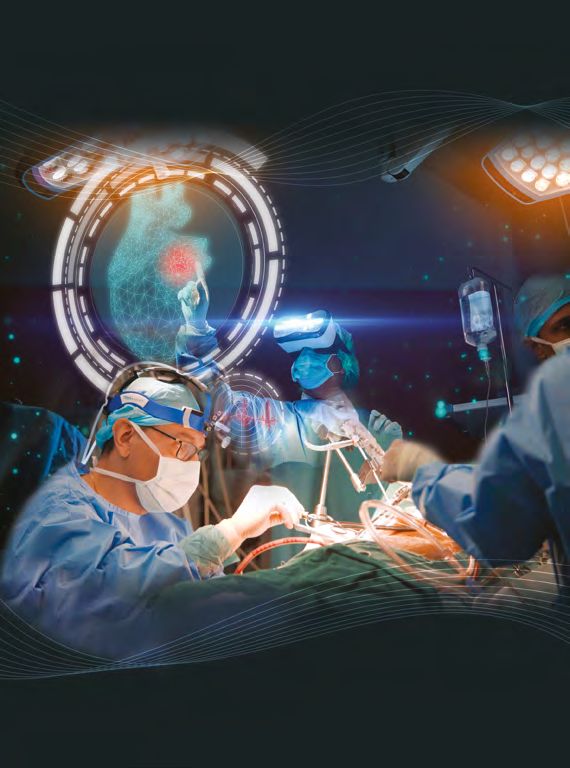
PULSE | ISSUE 36 | TABLE OF CONTENTS

                                         04
    TABLE OF                             Director's Message

    CONTENTS
                                         Message from Prof. Tan Huay Cheem

                                                  COVER STORY                      12
                                                                                   A China-Singapore
                                         05                                        Covid-19 Webinar
           THE TEAM                      A New Institutional Peak                  A discourse on managing
                                         Of Excellence                             STEMI patients during the
     Editorial Directors                 Minimally invasive and hybrid             coronavirus pandemic
     Prof. Tan Huay Cheem                cardiothoracic surgery programme
     A/Prof. Poh Kian Keong

     Editors
     Mr. Don Chan
     Ms. Juliette Lim

     Publications &
     Abstracts
     Ms. Fion Tay
     Ms. Lin Xiao Yun
     Ms. Tan Sze Hwee                     COVER STORY |
                                          A New Institutional Peak Of Excellence
     Publishing Agency
     The Orange Press Pte. Ltd
                                                      EVENT                        13
                                                                                   Honouring The Legacy
     Pulse is a biannual
     publication by the
                                         09                                        Of Prof. Chia Boon Lock
     National University                 Risk Stratification Of Chest              Paying it forward with the Chia
     Heart Centre, Singapore             Pain Patients                             Boon Lock Memorial Bursary
     (NUHCS)                             Asia’s first Rapid Access Chest           Award
                                         Pain Clinic at Ng Teng Fong
                                         General Hospital wins
     1E Kent Ridge Road, NUHS
     Tower Block, Level 9,               excellence award                          14
     Singapore 119228
                                                                                   Going On Air
                                                                                   Asian Interventional
                                                                                   Cardiovascular Therapeutics-
                                                                                   AsiaPCR went online
         nuhcs@nuhs.edu.sg

         www.nuhcs.com.sg                                                                    CLINICAL

         www.youtube.com/user/NUHCS                                                15
                                         10                                        The Inaugural Asia Pacific
         www.facebook.com/NUHCS
                                         The HEART Truth Mandarin                  Consensus Document
                                         Symposium 2020                            On Coronary Bifurcation
                                         The biennial National University          Interventions Published
     Copyright © is held by the          Heart Centre, Singapore public            A collaborative effort by 22
     publishers. All rights reserved.    symposium goes virtual                    experts across 11 countries in
     Reproduction in whole or in parts
     without permission is prohibited.                                             Asia Pacific

2
PULSE | ISSUE 36 | TABLE OF CONTENTS

16                               22                                     28
Raising Competency Levels        Specialist In Training                 Being More Precise About
With Medical Simulation          Completing a fellowship during a       Heart Failure
Training                         pandemic                               New biomarkers identified can
New high fidelity endovascular                                          predict heart failure after a heart
simulators mimic realistic            FACES OF NUHCS                    attack
procedural environment
                                                                        30
18                                                                      The First Heart Genomic
Best Care Every Time                                                    Connectome
Developing an integrated care                                           A genetic map of the heart opens
pathway to improve coronary                                             new ways of understanding heart
artery bypass surgery outcomes                                          disease
                                 23
                                 In The Spotlight
                                 Dr. Peter Chang starred as Body &
                                 Soul’s weekly co-host on TV

                                 24
                                 Staying Connected With
19                               Patients                               32
Rapid Improvement Event          Meet the first Certified Cardiac       In The Lead
Transfer of complex cardiac      Device Specialist (CCDS) nurse in
                                                                        Initiating PASSIvation of
patients between hospitals       Singapore
                                                                        Vulnerable plaque with AZD5718
                                                                        in acuTe coronary syndromE trial
        EDUCATION
                                          RESEARCH                                NEWSBYTES

                                                                        34
                                                                        Awards & Promotions
                                                                        Congratulations to our award
                                                                        winners and newly-promoted
                                                                        doctors!
20
All About Blood Pressure         26                                     36
                                 A Cog In The Wheel                     Publications & Abstracts
21                               Singapore’s role in the
                                 International Study of
Breakfast For The Heart          Comparative Health Effectiveness
Two breakfast recipes for the    with Medical and Invasive
time-starved                     Approaches trial

                                                                                                              3
PULSE | ISSUE 36

    DIRECTOR'S
    MESSAGE
    Dear readers,                       We have mapped out and are
                                        embarking on our five-year plan
    Welcoming the arrival of 2021       focused on transforming clin-
    with unabated breath after a        ical models. As these models
    tumultuous year, there is much      gain increased granularity, our
    to reflect on, in our collective    plan will include a beyond-
    memories and experiences.           hospital-to-community strategy,
                                        integrating innovative health
    In the past year of chaotic         technology and modernised
    upheavals, frontline health-        tertiary care, increasing patients’
    care workers bore the full brunt    access to specialist care through
    of the coronavirus pandemic.        nurse and allied health-led care
    Yet, amidst the health crisis,      with specialised clinics, estab-
    we managed to maintain our          lished through a collaborative
    standard of patient care. We        network within and beyond our
    even achieved some milestones       cluster.                      What we have witnessed in
    such as establishing the mini-                                    2020 was a healthcare system
    mally invasive cardiothoracic Our Department of Cardiac, that was squeezed, stretched,
    surgery (MICTS) as a peak-of- Thoracic and Vascular Surgery expanded and evolved as
    excellence programme, and (CTVS) will be rolling out its it underwent stress testing
    expanding the cardiogenic enhanced recovery after surgery through the pandemic. NUHCS
    shock life-saving programme to model to improve patient expe- has risen to the challenge and
    benefit more patients since its rience and outcomes including emerged stronger through the
    inception in February 2020.      shortened hospitalisation stays. darkest of times.

    With the hope that we are close     At Alexandra Hospital (AH), we        In this new year, knowing now
    to winning the battle against the   are building specialist vascu-        what we are capable of, we shall
    coronavirus and moving ahead        lar services that include diag-       be resolute in our pursuit of
    from the pandemic this year, the    nostic and interventional care;       medical excellence and advance
    National University Heart Centre,   as well as specialist cardiology      further to be ever ready for the
    Singapore (NUHCS) continues         services such as geriatric cardiol-   next challenge that awaits us.
    to progress towards actualising     ogy, cardiology sleep medicine
    the National University Health
    System (NUHS) Group’s clini-
                                        and women’s heart health. Post-
                                        operative inpatient rehabilitative    Tan Huay Cheem
    cal plan model of ‘One-Service,     care at AH will be augmented to       Prof. Tan Huay Cheem
    Multiple-Sites’.                    serve recovering patients before      Director and Senior Consultant,
                                        they discharge for home.              NUHCS

4
PULSE | ISSUE 36 | COVER STORY

             A NEW
INSTITUTIONAL PEAK
    OF EXCELLENCE
  Minimally invasive and hybrid cardiothoracic surgery programme
              The National University Heart     breast bone and open the
              Centre, Singapore (NUHCS)         chest cavity. Plainly, this tech-
              has reached a new institutional   nique is not without risks and
              peak of excellence with its       can cause major trauma to the
              minimally invasive and hybrid     body, requiring a long time for
              cardiothoracic surgery (MICTS)    the body to recover and heal
              programme.                        post-surgery. In weaker or older
                                                patients, “open-heart” surgery
              The conventional approach         may not be the most ideal as
              to reach the heart and lungs      they may be unable to tolerate
              is via a sternotomy where an      the procedure.
              incision is made to break the

                                                                                    5
PULSE | ISSUE 36 | COVER STORY

      Less invasive heart surgery
           is a plethoric platform
        that opens new pathways
       for cooperation within the
          multidisciplinary team,
       offering customisable care
          and attracting more job
          opportunities as well as
       patient volumes for a type
       of surgery that is right for
         the patient, if the patient
                    qualifies for it.
                 A/Prof. Theodoros Kofidis,
                Head and Senior Consultant,
                Department of CTVS, NUHCS

    Advanced technology applied      From being viewed as “inno- around the world to establish
    in surgery such as laparos-      vative procedures”, keyhole the MICTS programme here for
    copy1, interventional radiol-    surgeries are now progressively patients in Singapore.
    ogy2 and robotics have paved     becoming the gold standard in
    the way for minimally invasive   surgical procedures as patients The orchestration from A/Prof.
    surgeries – smaller incisions    seek the best possible long- Kofidis and the efforts put in by
    with higher precision and accu-  term results with lowest surgi- his team eventually led to the
    racy, achieving better outcomes  cal trauma and re-intervention recent recognition of the MICTS
    for patients.                    rates. With smaller incisions, programme as an institutional
                                     patients lose less blood, lower- Peak of Excellence for the
    Minimally invasive surgeries, ing their risk of infection or advances made in the clinical,
    otherwise known as keyhole arrhythmia and enjoy a better educational and research areas.
    surgeries, have boasted many cosmetic (smaller scar) result.
    advantages compared to                                            This recognition was by no
    conventional       “open-heart” A/Prof. Theodoros Kofidis, Head means an overnight achieve-
    surgeries that require larger and Senior Consultant, Depart- ment. It took more than 10
    incisions. Whilst large scale ment of Cardiac, Thoracic years of the team’s dedication,
    population studies are currently and Vascular Surgery (CTVS), requiring a transformation
    not available, numerous case NUHCS has been working in the surgical process which
    studies worldwide have docu- closely with a team to review, posed a steep learning curve for
    mented the benefits of keyhole refine and adapt the best prac- the team to master the technol-
    surgeries.                       tices of keyhole surgeries from ogies and techniques involved.

6
PULSE | ISSUE 36 | COVER STORY

                                                                        Peak of Excellence is an
                                                                        institutional award con-
                                                                        ferred on new and/or
                                                                        niche clinical services
                                                                        that are recognised for
                                                                        the potential to be devel-
                Figure 1: NUHCS MICTS Peak of Excellence team
                                                                        oped into peaks of excel-
                                                                        lence. Such clinical ser-
                                                                        vices will need to meet
                                                                        the following criteria.
                                                                        Criteria for a programme
                                                                        to reach “Peak of
                                                                        Excellence” status

                                                                        Direct Peak:
                                                                        • Defined clinical
                                                                          intervention
                                                                        • Has a direct impact on
                                                                          the lives of patients
                                                                        • Commonly a clinical
                                                                          breakthrough
                                                                        • Leads clinical field
Roles and functions of various To date, over 500 patients in
                                                                        • Creates large halo effect
medical professionals need Singapore and from the region
                                                                        • Patient level impact
to be adapted to ensure the have gone through the MICTS
                                                                        • Should be financially
benefits of the keyhole surgi- programme at NUHCS. Patients
                                                                          sustainable at steady
cal programme are maximised. have reported comparable or
                                                                          state after initial agreed
The medical team, allied health better outcomes and their ex-
                                                                          level of grant / cluster
professionals, researchers as periences have been well doc-
                                                                          support
well as administrators worked umented in research studies
tirelessly hand in hand with pa- published in numerous high
                                                                        Indirect Peak:
tients throughout their journey impact peer-reviewed journals
                                                                        • Systems / Models of
to evaluate and detail the pro- such as The Annals of Thoracic
                                                                          care / enablers
cess – refining the techniques, Surgery and European Journal
                                                                        • Enables other elements
reducing inefficiencies and per- of Cardio-Thoracic Surgery.
                                                                          to provide care
fecting the entire procedure.
                                                                        • Commonly enablers
                                  Conventional open-heart sur-
                                                                          (e.g. AI) and models of
Leadership from the Nation- geries typically takes six to
                                                                          care
al University Health Systems eight weeks for recovery whilst
                                                                        • Thought / model leader
(NUHS) and its hospitals were the keyhole approach allowed
                                                                        • Population level impact
also critical to ensure that the patients to recover in a shorter
                                                                        • Should be financially
overall patient experience im- time. Patients report being able
                                                                          sustainable at steady
proved and was not compro- to return to their regular dai-
                                                                          state with agreed level
mised throughout the entire ly activities sooner, including
                                                                          of cluster support
clinical pathway including the physical exercise, usual work
perioperative and the rehabilita-
tion process.                                                                                          7
PULSE | ISSUE 36 | COVER STORY

                                 and lifestyle routines. One pa-     NUHCS’s team has also gone
                                 tient even started training for     on to train other surgical teams,
                                 a 21km marathon four months         sharing their learnings and
                                 after his surgery!                  techniques with other medi-
                                                                     cal professionals in Singapore
    Procedures that can
                                 Worldwide, keyhole surgeries        and around the region to ac-
    be done via keyhole
                                 have rapidly evolved to be-         celerate their learning curve
    approach at NUHCS:
                                 come the preferred approach         and advance the standard of
    • Mitral valve surgery       for procedures such as mitral       patient care in the region. This
    • Tricuspid valve surgery    valve surgeries and transcathe-     includes lending resources and
    • Aortic valve surgery       ter procedures. In the last dec-    helping other cardiovascular
    • Combined surgeries         ade at NUHCS, much progress         centres set up similar surgical
    • CABG/TECAB/MIDCABG         has been made with key im-          programmes.
    • ASD closure and treat-     provements to patients’ experi-
      ments of arrhythmias       ence and quality of life.           At this juncture, the minimally
    • All types of transcathe-                                       invasive procedure is currently
      ter procedures             A/Prof. Kofidis and his team        still limited to a certain patient
    • Lung cancer / tumours      have captured their insights in     profile. However, as a newly in-
    • Various thorax proce-      a new book, “Minimally Inva-        augurated Peak of Excellence
      dures                      sive Cardiac Surgery: A Practical   centre, CTVS NUHCS is con-
                                 Guide”, to be published later       fident and hopeful in further
                                 this year. The book aims to ad-     developing and establishing
                                 vance patient care and extend       the programme as a standard
                                 the benefits of this technique      of care across a wide range of
                                 to more patients in the region.     possible surgical procedures.
                                 It has been specially designed      1
                                                                      laparoscopy – A type of surgical procedure
                                 with interactive multimedia         that allows a surgeon to access the inside of the
                                 through QR codes to enhance         abdomen and pelvis without having to make
                                                                     large incisions in the skin.
                                 readers’ experiences and better     2
                                                                      interventional radiology – A medical
                                 demonstrate key concepts ex-        subspecialty that involves a range of imaging
                                                                     procedures to obtain images inside the body
                                 pounded in the text.

                                 With links to leading research          ARTICLE BY

                                                                     A/Prof. Theodoros Kofidis
                                 institutes, the NUHCS MICTS         Head and Senior
                                 programme has a fertile ground      Consultant, Department
                                                                     of CTVS, NUHCS
                                 for continuous and extensive
                                 study where further develop-        A/Prof. Kofidis has been
                                                                     recognised for his innovative
                                 ments are being made. In fact,      surgical discoveries focused
                                 the technique has been prolif-      on less traumatic heart surgery. His passion
                                                                     in this area led to his founding of the Initiative
                                 erated to include more heart        for Research & Innovation in Surgery (IRIS). He
                                                                     continues to present his work at numerous
                                 and lung procedures and the         international conferences as well as lead training
                                 technique has been refined          workshops for medical teams around the world.
                                                                     He actively contributes to the industry through
                                 for various conditions seen in      his multiple concurrent appointments held
                                 Asian patients.                     globally. He remains active in research with
                                                                     many published works, as well as patents, and
                                                                     sits on the editorial review board for a number of
                                                                     scientific journals.

8
PULSE | ISSUE 36 | EVENT

RISK
STRATIFICATION
OF CHEST PAIN
PATIENTS
Asia’s first Rapid Access Chest Pain Clinic (RACPC) at Ng Teng
Fong General Hospital (NTFGH) wins excellence award
An increasing number of pa-        At the RACPC, a specialist chest
tients experiencing chest pains    pain nurse reviews patients’ risk
are going to the emergency         profiles, performs blood tests
department (ED) where waiting      and treadmill ECG3 before they
times can be long and testing      are reviewed by a consultant
expensive, especially when the     cardiologist. The entire process
patient is admitted.               would take less than three hours
                                   with patients receiving a com-      With these results, the RACPC
Patients who are seen at the       plete diagnosis and treatment       model will be rolled out to more
cardiology specialist outpatient   plan by the end of their visit.     polyclinics and primary care
clinic (SOC) often wait several                                        networks this year to benefit
weeks for their first appoint- The pilot registered a 98 percent       more patients.
ment and may return for several decrease in waiting time for eval-     1
                                                                        ECG – A test measuring the electrical activity of
                                                                       the heart.
hospital visits before a definitive uation by a cardiologist. On av-
                                                                       2
                                                                        acute coronary syndromes – Describes the
diagnosis can be formed.            erage, the patient only requires   range of various conditions associated with
                                    1.5 hospital visits compared to    sudden, reduced blood flow to the heart,
                                                                       often associated with plaque buildup inside
To address the current inef- 3 from before. Consequently,              arteries causing abrupt limitations of blood
ficiencies, a pilot nurse-led, healthcare expenditure fell by          flow, consequently leading to a heart attack or
                                                                       stroke.
cardiologist-supervised RACPC 20.7 percent, with inpatient bed         3
                                                                        treadmill ECG – Simple test to measure the
was set up to improve the diag- days due to chest pains decreas-       heart’s response to physical stress by having
                                                                       patient walk on a treadmill at increasing speed
nostic pathway for patients.        ing by 24.7 percent.               and difficulty.

                                                                           ARTICLE BY
Under this pilot model, patients   Selected from a total of 200 en-
                                                                       Asst. Prof. Pipin Kojodjojo
seen at the primary care clinics   tries from 89 hospitals across 16   Director, Cardiovascular
with ongoing chest pain or elec-   countries, this programme was       Catherisation Laboratory
                                                                       and Senior Consultant,
trocardiogram (ECG)1 changes       recognised at the Asian Hospi-      Department of
                                                                       Cardiology, National
suggestive of acute coronary       tal Management Awards 2020,         University Heart Centre,
syndromes2 are immediately         with an Excellence Award in the     Singapore (NUHCS)

sent to the ED. Other patients     Patient Experience Improve-         Asst. Prof. Kojodjojo concurrently holds the
would be referred to the RACPC     ment Category.                      positions of Head of Division, Senior Consultant,
                                                                       Cardiology at NTFGH and Asst. Prof. at Yong Loo
for evaluation within 24 hours.                                        Lin School of Medicine, National University of
                                                                       Singapore.

                                                                                                                            9
PULSE | ISSUE 36 | EVENT

     THE
 HEART
     TRUTH
     MANDARIN SYMPOSIUM 2020
     The biennial National University Heart Centre, Singapore
     (NUHCS) public symposium goes virtual

     S
       ince 2001, NUHCS organ-           Symposium moved to a virtual        Huay Cheem, Director and
       ises the biennial Manda-          platform for the first time –       Senior Consultant, NUHCS
       rin public symposium,             delivered via live video stream-    delivered bite-sized information
 “The HEART Truth”, with the             ing on YouTube.                     about heart health issues. They
  aim to educate the public                                                  shared about the key differ-
  about preventive heart health,         More than 500 people watched        ences in heart attacks between
  share about the latest develop-        the live video stream on a Satur-   men and women, cardiac reha-
  ment in this field and address         day afternoon via their comput-     bilitation treatment for patients
  the public’s misconceptions            ers, mobile phones, tablets or      during the pandemic, as well as
  about heart health.                    smart TVs.                          the trends and development of
                                                                             coronary angioplasty.
     Due to the Covid-19 pandemic        Delivering a symposium in this
     in 2020, the public symposium       manner, without a live audi- The symposium was well-
     could not take place in its usual   ence, was a different experi- received, reaching a good mix
     event format where hundreds         ence. Helping to keep viewers of Mandarin speakers in Singa-
     of participants would gather to     engaged through the 90-minute pore who participated in the
     discuss concerns about their        symposium was local radio DJ lively Q&A session by posting
     heart health and engage with        Anna from Hao FM 96.3, who questions through the live chat
     cardiologists from NUHCS in         moderated the event.           functions.
     person.
                                         Three speakers from the Depart-
  With health issues being a key          ment of Cardiology, NUHCS
  priority for Singaporeans espe-        – Asst. Prof. Low Ting Ting,
  cially during a health crisis,          Consultant, Asst. Prof. Yeo Tee
 “The HEART Truth” Mandarin              Joo, Consultant, and Prof. Tan

10
PULSE | ISSUE 36 | EVENT
The overwhelming
enthusiasm received
for our first public
virtual event was
unexpected, but with
this reception, we will ARTICLE BY
Prof. Tan Huay Cheem
surely look into more Director and Senior
Consultant, NUHCS
virtual public events
which may perhaps Prof. Tan is a Professor of
Medicine, Yong Loo Lin
reach more people... School of Medicine, NUS and has a master of
Medicine in Internal Medicine. He is an active
Prof. Tan Huay Cheem, clinical researcher, visiting professor at several
hospitals in China and invited speaker at many
Director and Senior Consultant, NUHCS international cardiology meetings.
11PULSE | ISSUE 36 | EVENT
A CHINA-
SINGAPORE
COVID-19
WEBINAR
A discourse on managing
STEMI1 patients during the
coronavirus pandemic
Following the initial outbreak
of the coronavirus in China in
December 2019 and the ensu-
ing lockdown of Wuhan city
on 23 January 2020, significant As there were many attendant and to consider the mental and
changes had to be made for the challenges that confronted emotional protection for the
care of cardiac patients in China. interventional cardiologists, entire medical team to keep
In particular, the treatment of National University Heart Centre, morale up whilst optimising
patients with heart attacks. Singapore (NUHCS) organised a patient care during such trying
Mandarin webinar on 11 April times.
With concerns about the risk of 2020 which attracted more than
virus exposure to medical staff 8,000 viewers.
and limited screening resources 1
STEMI – A common acronym for ST segment
elevation myocardial infarction (STEMI)
available at that time, coronary Chaired by Dr. Lang Li from describing a more severe form of heart attack
angioplasty2 and stenting could Guangxi University in Nanning, where the coronary artery is blocked off by
a blood clot for a prolonged period of time
no longer be offered as the first doctors from major Chinese affecting a large area of the heart which leads
to a life-threatening emergency.
line treatment for reperfusion3 cities, including Wuhan, Nanjing
2
angioplasty – Procedure which restores blood
therapy. and Guangzhou were invited flow through arteries.
to share their experiences 3
reperfusion – Restoration of blood flow to an
In Singapore, the first Covid-19 in managing STEMI patients organ or tissue, typically after a heart attack,
which can be done with surgery and/or drugs.
patient was diagnosed on during the Covid-19 pandemic.
23 January 2020 which was
followed by the first reported Prof. Tan Huay Cheem, Direc- ARTICLE BY
death on 21 March 2020. Signif- tor and Senior Consultant, Prof. Tan Huay Cheem
Director and Senior
icant changes were made to NUHCS, one of the key speak- Consultant, NUHCS
emergency cardiac services in ers, expounded on the Centre’s
Prof. Tan is a Professor of
Singapore. However, Singapore response in the pandemic. Medicine, Yong Loo Lin
continued to offer coronary He emphasised the need to School of Medicine, NUS and has a master of
Medicine in Internal Medicine. He is an active
angioplasty as the first line of provide sufficient personal clinical researcher, visiting professor at several
treatment because of the treat- protective equipment (PPE), hospitals in China and invited speaker at many
international cardiology meetings.
ment’s superior efficacy.
12PULSE | ISSUE 36 | EVENT
HONOURING THE LEGACY
OF PROF. CHIA BOON LOCK Paying it forward with the Chia Boon Lock Memorial Bursary Award
A much respected and coura-
geous man who in his 34-year
battle with cancer never once
wavered in the face of adversity.
A brilliant doctor who devoted
his entire life to the single-mind-
ed pursuit of excellence in cardi-
ology, a selfless teacher who was
willing to share his knowledge
with others, and a great mentor
who was generous and ever ready
with his advice...
Bursary award recipient Goh Xin Lei
Prof. Tan Huay Cheem, Director and
(2nd from right)
Senior Consultant, NUHCS
Three years have passed since Lin School of Medicine, National Gold Medal and Prize, an annu-
well-loved Prof. Chia Boon Lock University of Singapore (NUS), is al award for medical students
passed on 27 December 2017. the first recipient of the bursa- with the best written report on a
To this day, Prof. Chia’s legacy ry award. With the award, she cardiology research project. The
has remained firmly etched in is at liberty to participate in the NUS Board of Undergraduate
the minds of those whose lives school’s extra-curricular activi- Studies will oversee this award.
he had touched. ties which would contribute to
her holistic medical education. At the National University Heart
The Chia Boon Lock Memori- Centre, Singapore (NUHCS), the
al Bursary Award was set up in She is also the Playhouse Di- annual final year medical stu-
honour of his legacy as an out- rector for the NUS Medicine dent weekend teaching course
standing and devoted educator, Playhouse Annual Drama has been named the “Chia Boon
mentor and teacher. This award Competition, a member of an Lock Cardiology Review Course”,
aims to help students pursuing award-winning team in the in remembrance of the educa-
a medical education alleviate Medical Grand Challenge which tor that he was, and to keep his
their financial burdens. Prof. nurtures creativity and culti- legacy alive.
Chia’s peers, colleagues, and vates an inquiring and entrepre-
ex-students have generously neurial mind amongst medical ARTICLE BY
donated more than S$300,000 students. Outside of her studies, Prof. Tan Huay Cheem
to the fund to continue his life’s Ms. Goh dabbles in water-colour Director and Senior
Consultant, NUHCS
work and passion for imparting painting and calligraphy.
medical knowledge. Prof. Tan is a Professor of
Medicine, Yong Loo Lin
In another tribute to the late School of Medicine, NUS and has a master of
Medicine in Internal Medicine. He is an active
Ms. Goh Xin Lei, a fifth-year med- Prof. Chia, NUS is setting up clinical researcher, visiting professor at several
ical student from the Yong Loo the Chia Boon Lock Cardiology hospitals in China and invited speaker at many
international cardiology meetings.
13PULSE | ISSUE 36 | EVENT
GOING ON AIR
Asian Interventional Cardiovascular Therapeutics
(AICT)-AsiaPCR went online
As with many events, the AICT- vascular closure devices2, indi-
AsiaPCR went online in 2020 cations and techniques for ret-
and was successfully brought to rograde chronic total occlusion
fruition on 13 December 2020. (CTO)3, and overcoming chal-
lenges of ST-Elevation Myocar-
Initially planned to be held in dial Infarction (STEMI) percuta-
July 2020, the event had to be neous coronary interventions
cancelled following travel re- (PCI)4.
strictions and government regu-
lations in the wake of the coro- In a six-hour non-stop meeting,
navirus outbreak. Nonetheless, the event attracted more than
PCR Board Members announced 2,000 attendees, predominant-
the move of AICT-AsiaPCR to the ly medical doctors from all over
online space, building on the the world.
momentum created following 1
DAPT – A treatment therapy where the patient is
its first PCR e-Course held in given two types of antiplatelet agents to prevent
June. platelets in the blood from clotting which can
lead to a heart attack or clotting in the coronary
stent.
The AICT-AsiaPCR, designated 2
vascular closure device – A device usually made
from collagen, metallic clip or suture designed to
as the official scientific meeting provide immediate sealing of the small puncture
of the Asia Pacific Society of In- made in an artery after an angiogram.
terventional Cardiology (APSIC) 3
retrograde chronic total occlusion (CTO) – An
innovative approach to treat CTO (a complete
aligns with the society’s mission or nearly complete blockage of one or more
of “Transforming Lives Through coronary arteries mainly cause by plaque
buildup)
Advancing Innovation and Glob- 4
STEMI PCI – A non-surgical procedure to treat
al Partnerships”. the narrowing of the coronary arteries often
done through balloon angioplasty to treat a
more severe form of heart attack where the
While it was tricky to deliver the coronary artery is blocked off by a blood clot for
a prolonged period of time affecting a large area
programme entirely online, the of the heart.
programme’s directors put to-
gether an educational and ex- ARTICLE BY
Prof. Tan Huay Cheem
citing course to share the latest Director and Senior
expertise and knowledge in the Consultant, National
University Heart Centre
field of interventional cardiolo- Singapore
gy with the attendees.
Prof. Tan is a Professor of Medicine, Yong Loo
Lin School of Medicine, NUS and has a master
Topics included decision mak- of Medicine in Internal Medicine. He is an active
clinical researcher, visiting professor at several
ing around dual antiplatelet hospitals in China and invited speaker at many
therapy (DAPT)1, the role of international cardiology meetings.
14PULSE | ISSUE 36 | CLINICAL
THE INAUGURAL ASIA PACIFIC
CONSENSUS DOCUMENT ON
CORONARY BIFURCATION
INTERVENTIONS PUBLISHED
A collaborative effort by 22 experts across 11 countries in Asia Pacific
Through such collaborative
effort, challenges could be iden-
tified; skills, knowledge and
techniques could be shared;
collaboration in research could
be fostered; resources and data
could be appraised and pooled;
and partnership could be formed
within APAC and beyond.
A/Prof. Adrian Low, Senior Consultant,
Department of Cardiology, NUHCS
Coronary bifurcation interven- weigh in on this evolving do- ARTICLE BY
tion1 is common but complex. main of coronary intervention. Dr. Loh Poay Huan
Senior Consultant,
In recent years, progress has Department of
been made in this field with The conclusions drawn were Cardiology, NUHCS
considerable contribution from captured in the inaugural APAC Dr. Loh worked as a consultant
Asia Pacific (APAC). However, consensus document recently interventional cardiologist in
the UK for two years before joining NUHCS in
the standard of practice var- published in the EuroInterven- 2014. He started his career as a researcher in the
field of heart failure and refractory angina, before
ies across the region due to tion Journal. joining the British National Training Program in
differences in culture, socio- Cardiology in 2006 and has since continued with
his specialist training in interventional cardiology.
economic factors and the This consensus document He continues to be active in research with a
healthcare set-up. The practice aims to address the differences number of published research across various
cardiology journals.
may also differ in other parts of in practice across the region,
the world. as well as between APAC and A/Prof. Adrian Low
Europe or the United States of Senior Consultant,
Department of
A/Prof. Adrian Low, Senior Con- America. It offers insights and Cardiology, NUHCS
sultant, Department of Cardiol- techniques originating from the
A/Prof. Adrian Low is also the
ogy, National University Heart region to cardiologists in other current Programme Director of
Centre, Singapore (NUHCS) parts of the world. Acute Coronary Syndrome Programme in NUHCS.
As a Senior Consultant, his focus remains clinical
chaired a two-day forum in where he has expanded the radial vascular access
program at NUHCS and advocates for radial and
Singapore where 22 regional Coronary bifurcation intervention – the
1
treatment of coronary bifurcation lesions small access vascular interventions. He is a keen
experts across 11 countries in is very dynamic with an ongoing evolution researcher and is also an advocate of functional
in clinical approaches and techniques and evaluation of coronary artery disease and the use
APAC convened to discuss and the management of more complex cases of pressure wire guided interventions to reduce
continuing to evolve unnecessary procedures.
15PULSE | ISSUE 36 | CLINICAL
RAISING COMPETENCY
LEVELS WITH MEDICAL
SIMULATION TRAINING
New high fidelity
endovascular simulators
mimic realistic procedural
environment
Equipped with Somnotec’s
Mentice VIST® G5 endovascu-
lar simulators, the National The system offers a suite of Simulation realism allows
University Heart Centre, Singa- modules with various scenarios individuals or teams to train
pore (NUHCS) now boasts a in peripheral and aortic inter- together, working through a
high fidelity1 system that is able ventions2 (including aortic valve) range of scenarios as experien-
to simulate a wide range of as well as coronary procedures tial training based on real-life
cardiovascular surgeries. This which allow medical profession- situations. Additionally, this
enables hands-on procedural als to play out a wide variety of system provides a structured
training for clinicians and surgi- scenarios and error-prone situ- syllabus for each module which
cal teams to raise their level of ations, subsequently receiving helps to score and certify teams
clinical proficiency, including immediate objective feedback prior to actual clinical situations.
the rehearsal of pre-operative for reflection on their perfor-
procedures – all without jeop- mance in a controlled setting.
ardising patients’ safety.
1
high fidelity – The reproduction of an effect ARTICLE BY
(sound or image) that is very close to the original.
Dr. Chang Guohao A/Prof. Andrew Mark
2
peripheral and aortic interventions – Consultant, Department Tze Liang Choong
Procedures to treat peripheral artery disease of Cardiac Thoracic and Consultant, Department
which is the narrowing of arteries that affects Vascular Surgery (CTVS), of CTVS, NUHCS
blood flow to the legs, stomach, arms and head. NUHCS
3
Balloon valvuloplasty – A procedure to repair a A/Prof. Choong is a
heart valve that has a narrowed opening. Dr. Chang is an accredited specialist in consultant, vascular,
cardiothoracic surgery by Singapore’s Ministry endovascular and aortic surgeon at NUHCS.
4
thoracic aortic aneurysms – The weakened He is a well-published and active researcher,
of Health and was awarded the College of
areas in the aorta which can cause bulging like having been invited to deliver keynote lectures
Surgeons Gold Medal in Cardiothoracic Surgery.
a balloon (aneurysm) due to the blood pushing at numerous international conferences. He also
He is currently a Consultant in the Department
against the vessel wall. lectures in his concurrent positions as a core
of CTVS at NUHCS with interests in all aspects of
5
dissections – Tears in the wall of blood vessel adult cardiac surgery including extracorporeal faculty member in the National University Health
wall that can cause life-threatening bleeding or life support. System (NUHS) Research Residency Programme
sudden death as well as an assistant professor at Yong Loo
Lin School of Medicine, National University
6
angiography – An imaging test that uses X-ray of Singapore (NUS). Prior to NUHCS, he was a
to view blood or lymph vessels consultant in vascular and endovascular surgery
at King’s College Hospital in the United Kingdom.
7
PCI – A non-surgical procedure to treat the
narrowing of the coronary arteries, often done
through balloon angioplasty.
16PULSE | ISSUE 36 | CLINICAL
TRANSCATHETER AORTIC VALVE IMPLANTATION MODULE
This module provides pre- when the heart’s aortic valve • Acquiring implant annular
procedural practice to execute a narrows, reducing blood flow plane
seamless and safe transcatheter onward to the rest of the body. • Crossing the stenotic aortic
aortic valve implantation (TAVI) valve and wire placement
workflow for the treatment of It provides individual and • Balloon valvuloplasty3
aortic stenosis which occurs team-based training in: • Valve implant
THORACIC ENDOVASCULAR AORTIC REPAIR MODULE
This module provides pre-procedural practice to
execute a seamless and safe thoracic endovas-
cular aortic repair (TEVAR) workflow for the treat-
ment of thoracic aortic aneurysms4 and dissec-
tions5. TEVAR is a minimally invasive procedure to
repair the aorta, the major blood vessel which ex-
its the heart and carries blood to all the organs in
the body. The module focuses on the following:
• Wire exchange
• Crossing the aortic arch
• TEVAR stent deployment
CORONARY ESSENTIALS TRAINING MODULE
This module covers the fundamentals in diagnostic
angiography6 and percutaneous coronary intervention
(PCI)7. The software also allows proctors to remotely
introduce in real-time complications and manipulate
scenarios using a tablet. Using lesion scoring and
navigation training exercises, it focuses on the following:
• Identifying lesions
• Comprehend anatomical structuring
• Selection of appropriate devices depending on the
approach and anatomy
17PULSE | ISSUE 36 | CLINICAL
BEST CARE
EVERY TIME
Developing an integrated care pathway to improve
coronary artery bypass surgery (CABG) outcomes
ProvenCare® is an intensive, in adult cardiac surgery
evidence-based treatment pro- have not been followed
gramme focused on ensur- up consistently. Currently,
ing the best care is delivered the Value-Driven Outcomes
to patients. At the core of the analysis of some care pro-
programme, the process ap- cesses showed a variance of
plies evidence-based protocols 30 to 96 percent for follow-up
aimed at reducing mortality care processes such as ear-
rates, improving outcomes, ly post-operative antiplatelet1 1
antiplatelet – Medication that stop platelets in
and reducing costly hospital re- therapy, use of beta blockers2, the blood from sticking together and forming a
clot.
admissions by offering a secondary prevention with 2
beta blockers – A class of drugs that reduce
“warranty” for patients in this statins3, and early post- blood pressure by blocking the effects of
hormones, epinephrine and adrenaline.
programme. operative mobilisation.
3
statins – A class of drugs aimed at reducing
illness and mortality in those who are at high
By eliminating unwarranted var- One of the key features of the risk of cardiovascular disease.
iation and applying scientific ProvenCare® model is its ability
best practices to CABG patients, to provide quality and consist- Much credit goes to Ms. Choo
Geisinger, the hospital group ency for specific medical proce- Mei Ling from the Opera-
which pioneered the model, has dures and services, embedded tions and Administrations
been able to reduce hospital into the electronic health record Department for her persis-
re-admissions, complications, system to provide decision sup- tence and patience over the
length of stay, unnecessary re- port for the care team, ensuring nine years from our first
source utilisation and costs. that care is given in the most ef- submission to the eventual
ficient and consistent manner approval of funding.
With the recommendation possible. Asst. Prof. Kristine Teoh Leok Kheng,
Senior Consultant, Department of CTVS,
from Singapore’s Ministry of NUHCS
Health, the National Univer- NUHCS recently implemented ARTICLE BY
sity Heart Centre, Singapore this multifaceted programme Asst. Prof. Kristine Teoh
(NUHCS) has reviewed the mod- in hopes of replicating similar Leok Kheng
Senior Consultant,
el and received funding from the results. The team at NUHCS has Department of Cardiac,
Thoracic and Vascular
Health Services Development begun to establish a consen- Surgery (CTVS), NUHCS
Programme to develop and im- sus on key best practices that
plement a new integrated care should be consistently delivered Having worked with mostly elderly patients for
over 10 years at a number of cardiothoracic
pathway to improve CABG out- to patients to ensure reliable units in the United Kingdom, Asst. Prof. Teoh
has a special interest in improving healthcare
comes, inspired by the Proven- delivery of such care. Eventual- provision, quality outcome measures, and
Care® model. ly, the goal is to not only reduce innovative transcatheter therapies that avoid
the need for major open surgery. In Singapore,
the mortality rate of patients but she pursues her interests at NUHCS and
From a historical perspec- also, post-operation complica- remains passionate about teaching and training
through her role as an assistant professor at the
tive, previous care pathways tions for a better quality of life. Department of Surgery, Yong Loo Lin School of
Medicine, National University of Singapore (NUS).
18PULSE | ISSUE 36 | CLINICAL
One of the greatest
benefits is the op-
portunity for staff
across the three
centres to meet and
RAPID
strengthen our work-
ing relationship.
This synergy is espe-
IMPROVEMENT
cially meaningful in
time-sensitive operations
concerning people’s lives.
I’m grateful to all those who
EVENT
have contributed in making
this a successful event.
Asst. Prof. Chai Ping, Head &
Senior Consultant, Department of
Cardiology, NUHCS Transfer of complex cardiac patients between hospitals
Frequently, critically ill cardi- improvement event (RIE) to de- From this RIE, a new workflow
ac patients need to be trans- liberate over the issues. was established that will be im-
ferred urgently from Ng Teng plemented in phases over a few
Fong General Hospital (NTFGH) An intensive workshop con- months to ensure a seamless
or Alexandra Hospital (AH) to ducted over a week brought transition, and allow personnel
the catherterisation labs (cath- key personnel from the three to be familiarised with the new
labs)1 at National University centres together to map out process.
Hospital (NUH) for diagnostic clear pathways for patients with
procedures and emergency in- the following key benchmark 1
cathlabs – A special hospital room where
a specially trained cardiac team performs
terventions such as inotropic indicators: minimally invasive tests and procedures with
support2, mechanical ventila- • Optimise patient safety the patient usually concious.
tion and intra-aortic balloon • Achieve best time possible 2
inotropic support – Therapy that changes the
force of the heart’s contractions to stabilise
counterpulsation (IABP)3. in the transfer of critical pa- blood circulation and to optimise oxygen
supply.
tients to NUH’s cathlabs
3
IABP – The most common method using a
Inter-hospital transfers of these • Optimise communication temporary mechanical assist device to support
high-risk patients is a complex updates on patients’ condi- blood flow and oxygen supply for the heart.
exercise, fraught with poten- tion throughout transfer
tial complications and rapid • Detecting, monitoring and ARTICLE BY
changes in the patients’ condi- managing adverse events Asst. Prof. Chai Ping
Head & Senior Consultant,
tion. This places great demands • Emergency response should Department of Cardiology,
on the healthcare personnel patients’ condition deterio- National University Heart
Centre, Singapore (NUHCS)
carrying out the transfer where rates
speed is critical and leaves no Asst. Prof. Chai Ping was
accredited as specialist in
room for error. This RIE provided a platform for cardiology in 2002. Subsequently, he did his
members to better understand fellowship in Cardiovascular Magnetic Resonance
at the Royal Brompton Hospital in London, the
To streamline the process, per- and appreciate the challenges United Kingdom from the period of 2004 to 2005.
sonnel from NTFGH, AH and faced by each centre, and work His specialty interest lies in heart failure and
non-invasive cardiovascular imaging. He is heavily
NUH came together in a rapid on how to overcome these gaps involved in medical and nursing education.
together.
19PULSE | ISSUE 36 | EDUCATION
PREVENTING BLOOD PRESSURE CONDITIONS
ARTICLE BY
NUHCS Pulse Editorial
Eat healthy. Do not smoke Avoid alcohol
Reduce salt intake.
Keep active. Maintain healthy
Look after your Exercise regularly. body mass index
mental health (BMI)
Blood Pressure is the force of blood pushing
against your artery walls as it goes through your Healthy BMI Range:
body. Your blood pressure changes as you engage 18.5 to 22.9
in different activities throughout the day. BMI = (Weight in
kilograms) /
The “normal” range can also vary slightly from (Height in metres)2
person to person depending on their age and
physique. However, if your blood pressure is
within the low or high range many times in a day,
visit a doctor to get a more detailed analysis.
SYSTOLIC PRESSURE
Pressure when your heart contracts / squeezes
to push out blood to the rest of your body
DIASTOLIC PRESSURE 1 IN 4
aged 30 to 69 in
Pressure when your heart relaxes and fills with blood and oxygen Singapore have high
blood pressure
Systolic
90 120 140 above 180
Pressure
LOW NORMAL HIGH VERY HIGH
Diastolic
60 80 90 above 120
Pressure
Condition Low Blood Pressure a.k.a. Normal High Blood Danger of
Hypotension Pressure a.k.a. arteries bursting
Hypertension
Sudden drops in pressure Warning: Danger
can be life-threatening. In Most people of stroke or heart
older people, it could mean do not have attack.
that blood is not being any symptoms
effectively pumped to all
parts of their body and
should seek medical advice.
20PULSE | ISSUE 36 | EDUCATION
Breakfast
FOR THE
TWO-INGREDIENT PANCAKE
This recipe is a winner especially for
those looking for gluten-free or dairy-free
HEART
options. Cooking these pancakes could be
tricky as they cannot hold their shape well,
but you can keep your pancakes small to
make them easier to cook and flip.
Two breakfast recipes for the time-starved Ingredients:
2 eggs & 1 ripe banana
So much to do and in a rush? These heart
1. Mash up the banana and beat it in with
healthy recipes will take just 10 minutes to
the eggs.
prepare and are perfect to kickstart your day!
2. Heat your pan over medium heat with
some olive or vegetable oil.
Patients with comorbidities should consult 3. Pour the mixture into the pan and gently
with a dietitian for a customised diet plan. fry it. Flip it after a minute to cook the
other side.
ARTICLE BY 4. Serve warm.
NUHCS Pulse Editorial
Ingredients:
CLASSIC YOGHURT ½ cup Greek yoghurt, dry oats, cereal or nuts and fruits
PARFAIT 1. Slice fruits to fit them in your cup. Strawberries and blueber-
Best for freestylers! You ries are great for heart health so be generous with these.
can layer it anyway you 2. Fill your cup with the ingredients in layers. Alternate layers
like. Try switching be- with yoghurt, fruits and dry cereal or oats.
tween soft and crunchy 3. Nuts have been proven to reduce the risk of heart disease. In
bases, and allowing fact, we recommend a cup (about 40g) of nuts a few times
the parfait to sit over- each week for adults.
night for a tastier snack 4. Layer all these awesome ingredients in your favourite cup
in the morning. before starting on your parfait.
5. Refrigerate overnight for added flavor.
21PULSE | ISSUE 36 | EDUCATION Image credits:
Royal Papworth Hospital / Twitter
SPECIALIST
IN TRAINING
Completing a fellowship during a pandemic
D
r. Lim Yoke Ching, Con- training, she also
sultant, Department of saw patients in the
Cardiology at National cardiomyopathy 4
University Heart Centre, Sin- clinic, and the cardio-genetics5
gapore (NUHCS), received clinic at both the RPH and 1
cardiogenic shock – Condition when the heart
suddenly cannot pump enough blood to meet
the Health Manpower Devel- Addenbrooke’s Hospital locat- the body’s needs. This condition is often fatal if
not promptly treated.
opment Programme (HMDP) ed in Cambridge.
2
endomyocardial biopsy – A procedure where
award, which gave her the op- small amounts of heart tissue is obtained for
portunity for further training While her time at RPH was further testing such as diagnostic, therapeutic
and research purposes.
as a fellow in advanced heart shortened due to the pandem- 3
right-heart catheterization – Also known as a
failure at the Royal Papworth ic, Dr. Lim expressed her grat- pulmonary artery catherization, this procedure
Hospital (RPH) in Cambridge, itude for the opportunity to measures the pressures in the heart and lungs.
the United Kingdom (UK). advance her training under the 4
cardiomyopathy – Disease of the heart muscle
which makes it harder to pump blood to the
highly regarded fellowship pro- rest of the body. There are various causes and
different types of cardiomyopathy.
It is one of the largest heart and gramme.
cardio-genetics – The inter-discipline area
lung transplant hospitals in
5
describing the work combining expertise from
the UK, having performed the Aside from the depth and genetics and cardiology to study the genetic
causes of heart disease.
most number of heart and lung breadth of exposure, the pro-
transplants in the country in re- gramme allows for close inter-
cent years. action with faculty members
as well as a balanced schedule
Under the mentorship of five for research and clinical experi- My time spent at RPH
heart failure and transplanta- ence, critical in sharpening the has been productive
tion cardiologists, Dr. Lim was skills of a cardiologist.
and insightful at
exposed to a wide range of pa-
tients – from those with chronic
every turn. It has
heart failure in the outpatient ARTICLE BY been nothing short of
clinics to patients with cardio- Dr. Lim Yoke Ching inspirational and I am
genic shock1 requiring mechan-
Consultant, Department
of Cardiology, NUHCS excited to apply my
ical circulatory support and new knowledge upon
Dr. Lim joined NUHCS
heart transplantation. after completing her senior returning to NUHCS.
residency training in cardiology at NUHCS in 2017.
She has a special interest in heart failure and in Dr. Lim Yoke Ching, Consultant,
She also had the opportunity women’s heart health. She is currently a core Department of Cardiology, NUHCS
faculty member of the NUHCS Cardiology Senior
to hone her skills in endomyo- Residence Programme and an assistant professor
cardial biopsy2 and right-heart with the Yong Loo Lin School of Medicine,
National University of Singapore (NUS).
catheterisation3. As part of her
22PULSE | ISSUE 36 | FACES OF NUHCS
ARTICLE BY
IN THE
Dr. Peter Chang
Consultant, Department of
Cardiology, NUHCS
Dr. Chang is passionate about diseases
SPOTLIGHT
affecting blood vessels and therapeutics
for peripheral artery disease. His special interests is in
the area of vascular medicine, treatment of critical limb
ischemia and prevention of limb amputation. On the
research front, he is currently focused on topics related
to the recognition of peripheral artery disease and
Dr. Peter Chang starred as Body & Soul’s cardiovascular risks.
weekly co-host on TV
Body & Soul is a television the call came, I thought it was a my celebrity co-host, Vernetta
health talk show aimed at de- great opportunity for people to Lopez. She would calmly show
mystifying health issues. Med- learn about health matters as me how she hit her marks, find
ical professionals are invited they are spending more time at her light, and deliver her lines
as co-hosts on the show to ad- home. perfectly each time. On my own,
dress common health concerns I too tried to picture and emu-
in Singapore. Lights, camera, action! What late Dr. Oz on his own show.
was it like filming for a TV show?
The Pulse editorial team sat The first time I stepped into the
down with Dr. Peter Chang, Con- studio, I was immediately taken
sultant, Department of Cardiol- aback by the number of lights
Dr. Mehmet Oz is a cardiac
ogy, National University Heart over me. I thought, the idiom
surgeon and an American ce-
Centre, Singapore (NUHCS) who “be in the spotlight” should be
lebrity, having appeared on
was invited to co-host Season 8 changed to “be in the spot- numerous TV shows as well as
of the show and find out more lights”! hosting his own talkshow “The
about his filming experience. Dr. Oz Show” distributed by
As I settled my anxiety, the nerv- Sony Pictures Television.
PULSE: What were your initial ousness quickly turned into an
thoughts when you first got the appreciation for the dynam-
call for the show? ic rhythm palpable on the set.
Dr. Chang: It was supposed to From the make-up artist and Was there any particularly
be the year that my two sons, writers, to the cameramen and memorable event for you?
Daniel and Charlie, turned from producers, the flow of everyone It was six days of intense film-
babies to toddlers. Then came seemingly working as one with a ing. After all that time in the
the coronavirus. It put a spot- razor-sharp focus was similar to studio, I bonded with everyone
light on how fragile we are and that of a musical performance. and felt extremely honored to
I realised more people were be given such an important op-
becoming more aware and in- Being a TV rookie, I tried to learn portunity this year. I sincerely
terested in their health. When as much as I can, and observed thank everyone for helping me
reach a new stage where I can
proudly mark as my achieve-
ment for 2020.
23PULSE | ISSUE 36 | FACES OF NUHCS
STAYING
CONNECTED
WITH
PATIENTS
Meet the first Certified Cardiac Device
Specialist (CCDS) nurse in Singapore
Specialised nurses play a crit- helping with the early triage of What drew my interest
ical role in a patient’s journey. patients. in EP was that I find the
Trained with specific skillsets, latter to be academically
specialised nurses are a stable One such nurse, Ms. Lai Lee and scientifically
and valuable medical resource, Wah, Senior Staff Nurse (SSN), interesting, especially
providing the 24-hour presence, Arrhythmia Management, the interpretation of
helping to optimise patient care NUHCS specialises in the elec- the different kinds of
management. This is especially trophysiology (EP)1 service since electrocardiogram (ECG).
pertinent where cardiovascular 2015. The EP field has evolved Ms. Lai Lee Wah, SSN, Arrhythmia
conditions are often associated rapidly in recent years with vari- Management, NUHCS
with significantly high morbidity ous therapeutic procedures and
and mortality rates, and patients innovative technologies availa- and implantable cardioverter
are often seen at the emergency ble to treat a wide range of heart defibrillator (ICD)2.
department of hospitals. rhythm problems.
She works with the EP cardiac
With such intense complexities On top of her usual nursing du- technicians to remotely mon-
in cardiovascular conditions, ties such as nursing wounds, itor the electrical activity of the
most nurses working at the Na- monitoring for post-procedure patients’ hearts through their
tional University Heart Centre, complication and educating pa- pacemakers, ICD and implant-
Singapore (NUHCS) undergo tients on their condition to keep able loop recorders for any
further specialised training to them informed of their health potential adverse events. This
play a greater role in patient status, Ms. Lai, as an EP nurse, allow patients to go about their
care management. More impor- is responsible for the care man- daily lives and greatly reduces
tantly, their specialised training agement of patients after their the need for frequent follow-ups
helps to ease the pressure for EP procedures. This includes the in the clinic.
early specialist review which remote monitoring of patients’
is especially critical when at- heart electrical activity after the Because of the fast evolving
tending to cardiac patients and insertion of their pacemakers technology in this field, Ms Lai
24PULSE | ISSUE 36 | FACES OF NUHCS
Looking back on these
The CCDS is a events, I cannot be more
globally rec- grateful for the leadership,
ognised pro- encouragement and support
gramme, estab- from my colleagues including
lished by the doctors, device vendors and
IBHRE, which en- technicians who have gener-
sures that certi- ously shared their knowledge
fied professionals with me, allowing me to ad-
are familiar with, vance in my own career.
and have a sound
needs to stay up-to-date with understanding of Surely it must have been diffi-
the latest developments in the the technology, clinical prac- cult. How did you cope?
industry, and has also been tice, diagnosis, interpretation Nursing is a dynamic role
instrumental in providing in- and management of any which requires constant
service training to other nurses heart arrhythmia abnormal- study and practice. Working
in this area. ities. in a hospital also keeps me
busy, so the main challenge
Recently, she earned her cre- With nearly 1,000 cardiac for me was juggling work
dentials from the International devices implanted in Singa- and studies. I simply could
Board of Heart Rhythm Examin- poreans every year, I feel it is not have achieved all these
ers (IBHRE) to become the first critical to ensure we become without the support of my
CCDS-certified nurse in Singa- very familiar with these de- colleagues and supervisors
pore. vices so we can better man- who have been so generous
age our patients’ health, lev- in guiding and supporting
NUHCS Acting Asst. Director eraging on the technology. me along the way. I believe
of Nursing, Ms Doreen Chew Being skilled in this area also cardiac devices will become
caught up with Ms. Lai to find allows me to play a greater more commonplace so I am
out more about her nursing role in my patients’ care and very glad to have attain the
journey. become a better team sup- CCDS certification as I con-
port for my colleagues. tinue to develop and deepen
Doreen: Please share with us my skills in this area.
how your training has helped
you in your role. Could you share any memora- 1
EP– The branch of physiology which studies
the electrical activity and pathways of biological
ble experience as a nurse? cells and tissues.
Lee Wah: There has been a
number of innovative med- Attaining the CCDS certifi- 2
ICD – A small device inserted under your skin
in the chest to monitor your heart rhythm and
ical technologies which has cation was a definitely high detect abnormal rhythm which could signal a
helped cardiovascular pa- point in my career. In 2019, I potential heart attack.
tients continue to lead good was also given the honour to ARTICLE BY
quality lives, even after surgi- present our initiative “Coban Ms Doreen Chew
Acting Asst. Director
cal procedures. This means versus Elastoplast pressure of Nursing, Acute Care
that the medical team, and bandage for Cardiovascular Advanced Practice
Nurse, NUHCS
us nurses, will be required to Implantable Electronic De-
stay up-to-date with the lat- vice (CIED) implantation” at Ms. Chew has over 20 years of clinical practice
experience, specialising in acute care. She is the
est technology to ensure we the Asia Pacific Heart Rhythm elected Chairperson of the National University
are able to operate and man- Society (APHRS) Conference. Hospital (NUH) Nurse Leaders Council and
Advisor for Professional Practice Council. She
is also an active member in the Kent Ridge
age the devices to improve Redevelopment Nursing Workgroup.
the health of our patients.
25You can also read


