30TH ANNUAL NORTH AMERICAN INVASIVE SPECIES MANAGEMENT ASSOCIATION - November 7-10, 2022 - NAISMA
←
→
Page content transcription
If your browser does not render page correctly, please read the page content below

NORTH AMERICAN INVASIVE SPECIES
MANAGEMENT ASSOCIATION

30TH ANNUAL
November 7-10, 2022               Kissimmee, FL

                                       F lorida
                                        I nvasive
                                          S pecies
                                           C ouncil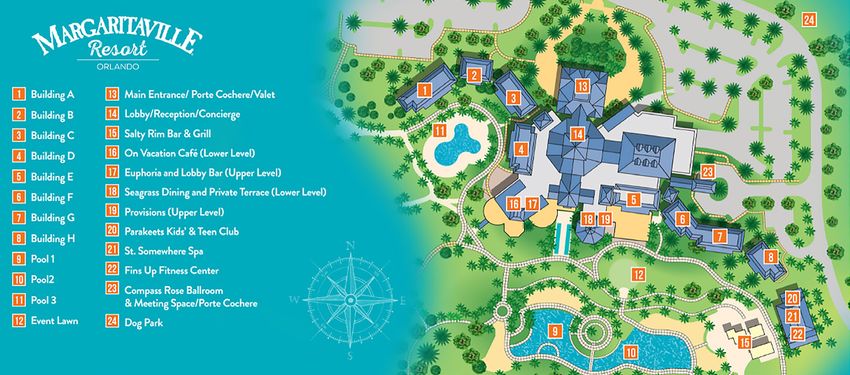
Table of Contents

SCHEDULE AT A GLANCE................................................................. 3

ACKNOWLEDGEMENTS.................................................................... 7

GENERAL INFORMATION................................................................ 10

KEYNOTE SPEAKERS....................................................................... 12

FIELD TRIPS..................................................................................... 15

CONFERENCE AGENDA.................................................................. 17

POSTER PRESENTATIONS................................................................ 31

SPONSORS AND EXHIBITORS......................................................... 32

NOTES............................................................................................. 33

All recorded sessions from the conference will
be available for purchase after the conference.
Conference Attendees: $75
Non-Members: $199
Members: $149

2                                                                  Celebrating the 30th Annual

Sponsors
Thank you to our sponsors & exhibitors:

                                          MINNESOTA INVASIVE
                                          TERRESTRIAL PLANTS
                                          AND PESTS CENTER

NAISMA Conference                                              3
Daily At-a-Glance Agendas
please see pg. X for session details and room locations

                                                              SCHEDULE KEY

 Special Session                            Pink                     Concurrent Session - AIS                               Blue

 Florida                                    Dark Orange              Concurrent Session - Interdisciplinary                 Yellow

 Workshop                                   Light Orange             Field Trip                                             Purple

 Concurrent Session - Terrestrial           Green

                              MONDAY, NOVEMBER 7, 2022 (All times are in Eastern Time)
                           Committee Meetings are open to NAISMA members to attend unless otherwise noted.

9:00 am - 11:00 am    NAISMA Board of Directors and Executive Committee Strategic Planning Session (Private) (Board Room)

11:00 am - 1:30 pm    Committee Meetings
                                                                             Virtual Field Trip Option:
                                                                             National Park units in Florida and the Caribbean
4:00 pm - 6:00 pm     Welcome Reception - Meet and Greet (On Vacation)
TUESDAY, NOVEMBER 8, 2022 (All times are Eastern Time)

7:30 am - 8:30 am     Breakfast with exhibitors (Seagrass Foyer)

                      Welcome Keynotes: Bill Uihlein, USFWS SE Assistant Regional Director for Conservation Innovation and Science
8:30 am - 9:30 am
                      (Compass Rose Ballroom)

                      Concurrent Session - Invasive Animal       Concurrent Session - Noxious
                                                                                                 Concurrent Session - Healthy
9:35 am - 10:35 am    Monitoring & Management (Compass           Weed Management (Compass
                                                                                                 Landscapes (Compass)
                      North)                                     South)

10:35 am - 10:50 am   Networking break with exhibitors (Seagrass Foyer)

                      FL Special Session: Python Control         Concurrent Session - Weeds      Concurrent Session - Biological Control
10:50 am - 11:50 am
                      (Compass North)                            and Pests (Compass South)       Methods (Compass)

11:50 am - 1:00 pm    Lunch; Annual General Meeting (Box lunch provided) (On Vacation)

                                                                 Special Session: Using Weed
                      Workshop: Python Control in Florida        Biocontrol to Reduce Wildfire   Special Session: Horizon Scanning
1:00 pm - 3:05 pm
                      (Compass North)                            Risk And Mitigate Wildfire      (Compass)
                                                                 Impacts (Compass South)

3:05 pm - 3:20 pm     Networking break with exhibitors (Seagrass Foyer)

                      Special Session: Special Session:          Workshop: Gamification
                                                                                                 FL Special Session - Stakeholder
3:20 pm - 4:20 pm     Structure, Law, and Implementation of      of Invasive Species ID and
                                                                                                 Engagement in Florida (Compass)
                      the Infrastructure Bill (Compass North)    Reporting (Compass South)

4:45 pm - 6:45 pm     Poster Reception (On Vacation)

6:00 pm - 8:00 pm     Dinner on your own
WEDNESDAY, NOVEMBER 9, 2022 (all times are Eastern Time)
7:30 am - 8:30 am     Breakfast with exhibitors (Seagrass Foyer)

                      Keynote: Dan Simberloff, Gore Hunger Professor of Environmental Science at the University of Tennessee, editor-in-
8:30 am - 9:30 am     chief of the journal Biological Invasions, and author of Strangers in Paradise: Impact and Management of Nonindigenous
                      Species in Florida (Compass Rose Ballroom)

                                                                                Concurrent Session
                                                        Concurrent Session
                      FL Special Session: Animal                                - Technology for
                                                        - AIS Monitoring,
                      Invasive Species Monitoring,                              Early Detection
9:35 am - 10:45 am                                      Detection, and
                      Detection, and Management                                 and Management
                                                        Management
                      (Compass North)                                           of Invasive Species
                                                        (Compass South)
                                                                                (Compass)

                      FL Special Session: Aquatic
                                                        Concurrent Session -    Concurrent Session
                      Invasive Species Monitoring,
10:50 am - 11:50 am                                     Biocontrol (Compass     - Risk Assessment
                      Detection, and Management
                                                        South)                  (Compass)
                      (Compass North)

11:50 am - 12:50 pm   Lunch (on your own)                                                                12:00-5:00 pm
                                                                                                                             12:00-5:00 pm
                                                        Concurrent Session                               Disney Wilderness
                      FL Special Session: Terrestrial                                                                      Orlando
                                                        - Aquatic Invasive                               Preserve/ Nature
                      Invasive Species Monitoring,                              Concurrent Session -                       Wetlands Park
1:00 - 3:15pm                                           Species Management                               Conservancy
                      Detection, and Management                                 Policy (Compass)
                                                        & Control (Compass
                      (Compass North)
                                                        South)

3:15 - 3:30 pm        Networking break with exhibitors (Seagrass Foyer)

                                                        Concurrent Session
                      FL Special Session: Invasive                              Concurrent Session -
                                                        - Partnerships and
                      Plant Control Techniques                                  Molecular Detection
3:30 - 4:30 pm                                          Strategies to Prevent
                      including Biocontrol (Compass                             of Invasive Species
                                                        the Spread of AIS
                      North)                                                    (Compass)
                                                        (Compass South)

5:30 pm - 8:00 pm     NAISMA “Not a Banquet” and Awards Ceremony (On Vacation)
THURSDAY, NOVEMBER 10, 2022 (all times are Eastern Time)
            7:30 am - 8:30 am     Breakfast with exhibitors (Seagrass Foyer)

            8:30 am - 9:30 am     Closing Day Keynote: Christie Trifone Millhouse, NAISMA Executive Director (On Vacation)

                                  Workshop Part 1:Identifying research
                                  and management priority areas at the      Concurrent Session

NAISMA Conference
                                                                                                        Concurrent Session - Chemical Control Methods
            9:35 am - 10:35 am    intersection of climate change and        - Public Engagement
                                                                                                        (Mango Moon)
                                  invasive species in the United States     (Provisions)
                                  (Cross-RISCC) (On Vacation)

            10:35 am - 10:50 am   Networking break with exhibitors (Seagrass Foyer)

                                                                            Workshop:
                                  Workshop Part 2: Identifying research     Environmental DNA
                                  and management priority areas at the      tools developed by the
                                                                                                        Concurrent Session - Invasive Animals (Mango
            10:50 am - 11:50 am   intersection of climate change and        U.S. Department of
                                                                                                        Moon)
                                  invasive species in the United States     the Interior for invasive
                                  (Cross-RISCC) (On Vacation)               species management
                                                                            (Provisions)
            11:50 am - 1:00 pm    Lunch (on your own)

                                                                            Special Session:            Special Session:
                                                                            Precision Information       NAISMA's Weed           12:00-5:00      12:00-
                                  Special Session: Get to Know the          Technologies                Free Products'          pm              5:00 pm
            1:00 pm - 3:05 pm
                                  Sponsors (On Vacation)                    Enhancing Invasive          Program Overview
                                                                            Plant Management            and Panel Discussion    Carnaveral      Orlando
                                                                            (Provisions)                (Mango Moon)            National        Wetlands
                                                                                                                                Seashore        Park
            3:05 pm - 3:20 pm     Concluding Remarks (On Vacation)

7
Acknowledgements

CONFERENCE COMMITTEE                            BOARD DIRECTORS
Chair: Deah Lieurance, Assistant Extension      Sarah Rang, Executive Director Invasive
Scientist, Coordinator, UF/IFAS Assessment of   Species Centre
Non-native Plants                               Frank Wong, Industry Affairs Lead, Public
Chuck Bargeron, Director, Center for Invasive   Affairs, Science and Sustainability, Bayer
Species & Ecosystem Health, University of       CropScience
Georgia                                         Nicole Kimmel, Aquatic Invasive Species
Kelly Cooley, CoolPro Solutions                 Specialist, Alberta Environment & Parks
Frank Wong, Industry Affairs Lead, Public       Allison Zach, Nebraska Invasive Species
Affairs, Science and Sustainability, Bayer      Program Coordinator, Nebraska Cooperative
CropScience                                     Fish & Wildlife Research Unit
Cody-Marie Miller, The Nature Conservancy       Jennifer Dean, Invasive Species Biologist,
Katherine Murray, Environmental Quality, Inc.   New York Natural Heritage Program
Tom Boos, AIS Prevention Coordinator, Tahoe     Amy Morey, University of Minnesota,
Regional Planning Agency                        Minnesota Invasive Terrestrial Plants and Pests
Kate Wilson, Commission Administrator,          Center
Montana Department of Natural Resources &
Conservation                                    STAFF & TEAM MEMBERS
John Petty, Executive Director, Wisconsin       Christie Trifone Millhouse, Executive Director
Crop Improvement Association                    Elizabeth Brown, Director of Government
                                                Relations and Professional Development
EXECUTIVE BOARD                                 John Stabinger, Website, LMS, and Marketing
Kate Wilson, President, Commission              Admin
Administrator, Montana Department of Natural    Lindsey Cathcart, PlayCleanGo Manager
Resources & Conservation                        Tina Page, NAISMA Store Manager
Deah Lieurance, Secretary, Assistant            Michelle Huntley, Marketing and Membership
Extension Scientist, Coordinator, UF/IFAS       Manager
Assessment of Non-native Plants                 Thank you to
Thomas Boos, Treasurer, AIS Prevention          Belle Bergner, Krista Lutzke, Vanessa Padilla,
Coordinator, Tahoe Regional Planning Agency     Tina Casagrand, and Brian Olson.
Chuck Bargeron, Past President, Director,
Center for Invasive Species & Ecosystem         FLORIDA INVASIVE SPECIES
Health, University of Georgia                   COUNCIL
                                                Officers               Board
BOARD DIRECTORS                                 - Deah Lieurance,      - Veronica Runge
Aaron Eagar, State Weed Coordinator, Utah         Chair                - Taylor Clark
Department of Agriculture and Food              - Jimmy Lange, Past - CJ Greene
Jennifer Andreas, Associate Professor,            Chair                - Raychel Rabon
Extension Specialist, Biological Control        - Aimee Cooper,        - Salvador Medina
Specialist, Washington State University           Secretary            - Carey Minteer
Extension                                       - Allegra Buyer,       - Chris Marble
John Petty, Executive Director, Wisconsin         Treasurer
Crop Improvement Association                    - Sherry Williams, NA-
                                                  IPC Liaison

8                                                              Celebrating the 30th Annual
General Information
Registration Table

REGISTRATION                                       PRESENTATION UPLOADING
Registration will be in the On Vacation room of    Presenters may upload their presentations up
the Margaritaville Resort.                         until the day before their assigned session.
                                                   Please use the following form to upload your
The registration desk will be open from            presentation to upload their presentations
7:30 am - 4:30 pm Monday; 7:30 am - 4:30 pm        to a form: https://naisma.org/2022-annual-
Tuesday and Wednesday; and 7:30 - 4:30 PM          conference-presentation-submission-form/. If
Thursday.                                          you are running into issues, please contact your
                                                   moderator.

Food & Meals

DIETARY NEEDS                                      RECEPTIONS
Many complimentary meals and breaks service        Monday evening’s Welcome Reception will be
are provided throughout the conference. Special    held in the On Vacation event space. Tuesday
dietary needs must be requested in advance         evening there will be a Poster Reception in On
and are not guaranteed for on-site registrants.    Vacation. Wednesday’s “Not a Banquet” and
                                                   Awards Ceremony will also be held in On Vaca-
BREAKFAST                                          tion. The Welcome Reception and Poster recep-
Breakfast with exhibitors will be provided every   tion will feature a cash bar and complimentary
day in the Seagrass Foyer.                         refreshments. Not a Banquet is an add-on event
                                                   that requires a pre-conference registration and
LUNCH                                              will include a casual dinner with a cash bar.
Box lunches will be provided to all attendees
on Tuesday at the Annual General Meeting.          DINNER
                                                   Dinner is on your own each night with the excep-
BREAKS                                             tion of “Not a Banquet” on Wednesday (requires
Morning and afternoon breaks will include coffee   a pre-conference purchased ticket). We suggest
and tea.                                           using evening meals to network and socialize
                                                   with colleagues. Kissimmee boasts a vibrant
                                                   dining scene with choices from upscale to Ca-
                                                   ribbean-style tacos, many of which are a short
                                                   walk or Uber ride from the conference hotel.

Media

GET SOCIAL                                         PROGRAM PHOTOS
Be sure to follow what attendees are chatting      Field trip photos were provided by each location
about on our Facebook page and Twitter account:    host. All other photos are from Adobe Stock.
@NAISMAorg. Add #NAISMA2022 to your posts
and please tag NAISMA!

NAISMA Conference                                                                                9
Keynote Speakers
Tuesday, November 8

DR. BILL UIHLEIN, the Regional
Assistant Regional Director for
Conservation Innovation and Science

Learning from the Past,
Changing the Future                                  About Dr. Bill Uihlein

The U.S. Fish and Wildlife Service Congressional     Bill serves as the Assistant Regional Director of
appropriation to control invasive species was        the Science Application and Migratory Bird Pro-
$16.5 million in fiscal year 2021. The funding       grams. Science Applications and Migratory Birds
fluctuates year to year, but has only increased      provides a mission-driven relationship-building
since the initial appropriation in FY2008. In        forum that focuses on defining the conservation
FY2020, the USFWS received $5.0 million to           landscape of the future to sustain fish, wild-
increase the number of Invasive Species Strike       life, and plants. Both programs are within the
Teams nationwide. Often federal funds are lev-       South Atlantic Gulf and Mississippi Basin. They
eraged with other federal agency, state, and         are comprised of incredibly skilled individuals
non-governmental partners. Collectively, time,       working to support decision making to sustain
treasure, and talent are annually applied towards    fish and wildlife by addressing and integrating
reducing numbers of feral pigs, pythons, cogon       efforts such conservation adaption planning
grass, alligator weed, and phragmites to name        and coordinating science within the Service’s
a few. However, in only a few cases the goal of      interest in the Regional Vision through science
eradication is achieved. More often our goal is to   capacity development, landscape planning and
suppress, reduce, or maintain species numbers        integration, supporting the work of Joint Venture
to enhance native habitats or individual plant       partnerships, informing targeted conservation
and animal species. We know we must remain           actions, measuring results, and evaluating un-
vigilant, while continuing to learn, adapt, and      certainties. Bill says his background and love
change. We strive to be innovative based on          of outdoors came from working for his dad, the
the feedback from fundamental questions: Are         foreman, on several ranches in Wyoming, Cali-
we focused on what matters? Are we trying new        fornia, and New Mexico. He earned a Bachelor’s
approaches? Are we learning from our successes       and Master’s Degree in Biology from Eastern
and failures?                                        New Mexico University and a Ph.D. from Mis-
                                                     sissippi State University. Bill’s Service career has
                                                     been in Migratory Birds, serving as the Science
                                                     Coordinator and eventually the Coordinator of
                                                     the Lower Mississippi Valley Joint Venture part-
                                                     nership and then in his current role of Assistant
                                                     Regional Director. Most of Bill’s work experienc-
                                                     es have centered on leadership, relationship
                                                     building, and leveraging technical expertise in
                                                     landscape assessment, ecosystem modeling, and
                                                     monitoring for waterfowl and landbirds.

10                                                                   Celebrating the 30th Annual
Wednesday, November 9 DAN SIMBERLOFF University of Tenessee Managing Invasions: What’s Worked, What Hasn’t, and What Might About Dan Simberloff A problem managing invasions is early detection. Daniel Simberloff is the Nancy Gore Hunger Use of citizen scientists and smartphones is aiding Professor of Environmental Studies at the this effort, as is the advent of eDNA. Populations University of Tennessee. He received his of many species have been eradicated, especially A.B. (1964) and Ph.D. (1968) from Harvard but not only when detected early; technologies University and was a faculty member at Florida to do so are improving. Many invaders have been State University from 1968 through 1997, maintained at low levels, even after widespread when he joined the Department of Ecology establishment, usually by physical, chemical, and and Evolutionary Biology at the University biological methods. Non-target impacts are a of Tennessee. His publications number ca. persistent problem of the latter two approaches. 500 and center on ecology, biogeography, New technologies based on molecular genetics evolution, and conservation biology; much of his to eradicate or manage animal invasions are research focuses on causes, consequences, and being developed, although there is notably management of biological invasions. His research little activity on research and development of projects are on insects, plants, fungi, birds, and such tools for invasive plants. Gene-silencing mammals. He is editor-in-chief of Biological is already used to manage invasive insects and Invasions, senior editor of the Encyclopedia of is being developed for other species. Oxitec’s Biological Invasions (2012), author of Invasive genetically engineered Aedes aegypti mosquito, Species: What Everyone Needs to Know (2013), though controversial, has been massively released co-editor of Integrating Biological Control into in nature in the wake of the zika epidemic, and Conservation Practice (2016), and serves on the gene-editing projects employing CRISPR Cas editorial boards of several journals. In 2006 he 9 gene drives to eradicate invasive species was named Eminent Ecologist by the Ecological are under development despite substantial Society of America, in 2012 he won the Margalef controversy regarding potential unintended Prize for research in ecology, and in 2015 he consequences. All in all, the means are already won the Wallace Prize of the International in hand to lessen greatly invasions and problems Biogeography Society for lifetime contributions. wrought by them, and further advances are likely. He is a member of the U.S. National Academy The problems in developing and employing them of Sciences and the American Academy of Arts are primarily socioeconomic. and Sciences. NAISMA Conference 11
12 Celebrating the 30th Annual
Field Trips
The Ft. Myers/Naples area and Sanibel Island are home to some of the best
wildlife and unique habitats in North America — as well as numerous invasive
species challenges and successes. Many thanks to co-hosts Florida Invasive
Species Council for connecting us with tour sites and guides that showcase
invasive species management in such a verdant environment.

NOVEMBER 9
Disney Wilderness Preserve/ Nature
Conservancy - Meet outside
Margaritaville lobby at 11:45 pm for tour.
Volunteer to ensure right folks get on
right bus (two tours on the 9th). Drive ~1
hour to preserve; 2-2.5 Hour buggy tour;
meet at bus by 3:45 pm; return to hotel
by 5 pm.

Leads: Cheryl Millett cmillett@TNC.ORG; sup-
port onsite from Kelli Gladding, Kelli (k.glad-       and participants will need to sign a liability waiv-
ding@ufl.edu); Jonathan Glueckert (jglueckert@        er. More information: https://www.nature.org/en-
ufl.edu)                                              us/get-involved/how-to-help/places-we-protect/
Location: 2700 Scrub Jay Trail Kissimmee, FL          the-disney-wilderness-preserve/
34759. ~50-60 min from hotel.
Capacity: 18 guests + 2 guides (onsite)               Costs: $50 for 2-hour swamp buggy ride; trans-
Summary: The Disney Wilderness Preserve is            portation & lunches.
11,500 acres of longleaf and slash pine forest,       Notes: They only have capacity for one field trip
grassland, scrub, and wetland communities at          - one swamp buggy tour for 18 people
the headwaters of the Everglades ecosystem.           .
It is embedded in a matrix that is increasingly
dominated by a fast-growing human population.
It was restored as mitigation for impacts from
expansion by The Walt Disney Company and
the Orlando Airport.

We’ll explore the Disney Wilderness Preserve on
an 18-passenger swamp buggy to see how it is
shaped by fire and has a relatively open struc-
ture. Mitigation involved wetland and upland
habitat restoration activities including control of
non-native, invasive plants, controlled burns in
fire-dependent habitats, mechanical removal of
overgrown shrubs and trees resulting from fire
suppression, and removal of agricultural ditch-
es. Today it is largely managed with controlled
burns and non-native invasive plant control. The
swamp buggy involves a steep climb to enter,

NAISMA Conference                                                                                     13
NOVEMBER 9 & 10
Orlando Wetlands Park – (Christmas, FL)
Meet outside Margaritaville lobby at 11:45
pm for tour. Volunteer to ensure right folks
get on right bus (two tours on the 9th). Drive
~1 hour to preserve; 2-2.5 Hour buggy tour;
meet at bus by 3:45 pm; return to hotel
by 5 pm. (https://www.orlando.gov/Parks-
the-Environment/Directory/Wetlands-Park
[orlando.gov] ).

Leads: Lyn Gettys (lgettys@ufl.edu); support
onsite from “work kids” (Joey Sigmon, Kyle           were planted to create the wetland) provide
Thayer, Jennifer Bishop if needed). Mark Sees        habitat while polishing the water before it flows
at OWP (Mark.Sees@cityoforlando.net).                to the St. Johns River. The Park welcomes many
Location: Address: 25155 Wheeler Road, Christ-       thousands of visitors every year and is known
mas, FL 32709. ~ 50 miles/little over an             around the world for its attraction to migratory
hour from hotel.                                     birds. A visit to Orlando Wetlands Park offers
Capacity: 56 total (including tour guides +          an excellent opportunity for nature study, bird
volunteers) – let’s say 50 attendees (each trip)     and wildlife watching, botanical exploration,
Summary: Orlando Wetlands Park is a 1,650-           nature photography and peaceful enjoyment.
acre man-made wetland that provides advanced         Park guides (including bird, butterfly, plant and
treatment for reclaimed water from the City of       wildlife checklists) and much more information
Orlando and surrounding areas. The Park in-          are available on the website at https://www.
cludes nineteen miles of berms that encompass        orlando.gov/Parks-the-Environment/Directory/
18 wetland cells and the 75-acre Lake Searcy.        Wetlands-Park
The system provides habitat for many fauna,          Costs: Transportation & lunches only; free ad-
including over 200 bird species, otters, foxes,      mission; no charge for tram tour (60 max)
deer, turtles, snakes and alligators. The abundant
flora (2 million aquatic plants and 200,000 trees

14                                                                  Celebrating the 30th Annual
NOVEMBER 10
Canaveral National Seashore –
Meet outside Margaritaville lobby at 11:45 pm for tour. Volunteer to ensure right
folks get on right bus (two tours on the 10th) at 12 pm. Drive ~1.4 hours to national
seashore; 2 hour walking tour; meet at bus by 4:00 pm; return to hotel by 6 pm.

Leads: Michelle Avia Woulard (National Park         significance and an outstanding Florida water. It
Service), avia_woulard@nps.gov; attendee Qs         is one of the most diverse and productive estuar-
to Kate Wilson (kate.wilson@mt.gov).                ies in North America. The national seashore also
Location: 7611 South Atltantic Av. New Symna        contains cultural resources that reflect human
Beach 32169. ~1:40 drive to/from hotel (longer      history in the Florida peninsula from 2000 BC
drive).                                             to early 20th century Florida settlement. Ranger
Capacity: 56 total on bus (including volunteers).   and botanist to provide 1.5 hour walking tour
So let’s say 54 attendees.                          to NAISMA attendees that will include invasive
Summary: Canaveral National Seashore con-           plant management, native species protection,
tains nearly 58,000 acres of barrier island, open   habitat restoration, etc. Closed toe shoes, sun-
lagoon, coastal hammock, pine flatwoods, and        screen/protection and bottled water required.
offshore waters. With 24 miles of pristine beach,   More information: https://www.nps.gov/cana/
it is prime habitat for many threatened and en-     index.htm
dangered species providing nesting beaches          Costs: Transportation & lunches; special use
for several thousand protected marine turtles.      permit issued to waive park pass entry fee
Two thirds of the park is in Mosquito Lagoon.       Notes: They only have capacity for up to 60
The lagoon is designated an estuary of national     people (bus can fit 56).

NAISMA Conference                                                                                 15
Conference Agenda

                         MONDAY, NOVEMBER 7, 2022
9am - 11:00m
Board Room               Board of Directors Strategic Planning Closed Session

     Note: Committee meetings are open to all NAISMA members. This is a great opportunity
     to share feedback and learn more about the association. Please join us!

 11am - 12pm
 Continental Drifter     Legislative Committee

 11am - 12pm
 Hemisphere Dancer       Biocontrol Committee

 11am - 12pm             Membership, Marketing, and Communications
 Board Room              Committee
 11am - 12:30pm
 Coral Reef              Certified Weed Free Products Committee

 12pm - 1pm              Inclusion, Diversity, Equity, and Accessibility
 Board Room              Committee (IDEA)
 12pm - 1pm
 Continental Drifter     Standards Committee

 1:00pm - 1:30pm
 Continental Drifter     Professional Development Committee

 1:00pm - 1:30pm
 Hemisphere Dancer       PlayCleanGo Advisory Committee

 1:00pm - 4:00pm
 Coral Reef              FL Python Control Plan (FPCP) Workgroup Meeting

 4pm - 6pm
 On Vacation             Welcome Reception: Meet & Greet

                         TUESDAY, NOVEMBER 8, 2022
7:30am - 8:30am
Palms Foyer
                        Breakfast with exhibitors

8:30am - 9:30am
Queen Palm
                        Welcome Keynotes

9:35am - 10:35am        Invasive Animal Monitoring & Management
Queen Palm              Triston Hansford, Brittany M Mason, and Gonzalo-Medina-Vogel

16                                                           Celebrating the 30th Annual
TUESDAY, NOVEMBER 8, 2022
9:35am - 10:35am
Compass North Invasive Animal Monitoring & Management
• Georgia’s Battle with Dragons, and The Training of Knights
Argentine black and white tegus are a growing concern in the state of Georgia and have the potential to
establish populations and cause lasting harm throughout the southeast. Management for these invasive
tegus has proven successful in reducing tegu populations thus far, but further tracking and verifying
reports of these large lizards is key to ensuring management strategies are up to date and effective. A
large concern for the verification of reports and tracking with Argentine black and white tegus, as well as
many other invasive species is misidentification and subsequent false reports of those species. Through
Georgia’s First Detector program, we aim to lead instruction available to both members of the public
as well as professionals to equip them with the knowledge and experience they may need to help find,
identify, report, and assist in managing invasive species wherever they should occur.
Triston Hansford, Invasive Species Specialist, UGA Center for Invasive Species and Ecosystem
Health
I received a Bachelors of Science degree in Natural Resource Conservation with a focus on wildlife from
Abraham Baldwin Agricultural College, and have worked for the Center for Invasive Species and Ecosystem
Health for 2 years. I’ve recently taken over the coordination of Georgia’s First Detector program. In addition,
I have also been a licensed wildlife exhibitor in the state of Georgia for 3 years, and conduct numerous
outreach classes for school and events on native and invasive species with a focus on native herpetofauna
and other problematic invasive species.
• Predicting Dispersal Paths of the Invasive Argentine Black and White Tegu (Salvator merianae)
Using Circuit Theory
The Argentine black and white tegu (Salvator merianae) is a large, omnivorous lizard native to South America
(southeastern Brazil, Uruguay, eastern Paraguay, and Argentina) that has been introduced to South Florida
through the pet trade with breeding populations confirmed since 2011. Informed tegu management in
South Florida has become increasingly important as the population spreads into Everglades National Park
and Turkey Point Power Plant where tegus threaten native wildlife through competition for food, burrow
use, and direct predation. We used circuit theory, which calculates the degree of electrical current flow
by raster cell through a map of habitat resistance values, to identify where movement is funneled in the
landscape. To calculate resistance values, we used a step selection analysis conducted on tegu telemetry
data, collected between 2016 and 2021, on ten habitat types. Tegus had the highest preference for dry,
vegetated habitat including upland, rural vegetated, freshwater forested wetland when dry, roads without
barriers (i.e. no bordering fences or road medians), and rural barren. Wet habitats including marsh and
water had higher resistance and urban habitats had extremely high resistance to tegu movement. Based
on our resistance values, we created a circuit density map from circuit theory which identified numerous
areas with high dispersal probability, especially along a disturbed forested strip of habitat south of
agricultural land and levees which are artificially raised, interconnected habitat adjacent to canals and
marsh habitat. Identification of locations that have the highest probability of use during tegu dispersal
behavior across natural, disturbed, and agricultural interfaces can inform targeted science-based control
efforts that maximize resource use.
Brittany M Mason, UF IFAS FLREC
Brittany is a master’s student with the University of Florida Croc Docs research lab at the Fort Lauderdale
Research Extension Center, under the advisement of Dr. Frank Mazzotti. She has been with the Croc Docs
for six years where she conducts invasive species and crocodylian fieldwork and research. Her research
interests are invasive species research and management, herpetofauna conservation and ecology, and
movement ecology. For her master’s thesis, she is using radio telemetry data to determine drivers of tegu
movement and potential dispersal paths tegus may take from their core population into vulnerable habitat.
Additional authors: Frank J. Mazzotti and Mathieu Basille
BOOST YOUR PROFESSIONAL
SKILLS AND RESUME...
with the only online invasive species
management training program available.
NAISMA Conference 17TUESDAY, NOVEMBER 8, 2022 • Trapping Efficiency for Control of American Mink (Neovison vison) in Patagonia Two main challenges when controlling alien American mink (Neovison vison) in Patagonia are to maximize campaign efficiency and to avoid trapping native species. We designed and tested new variants of collapsible wire box traps. We used the data to model the efficiency rate of the trapping and to determine the trapping effort required to remove 70-90% of the estimated discrete mink population. Between January 2018 and March 2021, we operated 59 trapping transects over 103 three-day trapping periods in southern Chile. Traps were first baited with canned fish, and afterwards with mink anal gland lure. The compact GMV-13 caught fewer non-target rodents and no native mammals. The scent lure was more successful. There was also a significant improvement in the proportion of female mink trapped and reduced labour compared with our previous campaign. We caught relatively more females than males after the third night of trapping on a transect. Our data analysis supports the use of the GMV-13 variant of wire cage trap as the best trap size: it is effective on female mink, small, cheap, and easy to transport. Combined with mink anal scent lure it reduces the possibility of trapping native species compared with other traps tested in Chile. Our trapping protocol recorded one of the highest efficiency (mink/trap-night) among different regions of the world. We recommend trapping campaigns using GMV-13 during summer, with a 200-m trap spacing. This research was funded by FONDECYT (National Found for Science and Technology) project 1171417. Gonzalo Medina-Vogel, Center for Research in Sustainability, Universidad Andres Bello Dr. In Veterinary Medicine (1989), Universidad Austral de Chile; PhD in Wildlife Ecology (1989) Lincoln University, New Zealand. Researcher in health, ecology and conservation of Southern River otter (Lontra provocax) and marine otter (Lontra feline), researcher in ecology of Canine Parvovirus, Canine Distemper Virus, Toxoplasmosis and Leptospirosis, researcher in ecology and control of alien carnivores in Patagonian landscapes. Currently senior professor and researcher at the Center of Research in Sustainability, Andres Bello University, Santiago, Chile. Additional authors: Ronar Lopez: Centro de Investigación para la Sustentabilidad, Facultad Ciencias de la Vida, Universidad Andrés Bello; Daniel J. Pons: Centro de Investigación para la Sustentabilidad, Facultad Ciencias de la Vida, Universidad Andrés Bello; Kay Clapperton 9:35am - 10:35am Compass Concurrent Session - Healthy Landscapes • Biocontrol: a resilience strategy for Hawaii‚ and Pacific islands Healthy ecosystems play a critical role in resilience to climate change. Yet on tropical Pacific islands, the health of terrestrial ecosystems and their functions are significantly impacted by invasive species. In a changing climate, and particularly for Hawai‘i and Pacific islands, biological control needs to be recognized as an important climate resilience strategy. In contrast to continental systems, lightning and wildland fires were not historically frequent in Hawai‘i and other Pacific islands, thus native plants are largely not fire- adapted. The introduction and spread of fire-adapted invasive plants, coupled with human actions and climate change, are having a disproportionately large impact on biodiversity and ecosystem function, particularly in dryland systems. Like these fire-adapted grasses, certain invasive species can be seen as “game changers”—they alter the hydrology, soil microbes and nutrients, primary production, and/ or decomposition regimes, which shifts entire habitats to favor invasive species over native species. The form and function of native forests are as important as the individual species for watershed function and carbon storage and cycling potential of native forests. For these widespread, game-changer invasive species, biological control is the only landscape-scale tool that can reduce the speed and severity of these impacts, and improve outcomes of restoration and resilience efforts. Hawaii has a long history of successful biocontrol releases in part due to the collaborative nature of biocontrol research, and this talk will highlight some current regional biocontrol projects on “game-changer” weeds and pests, and others that will need to be addressed. Christy Martin, University of Hawaii Pacific Cooperative Studies Unit-Coordinating Group on Alien Pest Species Chelsea Arnott is the planner with the Hawaii Invasive Species Council (HISC), an inter-departmental council that provides policy-level direction, coordination, and planning for the prevention and management of harmful invasive species in Hawaii. Ms. Arnott supports the implementation of the Hawaii Interagency Biosecurity Plan which identifies 147 actions items to improve the prevention and management of invasive species in Hawaii, and includes increasing biocontrol capacity to address pests and weeds of Hawaii and the region. Christy Martin is the program manager for the Coordinating Group on Alien Pest Species, a partnership of government agencies and non-government organizations working together to strengthen Hawaii’s biosecurity programs, including biological control of pests and weeds. Darcy Oishi is the Acting Manager of the Plant Pest Control Branch, Hawaii Department of Agriculture. He also serves as the State Entomologist and Plant Pathologist and leads efforts on biosecurity and classical biological control programs. Additional authors: Chelsea Arnott Pacific Cooperative Studies Unit-University of Hawaii at Manoa- Hawaii Invasive Species Council and Darcy Oishi Hawaii Department of Agriculture- Plant Pest Control Branch
TUESDAY, NOVEMBER 8, 2022
• A new tool for assessing risk of non-native species introduction and spread in marine systems
  Reducing the risk of introduction and slowing the spread of established non-native species is vital in
  mitigating adverse impacts of invasive species. In the marine environment, there is a growing need for
  a means of assessing risk of non-native species introduction and spread to evidence the development
  of biosecurity plans as a management measure. To facilitate this process and provide a standardized
  approach to risk assessment, the use of decision support tools is becoming more common in practice.
  Taking a quantitative approach, we have developed a tool to assess risk of non-native species introduction
  and spread in marine systems, upon which biosecurity recommendations can confidently be based. The
  tool provides a single assessment process via a modular approach to provide a quantitative score of
  relative risk of introduction and spread. It examines activities within the risk assessment area that can act
  as pathways (i.e., vectors) of introduction and spread, and considers invasive species within, adjacent to,
  and likely to enter the risk assessment area, taking a functional group approach to account for future risks.
  The tool has been automated as much as possible so that data can be easily and efficiently entered by an
  assessor, with risk scores presented in a clear manner. Importantly, biosecurity modules have also been
  included, providing high level indications of the types of measures which may be considered in relation
  to the different pathways examined within the assessments, thereby facilitating downstream development
  of applicable biosecurity plans.

  Katie A. O’Shaughnessy, APEM Ltd
  Katie is a marine ecologist focusing on coastal non-native species, with a particular interest in biofouling
  species. She currently works for the environmental consultancy, APEM Ltd (based in the UK), in their
  Invasive and Non-Native Species Team. Here, her work involves biosecurity planning, assessing pathways
  and vectors, and planning and conducting non-native species surveys in aquatic environments. Previous to
  her current role, Katie worked for Texas Parks and Wildlife Coastal Fisheries as their National Academies
  of Sciences Fellow where she led the northern GoM horizon scan for potentially invasive marine species.
  Katie has a PhD in Environmental Science from the University of Plymouth in the UK and a Masters in
  Marine Science from Coastal Carolina University in South Carolina.

• Development of a Network of Minirhizotron Devices for Real-time Nondestructive Rapid
  Detection of Cyst Nematode
  Plant-parasitic nematodes, especially cyst nematodes, can be problematic within the nursery industry since
  it needs to obtain maximum seedling and plant production continuously. Once established in a nursery
  setting, cyst nematodes can negatively affect many crops of agriculture importance through the nursery
  trade since it provides the ideal environment for reproduction and dispersal of cysts and adult females.
  Early detection of the existence of cyst nematodes is critical for risk mitigation. In a previous study, an
  innovative portable device based on minirhizotron techniques with a probe inserted into the soil near the
  root of a plant to capture its root images without damaging it was developed. Experimental tests showed
  that the device successfully takes plant root images, and custom-designed image processing algorithms
  also detect the cyst on the images. This study presents further enhancements of the device, making it self-
  sustaining and suitable for extended field and nursery deployment. The enhanced device is also equipped
  with wireless communication and network capabilities allowing remote access and control. A web-browser
  based graphic user interface (GUI) was also developed, allowing users to operate the enhanced device
  deployed in agricultural or nursery settings. Functions, including taking plant root images, storing the
  images on the device or selected cloud, and applying the image processing algorithm to analyze images
  stored on the cloud or downloaded to local storage devices to detect cysts on the images, are integrated
  into the GUI. The enhanced device can also be scaled up to create a national or international network.

  Junkun Ma, Sam Houston State University
  Dr. Junkun Ma is a professor of mechanical engineering technology in the Department of Engineering
  Technology at Sam Houston State University. He has an educational background and expertise in the
  mechanical system’s design, integration, test, and analysis. His research interests include designing and
  developing innovative devices and systems with practical applications, including mechanical systems
  and their automation and control. Dr. Ma is also interested in the development of functional engineering
  materials based on powder processing. Applying a combined three years of industrial product design
  and development and 18 years of academic research and teaching experiences, Dr. Ma leads the design,
  prototype, and test of the mechanical mechanism, single-board computer (SBC) based control, wireless
  communication, and network interface for the innovative minirhizotron device. A team of faculty and
  undergraduate research assistants also participated in this project, which is supported by the USDA Plant
  Protection Act.

NAISMA Conference                                                                                            19
TUESDAY, NOVEMBER 8, 2022
9:35am - 10:35am
Compass South                  Noxious Weed Management
• Montana Noxious Weed Survey: Has 25 Years of Education Been Effective?
     Education is often touted as one of the most important aspects of noxious weed management, yet there
     is little evidence to show its effectiveness. In 1994 a general population survey was conducted in Montana
     to evaluate Montanans’ knowledge of noxious weeds. The results of the survey showed that Montanans
     were lacking in general knowledge about noxious weeds, including how they spread and their ecological
     impacts. In response to the survey, a statewide noxious weed education campaign was created in 1995.
     The campaign coordinates noxious weed education and outreach among federal, state, and local entities.
     To evaluate effectiveness of 25 years of noxious weed education, a survey similar to the 1994 survey was
     distributed throughout Montana in 2019. A mail questionnaire was used and received 830 responses, with
     an overall response rate of 18%. Results showed that Montanans are interested in the topic of noxious
     weeds and interest is evenly distributed across different areas of the state, but interest is somewhat less
     for younger adults and women. There has been an increase in Montanans’ knowledge about noxious
     weeds over the last 25 years. In 1994, 67% of respondents reported that they “knew little or nothing”
     about noxious weeds compared to 48% in 2019, a 19% decrease. Furthermore, 40% of respondents said
     that their knowledge has increased “a little” or “a lot” in the last 5 years. Respondents indicated that
     family and friends are the most frequent source of learning, and the internet is the most popular resource
     when searching for information about noxious weeds. Our project provides evidence that noxious weed
     education is beneficial, and it charts a course for improved outreach in the future.

     Shantell Frame-Martin, Montana Noxious Weed Education Campaign
     Shantell Martin, Project Coordinator for the Montana Noxious Weed Education Campaign (MNWEC). The
     MNWEC is a collaborative effort between federal, state, county, tribal, university, and non-governmental
     land management agencies and noxious weed organizations to educate Montanans about noxious weeds
     and to encourage participation in ecologically based integrated weed management. Land management
     and conservation have always been at the forefront of life’s direction for Shantell; throughout college and
     during the quest to earn her M.S., Shantell worked for the US Fish & Wildlife Service, and while working
     towards her undergraduate degree, she worked for the US Forest Service, and the US Bureau of Land
     Management. When not coordinating statewide noxious weed education efforts, Shantell enjoys spending
     time outdoors rafting Montana’s many rivers, fly fishing and big game hunting with her husband, exploring
     the wonders of nature with her three outdoor adventuring children and two rambunctious fur kids.

• Protecting resilient plant communities with collaborative landscape scale cheatgrass
  management
  Julie Kraft, Sublette County Weed and Pest

• Giant Hogweed in Pennsylvania: Stopping the Spread
     Giant hogweed (Heracleum mantegazzianum), a Pennsylvania state and Federal noxious weed is a spreading
     plant in the Apiaceae family often found along shaded waterways in several northern states, USDA zones
     5-7. Giant hogweed poses a health risk to mammals as contact with the sap of the plant may cause a
     painful reaction on the skin which includes burns and blistering. The plant was introduced to the United
     States from Eurasia in the early 1800’s as an ornamental plant due to its impressive size and large white
     flowers. It eventually escaped cultivation and began to establish in natural areas where it forms large
     monocultures, replacing native plants. In 1985, a significant amount of giant hogweed was discovered
     in western Pennsylvania after conducting USDA surveys in the region. In 1998, a statewide program was
     initiated to raise awareness to the public, and to establish an eradication process. This program included
     informational brochures, a hogweed hotline and elimination of plants with either herbicide treatment or
     mechanical removal. In 2000, giant hogweed was officially listed as a state noxious weed in Pennsylvania.
     The giant hogweed program has been very successful with over 525 sites eradicated throughout the
     Commonwealth as of 2021

     Trilby Libhart, Pennsylvania Department of Agriculture, Bureau of Plant Industry
     Trilby Libhart is the Botany & Weed Specialist for the Pennsylvania Department of Agriculture performing
     regulatory and control work of weeds on the Commonwealth’s Controlled Plant and Noxious Weed List.
     She has worked with plants in different capacities for 25+ years from plant production to conservation and
     currently invasive and noxious weeds and has enjoyed all her experiences. Trilby currently resides in the
     “Garden Spot” of Pennsylvania with her husband, son, dog, cats and many, many plants.

10:35am -
10:50am                        Networking break with exhibitors
Seagrass Foyer

20                                                                          Celebrating the 30th Annual
TUESDAY, NOVEMBER 8, 2022 10:50am - 11:50am FL Special Session: Python Control in Florida Compass North • Florida Python Control Burmese pythons (Python molurus bivittatus) are an invasive large-bodied species in Florida adversely impacting native species and the Everglades ecosystem. Current range estimates that this species is established in south Florida spanning south of Lake Okeechobee to the Upper Keys, an area greater than 4,000 square miles that is owned and managed by an array of agencies, organizations, Tribes and private landowners. Managing an invasive species problem of this magnitude requires interagency collaboration. The Florida Fish and Wildlife Conservation Commission (FWC) has increased efforts with land managing partners to address this cryptic invasive constrictor that inhabits some of south Florida’s most inaccessible terrain. Recent efforts include implementation of python contractor removal programs, coordinating annual Florida Python Challenge® events, removing regulatory barriers for the public to remove nonnative reptiles from public lands, supporting research projects that develop and refine innovative python detection and removal strategies, and coordinating the implementation other components of an interagency Florida Python Control Plan (FPCP). Fifteen federal, state, and local agencies, Tribes, and a non- governmental organization have worked together to draft Florida’s first FPCP which identifies goals and strategies that land managing partners will use as a resource guide to cooperatively manage and control Burmese pythons. It is through these and other interagency efforts that minimizing impacts of pythons and reducing their numbers across the landscape has improved over time with the expectation that future collaboration will increase the efficacy of python control. McKayla Spencer, Florida Fish and Wildlife Conservation Commission (FWC) McKayla Spencer is the Interagency Python Management Coordinator for the Florida Fish and Wildlife Conservation Commission (FWC). She received her B.S. in Zoology from the University of Florida and her M.S. in Biology from Austin Peay State University with a thesis on comparative physiology and behavior of Copperhead (Agkistrodon contortrix) and Cottonmouth (Agkistrodon piscivorus) snakes. She worked for over 3 years with invasive Brown Treesnakes (Boiga irregularis) on Guam before working with Burmese Pythons (Python molurus bivittatus) in Florida. In her current position with FWC, she oversees the Python Action Team Removing Invasive Constrictors contractors, participates in the Florida Python Control Plan Workgroup, and manages invasive snake control and research. Additional author: Sarah Funck, Florida Fish and Wildlife Conservation Commission, Nonnative Fish and Wildlife Program Coordinator NAISMA Conference 21
TUESDAY, NOVEMBER 8, 2022
• Contractor Programs as a Management Tool for Invasive Burmese Pythons
     The invasive Burmese python (Python molurus bivittatus) population continues to persist and expand within
     the Everglades and surrounding areas. Limited control options led agencies to seek innovative methods to
     increase removal efforts. In 2017, the South Florida Water Management District (SFWMD) and the Florida
     Fish and Wildlife Conservation Commission (FWC) began a collaboration to develop independent, but
     parallel, incentivized python removal programs. The objectives of both programs are to deploy experienced
     python removal experts to specific areas and compensate them for conducting surveys, while collecting
     search effort data and humanely removing as many pythons as possible from public lands. An additional
     incentive payment is made for every python removed based on length. Upon the direction of Governor
     Ron DeSantis, the two programs have since aligned in location access, program regulation, and removal
     requirements. These expansions and enhanced collaborative efforts have resulted in increased python
     removals and significant operational efficiencies, such as remote body measurement. Furthermore, the use
     and standardization of customized data collection systems and digital geospatial applications improves
     data quality and helps inform program optimization and management decisions. The two contractor
     programs have resulted in the removal of over 9,100 Burmese pythons, placing them among the most
     successful management strategies available in terms of both removals and cost effectiveness. While the
     contractor programs alone may not be a sufficient control tool for Burmese pythons across the Everglades
     landscape, they are positioned to be an important component of the broader long-term solution.

     Michael Kirkland, South Florida Water Management District
     Michael Kirkland is the South Florida Water Management District’s (SFWMD) Senior Invasive Animal
     Biologist. He has more than 15 years of experience working on Everglades restoration projects and an
     area of responsibility extending across 16 counties. He is the manager and one of the principal developers
     of the SFWMD Python Elimination Program, convening member and contributing author of the Florida
     Python Control Plan, contract manager for the University of Florida’s Everglades and Amphibian Monitoring
     Program, panel member of the Florida Fish and Wildlife Conservation Commission’s Nonnative Fish
     and Wildlife Technical Assistance Group, Steering Committee member of the Everglades Cooperative
     Invasive Species Management Area, and contributing author for the upcoming paper, Burmese pythons
     in Florida: A synthesis of biology, impacts, and management tools. He holds a Master of Science Degree
     in Environmental Policy and Management, where he graduated Summa cum laude, and a Bachelor of
     Science Degree in Biology.

     Additional authors: Sarah A. Funck, Florida Fish and Wildlife Conservation Commission, West Palm Beach,
     FL USAMcKayla M. Spencer, Florida Fish and Wildlife Conservation Commission, Sunrise, FL USAEdward
     F. Metzger III, South Florida Water Management District, West Palm Beach, FL, USAAli L. Courtemanche,
     Florida Fish and Wildlife Conservation Commission, Sunrise, FL USA

• Burmese pythons in Florida: A synthesis of biology, impacts, and management tools
     Burmese pythons in southern Florida represent one of the most intractable invasive-species management
     issues across the globe. The difficulty stems from a unique combination of inaccessible habitat and the
     cryptic and resilient nature of pythons that do very well in the subtropical environment of south Florida,
     rendering them extremely difficult to detect. Over the past two decades we have documented extensive
     direct alteration of the native food web as well as some aspects of the basic biology of these constrictors,
     while extensively exploring methods to capture and remove this damaging species. As such, we have
     written a review and synthesis of Burmese python research in southern Florida, with authors from across
     many federal and state agencies, non-profits, and universities, representing the consensus of the scientific
     community regarding the python invasion. We describe python biology and control tools intended to be
     used for management of this invader. We conclude with a detailed focus on future research directions and
     development of new control tools aimed at suppression and management of this species.

     Jacquelyn Guzy, U.S. Geological Survey
     Jackie is a population ecologist focusing on management of invasive species and conservation of imperiled
     amphibian and reptile species in dynamic landscapes. Often her research examines semi-aquatic amphibian
     and reptile responses to land-use and hydrologic change along with quantification of survival, recruitment
     and movement behaviors.

     Additional authors: Bryan G. Falk (National Parks Service), Brian J. Smith(Utah State University), Andrea F.
     Currylow (U.S. Geological Survey), Amy Yackel Adams (U.S. Geological Survey), Christina M. Romagosa
     (University of Florida), Margaret E. Hunter (U.S. Geological Survey), Kristen M. Hart (U.S. Geological Survey)

22                                                                            Celebrating the 30th Annual
TUESDAY, NOVEMBER 8, 2022 10:50am - 11:50am Concurrent Session - Weeds and Pests Compass South • Effects of cutting and fire on Callery pear (Pyrus calleryana) growth Callery pear (Pyrus calleryana Decne.) is an invasive tree from Asia that has been rapidly spreading across the eastern United States for several decades While originally intended to combat fire blight in European pears, its planting as an ornamental tree has resulted in its spread into disturbed areas as well as managed and natural forests. Callery pear has negative economic and ecological impacts and managing its spread has become a major issue for landowners. To assess potential management techniques in controlling Callery pear, we measured resprouts following cutting and prescribed fire in managed forests of South Carolina and Georgia. Callery pear readily resprouted following both cutting and fire, indicating that neither of these alone is appropriate for managing the invasive tree. Callery pear likely requires a combination of methods to provide sufficient control. Future research will investigate combinations of management techniques in control of Callery pear. Jess Hartshorn, Clemson University Dr. Jess Hartshorn is an Assistant Professor of Forest Health at Clemson University where she studies the impacts of invasive plants on native flora and fauna as well as pests and diseases of ecologically and commercially important trees. Additional authors: D.R. Coyle, Clemson University; J.F. Palmer, Clemson University; D. Clabo, University of Georgia; and J.T. Vogt, USDA Forest Service • The Florida and Caribbean pest pathway: tracking routes of introductions of fire ants and Diaprepes root weevils using genetic data Invasive species have become a global threat to human, livestock, agricultural and biodiversity health, thus the ability to prevent future invasions has become a biosecurity priority worldwide. Knowledge of invasion pathways is a key component to establish effective preventive measurements. Here, we used genetic markers to track invasion routes of two invasive pests: the red imported fire ant (RIFA), Solenopsis invicta, and the Diaprepes citrus weevil, Diaprepes abbreviatus L. RIFA is native from South America and a serious agricultural, ecological, and public health pest that was inadvertently introduced into the southern USA almost a century ago. Our genetic data indicated that RIFA populations in the southeastern United States have been the source of newly introduced populations in California, Australia, New Zealand, Taiwan, Hong Kong, Macao, and China and probably the Caribbean as well. Diaprepes citrus weevil is polyphagous and affects more than 270 species of plants including citrus, sugarcane, ornamental and wild plants. Originally from the Caribbean, this weevil was first found in Florida in 1964, with a second outbreak in 2000, which persisted until now affecting two thirds of Florida, and has reached limited areas in Texas and California. Our genetic data suggested that there could have been at least three independent introductions of the weevil from the Caribbean to Florida, followed by secondary invasions to Texas and California from Florida, although an additional introduction of the weevil from the Caribbean directly to California cannot be excluded. Our work underscores the bi-directionality and dynamics of the Florida-Caribbean pest pathway. Marina Ascunce, USDA-ARS-CMAVE Fire Ant Unit Marina Ascunce is a new Scientist (January 2021) at the Imported Fire Ant and Household Insects Research Unit, USDA-ARS-CMAVE, located in Gainesville, Florida. She has been working in invasive species since 2005 using genetic tools to track routes of introductions and to learn about the population genetics and evolution of invasive species in both their native and their introduced geographic ranges. Beside her work in the lab, Dr. Ascunce has traveled internationally to the Caribbean and South America conducting field work. She currently participates in multiple international collaborations on invasive species. Originally from Argentina, Dr. Ascunce is English-Spanish bilingual. NAISMA Conference 23
You can also read


